Flamenco Shows in Madrid: How to Choose an Authentic Tablao and Plan a Memorable Night
The guitarist begins by establishing the compás. Palmas join the rhythm, sometimes on the offbeat, and the singer may begin alone before the guitar returns. In a soleá, the rhythmic cycle runs through twelve beats, with accents on 3, 6, 8, 10 and 12. Those accents create the internal structure of the music long before the dancer begins a full sequence.
Understanding even a little of this changes the way you experience a flamenco show in Madrid. Instead of watching only the dancer, you begin to hear where phrases land, notice how the performers respond to one another and understand why moments of silence can be as important as rapid footwork.
Madrid has a long-established flamenco scene, with intimate tablaos where singers, guitarists and dancers perform at close range. Choosing the right venue matters, particularly if you want an authentic flamenco experience rather than a large tourist-oriented production.
If you are fitting flamenco into a two-night stay, our Romantic Weekend Getaway in Madrid uses the performance as the centrepiece of one evening, leaving enough time around it to enjoy the rest of the city without rushing from one reservation to another.
Flamenco has its own rules, rhythms and shared vocabulary, much of which the artists use spontaneously on stage. Learn just a few of the basics before you sit down and the performance becomes considerably easier and more rewarding to follow.
What
Is a Flamenco Tablao?

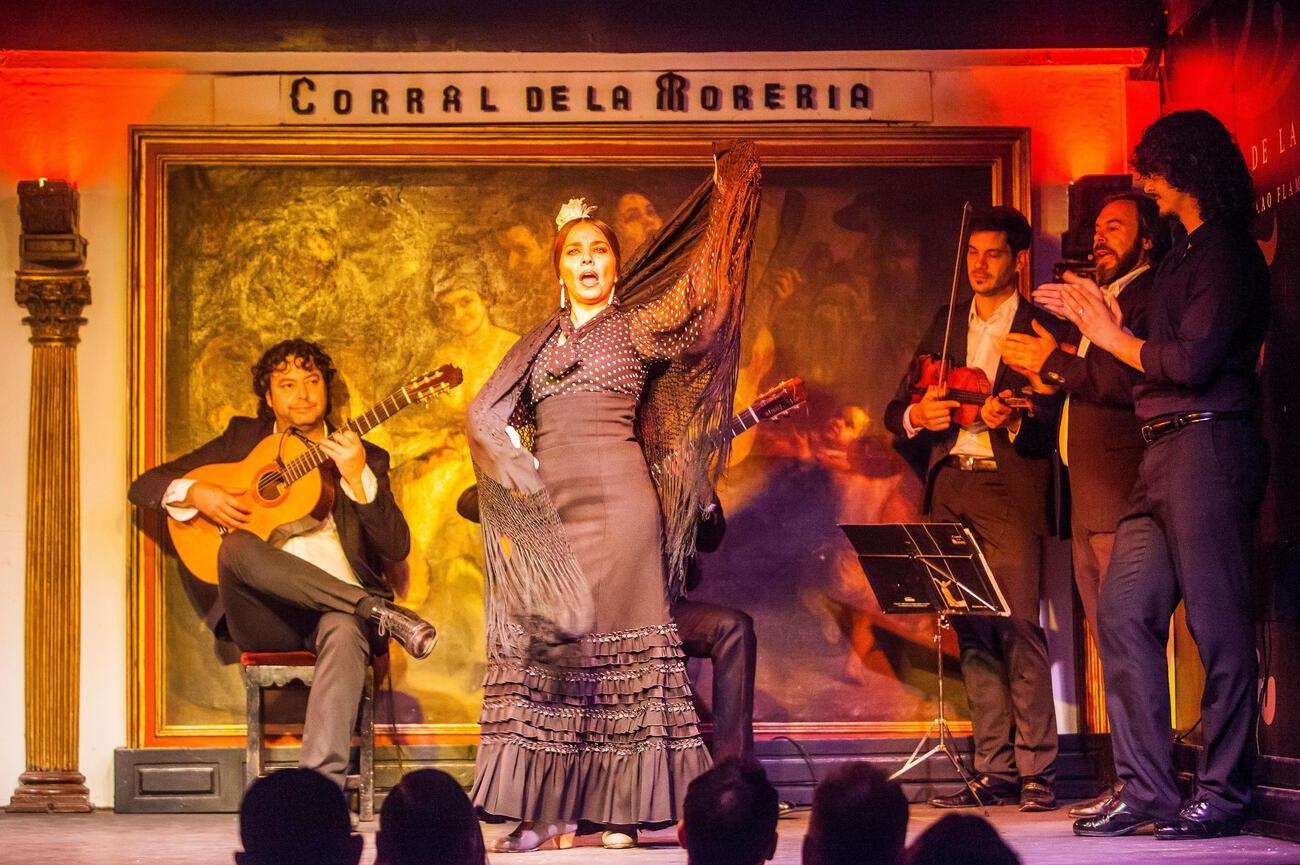
The modern flamenco tablao developed in the 1950s and 1960s from the older café cantante tradition. Its defining feature is intimacy. A relatively small room places the audience close to a raised wooden stage, where you can hear the strike of a dancer's heel, the guitar and even changes in a singer's breathing without the distance of a large theatre.
Three principal roles shape a flamenco performance. Cante is the singing, toque is the guitar and baile is the dance. First-time visitors often expect the dancer to be the centre of the show, but the singer traditionally holds a particularly important position within flamenco. The dancer responds to the musical structure unfolding in the room, while the guitarist listens and adapts just as closely.
This is one reason a serious tablao feels less predictable than a staged revue. The artists work within established flamenco forms, known as palos, while making live decisions about timing and intensity. A dancer may hold back, a singer may stretch a phrase, the guitarist can respond to that change and the palmas, or rhythmic handclapping, can tighten the pulse beneath them. Everyone shares the same musical language, but each performance develops in real time.
A tourist-oriented revue is usually structured differently. A larger room creates more distance between the audience and performers, group choreography may carry more of the spectacle, and amplification can play a greater role. Dinner service may also influence the pace and structure of the evening. None of these features automatically makes a performance poor, but they create a very different experience from an intimate tablao.
For a first flamenco show in Madrid, proximity can make the performance much easier to understand. Watch the singer during a dance solo and the guitarist when the singer changes direction. During quieter passages, notice the dancer's upper body rather than waiting only for rapid footwork. Much of flamenco happens in the interaction between the artists rather than in one performer alone.
Flamenco originated in Andalusia, but Madrid developed into an important professional centre as performers came to the capital to work and audiences gathered to see them. That history helps explain why Madrid has such an established tablao scene despite not being the birthplace of flamenco.
For visitors, the distinction is practical. A traditional tablao puts the relationship between singer, guitarist and dancer at the centre of the evening. A larger revue generally places greater emphasis on spectacle and production. Understanding that difference makes it much easier to choose the kind of flamenco experience you actually want.
This matters even more on a short trip. Our guide to planning a romantic weekend in Madrid explains how to structure two nights in the city without overfilling the itinerary. For the flamenco evening itself, choosing one intimate, memorable performance is usually a better use of the night than trying to fit several organised activities around it.
Best Flamenco Tablaos in
Madrid
Madrid's established flamenco tablaos differ in history, atmosphere, scale and approach to dining. The best choice depends less on finding a single "best" venue and more on deciding what kind of flamenco evening you want.
Corral de la Morería
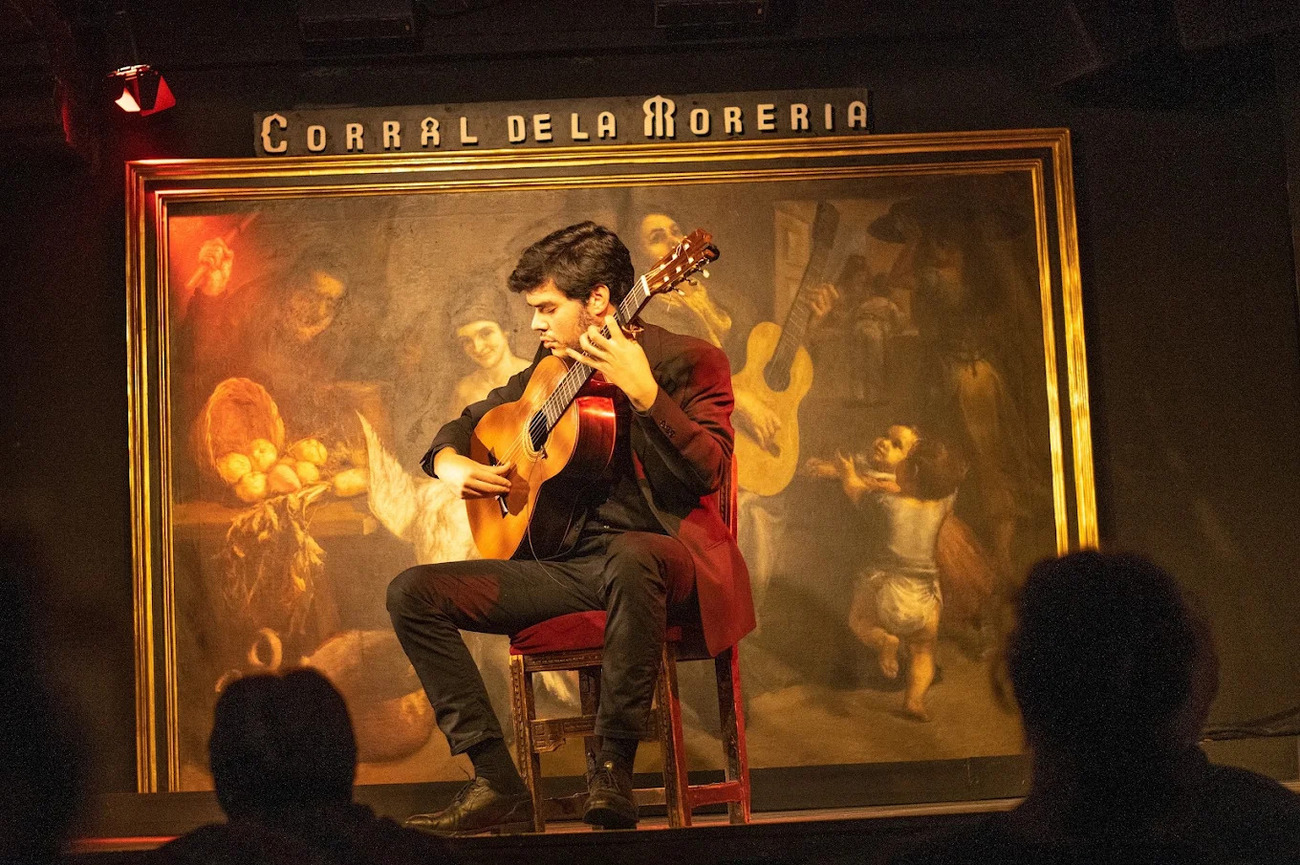
Corral de la Morería, near the Royal Palace, was founded in 1956 and is one of Madrid's most prestigious flamenco tablaos. Its stage has hosted many of the most important names in flamenco, including Paco de Lucía, Antonio Gades, Pastora Imperio and Blanca del Rey. Paco de Lucía presented Entre Dos Aguas here, one of several significant moments in the venue's long history.
Blanca del Rey is the owner and artistic director and has received Spain's Gold Medal for Merit in Fine Arts. That continuity between celebrated past performers and the venue's present artistic direction is an important part of Corral de la Morería's reputation.
Food is also taken particularly seriously here. Corral de la Morería has a Michelin-starred gastronomic restaurant as well as dining within the tablao. If dinner is an important part of your evening, consider the restaurant and flamenco performance together when deciding how you want to structure the night.
Corral de la Morería is one of the venues worth booking in advance, particularly when your dates are fixed or the flamenco evening is one of the highlights of your Madrid trip.
Cardamomo
Cardamomo is located on Calle Echegaray in Barrio de las Letras, a short walk from Puerta del Sol and Plaza de Santa Ana. Established in 1994, it developed a reputation as a meeting place for leading flamenco artists and offers a different atmosphere from Madrid's older tablaos.
The room is intimate, bringing the audience particularly close to the singers, guitarists and dancers. Its central location is another advantage, especially if you want to combine the performance with dinner or drinks and continue the evening on foot through Barrio de las Letras afterwards.
Cardamomo is a good option for travellers who value proximity to the performers and want flamenco to form part of a wider night out rather than dominate the entire evening.
Tablao Flamenco 1911
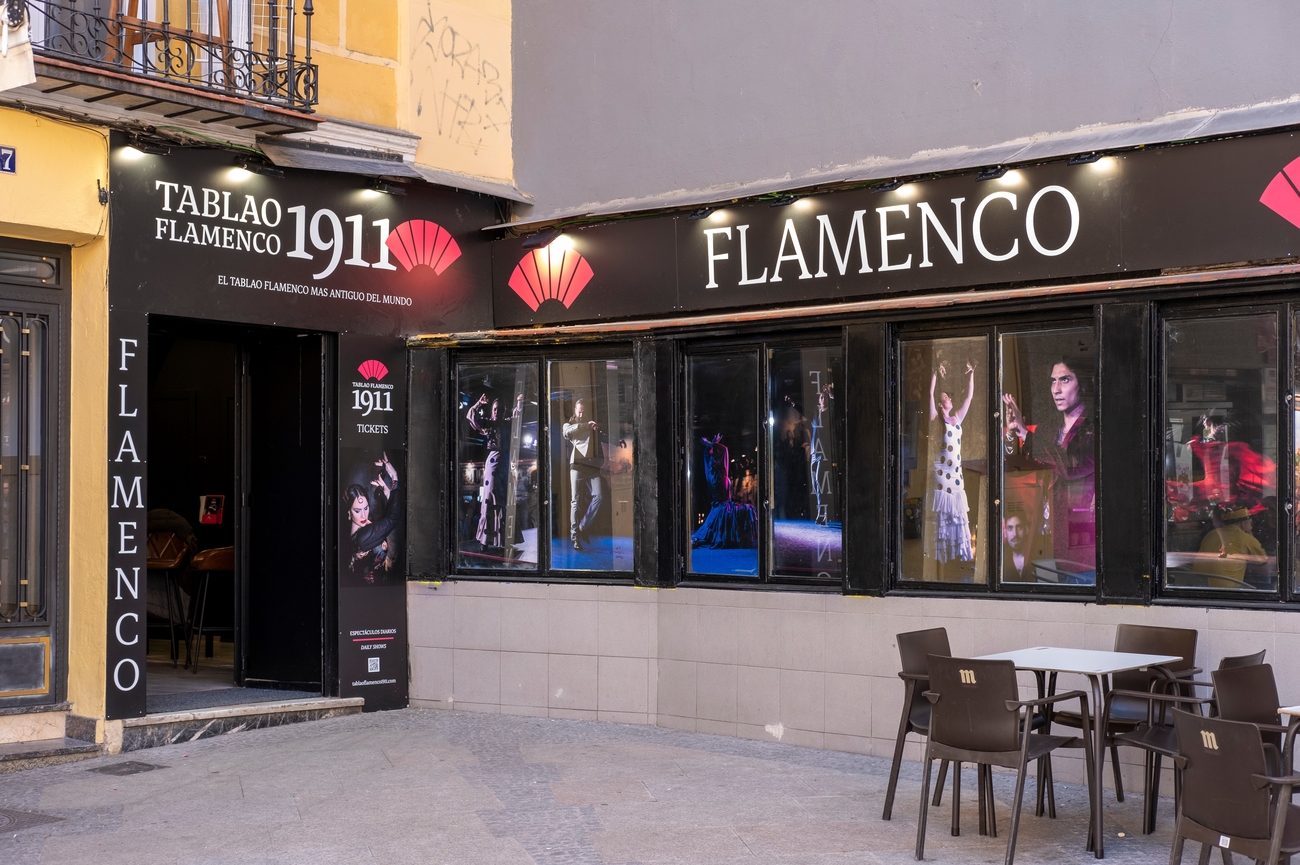
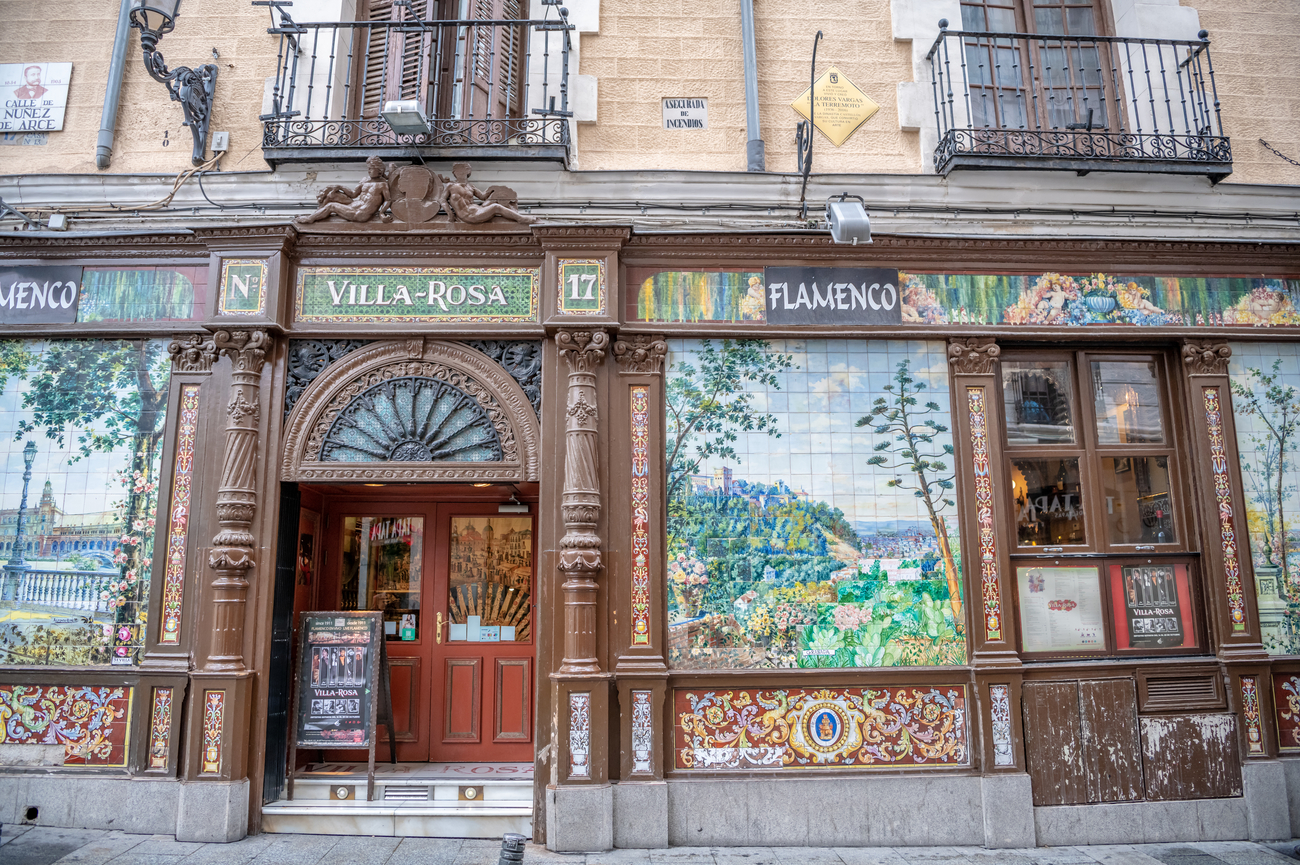
Tablao Flamenco 1911, formerly known as Villa Rosa, traces its history to 1911 and is one of Madrid's most historic flamenco venues. Its setting on Plaza de Santa Ana and distinctive hand-painted ceramic tilework give the room a strong sense of place before the performance even begins.
The venue's long connection with flamenco is part of its appeal, but history and decoration should not be the only reasons to choose it. Check the current artistic programme and consider where you will be seated, particularly if seeing the dancers' footwork clearly is important to you.
For travellers who want a flamenco tablao with a strong historical identity, Tablao Flamenco 1911 is one of Madrid's most distinctive choices.
Las Carboneras
Las Carboneras occupies part of the historic Palacio del Conde de Miranda in central Madrid. Its relatively intimate setting makes it another option for travellers who want to experience flamenco at close range.
When comparing seats, pay particular attention to the view of the stage floor. Being able to see the dancers' footwork matters, but so does seeing the reactions between the singer, guitarist and dancer. Those interactions are an important part of what makes a smaller tablao rewarding.
Torres Bermejas
Torres Bermejas is immediately recognisable for its elaborate Alhambra-inspired interior, giving it one of the most visually distinctive settings among Madrid's flamenco venues.
The surroundings are part of the experience, but they should not be the only factor in your decision. Look at the current programme, the performers and the seating arrangement as well as the room itself. For a memorable flamenco show in Madrid, what happens on stage ultimately matters more than the decoration around it.
How
to Choose a Good Flamenco Tablao in Madrid
When comparing flamenco tablaos in Madrid, look beyond promotional descriptions and star ratings. The quality of the evening depends on the performers, the room, the programme and how clearly you can see and hear what is happening on stage.
Start with the size and layout of the venue. Intimacy matters in flamenco because much of the experience comes from watching the interaction between singer, guitarist and dancer at close range. A larger room can still offer an excellent performance, but seating and sightlines become more important as the distance from the stage increases.
Next, look at the artists. Tablaos that publish the names of their performers make it easier to understand who you will actually be seeing. Flamenco is a live art form, and individual singers, guitarists and dancers can shape the character of a particular performance.
The programme matters too. For a first flamenco show, hearing several different palos, or flamenco forms, helps reveal the variety within the tradition. Some are slow and intense, while others are faster and more playful. A programme built around several styles gives a more complete introduction than one focused almost entirely on dramatic footwork.
Show time can also affect how the evening fits into your plans. An earlier performance may work well before a late Madrid dinner, while a later show can become the main event of the night. Rather than choosing a time because it is supposedly better, choose the performance that works naturally with the rest of your evening.
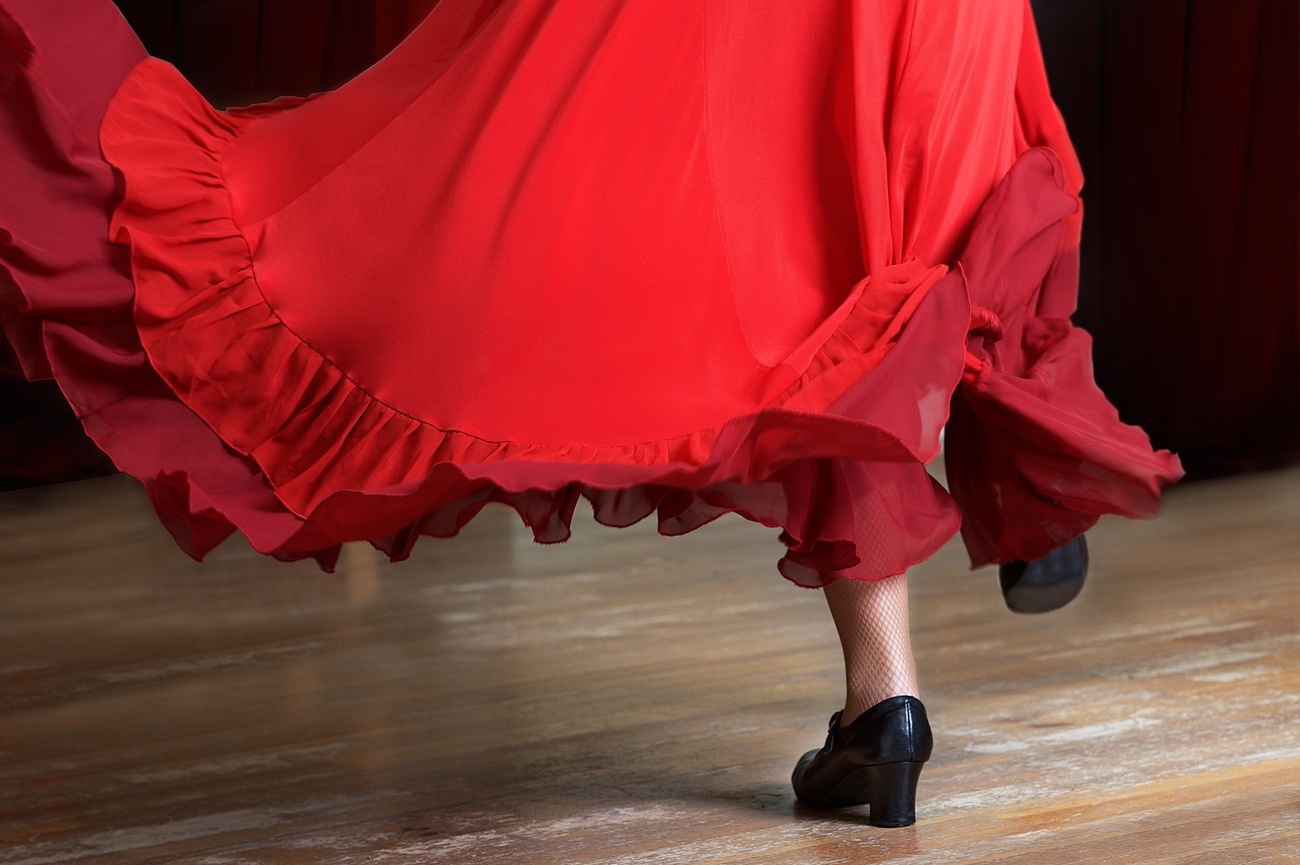
Finally, check the seating plan carefully. A clear view of the stage floor matters because much of the dancer's technique is expressed through the feet, particularly during an escobilla, a section in which footwork becomes especially prominent. A slightly more distant seat with an unobstructed view can therefore be better than a closer table with a restricted sightline.
These criteria are usually more useful than relying on ratings alone. Even an established Madrid tablao can feel different from one night to another because flamenco is a live performance. The aim is to choose a venue that allows you to see the artists clearly, hear the music properly and appreciate the interaction between everyone on stage.
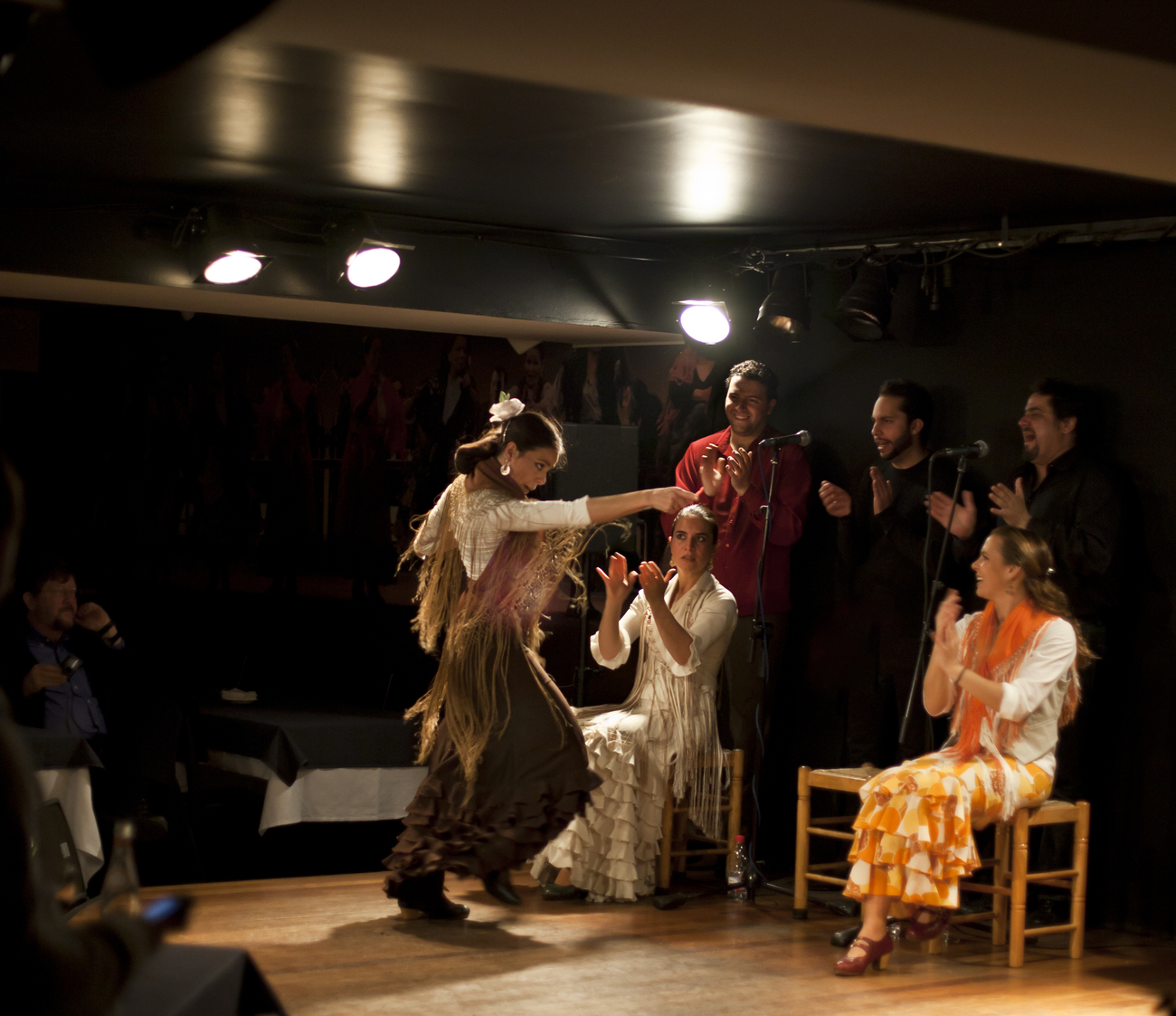
What to Watch for During
a Flamenco Show
The word palo refers to a flamenco form with its own rhythm, structure and expressive character. You do not need to recognise every form during your first flamenco show, but understanding a few of the most common palos makes the performance much easier to follow.
Soleá is a slow twelve-beat form with considerable emotional weight. Because there is space within the rhythm, control and timing matter as much as speed. Listen to where the accents fall and how the singer's phrases work against them. When the dancer enters, much of the interest comes from restraint and precision before rapid footwork takes over.
Alegrías also belongs to the twelve-beat family but has a brighter, lighter character and is associated with Cádiz. When a programme moves from a heavier form into alegrías, the change in mood is often immediately noticeable even if you do not yet recognise the rhythm by name.
Bulerías uses a fast twelve-beat compás and often appears later in a performance. Artists can enter and leave quickly, and the exchanges become increasingly playful. What looks spontaneous still depends on everyone knowing exactly where they are within the rhythmic cycle.
Tangos uses four beats and is one of the more accessible forms for a first-time listener. Its pulse can be easier to identify, making it a useful introduction to flamenco rhythm before you begin recognising the more complex twelve-beat forms.
Siguiriya sits at the darker and more intense end of the repertoire. Give particular attention to the singer. The voice establishes much of the emotional character, while the guitarist and dancer respond within that atmosphere.
A flamenco dance also has its own internal structure. The singer helps establish the mood, while the dancer begins to develop a relationship with the compás. During the escobilla, the footwork becomes more prominent. A llamada signals a change, while a desplante can provide a strong, decisive conclusion to a section. Once you begin recognising these elements, sequences that initially appear completely spontaneous become easier to understand.
Audience etiquette is straightforward. An occasional olé can express appreciation for a particular moment, but there is no need to provide constant encouragement. Avoid joining in with the palmas unless the performers invite the audience to participate, as rhythmic clapping is itself part of the music. Photography policies vary between tablaos, so check the venue's rules before taking out your phone or camera.
You may also hear the word duende. It describes those rare moments when a flamenco performance seems to move beyond technique and create an unusually powerful connection between the artists and the room. It cannot be guaranteed or scheduled, and an excellent flamenco performance does not need duende to be worth seeing.
Learning even a small amount of flamenco vocabulary before a show in Madrid changes the way you watch. You begin to notice the decisions being made between singer, guitarist and dancer and understand why a quiet passage can carry as much intensity as the fastest footwork.
Should
You Book a Flamenco Show with Dinner?
Madrid tablaos generally offer several ways to experience flamenco, including a show with a drink, tapas during the performance or a full dinner. The best option depends on whether you want to concentrate entirely on the stage or prefer to make flamenco part of a complete evening.
A show with a drink is the simplest format. Once the performance begins, there is relatively little service to distract from the singers, guitarists and dancers. For a first flamenco show in Madrid, this can be a particularly good choice if the performance itself is your main priority.
A tapas option offers a middle ground. You can have something to eat without turning the performance into a full dining experience. How well this works depends partly on how the venue organises its service, particularly in a smaller tablao where movement and conversation are more noticeable.
A flamenco show with dinner creates a different kind of evening. The advantage is convenience: dinner and entertainment are handled in the same place, leaving no need to arrange another restaurant before or after the performance. At venues with a strong culinary offering, the meal can become an important part of the experience in its own right.
If you are comparing flamenco dinner shows in Madrid, decide first how important the food is to you. Then compare the tablaos by the quality of the performers, the programme, the atmosphere of the room and the view from your seat. A convenient dinner package should complement the flamenco rather than become the only reason for choosing a particular venue.
Our Romantic Weekend Getaway in Madrid includes a 70-minute flamenco performance by nine artists at a renowned Madrid tablao, with a traditional Spanish meal and beverages served during the show. The getaway also includes two nights at Vincci Soho 4* and chauffeur transfers to and from Madrid Airport. Jain, vegetarian, vegan, halal and kosher dietary options can be requested.
This format works particularly well for couples who want one of their Madrid evenings arranged in advance. Travellers who want to concentrate entirely on the performance may prefer a show-only option followed by a separate late dinner elsewhere in the city.
How
to Plan Your Evening Around a Flamenco Show
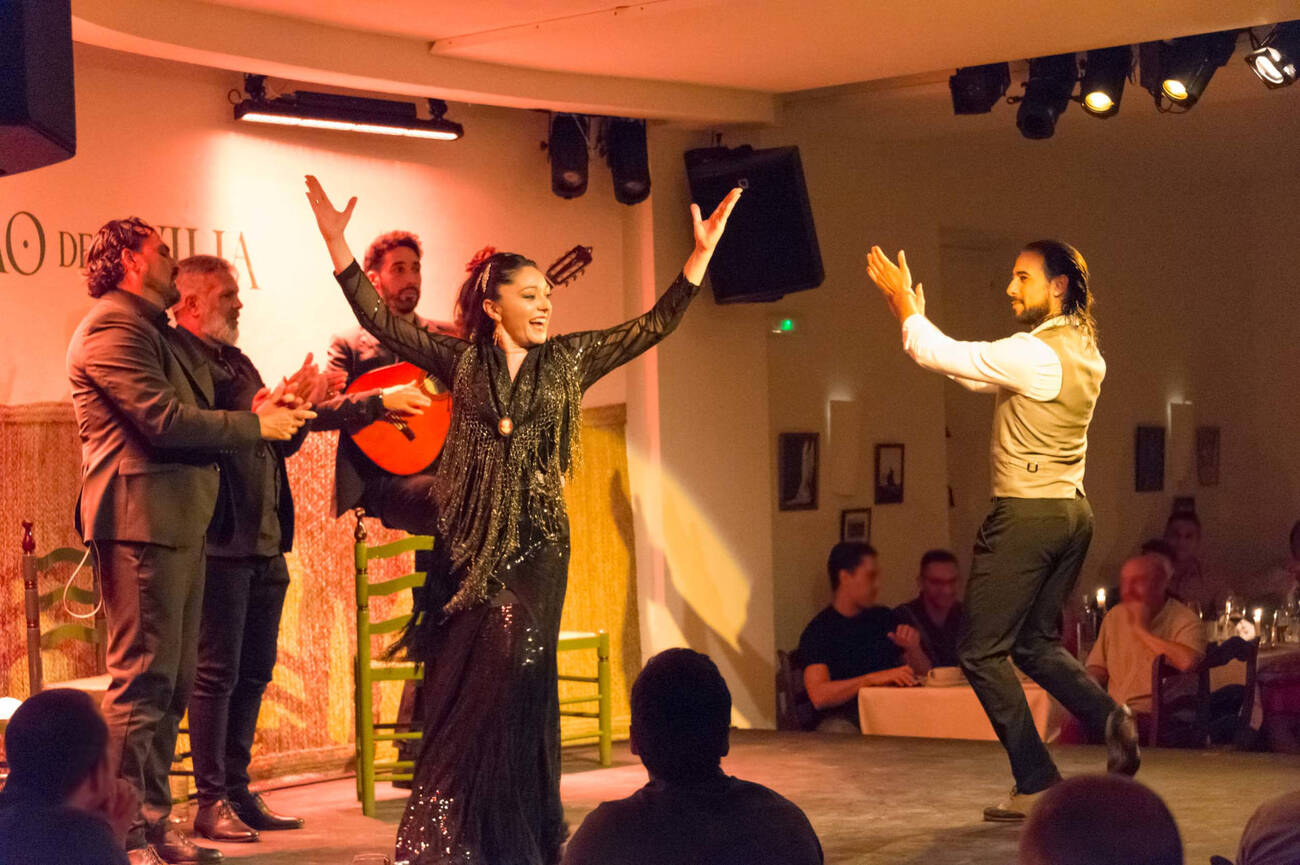
Plan the rest of the evening around the flamenco performance rather than trying to fit the show into an already crowded schedule. Arrive early enough to find your seat, settle into the room and understand the layout before the first compás begins.
The show time should shape what you do before and afterwards. An earlier performance can work well with a late dinner afterwards, while a later show may suit dinner or drinks beforehand. Leave enough time between reservations so that you are not rushing across Madrid just before the performance starts.
The location of the tablao can make the evening easier to organise. Corral de la Morería sits close to the Royal Palace and the historic western side of the centre, making it easy to combine with an evening walk nearby. Venues around Calle Echegaray and Plaza de Santa Ana fit naturally with drinks or dinner in Barrio de las Letras. Choosing somewhere close to your other plans reduces unnecessary transfers and allows the surrounding neighbourhood to become part of the evening.
If your flamenco show follows a day outside Madrid, leave time to return to the hotel and reset before going out again. A wine-tasting excursion into the surrounding Madrid wine region can take up much of the day, so avoid scheduling the evening too tightly. Our guide to wine tasting near Madrid explains how a vineyard day can fit comfortably alongside a flamenco evening.
Dress codes vary by venue, but smart-casual clothing is a safe choice for most Madrid tablaos. Formal dress is rarely necessary. Choose something appropriate for an evening out and comfortable enough for walking before or after the show.
The simplest approach is to let flamenco become the main event of the night. One dinner or drinks reservation around the performance is usually enough. Leave the rest of the evening open for the neighbourhood, a late walk and Madrid's naturally late rhythm.
Wait
for the Bulerías
For couples who prefer to have the main parts of the weekend arranged in advance, our Romantic Weekend Getaway in Madrid includes a 70-minute flamenco performance by nine artists at a renowned Madrid tablao, with a traditional Spanish meal and beverages served during the show.
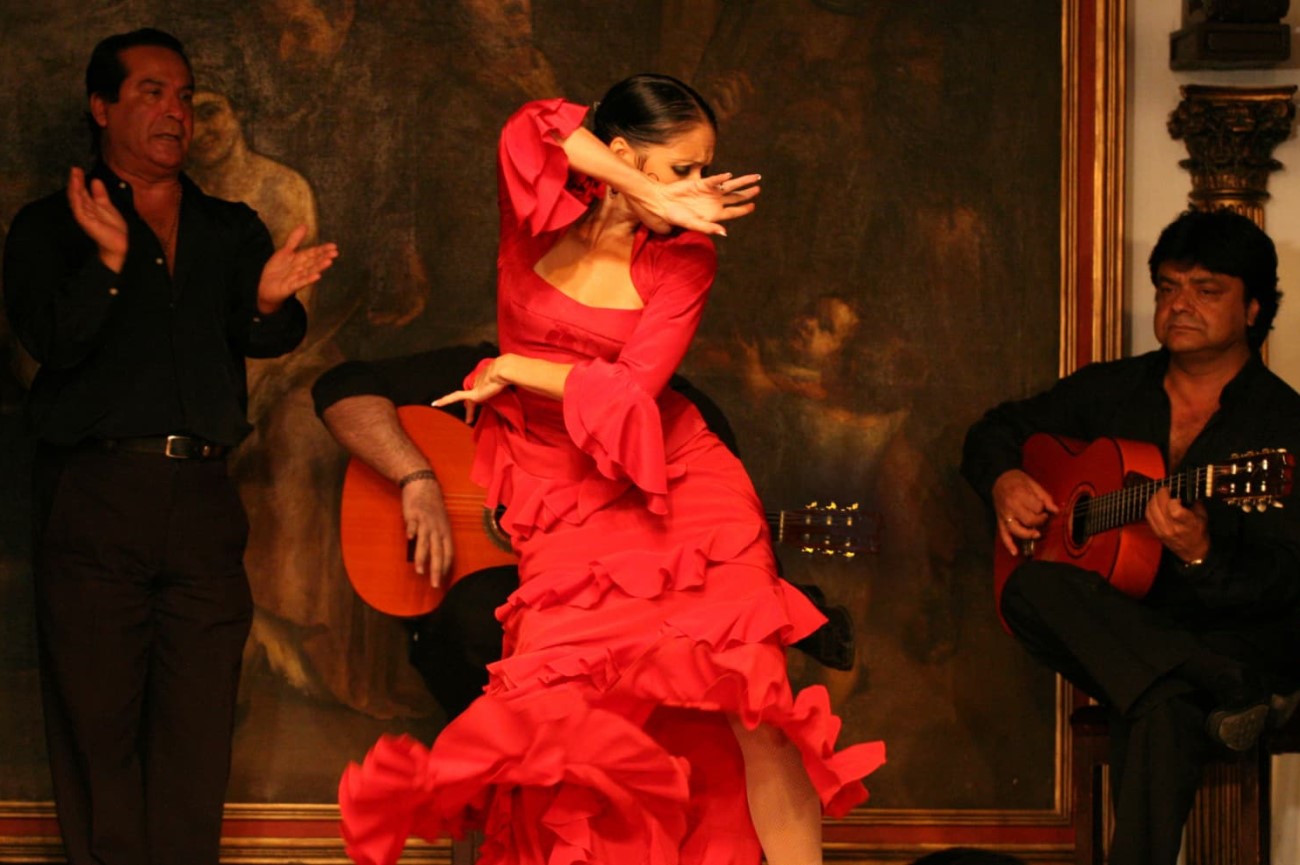
During the performance, listen for the bulerías. This fast flamenco form uses a twelve-beat compás and often brings a more playful energy to the stage. Individual artists can enter and leave quickly, taking turns within the same rhythmic cycle while the rest of the group follows every change.
Watch the edges of the stage as closely as the dancer in the centre. The singers, guitarists and other performers are listening to the same pulse and anticipating what comes next. When one artist finishes a phrase and another enters without breaking the compás, you begin to see the shared musical language that holds flamenco together.
That exchange is one of the moments worth waiting for.


Let us know what you love, where you want to go, and we’ll design a one-of-a-kind adventure you’ll never forget.
Get in touch
Miriam
Travel Specialist

Romina
Travel Specialist

Laura
Travel Specialist
Our offices:



Revigorate, Iberian Escapes and Algarve Lifestyle are the registered brand names of APCS Lda . We are a fully authorised travel agency licensed by Turismo de Portugal RNAVT/6867.
In the event of a dispute, the consumer may refer to: RAL - Centros de Arbitragem
Avª. 5 de Outubro, nº. 55, R/C Dtº. 8000-075 Faro, Portugal | Tel: +351 289 823 135 *
* national landline call
E-mail: info@consumoalgarve.pt| www.consumidoronline.pt | Mon to Fri: 9:00 - 13:00 / 14:00 - 17:00