Zugspitze Railway: A Trip to Germany’s Highest Peak
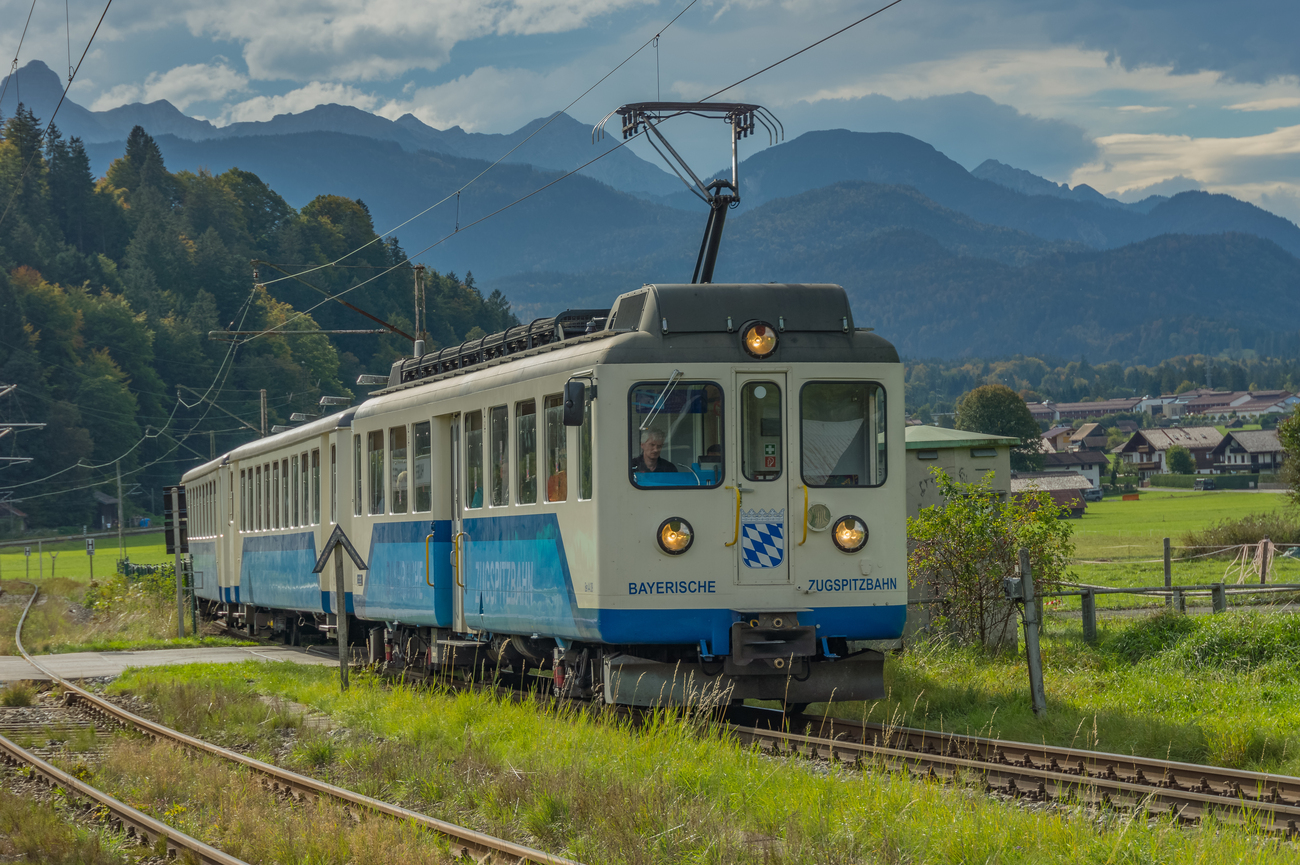
The Zugspitze Railway connects the Bavarian town of Garmisch-Partenkirchen with Zugspitzplatt, the high-altitude plateau below Germany’s highest peak, the Zugspitze. Opened in 1930, the railway was built to make the 2,962-metre mountain more accessible, creating a route into the Alps without requiring a challenging mountain hike.
The journey starts in Garmisch-Partenkirchen before slowly leaving the valley behind and heading into the alpine landscape. Along the way, the train passes forests, mountain slopes and traditional Bavarian scenery before entering the tunnel section inside the Zugspitze massif. The final part of the ride feels completely different from the beginning, with the landscape shifting from green valleys to a high-altitude world of rock, snow and glaciers.
The lower section feels like a regular regional train ride through the Bavarian Alps, with forests, meadows and mountain villages outside the windows. Higher up, the scenery becomes more rugged and the train’s slow pace gives you time to notice the change rather than rushing straight towards the mountain.
That gradual transformation makes the Zugspitze Railway useful for more than simply reaching the top. It gives you an easy way to experience the area without planning a demanding hike or dealing with mountain roads. You can ride from Garmisch-Partenkirchen, spend time around the glacier plateau and summit, and return the same day. The route is straightforward, but the experience feels very different from a standard sightseeing trip.
Zugspitze Railway Itinerary

Garmisch-Partenkirchen to Zugspitzplatt
The Zugspitze Railway follows one of Germany’s most impressive mountain routes, climbing from the valley town of Garmisch-Partenkirchen to the glacier plateau below the summit of the Zugspitze. This itinerary follows the full railway route, including the smaller intermediate stops that many visitors pass without exploring. While you can continue directly to Zugspitzplatt, you can also stop at Hammersbach, Grainau and Eibsee to add hiking, lake views and mountain activities to your trip.
Garmisch-Partenkirchen
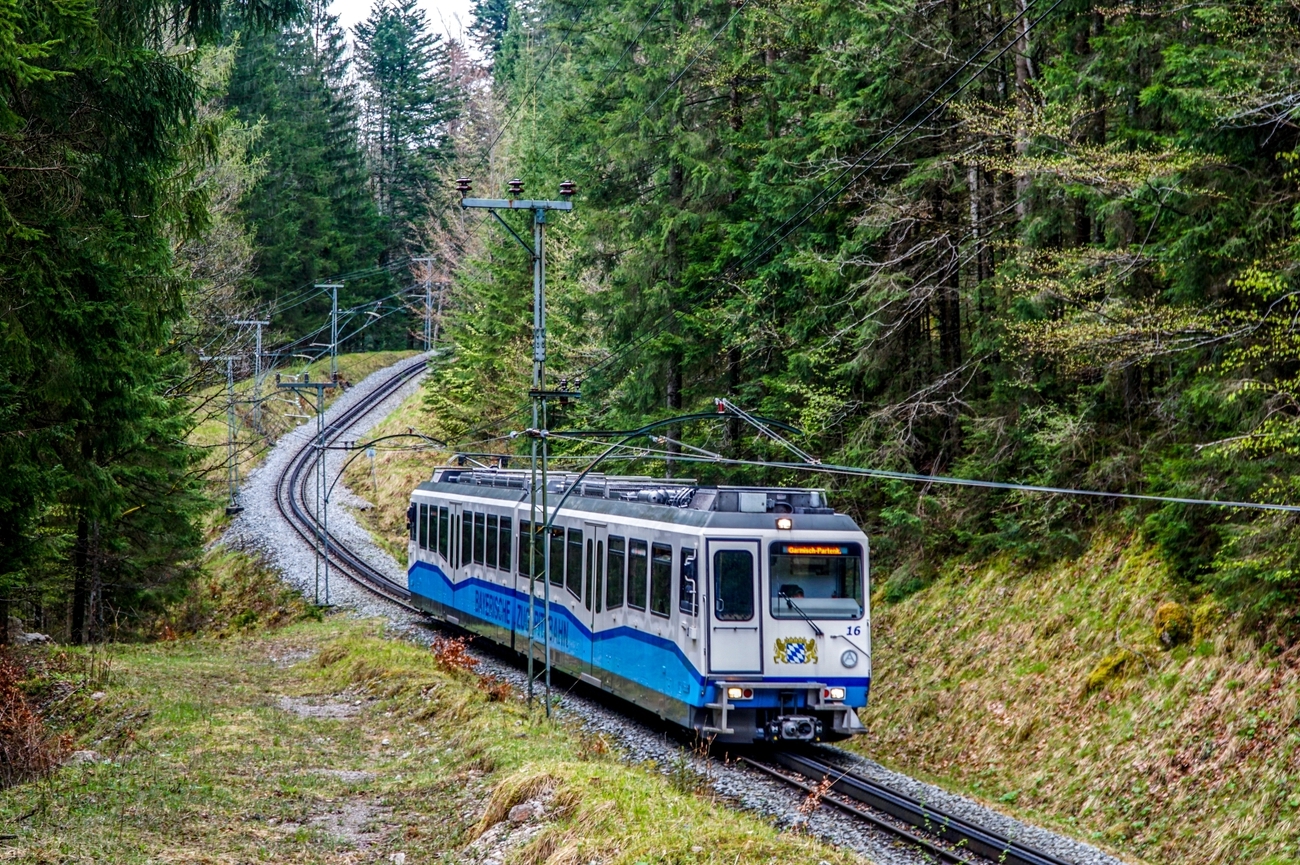
The journey begins at Garmisch-Partenkirchen, the main valley station of the Zugspitze Railway and one of Bavaria’s best-known mountain towns. Located at the foot of the Wetterstein Alps, it is a popular base for exploring the region, with traditional streets, restaurants and easy access to hiking areas.
The town is made up of two historic communities, Garmisch and Partenkirchen, each with its own character. Partenkirchen is known for its traditional painted houses and the historic Ludwigstraße, while Garmisch has a livelier centre with shops, cafés and restaurants. Nearby attractions include the Partnach Gorge, the Olympic ski jump and the scenic paths around the Loisach River.
From here, the train begins its gradual climb through the Bavarian landscape. The early section still feels like a regional railway ride, passing through green valleys and wooded areas before the mountains begin to dominate the landscape.
Hausberg
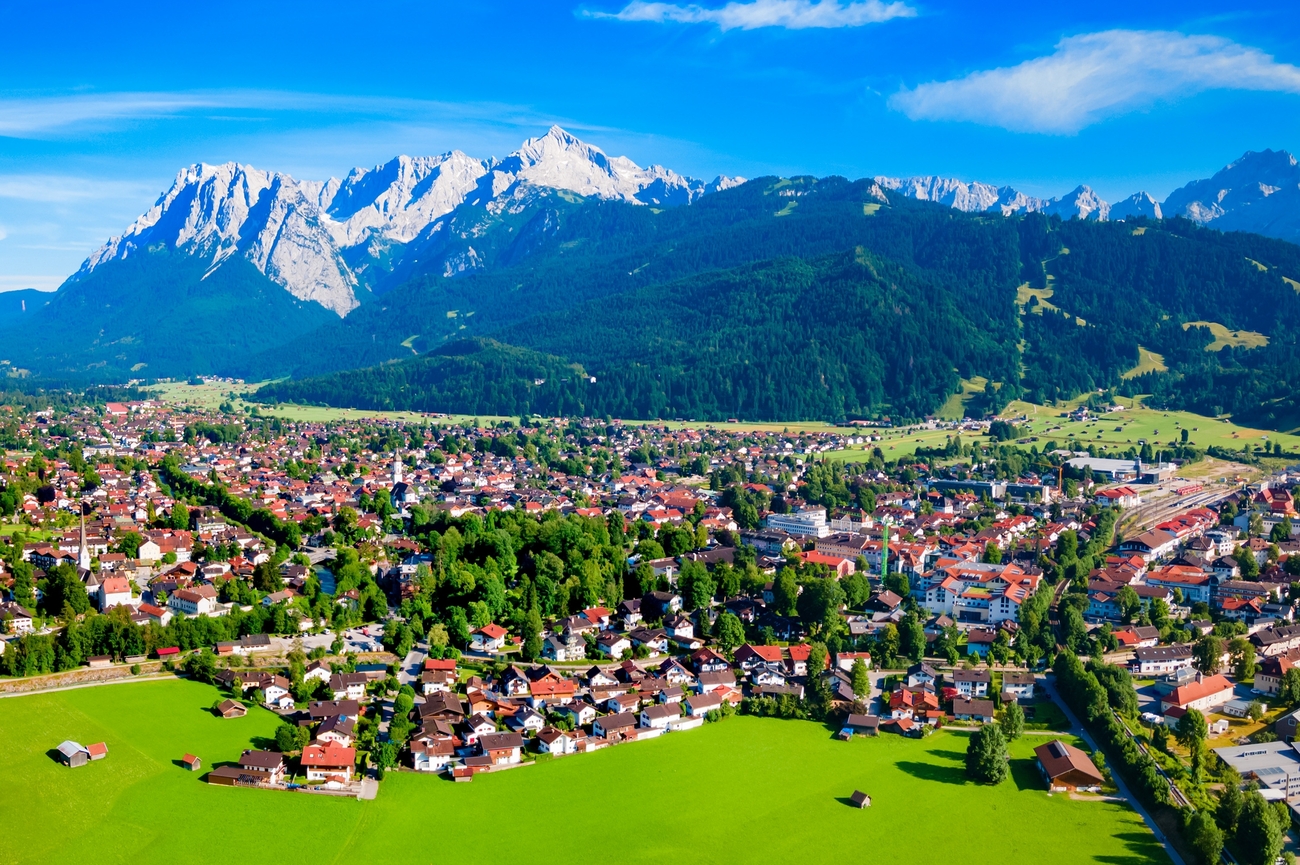
Hausberg is one of the first stops after leaving Garmisch-Partenkirchen and sits at the foot of the Hausberg ski area. The station is particularly useful in winter, when the Hausbergbahn provides access to the surrounding Garmisch-Classic slopes. During the warmer months, walking routes around the lower mountain can also be reached from the area.
Forested slopes rise around the railway as the route begins its transition from the valley into the mountains.
Kreuzeck-/Alpspitzbahn
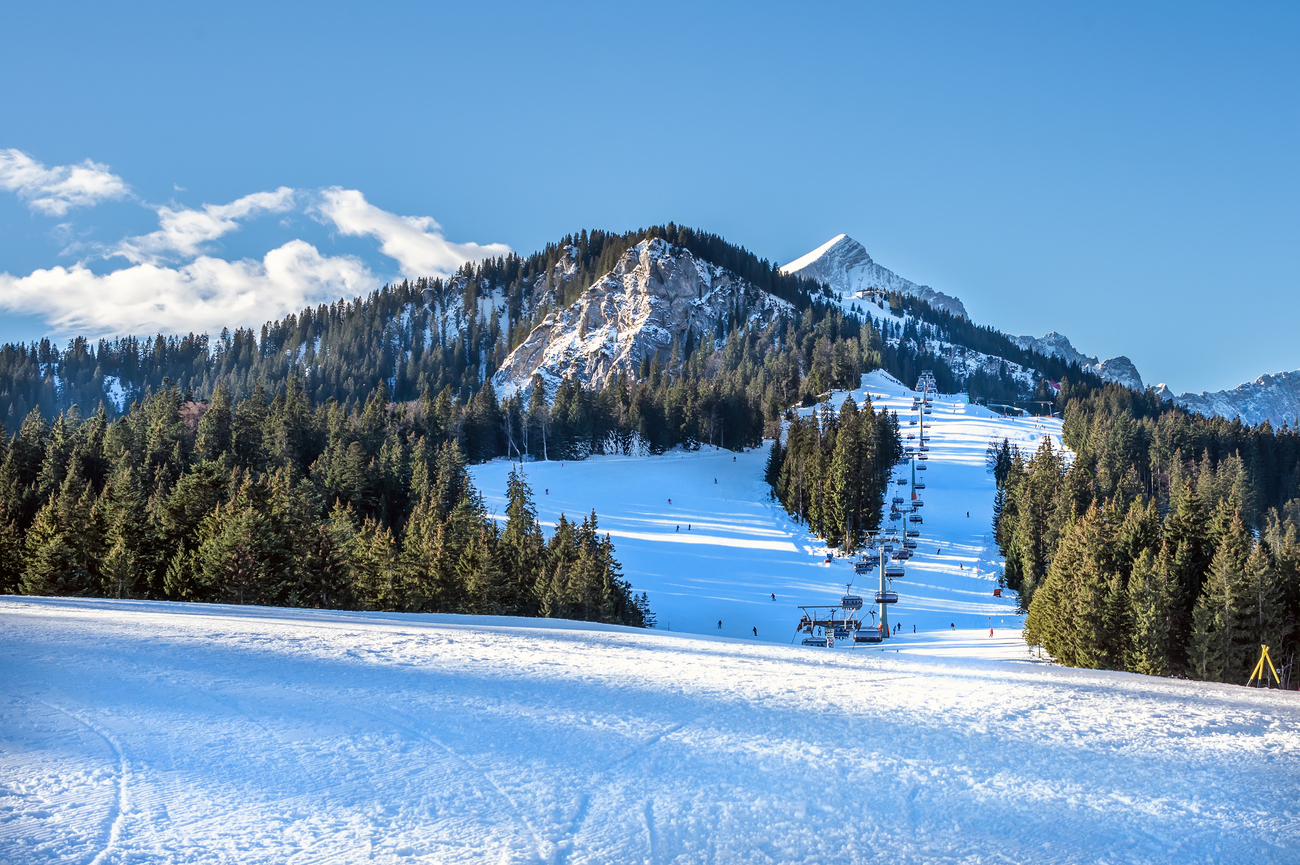
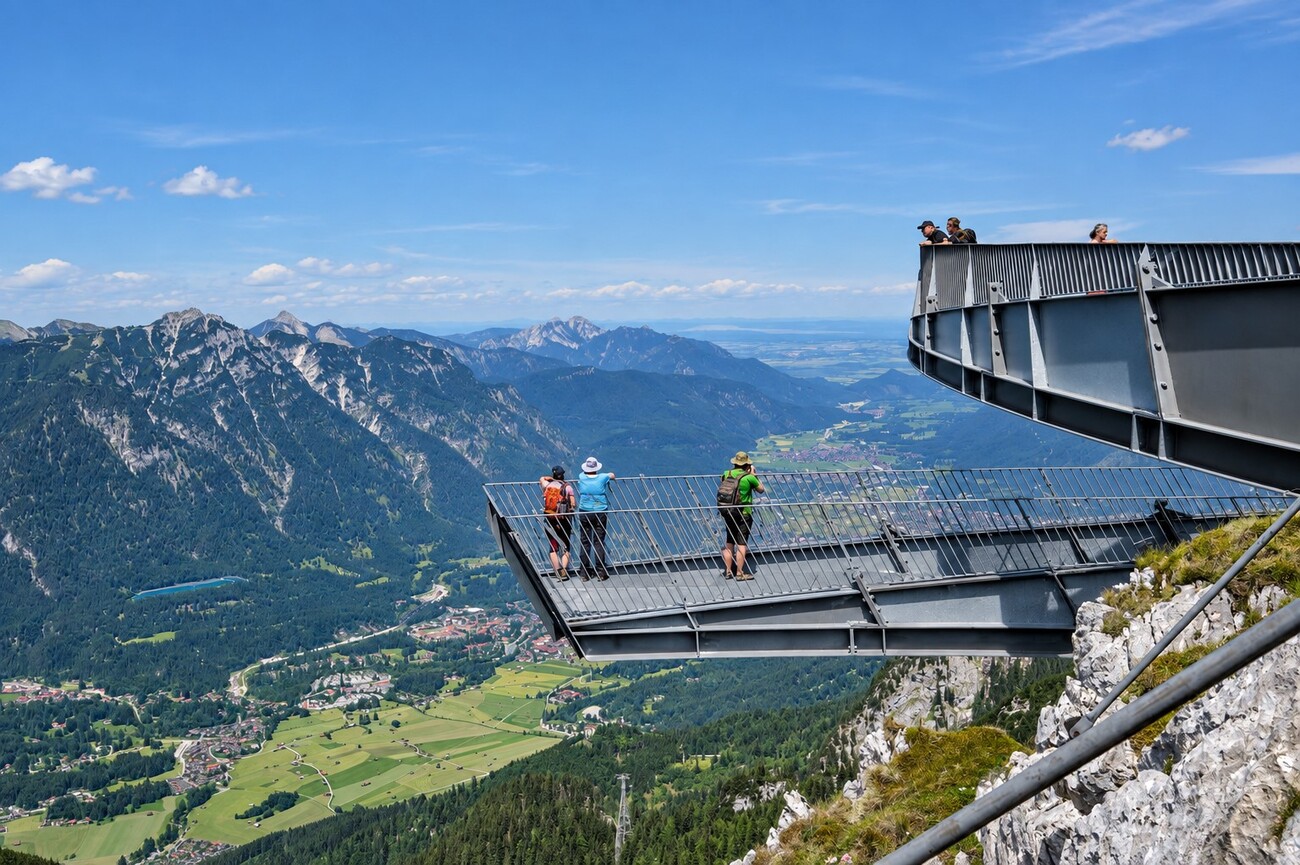
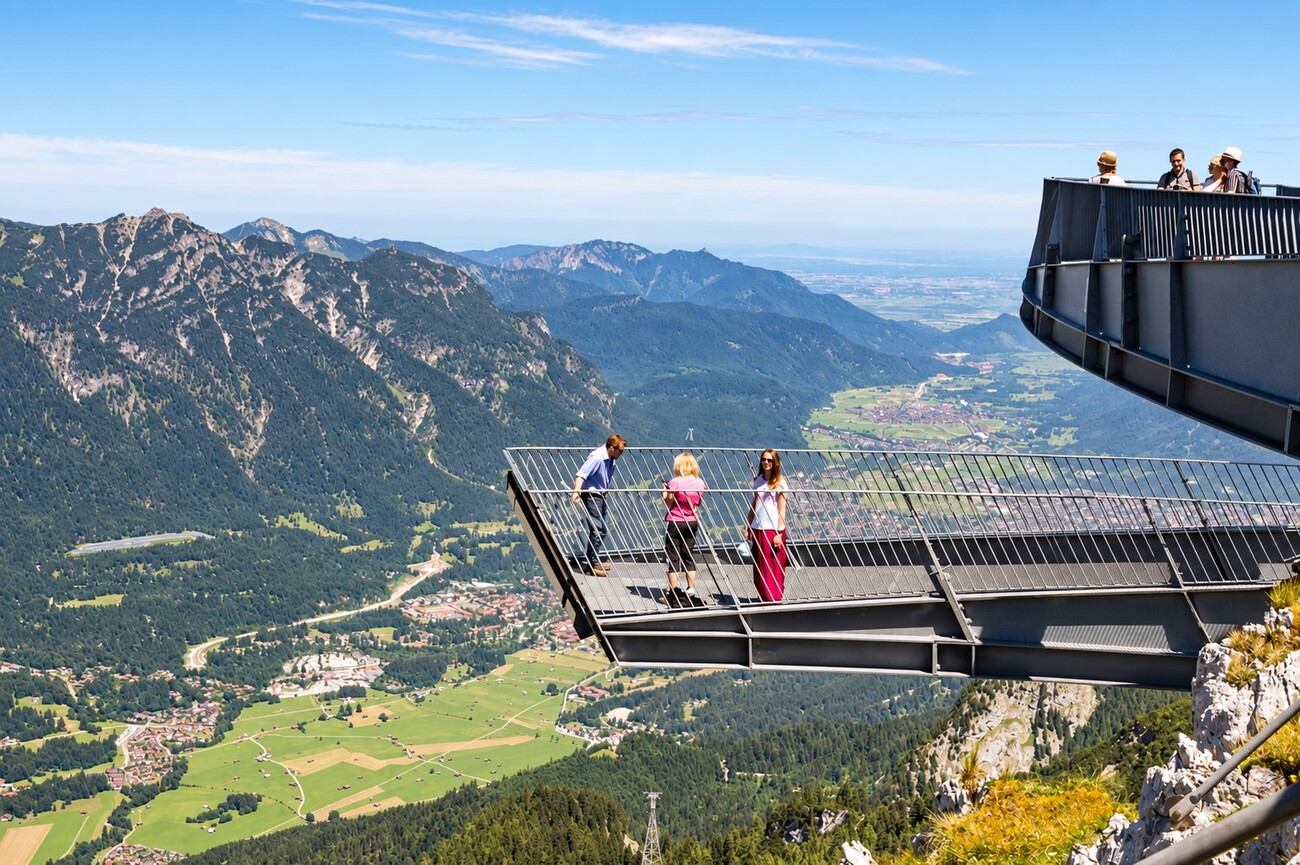
The Kreuzeck-/Alpspitzbahn stop connects passengers with two of the region’s best-known mountain lift areas. The Kreuzeckbahn climbs towards the Kreuzeck, a popular starting point for hiking routes and winter ski runs, while the Alpspitzbahn leads towards the AlpspiX viewing platform and the slopes below the Alpspitze. From the platform, two steel walkways extend over the mountain edge, creating a dramatic viewpoint above the valley.
The area also provides access to the Osterfelderkopf, where several trails begin, including routes towards the Alpspitze and the famous Höllental valley. In winter, the lifts serve the Garmisch-Classic ski area. In summer, the same slopes become a network of hiking paths with wide views across the Wetterstein mountains.
If you want to spend more time in the region, this stop works well as a separate mountain excursion. It gives access to dramatic alpine scenery, the AlpspiX viewpoint and several hiking routes without needing to continue all the way to the Zugspitze summit area.
Hammersbach
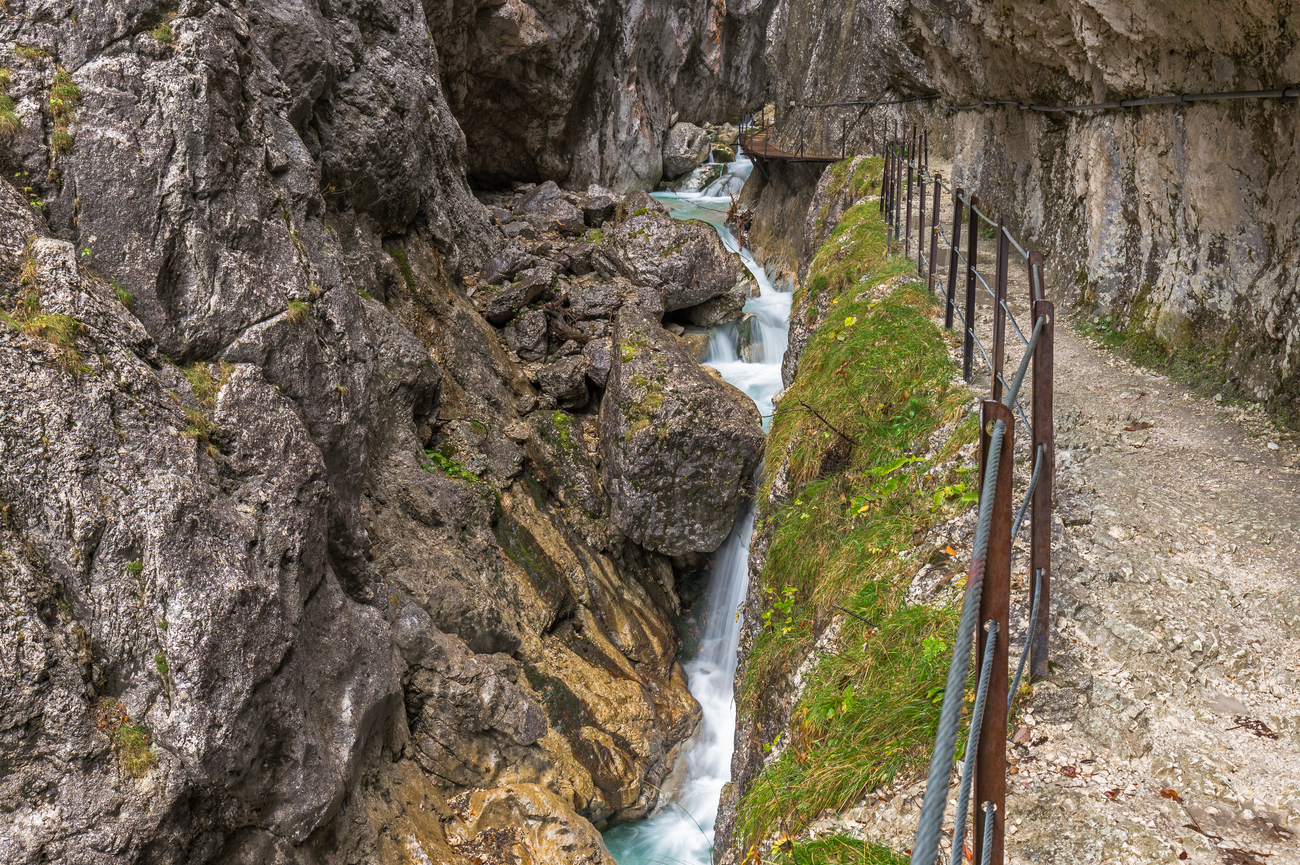
Hammersbach is a small railway stop in the municipality of Grainau and the main access point for the Höllentalklamm gorge. The station is used by hikers travelling towards the gorge, the Höllental valley and routes leading into the Wetterstein mountains.
From Hammersbach, the trail to the Höllentalklamm entrance takes approximately 45 to 60 minutes. The route follows the Hammersbach stream through forested terrain before reaching the gorge. The gorge is crossed by bridges and walkways built into the cliffs, so conditions can be wet and slippery.
The Höllentalklamm is generally open during the warmer months, although access can be affected by snow, ice, heavy rain or maintenance work. Hammersbach is therefore more useful as a hiking stop than as a brief sightseeing stop from the train.
Grainau
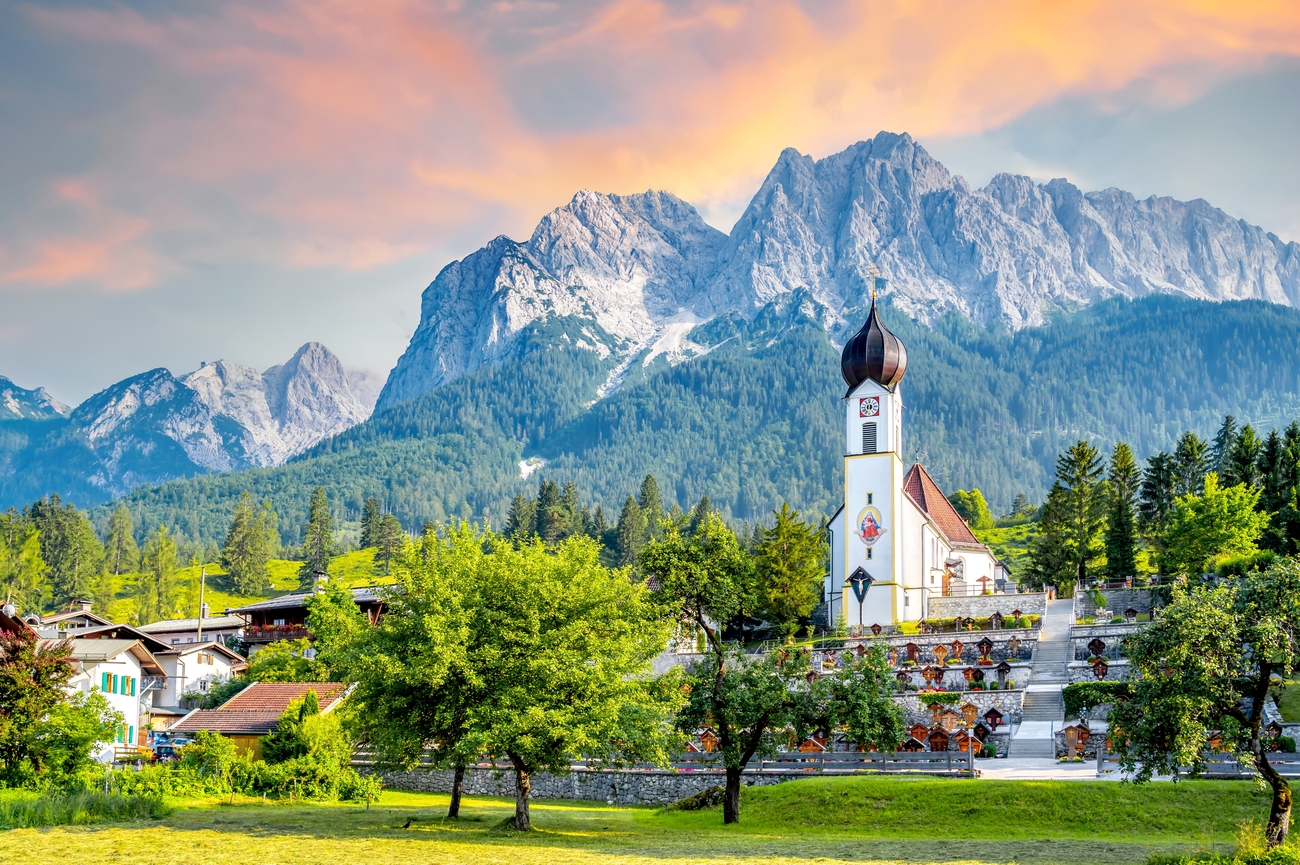
Grainau is the main village stop before the railway begins its steeper mountain climb towards the Zugspitze. Surrounded by the Wetterstein mountains, the village offers classic Bavarian alpine scenery and serves as a base for outdoor activities throughout the year.
From Grainau, the railway begins operating as a cogwheel train for the steeper climb towards the mountain. The lower forests and meadows gradually give way to steeper slopes as the route moves from the valley into higher alpine terrain.
Eibsee
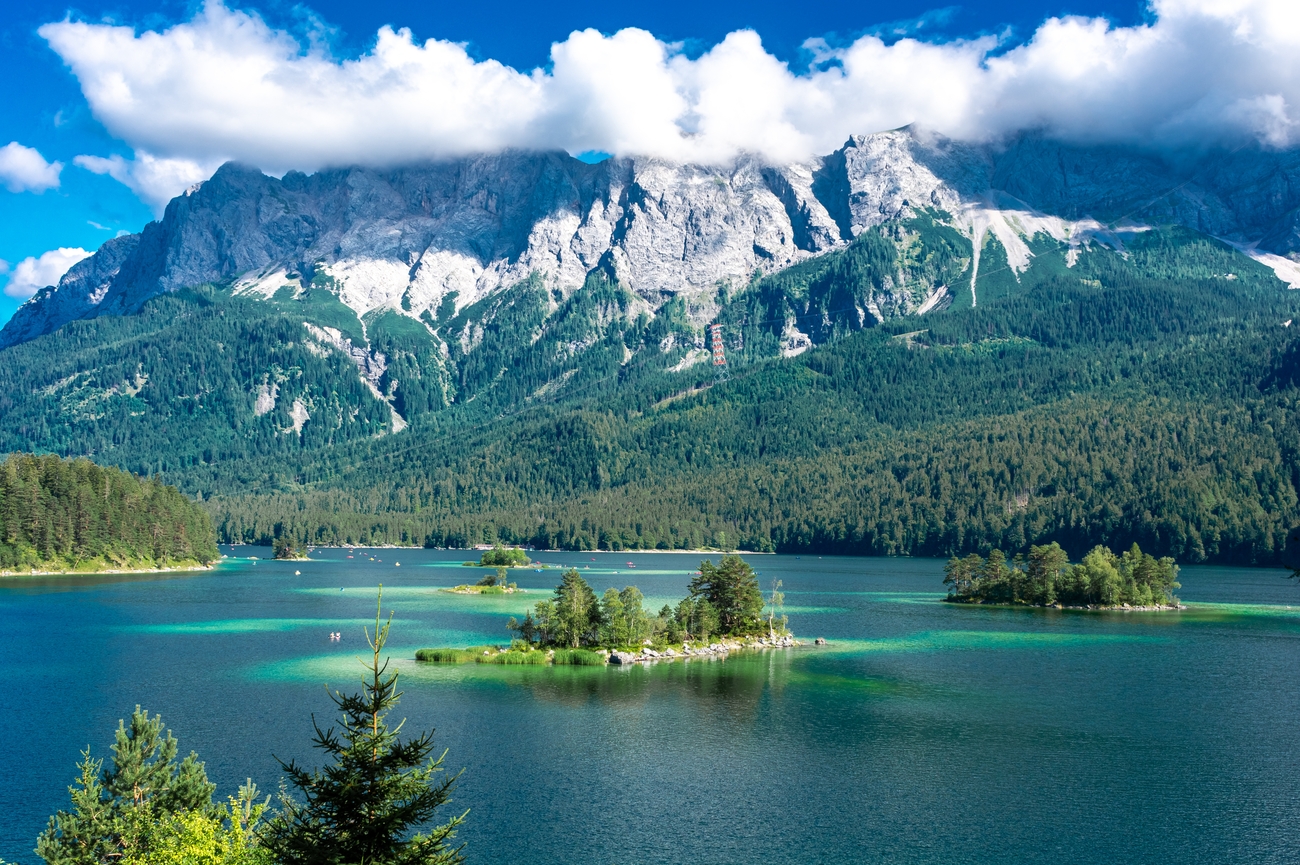
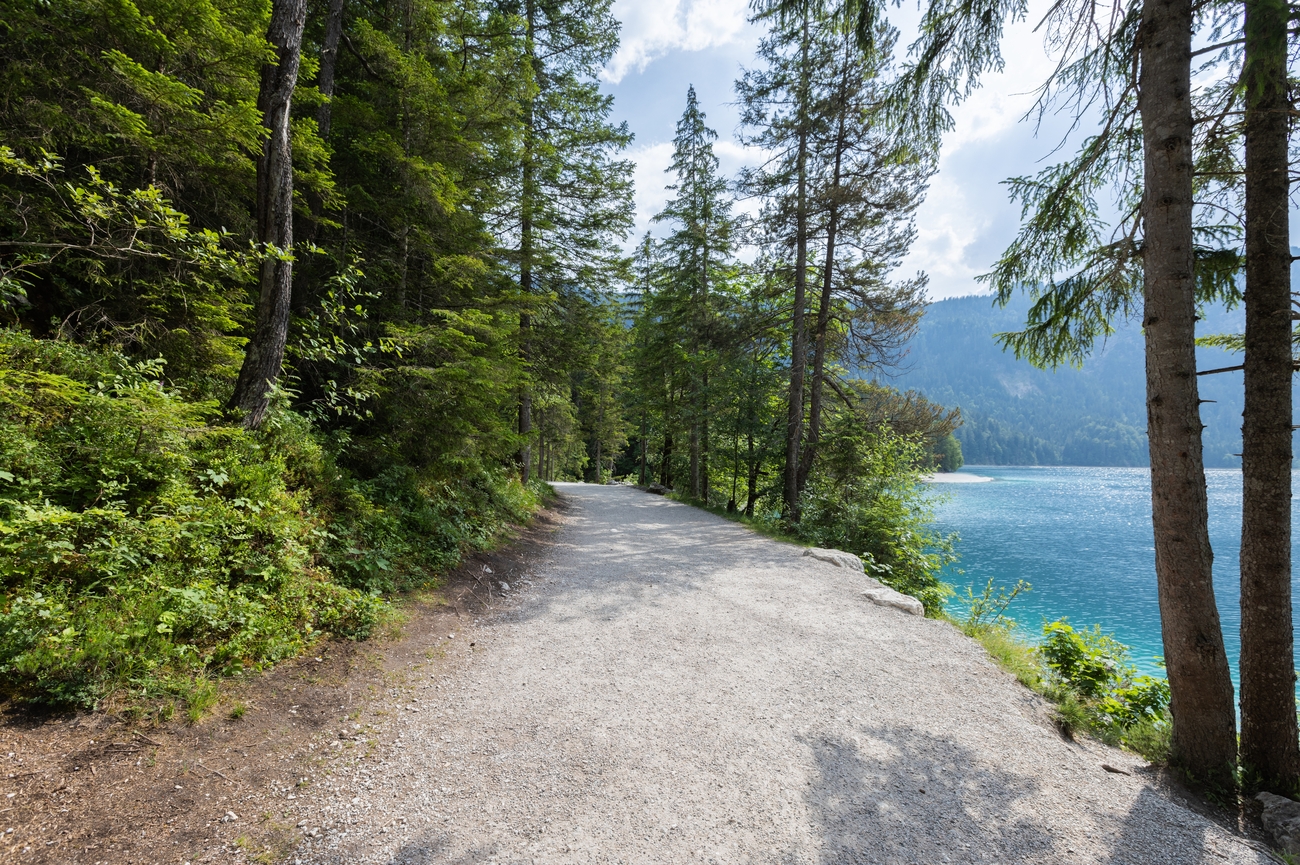
Eibsee is one of the most popular stops on the Zugspitze Railway. The station sits near Lake Eibsee, one of Bavaria’s most photographed alpine lakes, known for its clear turquoise water, wooded shoreline and views of the Zugspitze rising above it. The lake was formed by a landslide from the Zugspitze thousands of years ago, leaving behind several small islands and clear, shallow bays along the shore.
A walking path follows the lakeside, offering changing views of the water, surrounding forests and mountain peaks. The complete circuit is around seven kilometres and takes approximately two hours. The shoreline is especially attractive on calm days, when the Zugspitze and nearby peaks are reflected in the lake. In summer, you can also swim, rent boats or enjoy the lakeside area, although the water remains cold even during warmer weather.
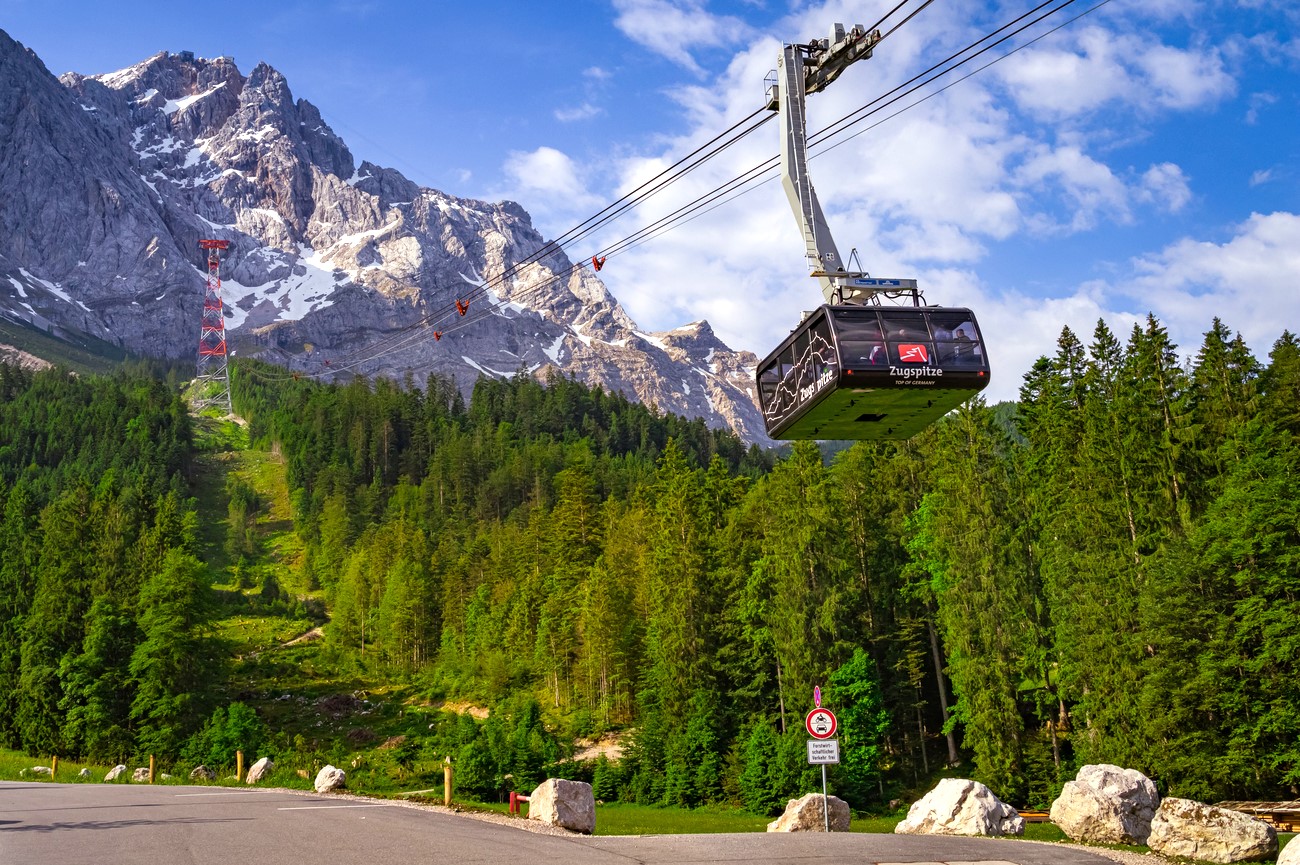
The stop also connects with the Zugspitze Cable Car, allowing you to combine different routes up and down the mountain. The cable car reaches the summit area much faster than the railway and provides open views during the ascent. Spending time around the lake before or after the railway journey is one of the easiest ways to add more scenery to your itinerary.
Riffelriß
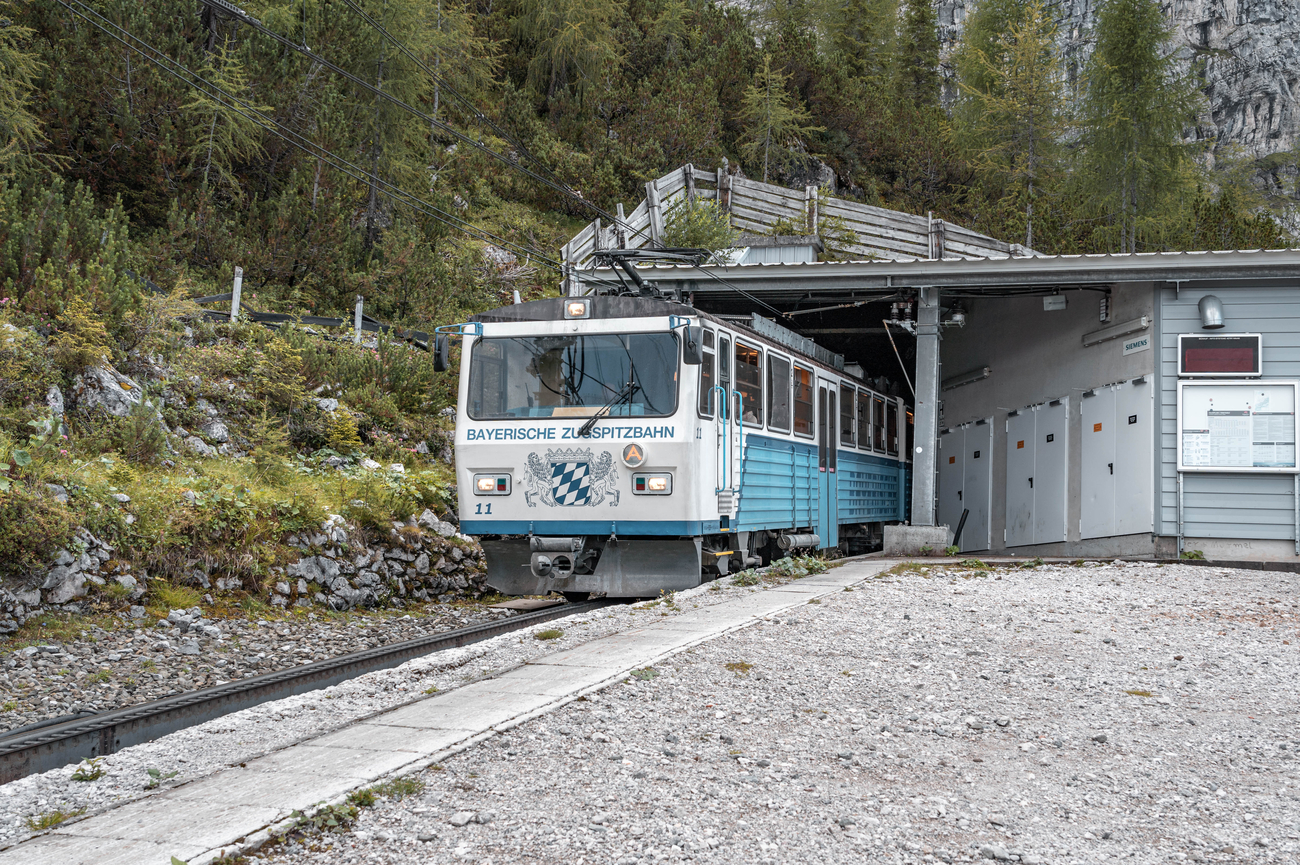
Riffelriß is a high-altitude request stop on the cogwheel railway, located near the entrance to the Zugspitze tunnel between Eibsee and Zugspitzplatt. By this point, the train has left the forests and villages of the lower route behind and climbed to roughly 1,600 metres above sea level. The stop is mainly used by hikers rather than passengers travelling directly to the glacier plateau, with mountain paths leading into the surrounding rocky terrain.
If you stay on the train, Riffelriß is still a distinctive point in the journey. From here, the railway enters the long tunnel through the Zugspitze massif before emerging at Zugspitzplatt.
Zugspitzplatt
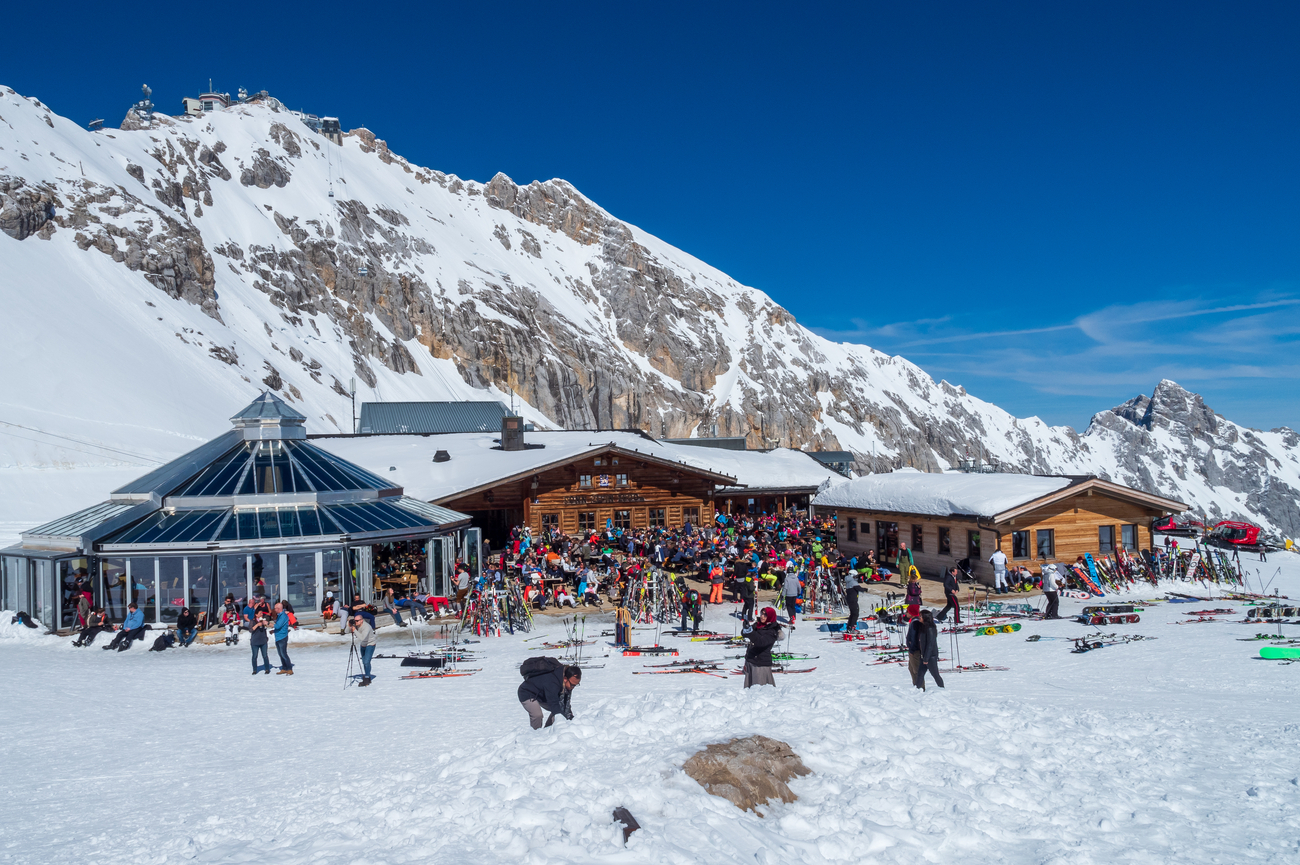
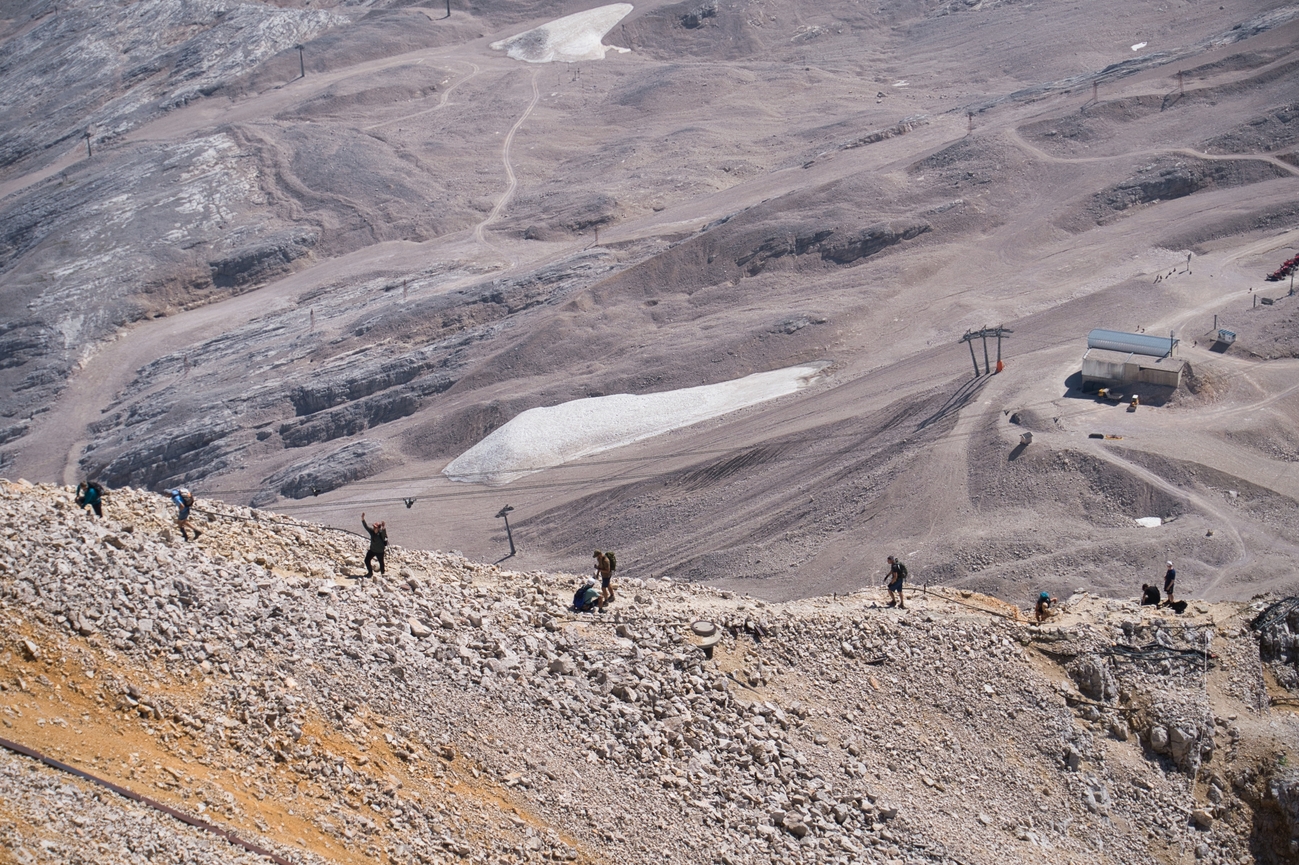
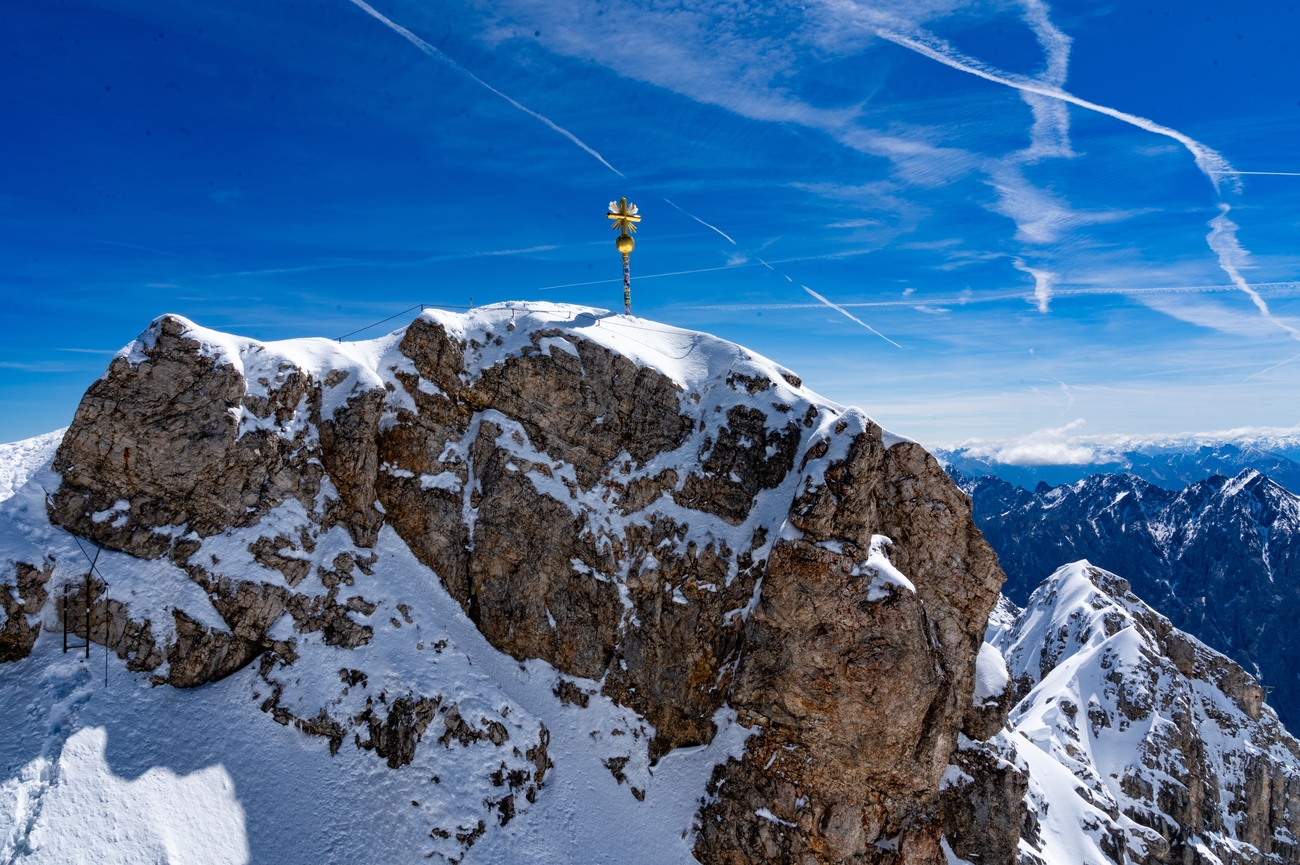
The final stop is Zugspitzplatt, the terminal station of the Zugspitze Railway. It sits on the Zugspitze’s high glacier plateau, below the summit and within the mountain’s main visitor area. The station is reached after the railway passes through the Zugspitze tunnel, making the arrival feel especially dramatic: the lower forests and villages disappear, replaced by exposed rock, snowfields and steep alpine slopes.
Zugspitzplatt is more than a railway terminus. It provides access to the Zugspitze Glacier, Germany’s highest church, the Sonnalpin restaurant and several viewing areas across the plateau. The glacier area is used for winter sports when conditions allow, while in summer it provides access to marked walking routes and high-altitude viewpoints. Snow can remain on the plateau well into the warmer months, although conditions vary considerably with the season and weather.
From Zugspitzplatt, you can continue to the summit at 2,962 metres using the Gletscherbahn cable car. The short ride connects the glacier plateau with the summit area, where viewing platforms provide panoramas across the Alps and, on clear days, into Germany, Austria, Switzerland and Italy. The summit itself is separate from the railway station, so reaching the highest point requires this additional connection or a demanding climb.
Duration
The Zugspitze Railway journey from Garmisch-Partenkirchen to Zugspitzplatt takes approximately 75 minutes and covers around 19 kilometres. The route runs directly from the valley station to the glacier plateau, with no transfers required. This makes it one of the simplest ways to reach the high Alps without needing to hike or drive a mountain road.
The route includes stops at Hausberg, Kreuzeck-/Alpspitzbahn, Hammersbach, Grainau, Eibsee and Riffelriß before reaching Zugspitzplatt at 2,588 metres. These stations provide access to ski areas, hiking trails, alpine villages, Lake Eibsee and the high mountain terrain around the Zugspitze.
The lower stops are mainly connected with local recreation and outdoor activities, while Eibsee and Riffelriß mark the transition into the higher mountain environment. Zugspitzplatt is the final railway station and provides access to the glacier plateau, summit facilities and onward connections to the Zugspitze summit.
If you travel straight from Garmisch-Partenkirchen to Zugspitzplatt and return, the railway can easily be completed as a half-day or full-day trip depending on how much time you spend at the top. However, stops at places like Hammersbach, Grainau or Eibsee require additional time and can turn the railway ride into a longer Bavarian Alps itinerary.
Schedules and Tickets
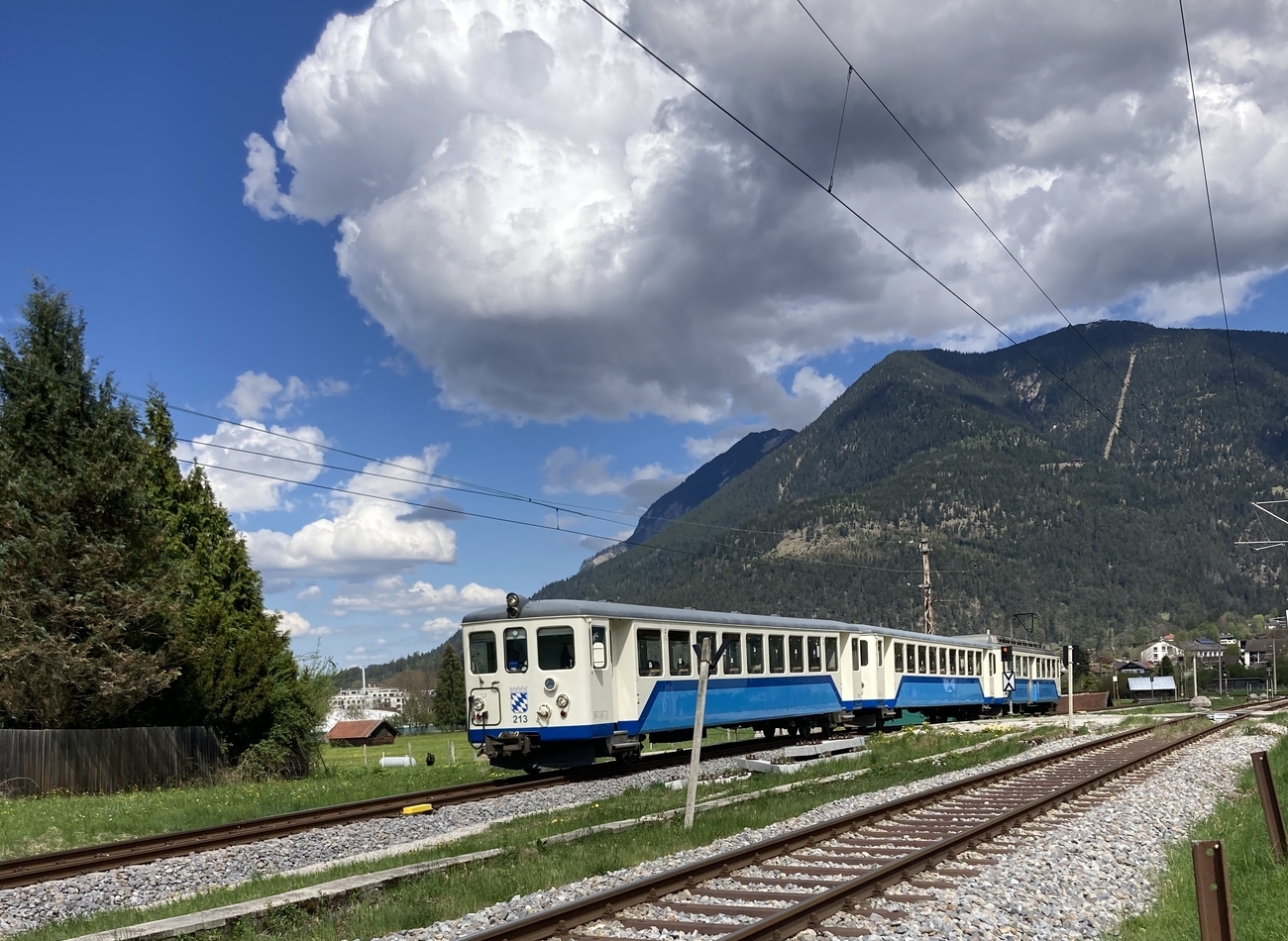
The Zugspitze Railway runs regularly throughout the day, although the timetable varies by season. Services and connecting cable cars can also be affected by weather conditions and maintenance, so it is best to check the latest timetable on the official Zugspitze website shortly before travelling.
Tickets can be purchased through the official Zugspitze website or at station ticket counters. The Deutschland-Ticket is valid only on the valley section of the cogwheel train between Garmisch-Partenkirchen and Grainau; a separate Zugspitze ticket is required to continue to Eibsee or Zugspitzplatt.
The standard Zugspitze Ticket includes one ascent and one descent and can be used to combine the cogwheel railway, Gletscherbahn cable car and Zugspitze Cable Car. This makes it possible to travel up by train and return via the cable car, or complete the journey in the opposite direction.
Where To Stay Along the Zugspitze Railway
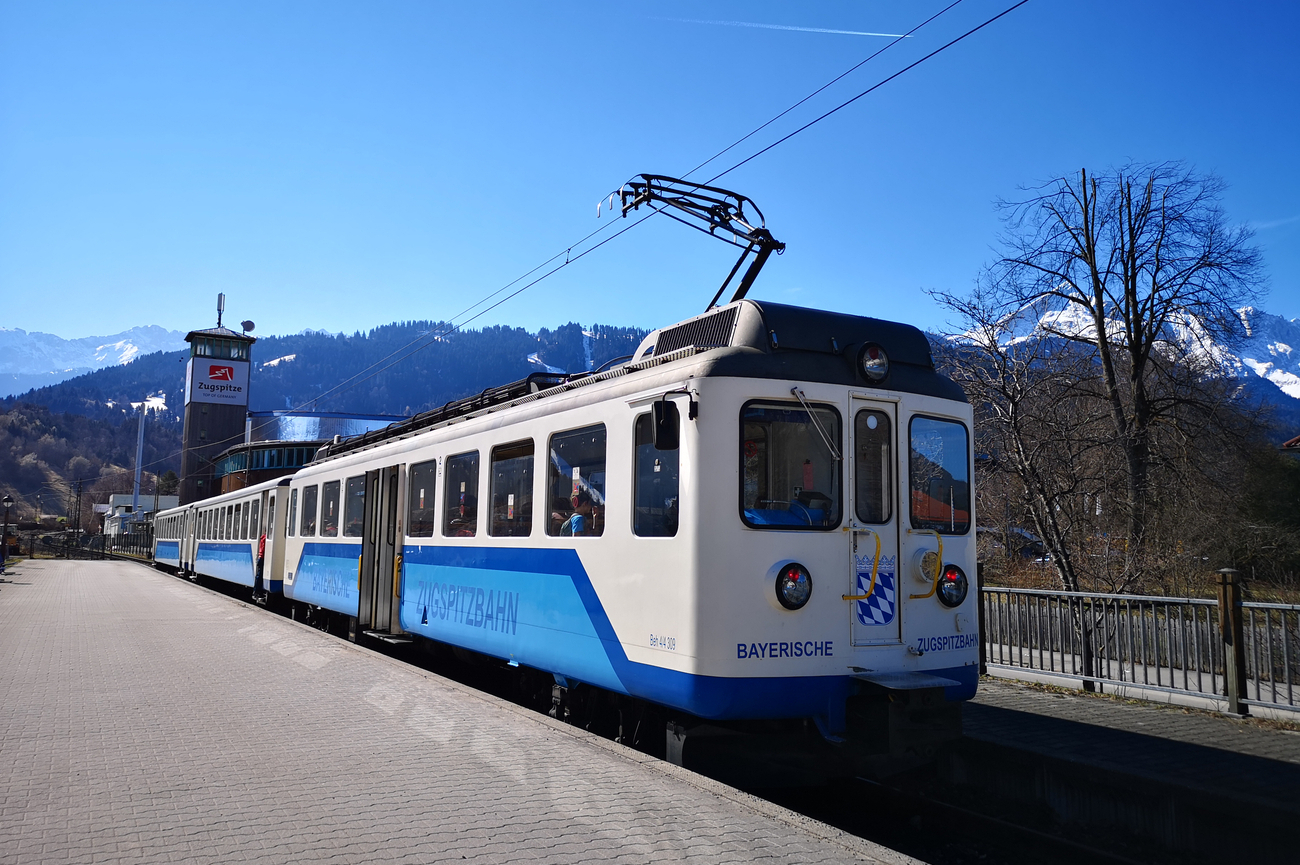
The best place to stay for the Zugspitze Railway depends on how you want to experience the mountain. Garmisch-Partenkirchen is the easiest base, with the widest choice of hotels and restaurants and direct access to the railway, while the Eibsee area is the premium choice for travellers who want lake views and a more secluded alpine setting.
Zugspitzplatt is a glacier plateau rather than a town, so there are no conventional hotels there. Most visitors stay below the mountain and use the railway, cable car or a combination of both to reach the glacier plateau and summit area.
Garmisch-Partenkirchen
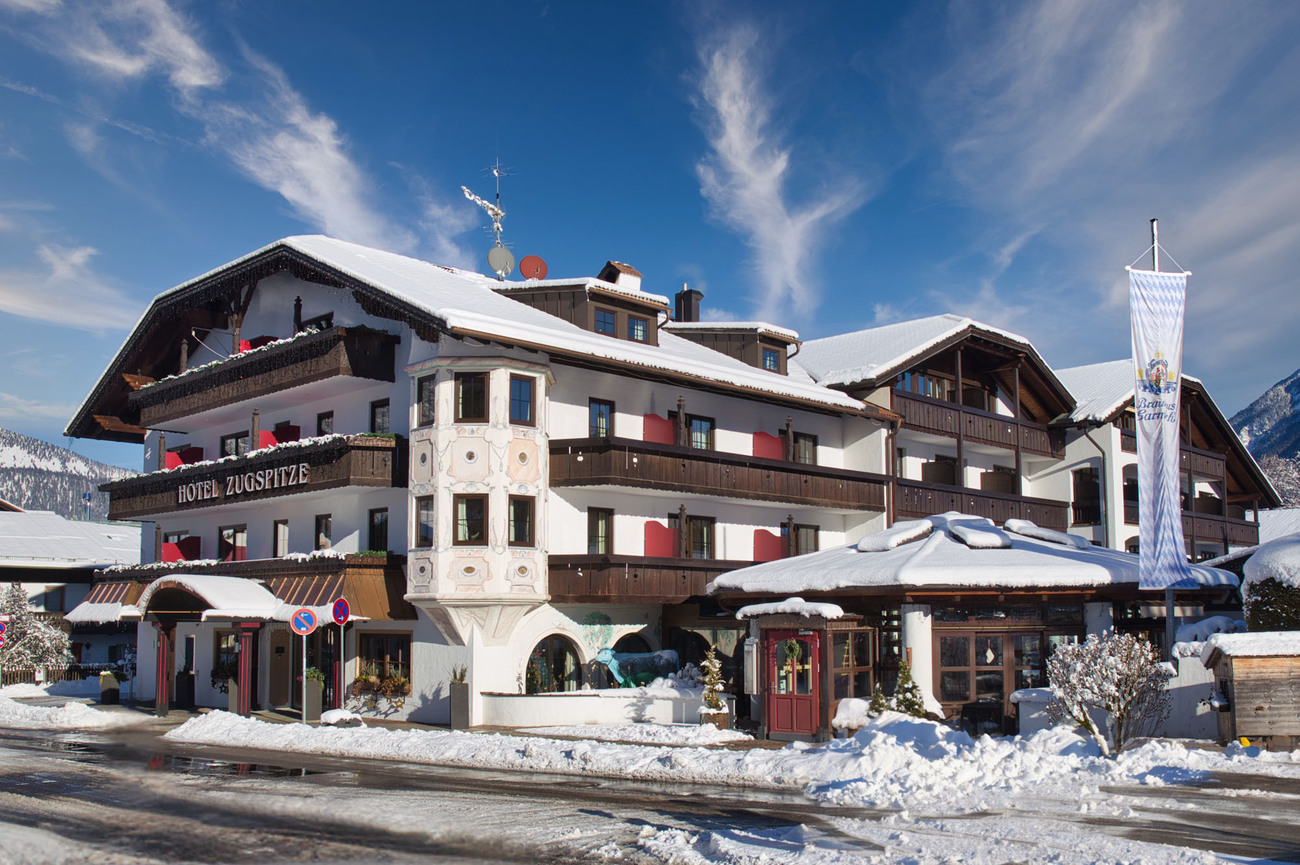
- Hotel Zugspitze (4-Star Superior): Hotel Zugspitze stands out for combining a central location in Garmisch-Partenkirchen with a distinctly alpine atmosphere. Its Bavarian-inspired design, comfortable rooms and full wellness area, including an indoor pool and spa, make it more than just a convenient place to sleep after a day in the mountains. You can reach restaurants, shops and local attractions easily, while the hotel still provides a relaxed retreat at the end of the day.
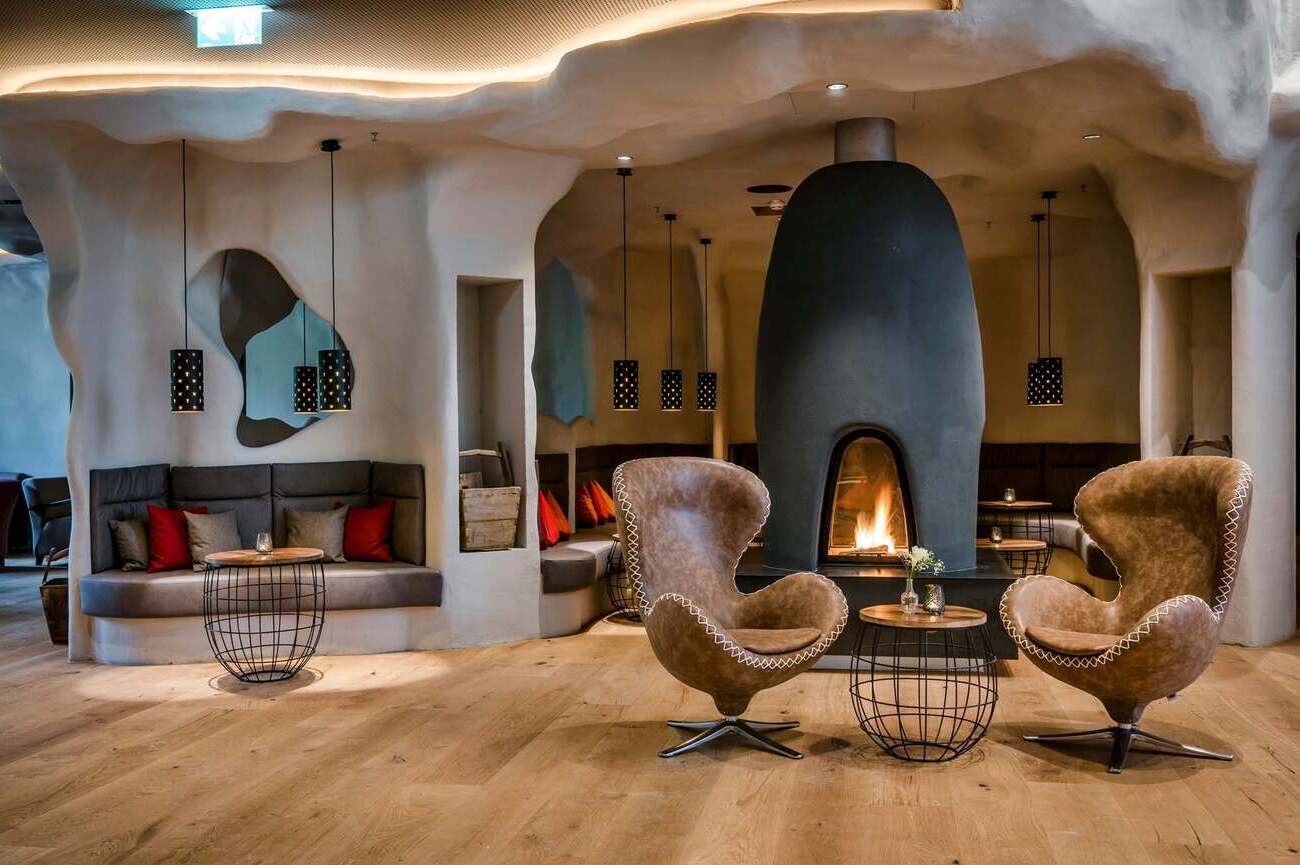
- Werdenfelserei (4 Stars): A family-run boutique hotel in Garmisch-Partenkirchen, Werdenfelserei is notable as Bavaria’s first solid-wood hotel. Its contemporary alpine studios and suites use warm natural materials, with balconies or terraces and mountain views, while some suites add fireplaces, private saunas or rooftop terraces. The two-level Himmel über Garmisch spa spans around 1,000 square metres and includes a rooftop infinity pool, saunas, steam bath and relaxation areas overlooking the Wetterstein Mountains. Regional dining at Wurzelwerk and the hotel’s location beside the spa gardens make it a strong choice for travellers combining the Zugspitze Railway with hiking, skiing or time in Garmisch-Partenkirchen.
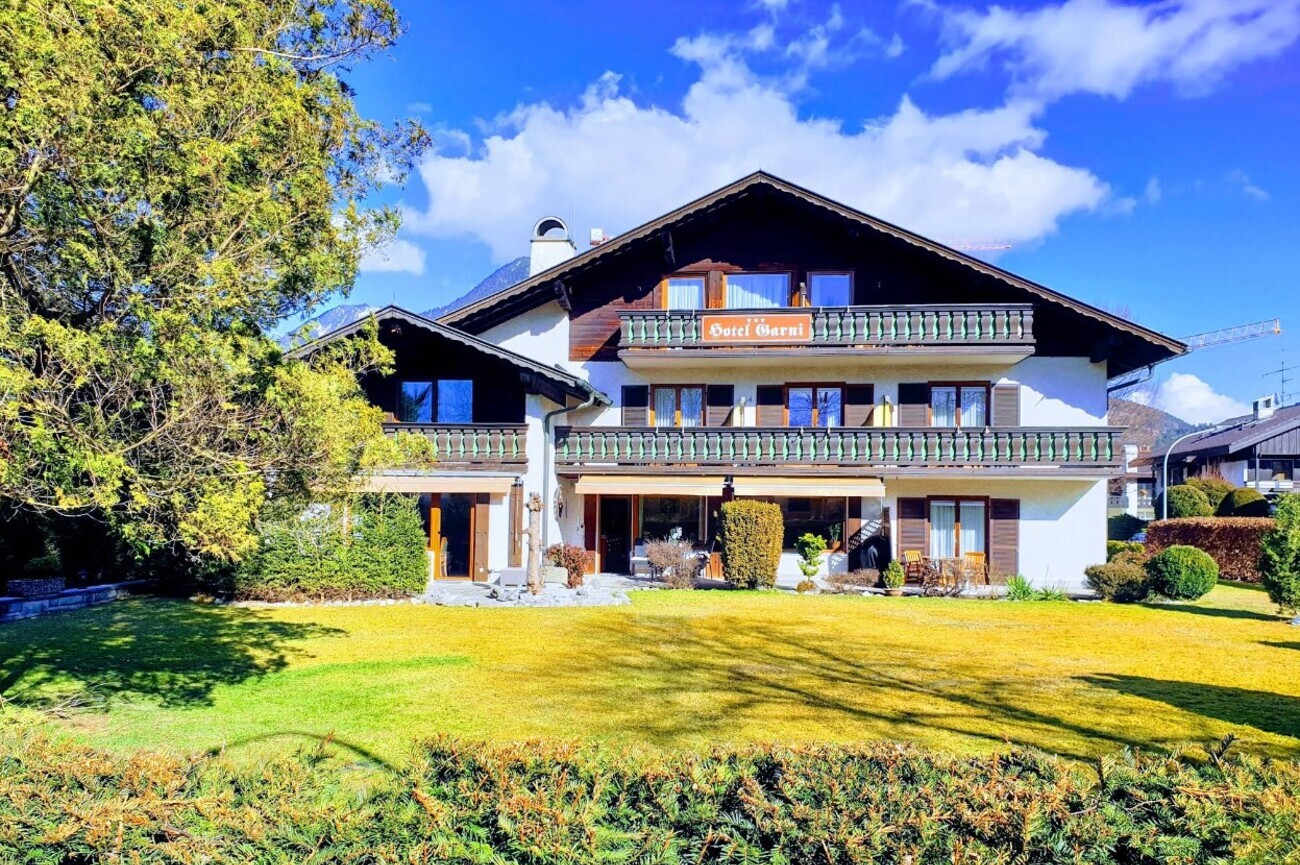
- Hotel Garni Brunnthaler (3 Stars): Hotel Garni Brunnthaler is a practical, more affordable option in Garmisch-Partenkirchen. It focuses on comfortable rooms, a convenient location and easy access to the town. It is a good choice if your priority is spending your time outside. You remain close to restaurants, the railway station and local attractions while keeping more of your budget available for mountain activities.
Eibsee and Grainau
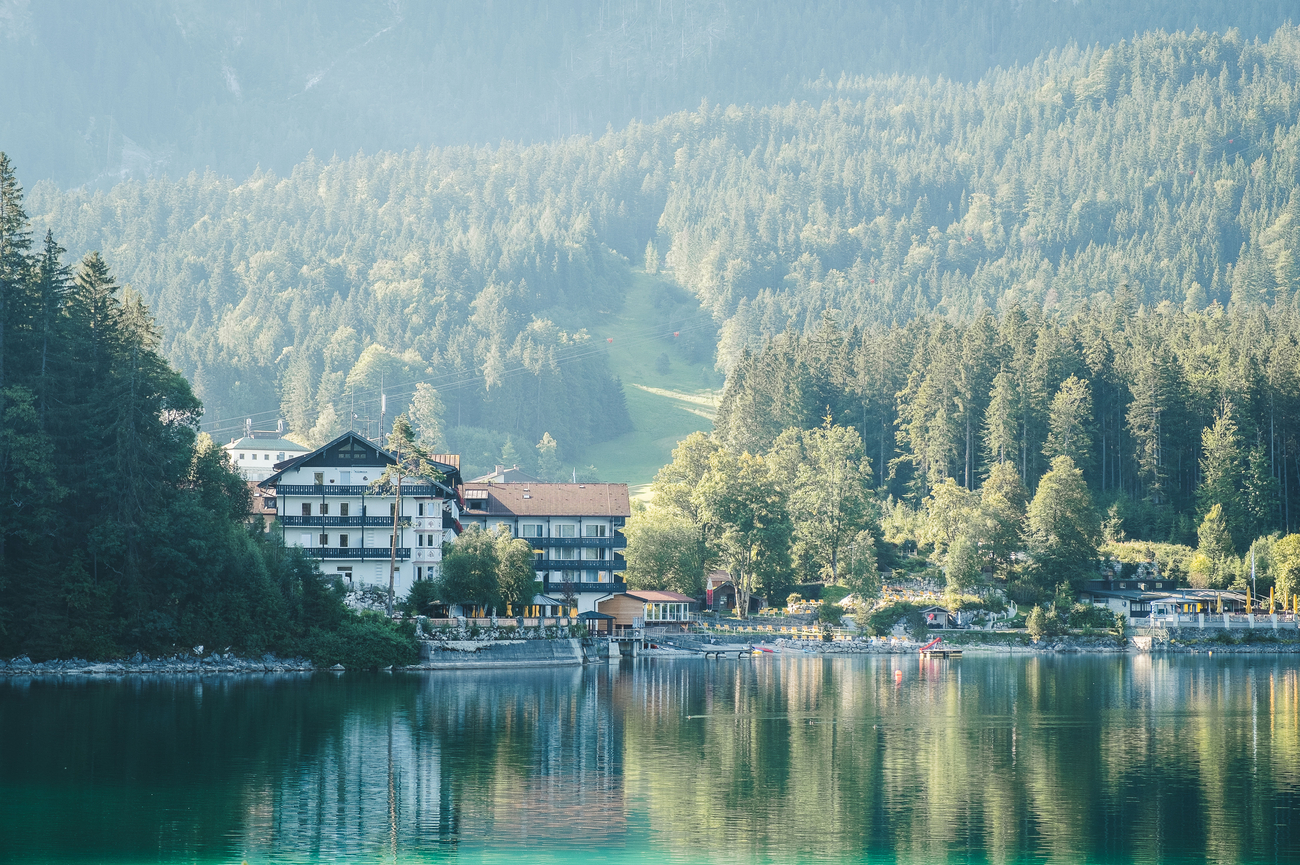
- Eibsee Hotel (4-Star Superior): Eibsee Hotel is the premium option in the Eibsee area. Its location directly beside the lake makes it stand out, with views of the Zugspitze, private lake access and a more secluded atmosphere than staying in Garmisch-Partenkirchen. Guests have immediate access to the shoreline and walking paths around the lake, while the rooms, restaurant and outdoor areas make the most of the mountain setting. A stay here pairs particularly well with a Zugspitze day using the railway and cable car.
- Hotel am Badersee (4 Stars): Hotel am Badersee is a comfortable four-star option in Grainau, close to Eibsee and the Zugspitze. The hotel is known for its peaceful forest setting, wellness facilities and mountain-focused atmosphere. It sits beside the small Badersee lake, offering a quieter setting than Eibsee while remaining close to the region’s main attractions. Its spa facilities, restaurant and views of the surrounding Wetterstein mountains make it a good choice for relaxing after a day of hiking or sightseeing.
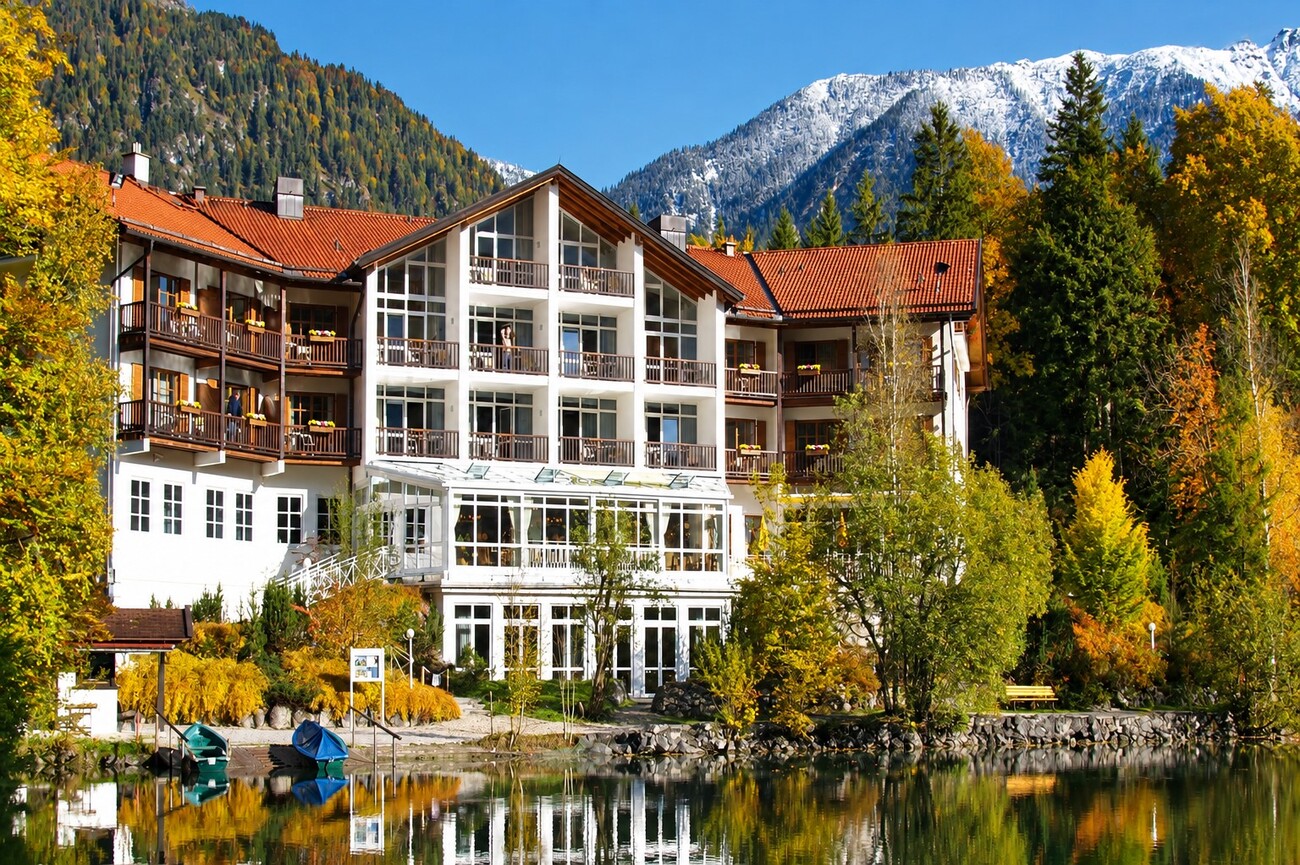
- Boutique Hotel Längenfelder Hof (4 Stars): This intimate hotel in Grainau has just 19 rooms and suites plus four country-style apartments, combining contemporary alpine design with natural materials such as Swiss stone pine and oak. The wellness area includes a panoramic indoor pool, Finnish sauna, outdoor bio sauna, infrared loungers and relaxation spaces, all with views towards the Wetterstein Mountains. A regional alpine breakfast, quiet garden setting and easy access to hiking, skiing and the Zugspitze make it a particularly good choice for a peaceful stay near Garmisch-Partenkirchen.
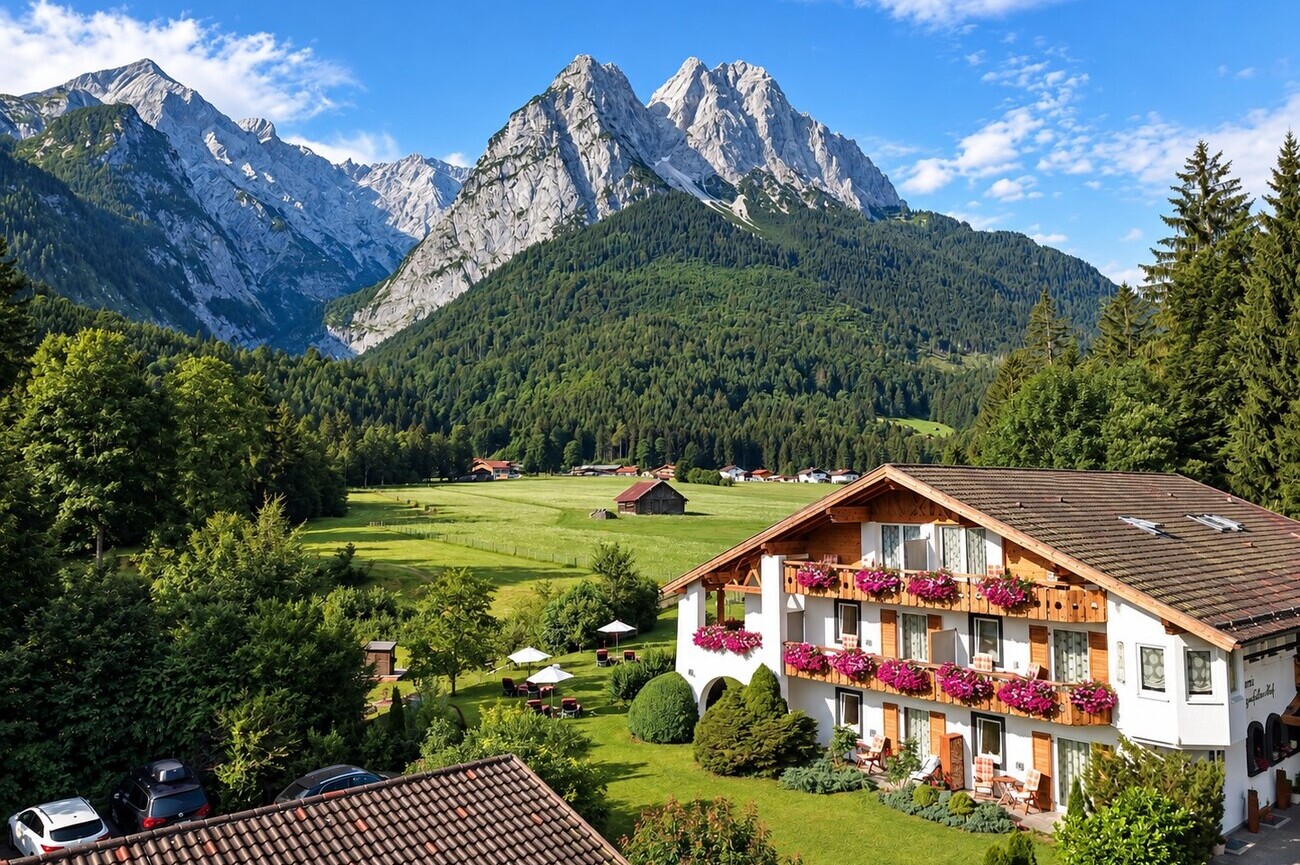
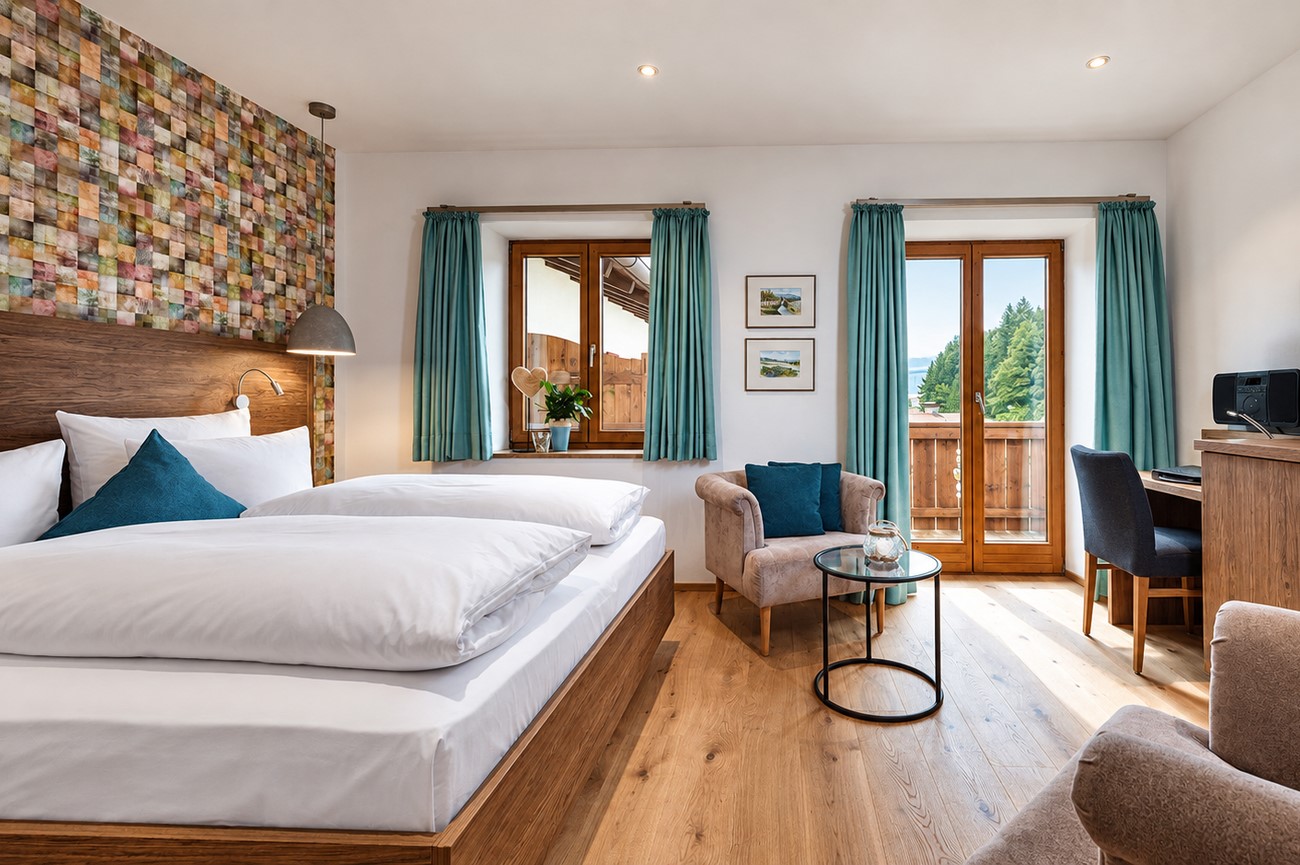
- Bayern Resort Hotel (4 Stars): Set on a small hillside in Grainau with views towards the Zugspitze, this adults-only hotel is designed for a quiet alpine stay close to both the Eibsee and Garmisch-Partenkirchen. The AlpenOase wellness area includes a Finnish sauna, aroma steam bath, infrared relaxation loungers and a panoramic terrace, while the natural outdoor pool is open from spring to autumn. The hotel is within walking distance of the centre of Grainau and the Zugspitzbahn, making it particularly convenient for trips to the Eibsee and Zugspitze.
Where To Eat Along the Zugspitze Railway
Food around the Zugspitze is less about chasing a long restaurant list and more about finding the right setting. Whether you want a proper Bavarian meal, a relaxed lakeside lunch or something warm after reaching the glacier plateau, these stops give you a good mix of local flavour and memorable locations. Garmisch-Partenkirchen offers the widest range of restaurants, while Eibsee and Zugspitzplatt are more about convenient places to eat with standout mountain views. Plan your meals around your route.
Garmisch-Partenkirchen
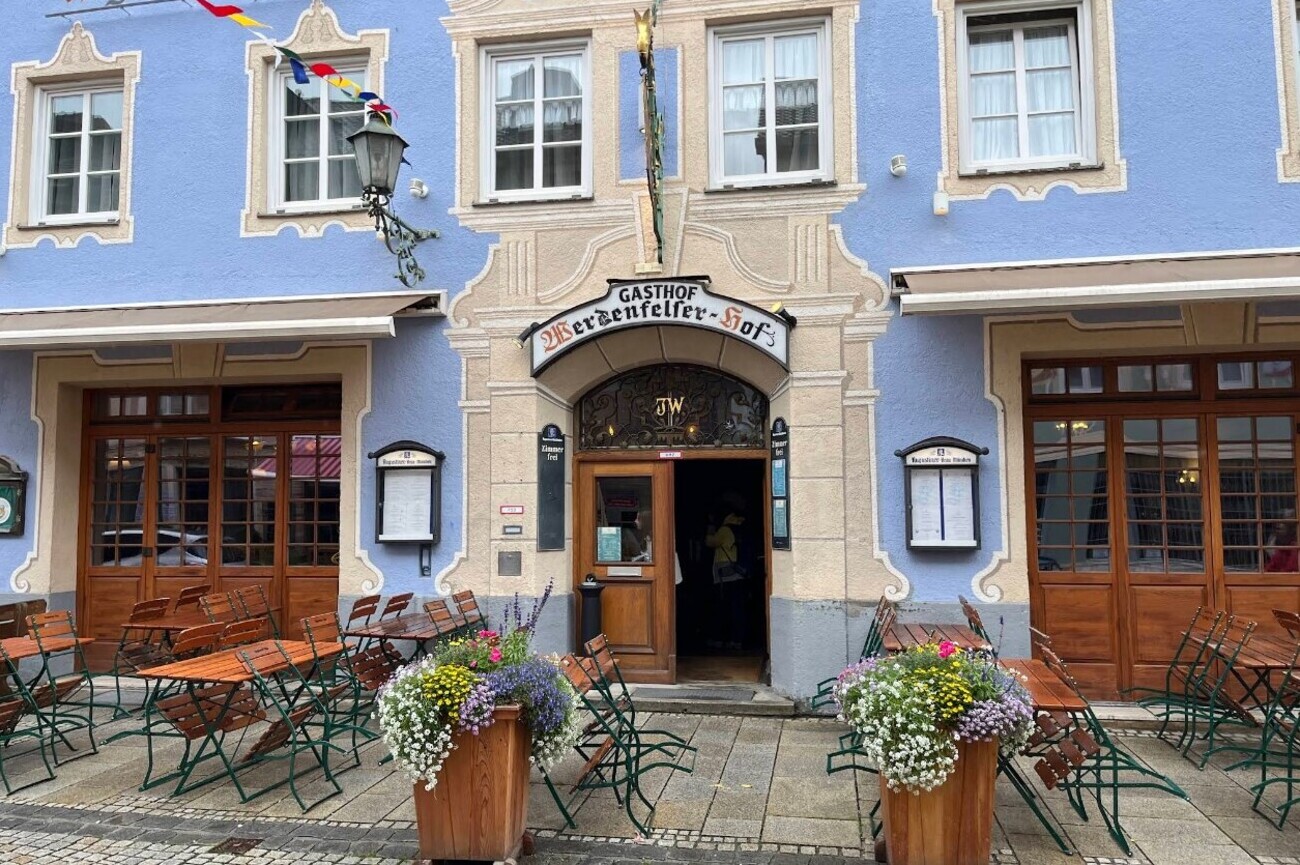
- Werdenfelser Hof is one of the classic places to try traditional Bavarian food in Garmisch-Partenkirchen. The restaurant focuses on regional dishes such as schnitzel, roast pork, dumplings and seasonal specialities. It is casual but traditional, with a cosy interior that fits the town’s alpine character. After a day on the Zugspitze Railway or exploring Partnach Gorge, this is the kind of place where you can settle in for a proper Bavarian dinner without overcomplicating things.
- Zum Wildschütz is a popular choice for classic Bavarian comfort food. The restaurant is known for hearty portions, local specialities and a traditional atmosphere that feels connected to the region. You can expect dishes such as game specialities, Bavarian favourites and regional beers. It is a reliable stop if you want a straightforward local meal before or after taking the railway up the mountain.
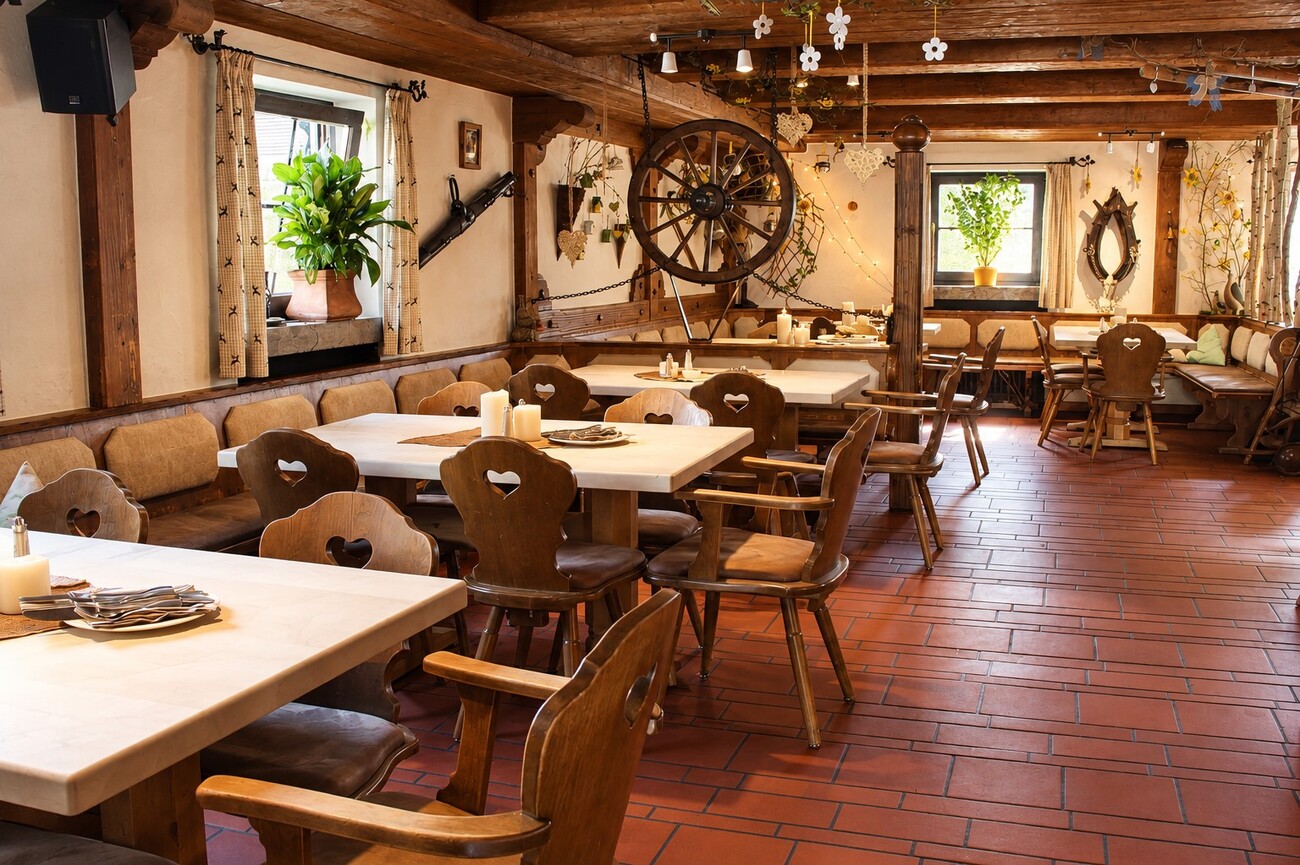
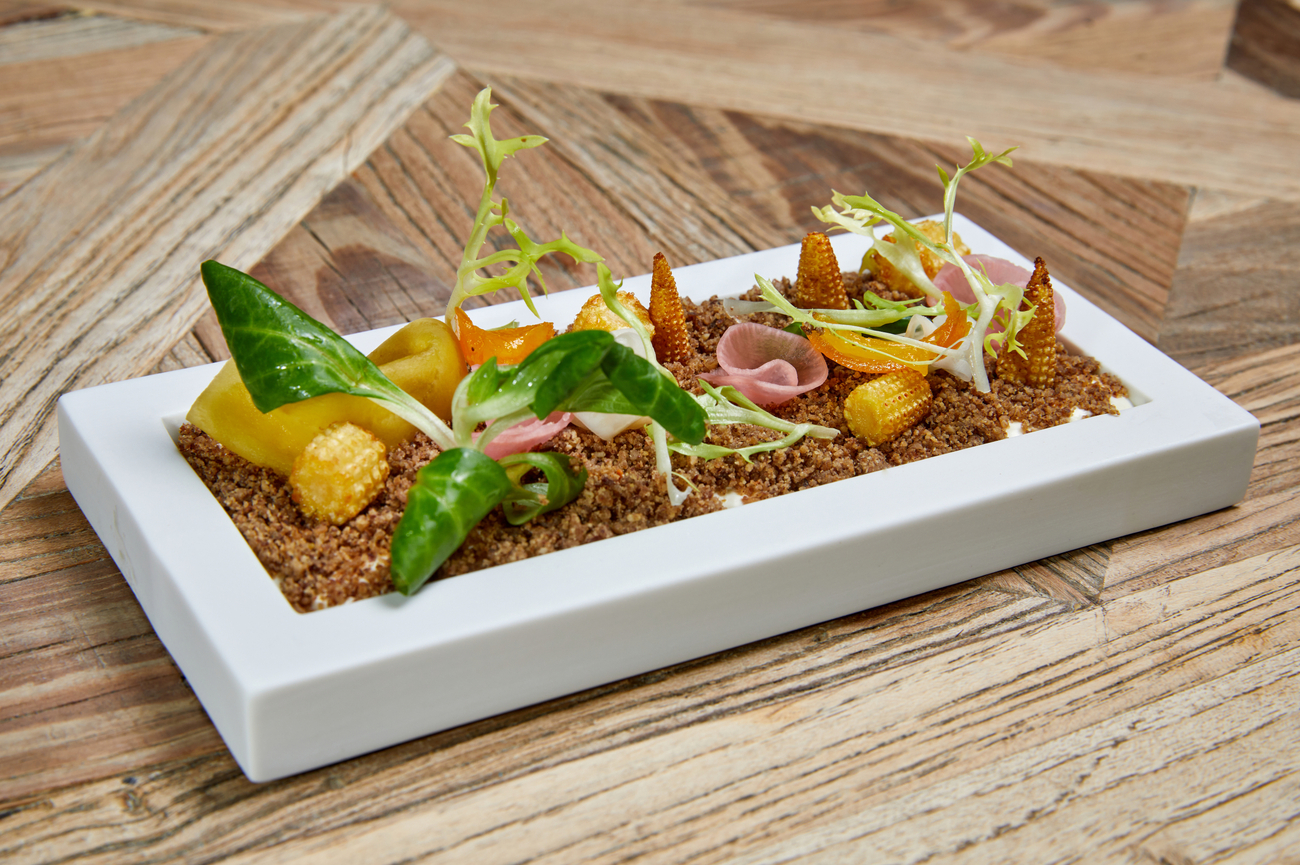
- 4Eck Restaurant: 4Eck Restaurant is a modern dining spot in Garmisch-Partenkirchen known for its creative, seasonal menu, stylish interior and relaxed atmosphere. It suits travellers looking for a more contemporary meal after visiting Eibsee, exploring the surrounding mountain trails or spending the day on the Zugspitze.
Eibsee
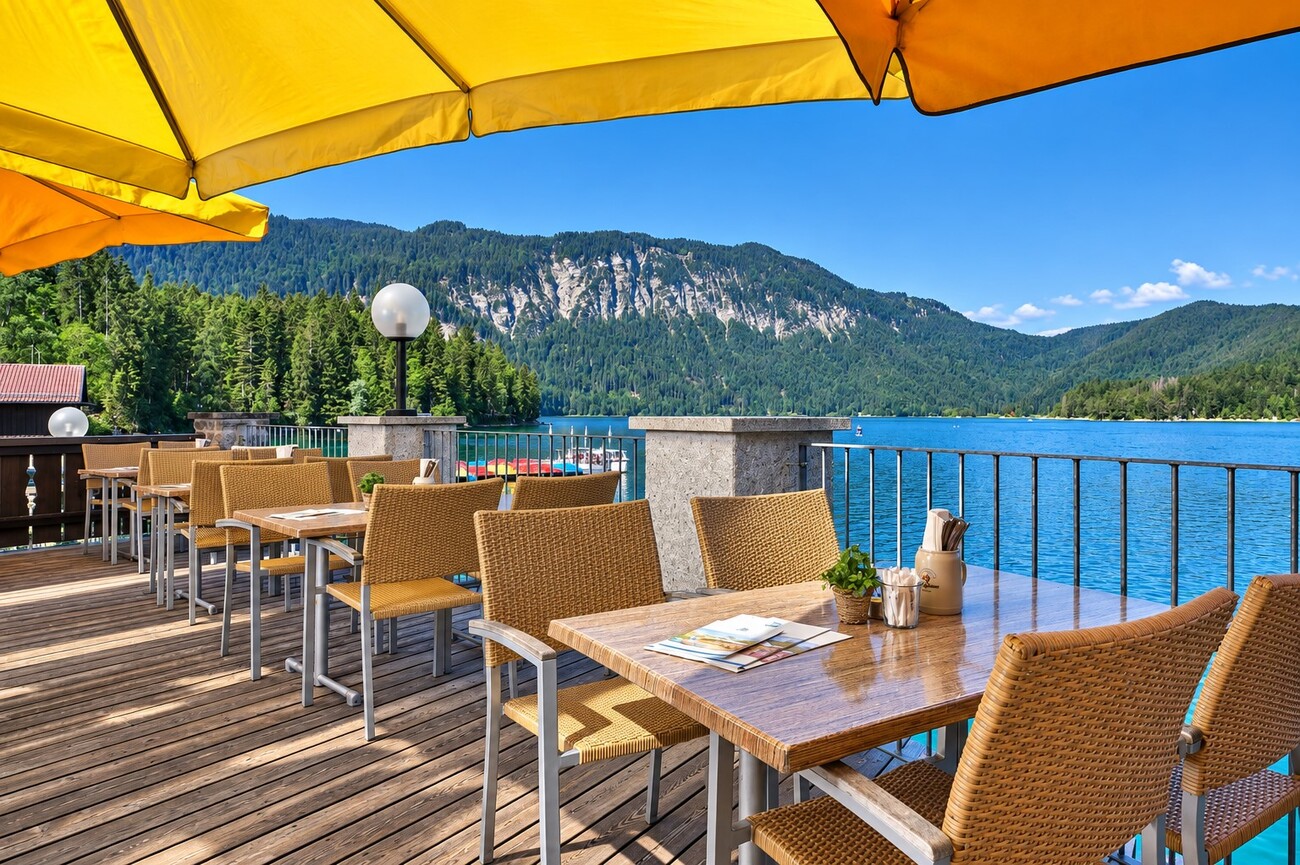
- Eibsee Pavillon: Located near Lake Eibsee, Eibsee Pavillon is one of the easiest places to eat when exploring the lake and Zugspitze area. The restaurant offers relaxed Bavarian dining with views of the lake and surrounding mountains. Cheese spätzle makes a comforting choice after walking around the lake, while roast pork with beer sauce is another hearty option.
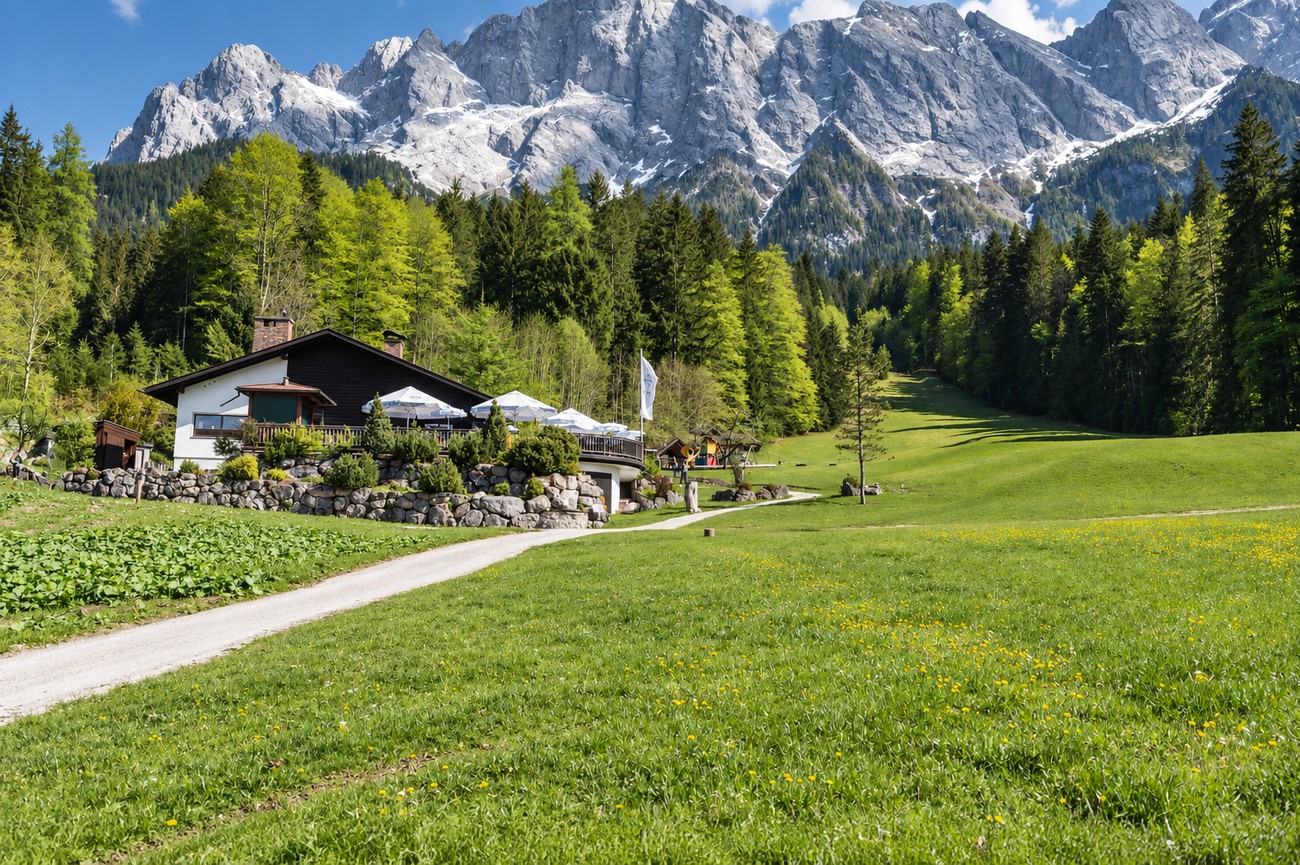
- Eibsee-Alm (Eibsee Hotel): Set above Lake Eibsee, around a 10-minute walk from the hotel, Eibsee-Alm serves traditional Bavarian cuisine in a rustic mountain setting. The menu includes hearty Brotzeit platters and regional specialities, while a log fire adds to the cosy alpine atmosphere inside. Its location near the Zugspitze cable car makes it a convenient stop for hikers and visitors exploring the Eibsee and Zugspitze.
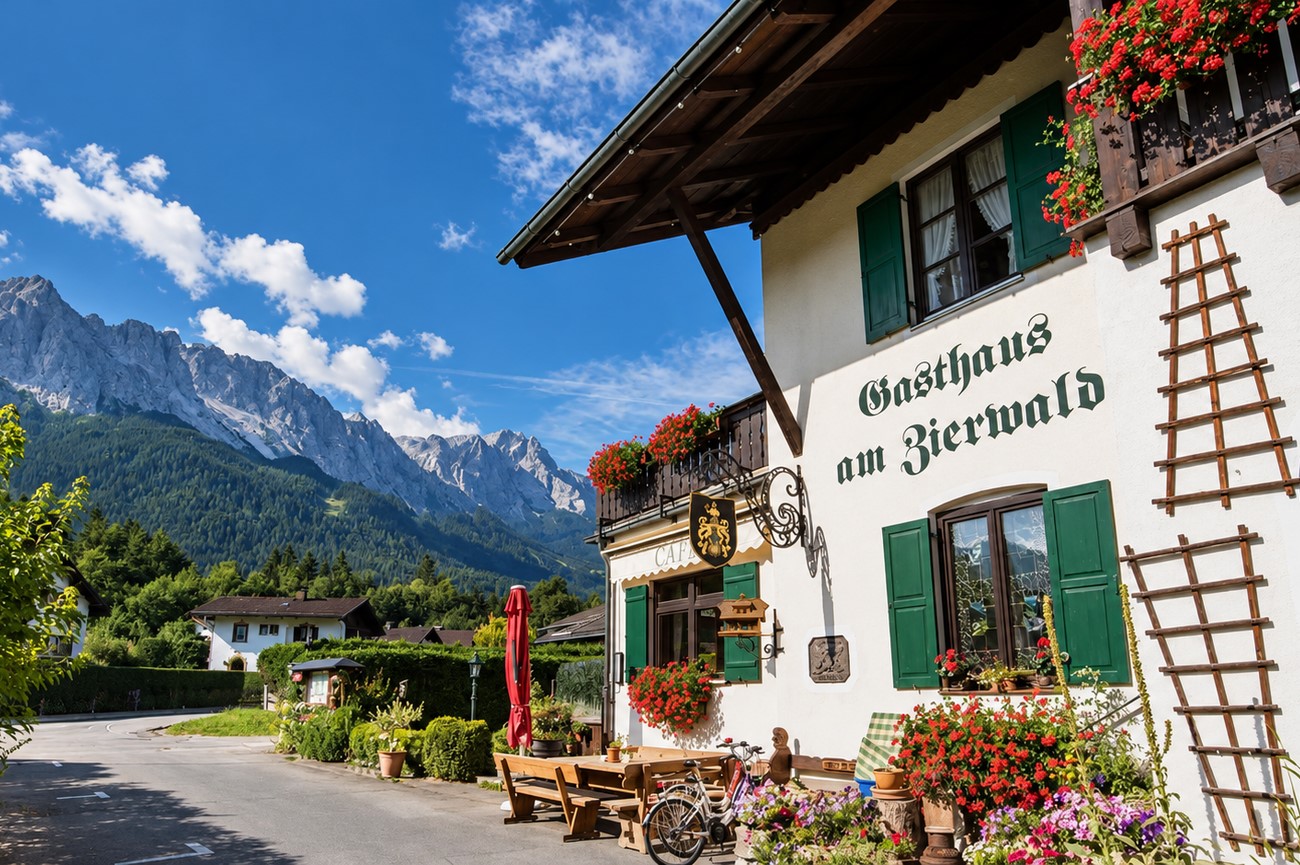
- Gasthaus am Zierwald is a smaller local restaurant offering traditional regional dishes in a relaxed village setting. The menu focuses on hearty cooking, including Swabian specialities, soups and local-style dishes. Its homemade goulash soup is a particularly good choice. It is the type of place to visit when you want a substantial meal away from the busier tourist areas.
Zugspitzplatt
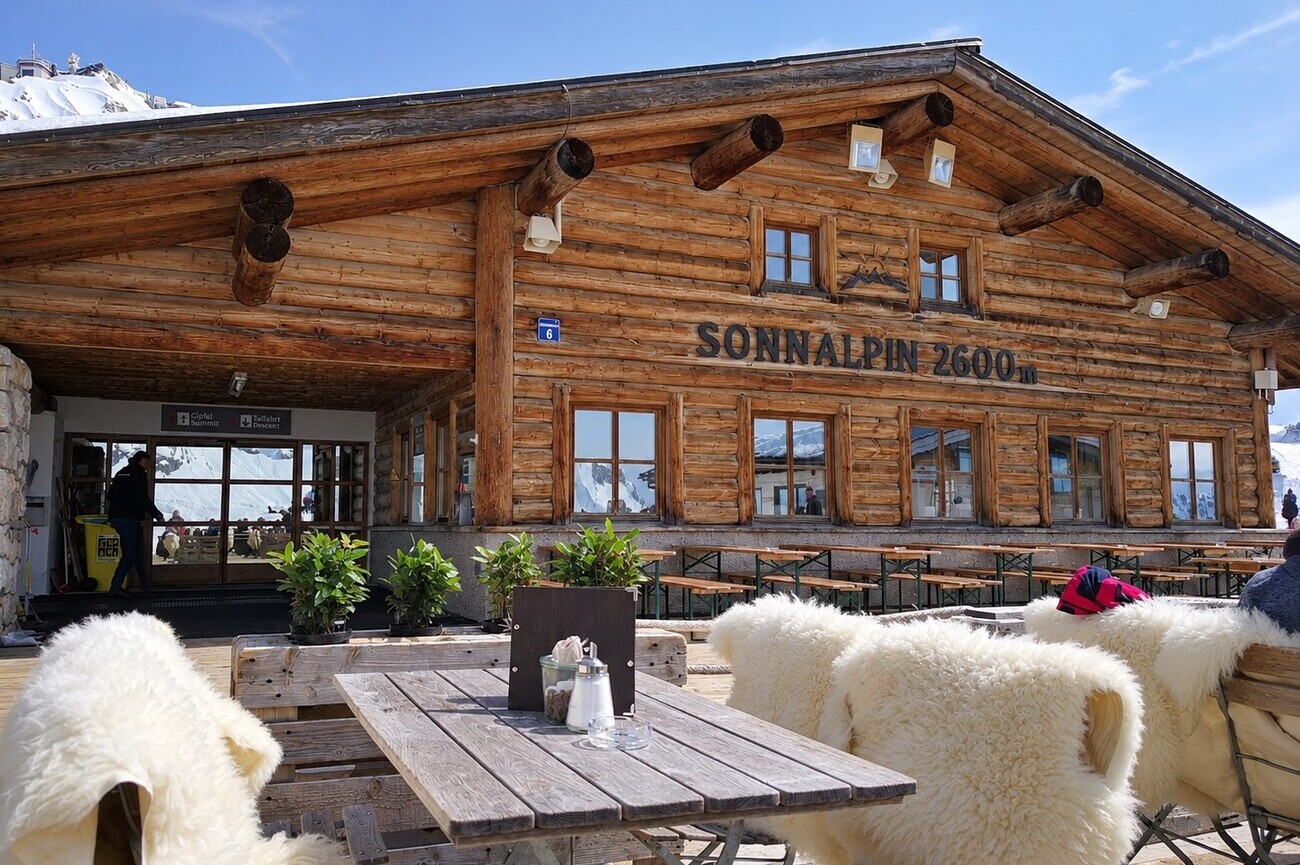
- Gletscherrestaurant Sonnalpin is a self-service restaurant on the Zugspitzplatt and one of the most convenient places to eat after arriving by the Zugspitze Railway. Located beside the glacier, it offers Bavarian dishes, international specialities and vegetarian options alongside views of the surrounding mountains. It is a practical choice for a warm lunch, snack or drink before continuing to the Zugspitze summit.
Zugspitze
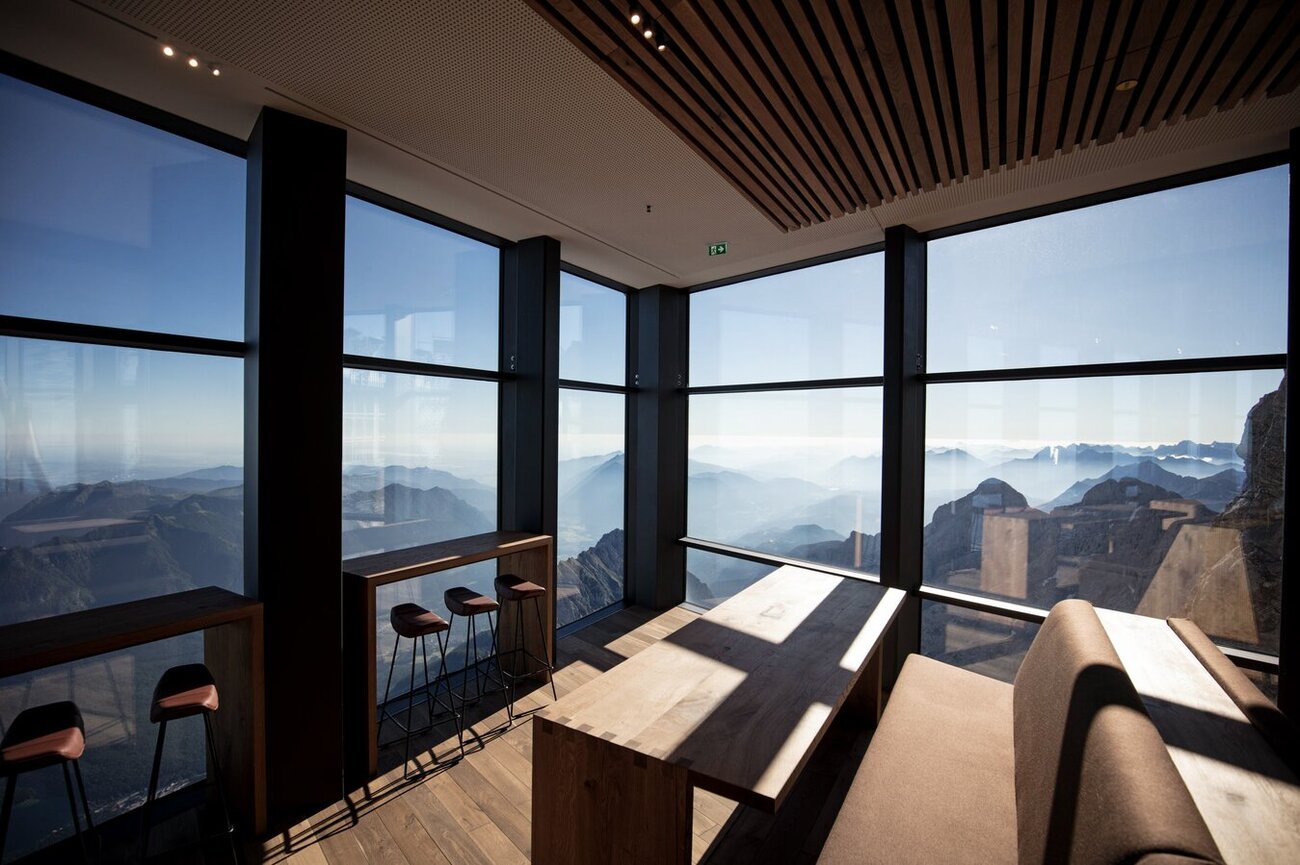
- Panorama 2962: Located at the Zugspitze summit station, almost 3,000 metres above sea level, Panorama 2962 pairs Alpine cuisine with exceptional mountain views. The menu draws on specialities from Germany, Austria, Switzerland and Italy, while the restaurant's panoramic windows and terrace offer 360-degree views across around 400 peaks in four countries.
Other Things To Do Along the Zugspitze Railway
The Zugspitze Railway is more than a way to reach Germany’s highest mountain. The stops along the route open up a mix of outdoor activities, scenic viewpoints and alpine experiences worth adding to your itinerary. You can keep things simple with a walk around a lake or go further with guided mountain tours and longer hiking routes through the Wetterstein Alps.
Garmisch-Partenkirchen
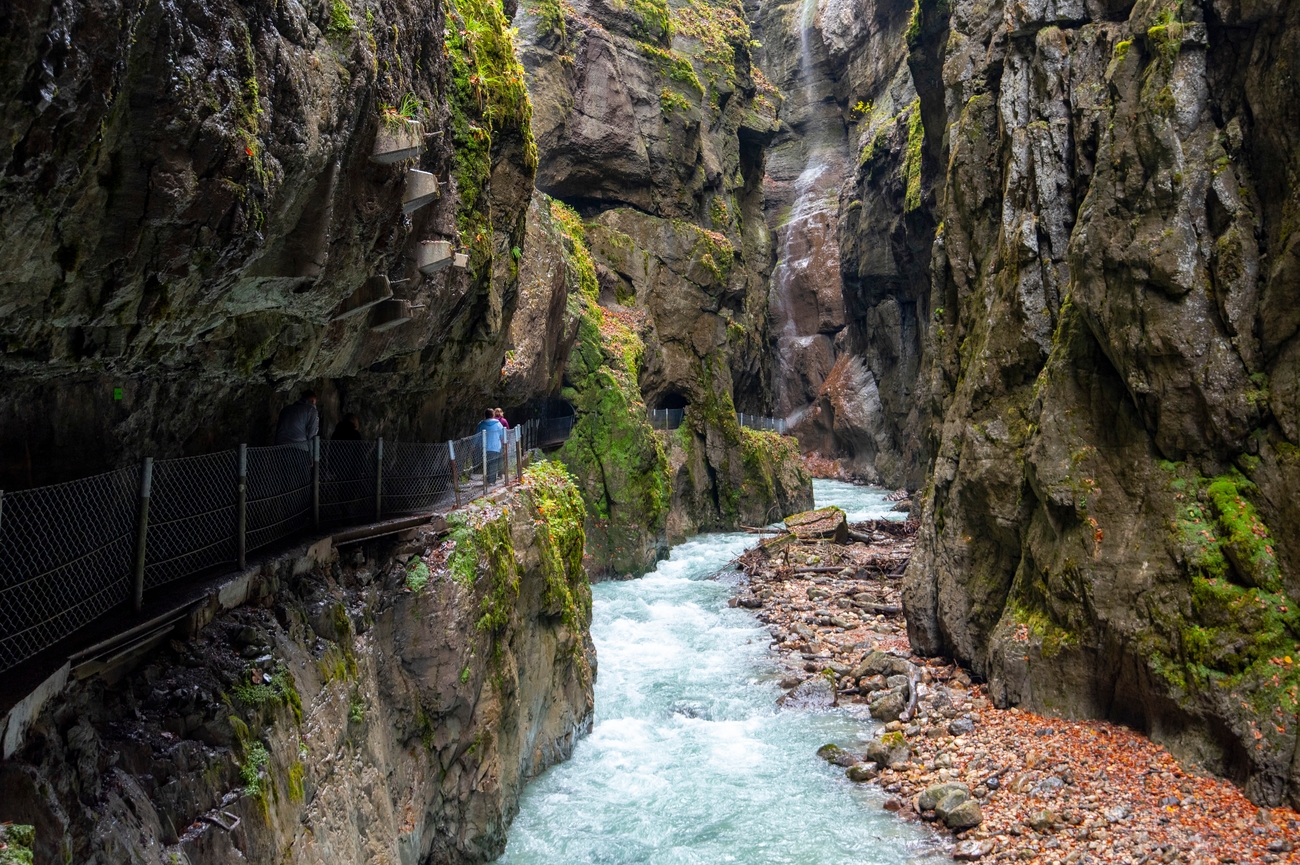
- Explore Partnach Gorge: Partnach Gorge is one of Garmisch-Partenkirchen’s most popular natural attractions and an easy addition before or after your Zugspitze Railway trip. The 700-metre-long gorge features narrow paths, tunnels and walkways alongside the rushing Partnach River, with steep rock walls rising above you. Guided hiking tours can also combine the gorge with nearby alpine trails.
- Ride the Alpspitzbahn and Visit AlpspiX: The Alpspitzbahn cable car takes you towards the Alpspitze mountain, where the famous AlpspiX viewing platform extends over the mountain edge. Two steel walkways create a dramatic viewpoint overlooking the valley and surrounding peaks. You can visit as a half-day activity or combine it with hiking routes around Osterfelderkopf.
Eibsee
- Walk Around Lake Eibsee: Lake Eibsee is one of the easiest and most rewarding activities near the Zugspitze Railway. The circular trail takes around two hours and offers changing views of turquoise water, small islands, forests and the Zugspitze rising above the shoreline. Guided nature walks are also available, while sunrise and quieter evening hours are particularly attractive when the lake is less crowded.
- Take the Zugspitze Cable Car: The Zugspitze Cable Car from Eibsee is one of the fastest ways to reach the summit area. The ride climbs from the lake towards the Zugspitze summit, with large glass windows providing wide views of the Alps during the ascent. You can combine the cable car with the Zugspitze Railway for a round-trip mountain experience, travelling up one way and returning by the other.
Zugspitzplatt
- Explore the Zugspitze Glacier Plateau: Zugspitzplatt is where the railway journey reaches its highest point, arriving at the glacier plateau beneath the summit. Here you can walk through the high alpine landscape, visit the glacier area and experience terrain that feels completely different from the green valleys below. No advanced mountaineering skills are required for the main visitor areas, although conditions vary considerably with the season and weather.
- Visit the Zugspitze Summit and Viewing Platforms: From Zugspitzplatt, you can continue to the summit area at 2,962 metres using the Gletscherbahn cable car. The summit platforms provide panoramic views across the Alps and, on clear days, towards Germany, Austria, Switzerland and Italy. Combining the railway, glacier plateau and summit makes an easy full-day excursion, particularly if you want time to explore without rushing between connections.
Planning a Zugspitze Railway
Journey?
If you want to include the Zugspitze Railway as part of a wider trip through the Bavarian Alps, Revigorate can build it into a tailor-made Germany vacation, combining Munich, Garmisch-Partenkirchen and the mountain experiences that are most worth your time.

Let us know what you love, where you want to go, and we’ll design a one-of-a-kind adventure you’ll never forget.
Get in touch
Miriam
Travel Specialist

Romina
Travel Specialist

Laura
Travel Specialist
Frequently Asked Questions
-
Do you need to reserve a specific train on the Zugspitze Railway?
No. A regular online Zugspitze Ticket does not include a seat reservation or bind you to a specific departure time. It is valid for the booked day, although busy periods can still involve waiting. The Early Bird train is an exception because it is tied to a specific departure.
-
Can you get off at intermediate stations and continue later on the same Zugspitze ticket?
Yes, you can break your journey at an intermediate station such as Grainau or Eibsee and continue later on the same day, provided you remain within the ticket’s one-ascent/one-descent conditions. The standard Zugspitze Ticket is day-specific, so it cannot normally be used to stay overnight and resume the journey the following day.
-
Is there anywhere to store luggage at Garmisch-Partenkirchen or Eibsee station?
There are luggage lockers at the main Deutsche Bahn station in Garmisch-Partenkirchen, a short walk from the Zugspitzbahn station. No general luggage lockers are currently advertised at Eibsee station, so it is better to leave larger bags in Garmisch-Partenkirchen before heading up the mountain.
-
What happens if the Zugspitze Railway is cancelled because of bad weather?
If weather makes safe operation impossible, services can be suspended until conditions allow them to resume. Check the live operating information before travelling. Standard tickets are not refundable or rebookable simply because bad weather is forecast; if the operator actually suspends or cancels a service, ask station staff about the options available for your ticket.
-
Can you bring your own food and drinks on the Zugspitze Railway?
Yes. You can bring ordinary food and drinks with you. Keep bags and containers compact, avoid obstructing seats or aisles and take any rubbish with you. There are also places to eat at Eibsee, Zugspitzplatt and the Zugspitze summit.
-
Is the Zugspitze Railway suitable for children?
Yes. The cogwheel railway is an easy way for families to reach the Zugspitze without a demanding mountain hike. Children under six travel free when accompanied by a parent or guardian, with child and youth fares available for older children. Families using a pushchair should note that the cogwheel train has steps and limited space.
-
Is the Zugspitze Railway accessible for wheelchair users and travellers with limited mobility?
Not fully. The cogwheel train is not barrier-free because the older vehicles have steps at the entrances and limited space for wheelchairs and walkers. Wheelchair users are advised to use the Zugspitze Cable Car from Eibsee and the Gletscherbahn, both of which are barrier-free.
-
Are dogs allowed on the Zugspitze Railway and cable cars?
Yes. Dogs are allowed on the cogwheel train and the Bayerische Zugspitzbahn cable cars. A dog ticket currently costs €8. A muzzle is not compulsory, although the operator recommends one in the cogwheel train and larger cable car cabins out of consideration for other passengers.
-
Can you take luggage, pushchairs or ski equipment on the Zugspitze Railway?
Normal hand luggage and ski equipment can be carried provided they can be stored safely and do not obstruct other passengers. Pushchairs are much less practical on the cogwheel train because of the stepped entrances and limited space; the Zugspitze Cable Car and Gletscherbahn are better suited to pushchairs. Contact the operator in advance if you need to transport oversized luggage or freight.
-
Can Revigorate arrange hotels, rail tickets and private transfers for a Zugspitze Railway trip?
Yes. Revigorate can include the Zugspitze Railway in a tailor-made Germany vacation and arrange accommodation, rail and mountain transport tickets, private transfers and the wider itinerary, including stays in Munich and Garmisch-Partenkirchen.
Our offices:


Revigorate, Iberian Escapes and Algarve Lifestyle are the registered brand names of APCS Lda . We are a fully authorised travel agency licensed by Turismo de Portugal RNAVT/6867.
In the event of a dispute, the consumer may refer to: RAL - Centros de Arbitragem
Avª. 5 de Outubro, nº. 55, R/C Dtº. 8000-075 Faro, Portugal | Tel: +351 289 823 135 *
* national landline call
E-mail: info@consumoalgarve.pt| www.consumidoronline.pt | Mon to Fri: 9:00 - 13:00 / 14:00 - 17:00