Schafberg Railway: The 35-Minute Alpine Train Ride Above Lake
Wolfgangsee

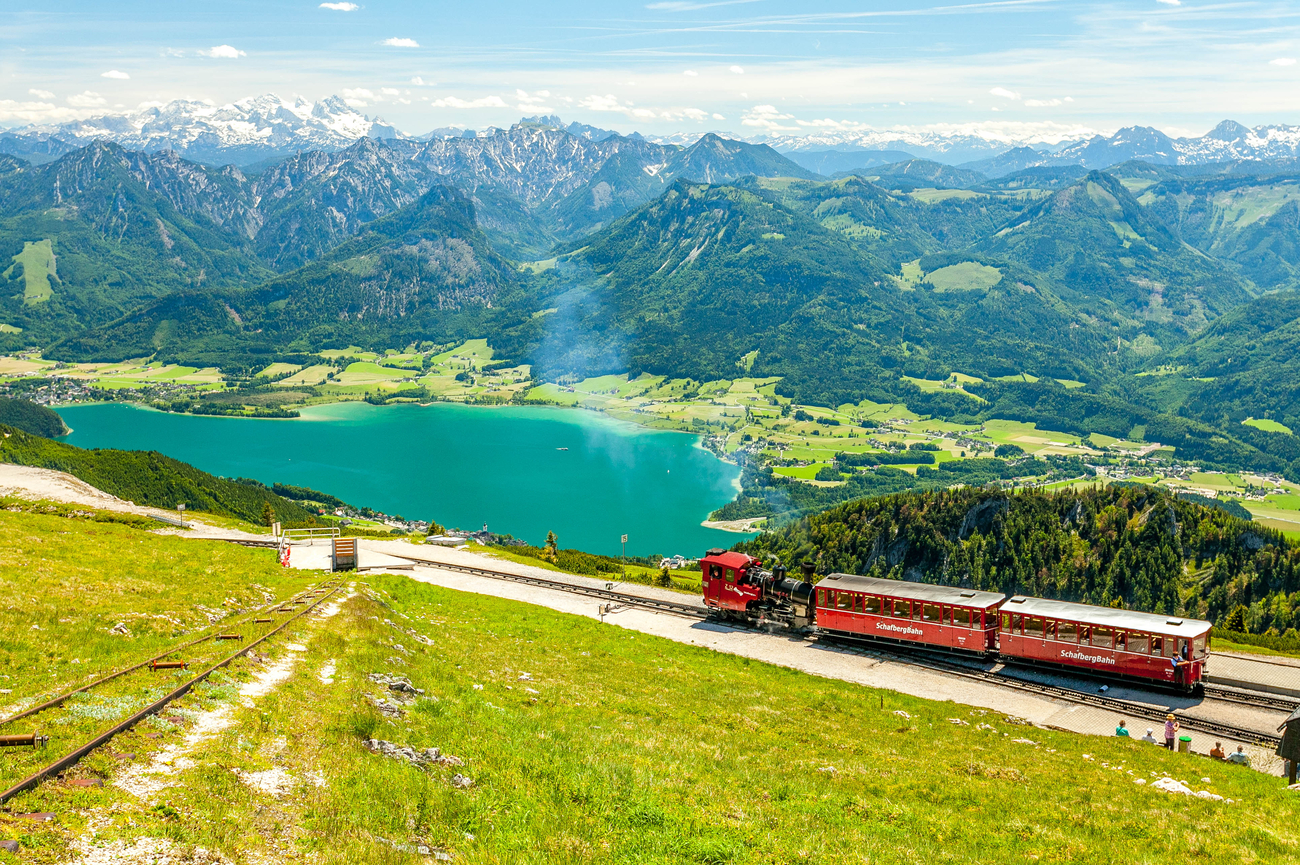
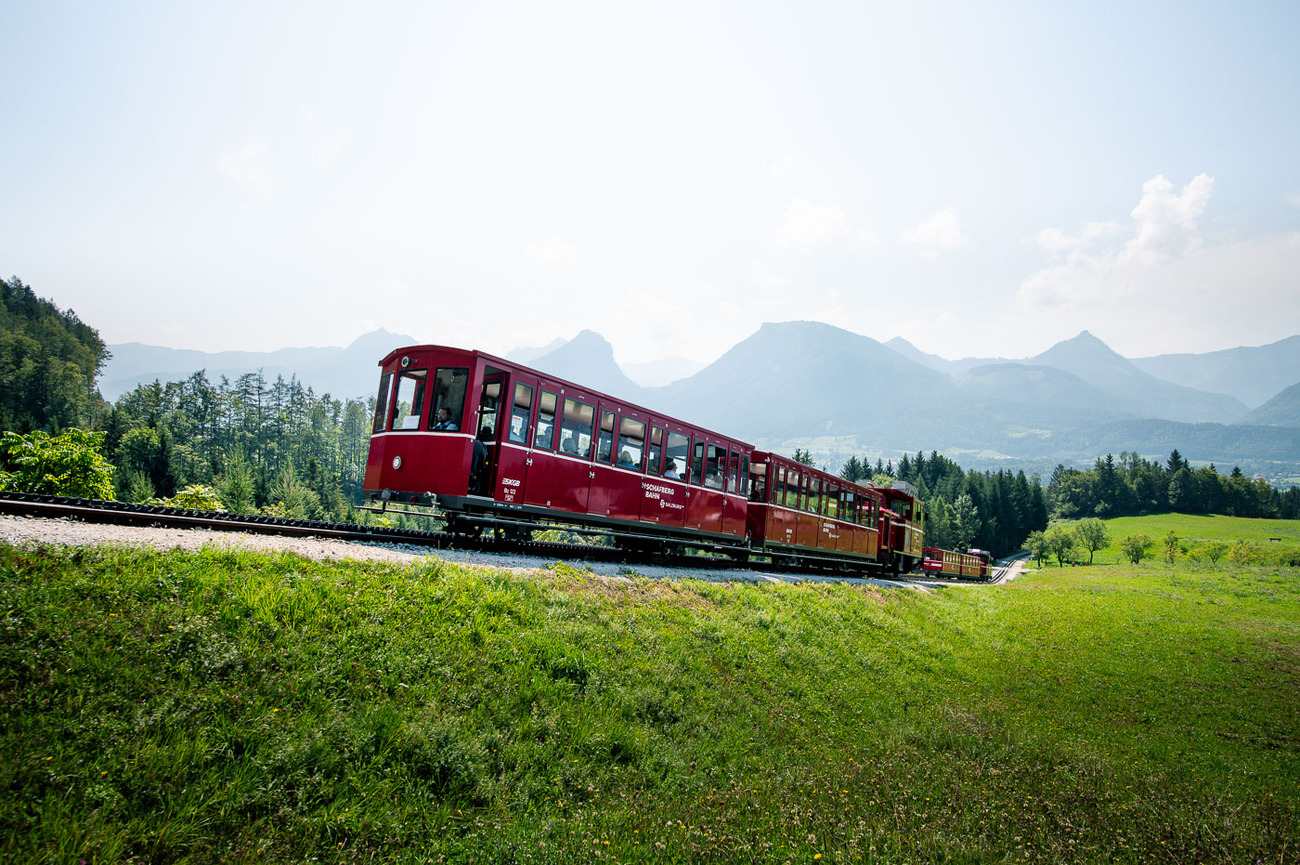
The Schafberg Railway, known locally as the SchafbergBahn, is a historic cogwheel railway in Austria’s Salzkammergut region. It climbs from St. Wolfgang on the shore of Lake Wolfgangsee to Schafbergspitze, just below the summit of Schafberg Mountain. The 5.85-kilometre journey takes around 35 minutes and rises from the lakeside into high alpine terrain.
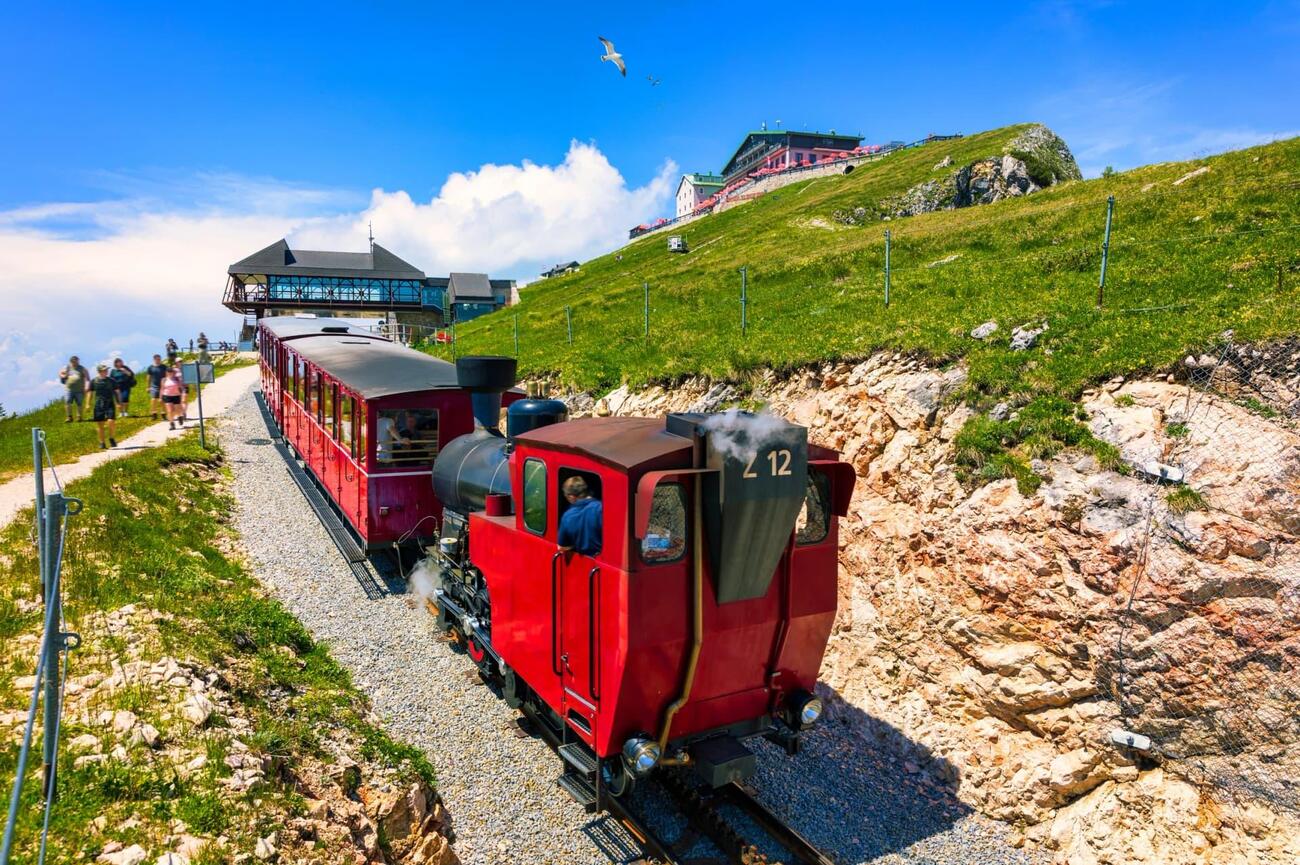
Opened in 1893, the railway uses a rack-and-pinion system to handle gradients that would be too steep for a conventional train. Both modern trains and historic steam locomotives operate on the route, making the journey part scenic excursion and part living railway heritage.
As the train climbs, views of Lake Wolfgangsee appear between the trees before the landscape opens above the forest into broad mountain scenery. At Schafbergspitze, the railway reaches 1,732 metres above sea level, with the 1,783-metre summit nearby. On clear days, the views extend across the lakes and peaks of the Salzkammergut and towards the Dachstein Alps.
The Schafberg Railway is short, but the rapid change from lakeside village to exposed alpine summit gives the journey its character. It is one of Austria’s most distinctive mountain railway experiences, combining historic engineering with some of the best elevated views in the region.
Schafberg Railway Itinerary
The Schafberg Railway follows a short but dramatic 5.85-kilometre route from St. Wolfgang on the shore of Lake Wolfgangsee to Schafbergspitze, high above the Salzkammergut. The journey takes around 35 minutes and climbs roughly 1,190 metres, passing through meadows, forest and increasingly exposed alpine terrain before reaching the upper station at 1,732 metres.
Although there are only a few key points along the line, each marks a noticeable shift in the journey's character. The lower section feels closely connected to the lake and village, while the middle reaches become more wooded and technical. Above Schafbergalm, the railway emerges towards the tree line and the final ascent becomes much more dramatic, with steeper mountain scenery, rock faces and wide views across the surrounding lakes and peaks.
St. Wolfgang
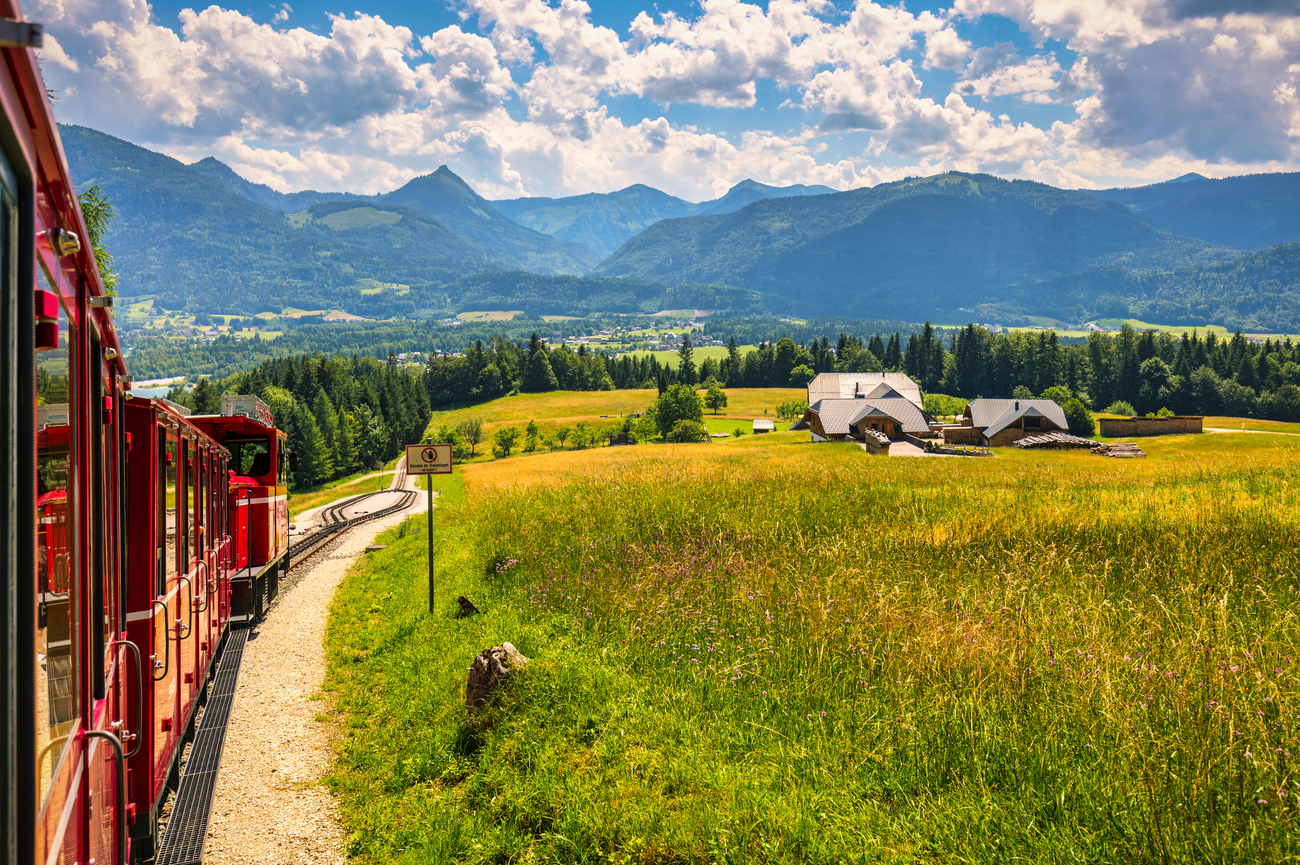
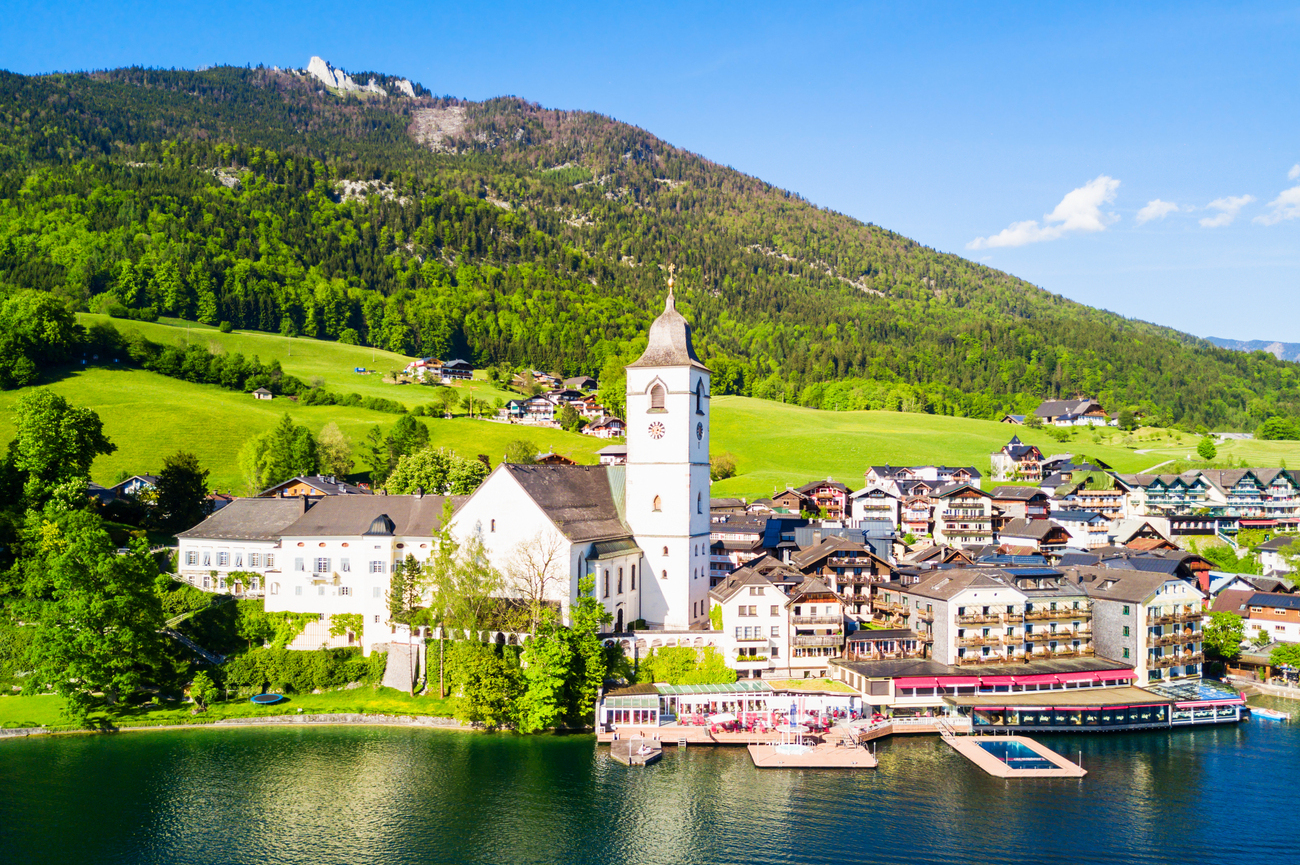
St. Wolfgang is the starting point of the Schafberg Railway and one of the best-known villages in Austria’s Salzkammergut region. The valley station stands close to the shore of Lake Wolfgangsee, at around 542 metres above sea level, giving the journey an unusually dramatic sense of elevation as the train climbs towards the upper station at 1,732 metres.
The railway begins ascending almost immediately after leaving St. Wolfgang, passing through meadows and forest above the lake. One easily missed detail is that after only around 472 metres, the line crosses the Dittelbach stream and leaves Upper Austria for the state of Salzburg. Although the journey starts in St. Wolfgang in Upper Austria, most of the climb therefore takes place across the provincial border in Salzburg.
Before boarding, allow time for the SchafbergBahn ErlebnisQuartier at the valley station. The modern building contains the ticket hall, a small museum area covering the history of the railway and Wolfgangsee shipping, and an original locomotive dating from 1893. The station building itself has also attracted international attention, winning a Prix Versailles award for architecture and design.
St. Wolfgang is worth exploring beyond the railway. Its compact historic centre, lakeside setting and Pilgrimage Church of St. Wolfgang make it easy to combine the train journey with several hours in the village or a boat trip across Wolfgangsee.
Dorneralm Siding
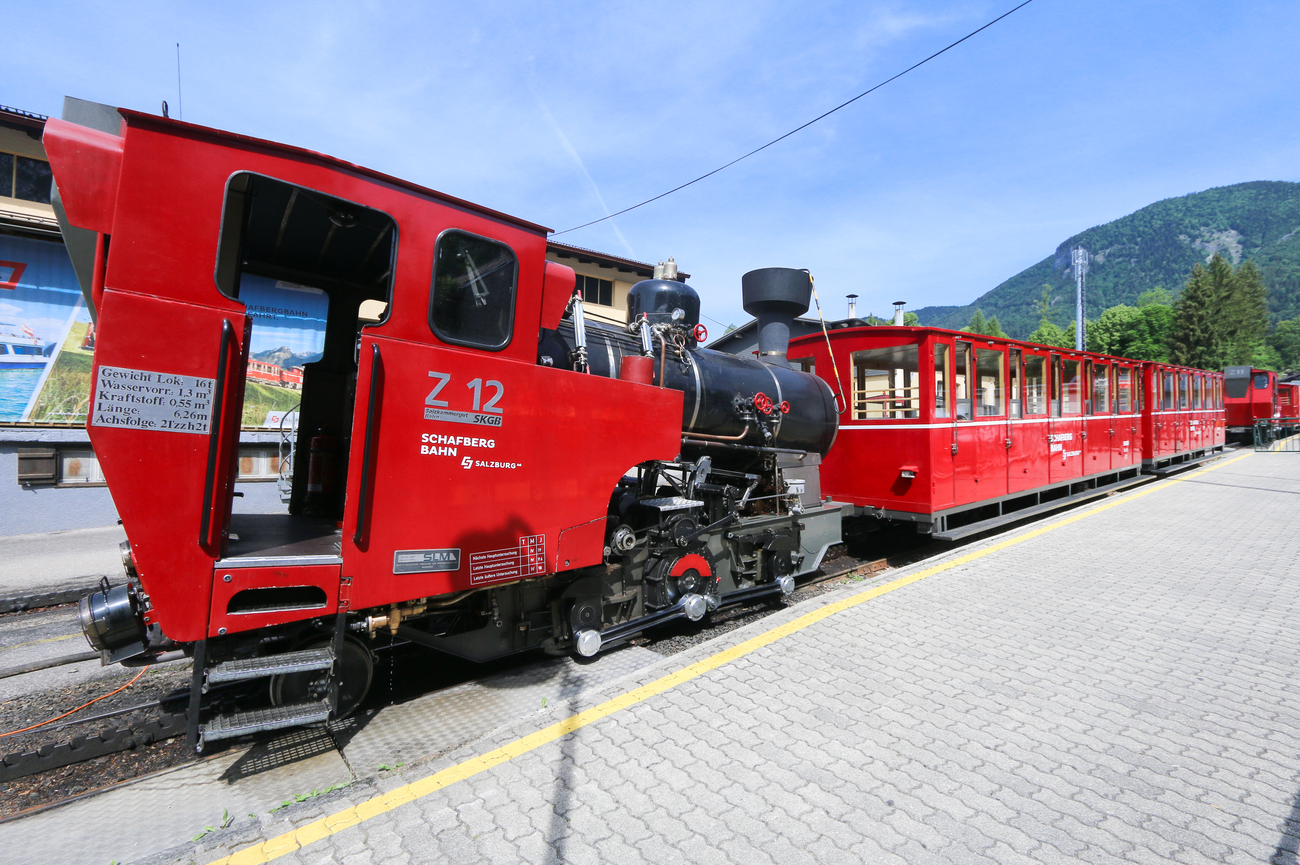
Dorneralm is not a passenger station, but it is an important operational point on the Schafberg Railway. The siding lies 2.7 kilometres from St. Wolfgang at around 1,015 metres above sea level, roughly halfway between the valley and the higher alpine section of the route.
By this point, the train has already climbed almost 500 metres from the lakeshore and the views back across Wolfgangsee become much broader. Dorneralm also allows trains to pass on the otherwise single-track railway, helping to manage services moving up and down the mountain.
The area is also crossed by hiking routes from St. Wolfgang towards Schafberg. One marked ascent passes Dorneralm before continuing to Schafbergalm and the summit, which means this otherwise technical railway point also forms part of the traditional walking route up the mountain.
Schafbergalm
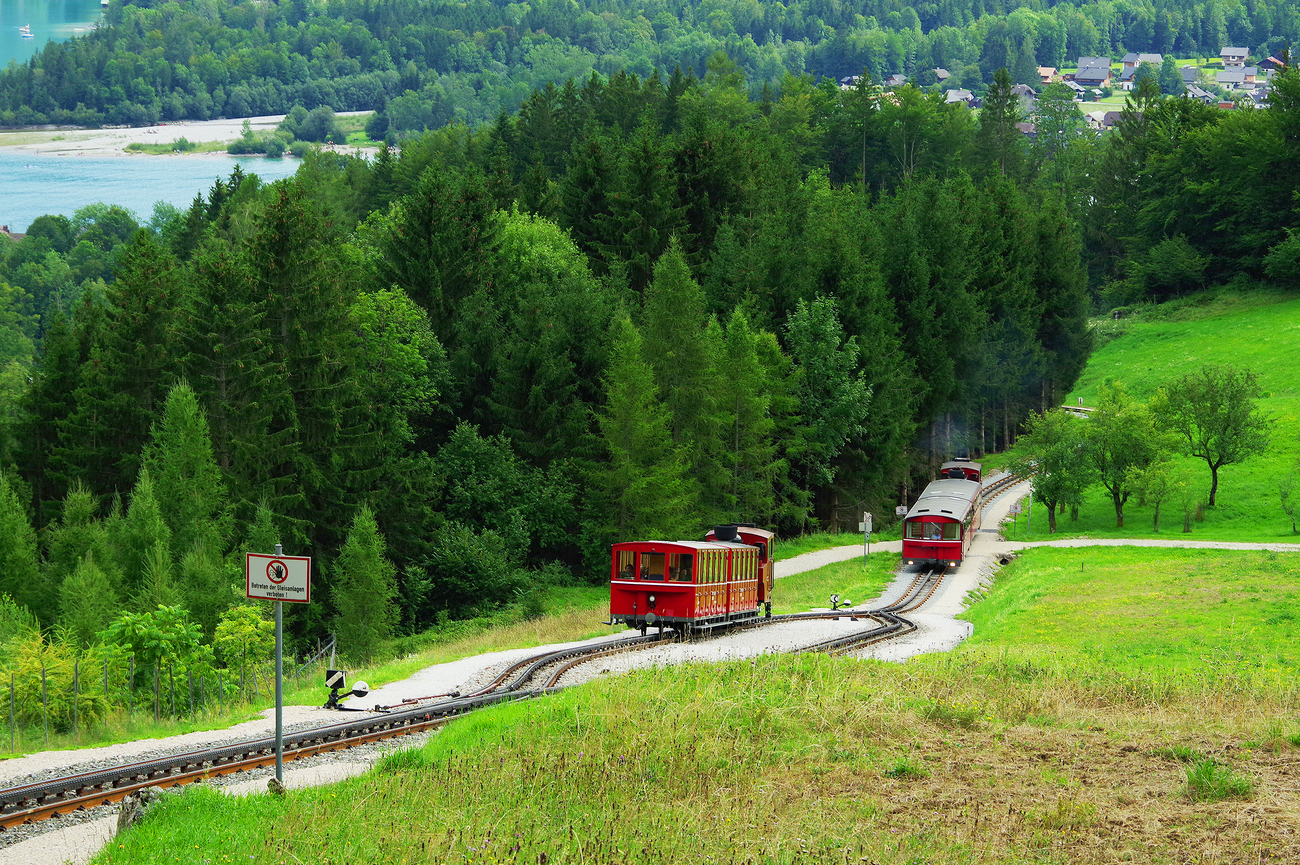
Schafbergalm is the main intermediate passenger stop on the Schafberg Railway, located 4.2 kilometres from St. Wolfgang at 1,364 metres above sea level. From here, the train continues its final ascent towards Schafbergspitze.
This is also where the journey's character noticeably changes. Schafbergalm sits around the mountain's tree line, so the enclosed forest scenery of the lower slopes gives way to more open views across Lake Wolfgangsee, the valley, and the surrounding peaks. From here, the final section of the railway steepens and becomes more exposed as it approaches the rocky upper part of Schafberg.
Passengers can leave the train at Schafbergalm and continue to the summit on foot, combining the cog railway with a mountain hike rather than riding the full route both ways. The station also becomes the upper terminus during some spring and Advent services when trains do not continue to Schafbergspitze.
For travelers who don't want to reach the summit, Schafbergalm still offers a strong sense of the mountain environment and much wider views than the lower part of the railway.
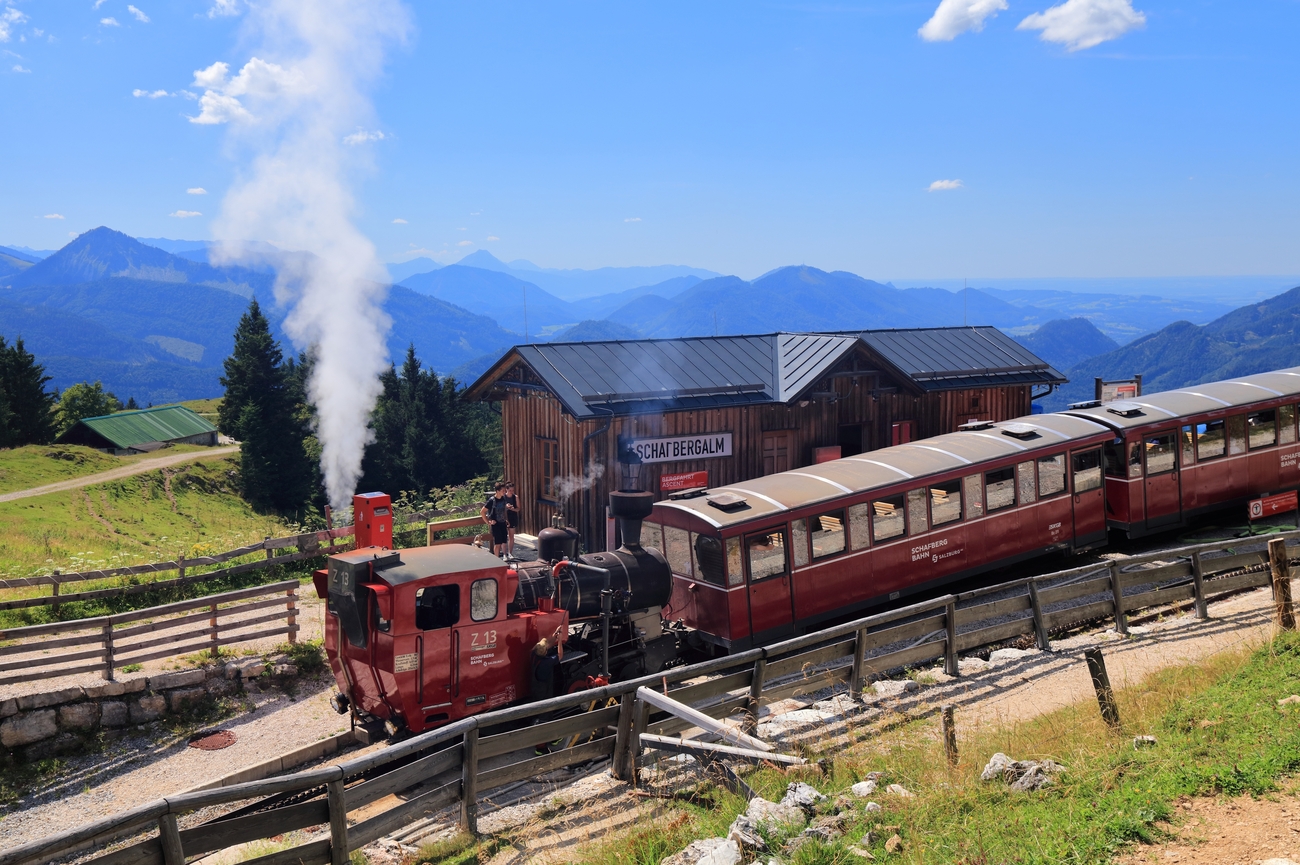
Schafbergspitze Summit
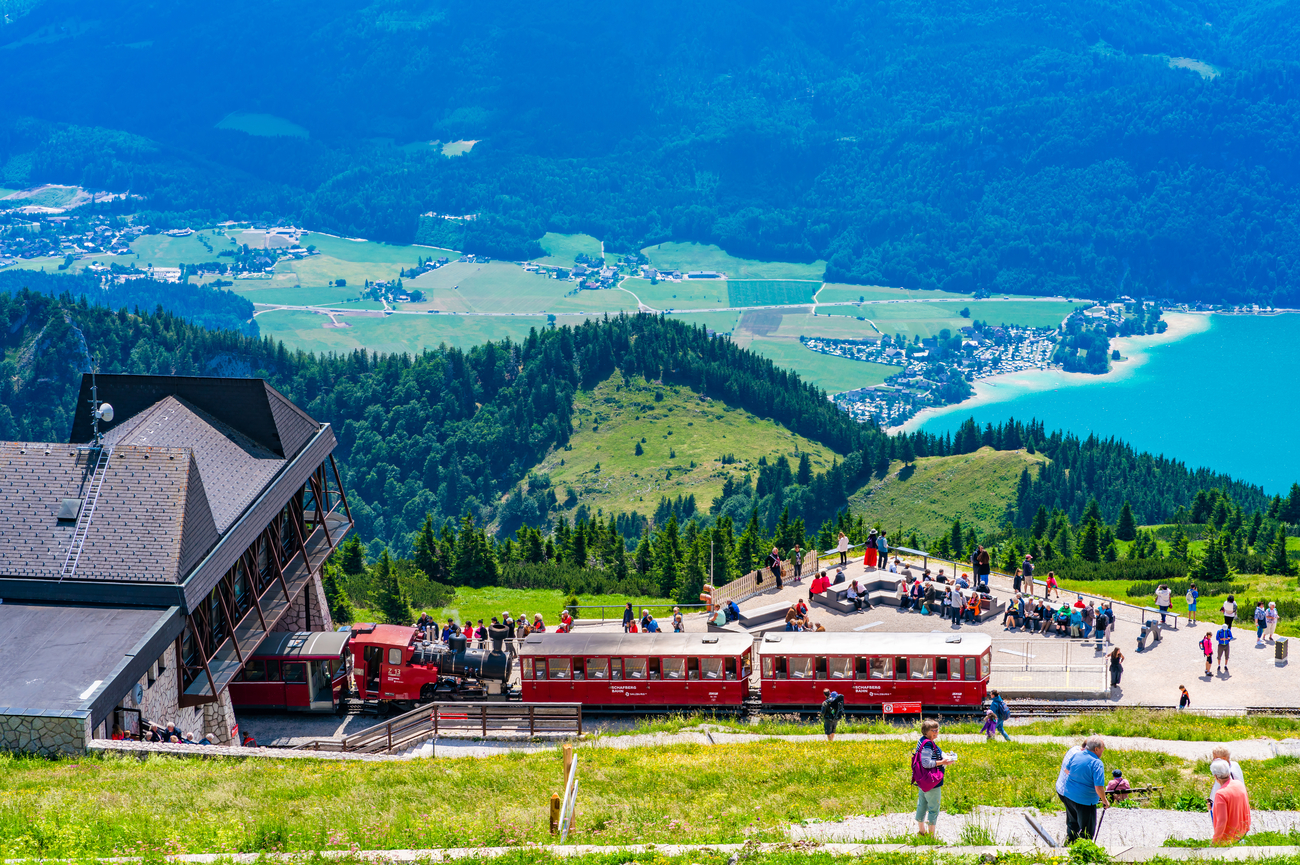
The final section from Schafbergalm is the most dramatic part of the journey. The railway climbs into exposed alpine terrain, passing close to rock faces and through two tunnels before reaching Schafbergspitze station at 1,732 metres above sea level.
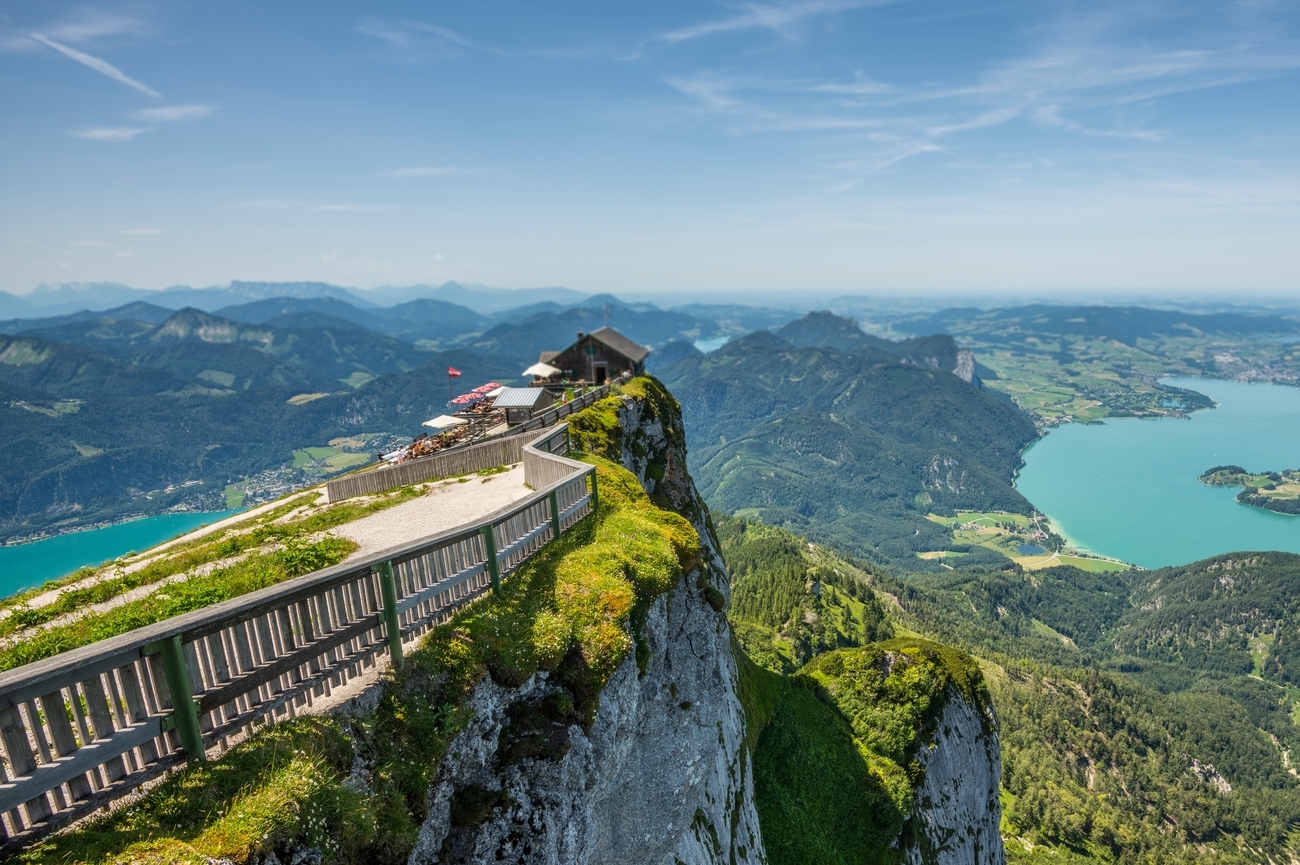
The station sits just below the 1,783-metre summit of Schafberg. From the top, the view extends across several Salzkammergut lakes and, in clear conditions, toward mountain ranges including the Dachstein and Watzmann. Older official SchafbergBahn material also notes that the panorama can extend as far as the Hohe Tauern and Großglockner when visibility is particularly good.
Close to the summit are the historic Hotel Schafbergspitze and the Himmelpforte mountain hut. The hotel predates the railway, built in 1862, more than 30 years before the first trains began climbing Schafberg in 1893. It stands at 1,783 metres and remains a family-run mountain hotel.
Allow enough time at the top rather than simply taking the next train down. Short walking paths connect the station to the summit viewpoints, while the higher position shows how abruptly Schafberg rises above Wolfgangsee and the surrounding lake district.
Schafberg Railway Duration
The journey from St. Wolfgang to Schafbergspitze takes around 35 minutes. In that time, the Schafberg Railway covers only 5.85 kilometres but gains 1,190 metres in elevation, with gradients reaching approximately 26 percent. That combination of short distance and steep ascent makes the ride feel very different from a conventional scenic railway.
There are no transfers on the full journey to Schafbergspitze. The train climbs continuously from the lakeside station through meadows and forest to Schafbergalm, then completes the final, more exposed section to the mountain station.
For most visitors, the railway works best as a half-day experience rather than a 70-minute return train journey. Allow extra time at Schafbergspitze for the viewpoints, short walks, and a meal or drink, especially in clear weather when the panorama is at its best.
If you combine the railway with St. Wolfgang or a Wolfgangsee boat journey, you can easily turn the excursion into a full day around the lake without long road transfers.
Schafberg Railway Schedules and Tickets
The Schafberg Railway operates seasonally, connecting St. Wolfgang Valley Station with the Schafberg summit during the main operating period. Trains run throughout the day, with multiple departures available for both the uphill and downhill journey. The timetable varies depending on the season, weather conditions and demand, so checking the latest schedule before travelling is recommended.
Uphill departures from St. Wolfgang generally start in the morning and run throughout the day, while return services from Schafbergspitze run regularly enough for the railway to work well as a half-day excursion.
Because the Schafberg Railway is a mountain railway, weather and operating conditions can affect services. Trains may be delayed, shortened or cancelled in poor conditions, while additional departures can be added during particularly busy periods. Larger groups should also arrange their journey in advance.
Tickets can be purchased through the official SchafbergBahn booking system, where current departure times and availability can be checked before travelling. Advance reservations are recommended during the main travel season, particularly for popular morning departures and days with good summit weather.
A typical visit includes the ascent to Schafbergspitze, time at the summit to enjoy the viewpoints and mountain surroundings, and the return journey to St. Wolfgang. Most travellers allow additional time at the top rather than simply taking the next train back down.
At the valley station, Café & Restaurant EQ is located inside the SchafbergBahn ErlebnisQuartier and provides a convenient place for a meal, coffee or drink before or after the journey. Opening days and hours vary throughout the year, so it's best to check directly before visiting.
Where to Stay Along the Schafberg Railway
St. Wolfgang is the most convenient base for the Schafberg Railway, placing you close to the valley station while also giving you easy access to Lake Wolfgangsee, boat services and the historic centre. Staying here lets you take an early train up Schafberg, spend time at the summit, and still have the afternoon or evening by the lake.
Accommodation at Schafbergspitze is far more limited, but an overnight stay at the summit offers a very different experience. Once the daytime visitors leave, the mountain becomes much quieter, with sunset and sunrise views that day-trippers rarely see.
St. Wolfgang
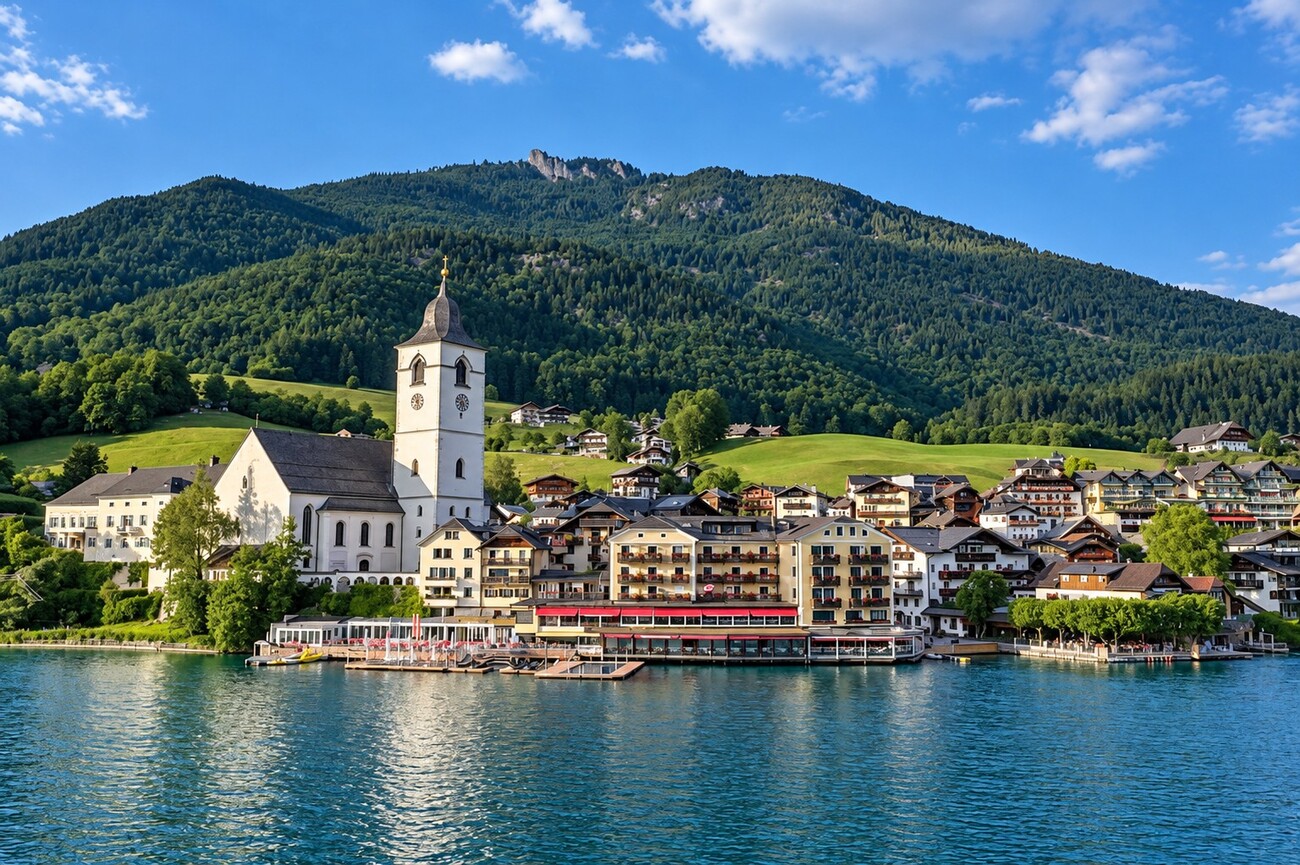
- Romantik Hotel Im Weissen Rössl (4 Stars): One of the best-known hotels on Lake Wolfgangsee, Im Weissen Rössl combines a historic lakeside setting with extensive wellness facilities and several dining options. Its standout feature is the spa directly on the lake, including the heated Rösslpool and lake bathing area. It is particularly well suited to travelers looking for a traditional Salzkammergut hotel with a strong sense of place.
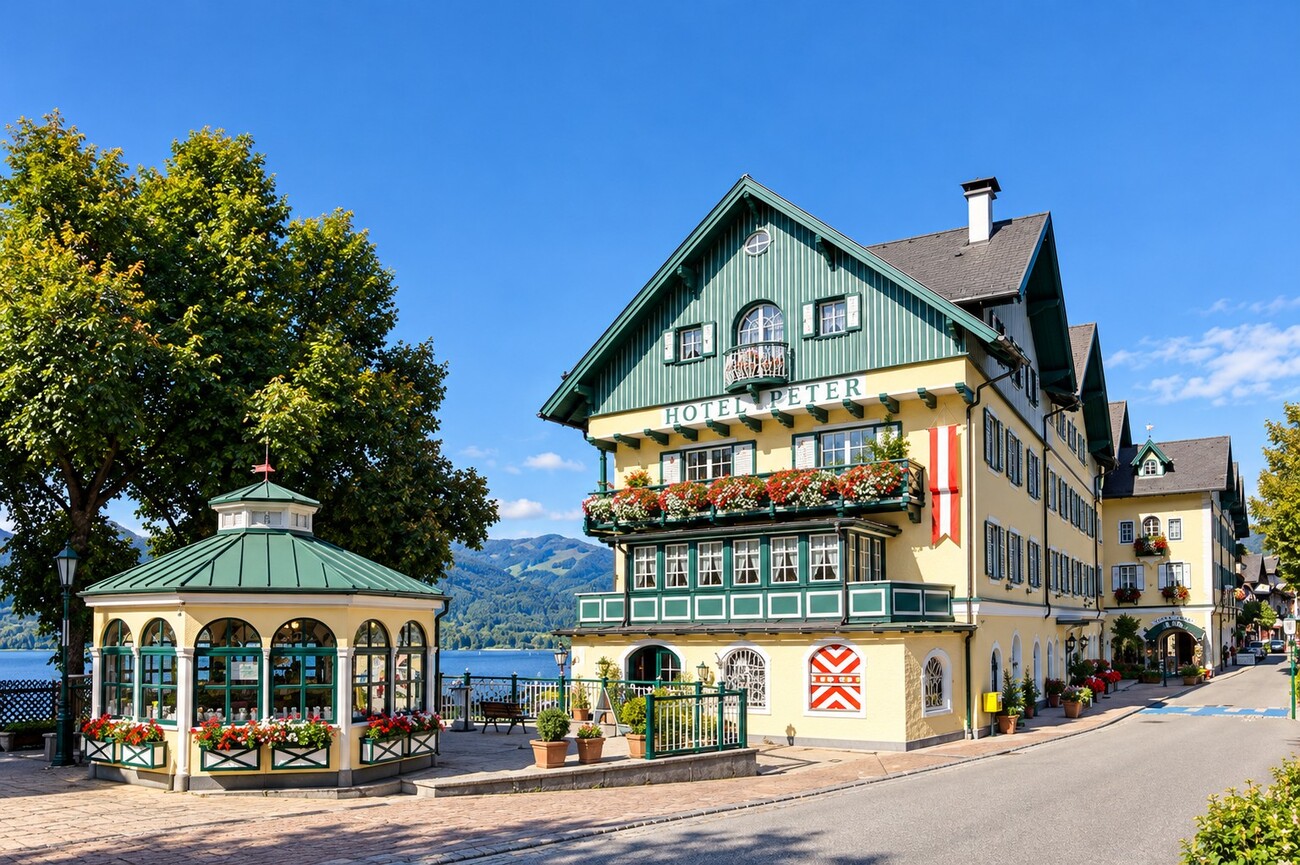
- Hotel Peter (4 Stars): A smaller, family-run option in the centre of St. Wolfgang, Hotel Peter has a quieter and more personal feel than the larger lakeside hotels. Its rooms look towards Wolfgangsee and the surrounding mountains, while the lakeside location keeps both the village centre and Schafberg Railway within easy reach. The on-site restaurant, PAUL der Wirt, also makes it a convenient choice for travelers who prefer not to dine out every evening.
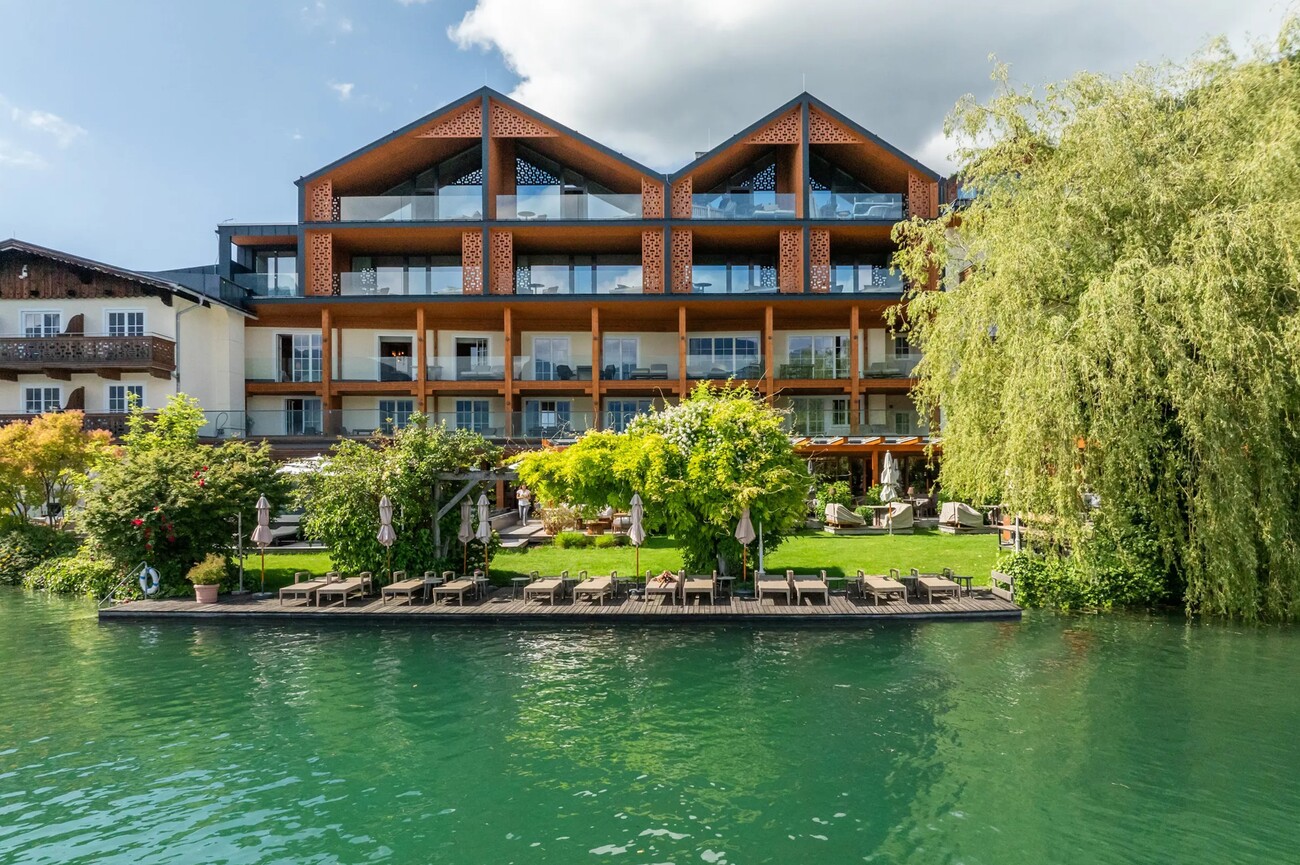
- Hotel Seevilla Wolfgangsee (4 Stars): Seevilla Wolfgangsee offers a more contemporary boutique stay directly on the lake. Its wellness facilities include a heated infinity pool overlooking Wolfgangsee, and the overall atmosphere is calmer and more design-led than many traditional hotels around the lake. It works particularly well for couples looking for a quieter base close to St. Wolfgang.
Schafbergspitze
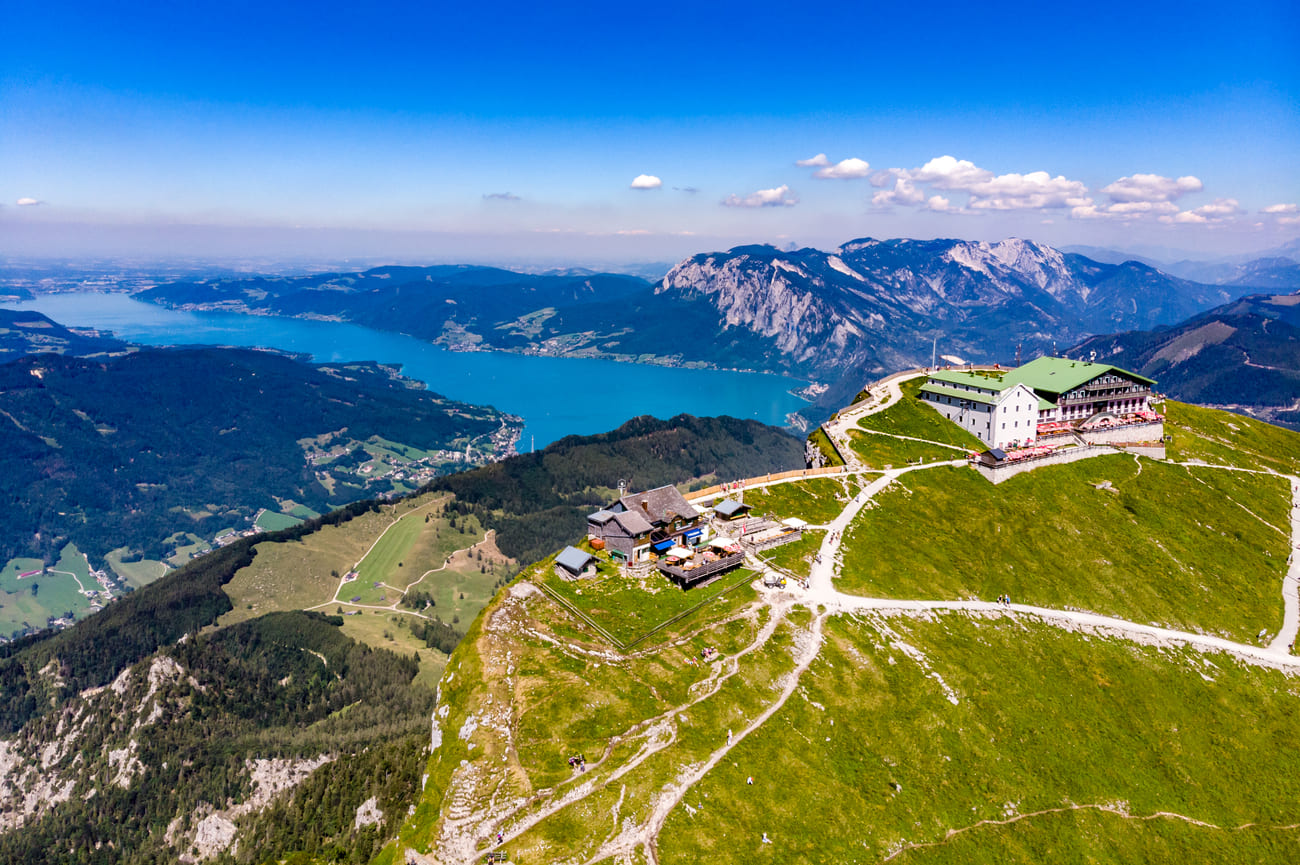
- Hotel Schafbergspitze: For the most unusual stay along the railway, Hotel Schafbergspitze sits at 1,783 metres near the summit of Schafberg. The Pasch family has run the hotel since 1966, and the property remains small, with just 17 rooms and capacity for around 34 guests. Accommodation is simple and traditional, with modest furnishings and limited facilities, so the appeal lies more in the exceptional location than in comfort or luxury. Staying overnight lets you experience the summit after the last daytime visitors leave, with the chance to see both sunset and sunrise from the mountain. Overnight guests using the railway can also park free at the designated car park near the valley station, a small but useful practical detail that is easy to miss.
Where to Eat Along the Schafberg Railway
St. Wolfgang has a surprisingly varied dining scene for a small lakeside town, ranging from creative fine dining to traditional Austrian cooking. The strongest options are concentrated around the historic centre and waterfront, making them easy to combine with a journey on the Schafberg Railway.
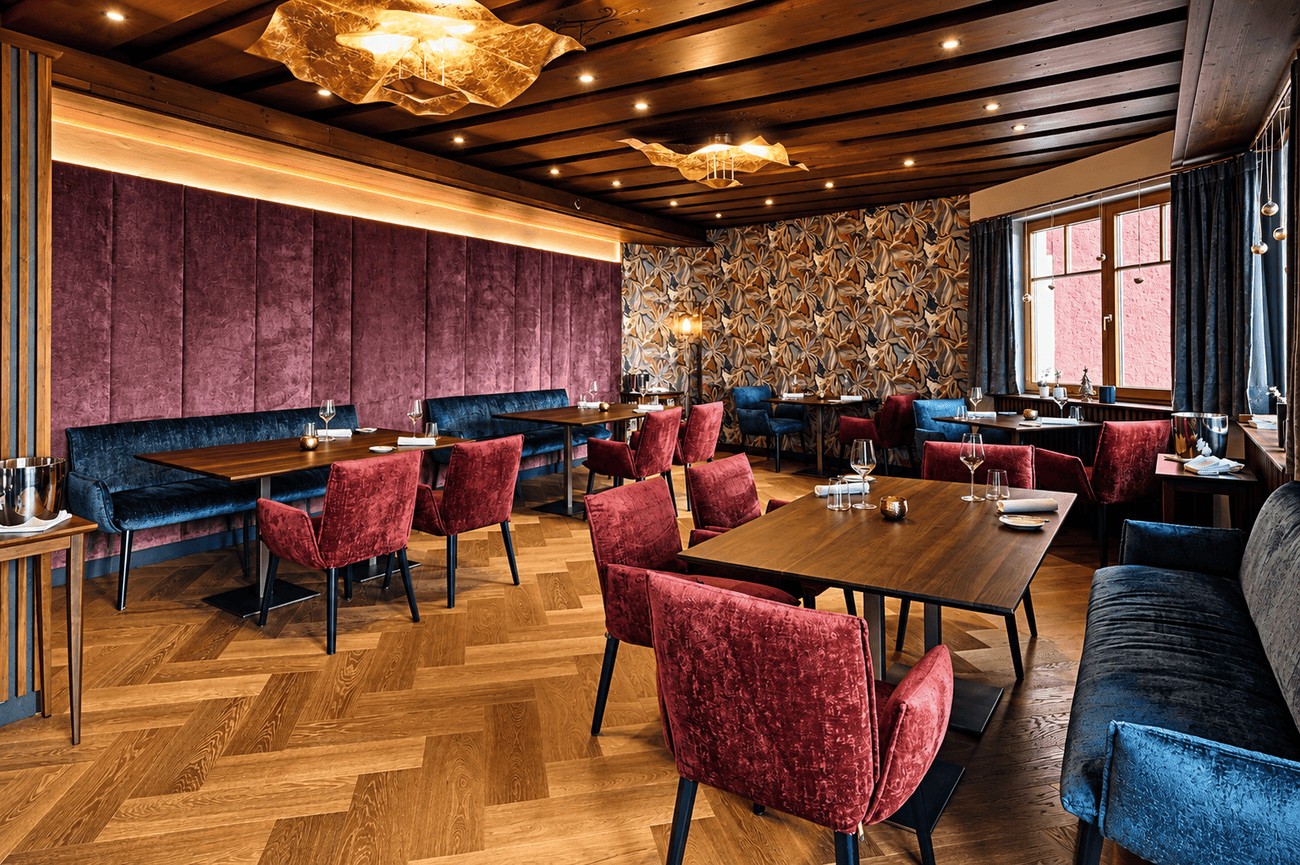
- Paula (One Michelin Star): Located inside the Weisser Bär Hotel & Wirtshaus on St. Wolfgang’s Marktplatz, Paula is one of the village’s most ambitious contemporary dining options. Chef Sebastian Leutgeb combines Austrian ingredients with French influences, while sommelier Miriam Grädler oversees the wine service. Awarded one Michelin star, the restaurant offers creative fine dining in an intimate setting. Its name pays tribute to the chef’s grandmother, Paula, giving the restaurant a more personal identity.
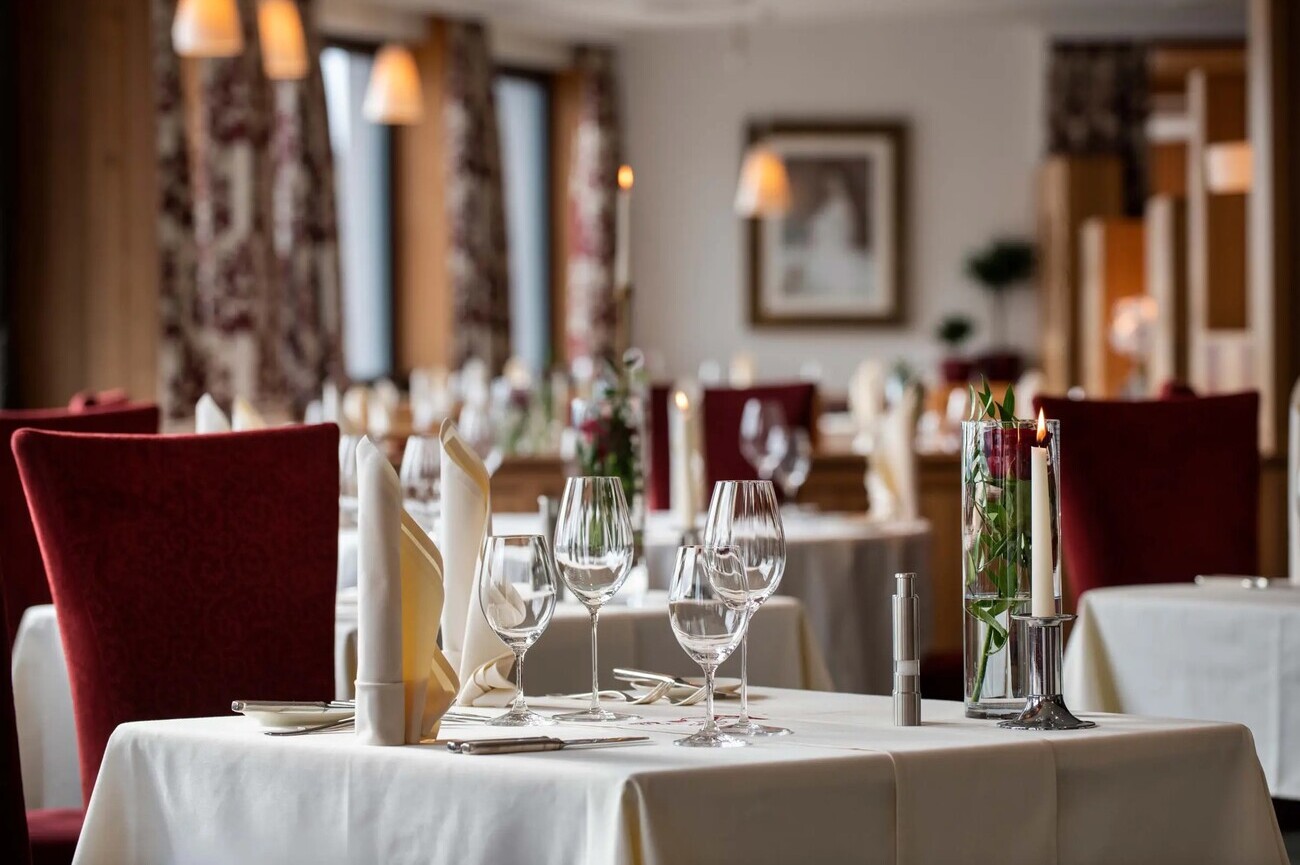
- Poll's Kaiserterrasse – Gourmet Restaurant Im Weissen Rössl: Set directly beside Lake Wolfgangsee, Poll’s Kaiserterrasse offers an elegant fine-dining experience with panoramic views across the water. Located within Romantik Hotel Im Weissen Rössl, the restaurant combines classic and contemporary Austrian cuisine with seasonal ingredients and an extensive wine selection. Featured in the Michelin Guide, it has also earned three toques from Gault & Millau and three forks from Falstaff, making it one of St. Wolfgang’s most distinguished dining options.
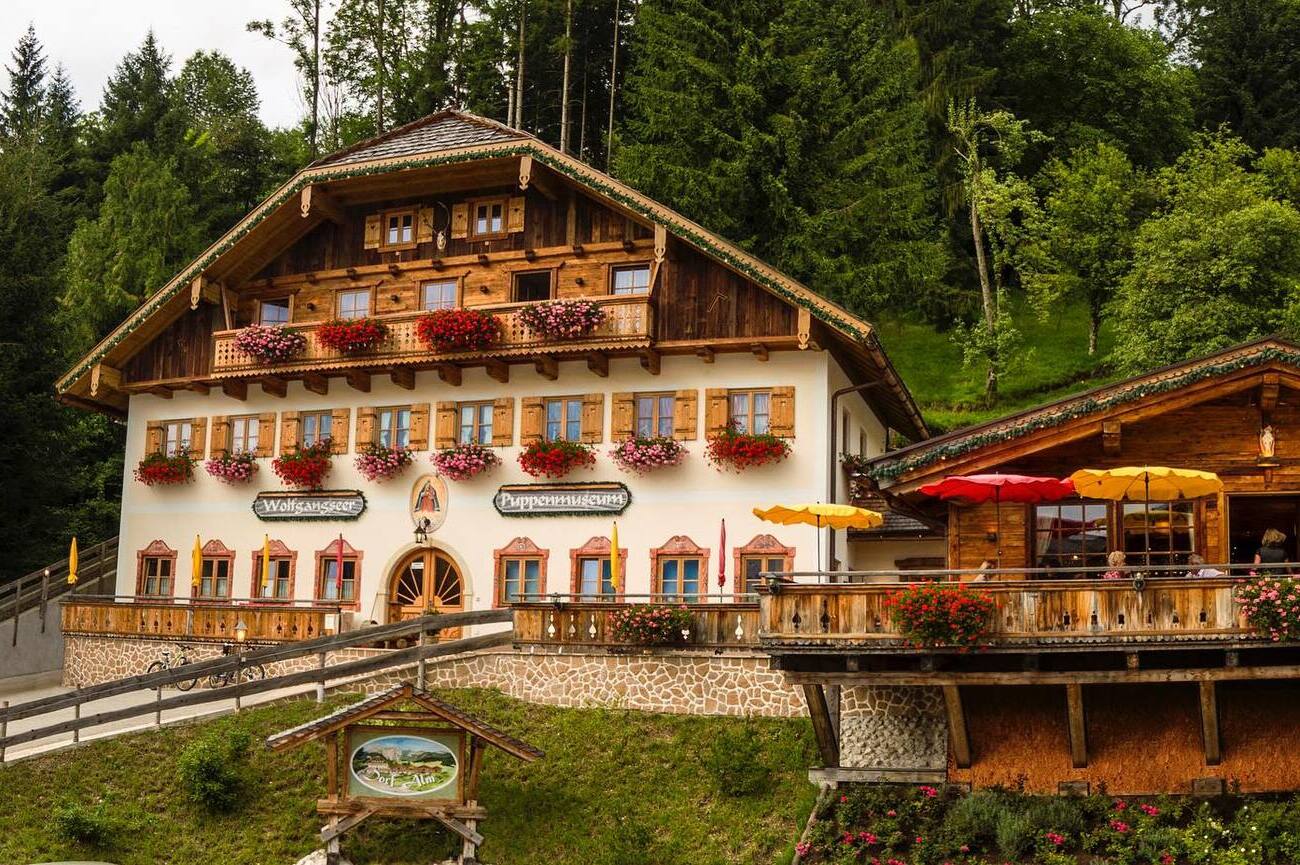
- Dorf-Alm zu St. Wolfgang: Dorf-Alm is the more traditional option, recreating the atmosphere of an alpine hut in the centre of St. Wolfgang. The kitchen focuses on Austrian home-style cooking rather than fine dining, offering a nice contrast to Paula and Poll’s Kaiserterrasse. It is also only around 500 metres from the Schafberg Railway station, so it works particularly well for an uncomplicated meal before or after the train journey.
Other Things to Do Along the Schafberg Railway
The Schafberg Railway may be the main reason many travelers come to this part of the Salzkammergut, but St. Wolfgang and Schafberg offer plenty more ways to experience the region. The area combines lake activities, mountain adventures and relaxed cultural experiences, making it easy to build a fuller itinerary around your train journey. Whether you prefer a premium private experience or a simple day outdoors, these activities let you see more of what makes Wolfgangsee and Schafberg special.
St. Wolfgang
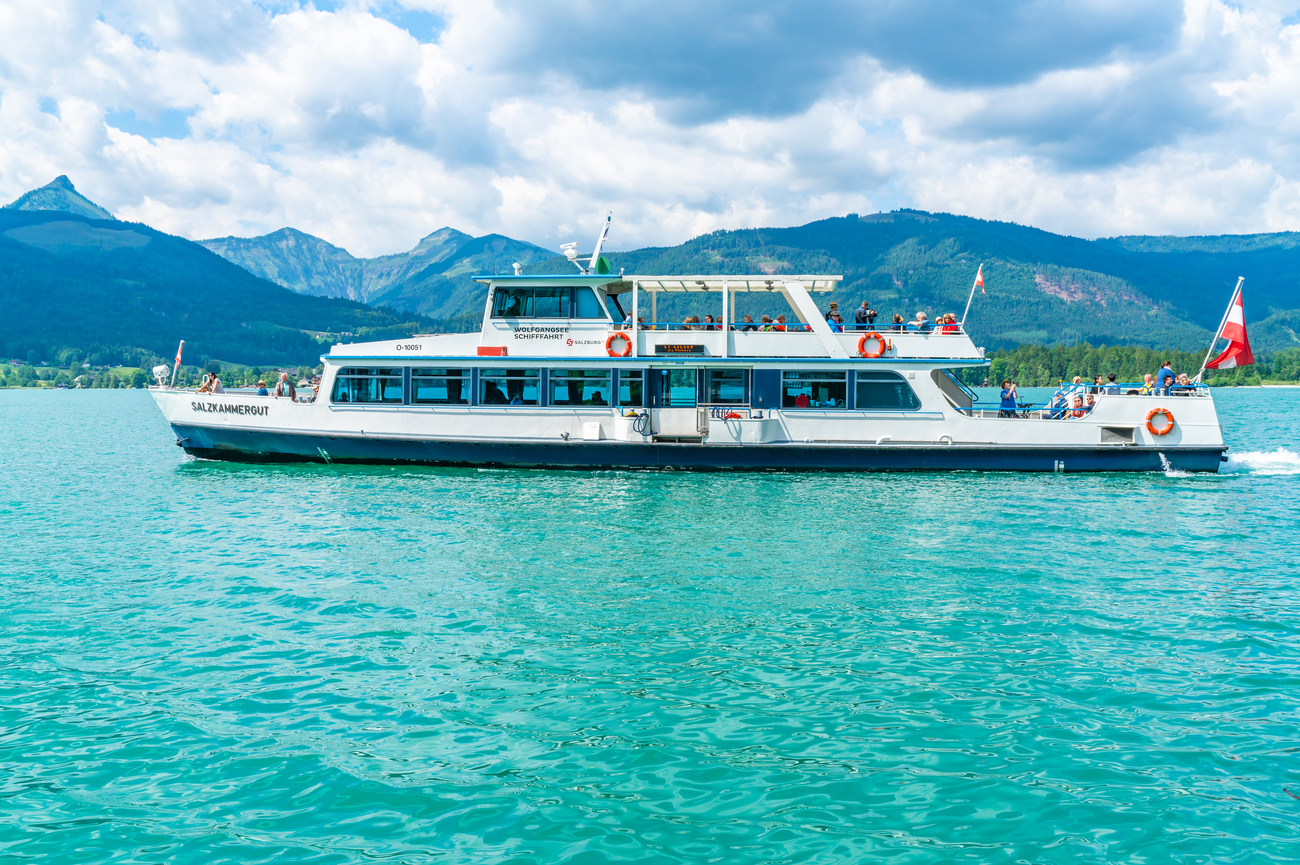
- Explore Lake Wolfgangsee by Boat: Lake Wolfgangsee is one of the Salzkammergut's highlights, and time on the water offers a completely different perspective on the surrounding mountains. Regular WolfgangseeSchifffahrt services connect St. Wolfgang with other lakeside villages including St. Gilgen and Strobl, making it easy to combine the railway with a wider day around the lake. The boat landing in St. Wolfgang is close to the Schafberg Railway station, so the two experiences pair particularly well. WolfgangseeSchifffahrt has operated on the lake since 1873, just two decades before the Schafberg Railway opened, and today the service links several landing stages around Wolfgangsee. The boat journeys are a relaxed way to enjoy the scenery, particularly on clear days when Schafberg rises directly above the lake. You can also book private boat tours around Wolfgangsee, offering a quieter experience with more flexibility over timing, route and stops. This works especially well if you want to combine the Schafberg Railway with a more premium day on the water rather than following a standard sightseeing itinerary.
- Walk Through St. Wolfgang and Visit the Pilgrimage Church: St. Wolfgang is much more than the starting point for the Schafberg Railway. The village has a long history as a pilgrimage destination, with the Pilgrimage Church of St. Wolfgang as its most important landmark. Its setting above the lake also makes it one of the Salzkammergut's most distinctive churches. Inside, the main highlight is the late Gothic winged altar Michael Pacher created and completed in 1481. When fully opened, the altar is around 12.5 metres high and more than six metres wide, making it one of the most important surviving works of late Gothic art in Austria. Parts of the enormous structure were transported to St. Wolfgang by boat before being assembled inside the church. After visiting the church, continue through the old streets around the market square, where traditional inns, historic façades and small shops retain much of the village’s original character. The compact centre is easy to explore on foot and works particularly well before or after the railway journey, especially if you also plan to spend time along the waterfront.
Schafbergspitze
- Enjoy the Summit Views: Schafberg's summit is a highlight of the railway journey, offering panoramic views across the Salzkammergut lakes and surrounding Alpine peaks. Once you arrive at Schafbergspitze, it is worth spending time walking beyond the immediate station area rather than treating the summit as a quick turnaround point. Different viewpoints reveal different parts of the landscape, including Lake Wolfgangsee below and, on clear days, several other lakes across the Salzkammergut. The wider panorama can also extend toward major mountain ranges such as the Dachstein Alps and Watzmann, with visibility depending heavily on weather conditions. Short paths around the summit make it easy to move between viewpoints and appreciate how sharply Schafberg rises above the surrounding lake district. Staying overnight at Hotel Schafbergspitze adds another dimension to the experience, letting you see the mountain after the daytime visitors leave and, in suitable conditions, enjoy both sunset and sunrise from the summit area.
- Hike Schafberg Mountain: Schafberg is also a popular hiking destination, and combining part of the walk with the railway is one of the best ways to experience the mountain at a slower pace. Trails connect St. Wolfgang, Dorneralm, Schafbergalm and the summit, passing through forest, meadows and increasingly exposed alpine terrain. One classic approach is to hike uphill from St. Wolfgang and take the railway down, avoiding the need to retrace the same route. The climb is demanding, with more than 1,000 metres of elevation gain, but it gives a much stronger sense of how dramatically Schafberg rises above Lake Wolfgangsee. Above Schafbergalm, the hiking route runs close to the railway and crosses it in places, offering walkers particularly good views of the cog trains on the mountain's upper section. You can also book a local mountain guide for a private hike focused on alpine scenery, photography or the natural landscape. If you plan to combine hiking with the railway, check the train timetable in advance and reserve your return journey during busy periods, as popular downhill services can fill up.
Plan Your Austrian Alpine Journey With
Revigorate
The Schafberg Railway works particularly well as part of a wider journey through Austria’s lake and mountain regions. Combine it with time around Lake Wolfgangsee, Salzburg, Hallstatt, the Dachstein region, and other scenic rail routes across the Salzkammergut.
Revigorate creates tailor-made Austrian itineraries around your interests and travel preferences, combining carefully selected hotels, private transfers, scenic rail journeys, lake experiences, and mountain excursions.
If you would like to include the Schafberg Railway in a personalised trip through Austria, contact Revigorate and let us help you plan your journey.


Let us know what you love, where you want to go, and we’ll design a one-of-a-kind adventure you’ll never forget.

Miriam
Travel Specialist

Romina
Travel Specialist

Laura
Travel Specialist
Frequently Asked Questions About the Schafberg Railway
-
When Is the Best Time to Travel on the Schafberg Railway?
The best time to travel on the Schafberg Railway is between May and October, when the mountain scenery is at its most accessible and the railway operates regular services to the summit. Summer offers green alpine landscapes, while September and October can bring clearer views and fewer visitors. Weather conditions at the summit can change quickly, so it is worth checking the forecast before travelling.
-
Which Side of the Train Offers the Best Views?
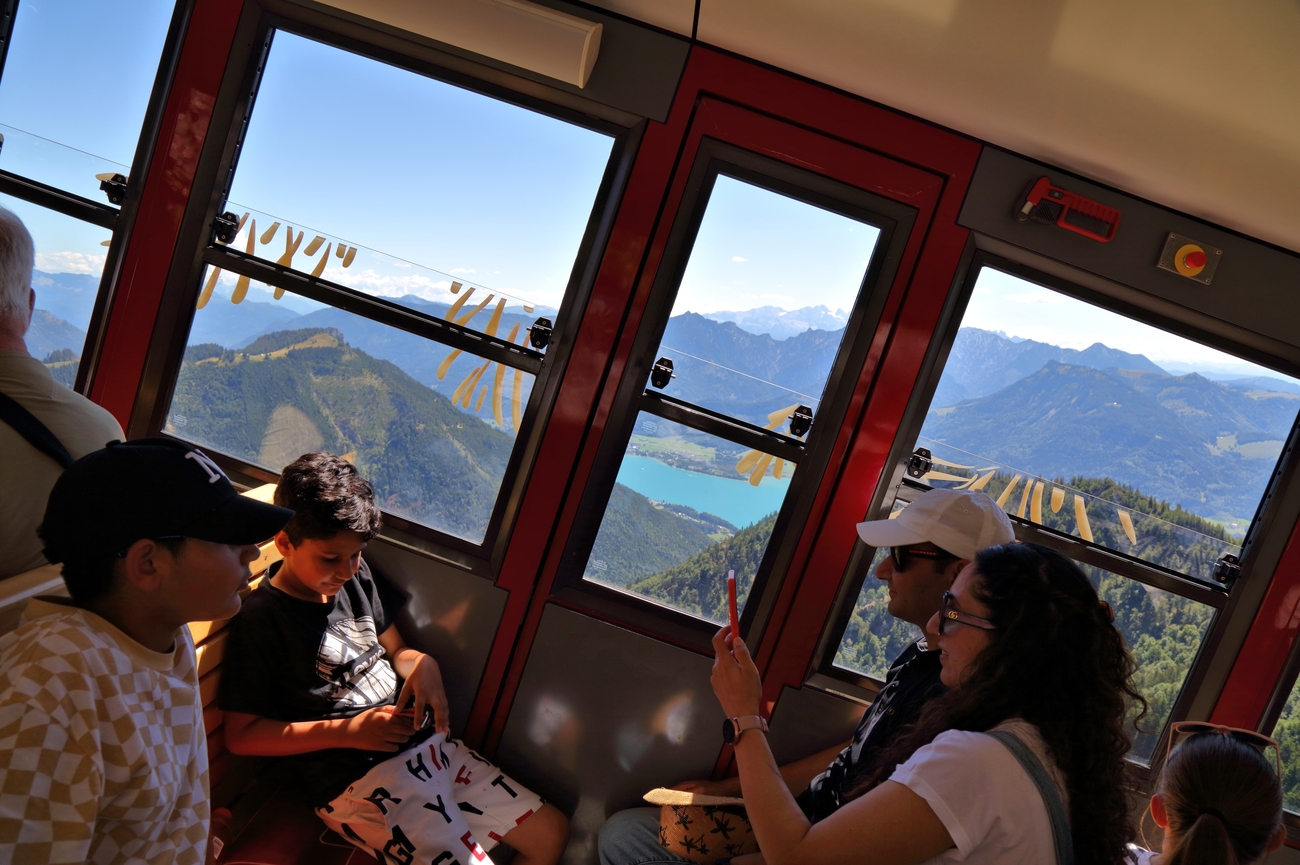
Both sides of the Schafberg Railway offer scenic views, although the perspective changes as the train curves around the mountain. The lake-facing side provides particularly attractive views of Wolfgangsee during parts of the ascent, while the opposite side offers forest and mountain scenery. For the best experience, choose a window seat and enjoy the changing landscape throughout the journey.
-
Can You Choose Between a Historic Steam Train and a Modern Train?
Yes. The Schafberg Railway operates modern locomotives for regular journeys and historic steam locomotives on selected nostalgia services. The original steam locomotives date from the 1890s and offer a particularly atmospheric way to experience the railway's heritage. Special steam journeys operate on limited dates and require advance booking, so check the official timetable if you would prefer a historic train.
-
Can You See Five Lakes From the Top of Schafberg Mountain?
Yes. On a clear day, the summit of Schafberg offers views across several lakes in Austria's Salzkammergut region, including Wolfgangsee, Mondsee, Attersee, Fuschlsee and Traunsee. In exceptionally clear conditions, the panorama can extend to even more lakes and distant Alpine peaks. The best visibility usually comes when the summit is free of low cloud and haze.
-
What Makes the Schafberg Railway Different From Other Scenic Trains in Austria?
The Schafberg Railway is Austria's steepest cogwheel railway, climbing approximately 1,190 metres over just 5.85 kilometres. Unlike longer scenic rail journeys that travel through valleys and mountain passes, this railway climbs directly from the shores of Lake Wolfgangsee towards an exposed Alpine summit. Its combination of historic railway engineering, steep gradients and panoramic lake views makes it a distinctive experience.
-
Is It Worth Staying Overnight at the Top of Schafberg Mountain?
Staying overnight at Hotel Schafbergspitze is worthwhile if you want to experience the mountain without the daytime crowds. Once the last trains depart, the summit becomes much quieter, offering opportunities to enjoy sunset, sunrise and the surrounding Alpine scenery. The accommodation is traditional rather than luxurious, so the main attraction is the exceptional location and atmosphere.
-
Can You Visit the Schafberg Railway on a Day Trip From Salzburg?
Yes. St. Wolfgang is approximately one hour from Salzburg by car, making the Schafberg Railway a convenient day trip. A private transfer is particularly practical, allowing you to coordinate your train departure with time at the summit and a visit to Lake Wolfgangsee. You can also combine the railway with a lake cruise or lunch in St. Wolfgang before returning to Salzburg.
-
Can Revigorate Include the Schafberg Railway in a Tailor-Made Austria Vacation?
Yes. Revigorate can include the Schafberg Railway in a tailor-made Austrian itinerary, combining the train journey with carefully selected accommodation, private transfers and experiences around Lake Wolfgangsee. The excursion can also form part of a wider journey through Salzburg, Hallstatt, the Salzkammergut and Austria's scenic railway routes, with arrangements tailored to your interests and preferred pace.
Our offices:
Return to Austria tours



Revigorate, Iberian Escapes and Algarve Lifestyle are the registered brand names of APCS Lda . We are a fully authorised travel agency licensed by Turismo de Portugal RNAVT/6867.
In the event of a dispute, the consumer may refer to: RAL - Centros de Arbitragem
Avª. 5 de Outubro, nº. 55, R/C Dtº. 8000-075 Faro, Portugal | Tel: +351 289 823 135 *
* national landline call
E-mail: info@consumoalgarve.pt| www.consumidoronline.pt | Mon to Fri: 9:00 - 13:00 / 14:00 - 17:00