MittelrheinBahn: A Castle-Lined
Journey Through the Rhine Valley

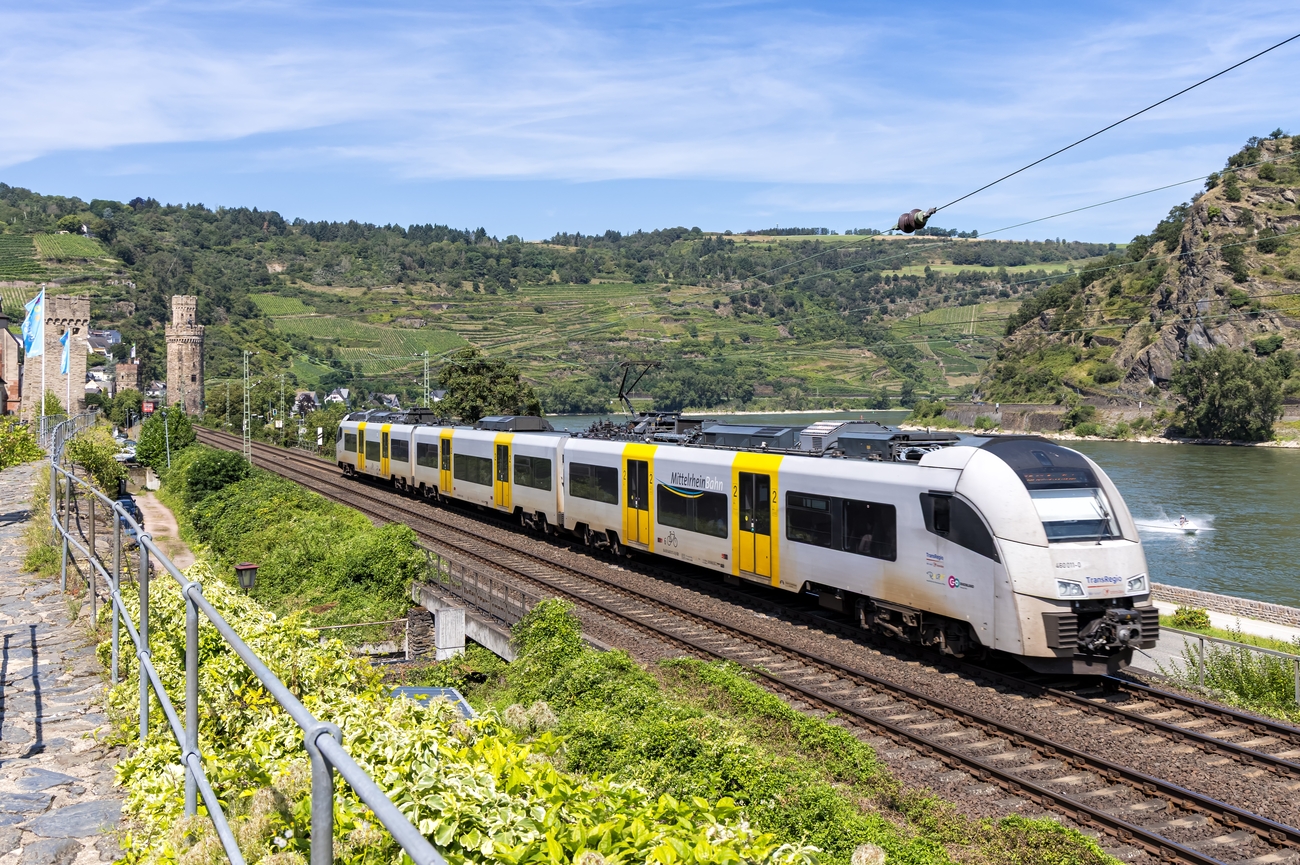
The Rhine Valley Railway is one of Germany’s most scenic train journeys, but it began as a serious piece of 19th-century transport infrastructure rather than a sightseeing route. Built in stages during Germany’s railway boom, the line first connected Cologne and Bonn in 1844, reached Koblenz in 1858 and continued south to Bingerbrück, now part of Bingen, in 1859. That expansion created an important rail corridor along the Rhine.
More than 160 years later, the railway still follows the river through a remarkably compact landscape of vineyard-covered hills, medieval castles and riverside towns. Its most popular stretch runs through the Upper Middle Rhine Valley between Bingen and Koblenz, a UNESCO-listed cultural landscape shaped by centuries of trade, winemaking and movement along the river. The railway is part of that history, not something added later for tourists.
Traveling through the Rhine Valley by rail is also refreshingly easy. The towns sit close enough together to build a flexible day trip or longer itinerary, whether that means stopping for a castle visit, walking along a riverfront promenade or spending a few hours in a historic wine town. You can explore several places without turning the day into a transport puzzle. Honestly, the railway has been connecting this region for generations, and it still does the job brilliantly.
This railway is worth taking because of its balance of scenery, history and convenience. You get the castles and classic Rhine views, but also working vineyards, ferry crossings, old station buildings and towns where daily life continues right beside the historical landmarks. It feels like a scenic journey, a history lesson and a practical way to explore the valley all at once.
MittelrheinBahn Itineraries
Cologne to Mainz
The MittelrheinBahn is running roughly 185 km along the Rhine from Cologne to Mainz. On a direct service, the journey takes just over three hours, but the route passes through the UNESCO-listed Upper Middle Rhine Valley, a landscape of steep vineyard slopes, medieval towns and more than 40 castles and fortresses. While you can ride it end-to-end, frequent stops make it easy to break the trip in historic towns like Bonn, Koblenz, Boppard and Bacharach.
Cologne
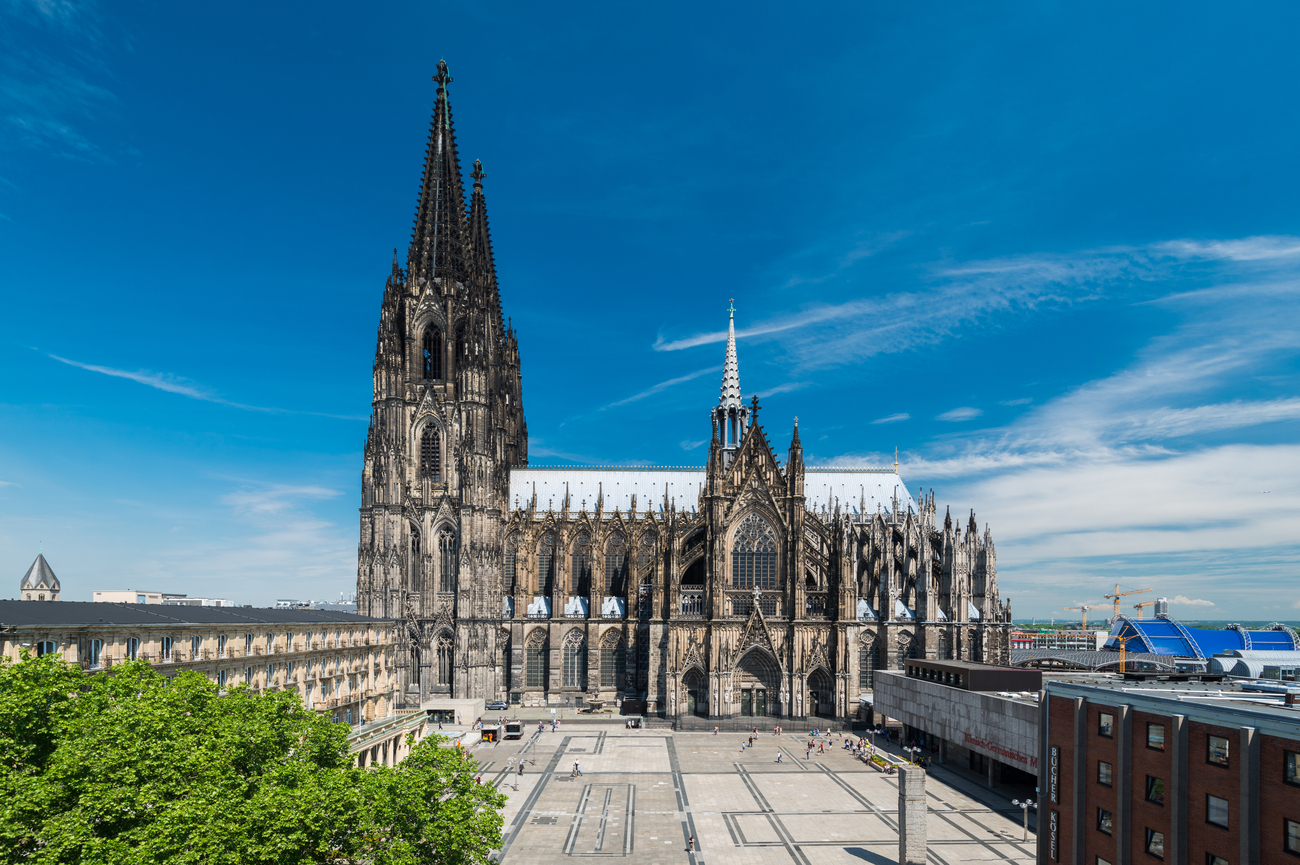
Your journey begins in Cologne, where the city wastes no time making an entrance. Cologne Cathedral stands directly beside the central station, so one of Germany’s most famous landmarks appears before the train has even moved. As the MittelrheinBahn leaves the city, Cologne’s busy neighborhoods gradually give way to quieter suburbs and open stretches of countryside. The Rhine remains slightly out of view at first.
Brühl
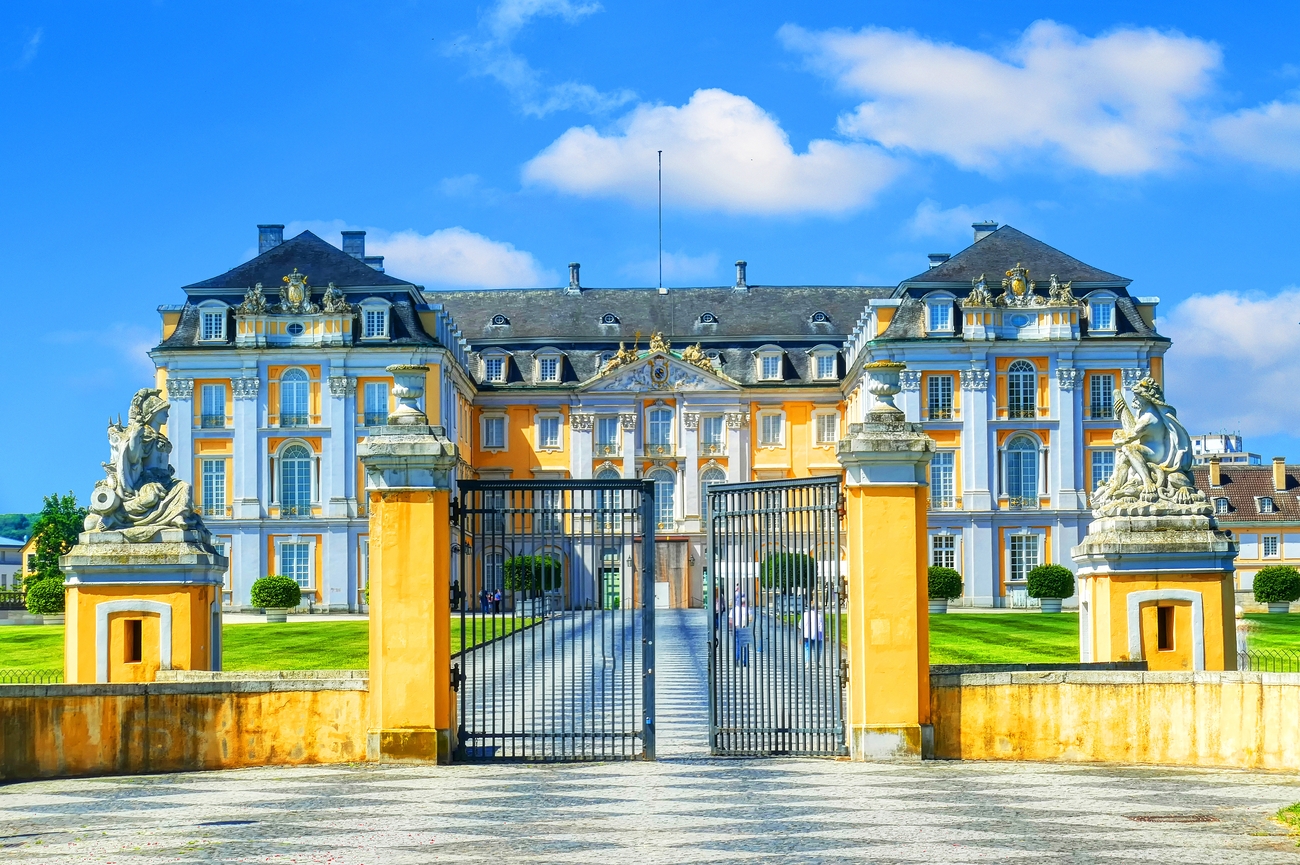
Brühl brings the first major historical landmark of the journey. Augustusburg Palace sits close to the railway, surrounded by formal gardens and wooded parkland. Together with nearby Falkenlust, it forms a UNESCO-listed complex known for its elaborate Rococo architecture.
The stop also marks a gentle transition between metropolitan Cologne and the smaller towns leading toward Bonn.
Bonn
Next comes Bonn, the former capital of West Germany and the birthplace of Ludwig van Beethoven. The city feels important without making a big performance out of it. Government buildings, museums and university halls sit comfortably beside lively shopping streets and historic squares.
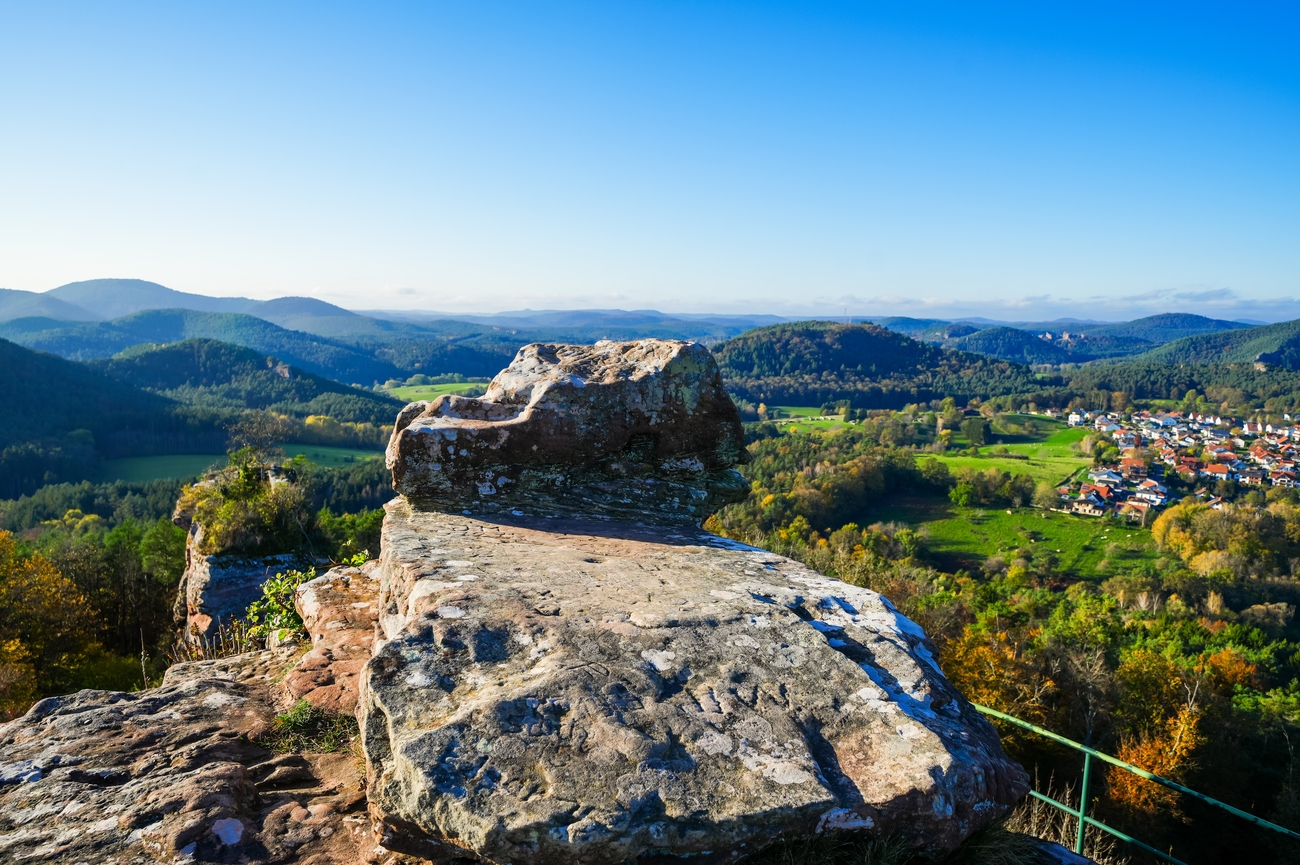
South of the center, the train passes Bonn’s former government district, Bad Godesberg and Mehlem. This is where the landscape begins stepping up. The hills of the Siebengebirge rise across the Rhine, with Drachenfels and its castle ruins visible on clear days.
Remagen
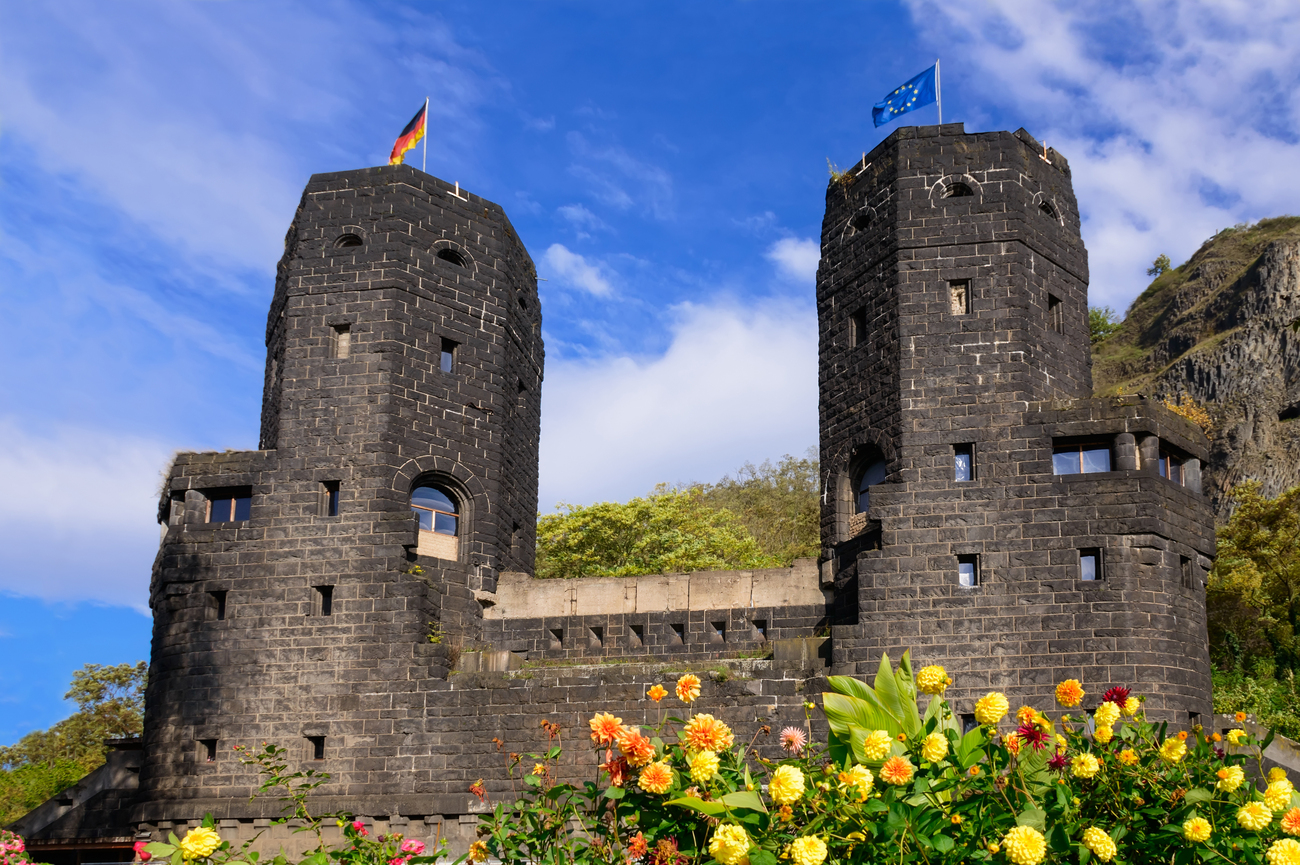
After passing the riverside communities of Rolandseck and Oberwinter, the railway reaches Remagen. The town became internationally known in 1945 when American forces captured the Ludendorff Bridge during the final months of World War II. The bridge no longer crosses the Rhine, but its surviving towers remain beside the river. Today, Remagen is much quieter than its wartime history suggests, with a long promenade and wooded hills framing the water.
Bad Breisig
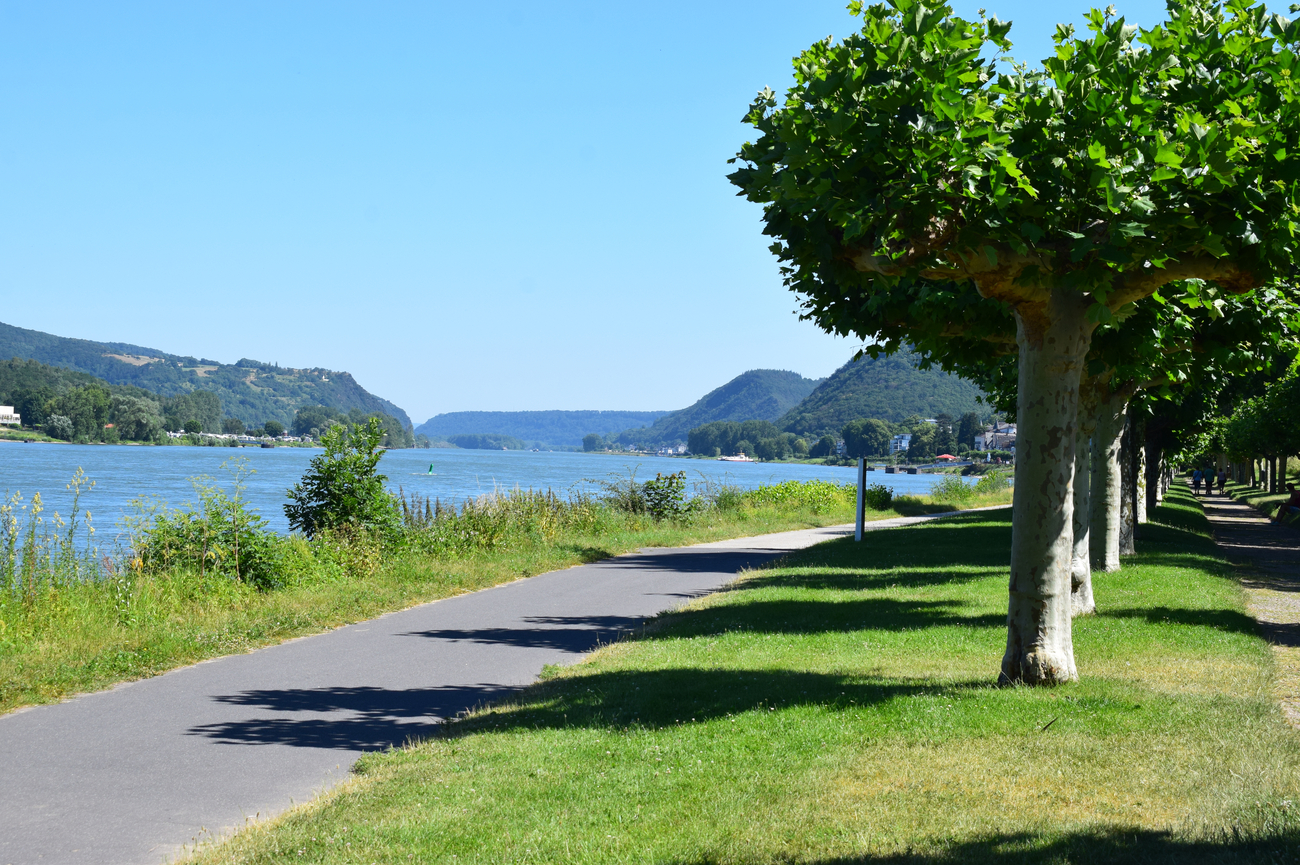
Bad Breisig arrives with classic spa-town energy: calm streets, thermal-water traditions and a riverfront designed for slow walks. It is the sort of place where leaving the train for coffee beside the Rhine feels completely reasonable.
The route continues through Brohl, where a heritage narrow-gauge railway occasionally travels inland through the Brohl Valley. Namedy follows shortly afterward, with its moated castle tucked close to the Rhine.
Andernach
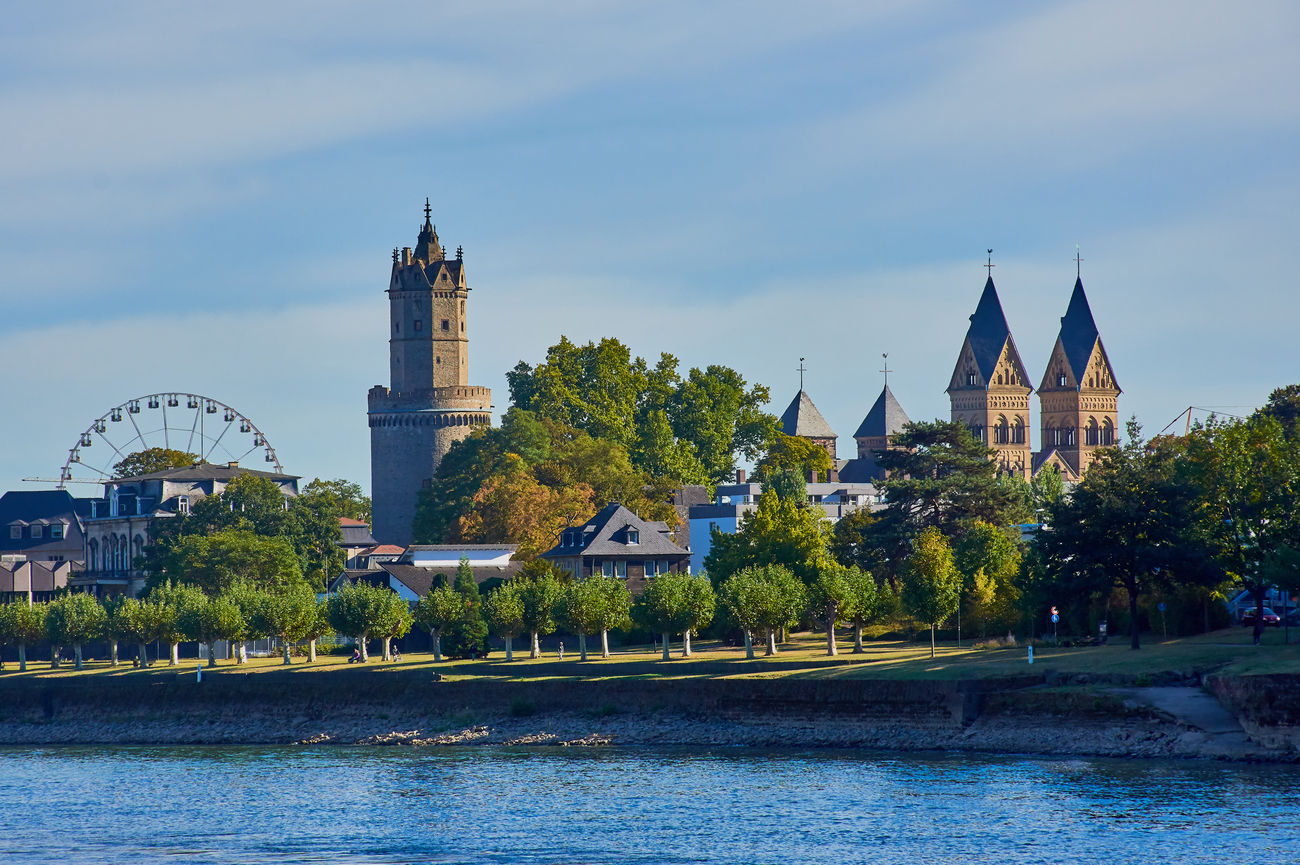
Andernach is one of the oldest cities along the route, with Roman foundations, medieval walls and the imposing Round Tower still shaping its skyline. Its most unusual attraction is the Andernach Geyser, described as the world’s highest cold-water geyser. Visiting the geyser requires a separate boat trip, so this is not a quick jump-off-and-back-on situation. From the carriage, however, Andernach still provides a strong mix of old fortifications, compact streets and riverside scenery.
Koblenz
Koblenz is where the journey shifts from pleasant to properly scenic. The city stands at the meeting point of the Rhine and Moselle, marked by Deutsches Eck and the hilltop Ehrenbreitstein Fortress.
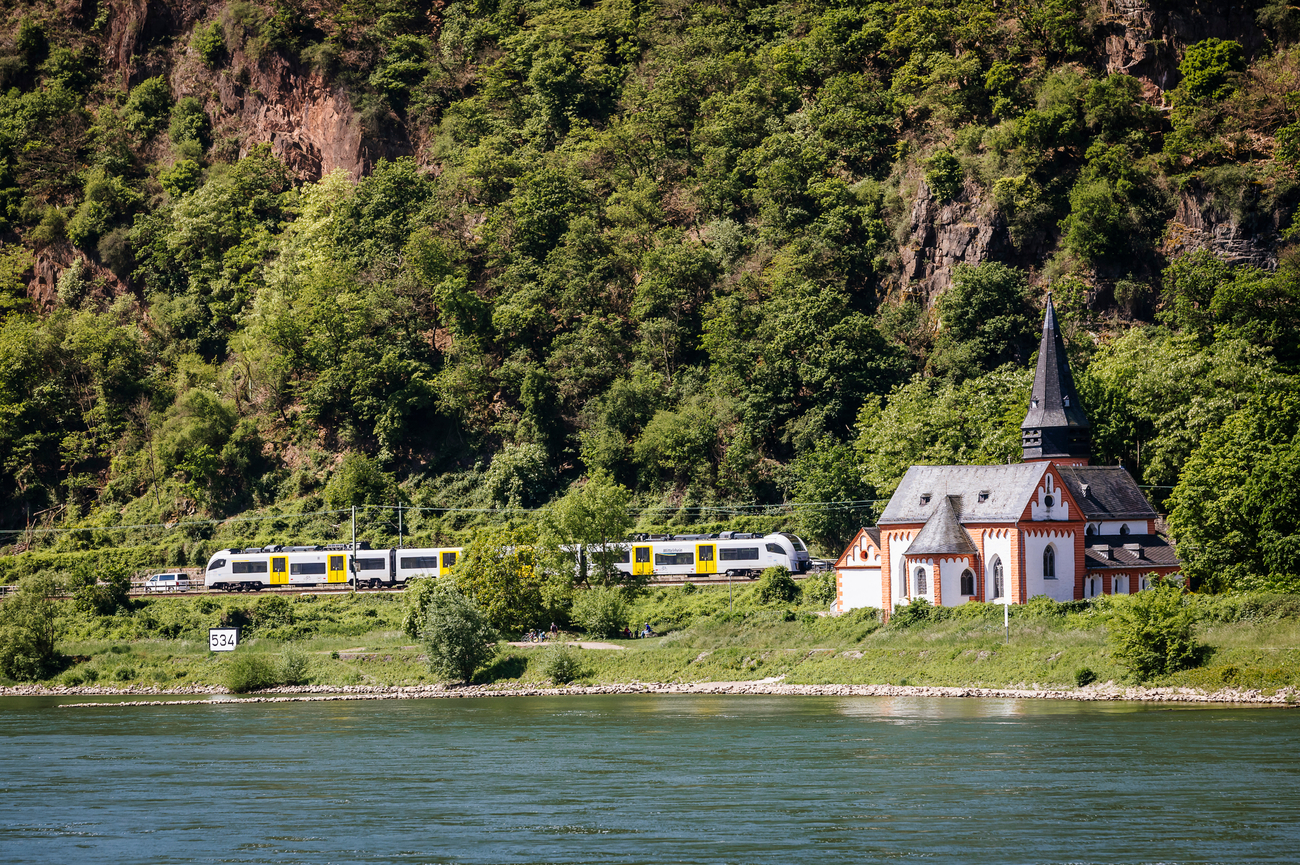
Once the train leaves Koblenz, the Upper Middle Rhine Valley takes over. The river narrows, vineyard-covered slopes rise beside the tracks and castles begin appearing with impressive regularity. This is the section where putting your phone down becomes oddly difficult because something new keeps showing up outside the window.
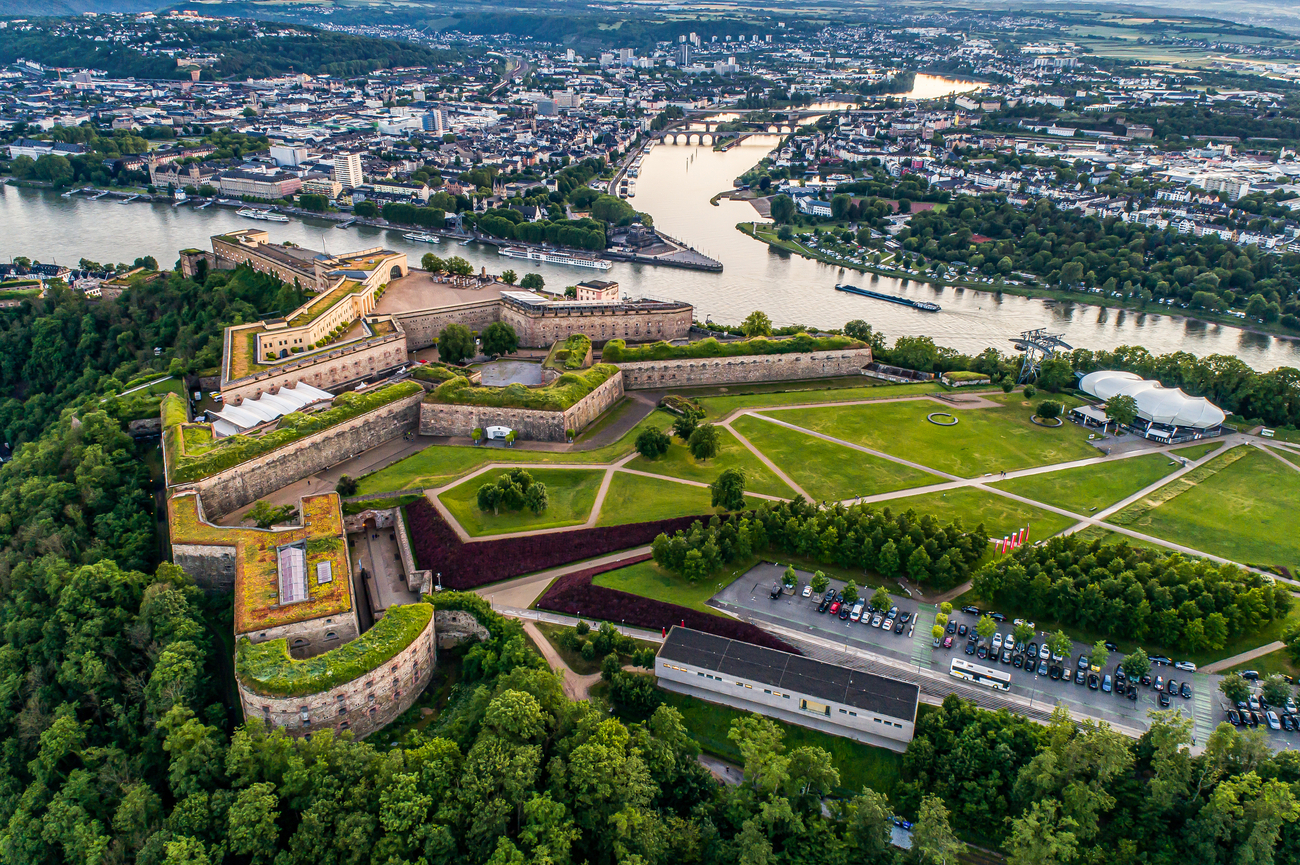
Rhens and Spay
Rhens is a compact medieval wine town known for its half-timbered buildings and the historic Königsstuhl, once associated with meetings of the electors of the Holy Roman Empire. Spay follows with a quieter riverfront surrounded by vineyards.
Across the Rhine, Marksburg Castle rises above Braubach. It is the only hilltop castle in this section of the Middle Rhine that was never destroyed, which explains why it looks unusually complete from the train.
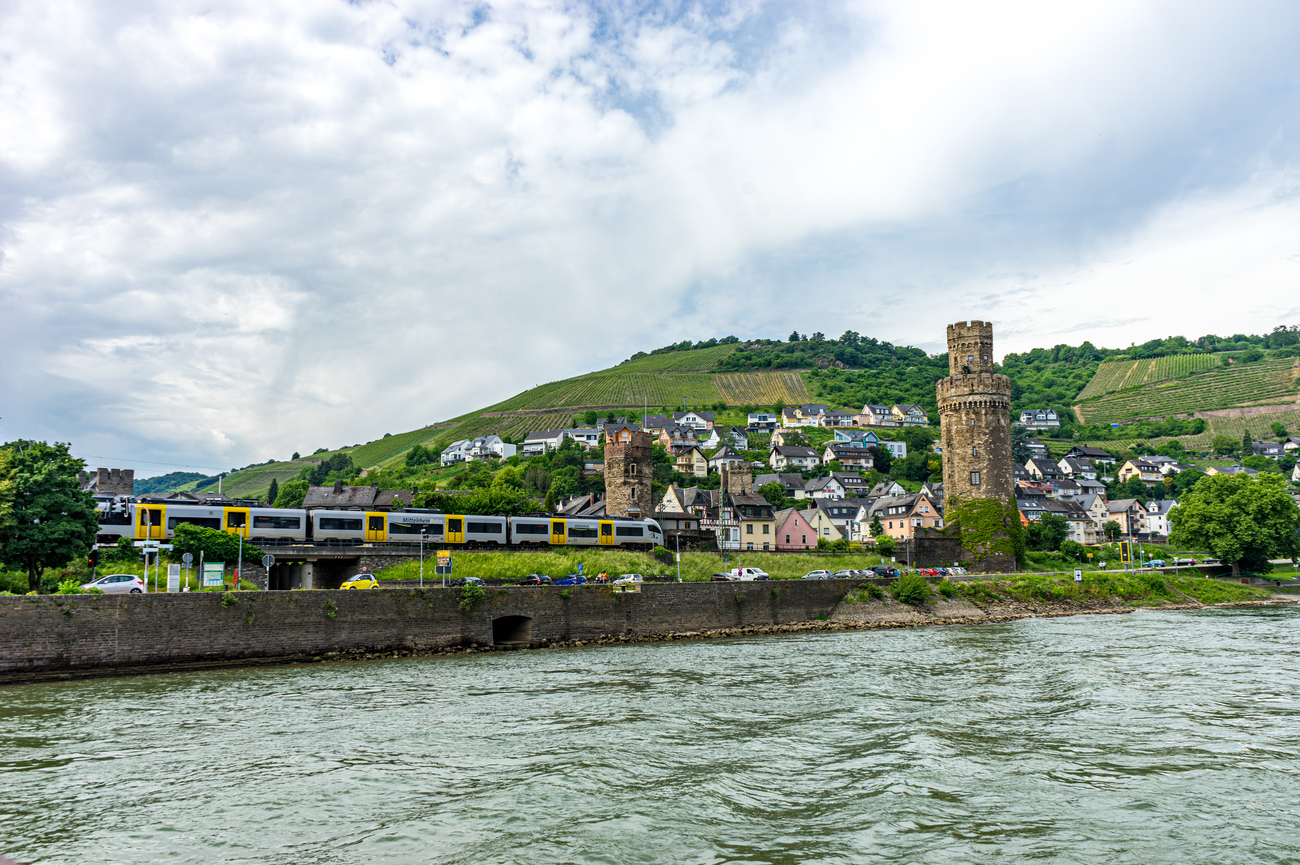
Boppard
Boppard sits beside one of the Rhine’s broadest bends, backed by the vineyards of the Bopparder Hamm. Roman remains, medieval buildings and a long riverside promenade make it one of the strongest places to leave the train.
Even if you remain onboard, the setting delivers. The river widens, boats move through the bend below the vineyards and the town gathers neatly between the water and the hills.
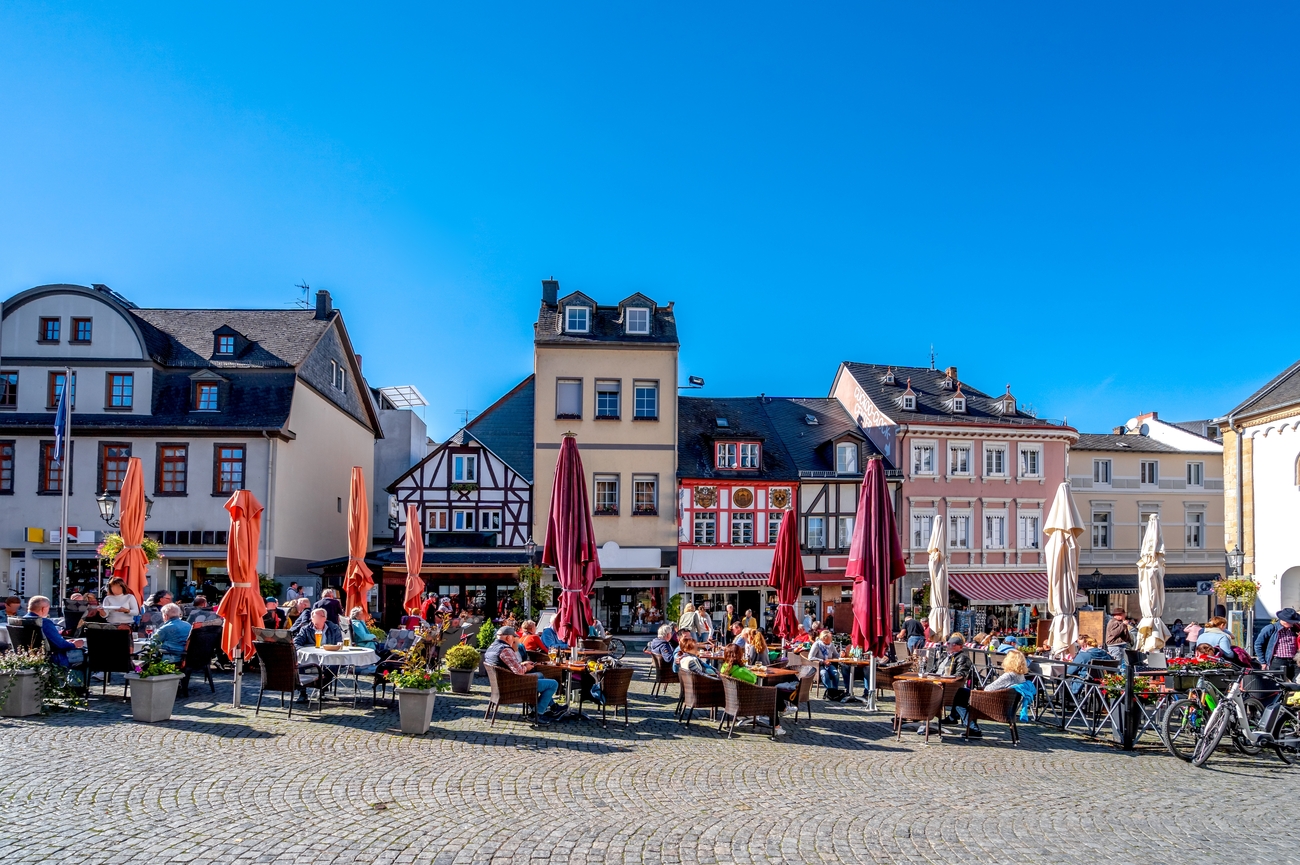
St. Goar
St. Goar is where the Rhine Valley becomes dramatically compact. Rheinfels Castle rises above the town, while the Loreley cliff stands across the river near St. Goarshausen. This historically difficult stretch of the Rhine is narrow, steep and busy. Trains, roads, river traffic, vineyards and medieval settlements all share the same tight corridor. It sounds crowded on paper, but from the window, the layers work brilliantly.
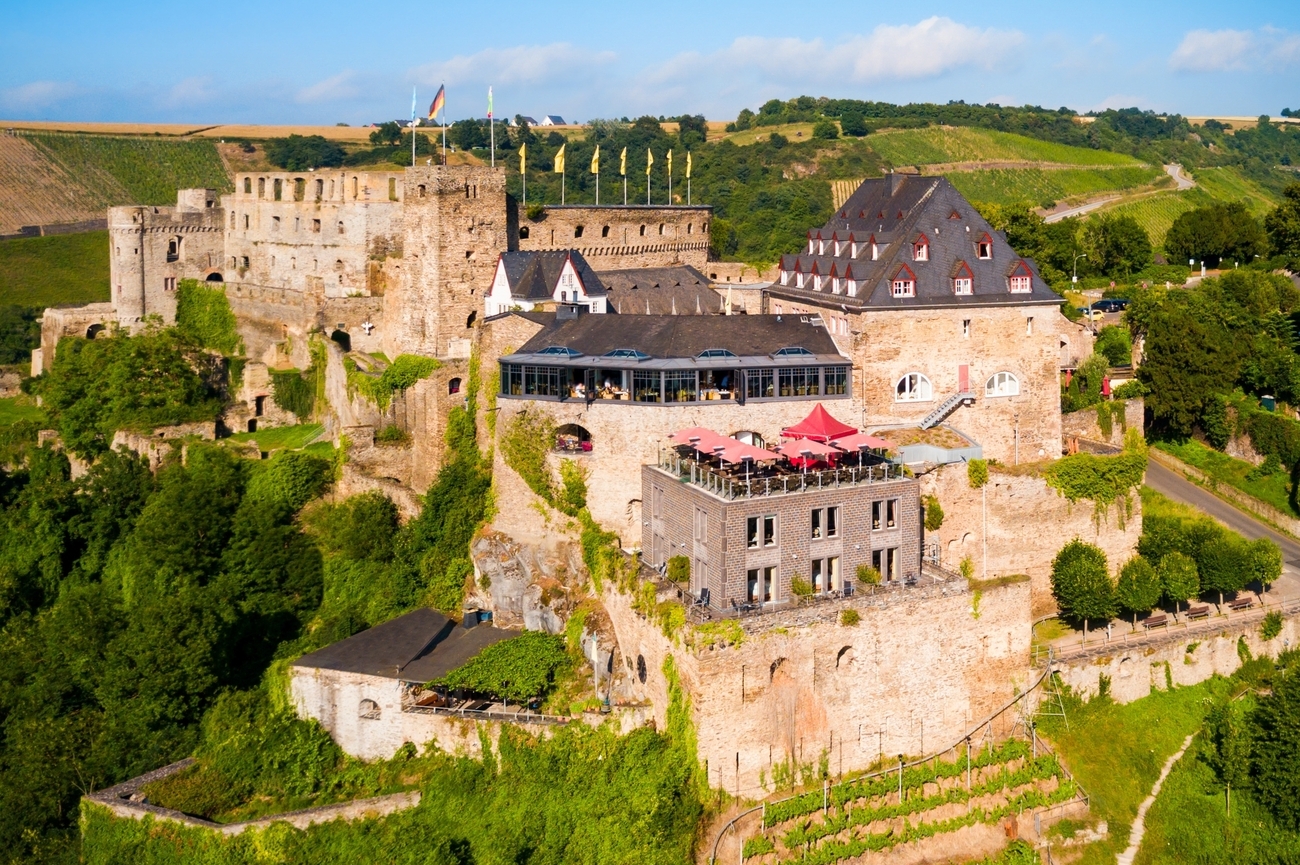
Oberwesel
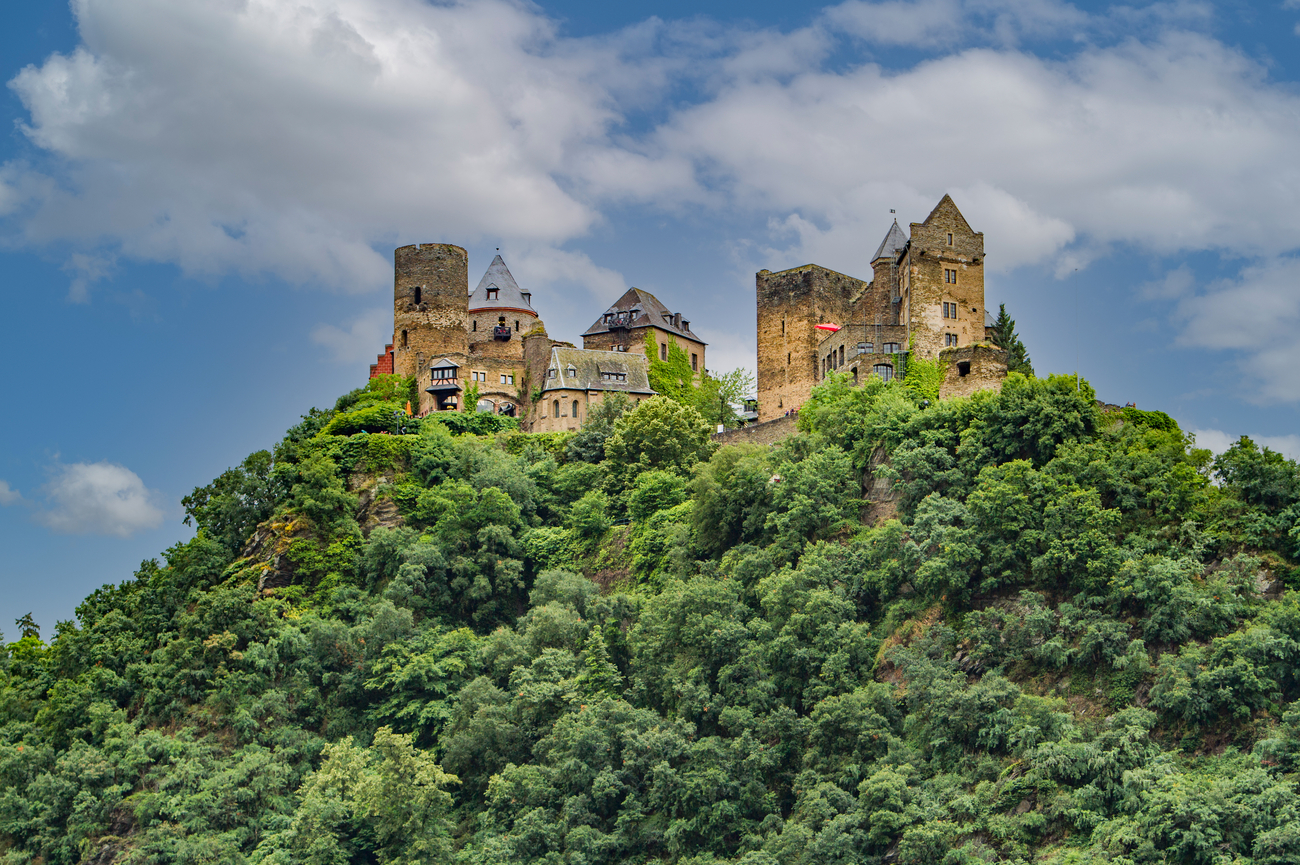
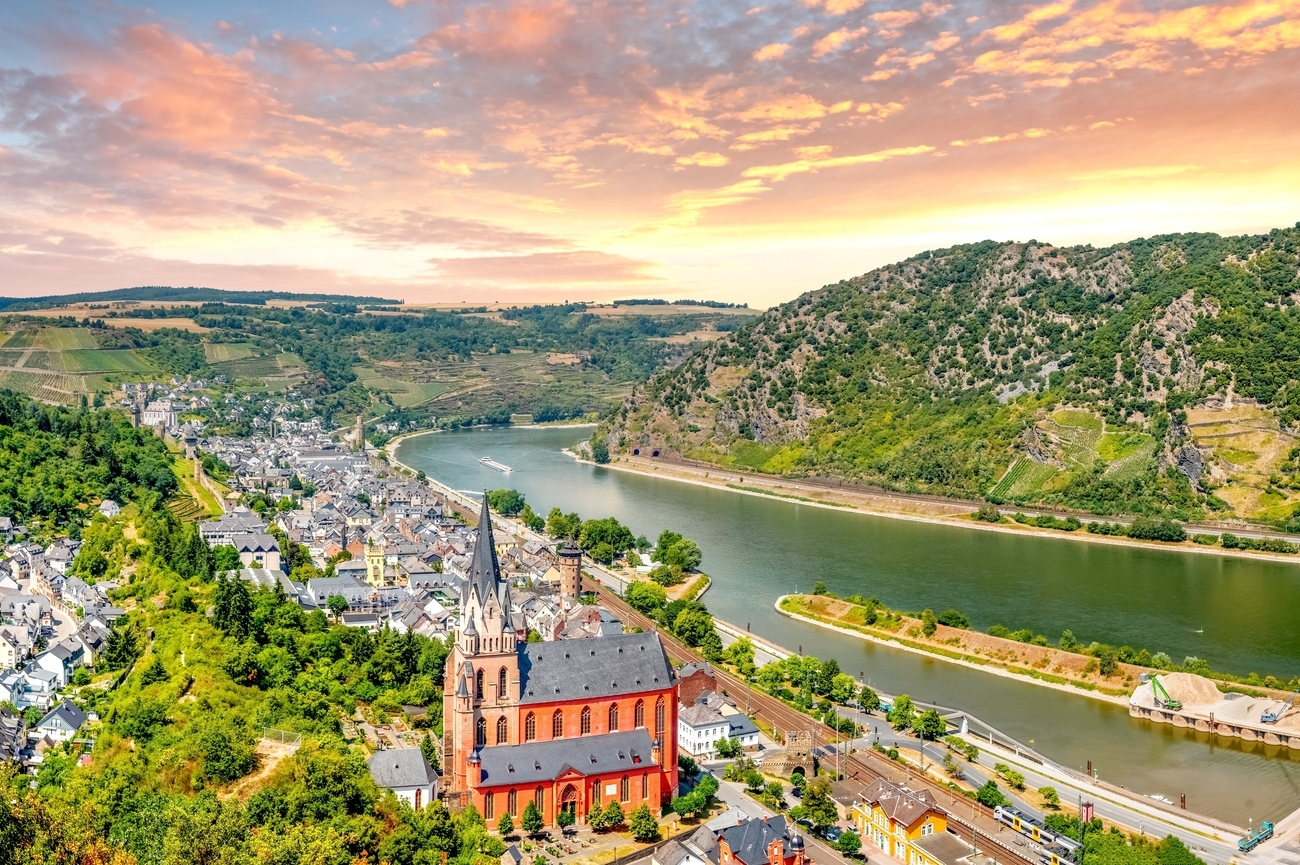
Oberwesel follows with medieval walls, defensive towers and Schönburg Castle overlooking the town. Vineyards climb the surrounding slopes, leaving very little space between the river, railway and historic center. The result is one of the route’s most complete town views. You can see how closely daily life, wine production and river transport have developed alongside one another.
Bacharach
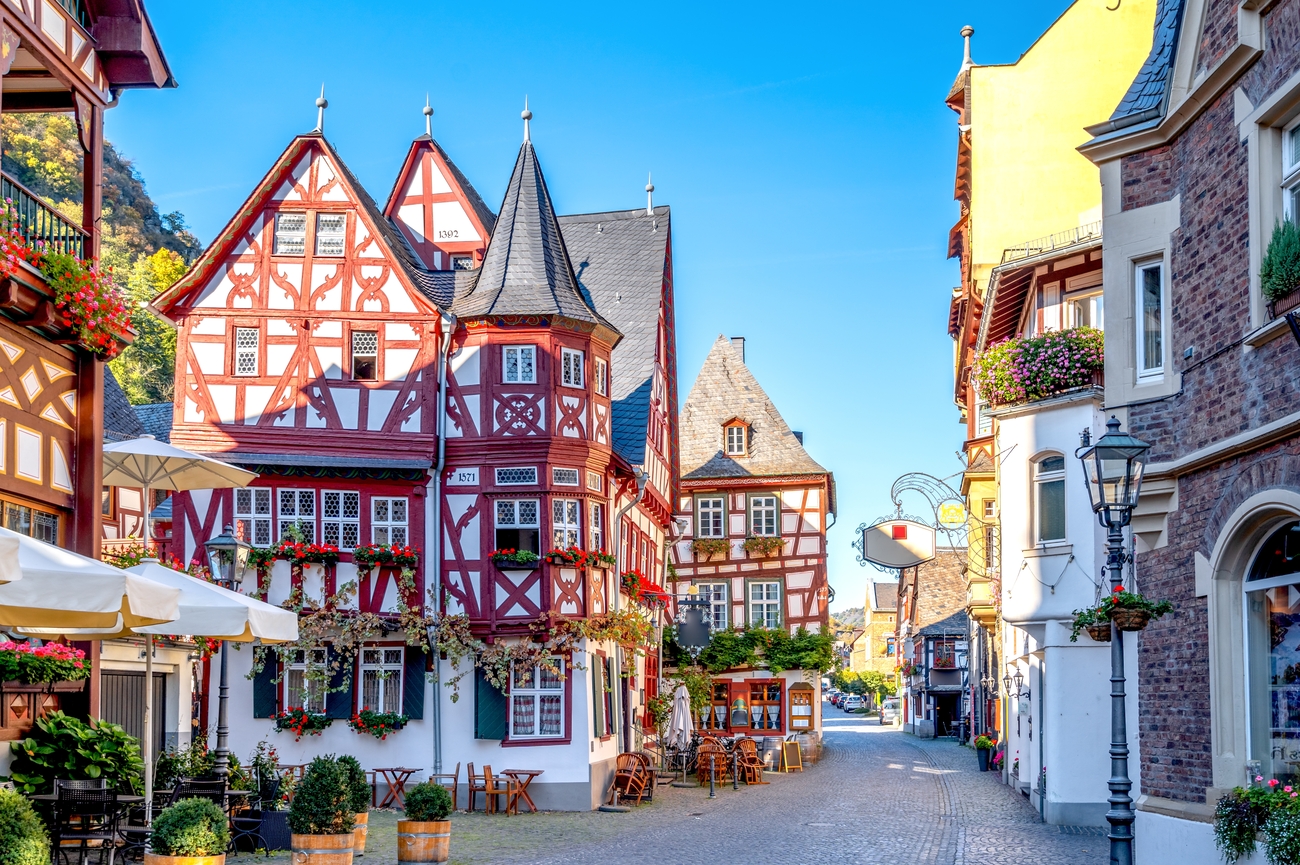
Bacharach looks almost suspiciously well preserved. Half-timbered houses fill the center, the ruins of Werner Chapel rise above the rooftops and Stahleck Castle watches from the hillside.
The railway passes directly beside the old town, partly framed by medieval walls and towers. It is one of those rare moments when the view from the carriage already feels like a proper visit.
Niederheimbach
and Trechtingshausen
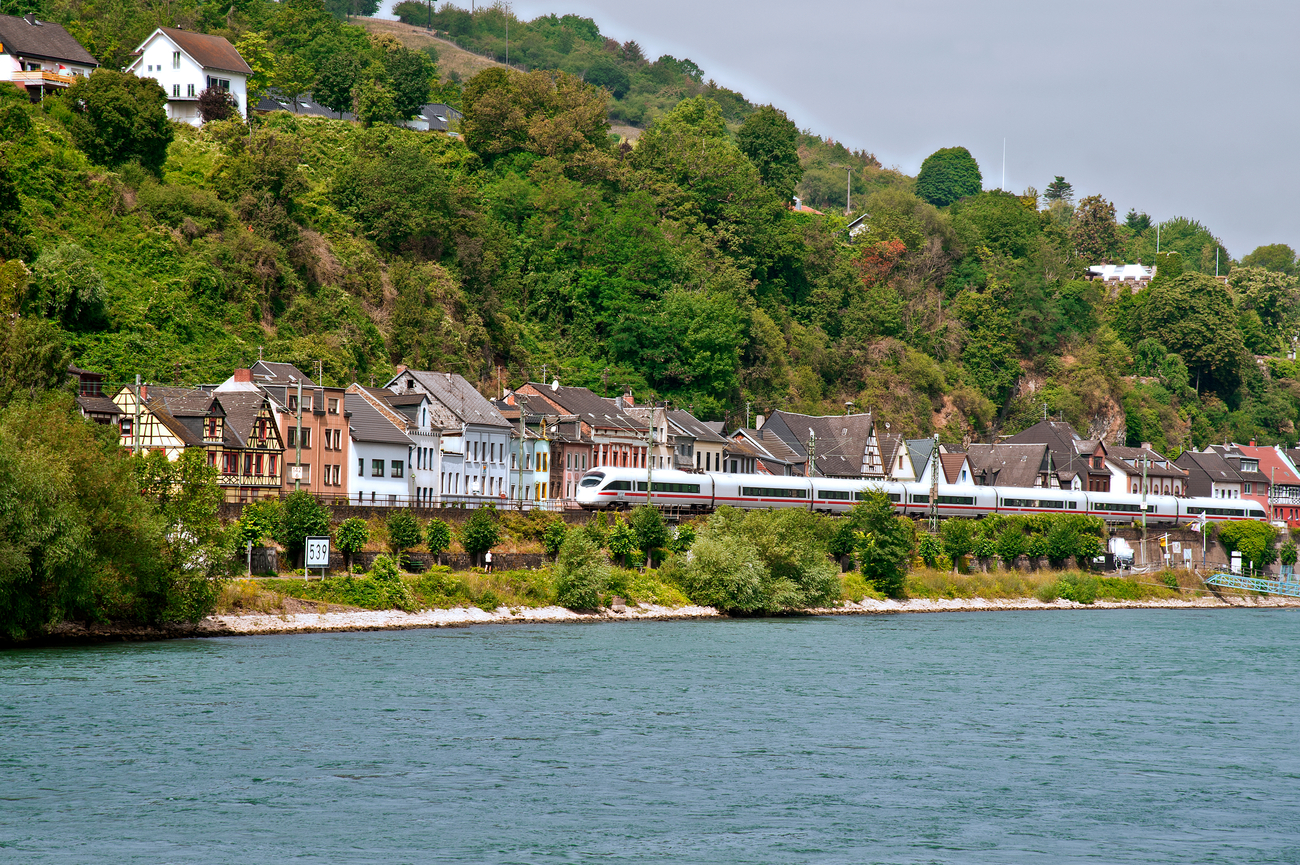
The train continues through the smaller wine towns of Niederheimbach and Trechtingshausen. This section brings another quick run of castles, including Heimburg, Sooneck, Reichenstein and Rheinstein.
The landmarks appear close together, so this is not the ideal moment for a nap or an intense luggage reorganization. The Rhine remains close to the tracks as wooded slopes and stone fortresses fill the view.
Bingen
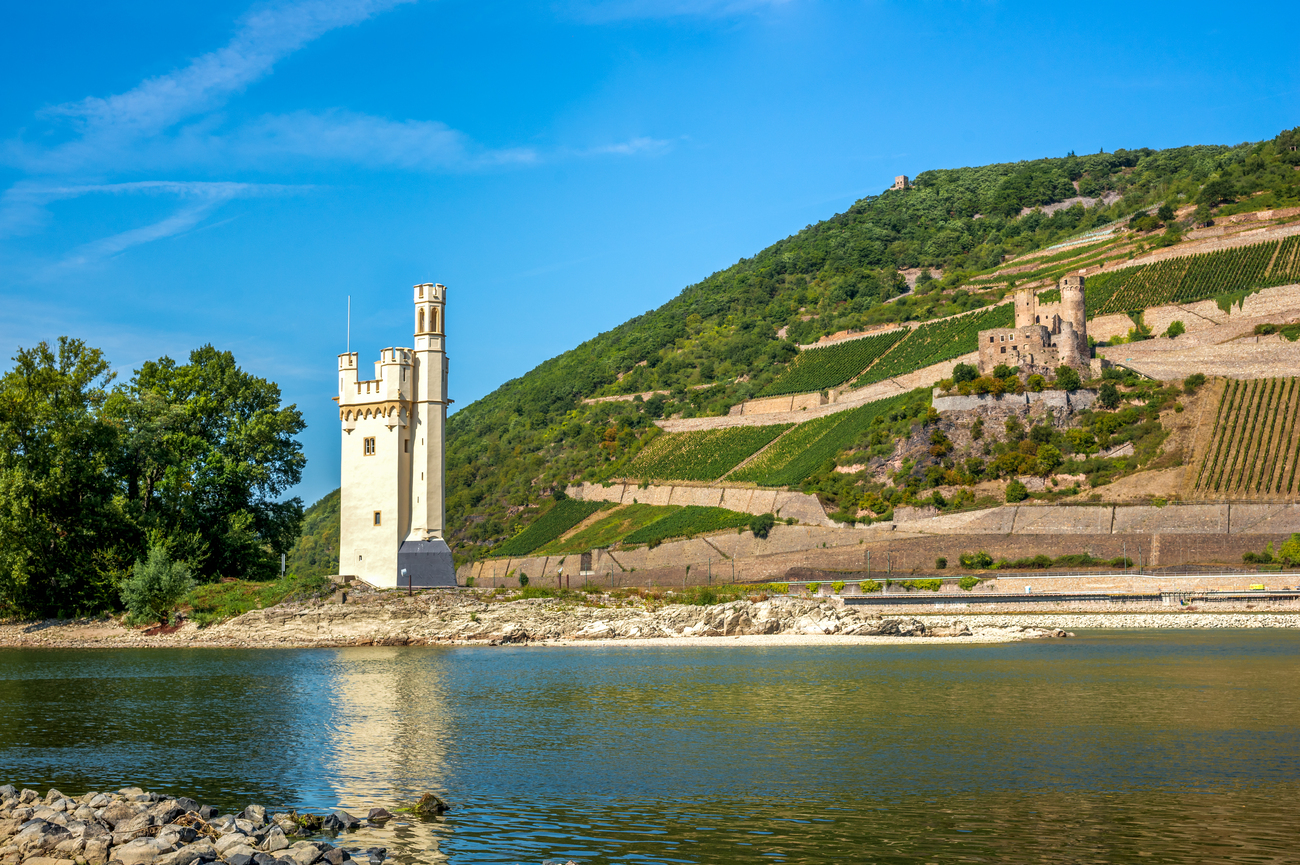
Bingen marks the southern end of the UNESCO-listed Upper Middle Rhine Valley. Approaching the city, look for the Mäuseturm standing on a small island and the ruins of Ehrenfels Castle across the river. The narrow gorge begins opening here, and the landscape becomes noticeably softer. Bingen itself sits near the meeting point of the Rhine and Nahe rivers and has long been connected with wine, river trade and Saint Hildegard of Bingen.
Ingelheim
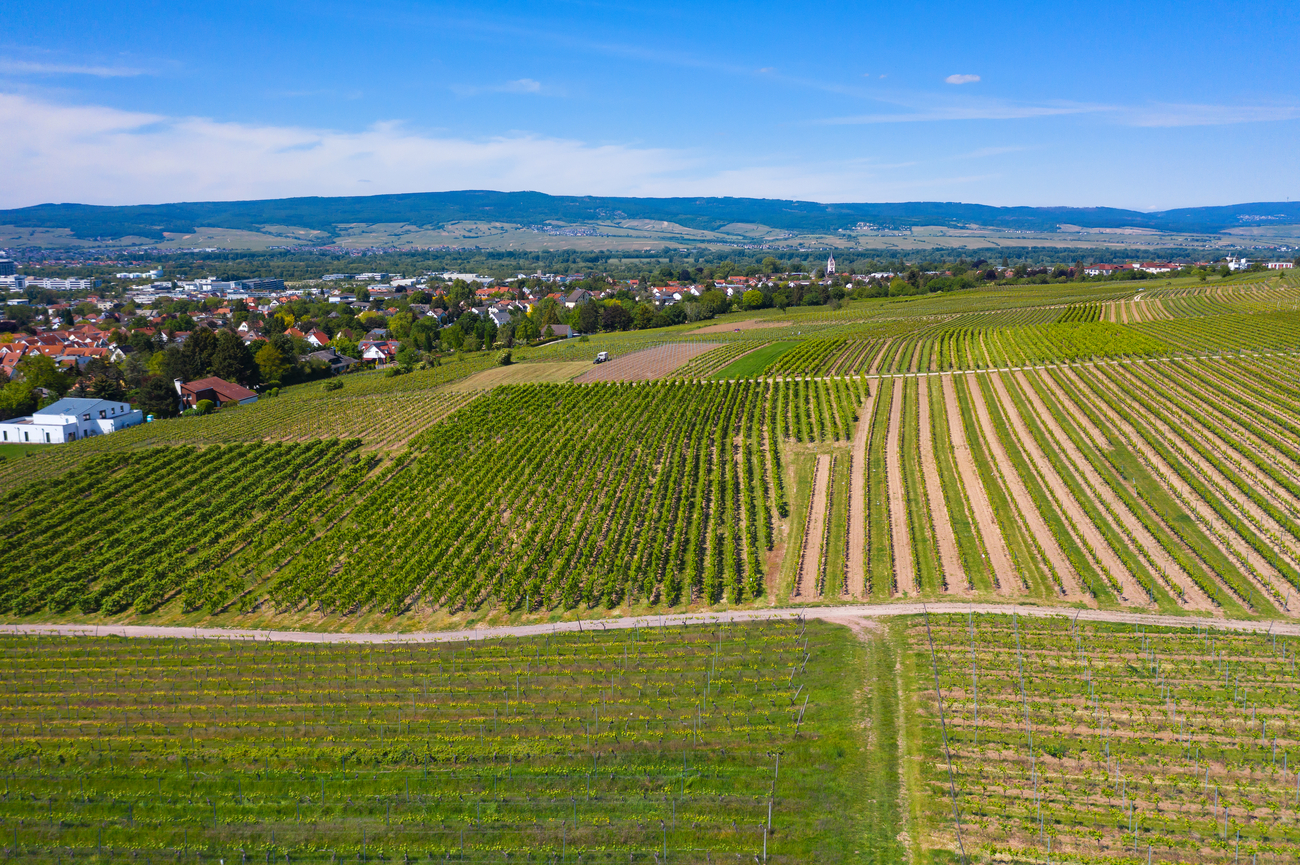
After Bingen, the journey enters the gentler vineyards of Rheinhessen. Ingelheim replaces dramatic cliffs with open wine country and residential neighborhoods. This city is closely associated with Charlemagne, who established an imperial palace here. Archaeological remains from the complex still survive.
Mainz
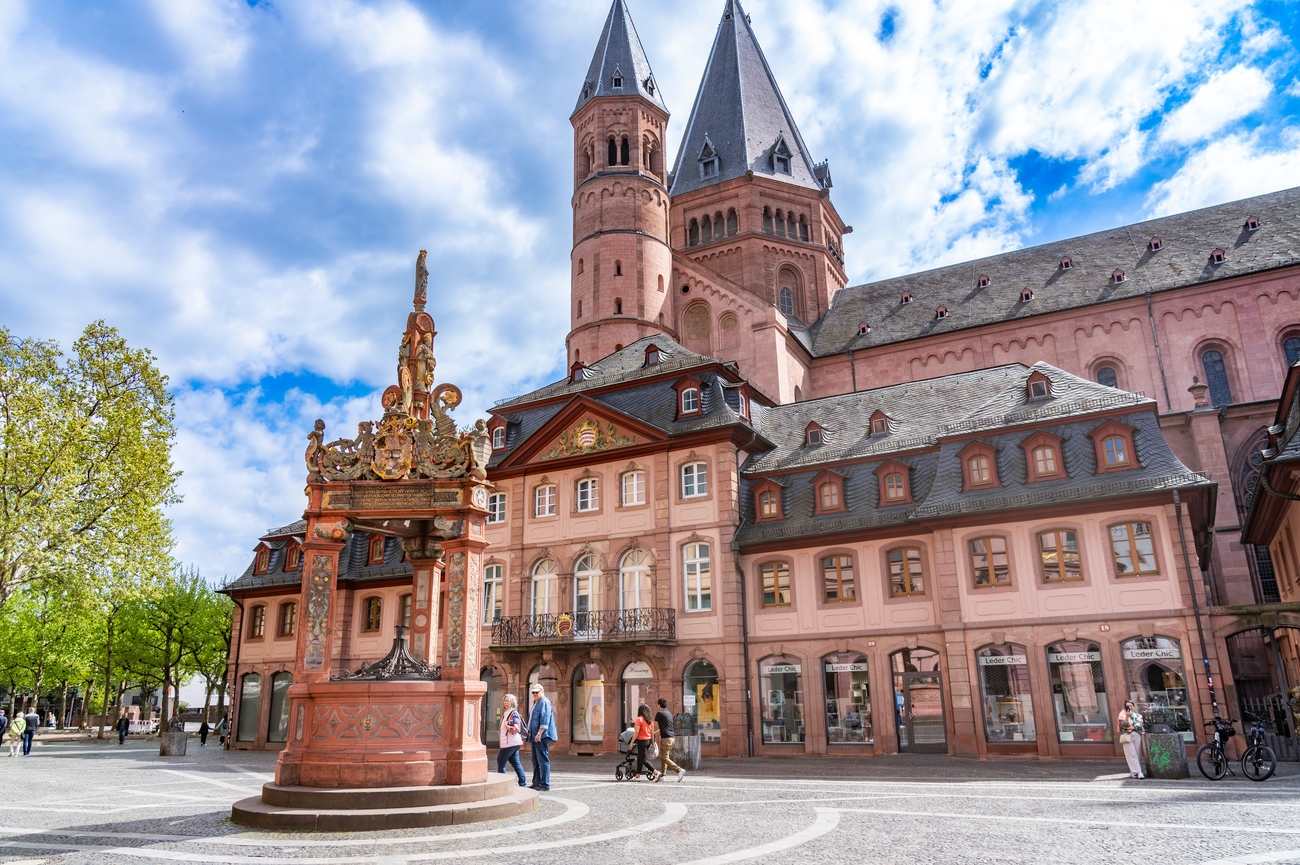
Just over three hours after leaving Cologne, the train arrives in Mainz. The capital of Rhineland-Palatinate is known for its Roman history, red sandstone cathedral and connection to Johannes Gutenberg, whose work with movable-type printing transformed communication across Europe. It provides an easy finish to the journey. The old town, market squares, wine taverns and Rhine promenade are all accessible from the central station. After a route filled with former capitals, medieval walls, vineyard slopes and an almost unreasonable number of castles, Mainz feels lively without breaking the relaxed rhythm of the railway.
Duration
The direct train journey from Cologne to Mainz takes approximately 3 hours and 20 minutes and covers around 184 kilometers. No transfer is required, so the entire route can be completed comfortably in one sitting.
The first part of the trip travels through Cologne’s southern districts before continuing toward Brühl, Bonn and the smaller communities along the Rhine. The landscape becomes increasingly scenic south of Bonn, with the river, the Siebengebirge hills and several historic riverside towns appearing along the way.
Koblenz is reached roughly halfway through the journey. From there, the train enters the Upper Middle Rhine Valley, the most scenic section of the route. For approximately the next hour, the railway follows the river through steep vineyard-covered hills and historic towns such as Boppard, St. Goar, Oberwesel and Bacharach. Numerous castles and fortresses are visible from the train, including Rheinfels Castle, Schönburg Castle and several hillside castles near Trechtingshausen.
After Bingen, the narrow Rhine Gorge opens into the broader vineyard landscapes of Rheinhessen. The final section passes through Ingelheim, Heidesheim, Budenheim and Mainz-Mombach before arriving at Mainz Hauptbahnhof.
If you choose to remain onboard you can complete the journey in one morning or afternoon. However, leaving the train to explore even one or two towns will extend the trip considerably. Stops in Bonn, Koblenz, Boppard or Bacharach can easily turn the route into a full-day journey, while visiting several destinations is better spread over two or three days.
Unlike Germany's dedicated scenic tourist trains, the MittelrheinBahn is a standard regional service used by commuters and visitors alike. The modern carriages are comfortable and practical, with large windows that make it easy to enjoy the views of the Rhine Valley. There are no panoramic coaches or dining cars, but the scenery outside is the real reason to take the journey.

Schedules and Tickets
The MittelrheinBahn RB26 generally operates once every hour between Cologne and Mainz, following the Left Rhine Railway through Bonn, Koblenz, Boppard, Bacharach and Bingen without transfers. Some services begin at Cologne Bonn Airport before continuing via Köln Hauptbahnhof, with the full journey from central Cologne to Mainz taking around three hours.
Departure times can vary on weekends, public holidays and during construction work, so it is advisable to check shortly before departure using DB Navigator or the official MittelrheinBahn RB26 timetable.
Tickets are sold via Deutsche Bahn and are available through DB Navigator, bahn.de, ticket machines and DB travel centers. As a regional service, ICE, IC and EC Super Saver and Saver fares do not apply; instead, the relevant options are the Normalpreis regional fare, the Deutschland-Ticket and regional day passes.
No Seat Reservations
Seat reservations are not available on the MittelrheinBahn, including for groups. You can choose any available seat after boarding. Weekend and summer services can become busy through the Upper Middle Rhine Valley, so an earlier departure offers a better chance of securing a window seat.
When traveling south from Cologne, the left side generally provides the closest views of the Rhine between Koblenz and Bingen. However, castles, vineyards and historic towns appear on both sides of the train.
Whether you travel the full route in one journey or spend several days exploring the riverside towns, the MittelrheinBahn offers one of Germany's most rewarding rail experiences. It combines medieval history, vineyard landscapes and everyday life along the Rhine into a journey that feels both timeless and authentic. More than simply a way to travel between Cologne and Mainz, it is an opportunity to experience one of Europe's most celebrated cultural landscapes from a unique perspective.


Let us know what you love, where you want to go, and we’ll design a one-of-a-kind adventure you’ll never forget.
Get in touch
Miriam
Travel Specialist

Romina
Travel Specialist

Laura
Travel Specialist
Frequently Asked Questions
- Is the MittelrheinBahn suitable for a day trip from Cologne?
Yes. The route works well for a day trip, particularly if you choose one or two towns to explore rather than travelling the entire line and stopping everywhere.
- Which towns are best for an overnight stay along the MittelrheinBahn route?
Boppard, Bacharach and St. Goar are particularly good choices for an overnight stay, combining attractive historic centres with easy access to the Rhine and surrounding castles.
- Can the MittelrheinBahn journey be combined with a Rhine river cruise?
Yes. Several towns along the route have river piers, making it possible to combine part of the train journey with a Rhine cruise for a different perspective of the valley.
- Is the MittelrheinBahn accessible for passengers with reduced mobility?
Many services use modern low-floor trains designed to improve accessibility. However, station accessibility varies along the route, so passengers requiring step-free access should check individual stations before travelling.
- Is there Wi-Fi on the MittelrheinBahn?
Wi-Fi availability depends on the particular train operating the service and should not be relied upon throughout the journey. Mobile reception may also vary through parts of the Rhine Valley.
- What is the best time of year to travel on the MittelrheinBahn?
Spring through autumn offers some of the most attractive Rhine Valley scenery, with vineyards, riverside towns and walking routes at their most appealing. Autumn is particularly striking when the vineyards change colour.
- Can Revigorate arrange private experiences along the MittelrheinBahn route?
Yes. Revigorate can arrange private sightseeing, castle visits, wine experiences, dining reservations and other tailored activities along the Rhine Valley, creating a journey around your interests rather than a fixed tour.
- Can Revigorate include the MittelrheinBahn in a tailor-made Germany itinerary?
Yes. Revigorate can incorporate the MittelrheinBahn into a tailor-made Germany itinerary, combining the Rhine Valley with private transfers, hand-picked accommodation, sightseeing, dining experiences and other destinations according to your interests.
Our offices:


Revigorate, Iberian Escapes and Algarve Lifestyle are the registered brand names of APCS Lda . We are a fully authorised travel agency licensed by Turismo de Portugal RNAVT/6867.
In the event of a dispute, the consumer may refer to: RAL - Centros de Arbitragem
Avª. 5 de Outubro, nº. 55, R/C Dtº. 8000-075 Faro, Portugal | Tel: +351 289 823 135 *
* national landline call
E-mail: info@consumoalgarve.pt| www.consumidoronline.pt | Mon to Fri: 9:00 - 13:00 / 14:00 - 17:00