Black Forest Railway: Through the Mountains, Towns
and Valleys of Southern Germany
The Black Forest Railway or Schwarzwaldbahn is one of Germany’s classic mountain railways, and its reputation makes more sense once the route starts climbing into the forest.
The historic line runs for about 149 kilometers from Offenburg to Singen, cutting across the Black Forest rather than simply following an easy valley floor. Completed in 1873 under engineer Robert Gerwig, the railway was built to connect the Rhine lowlands with communities across the mountains and the Lake Constance region. Getting there required 39 tunnels, a viaduct and a clever system of loops to manage the steep terrain.
The most interesting section comes after Hausach, as the train climbs toward Hornberg, Triberg and St. Georgen. Between Hornberg and Sommerau alone, the railway gains 448 meters in elevation. Gerwig stretched what is roughly 11 kilometers as the crow flies into 26 kilometers of track, using curves and loops to gain height without turning the railway into an excessively steep mountain line. The engineering becomes surprisingly easy to notice from the carriage: wooded valleys appear below, tunnels cut through the mountainside and each return to daylight seems to place the train a little higher than before.
That engineering is also what makes the Black Forest Railway such a good sightseeing route. Outside the window are thick forested slopes, small towns, old farmhouses and the occasional church tower tucked into the valleys. Around Hornberg and Triberg, the scenery gets especially good, but the train never feels like a tourist attraction pretending to be public transport. Current Black Forest Railway regional services continue beyond the historic Offenburg-Singen line, running between Karlsruhe and Konstanz.
And it takes very little effort to enjoy it. You can stay on board and watch the Black Forest change as the train climbs or stop somewhere like Gengenbach or Triberg and turn the journey into a full day out. The tunnels, loops and mountain scenery give the ride plenty of character, while the stations along the way make it practical for actual travel.
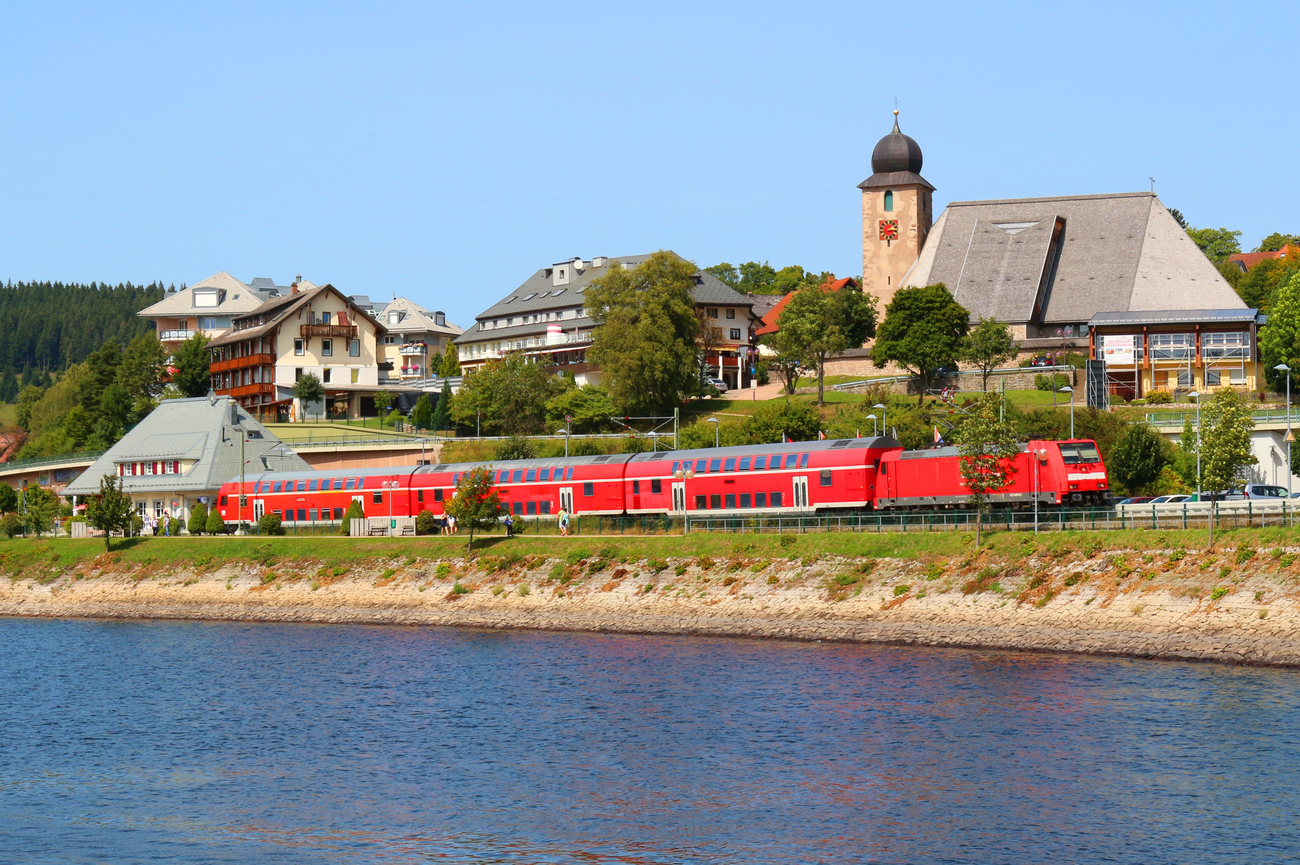
Black Forest Itinerary

Offenburg to Singen
The Black Forest Railway runs for about 149 kilometers from Offenburg to Singen, cutting right across the Black Forest from the Rhine Plain to the Hegau region near Lake Constance. It was fully opened in 1873 and follows the Kinzig Valley before climbing into the mountains between Hornberg, Triberg and St. Georgen, where it winds through 39 tunnels, crosses a viaduct and makes use of two large looping sections to gain height.
Today, Regional-Express (RE 2) trains actually run beyond the historic line in both directions, continuing between Karlsruhe and Konstanz. But if you’re thinking of the classic Black Forest Railway experience, the core stretch is really Offenburg to Singen. From there, it’s an easy decision whether to stop or keep going. Konstanz just makes for a natural extension if you’d rather finish the day on the shores of Lake Constance instead of turning back at Singen.
Offenburg
The journey begins in Offenburg, sitting between the Rhine Plain and the western foothills of the Black Forest. It is an important railway junction, with the Rhine Valley Railway continuing north and south while the Black Forest Railway turns east toward the mountains. The city itself lies among vineyards and fruit-growing country, with the Kinzig providing the natural route into the forest.
Leaving Offenburg, the scenery does not immediately turn into dense pine forest. The railway eases into it. Flat farmland gradually gives way to vineyards, wooded hills and villages gathered along the Kinzig.
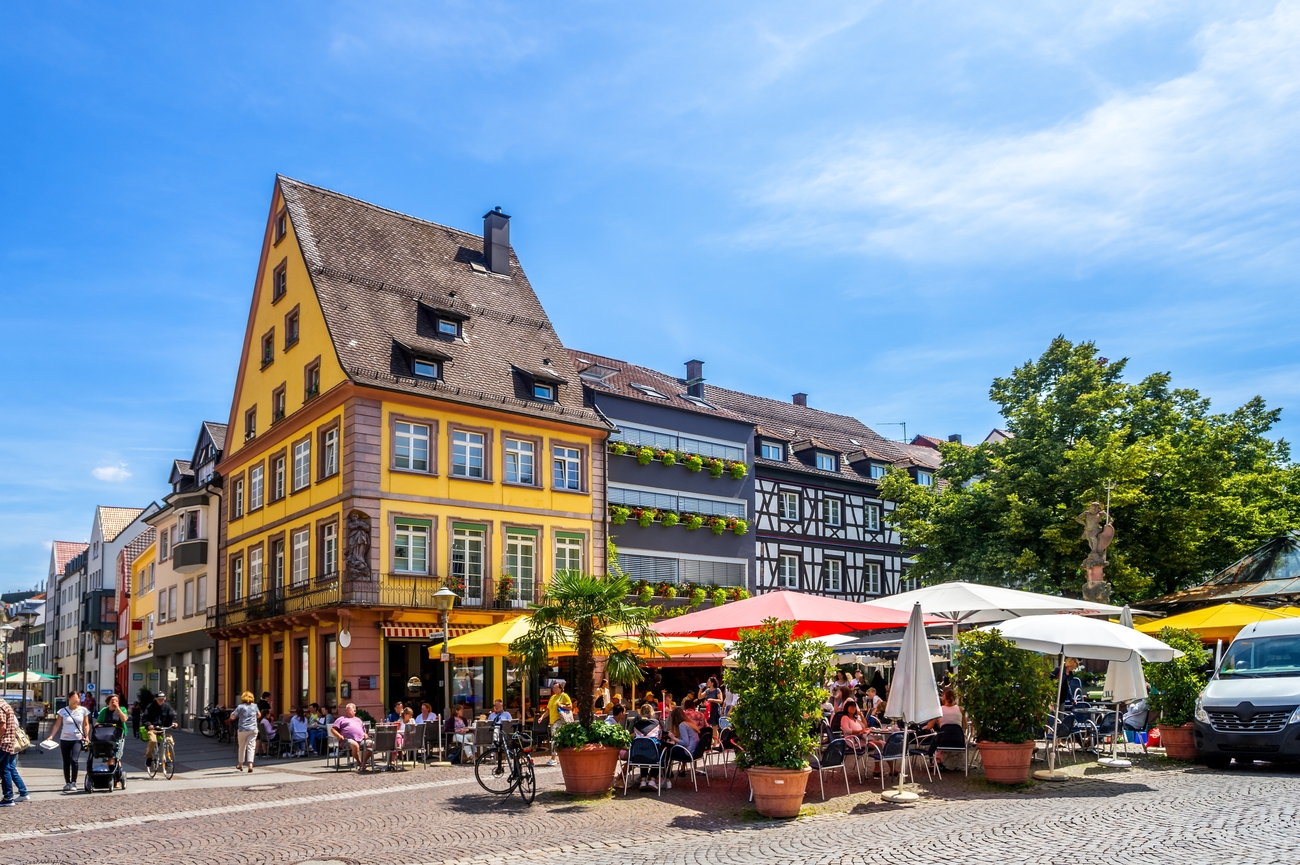
Gengenbach
Gengenbach is the first stop that seriously tests any plan to stay on the train all day. Its compact old town sits close to the station, with historic gateways, half-timbered buildings and narrow streets surrounded by vineyards and wooded hills. The railway continues deeper into the Kinzig Valley from here. Hills close in on both sides, the river stays nearby and traditional farmhouses begin appearing between patches of forest.
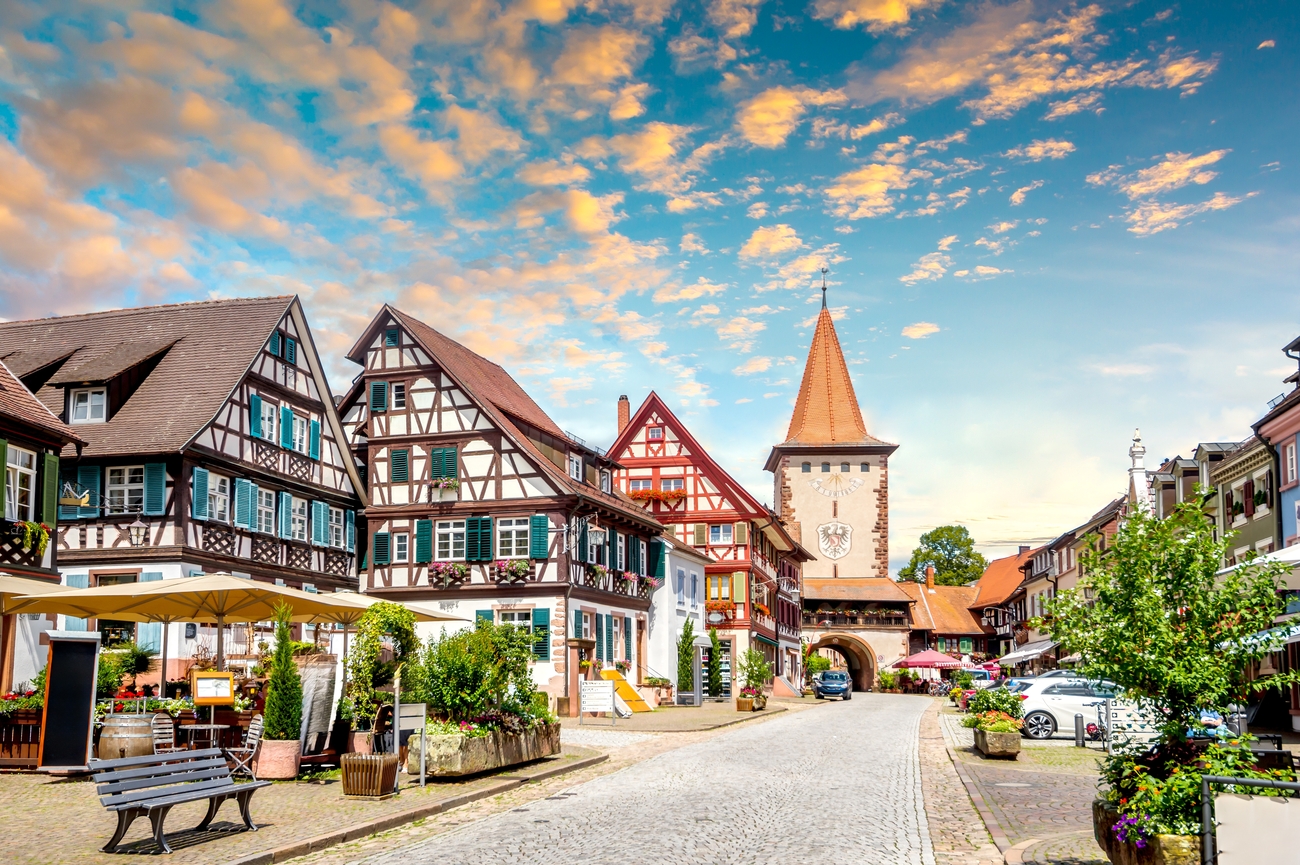
Haslach
Haslach brings another historic town into the mix, this time deeper inside the Kinzig Valley. The railway runs through a landscape shaped by forested slopes, small settlements and the river. This part of the route is more about watching the geography tighten around the railway. Villages occupy the limited flat ground along the valley floor while wooded hills rise almost immediately behind them. It is a good warm-up for what comes after Hausach.
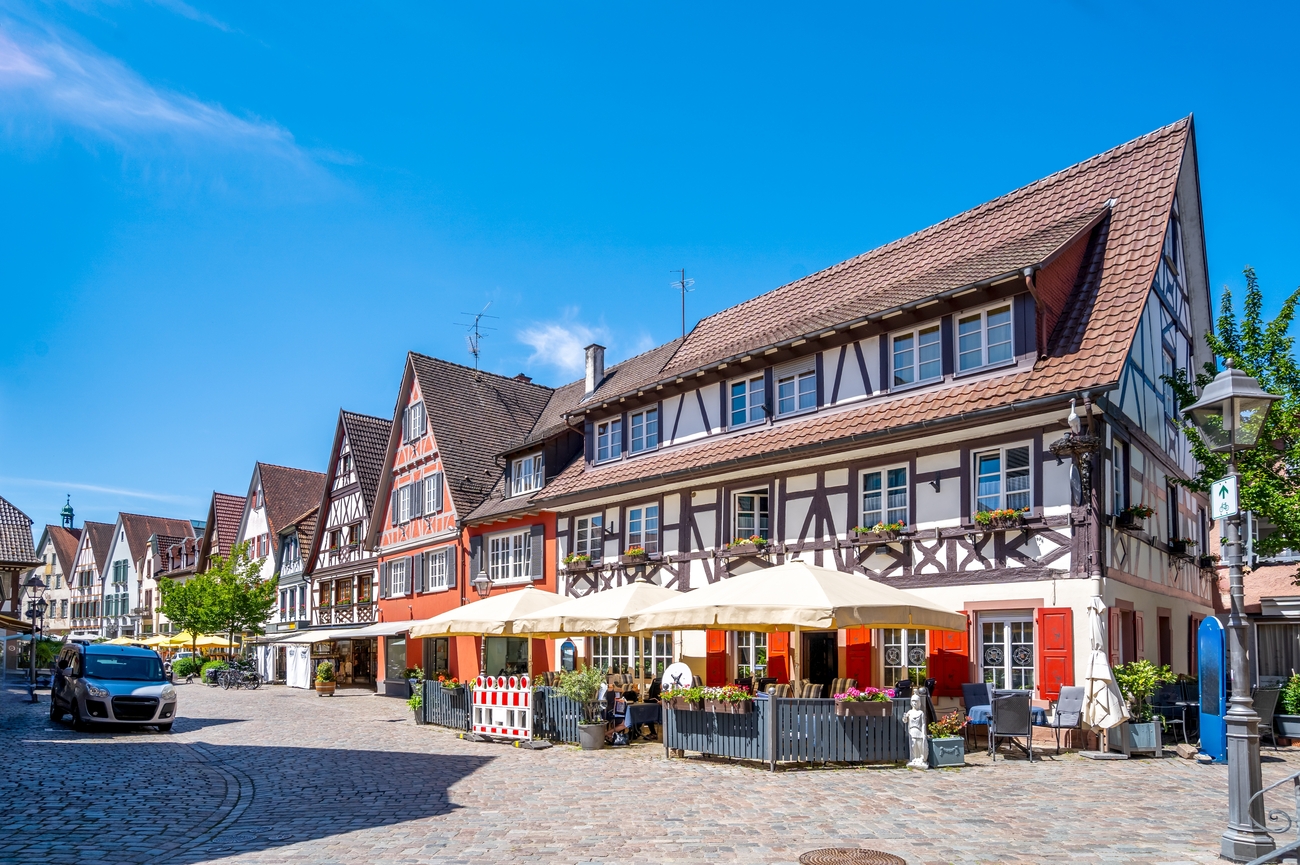
Hausach
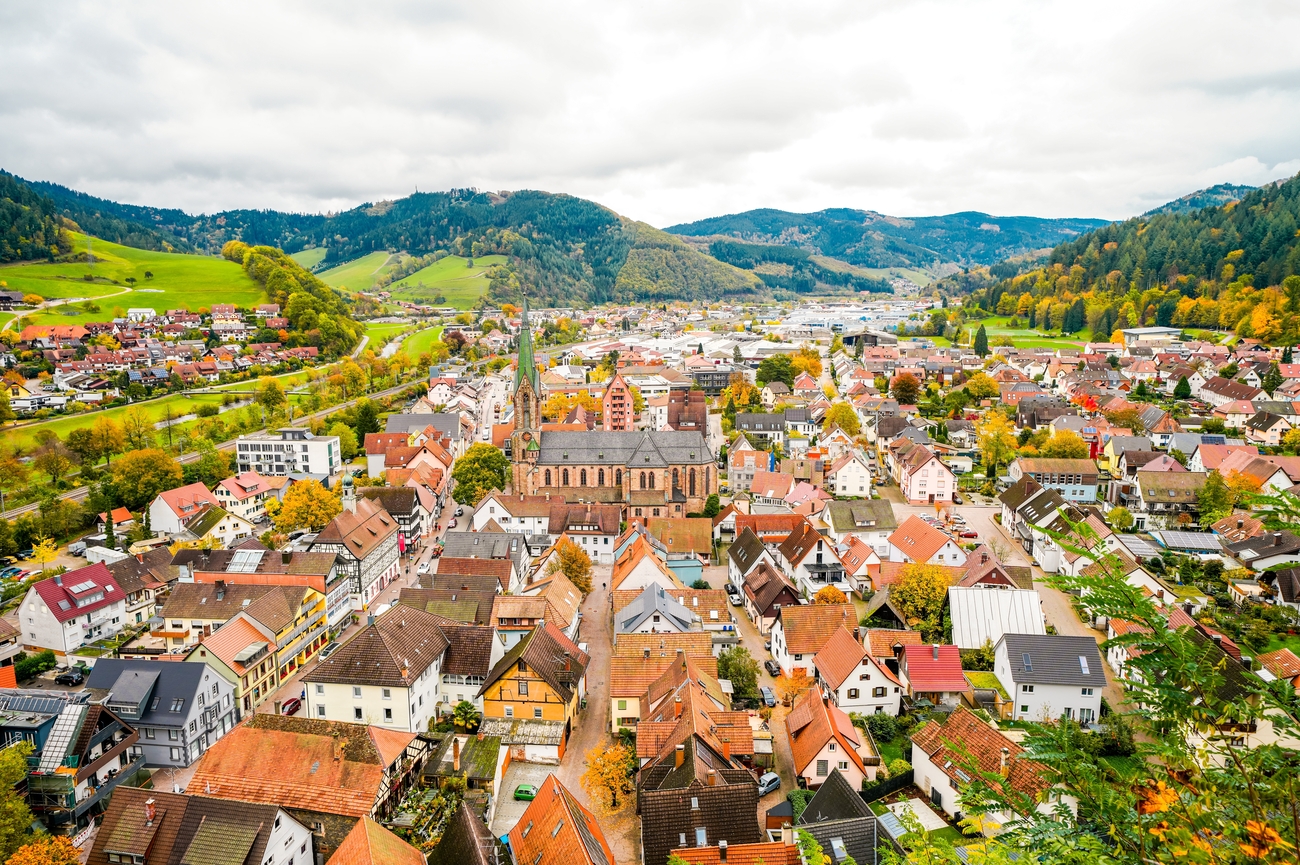
Hausach sits beneath the ruins of Burg Husen and marks one of the most important transitions on the journey. The town developed at a strategic point in the Kinzig Valley and the castle above it once guarded the old transport route through the region.
More importantly for the railway, Hausach is where things start getting properly mountainous. The relatively broad Kinzig Valley is left behind as the tracks turn south into the Gutach Valley toward Hornberg. The slopes become steeper and the settlements smaller.
Gutach
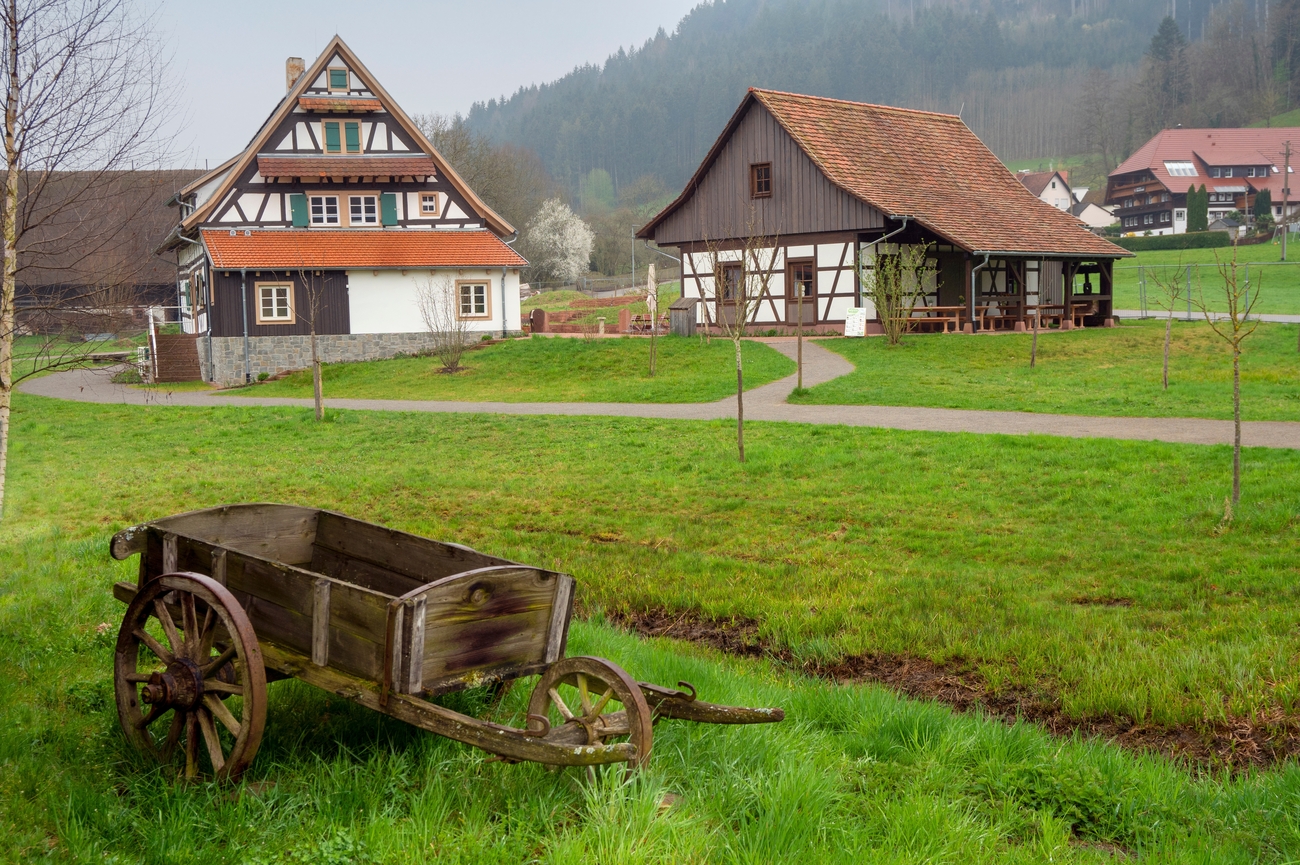
Between Hausach and Hornberg, the railway follows the Gutach Valley through one of the most recognizably Black Forest parts of the route. Traditional farmhouses sit beneath steep wooded slopes, with meadows breaking up the forest along the valley floor.
Gutach is best known for the Black Forest Open Air Museum Vogtsbauernhof, where historic farmhouses, mills, workshops and barns document centuries of rural life in the region. There is a railway stop directly outside the museum, but there is one useful detail to know: the through RE 2 Black Forest Railway service does not stop there. The Gutach Freilichtmuseum stop is served by the local RB 20 Ortenau-S-Bahn between Offenburg and Hornberg, so visiting requires changing to the local service.
Hornberg
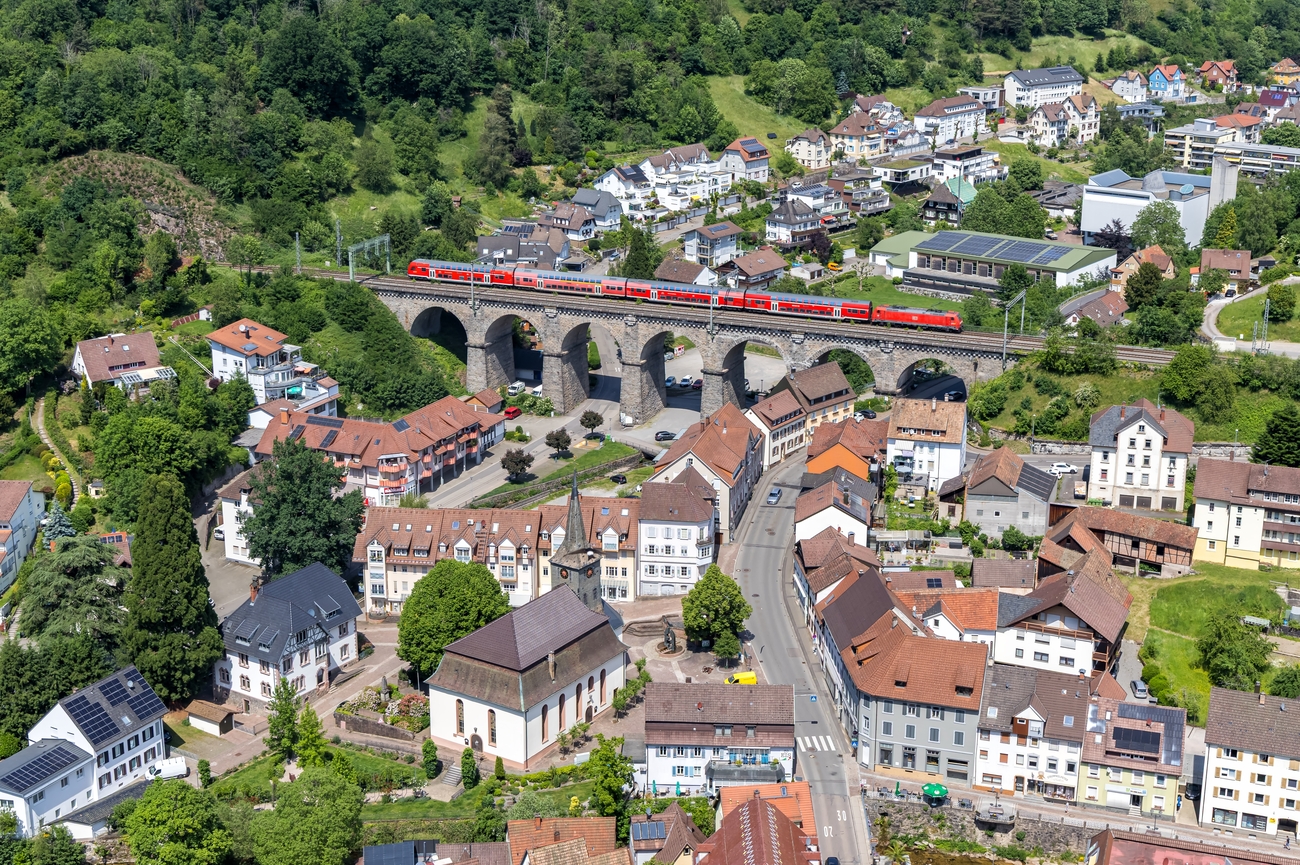
Hornberg is where the Black Forest Railway starts showing what all those engineering statistics actually mean. The town sits deep in the Gutach Valley, with the remains of Hornberg Castle above and the railway climbing along the surrounding slopes.
Its most obvious railway landmark is the Hornberg Viaduct, a seven-arched structure spanning the Reichenbach Valley. The present viaduct was built in 1924-25 and is the only viaduct on the Black Forest Railway. It is about 150 meters long and 24 meters high, but from the train the more interesting part is what happens immediately afterward: the route begins its serious climb toward Triberg and St. Georgen.
This is where finding a good window seat starts paying off.
Triberg
The stretch between Hornberg, Triberg and St. Georgen is the headline section of the Black Forest Railway. The direct distance between these places is not particularly huge. Engineer Robert Gerwig solved the problem by sending the tracks on long curves, through tunnels and around large loops, allowing trains to gain elevation gradually instead.
The train disappears into one tunnel, curves through the mountain and emerges with the valley suddenly sitting much farther below. At certain points, sections of railway already travelled can be seen from higher up the slope. The Black Forest Railway Adventure Trail around Triberg was specifically created to explain this engineering and provide viewpoints over the looping tracks.
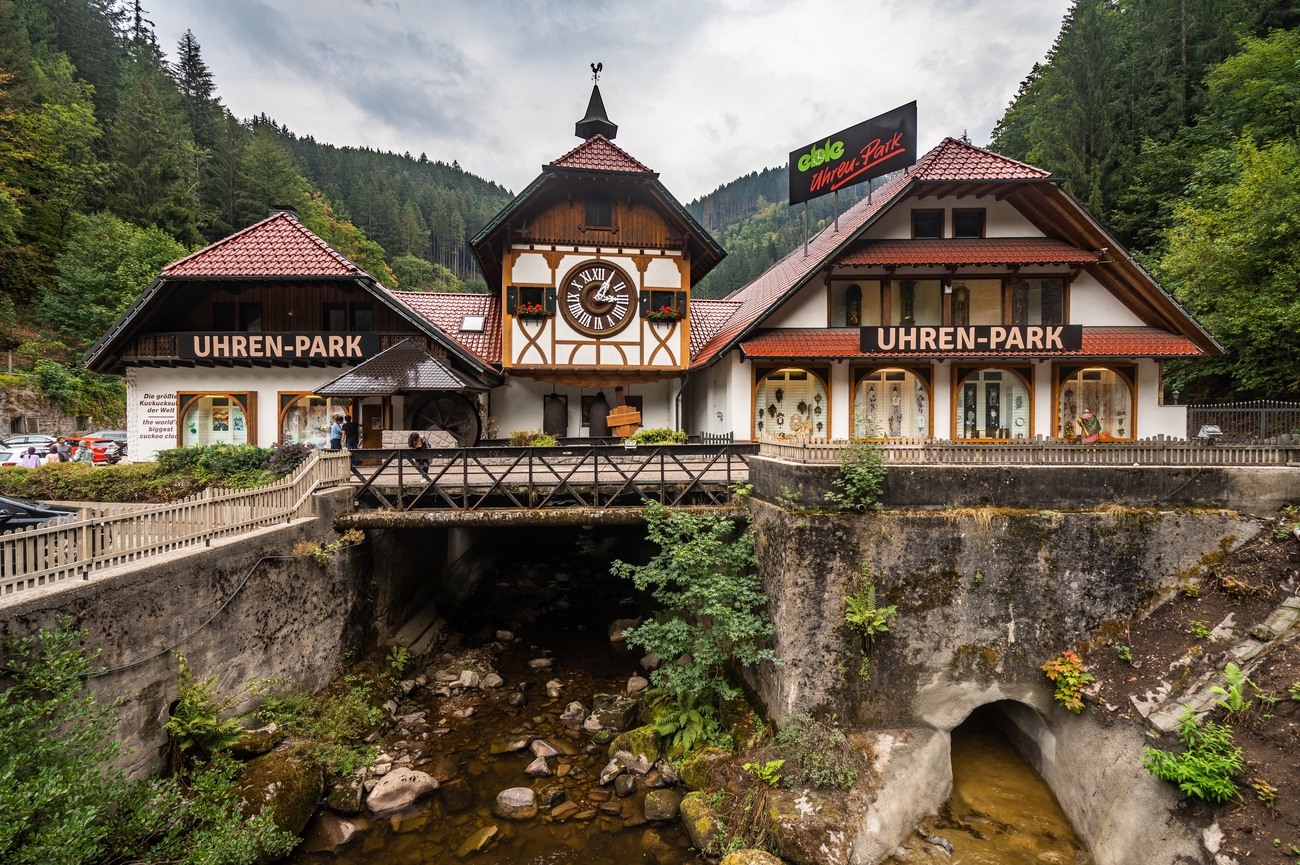
Triberg itself is famous for its waterfalls and its long association with Black Forest clockmaking. The waterfalls require leaving the station and heading into town, so this is a proper stop rather than something that can be checked off through the window.
St. Georgen
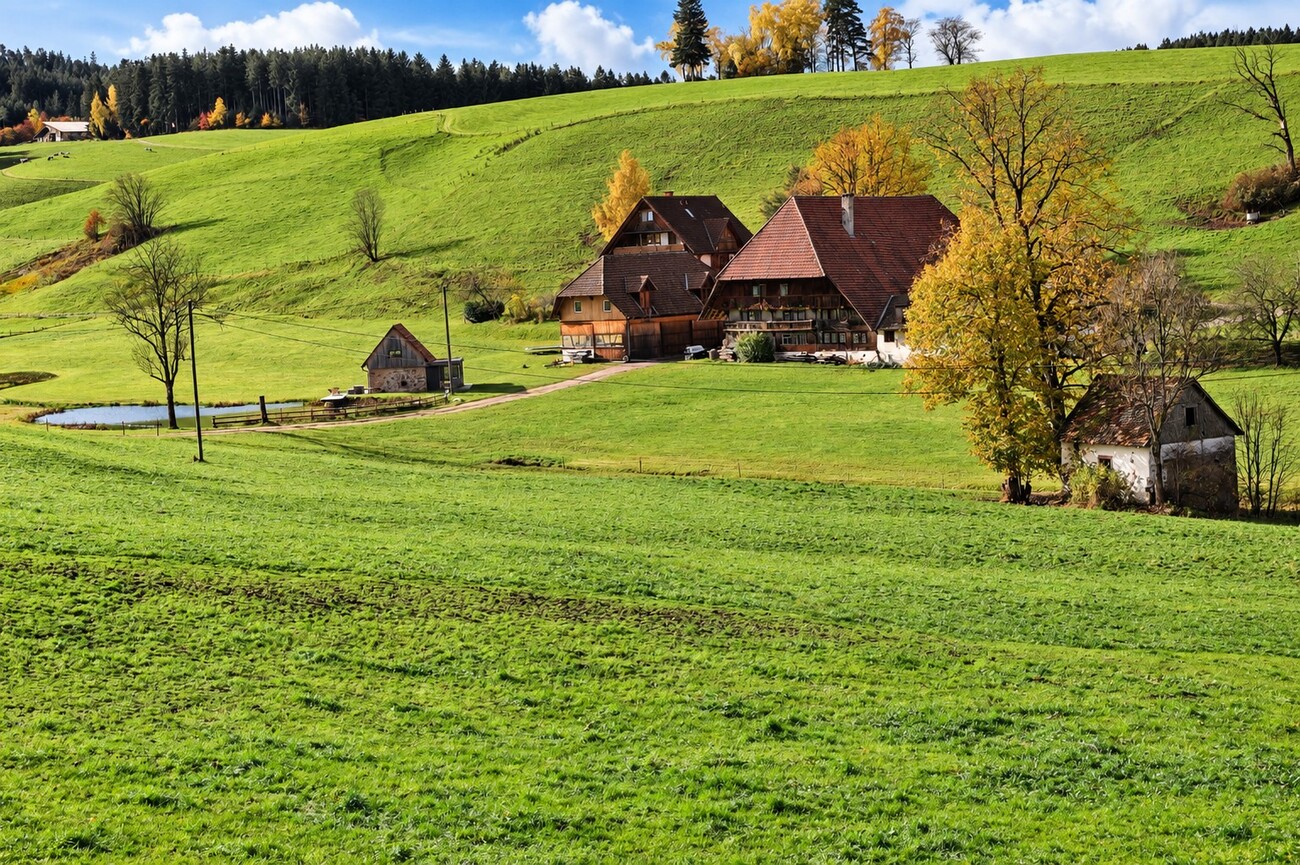
The railway continues climbing beyond Triberg toward St. Georgen, crossing the high central Black Forest. By now the deep valley scenery begins opening into higher plateaus, meadows and scattered farms. St. Georgen itself sits at around 800 to 1,000 meters above sea level. It also marks the point where the most intense railway engineering begins to settle down. The tunnels and curves are still part of the journey, but the dramatic climb through the Gutach Valley is largely complete.
Villingen
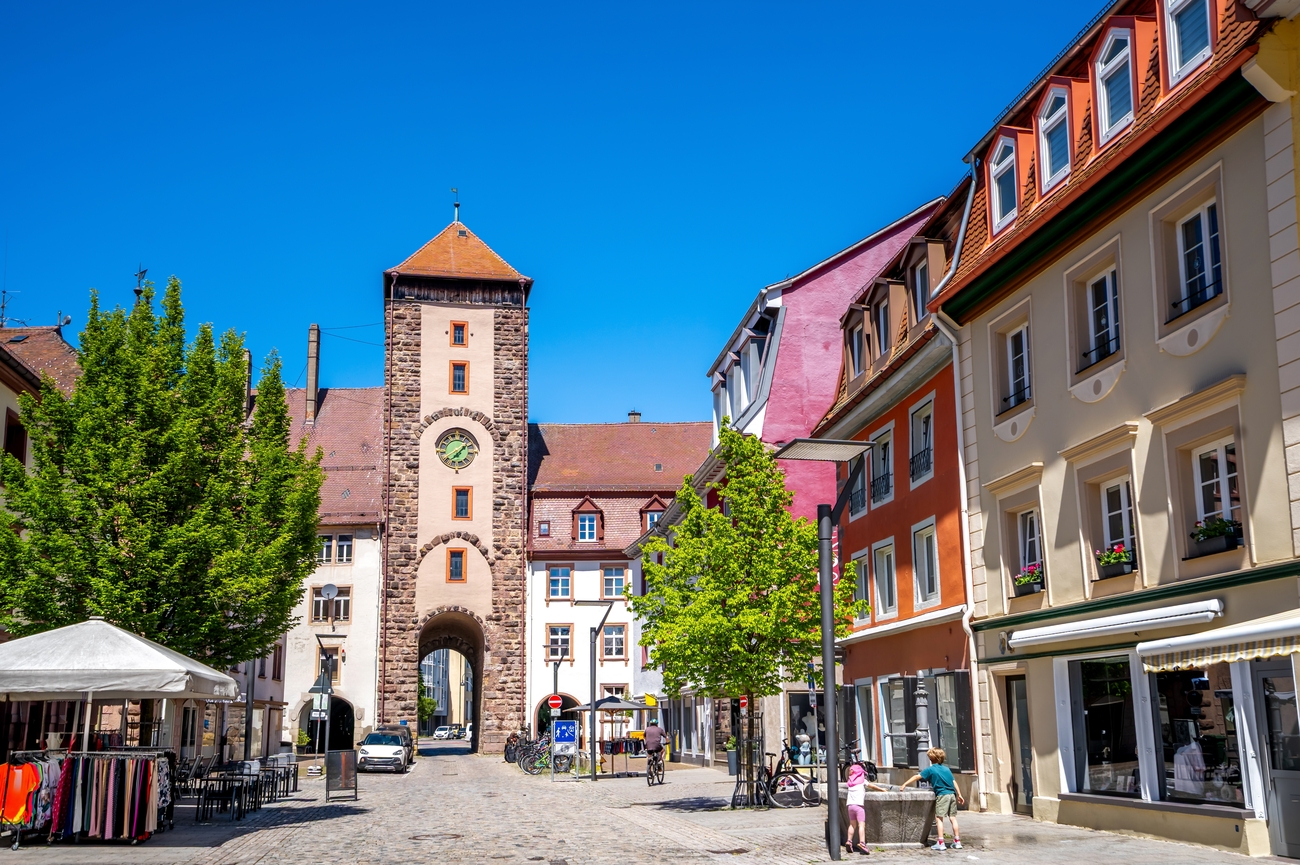
Villingen brings medieval streets back into the itinerary after a long stretch dominated by mountains and railway engineering. The historic center retains much of its defensive structure, including an almost complete town wall, large gates and towers surrounding the old street plan.
It is one of the stronger places for a longer break because the railway station sits beside an actual town rather than a trailhead or scattered mountain settlement. After the tight valleys around Hornberg and Triberg, the surroundings also feel noticeably broader.
Donaueschingen
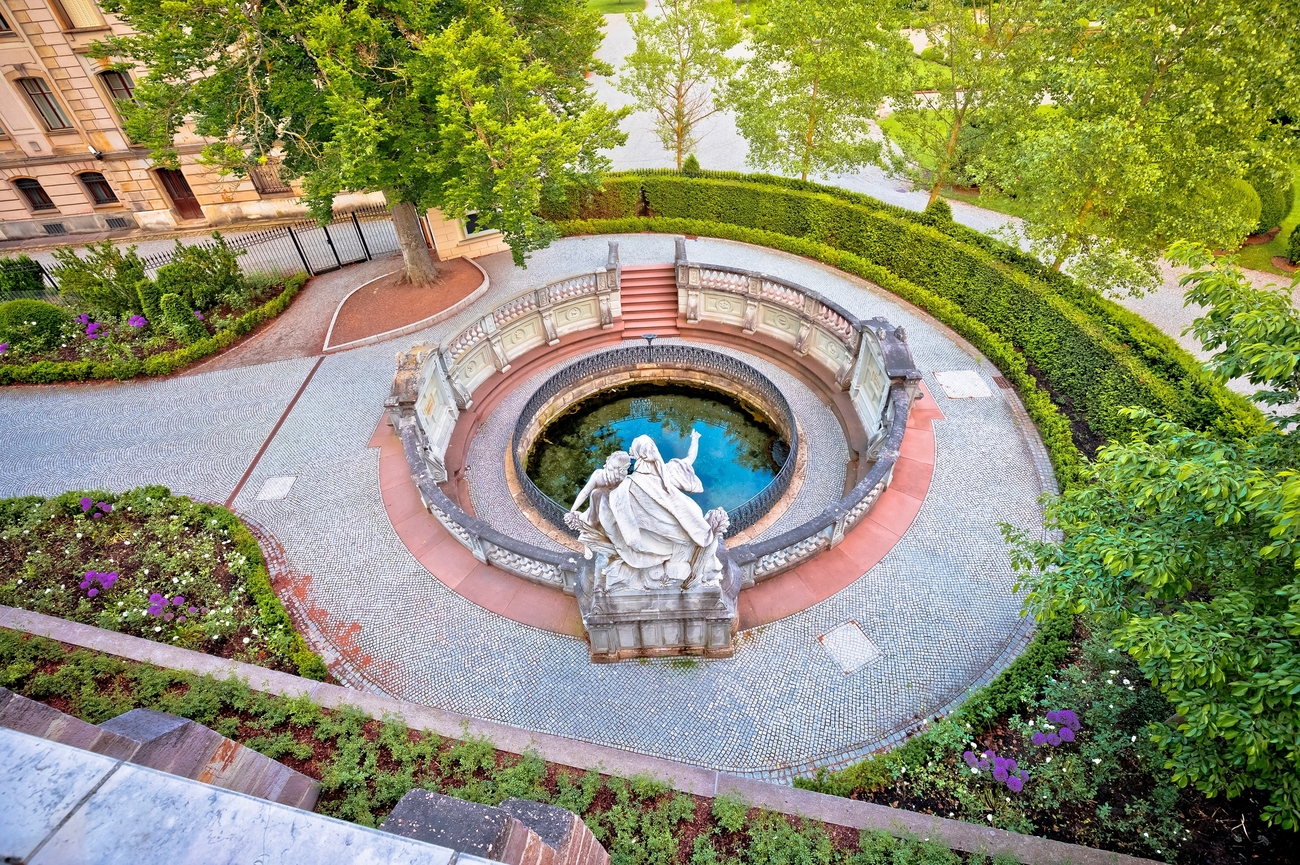
Donaueschingen gives the journey one of its biggest geographical flexes. This is the city associated with the source of the Danube. The formal Danube spring sits beside the Fürstenberg Palace complex, while nearby the Brigach and Breg meet to form the river that continues east across Europe.
The scenery around the railway changes again here. After dozens of tunnels, suddenly being able to see a long way ahead feels almost weird.
Immendingen
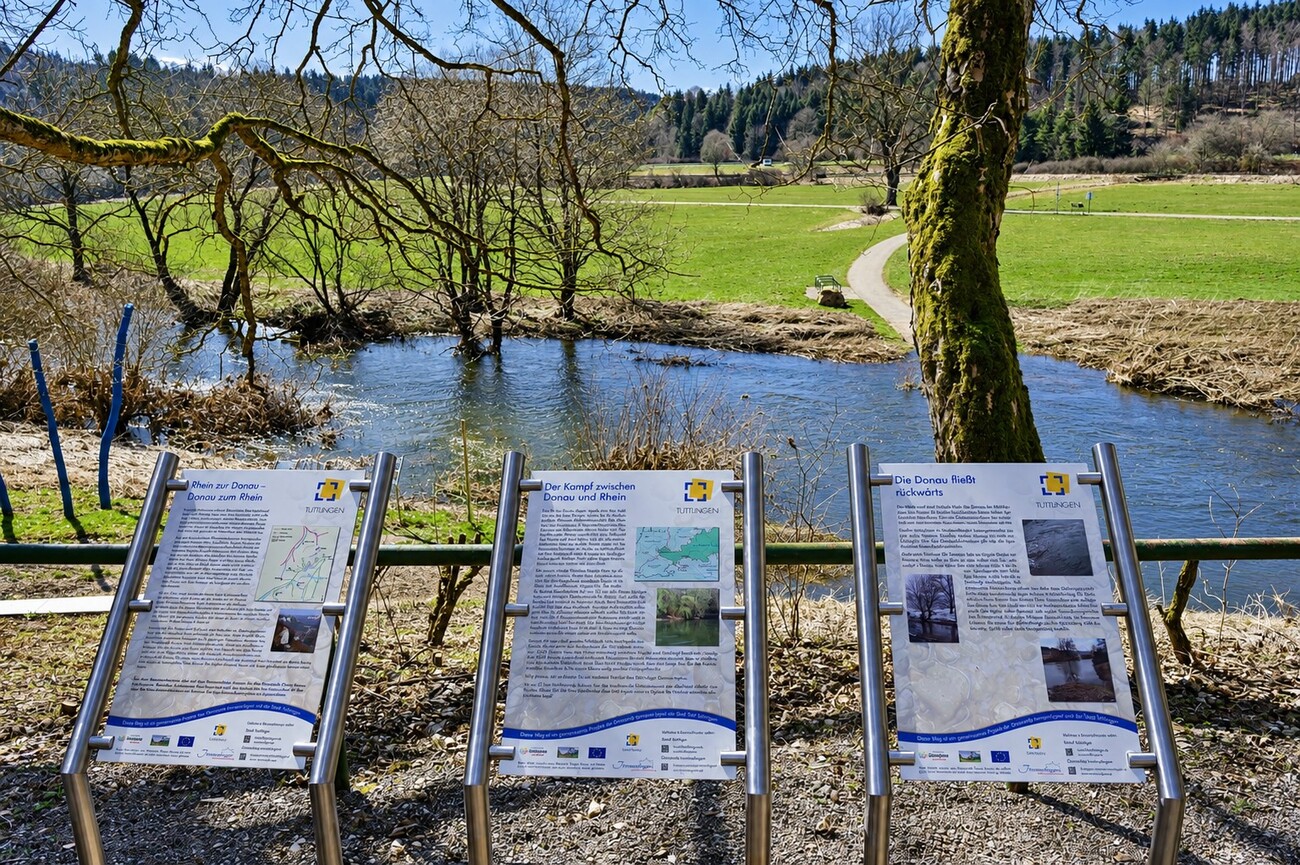
Immendingen continues the Danube theme, but with a much stranger twist. Near the town, sections of the Danube can disappear into the porous limestone beneath the riverbed in a natural phenomenon known as the Danube Sinkhole. Some of that underground water later reappears about 12 kilometers south at the Aachtopf spring.
Engen
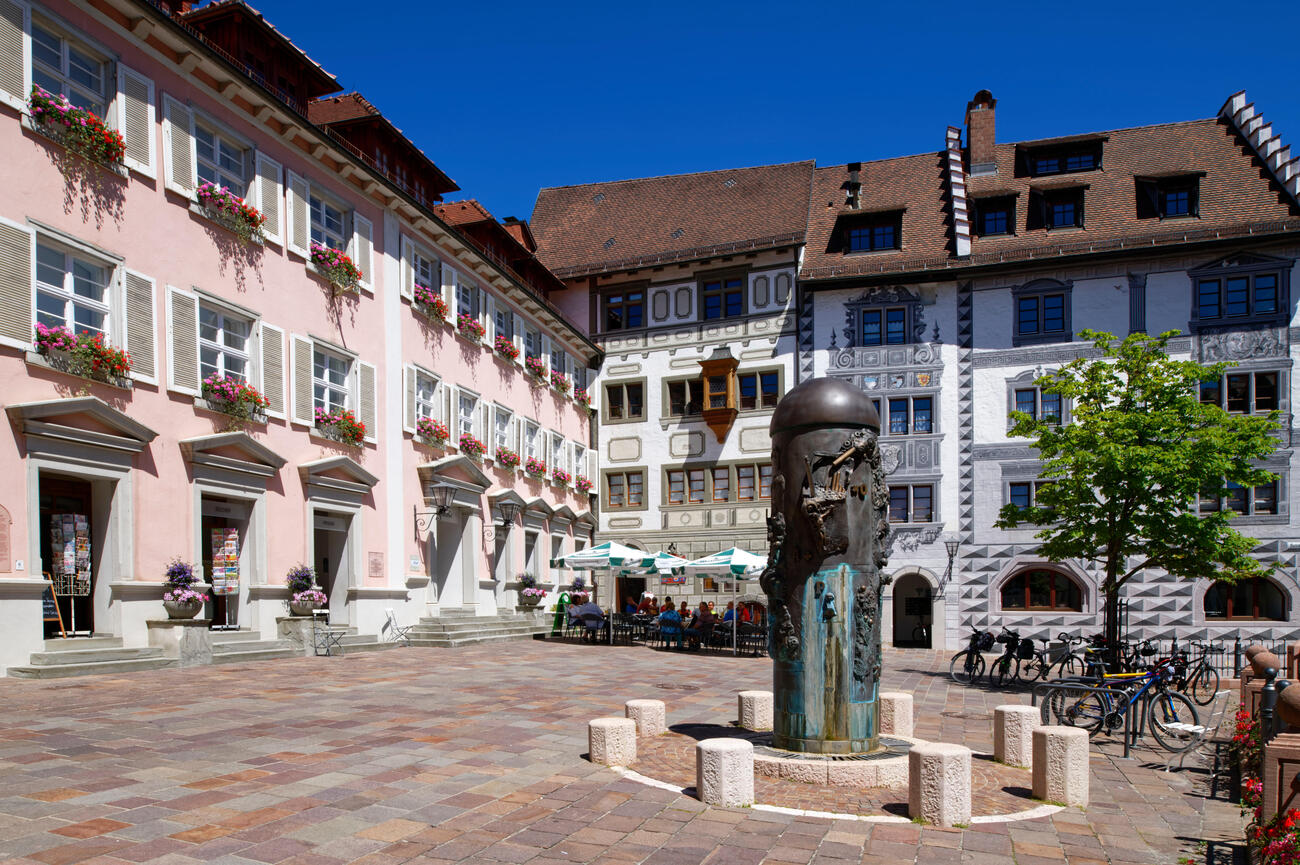
Engen sits in the Hegau, where isolated volcanic hills start rising from the countryside. It is a striking change after the continuous forested ridges around Triberg. The historic center is one of the best-preserved old-town ensembles in southern Germany, with medieval streets, a market square and carefully restored buildings packed onto the hillside.
The surrounding landscape is the bigger story from the train. The forest has opened up, visibility stretches much farther and the volcanic hills give the final section a shape of its own.
Singen
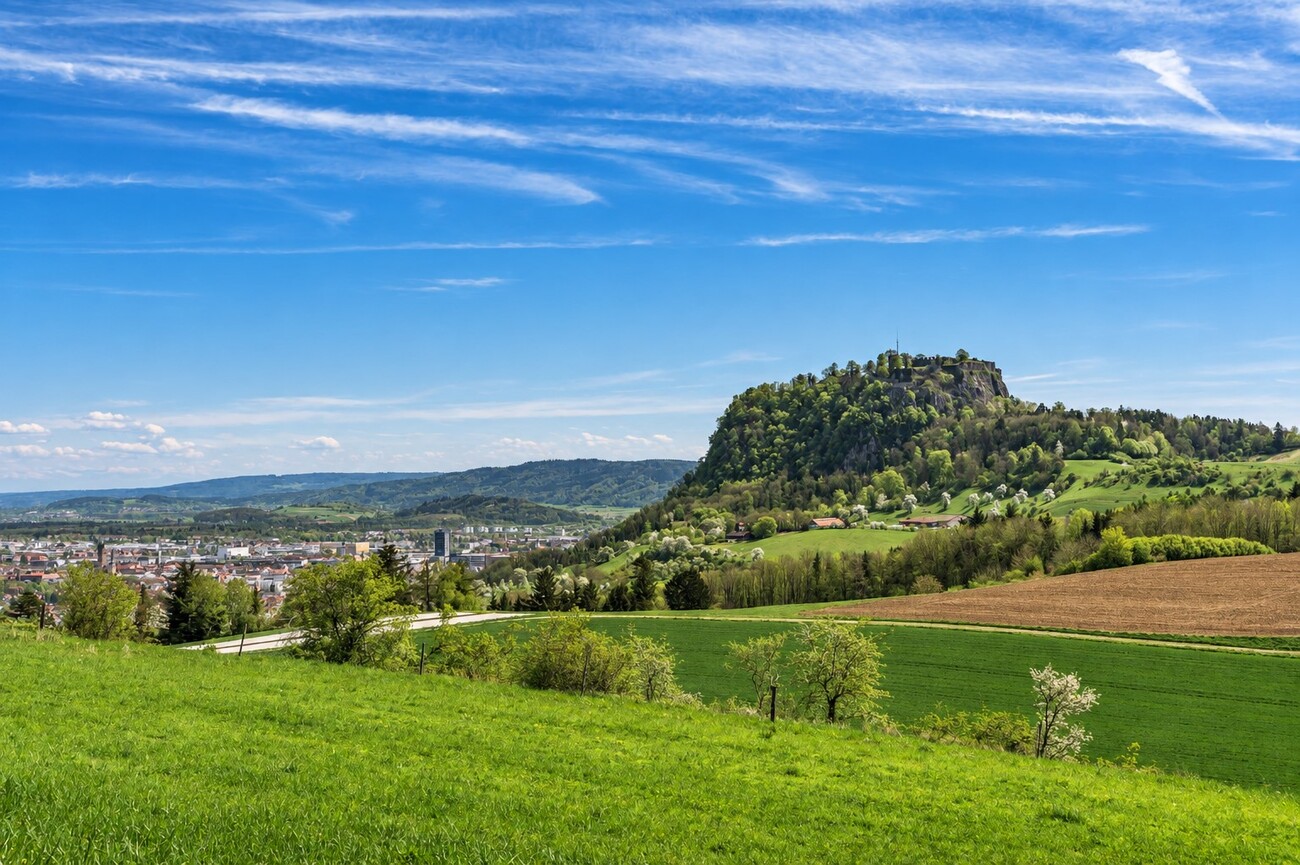
Singen is the southern end of the historic Black Forest Railway and feels very different from where the journey began. The city sits in the volcanic Hegau landscape, dominated by Hohentwiel, a steep former volcanic cone topped by enormous fortress ruins.
Reaching Singen completes the classic route from Offenburg. Over roughly 149 kilometers, the railway has moved from the Rhine Plain into the Kinzig Valley, climbed through the tunnels and loops around Triberg, crossed the high Black Forest and entered open volcanic country near Lake Constance. That amount of landscape change is exactly why riding the whole route works so well.
But there is no real need to call it a day here.
Optional Extension: Konstanz
Modern Black Forest Railway services continue from Singen through Radolfzell and Allensbach to Konstanz, turning the historic mountain railway into a direct connection with Lake Constance. Deutsche Bahn currently operates through Regional-Express services between Karlsruhe and Konstanz, so you can simply remain onboard after Singen.
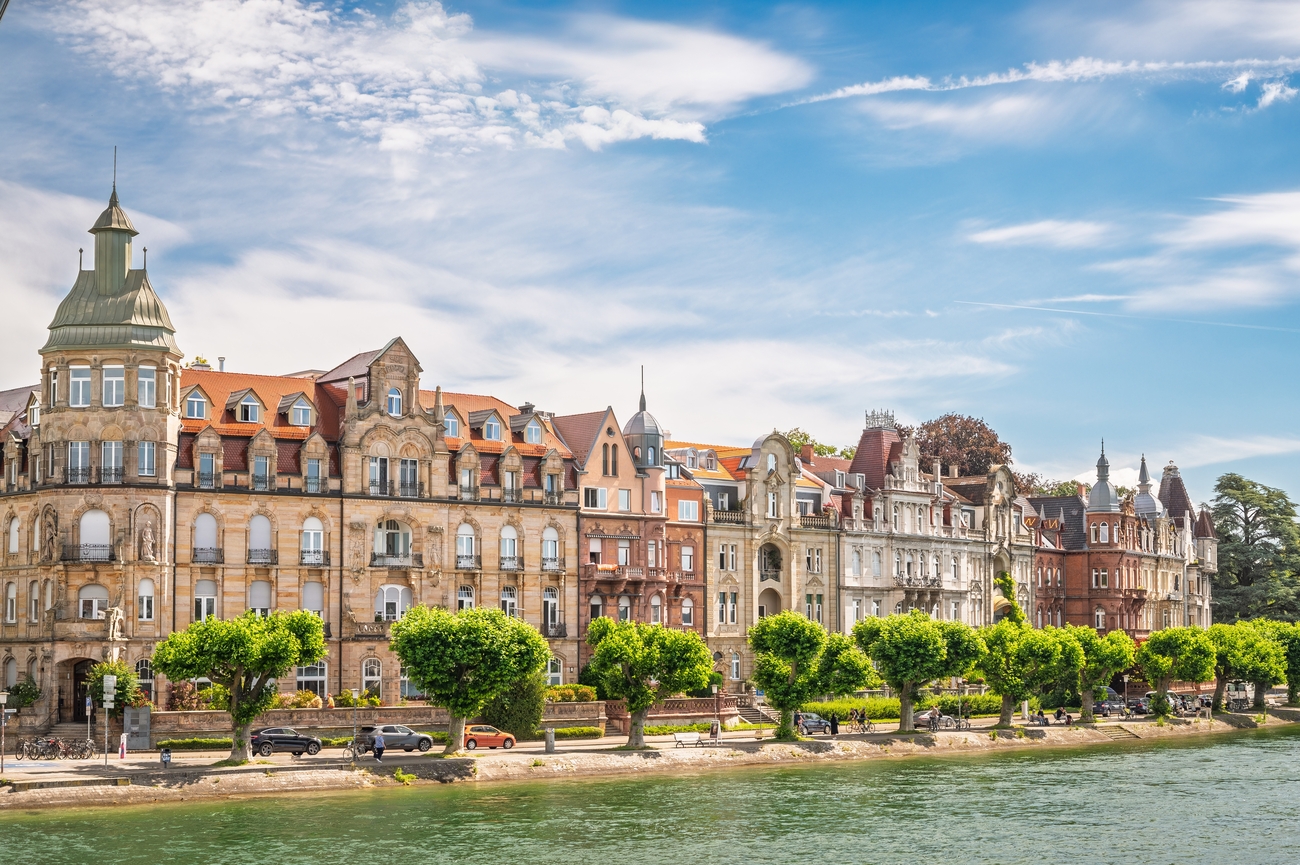
The final stretch trades mountain engineering for lake country. After Radolfzell, the railway follows the western side of Lake Constance toward Konstanz, where the main station sits close to the old town and waterfront. Konstanz itself is the largest city on the lake, with a historic center spreading behind the station.
It is technically beyond the original Offenburg–Singen Black Forest Railway, but as an ending, it makes a lot of sense. The journey begins at the edge of the Rhine Plain, spends its best section twisting through the Black Forest and finishes beside one of Central Europe's largest lakes.
Duration
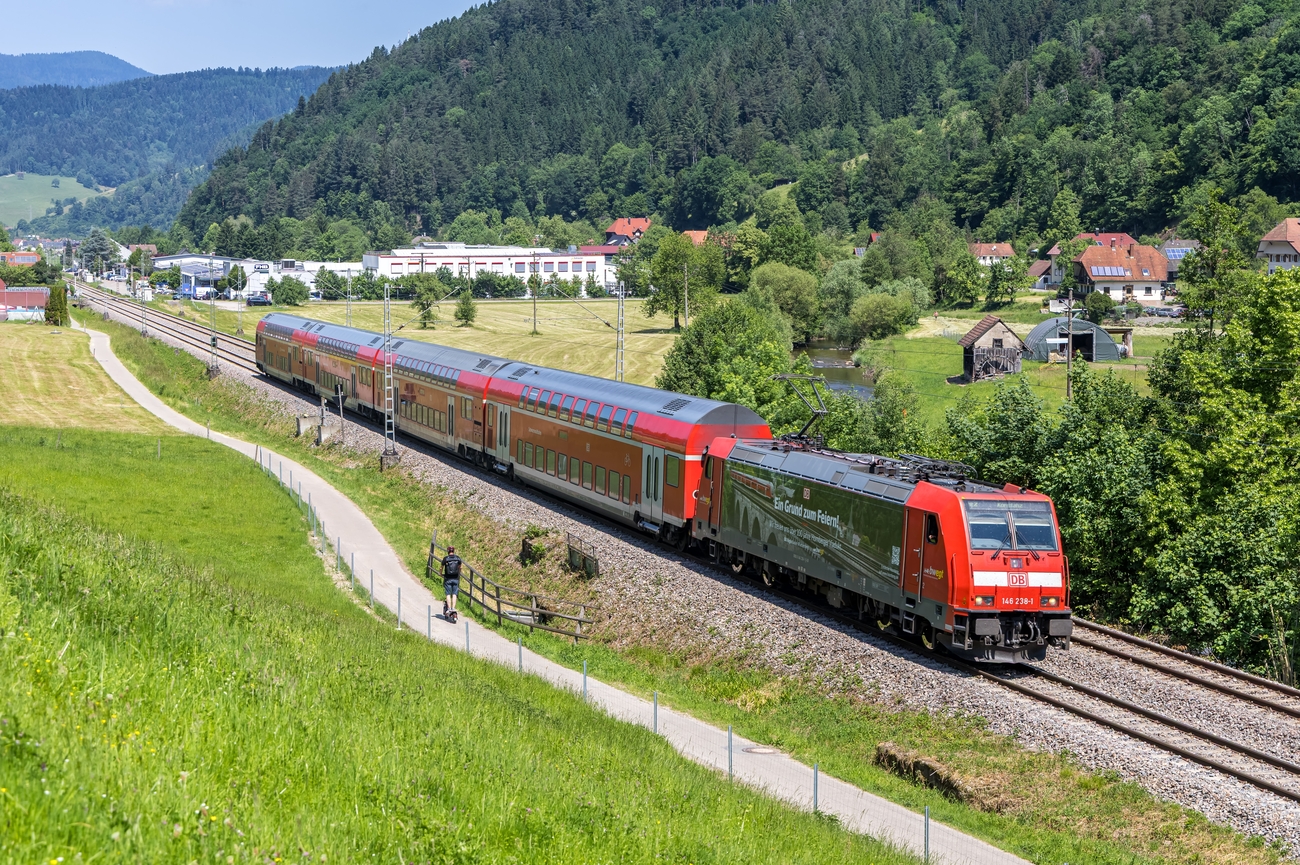
The direct journey from Offenburg to Singen takes around 1 hour and 50 minutes on the Regional-Express (RE 2), covering the historic Black Forest Railway’s roughly 149-kilometer route. Services run hourly, so no transfer is required when travelling straight between the two cities.
The first section from Offenburg follows the Kinzig Valley through Gengenbach, Haslach and Hausach. It is the gentler part of the route, gradually leaving the Rhine Plain and entering the Black Forest. Hausach is reached after roughly 20 to 30 minutes. And from Hausach, the line enters the Gutach Valley and climbs through Hornberg, Triberg and St. Georgen. This is the most scenic section, with tight curves, tunnels and steady elevation gain through the mountains. Triberg comes about 45 minutes after departure, with St. Georgen around 13 minutes later.
Beyond Villingen, the landscape opens up as the train continues through Donaueschingen, Immendingen and Engen. The final stretch crosses the Hegau before reaching Singen, where the historic Black Forest Railway ends. Passengers continuing to Konstanz can remain on the same RE 2 service. The full journey from Offenburg to Konstanz generally takes around 2 hours and 15 minutes, adding roughly another 25 minutes after Singen.
Schedules and Tickets
The Black Forest Railway is served by Regional-Express (RE) trains running once an hour. These through services operate between Karlsruhe and Konstanz, stopping along the historic Black Forest Railway at Offenburg, Gengenbach, Haslach, Hausach, Hornberg, Triberg, St. Georgen, Villingen, Donaueschingen, Immendingen, Engen and Singen. Additional regional trains operate on some sections of the route, so there can be more than one option per hour depending on where you are travelling.
For the latest departure times, the easiest option is DB Navigator or Deutsche Bahn's journey planner. Both show current schedules, platform information and delays, which is useful because engineering work can occasionally alter regional services. Tickets can also be purchased directly through DB Navigator or the Deutsche Bahn website. And if you prefer buying a ticket at the station, Deutsche Bahn ticket machines sell regional tickets and provide live timetable information. Tickets are also available from staffed DB sales points and Reisezentren where available.
If you are planning several stops, the Baden-Württemberg-Ticket can be useful. It allows unlimited regional and local transport within Baden-Württemberg for one day. Another option is the Deutschland-Ticket, which is valid on regional trains including RE services throughout Germany. It is a monthly subscription rather than a single-day sightseeing ticket, so it makes more sense for travelers already using regional public transport extensively during their stay.
Where To Stay
Offenburg, Singen and Konstanz make sense as overnight bases for completely different reasons. Offenburg puts you at the western entrance to the Black Forest and close to Baden wine country, Singen gives you easy access to the Hegau and Hohentwiel, while Konstanz is where the trip can shift into a proper Lake Constance stay.
Offenburg
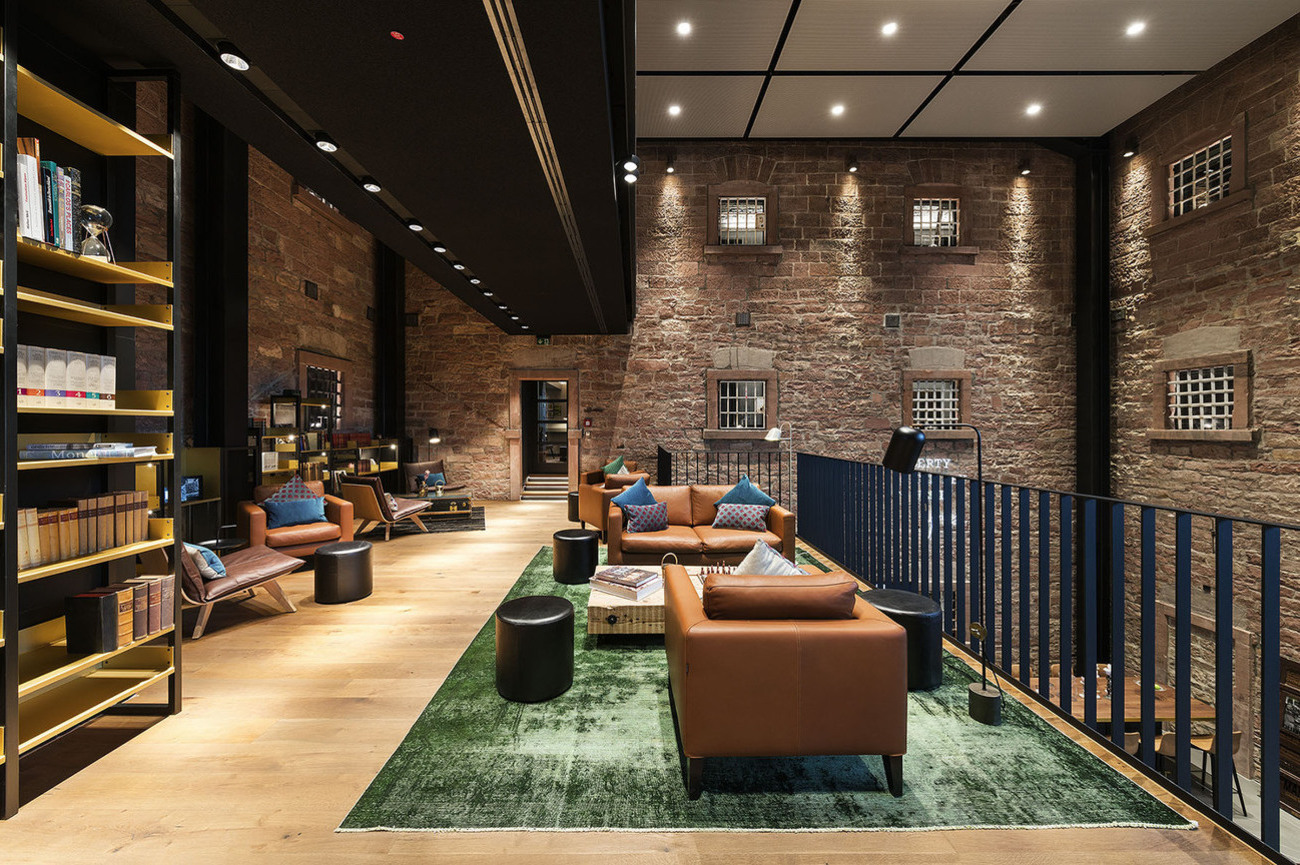
- Hotel Liberty Offenburg (4 Stars): Hotel Liberty is the place to book when you want Offenburg to feel like more than a practical railway stop. The design hotel occupies a converted former prison in the city center, turning the original historic structure into a much more polished mix of contemporary rooms, dining and serious design. There are just 38 rooms, giving it a more boutique feel than the larger business hotels around town, while the property also has Restaurant Wasser & Brot, a cocktail bar and higher-end suites. If the trip calls for a splurge in Offenburg, this is the one that actually feels special.
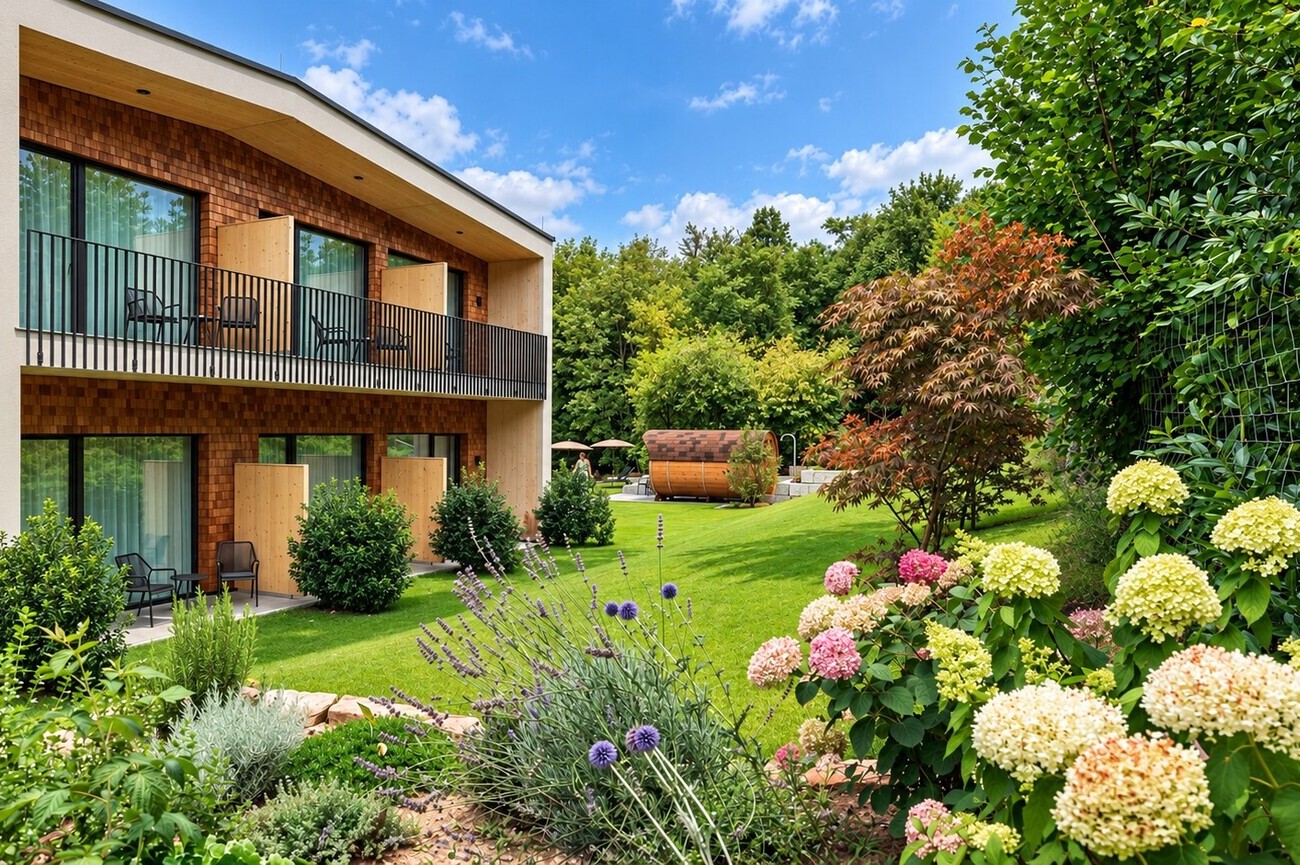
- Weinhotel Pfeffer & Salz (3 Stars Superior): Located in nearby Gengenbach, around 15 minutes by car from Offenburg, this family-run hotel is a good option if you prefer a quieter setting outside the city. Surrounded by vineyards and Black Forest countryside, it offers comfortable modern rooms, a regional restaurant, wine tastings and a vinotheque. The peaceful location makes it well suited to a relaxing stay, while Offenburg and the historic centre of Gengenbach are both within easy reach.
Singen
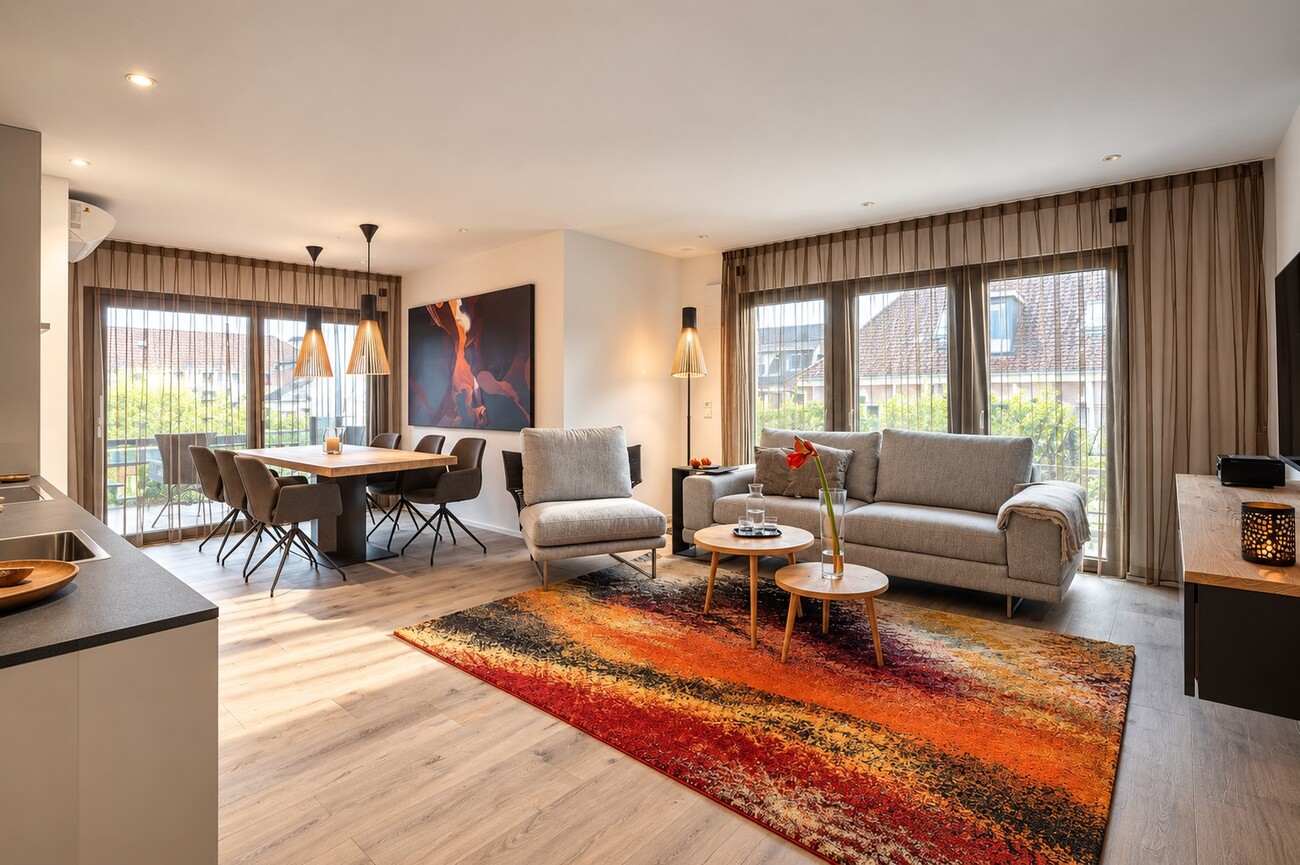
- PRIMERA Apartments & Boardinghouse (5 Stars): PRIMERA is Singen's high-end option, although it needs one small clarification: this is a five-star boarding house with serviced apartments, not a conventional luxury hotel with restaurants, bell service and a large lobby. Its focus is privacy, space and longer stays. The apartments come with high-quality furnishings, premium mattresses and bathrooms designed with a wellness feel, while much of the property uses timber construction and carefully selected natural materials. This is a good fit if you want more room, a quieter base and the ability to settle in for several nights rather than simply checking into another standard hotel room.
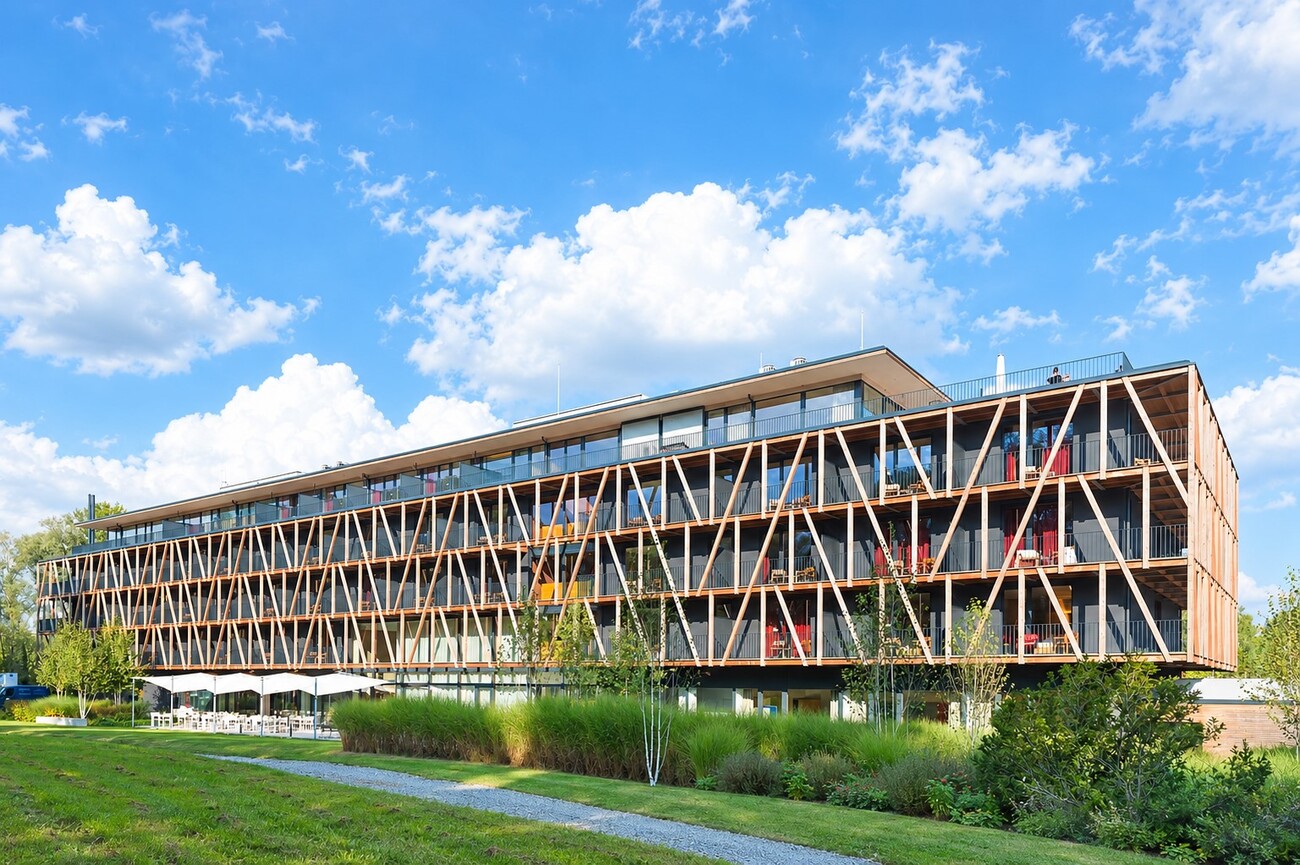
- bora HotSpaResort (4 Stars Superior): Located directly on Lake Constance in Radolfzell, around 15 to 20 minutes by car from Singen, bora HotSpaResort is a stylish wellness hotel with a peaceful lakeside setting. The hotel has spacious modern rooms and suites with balconies, an extensive 8,000 m² spa and sauna area, an outdoor pool, a Japanese onsen bath and direct access to the lake. Guests can also dine at the hotel’s restaurant or enjoy panoramic views from the Sky Lounge, making it a good option if you want to stay close to Singen while enjoying a more relaxing resort atmosphere.
Konstanz
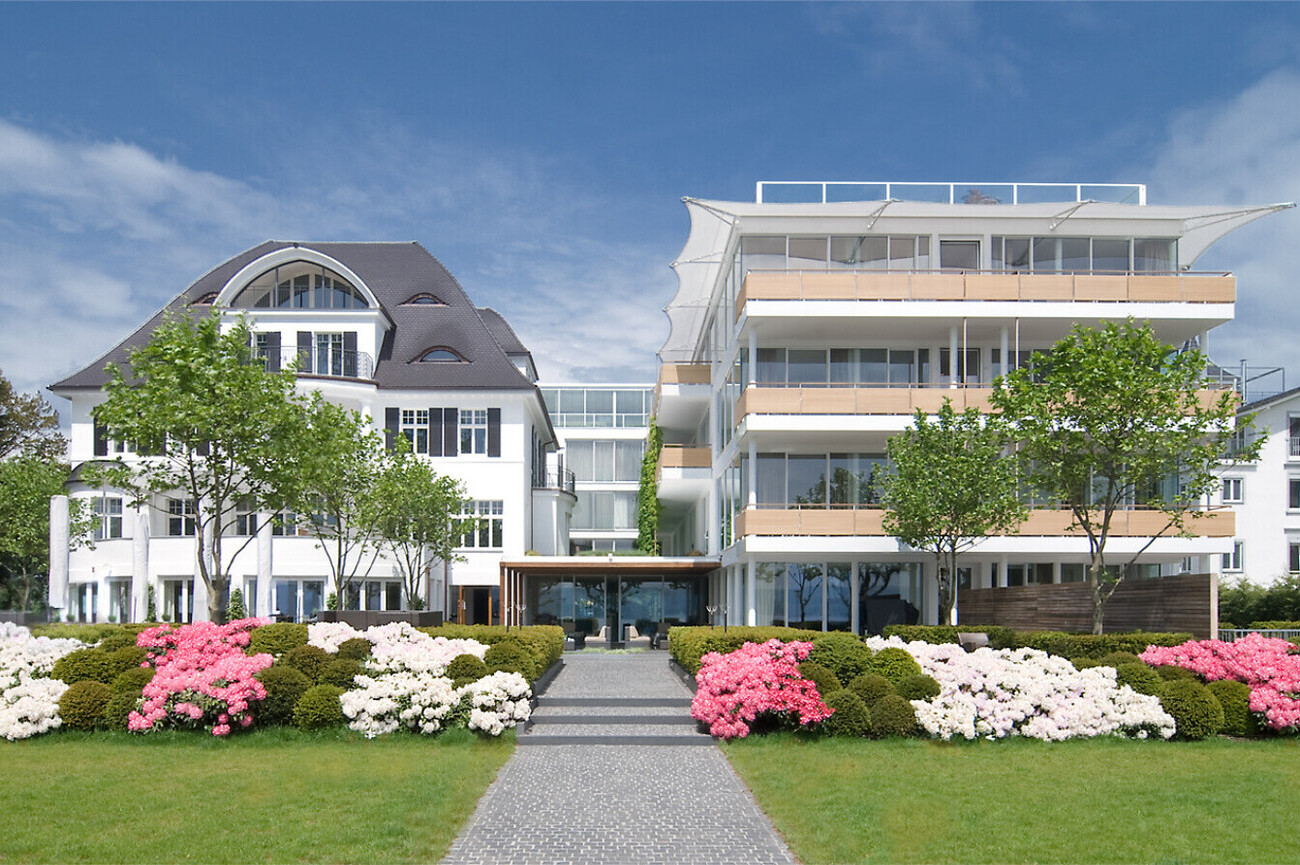
- RIVA – Das Hotel am Bodensee (5 Stars): RIVA is the full luxury option. The five-star-superior hotel sits directly on Lake Constance in Konstanz, combining a historic Art Nouveau villa with a contemporary extension. The lake is central to pretty much everything here, from the restaurant terraces to the rooms and the hotel's wellness concept. Its standout features include upscale spa facilities, high-end dining and Ophelia, the hotel's fine-dining restaurant. It also offers its own premium boat experiences on Lake Constance, so you can turn a railway trip into something considerably more polished once you arrive.
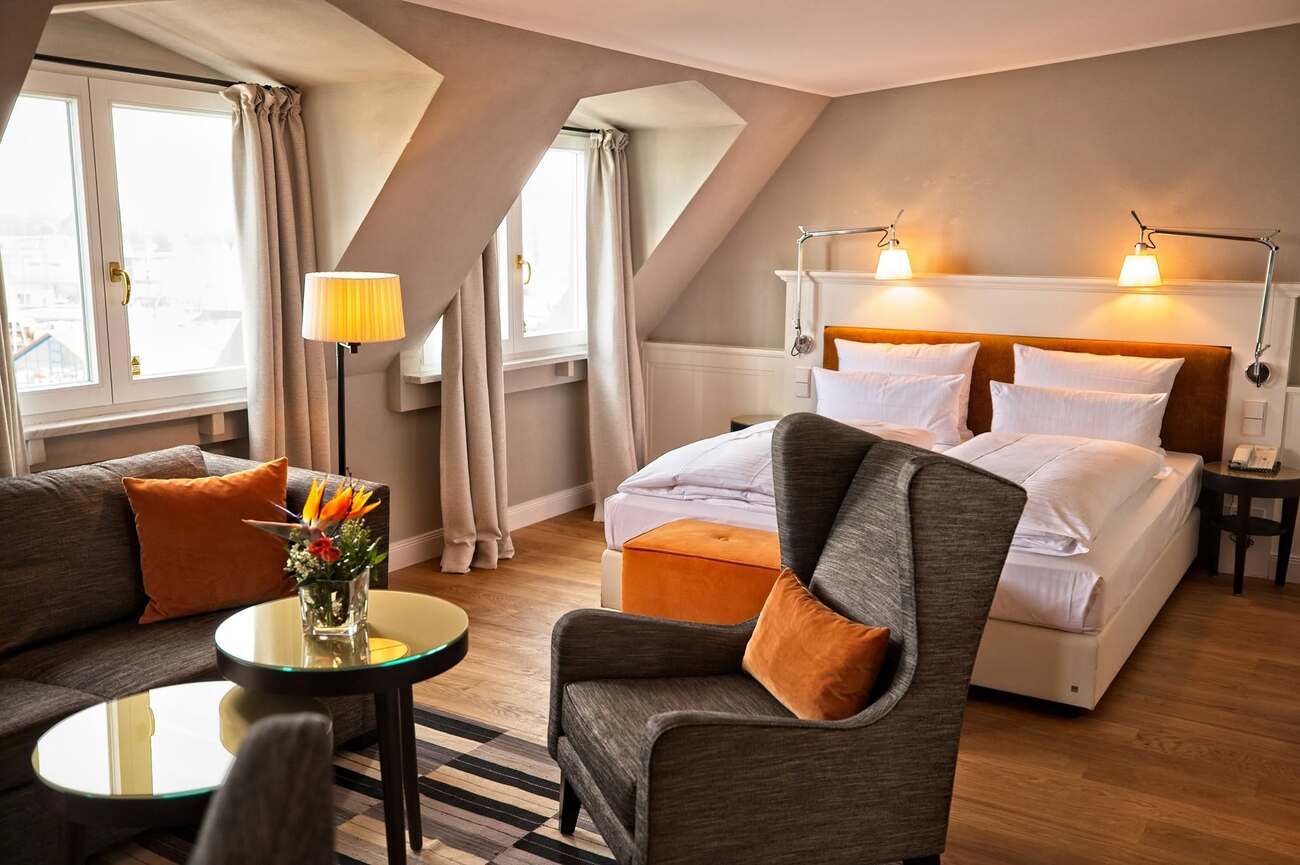
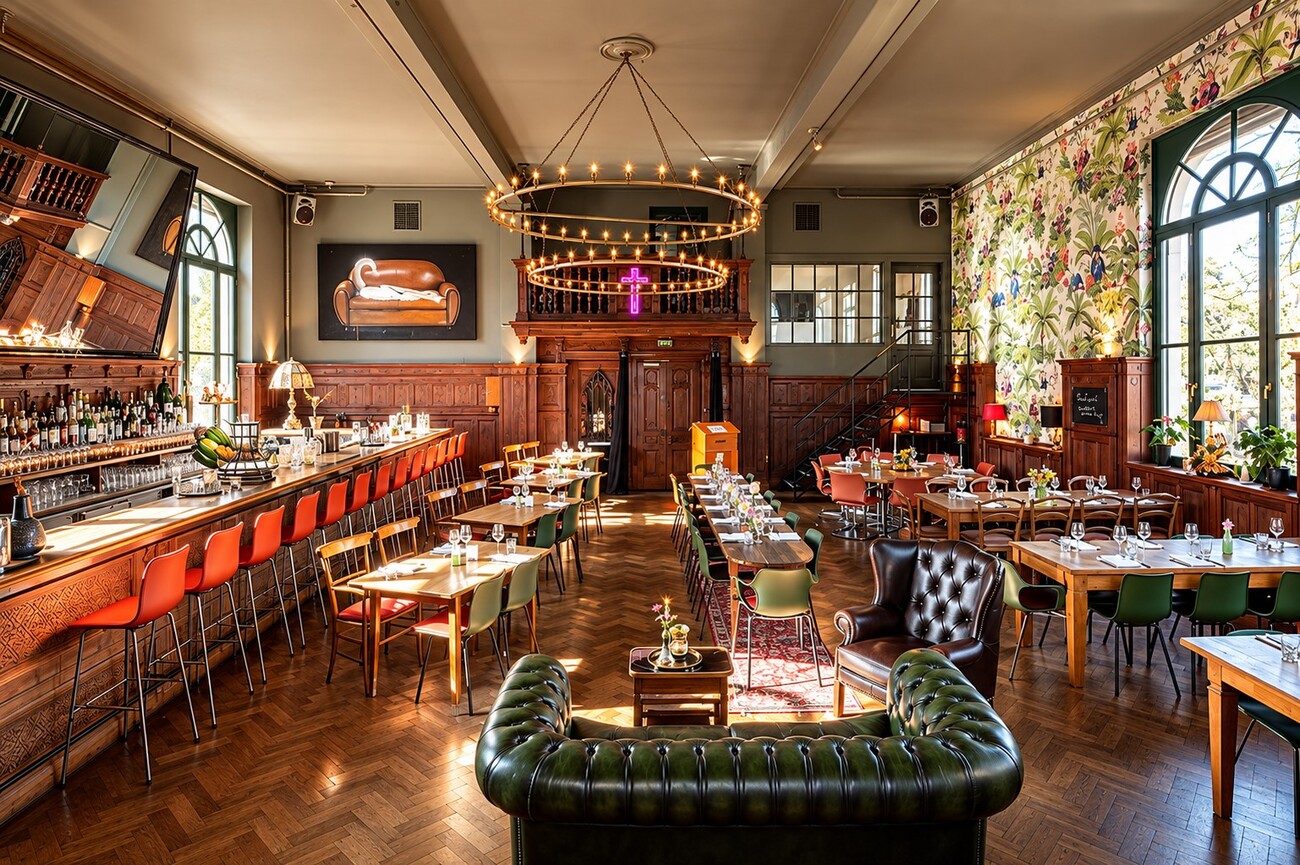
- Hotel Halm Konstanz (4 Stars): Hotel Halm has one of the most convenient addresses in town. The four-star hotel stands directly opposite Konstanz Hauptbahnhof, about 30 meters from the station, while the harbor and Lake Constance are less than five minutes away on foot. It has been operating on this site since the 19th century and still carries the atmosphere of a traditional European city hotel rather than a generic chain property. It's known for the Moorish Hall, an elaborate historic dining room that gives the hotel considerably more personality than the location alone would suggest.
Where To Eat
Dinner plans deserve a little more thought than simply choosing whatever sits closest to the station. Offenburg brings Baden and Alsatian influences into the mix, Singen is a strong place for Swabian cooking and ingredients from the Hegau and Konstanz finishes things with everything from old-school regional dishes to serious Michelin-level dining. The good news is that you can eat very well at every price point without leaving the cities covered on this route.
Offenburg
- Haus Zauberflöte - Hotel & Restaurant: Haus Zauberflöte makes more sense when you want food that actually connects with where you are. The kitchen focuses on Baden and Alsatian classics, serving some traditionally and giving others a more contemporary treatment. Its location on Lindenplatz also keeps you firmly in central Offenburg. The restaurant shares the building with a hotel, café and late-running bar, so dinner can quite naturally turn into another drink without another round of Google Maps navigation.
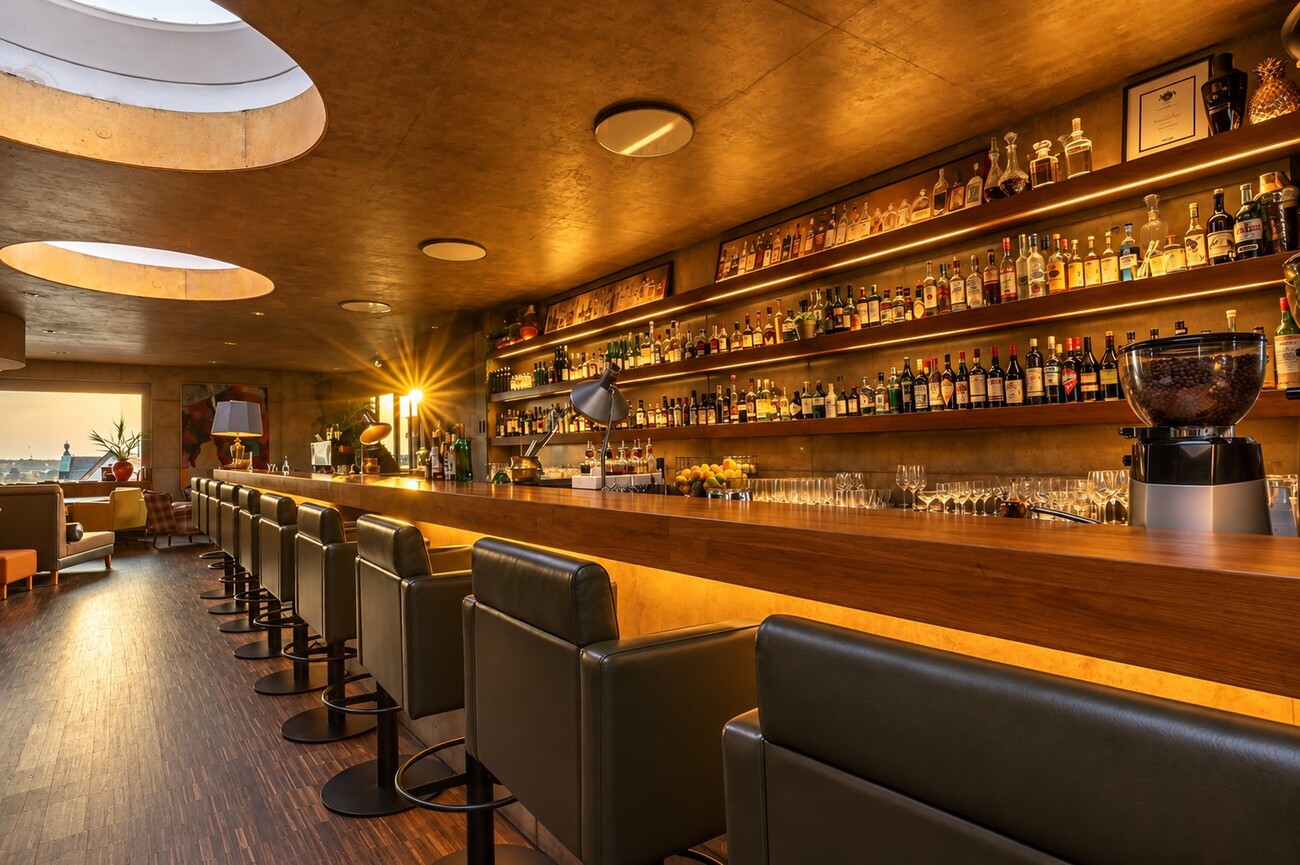
- Schoellmanns Bar & Küche: Come to Schoellmanns partly for dinner and partly for the rooftop. This city-center restaurant on Hauptstraße combines modern cooking with cocktails and a roof terrace overlooking Offenburg. The atmosphere is more social than traditional, particularly later in the evening, so it works well when another plate of heavy regional food sounds like a bit much.
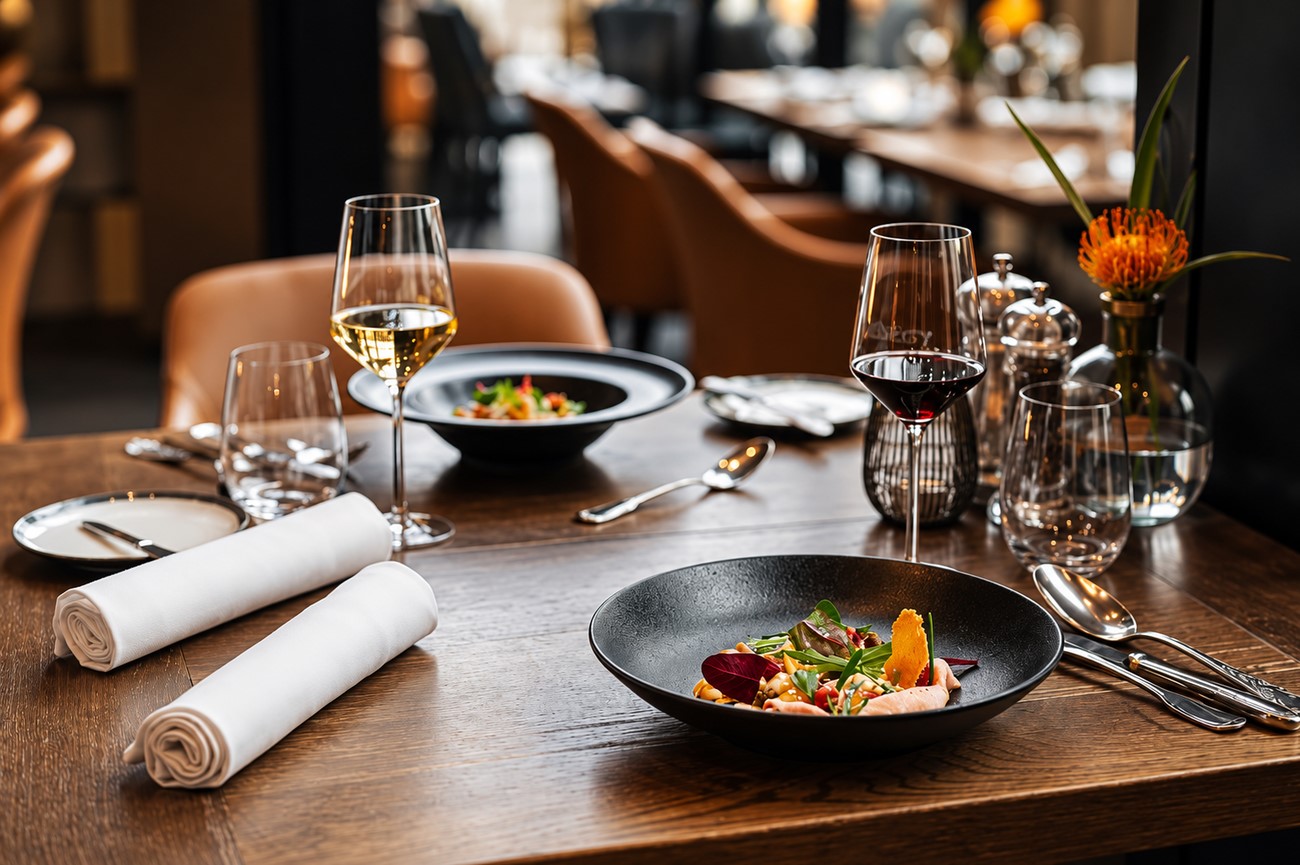
- Wasser & Brot: Located inside Hotel LIBERTY, Wasser & Brot has one of the most distinctive restaurant settings in Offenburg. The hotel occupies a converted 19th-century former prison, and the restaurant sits beneath a modern glass structure connecting the historic cell blocks, with high sandstone walls and original architectural details still visible. The kitchen combines regional ingredients from the Ortenau with international influences, with many dishes prepared over an open charcoal grill. The striking design, open kitchen and refined atmosphere make it particularly suitable for dinner when you want somewhere memorable rather than a conventional city restaurant.
Singen
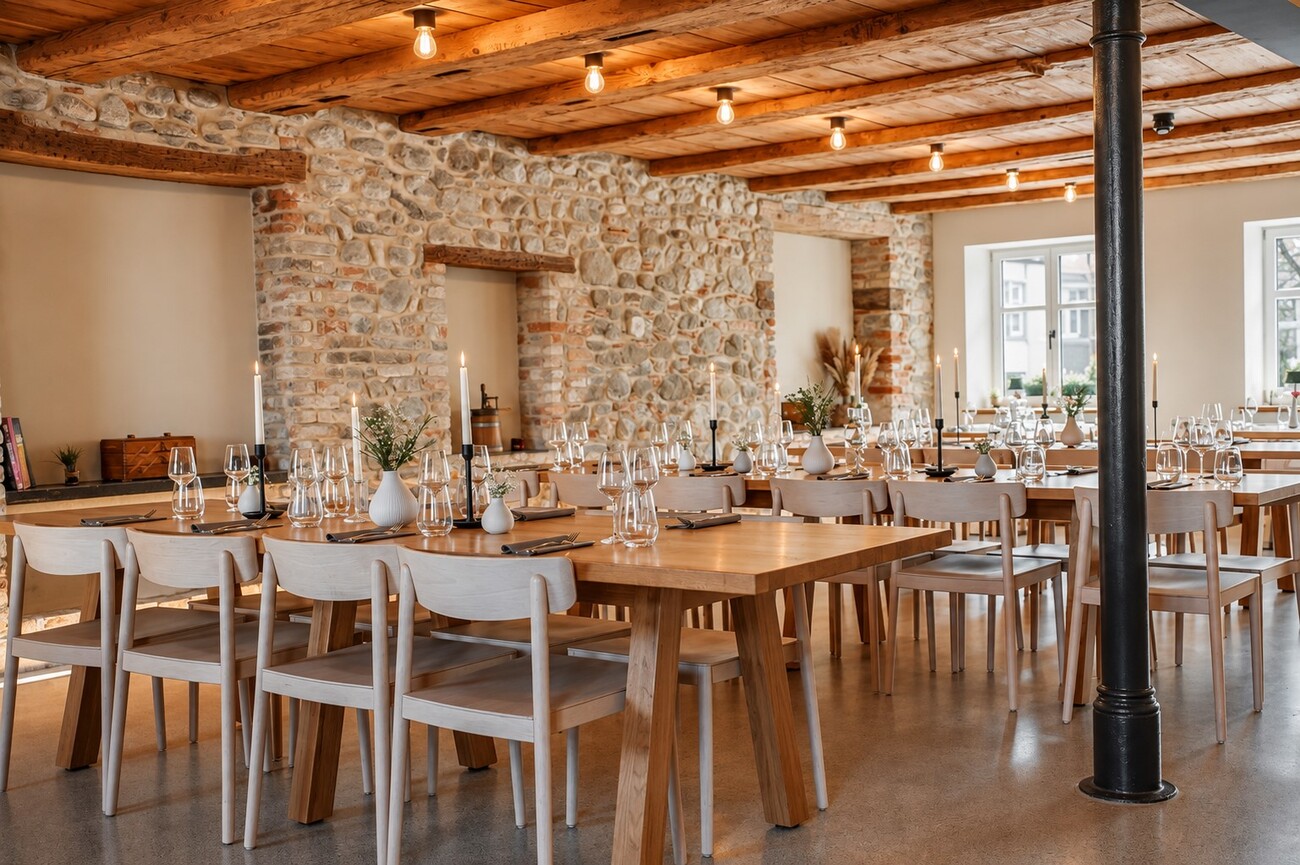
- Gasthaus Sternen Bohlingen: Singen's most interesting foodie detour is in Bohlingen, an official district of Singen. Chef-patron Peter Bogdanovic works with seasonal ingredients and contemporary presentations. The restaurant combines an old half-timbered building with a modern dining area overlooking the Aach, while its cellar highlights wines from the surrounding Bohlingen vineyards. It takes a little more effort to reach, but this is the place to choose when dinner is supposed to be part of the day's itinerary rather than just fuel for the next train.
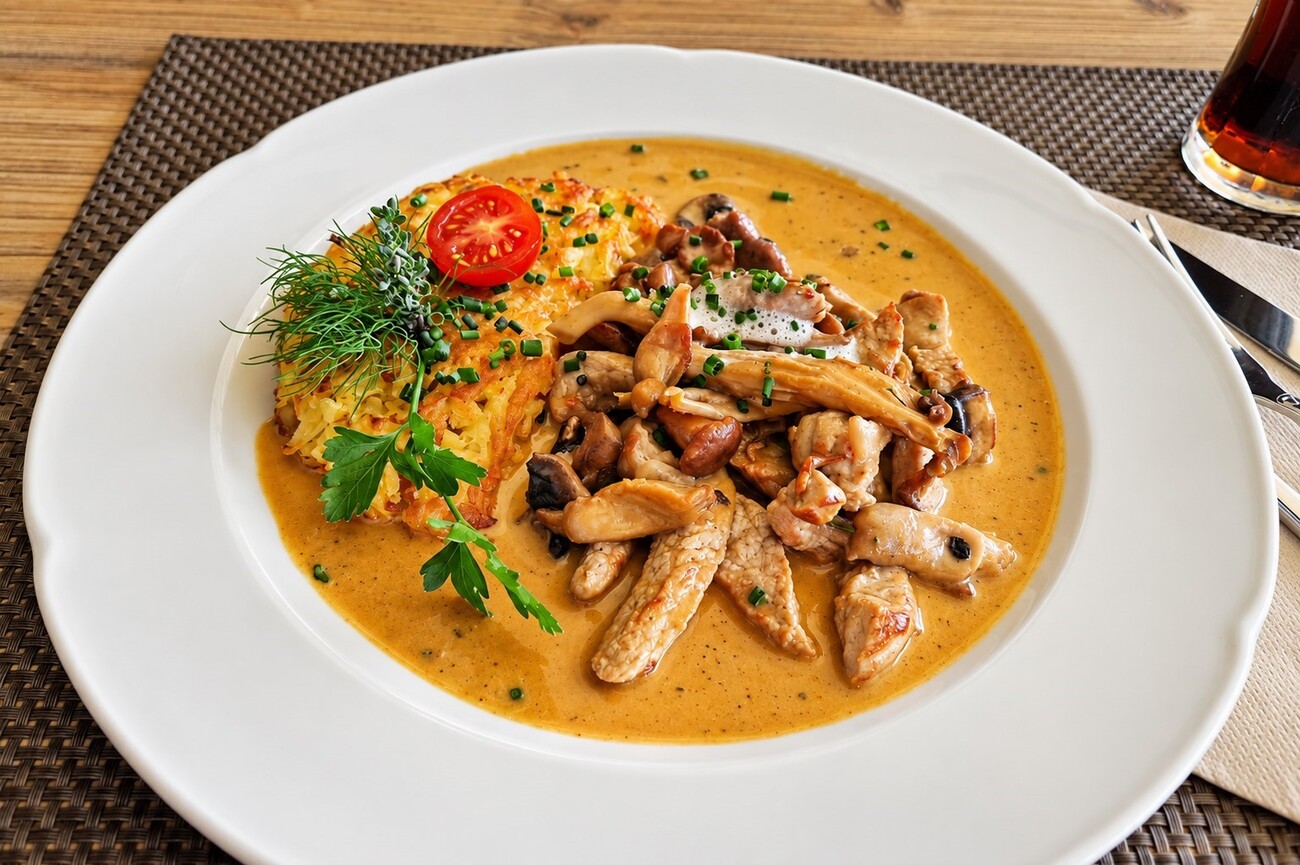
- Café Hotel Hegau-Haus: The Hegauhaus has the setting advantage. From its position on Duchtlinger Straße, the restaurant looks across the Hegau toward Hohentwiel and Lake Constance, while the menu stays rooted in regional cooking. Current dishes include preparations using Hohentwiel lamb, alongside game, seasonal vegetables and homemade Spätzle. If you want a sit-down meal that connects the plate with the volcanic landscape outside, this one does the job nicely.
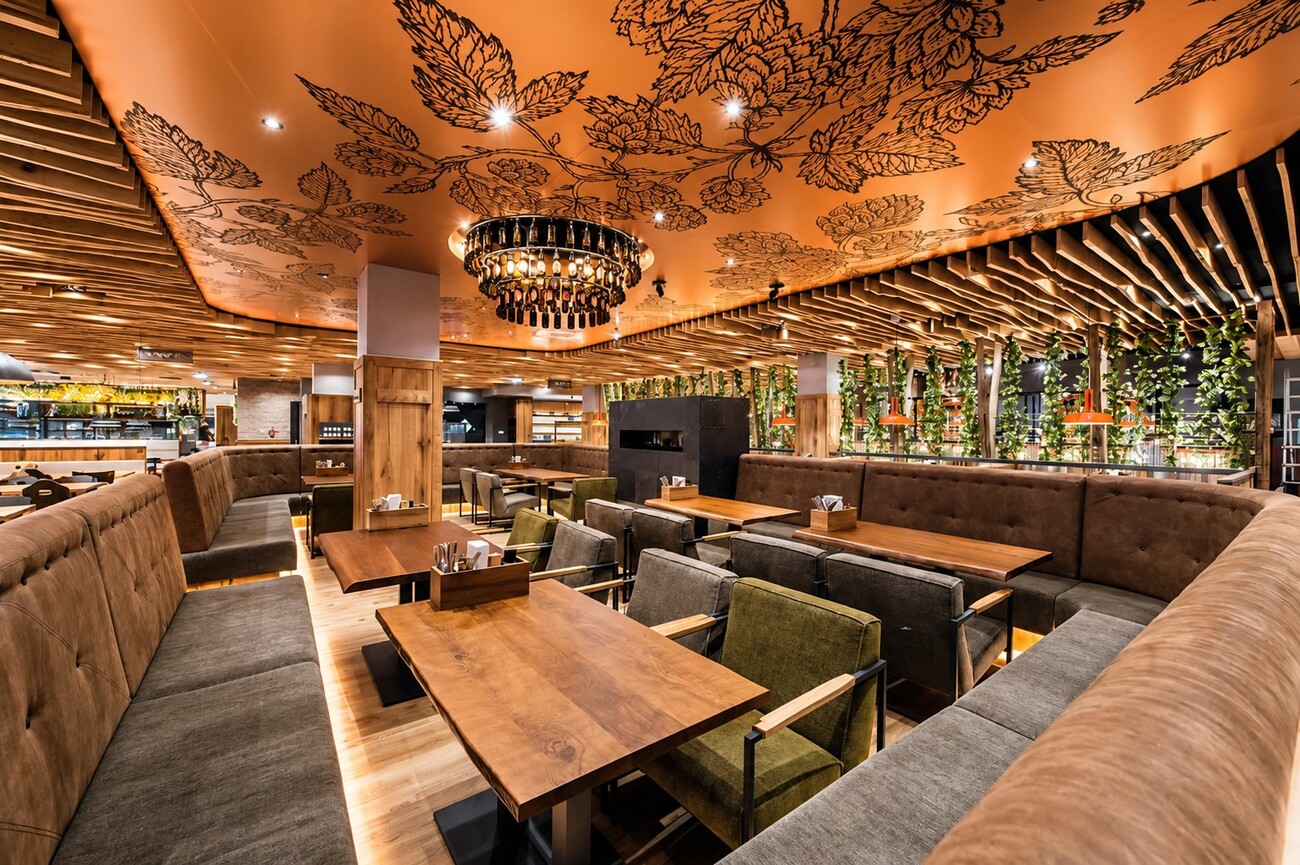
- Barfüßer Hausbrauerei Singen: For something much more casual, Barfüßer is the easy pick. The brewery restaurant sits on August-Ruf-Straße in central Singen and serves its own beer alongside Bavarian-Swabian comfort food. Expect the hearty end of the spectrum with dishes such as schnitzel and pork knuckle rather than tiny plates and tasting-menu pacing.
Konstanz
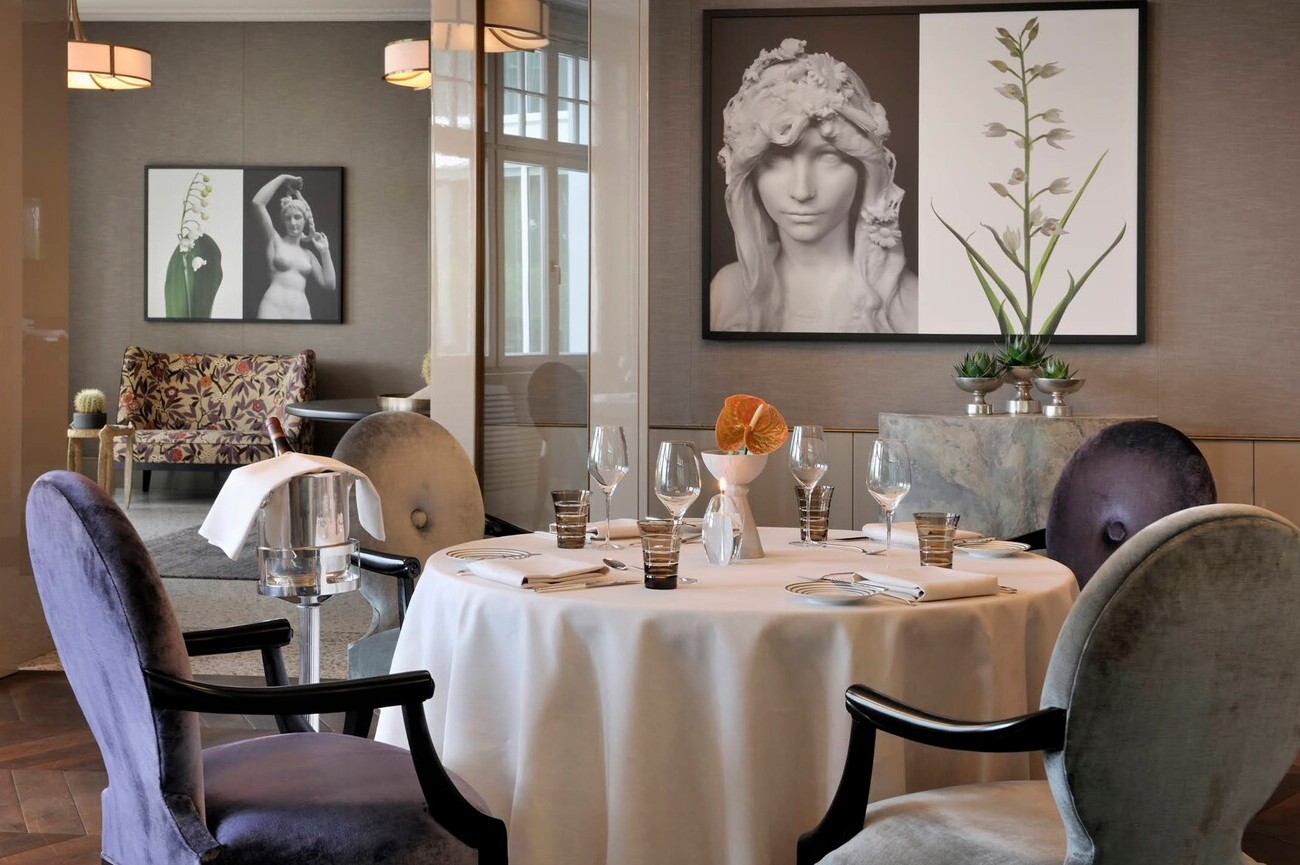
- Ophelia: Konstanz is where the restaurant budget can go properly upscale. Ophelia holds two Michelin stars, making it the clear luxury dining choice on this itinerary. The restaurant is inside the five-star-superior RIVA hotel on Seestraße, with chef Dirk Hoberg's tasting menus leaning toward precise, French-influenced cooking and high-end seasonal ingredients. It offers a multi-course tasting-menu experience, so reserve the evening for it and book ahead. And on warmer days, service can extend onto the Art Nouveau terrace, adding Lake Constance to an already fairly convincing splurge.
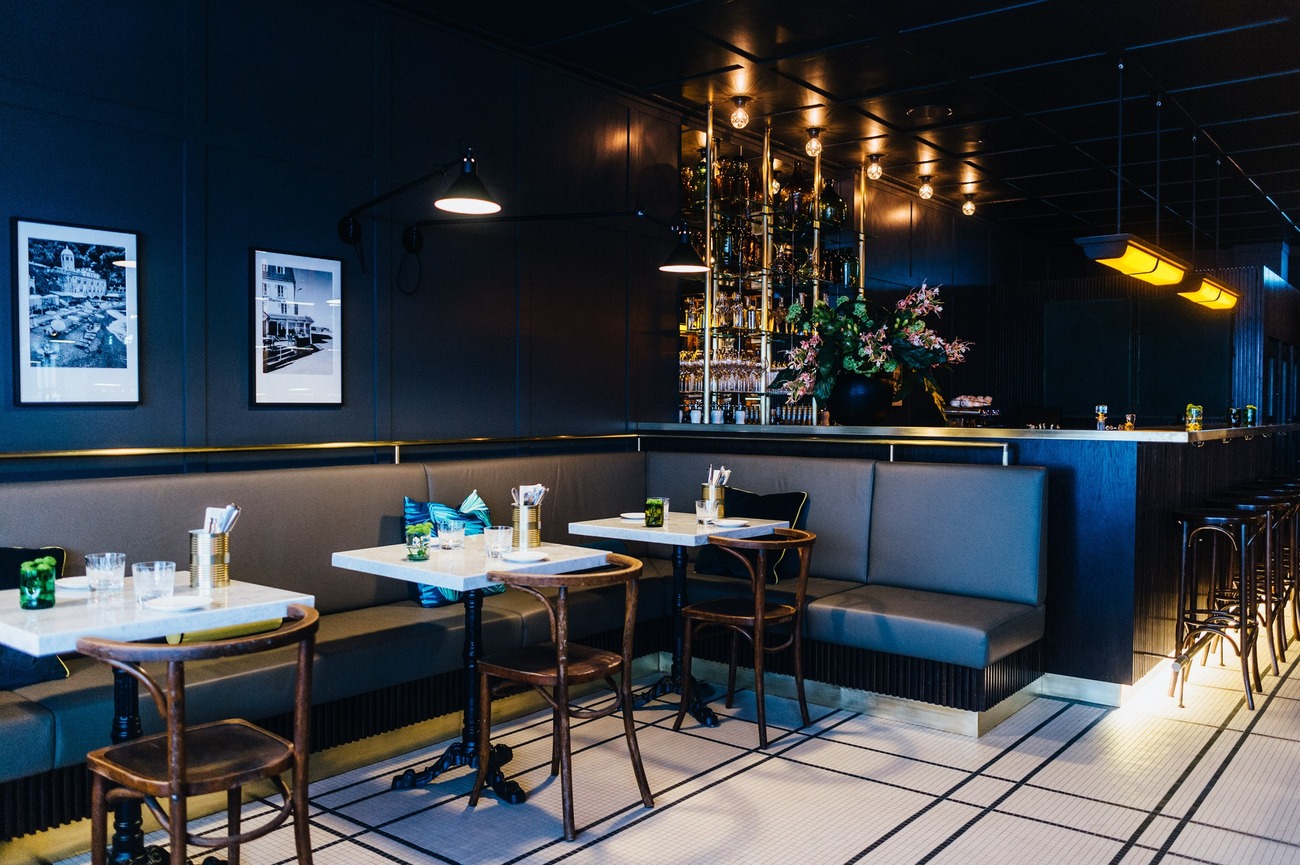
- Brasserie Colette Tim Raue: Brasserie Colette sits right in Konstanz’s old town, blending into the pedestrian streets with a calm, unfussy fine dining vibe. You can either go à la carte or commit to a structured set menu depending on how much time and appetite you’ve got. The kitchen follows Tim Raue’s signature style, which means a clear focus on that sweet–sour–spicy balance that shows up across multiple courses without feeling repetitive. Beef Wellington is one of the recurring highlights and tends to be a safe bet if you want something classic. There are also properly thought-out vegan options.
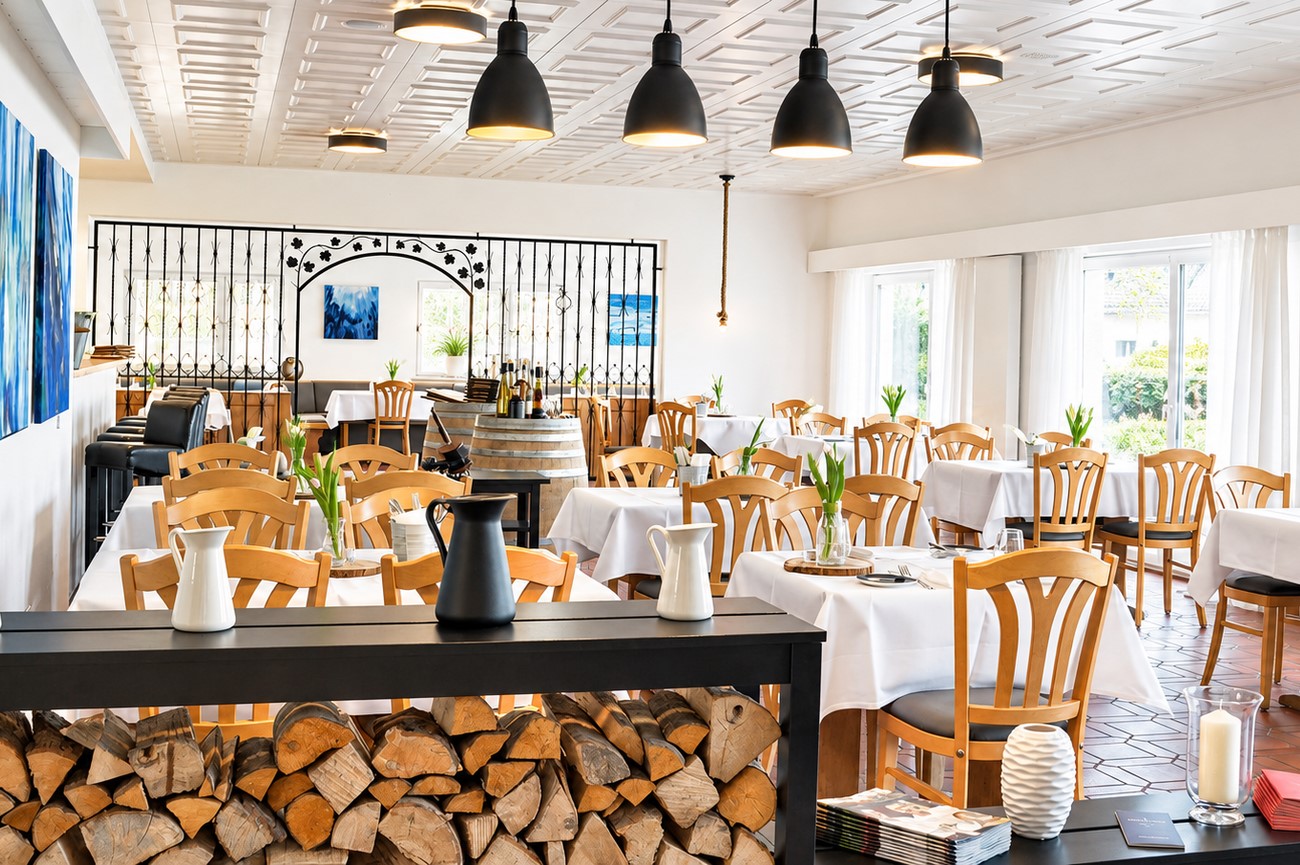
- Restaurant Anglerstuben: Set close to the Rhine in Konstanz, Restaurant Anglerstuben combines refined regional cooking with a relaxed, contemporary atmosphere. The kitchen focuses strongly on ingredients from the Lake Constance region, with fish playing an important role alongside seasonal produce and carefully prepared meat dishes. In the evening, you can choose between multi-course menus or order individual dishes, while the wine list concentrates entirely on German producers. During warmer weather, the small terrace overlooking the Rhine and nearby boat jetties adds considerably to the setting. It is a good choice when you want something more polished than a traditional gasthaus without committing to the formality of a Michelin-starred tasting menu.
Other Things to Do
The train is the reason for the trip, but Offenburg, Singen and Konstanz are worth giving actual time rather than treating them as platforms with good scenery attached. Offenburg leans into wine and layered city history; Singen is strongest when you head toward Hohentwiel and Konstanz naturally pulls the day toward the lake. Each also has a more polished way to do it, from privately arranged tours to chartering a boat once the railway reaches Lake Constance.
Offenburg
- Go Underground on a Vaulted-Cellar Tour: Offenburg has more history below street level than you might expect. The city's Gewölbekellerführung takes you through four historic vaulted cellars, some with origins reaching back to the Middle Ages. The guided experience lasts around two hours and uses the underground spaces to explain how people lived, stored goods and used buildings in the medieval city. This is a good option when you want something more specific than another general old-town walk.
- Take Offenburg’s Wine City Tour: Offenburg sits in the Ortenau wine region, so wine here is not a random tourist add-on. The city's official Wine City Tour combines a walk through central Offenburg with stops where guides and wine experts explain local wine production and the city's long relationship with viticulture. Tastings from Offenburg producers are included along the way.
Singen
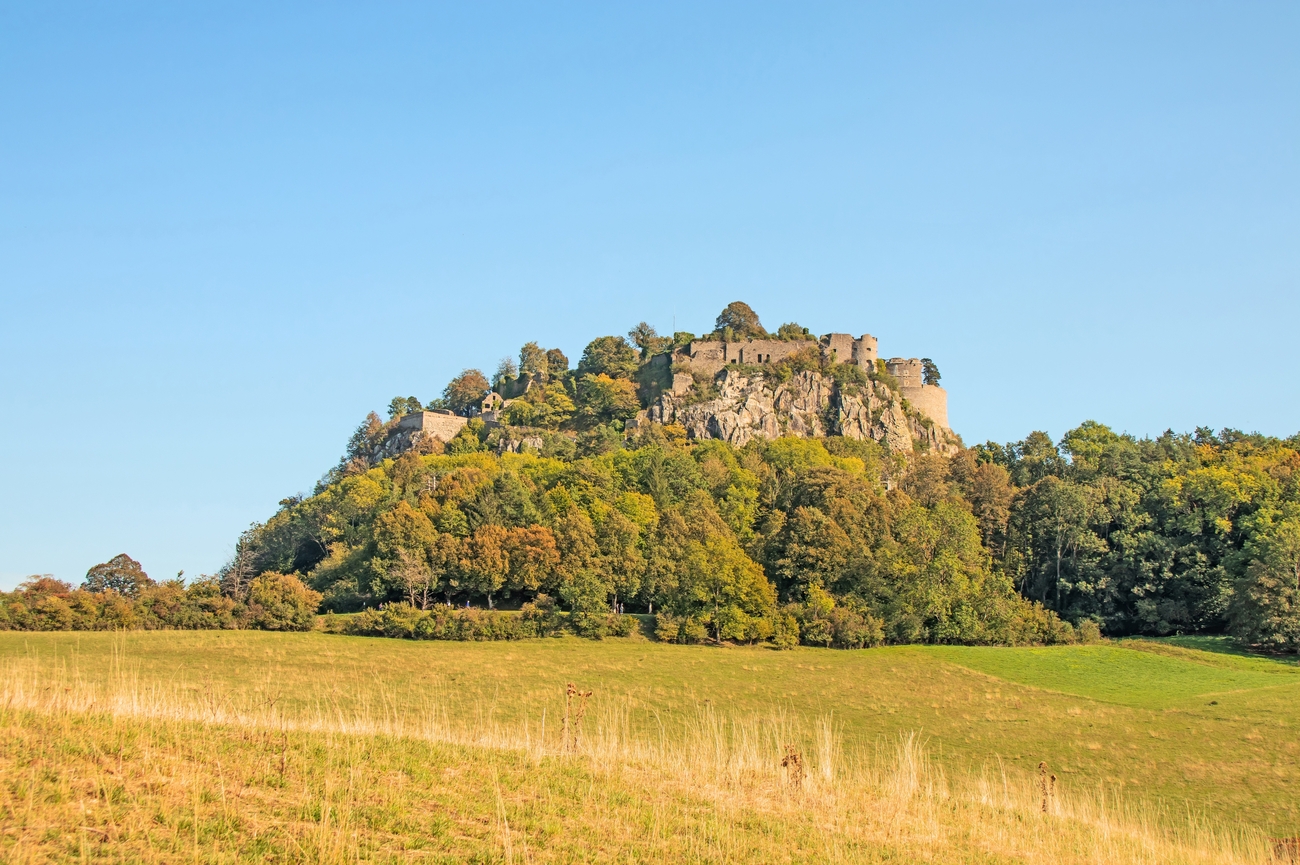
- Climb Hohentwiel and Explore the Fortress: Hohentwiel is the landmark that defines Singen. The former volcanic mountain rises above the city with the enormous ruins of Hohentwiel Fortress spread across its summit. From the higher sections, you can look across the Hegau and, in clear weather, toward Lake Constance and the Alps. If you want more than the fortress itself, follow the Vulkanpfad Hohentwiel. The circular trail covers roughly 4.6 kilometers and takes around two hours, with information covering the area's volcanic geology, natural environment and cultural history.
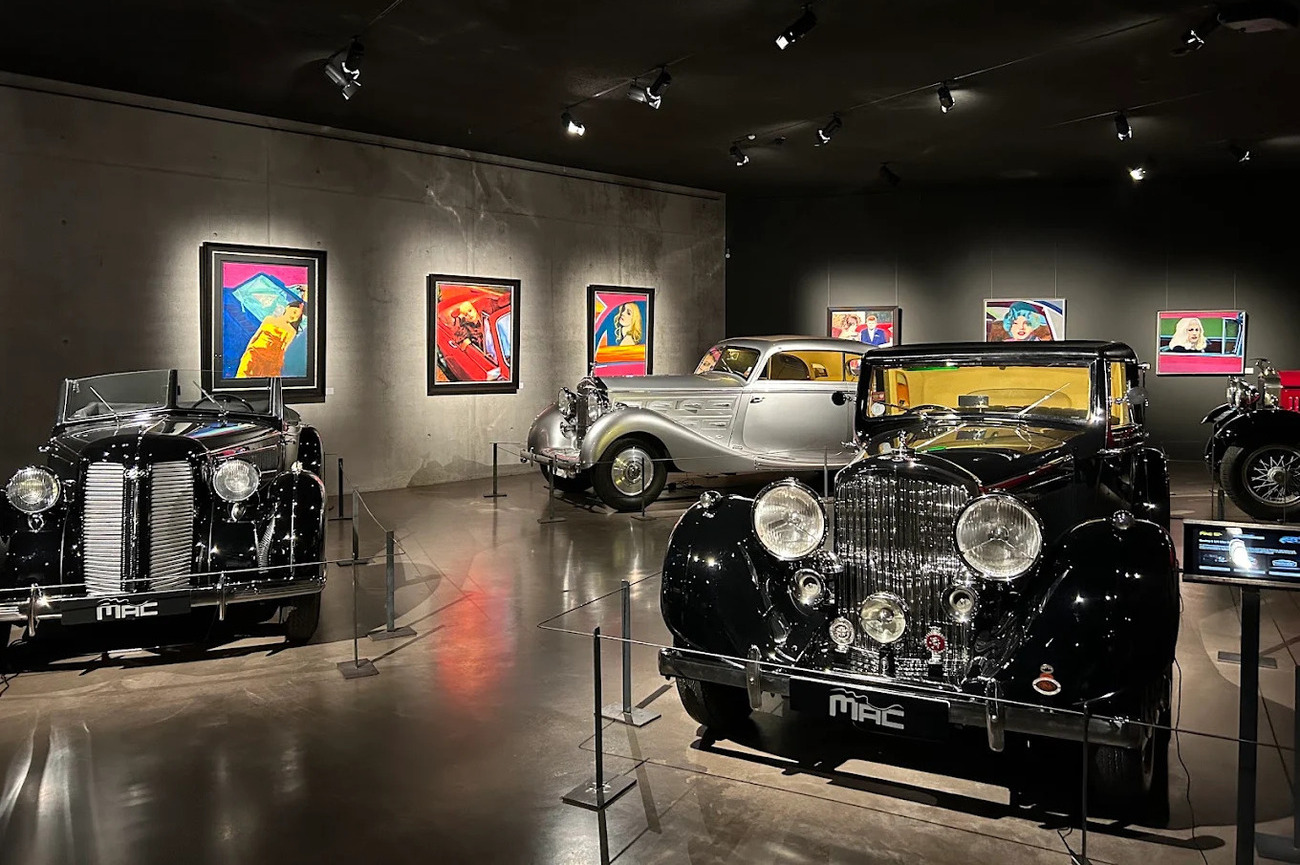
- Visit MAC Museum Art & Cars: MAC Museum Art & Cars is one of Singen’s more unexpected attractions. Instead of operating as a standard automobile museum, it places historic and collectible cars alongside changing exhibitions of art, photography and design. The museum buildings' contemporary architecture is designed to connect visually with the volcanic Hegau landscape surrounding Hohentwiel. It is also an easy backup when the weather decides that hiking is cancelled. And because the museum sits at the foot of Hohentwiel, you can comfortably combine it with the fortress rather than spending another day crossing the city.
Konstanz
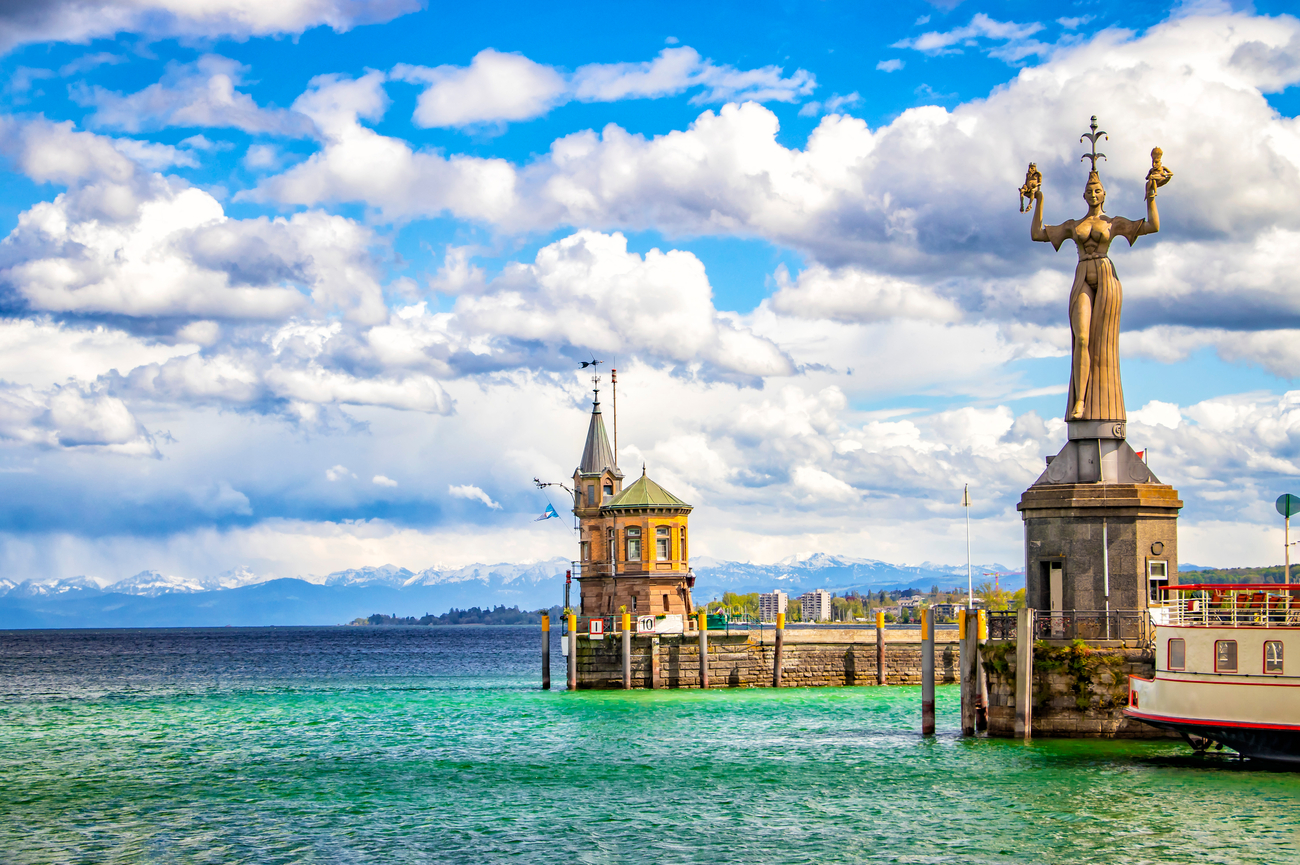
- Get Out on Lake Constance: Once you reach Konstanz, spending some time on the water makes sense. Passenger boats leave from the harbor for destinations around Lake Constance, including places such as Mainau and Meersburg, while shorter cruises let you see Konstanz from the water without using up the entire day. You can also charter a private sailing or motor yacht from Konstanz instead of joining a larger passenger cruise. This is definitely the biggest splurge of the three cities, but it is also one of the luxury upgrades that genuinely changes the experience.
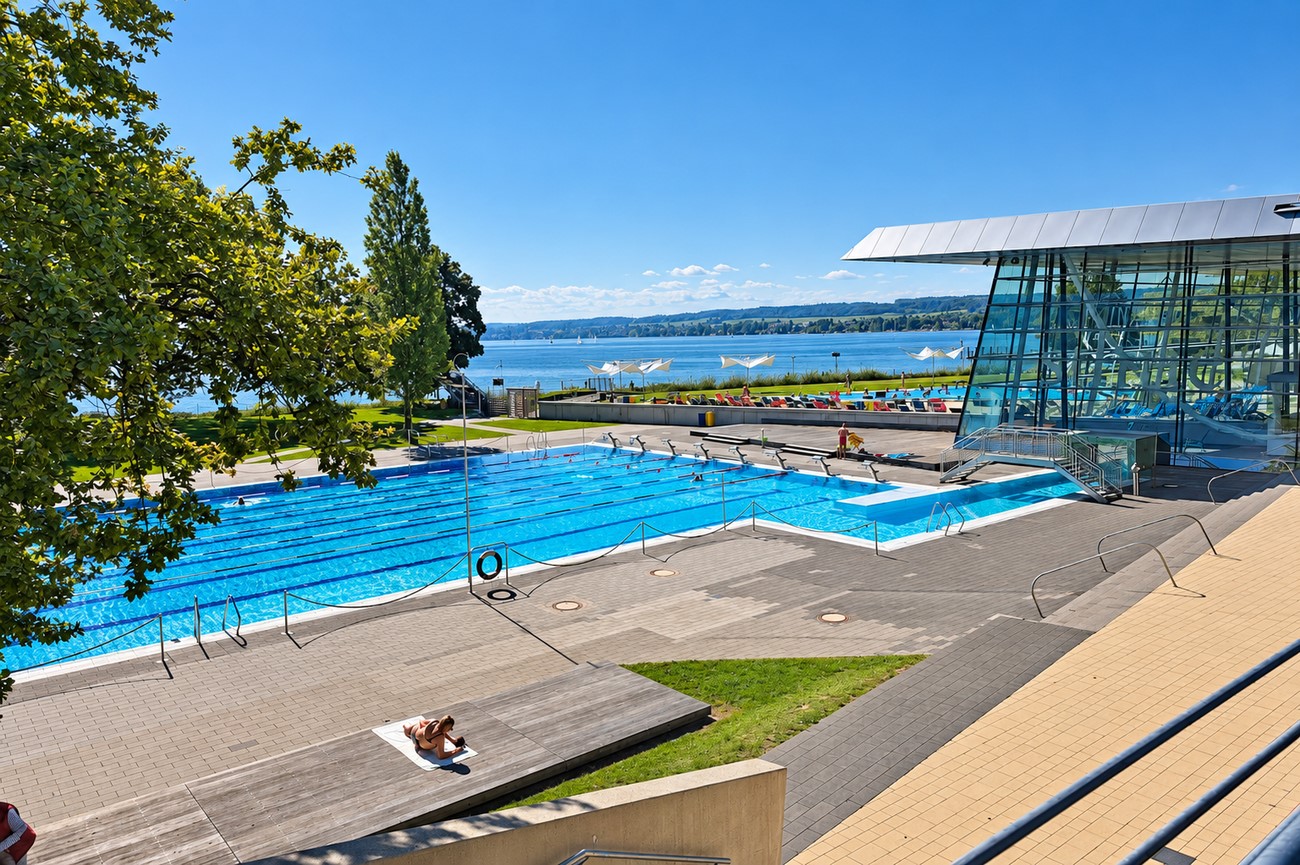
- Relax at Bodensee-Therme Konstanz: If you want a reset day in Konstanz, this is the move. Bodensee-Therme sits right on the lake and mixes thermal pools, saunas and direct access to Lake Constance. You can float between indoor and outdoor pools while looking straight out at the water, then switch into the sauna area for a more low-key wellness circuit. The setup is straightforward. Just swim, sauna, repeat and take breaks in the lounge areas facing the lake.
Plan Your Black Forest
Railway Journey
Travel the Black Forest Railway as part of a tailor-made journey through southern Germany, combining one of the country's classic scenic rail routes with carefully chosen stays, private experiences and time in the Black Forest and Lake Constance.
Start planning your Germany journey with Revigorate.


Let us know what you love, where you want to go, and we’ll design a one-of-a-kind adventure you’ll never forget.
Get in touch
Miriam
Travel Specialist

Romina
Travel Specialist

Laura
Travel Specialist
Frequently Asked Questions
-
Does the Black Forest Railway still use steam trains?
Not on regular services. The current RE 2 is an electric regional service using Class 146 locomotives and double-deck coaches. Historic steam locomotives are still used for occasional special excursions on the Black Forest Railway.
-
Are there food and drinks available on Black Forest Railway trains?
You should not rely on regular onboard catering on the RE 2. It is best to buy food and drinks before boarding, although you can bring your own refreshments onto the train.
-
Does the Black Forest Railway have first-class seating?
Yes. Black Forest Railway RE 2 trains normally include first-class accommodation. Deutsche Bahn describes the first-class area as having tables and power sockets, but you need a valid first-class ticket or upgrade to use it.
-
Do I need to reserve a seat on the Black Forest Railway?
No. A seat reservation is not required for regular RE 2 services. You can simply board with a valid ticket, although trains can be busier at weekends and during popular travel periods.
-
Can you leave the train at one town and continue the journey later the same day?
Yes, provided your ticket allows it. Day tickets and passes such as the Baden-Württemberg-Ticket, Deutschland-Ticket and an eligible Interrail or Eurail travel day make it easy to stop somewhere such as Gengenbach or Triberg and continue later. Check the conditions if you are travelling on a single-journey ticket.
-
Are there hiking trails that can be reached directly from Black Forest Railway stations?
Yes. One of the best examples is the Schwarzwaldbahn-Erlebnispfad, or Black Forest Railway Adventure Trail. Its two routes both start and finish at Triberg station, and hiking routes connected with the railway can also be accessed around Hornberg and St. Georgen.
-
How far is Triberg station from the Triberg Waterfalls?
The Triberg Waterfalls are about a 25-minute walk from Triberg station. The route heads uphill through the town, so allow a little extra time if you prefer a relaxed walk.
-
Can I use an Interrail or Eurail Pass on the Black Forest Railway?
Yes. Interrail and Eurail passes can be used on Deutsche Bahn regional trains such as the RE 2, provided your pass is valid for Germany and you have activated a travel day where required. A compulsory seat reservation is not required for this regional service.
-
Is the KONUS Guest Card valid on the Black Forest Railway?
Yes, within the KONUS network. The KONUS Guest Card allows eligible visitors to use participating local and regional trains in second class during their stay. It does not cover travel beyond the KONUS area or long-distance ICE, IC, EC and ECE services.
-
What is the best time of year to ride the Black Forest Railway?
For most first-time visitors, late spring through autumn is particularly appealing. Spring and summer bring green landscapes and longer daylight hours, while autumn adds colour to the forested sections. The railway operates throughout the year, so the best season ultimately depends on the scenery and activities you want to combine with the journey.
-
Is the Black Forest Railway worth travelling in winter?
Yes. The railway operates throughout the year, and the forest, tunnels and mountain valleys can take on a very different character in winter. The Triberg Waterfalls are also open year-round. Snow is not guaranteed, however, and shorter daylight hours leave less time for stops along the route.
-
Can Revigorate include the Black Forest Railway in a tailor-made Germany itinerary?
Yes. Revigorate can incorporate the Black Forest Railway into a tailor-made journey through Germany, combining the scenic rail route with carefully selected stays, private experiences, Black Forest towns and time around Lake Constance.
Our offices:


Revigorate, Iberian Escapes and Algarve Lifestyle are the registered brand names of APCS Lda . We are a fully authorised travel agency licensed by Turismo de Portugal RNAVT/6867.
In the event of a dispute, the consumer may refer to: RAL - Centros de Arbitragem
Avª. 5 de Outubro, nº. 55, R/C Dtº. 8000-075 Faro, Portugal | Tel: +351 289 823 135 *
* national landline call
E-mail: info@consumoalgarve.pt| www.consumidoronline.pt | Mon to Fri: 9:00 - 13:00 / 14:00 - 17:00