AKE-Rheingold: A Special Train Journey Through Europe
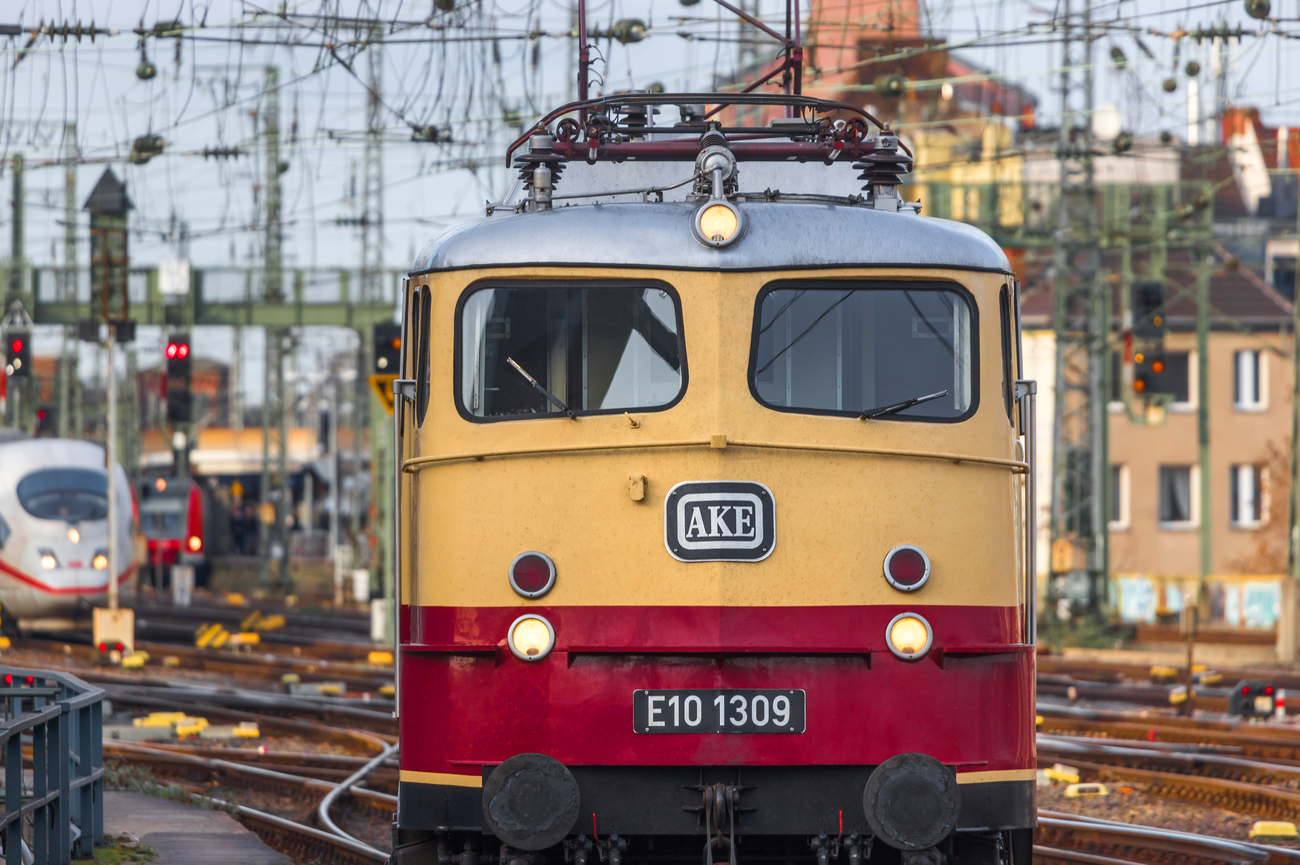
The AKE-Rheingold is a heritage train that brings the atmosphere of classic European rail travel back onto the tracks. Its story begins with the original Rheingold, launched in 1928 as a premium long-distance express linking the Netherlands, Germany and Switzerland. Known for its spacious coaches, high levels of service and elegant design, it became one of the great names of European railway travel. Today, the AKE-Rheingold continues that tradition using restored historic carriages on special journeys through Germany and neighbouring European countries.
Travelling on the AKE-Rheingold is as much about the journey as the destination. Classic interiors, generous seating and large windows create an experience very different from a modern high-speed train, with time to watch river valleys, vineyards, cities and Alpine landscapes unfold outside. Unlike a regular passenger service, however, the AKE-Rheingold does not follow one permanent route. It operates as a special excursion train, with itineraries changing throughout the year according to the season and destination.
That changing programme is part of its appeal. One journey might travel through Germany's great river valleys, another towards the Austrian Alps, the Italian lakes or Switzerland. What remains constant is the train itself: a working piece of European railway history designed for travellers who want the journey to matter just as much as where they eventually arrive.
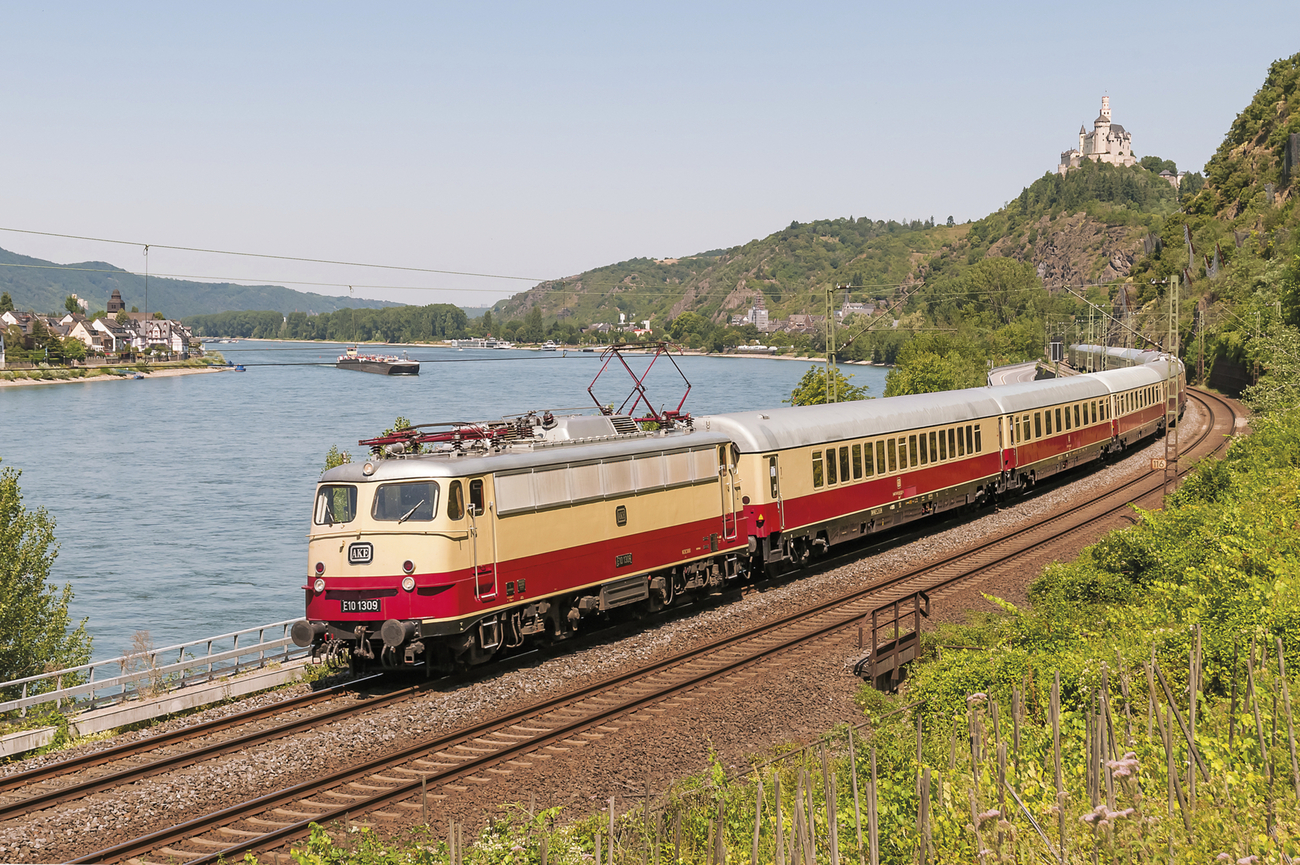
AKE-Rheingold Train Compartments
The AKE-Rheingold is designed around a classic first-class railway experience, where the journey is just as important as the destination. Instead of multiple travel classes competing for attention, the train focuses on comfort, space and a more relaxed style of travel. The train includes compartment coaches, a club carriage and rolling restaurant service, creating an experience that feels more like a classic railway journey.
Compartment Coaches
The compartment coaches are the main seating areas of the AKE-Rheingold, offering 48 seats in a classic railway setting. These coaches feature natural daylight, giving passengers clear views of the landscapes outside while traveling through Germany and other European destinations. The layout keeps the traditional charm of compartment-style rail travel, with a quieter and more private atmosphere compared to open-plan modern trains. It is a comfortable space for settling in during longer journeys, whether watching the scenery or simply enjoying the slower pace of the ride.
Club Waggon
The Club Waggon offers a more social setting with seating for 34 passengers. Like the compartment coaches, it features natural daylight and is designed to make the journey itself part of the experience. This carriage works well for travelers who enjoy a more relaxed onboard atmosphere. It provides space to gather, have conversations and enjoy the classic railway environment that the AKE-Rheingold is known for.
Open-Plan Carriage
The open-plan carriages provide an alternative seating arrangement with individual seats and double seats. Single seats are positioned by the windows, making them suitable for solo travelers, while double seats include one window seat and one aisle seat for couples or companions traveling together. These carriages offer a more open layout compared to the compartment coaches while maintaining the first-class comfort standards of the AKE-Rheingold.
Dining Car
The AKE-Rheingold includes a dedicated dining car with onboard restaurant service. Freshly prepared meals and beverages are served throughout the journey, including options for breakfast, lunch, coffee service and dinner. The dining car continues the tradition of classic long-distance rail travel, where meals are served as part of the onboard experience rather than as simple refreshments. You can enjoy regional drinks, including wines from areas such as the Moselle and Ahr, along with other beverages.
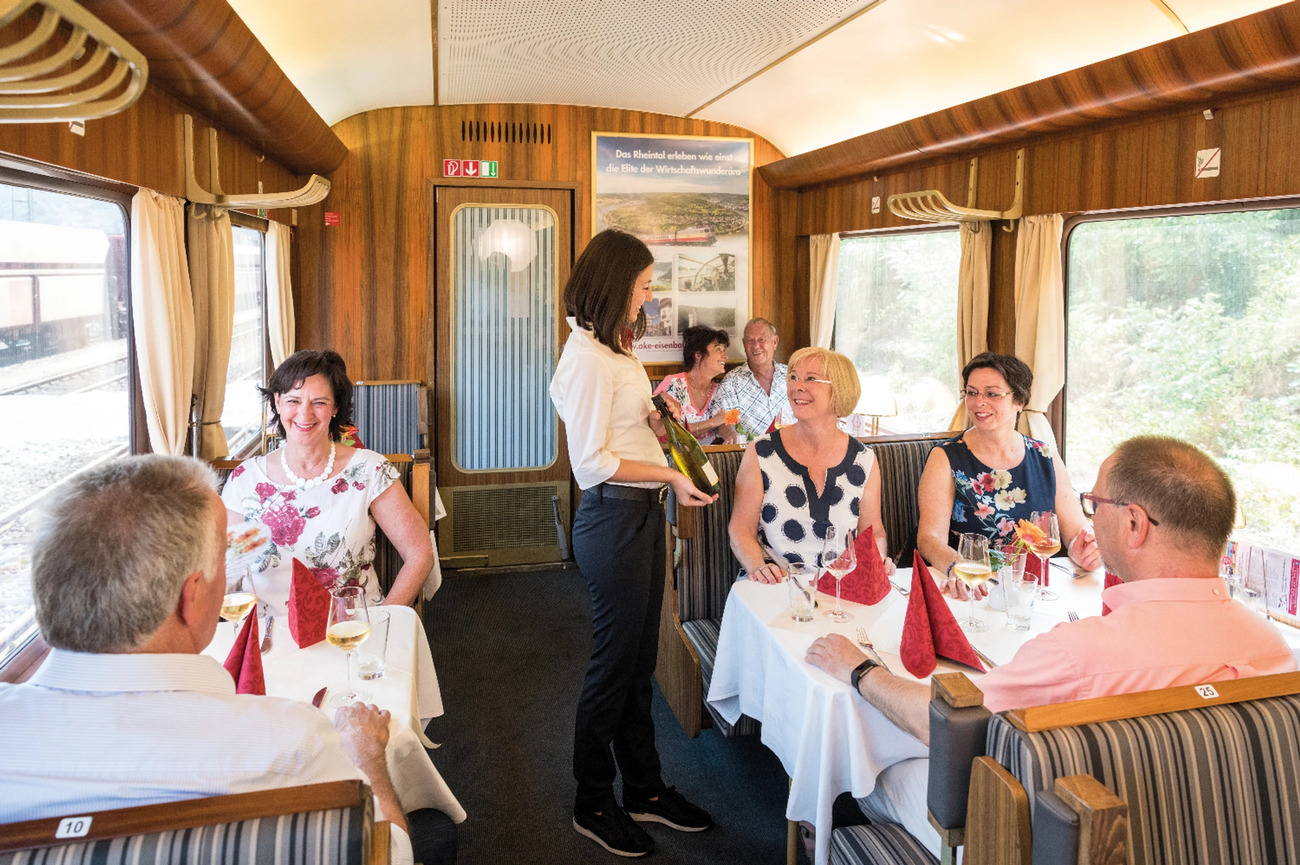
Bistro Car
The bistro trolley provides an additional social area within the train. It includes a counter and seating area where passengers can purchase drinks and relax during the journey. The carriage is designed as a casual meeting space, allowing travelers to enjoy coffee, wine or other refreshments while watching the scenery outside.
DomeCar Observation Coach
The DomeCar is one of the most distinctive historic carriages associated with the AKE-Rheingold. Built in 1963 for the TEE Rheingold fleet, it features all-around glazing and a raised glass observation dome designed to give panoramic views of the surrounding landscape. Only five of these dome cars were produced by Deutsche Bundesbahn in the 1960s, making the surviving coach a rare piece of European railway history.
The DomeCar is not currently in service. It suffered severe flood damage in July 2021, including the destruction of its electrical systems, and AKE-Eisenbahntouristik says it remains unavailable while restoration work continues.
Restaurant Service
The AKE-Rheingold includes onboard gastronomy with rolling restaurant service. The train’s restaurant facilities allow passengers to enjoy meals and drinks during the journey while traveling through different landscapes and destinations. The private first-class special train can accommodate up to 120 passengers in its restaurant cars. This setup provides dedicated dining space for organized excursions, group trips and longer scenic journeys.
What Routes Does the AKE-Rheingold Travel?
The AKE-Rheingold does not operate like a regular scheduled passenger train with one fixed route. Instead, it runs as a private first-class special train on selected tours throughout the year, travelling to destinations across Germany and neighbouring European countries. The itineraries often combine the train journey with hotel stays, guided excursions and local sightseeing, making the rail experience an important part of the trip rather than simply the transport between destinations.
Routes change according to the season and individual programme. Current itineraries include journeys through Germany, Switzerland, Austria and Italy, with destinations ranging from historic cities and river valleys to Alpine lakes, mountain landscapes and coastal regions.
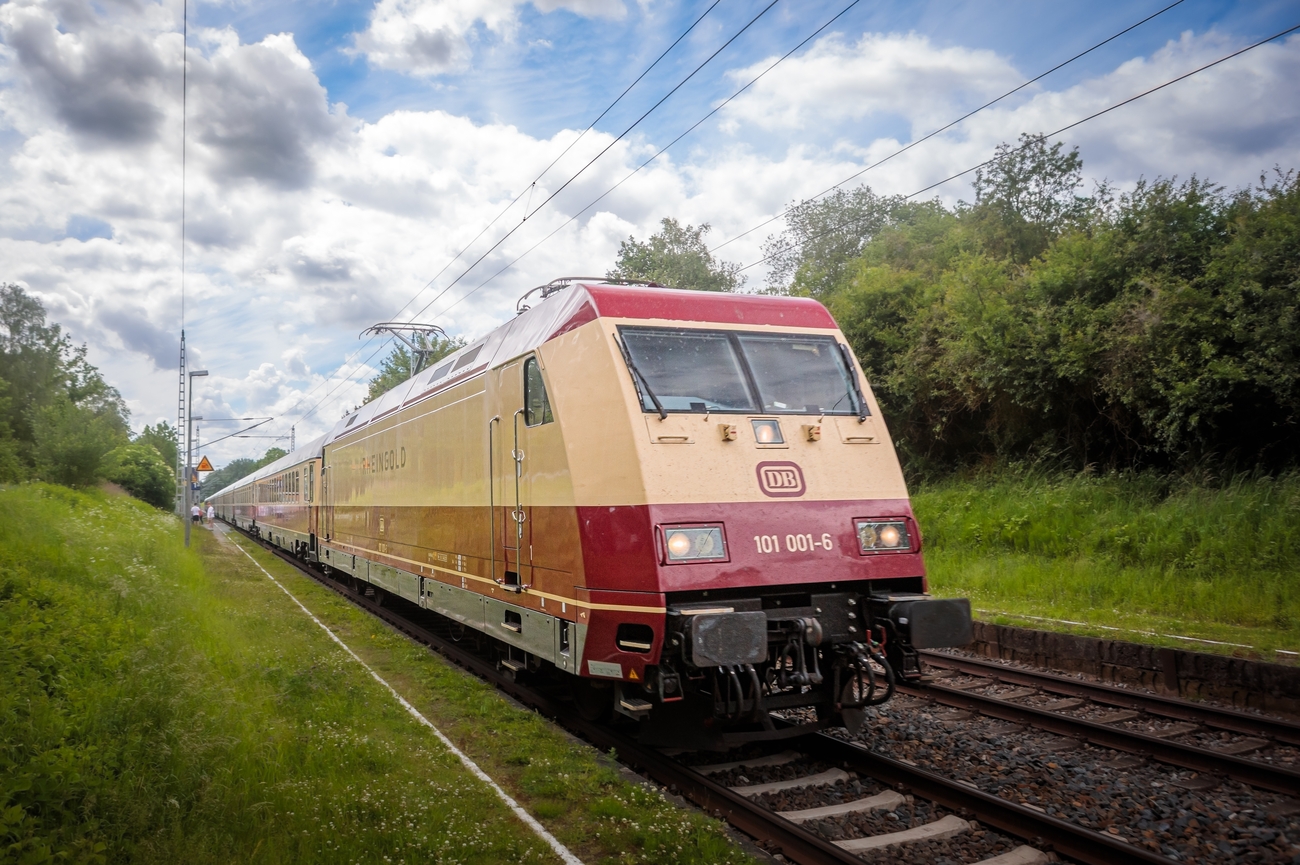
Where Does the AKE-Rheingold Travel in Summer?

The AKE-Rheingold’s summer programme combines scenic rail travel with destinations across Germany, Austria and northern Italy. Rather than following one permanent route, the train operates selected journeys to regions where passengers can explore coastal landscapes, Alpine lakes, historic cities and countryside through organised excursions. Summer itineraries include Rügen on Germany’s Baltic coast, the Wörthersee region in Austria and Piedmont in northern Italy, including Lake Viverone.
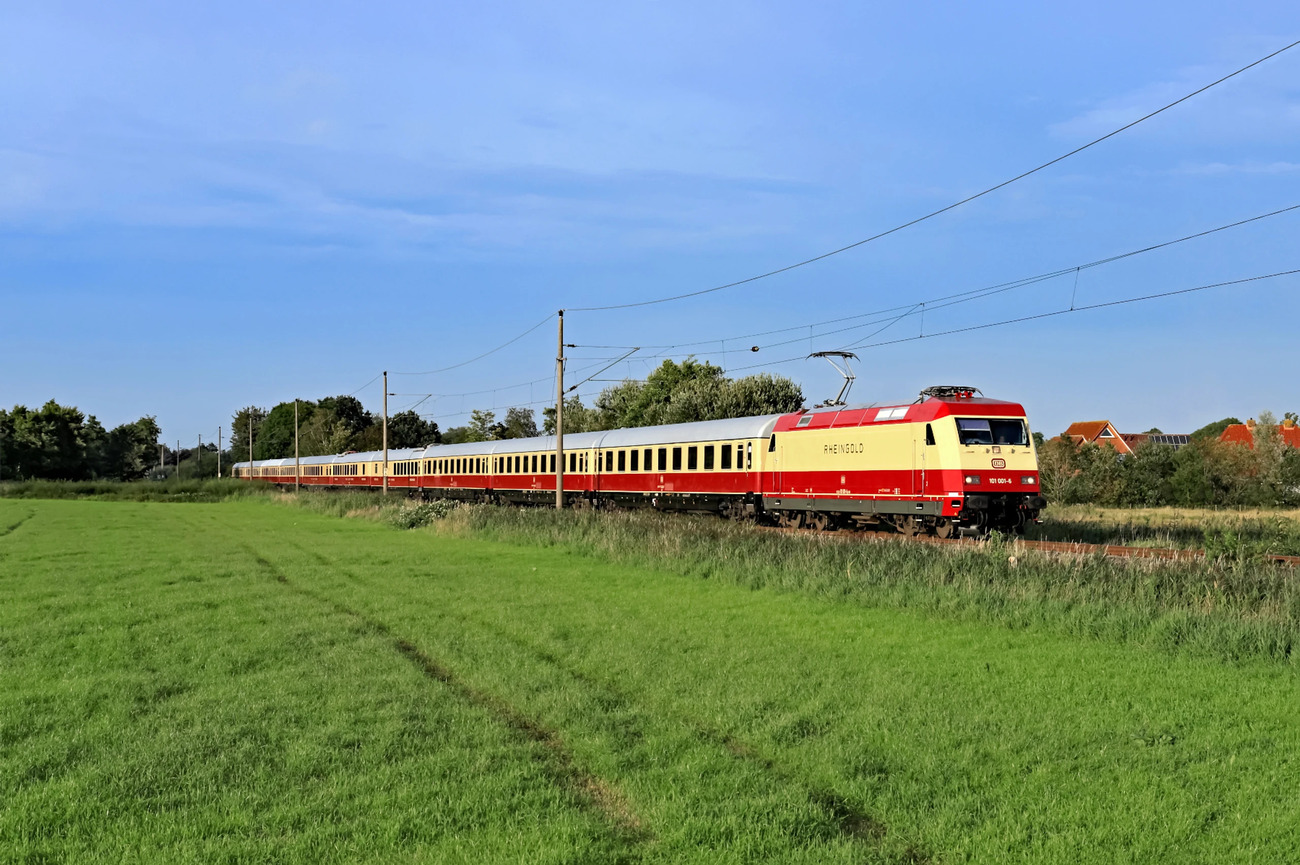
What Is the AKE-Rheingold Route from Koblenz to
Rügen?
Koblenz
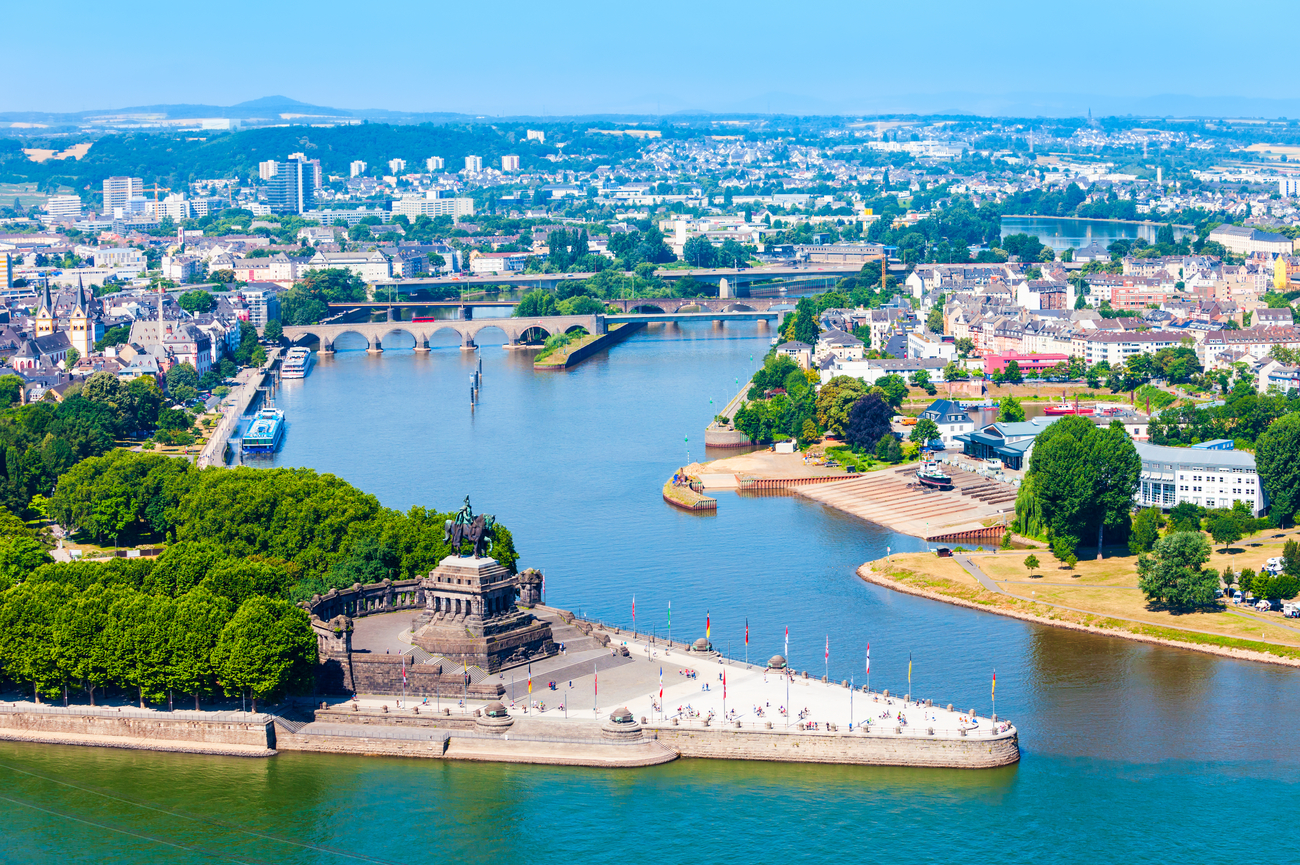
You can board the AKE-Rheingold in Koblenz, one of the most scenic boarding points along the Rhine. The city lies where the Rhine and Moselle rivers meet, making it an important gateway to the surrounding river valleys. Before boarding, you can explore Deutsches Eck, the famous headland marking the meeting point of the two rivers or look up toward Ehrenbreitstein Fortress, which overlooks Koblenz from above the Rhine. The city is surrounded by vineyards, wooded hills and historic towns, giving travelers a memorable start to the journey.
Bonn
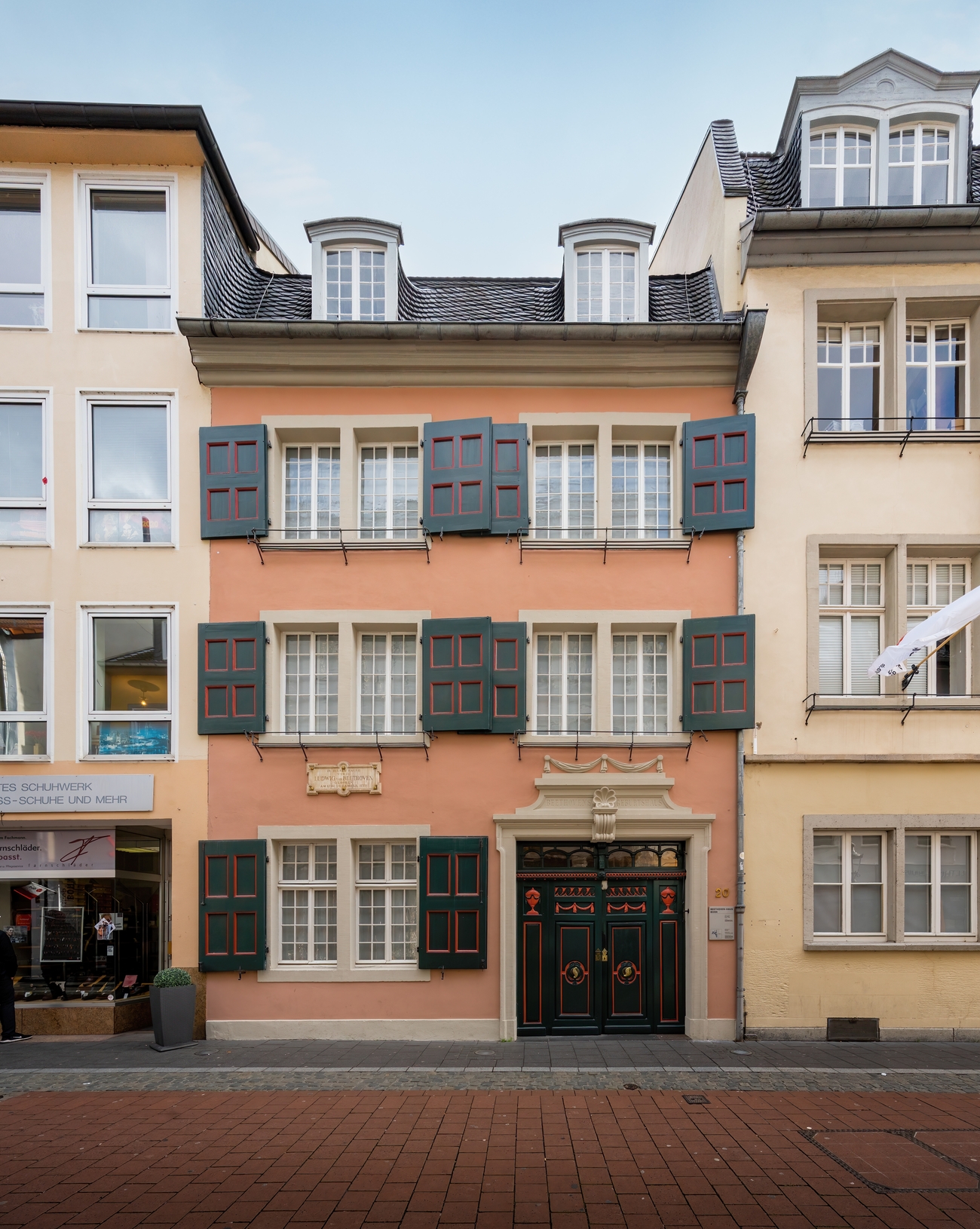
The next boarding point is Bonn, the former capital of West Germany. The city is closely connected with German political history and is also known as the birthplace of Ludwig van Beethoven. It is often associated with landmarks such as Beethoven’s birthplace, the old government district and the Rhine promenade. The city combines a historic center with a quieter riverside atmosphere.
Cologne
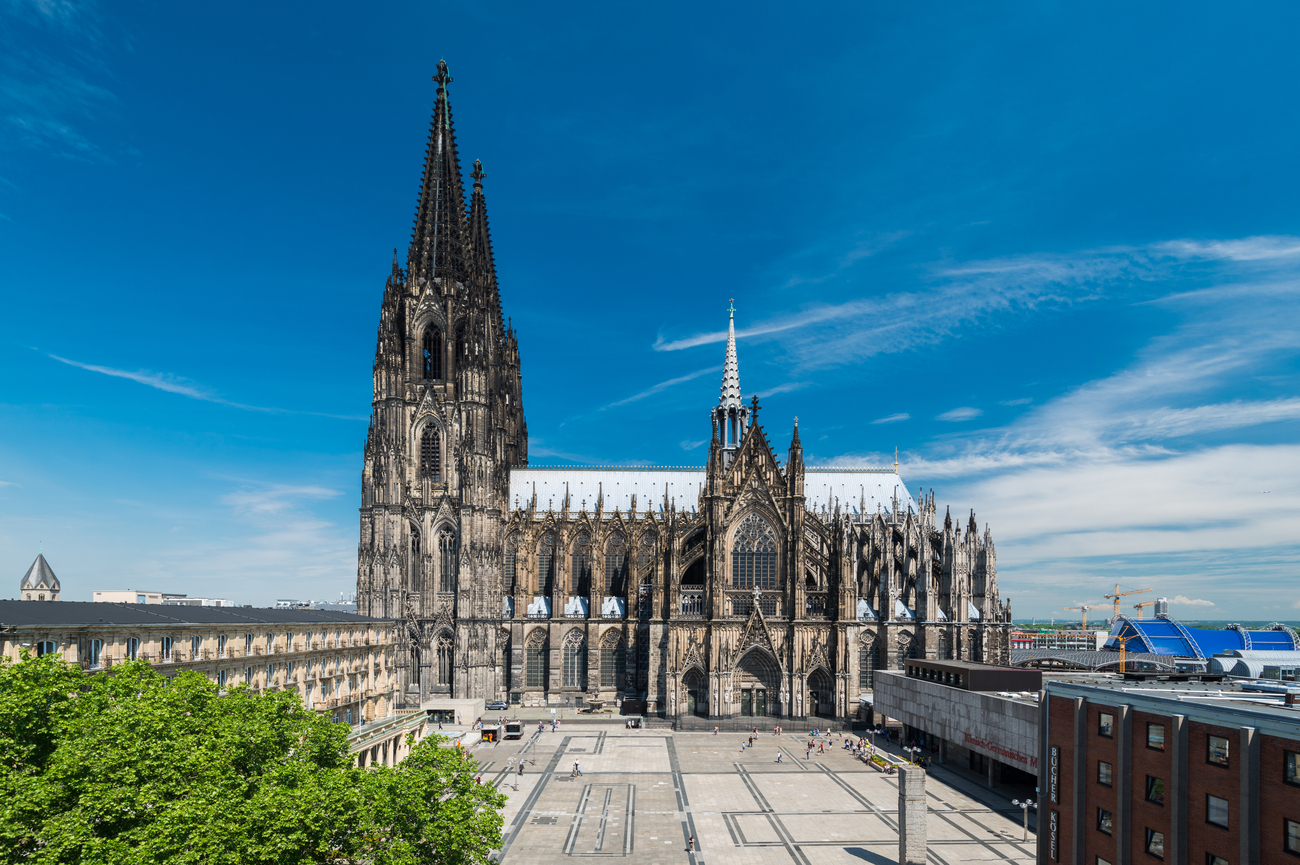
Cologne is one of Germany’s most recognizable cities and an important transport hub along the Rhine. Its defining landmark is Cologne Cathedral, a UNESCO World Heritage Site located directly beside the central station. Beyond the cathedral, Cologne is known for its Roman heritage, museums, old town streets and riverside location. The city has been an important cultural and trading center on the Rhine for centuries.
As the AKE-Rheingold departs Cologne, you can enjoy a comfortable first-class journey through the changing landscapes of western Germany. The train continues along important railway corridors toward the north, passing urban areas, industrial landscapes and quieter stretches of countryside.
Düsseldorf
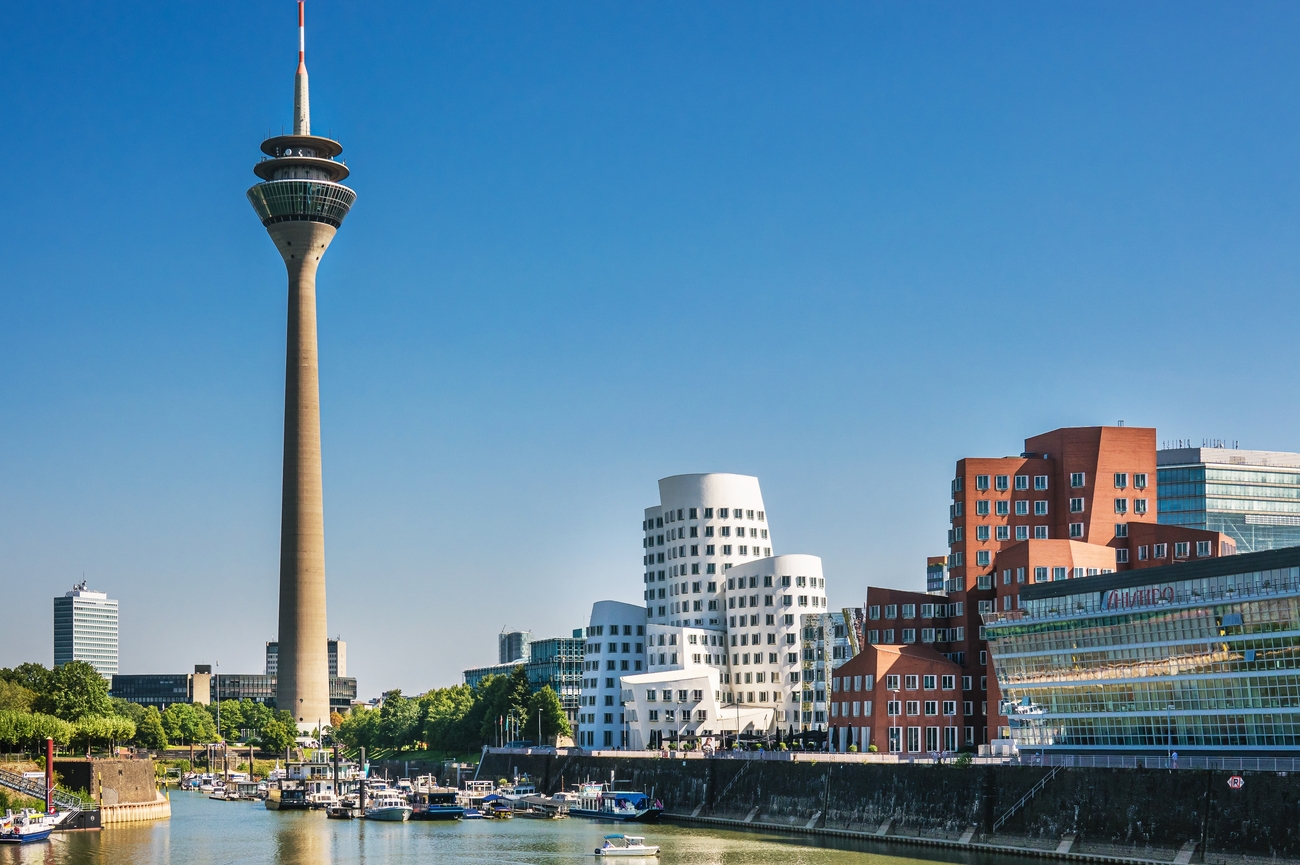
Düsseldorf marks a shift toward one of Germany’s most modern urban landscapes. The city combines business districts, creative industries and historic areas along the Rhine. The Altstadt remains the historic heart of the city, known for traditional breweries, old buildings and riverside walks. Nearby, MedienHafen presents a completely different side, with contemporary architecture surrounding the harbor.
Duisburg
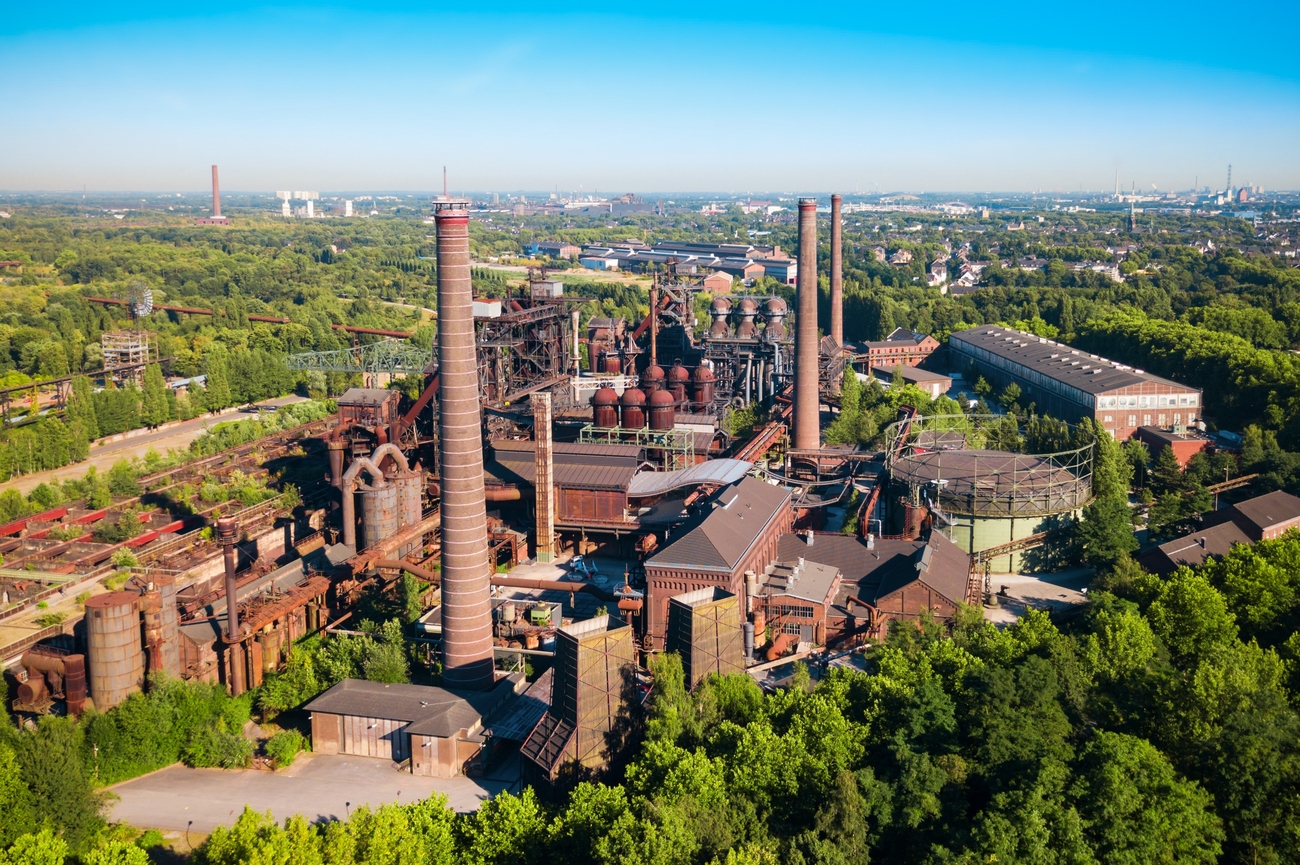
The route continues into Duisburg, where the Rhine and Ruhr rivers meet. The city’s identity has long been connected with shipping, steel production and heavy industry, with its inland port remaining one of the largest in the world.
From the train, Duisburg represents the industrial character of the Ruhr region. The city’s transformation is best seen at Landschaftspark Duisburg-Nord, where a former steelworks has been turned into a public park while preserving its industrial structures.
Essen
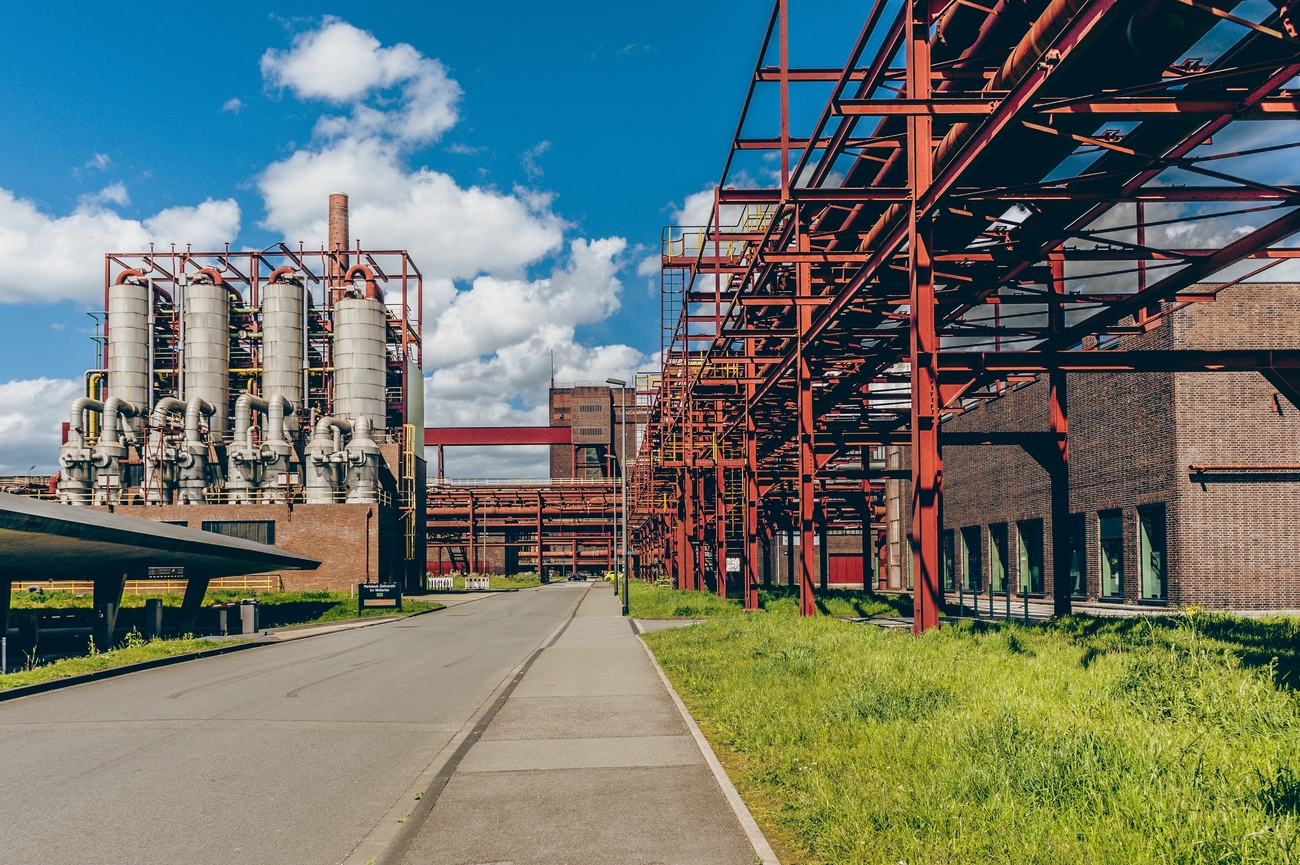
Essen continues the journey through the heart of the Ruhr region. Once one of Germany’s most important coal and steel centers, the city now shows how industrial landscapes can be transformed into cultural spaces.
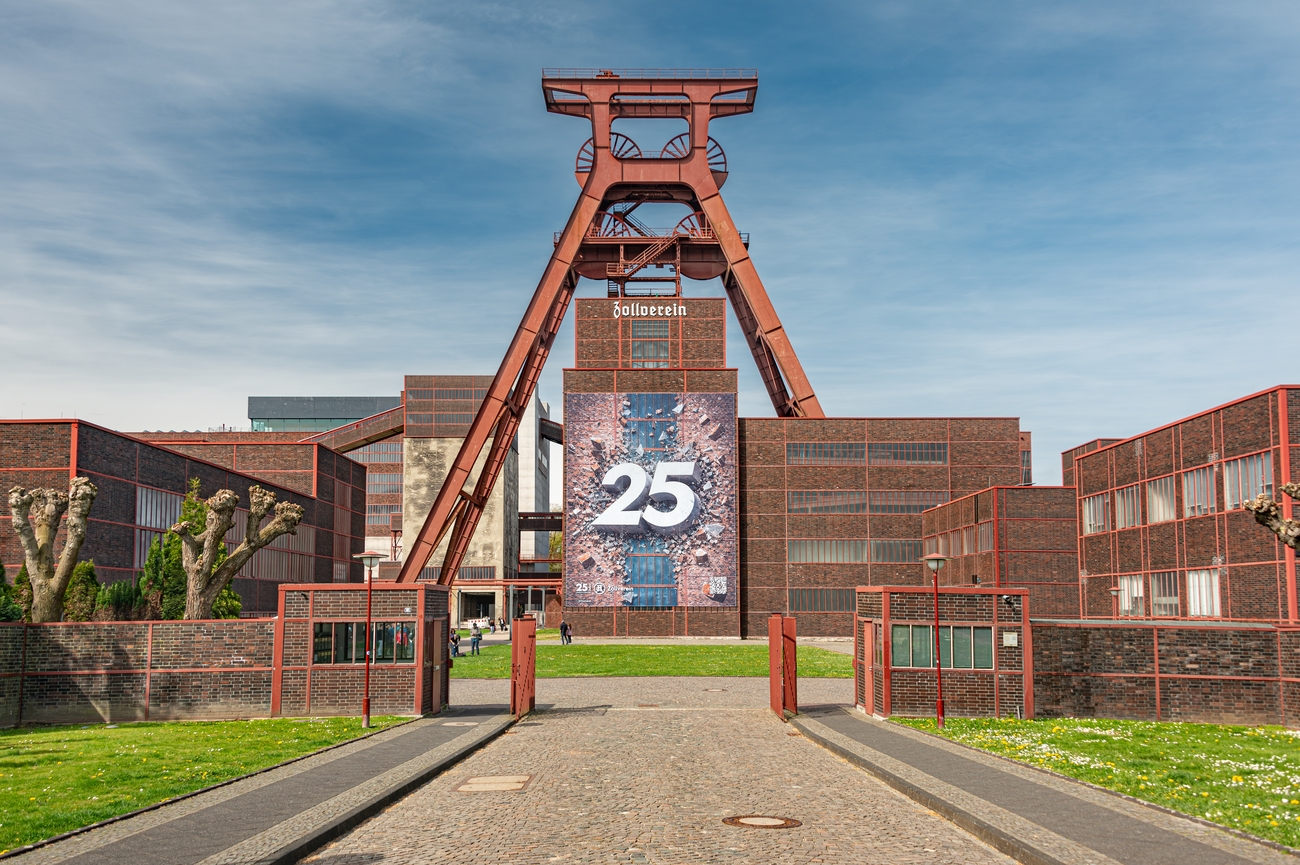
The Zollverein Coal Mine Industrial Complex, a UNESCO World Heritage Site, is the city’s most famous landmark. The former mine and coking plant now house museums, exhibitions and event spaces while preserving the history of the region’s industrial past.
Bochum
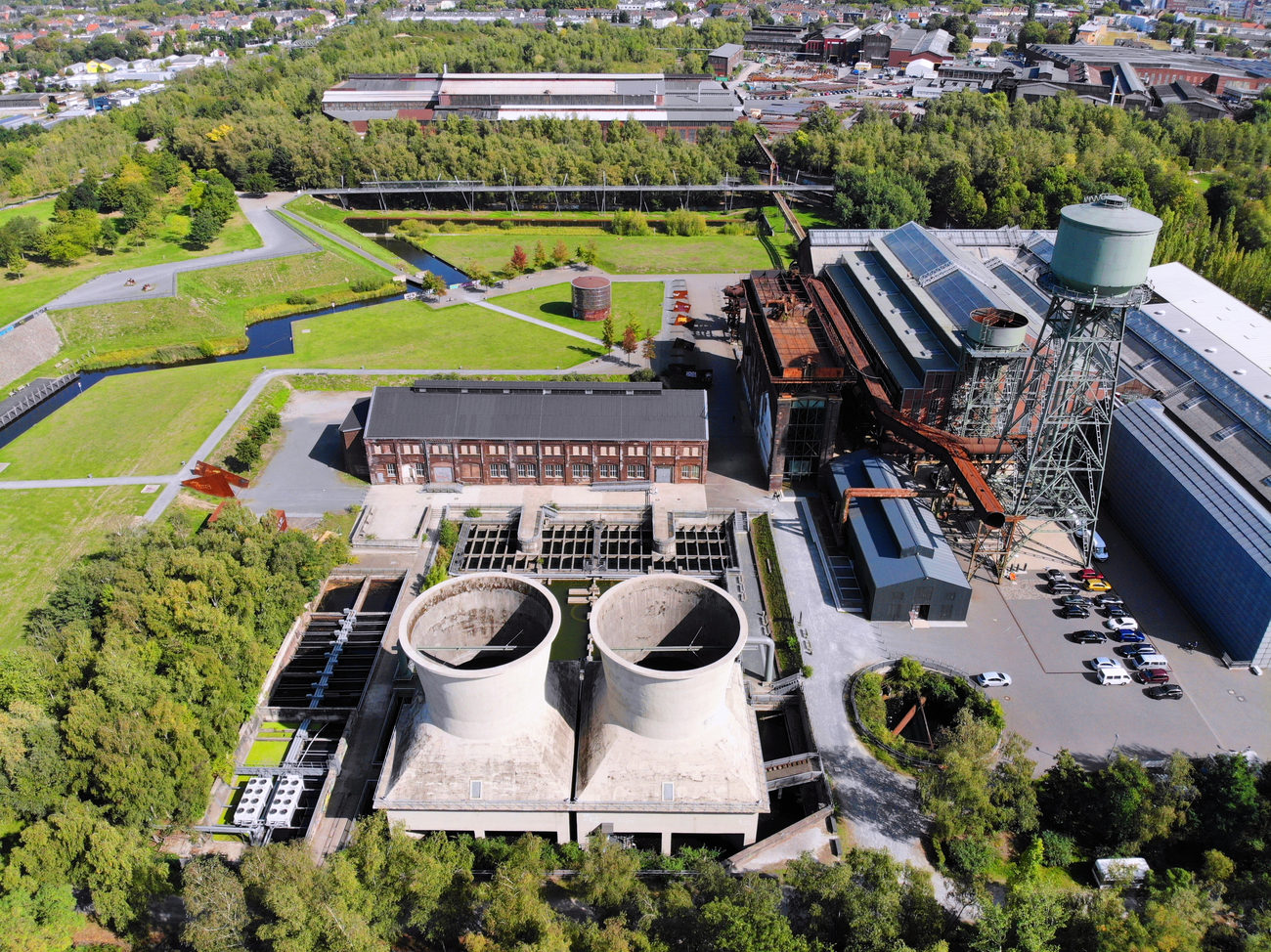
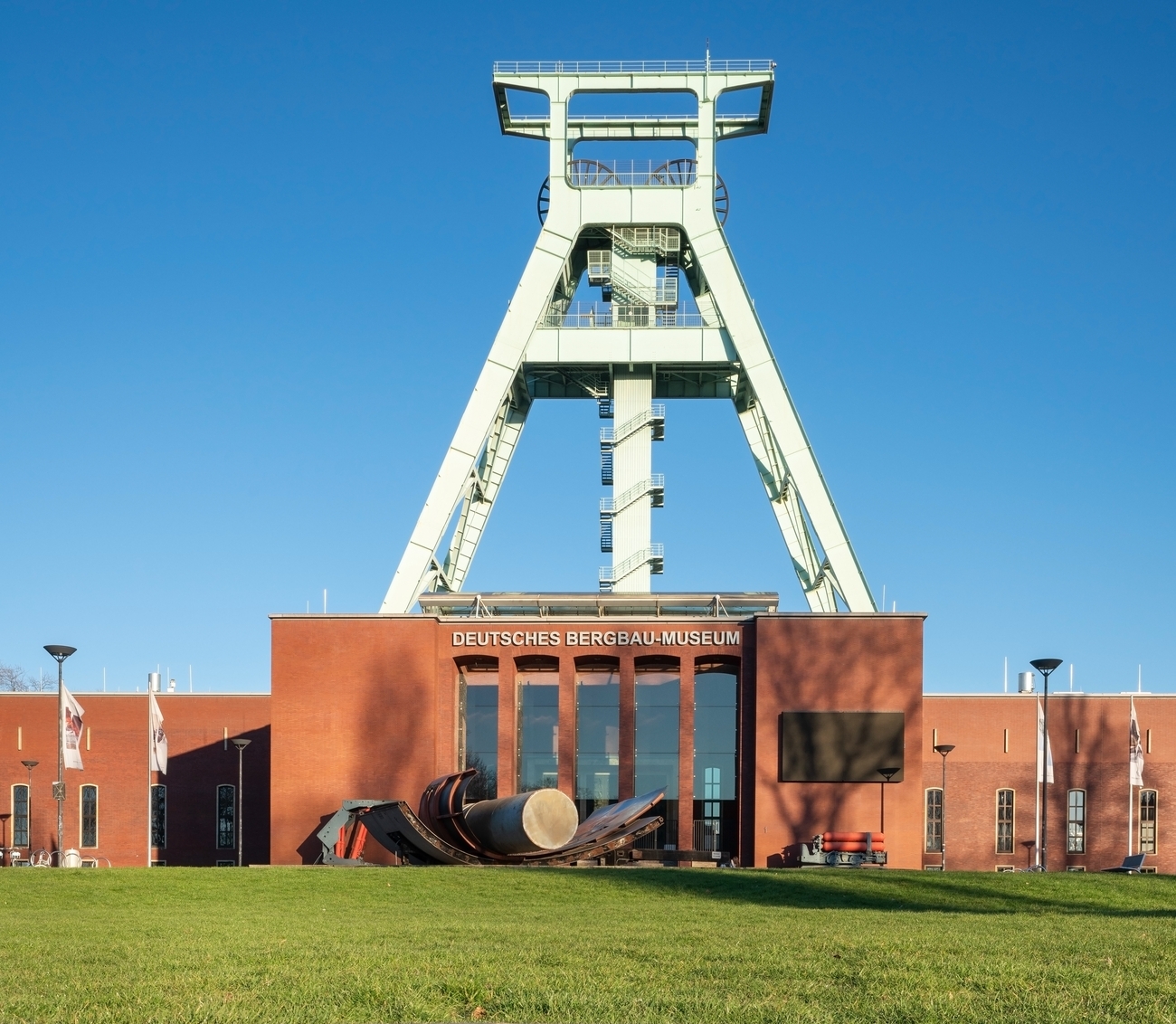
Bochum grew around coal mining and manufacturing, and its heritage remains visible through attractions such as the German Mining Museum, one of the world’s largest museums dedicated to mining.
The journey continues toward Dortmund, passing through Bochum’s former industrial landscape as the Ruhr region gradually changes from one city to the next. Along the way, old factories, railway infrastructure and converted industrial sites reveal how the area has moved beyond its coal-and-steel past. Jahrhunderthalle, once part of Bochum’s industrial complex and now used for concerts, exhibitions and events, is a fitting example of that transformation before the train reaches Dortmund.
Dortmund
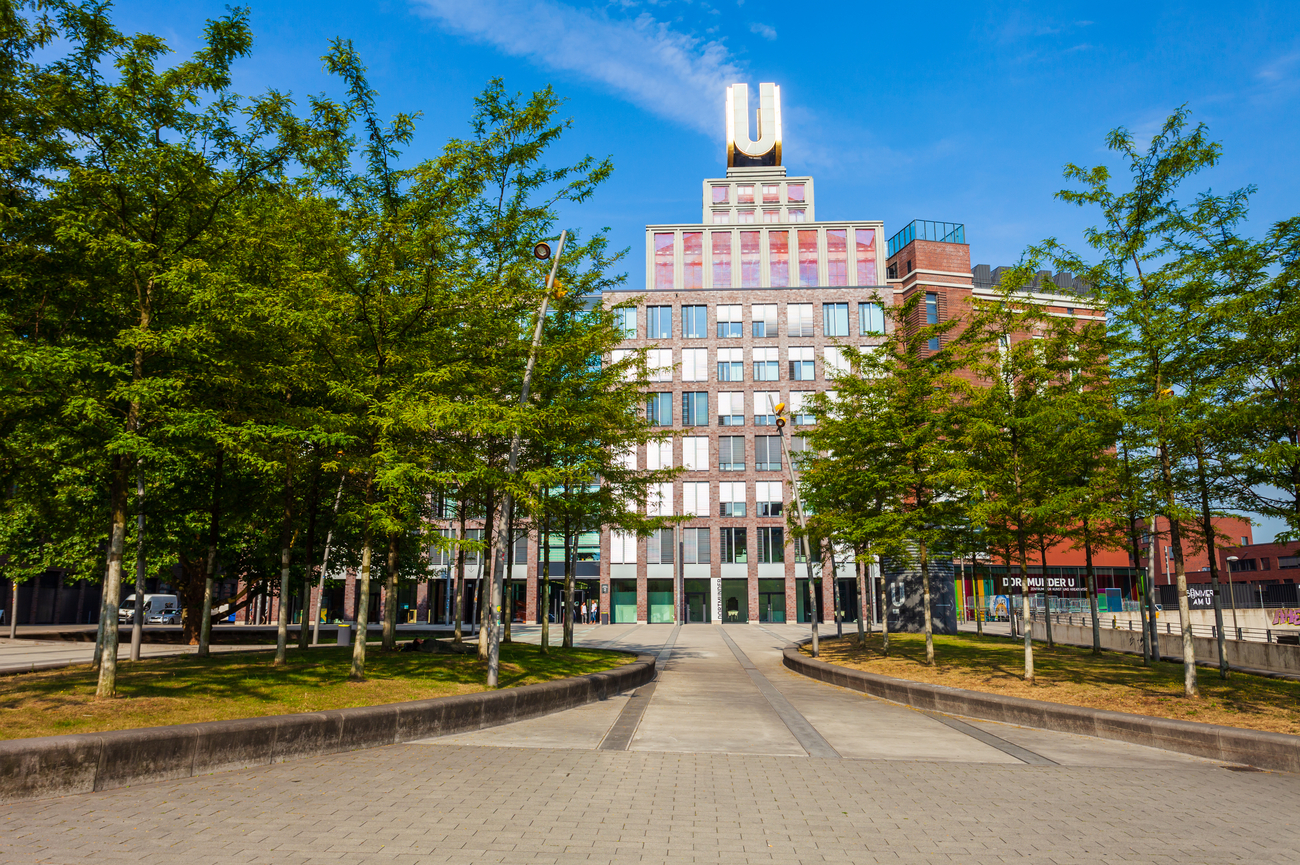
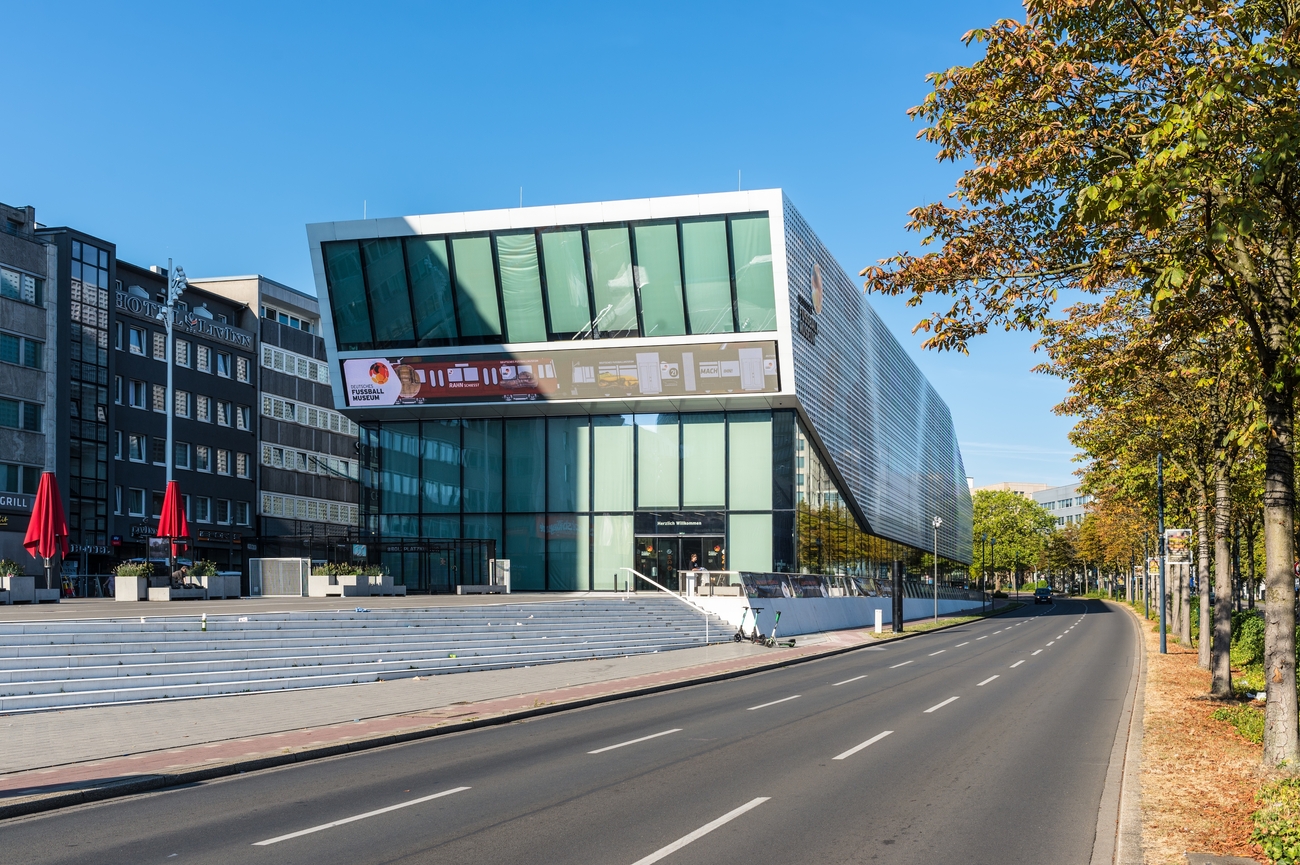
Dortmund is the final major Ruhr stop before the route moves farther north. The city’s history is closely tied to coal, steel and brewing, industries that shaped much of the surrounding region. Today, Dortmund is known for culture, technology and football. The Dortmund U-Tower and German Football Museum are among the city’s best-known landmarks, reflecting both its industrial background and modern identity.
Hamm
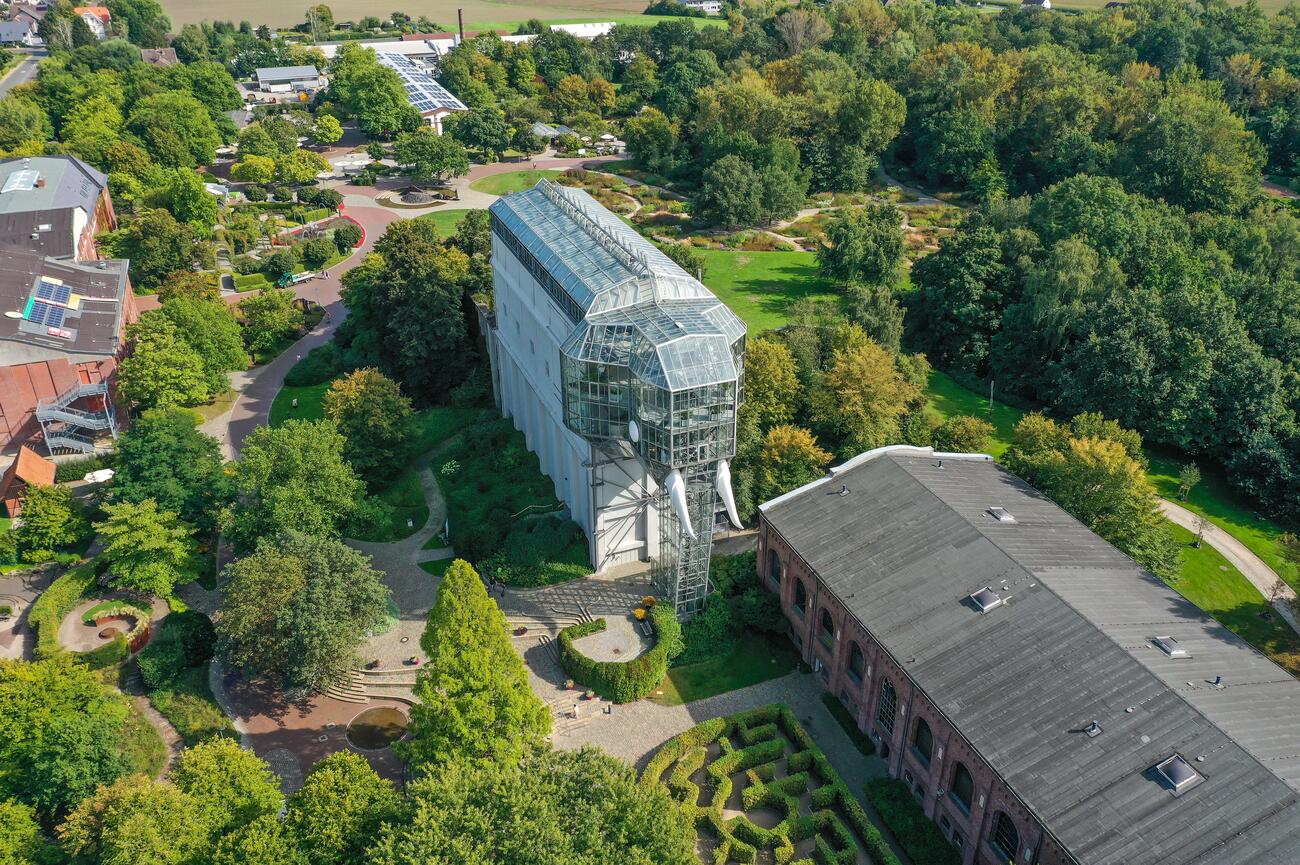
Hamm is where the landscape begins transitioning away from the dense Ruhr area toward northern Germany. The city is known for Maximilianpark, created on the site of a former coal mine, with the large glass elephant structure becoming one of its most recognizable symbols.
Münster
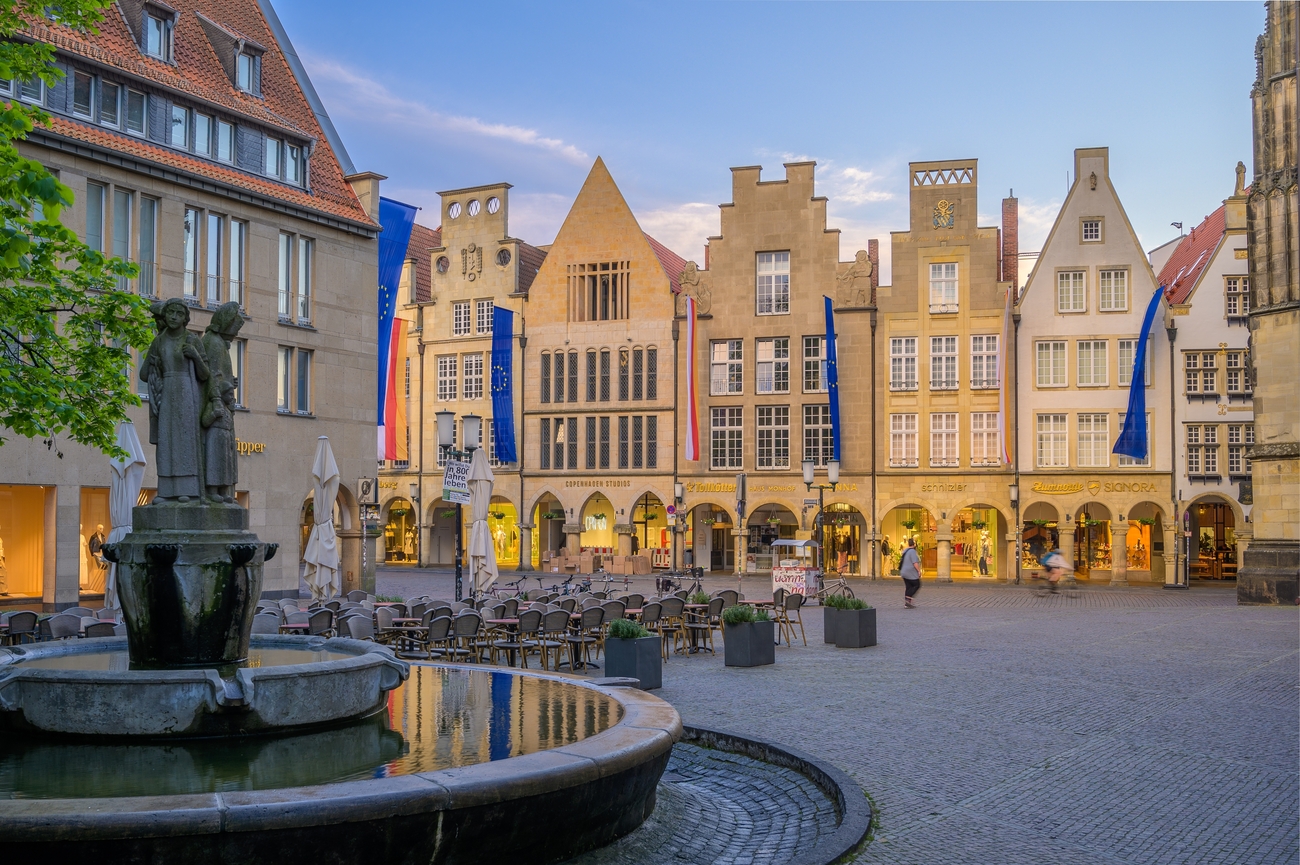
Münster brings a different atmosphere to the journey, with a historic center shaped by medieval architecture, university life and cycling culture. The Prinzipalmarkt, lined with traditional gabled buildings, is one of the city’s most recognizable views, while the Gothic St. Paulus Cathedral and the surrounding old town add to the city’s historic character.
From the train, Münster marks a noticeable change in the route. The dense industrial landscapes of the Ruhr region begin to give way to quieter surroundings, with more open fields, tree-lined sections and smaller settlements appearing between the stations.
Osnabrück
Osnabrück adds another historical layer to the journey. The city is best known for its role in the Peace of Westphalia negotiations, which ended the Thirty Years’ War in 1648. Together with Münster, Osnabrück hosted the diplomatic discussions that eventually brought an end to one of Europe’s longest and most destructive conflicts.
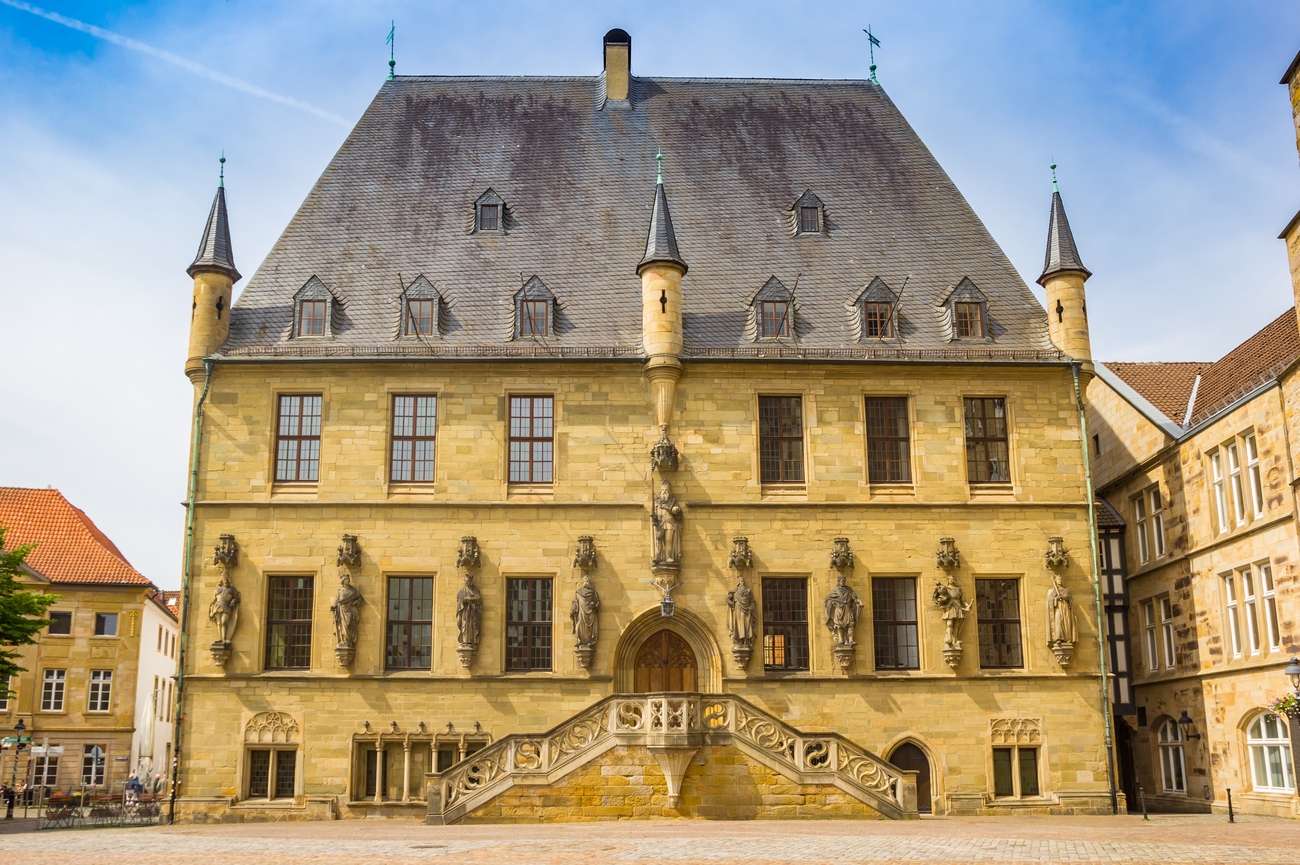
The old town is shaped by medieval streets, traditional gabled houses and churches that reflect Osnabrück’s long religious and political history. St. Peter’s Cathedral stands at the center of the city and is closely connected with its development as a bishopric. Nearby, the town hall and market square create one of the most atmospheric parts of the historic center.
The railway line moves toward Bremen and the changing scenery makes the transition from inland Germany to the northern lowlands especially noticeable. It is a quieter section of the journey, with fewer major city skylines and more space outside the carriage windows before the route reaches the historic Hanseatic city of Bremen.
Bremen
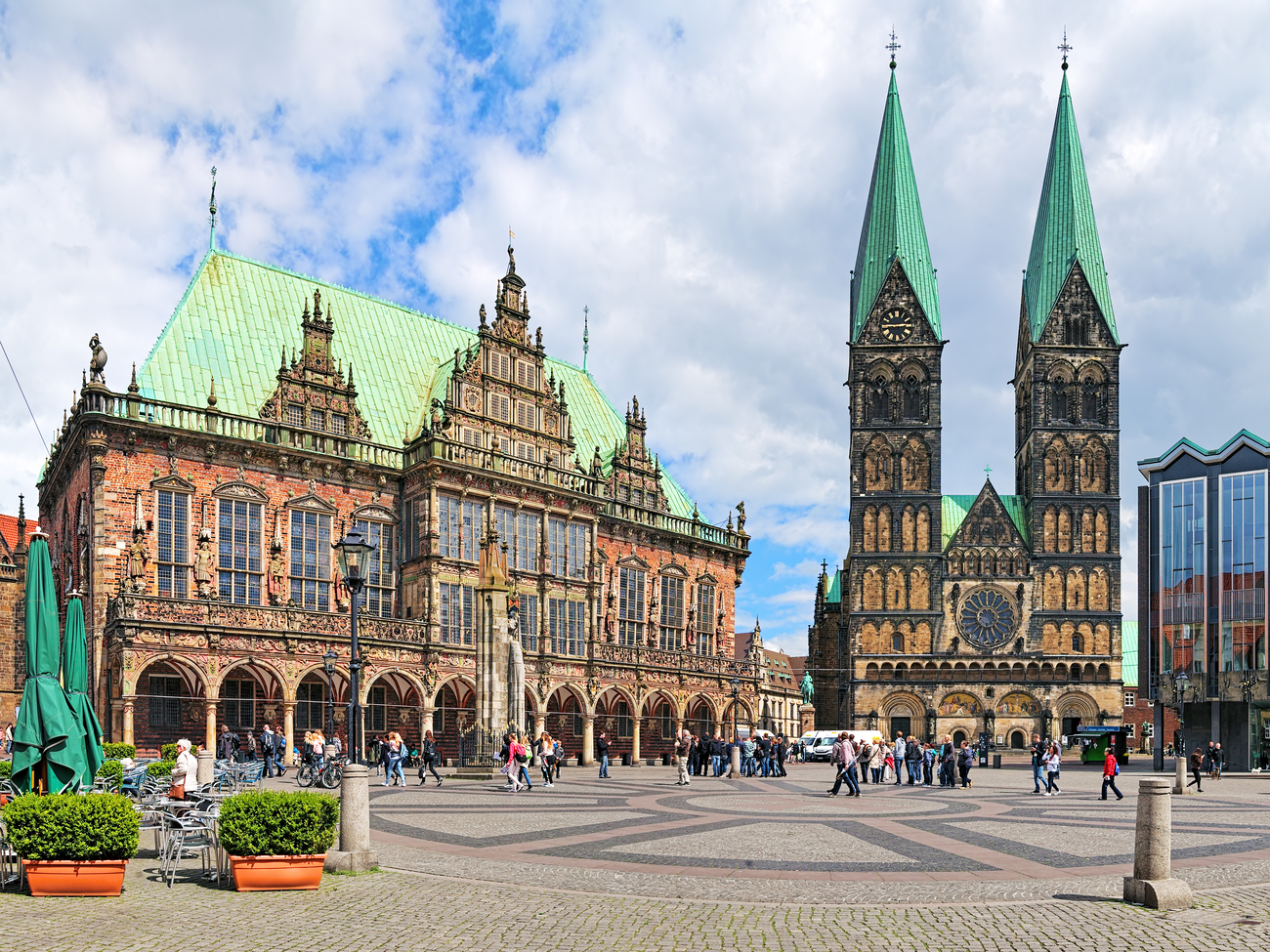
Bremen marks the northern end of the boarding route before the journey continues toward Rügen. As a former Hanseatic city, Bremen has a long connection with trade, shipping and the North Sea. The UNESCO-listed Town Hall and Roland statue define the historic market square, while the Schnoor quarter preserves a network of narrow medieval streets. The city’s maritime character also reflects the transition toward the coastal landscapes ahead.
Ostseebad Binz, Rügen
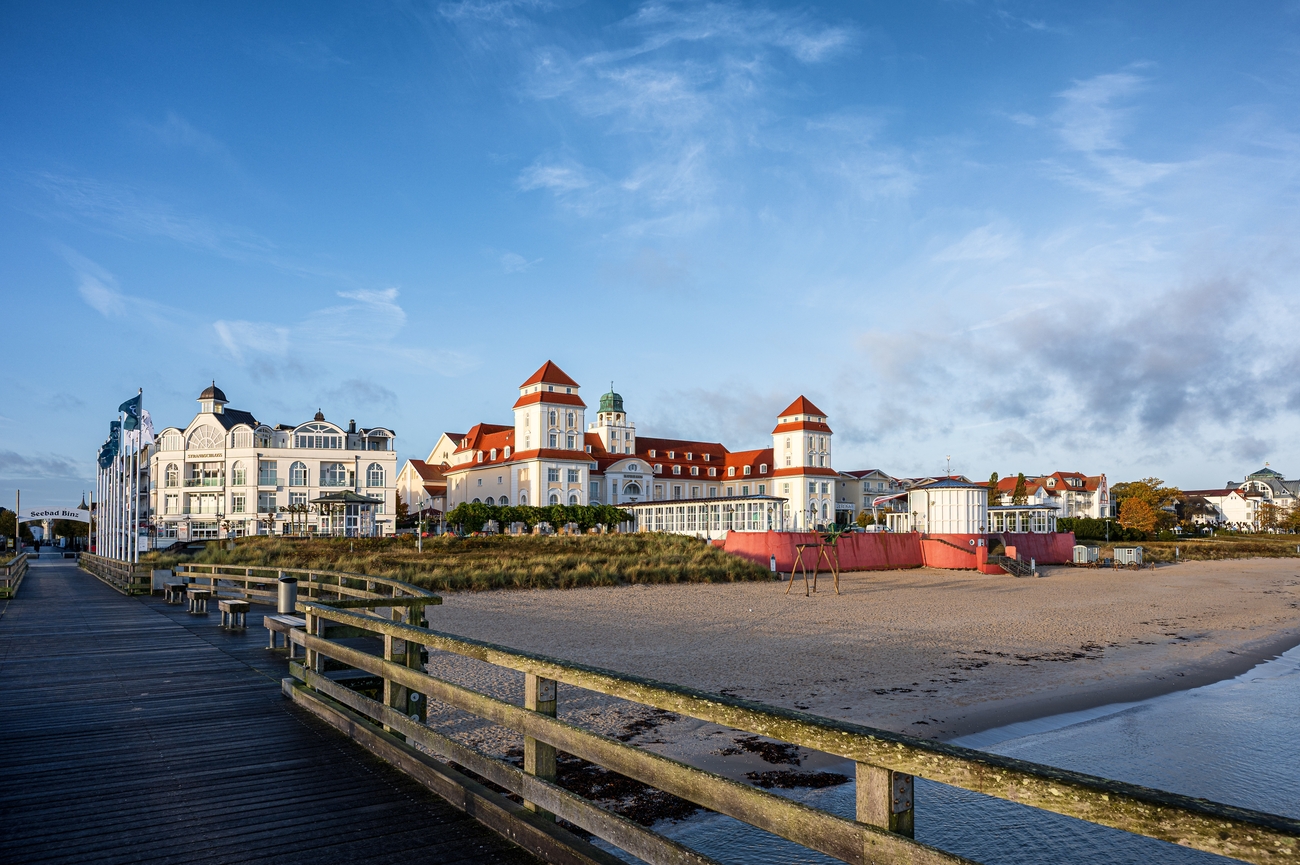
You’ve finally made it to the end of this journey: Ostseebad Binz on the island of Rügen. After traveling through Germany’s industrial regions and northern plains, the landscape changes completely to beaches, forests and Baltic Sea scenery. Binz is one of Germany’s best-known seaside resorts, famous for its long beach, elegant resort villas and waterfront promenade. The Seebrücke Binz extends into the Baltic Sea and remains one of the island’s most recognizable landmarks.
This is the end of the route, with the train journey giving way to time spent exploring Rügen’s coastline, resort towns and natural landscapes.
What Is the AKE-Rheingold Route from Dortmund to
Wörthersee?
Dortmund
Dortmund serves as one of the main departure points for AKE-Rheingold journeys. Once shaped by coal mining, steel production, and brewing, the city has transformed into a modern cultural center. You can explore landmarks such as the Dortmund U-Tower and the German Football Museum before beginning your railway journey.
As the AKE-Rheingold leaves Dortmund, the route enters one of Germany’s most densely populated regions. The distance between cities is short here, with former industrial sites, railway infrastructure and urban neighborhoods appearing almost continuously outside the window.
Bochum
Bochum continues the journey through the Ruhr area, where coal mining once defined everyday life. The city’s industrial heritage remains visible through attractions such as the German Mining Museum, which explores the history of mining and the industries that shaped the region.
As the AKE-Rheingold travels through the Ruhr region, passengers experience the contrast between Germany’s industrial heritage and its modern transformation. Former mining and steel centers now combine cultural attractions, museums, and revitalized urban spaces.
Essen
Once a major center of coal and steel production, Essen is now known internationally for preserving that industrial history. The Zollverein Coal Mine Industrial Complex, a UNESCO World Heritage Site, is the city’s defining landmark. The former mine and coking plant have been transformed into museums, exhibitions and cultural spaces, while the original industrial architecture remains a reminder of the city’s past. Leaving Essen, the AKE-Rheingold continues through the Ruhr landscape, where one city gradually blends into the next.
Duisburg
The route reaches Duisburg, where the Rhine and Ruhr rivers meet. The city has long been connected with shipping, steel production and international trade, with its inland port remaining one of the largest in the world. Duisburg represents the industrial strength of the Ruhr region, but it also shows how those landscapes have changed.
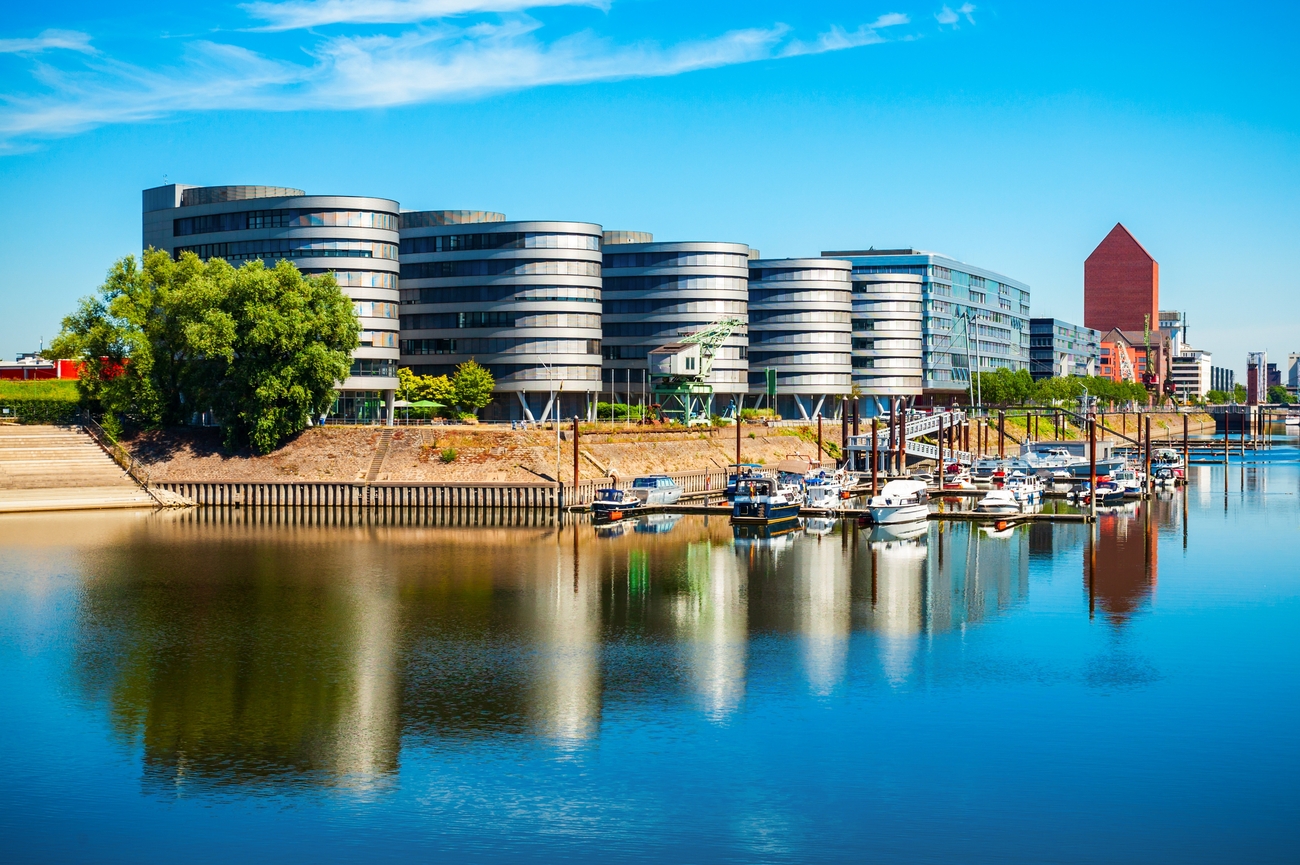
Düsseldorf
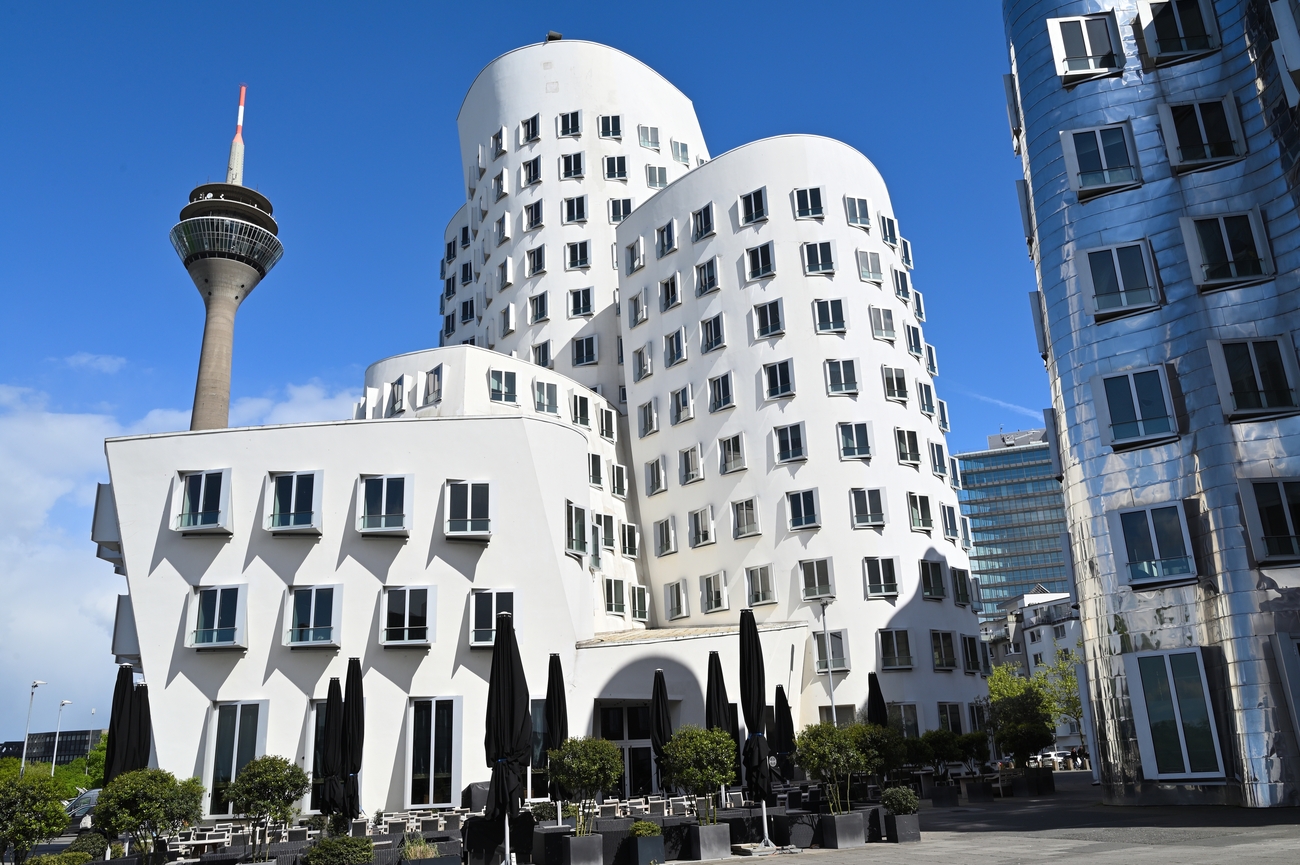
Düsseldorf brings a different atmosphere to the journey. Compared with the industrial centers of the Ruhr, the city is known more for business, fashion, art and its position along the Rhine. The Altstadt remains the historic heart of Düsseldorf, with narrow streets, traditional breweries, historic buildings and lively squares stretching toward the Rhine. The area is often known as “the longest bar in the world” because of the large number of pubs and breweries gathered within a compact old town. And nearby, MedienHafen presents a modern contrast, with contemporary architecture surrounding the harbor.
After Düsseldorf, the train continues south along the Rhine corridor. The landscape becomes increasingly connected to the river, with historic cities and changing scenery replacing the dense industrial character of the Ruhr.
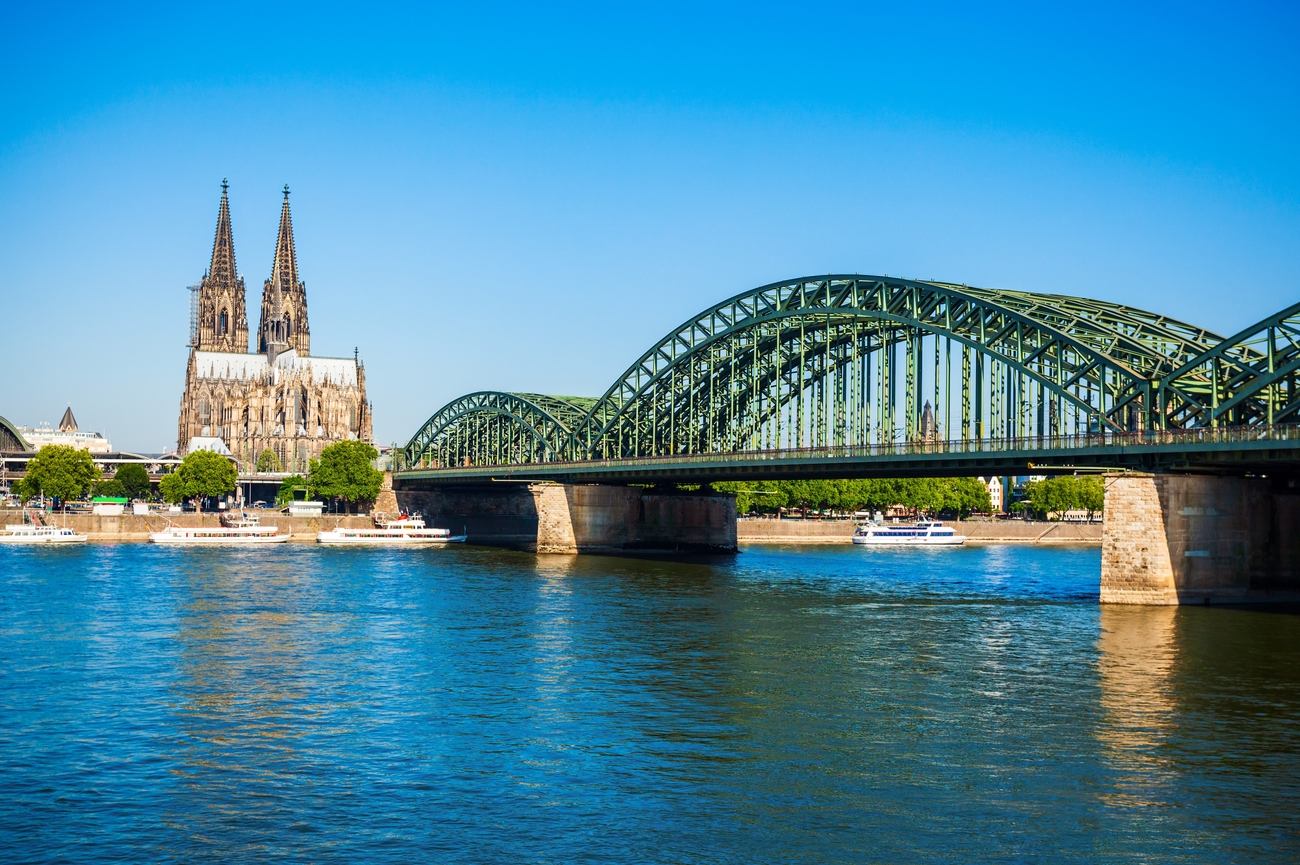
Cologne
The journey continues through Cologne, one of the Rhine region’s most important cities, before following the river corridor toward the next destination.
As the AKE-Rheingold leaves Cologne, the journey follows the Rhine southward. The route passes through one of Germany’s most historically significant landscapes, where riverside towns, vineyards and hills begin to replace the urban surroundings.
Bonn
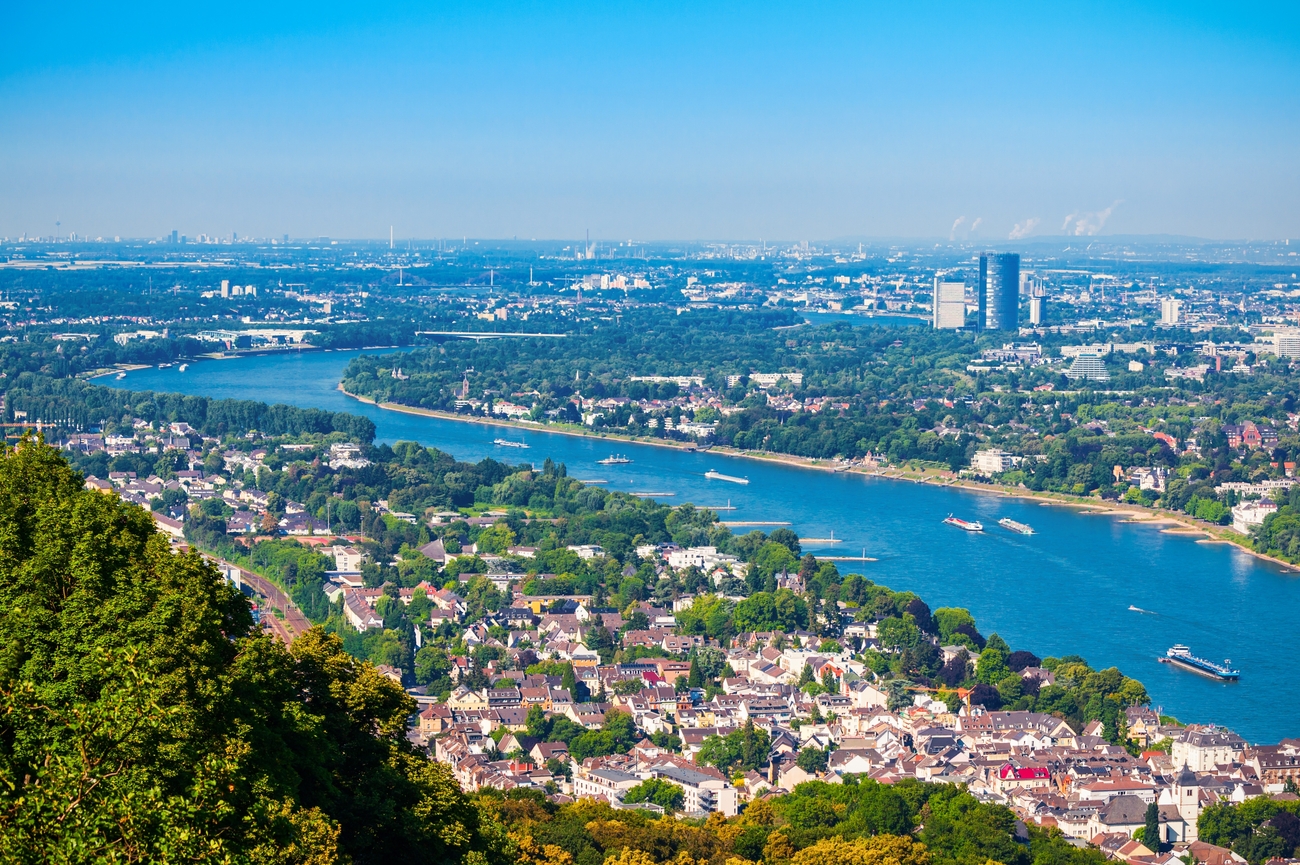
Bonn adds another layer of German history to the journey. The former capital of West Germany is closely associated with politics, culture and Ludwig van Beethoven, whose birthplace is one of the city’s best-known landmarks. The city’s former government district, university buildings and Rhine promenade reflect Bonn’s quieter character compared with nearby Cologne.
As the AKE-Rheingold leaves Bonn, the route continues south along the Rhine toward Koblenz. The surrounding scenery becomes increasingly scenic, with the Siebengebirge hills, riverside towns and wooded slopes appearing beyond the carriage windows.
Koblenz
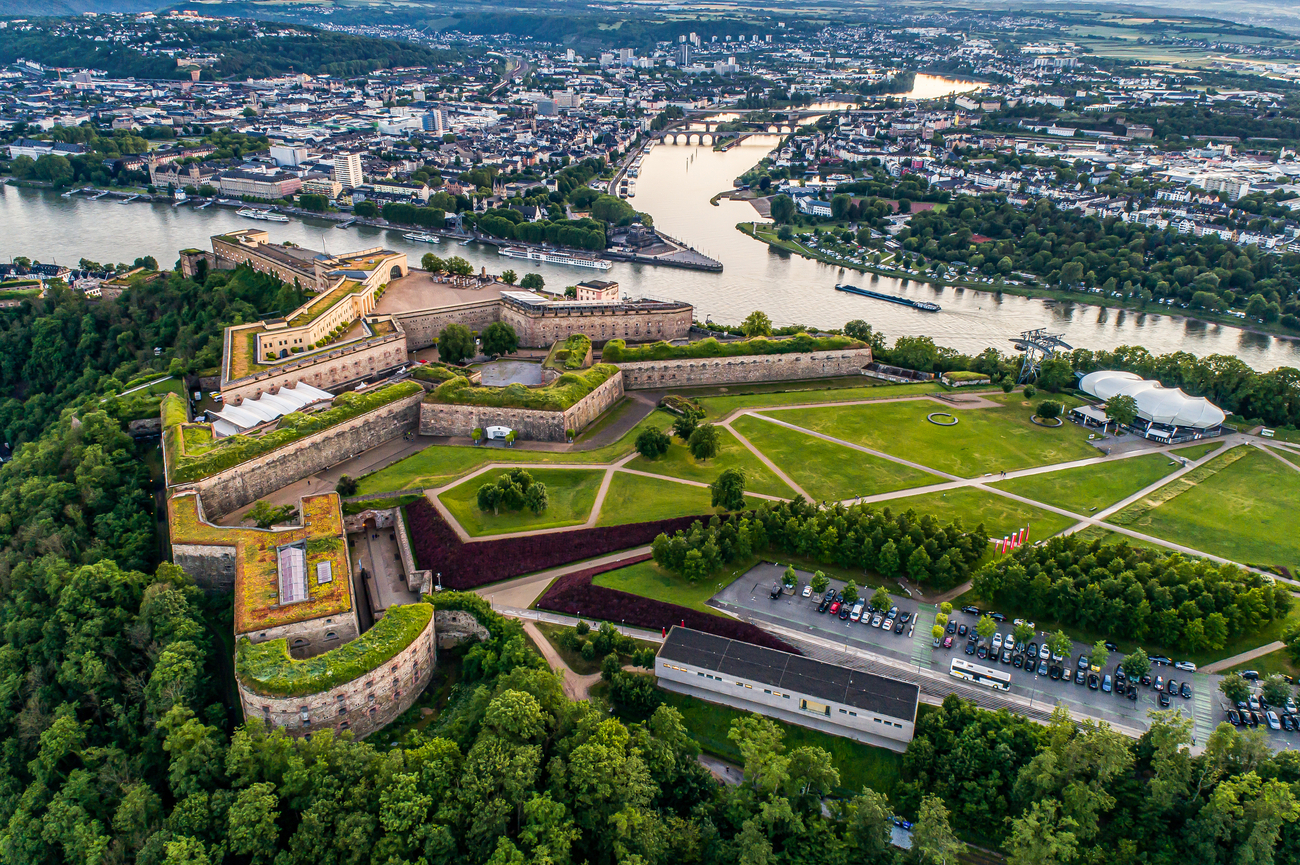
Koblenz is where the journey becomes especially scenic. The city sits at the meeting point of the Rhine and Moselle rivers, with Deutsches Eck marking the famous junction between the two waterways.
And above the city, Ehrenbreitstein Fortress overlooks the river landscape. Once the AKE-Rheingold leaves Koblenz, the route moves through the Rhine Valley, creating the most memorable part of the journey.
Mainz
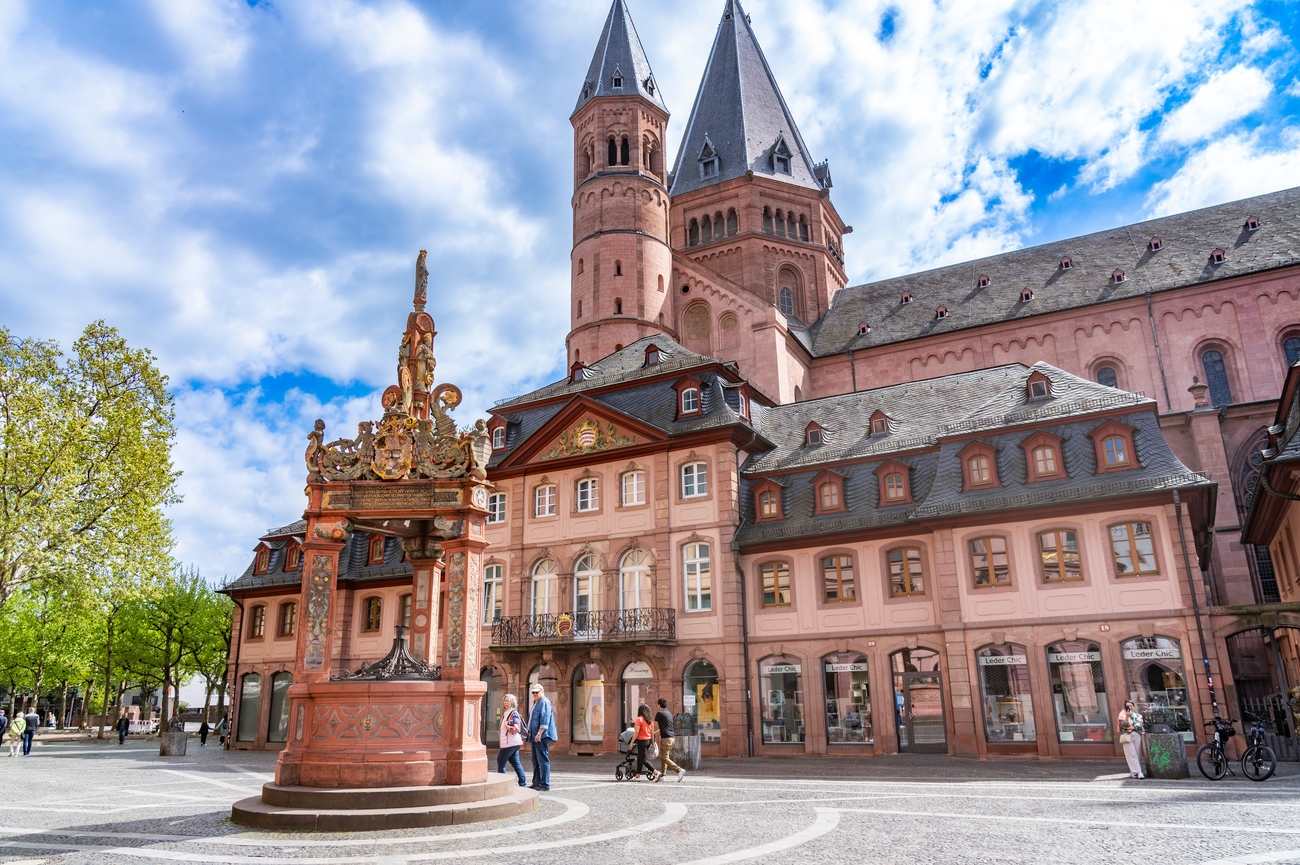
Mainz continues the journey along the Rhine and introduces another historic river city. Known for its Roman heritage, wine culture and connection to Johannes Gutenberg, Mainz has played an important role in European history. The city’s cathedral, old town and riverside areas reflect centuries of development along the Rhine. From here, the route gradually moves away from the classic Rhine landscapes and toward the wider regions of southern Germany.
Worms
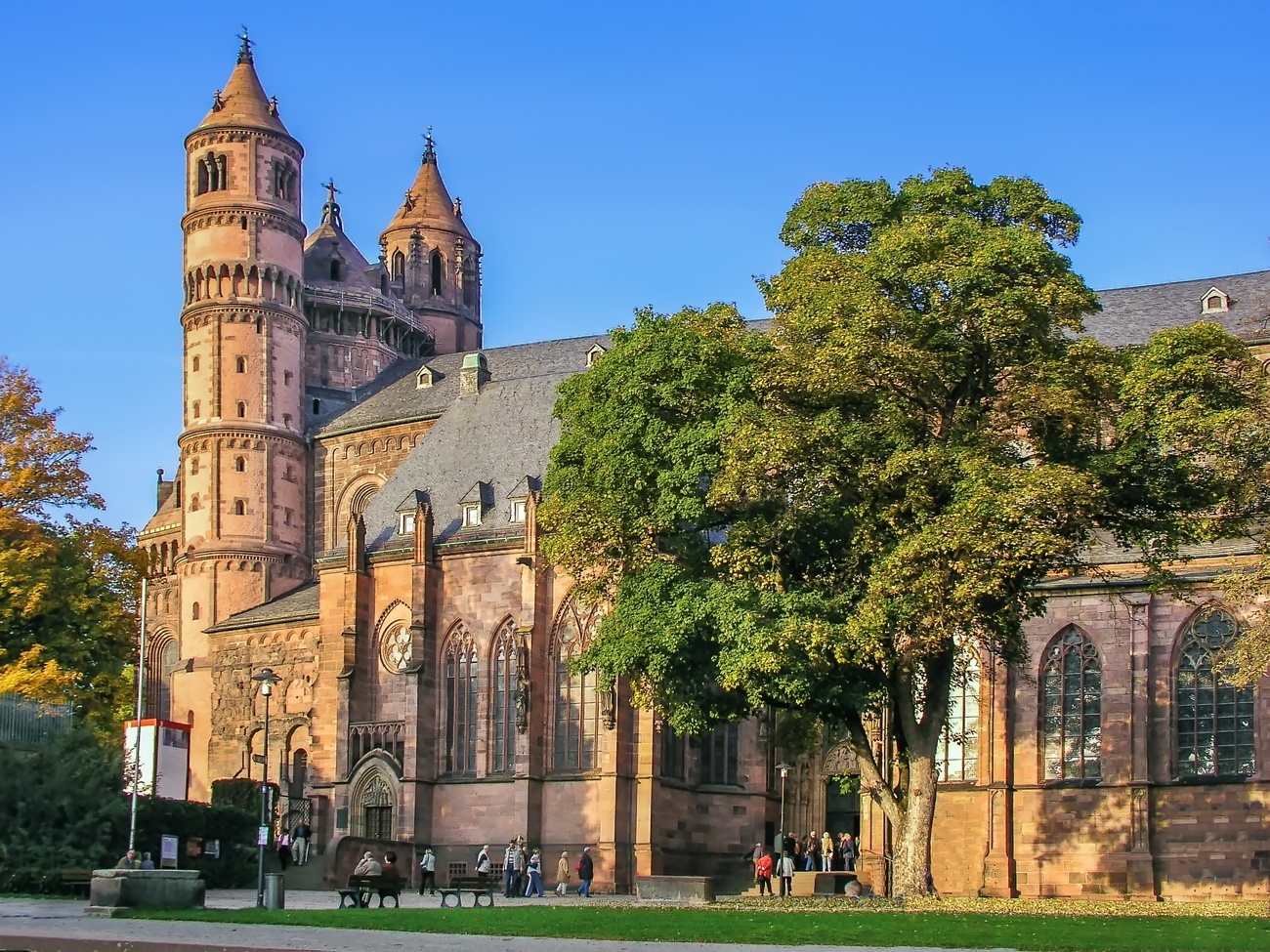
Worms is one of Germany’s oldest cities and adds an important historical stop along the journey through the Rhine region. The city was already significant during Roman times and later became one of the most influential centers of the medieval Holy Roman Empire. Its long history is still visible in the old town, where churches, historic streets and remnants of the city’s past reflect the importance Worms once held along the Rhine.
The city is best known for Worms Cathedral, also called St. Peter’s Cathedral, one of Germany’s most important Romanesque churches. Built between the eleventh and twelfth centuries, the cathedral is recognized for its imposing towers, rounded arches and richly decorated interior. Together with the nearby Jewish Cemetery Heiliger Sand, one of the oldest surviving Jewish cemeteries in Europe, it forms part of Worms’ remarkable religious and cultural heritage.
The city’s medieval character and layered history provide a strong contrast to the larger urban centers earlier in the route, while its position along the Rhine keeps it closely connected to the wider landscape of the journey.
Mannheim
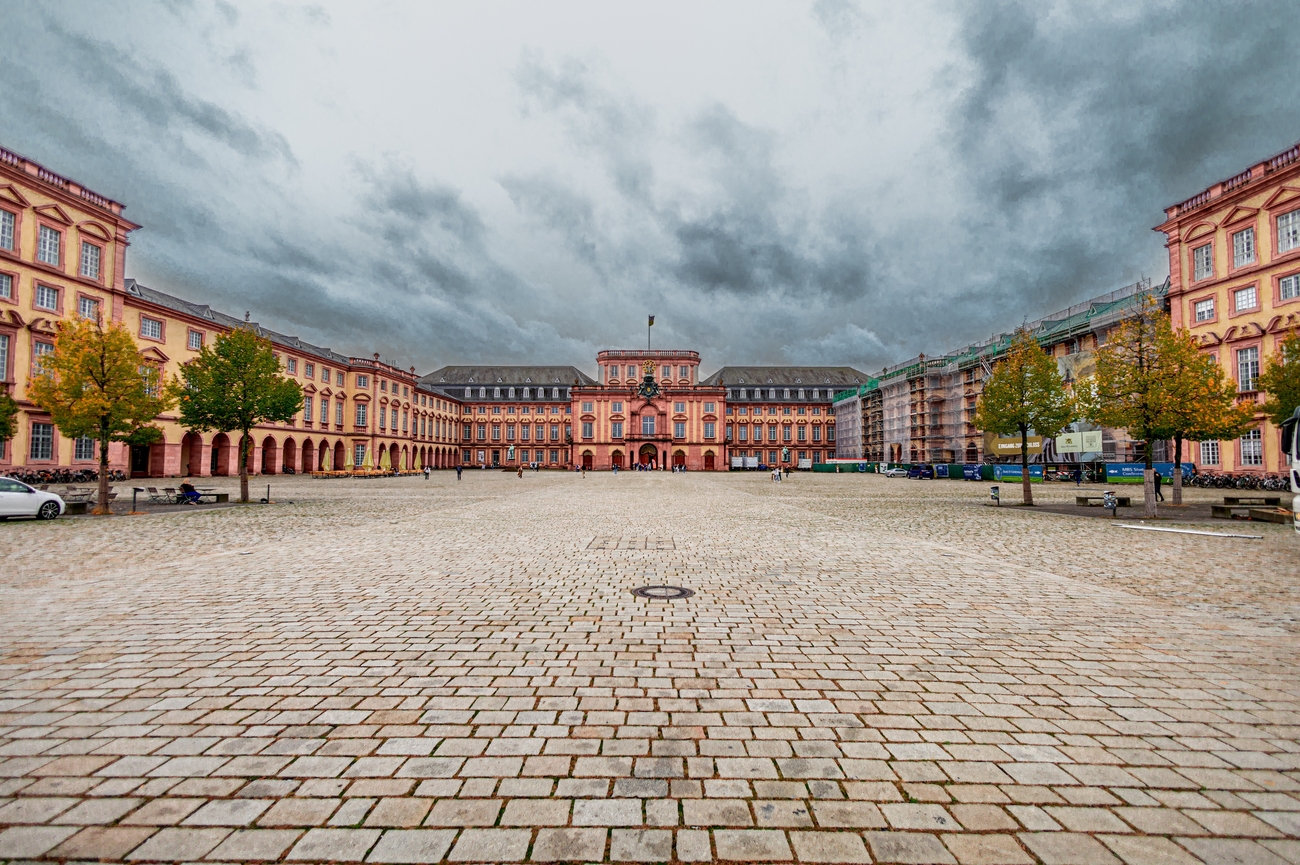
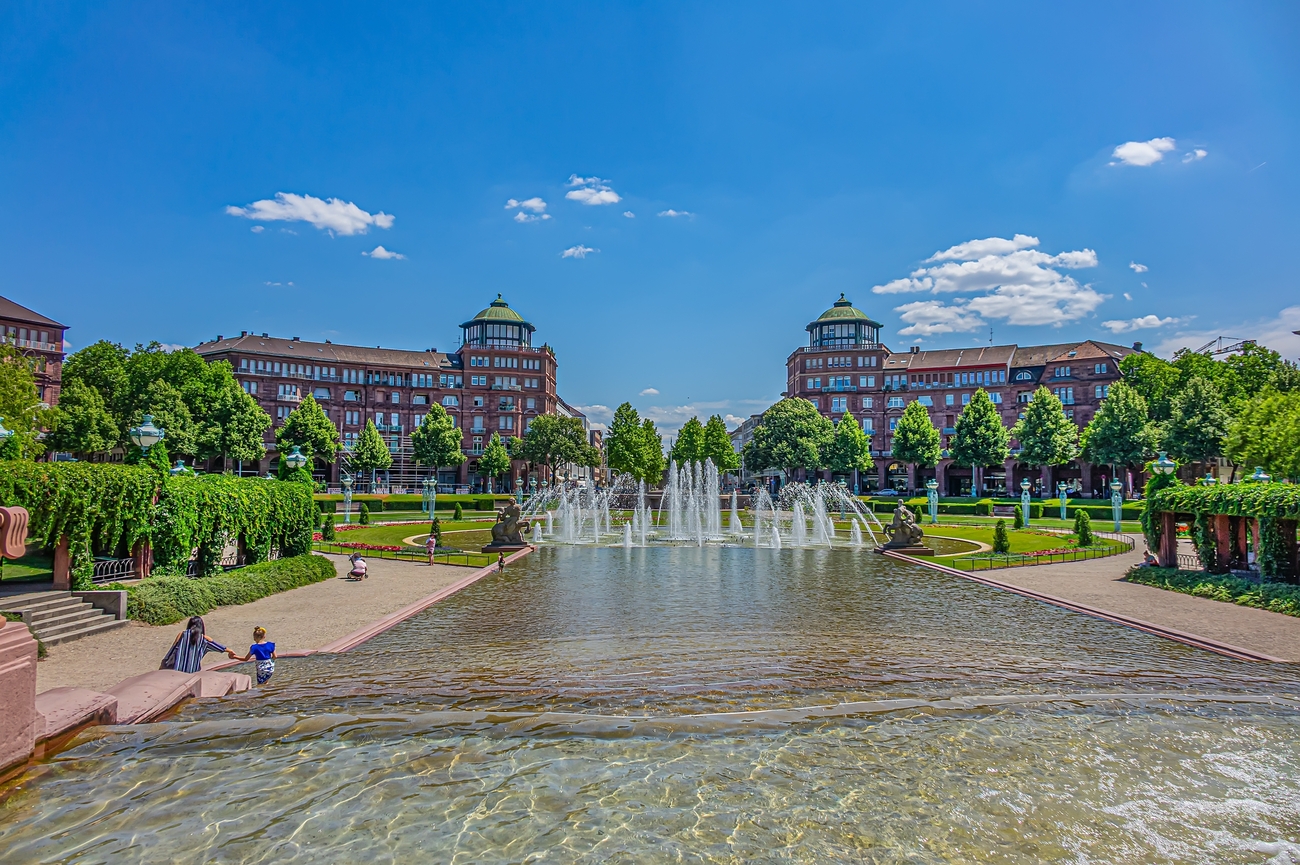
Mannheim sits at the meeting point of the Rhine and Neckar rivers and marks the transition into southwestern Germany. The city is known for its planned grid layout and baroque architecture, especially Mannheim Palace, one of Europe’s largest baroque residences. It also has strong links with innovation and engineering, including Carl Benz’s development of the first practical automobile. Leaving Mannheim, the landscape becomes increasingly rural as the train continues toward southern Germany.
Esslingen
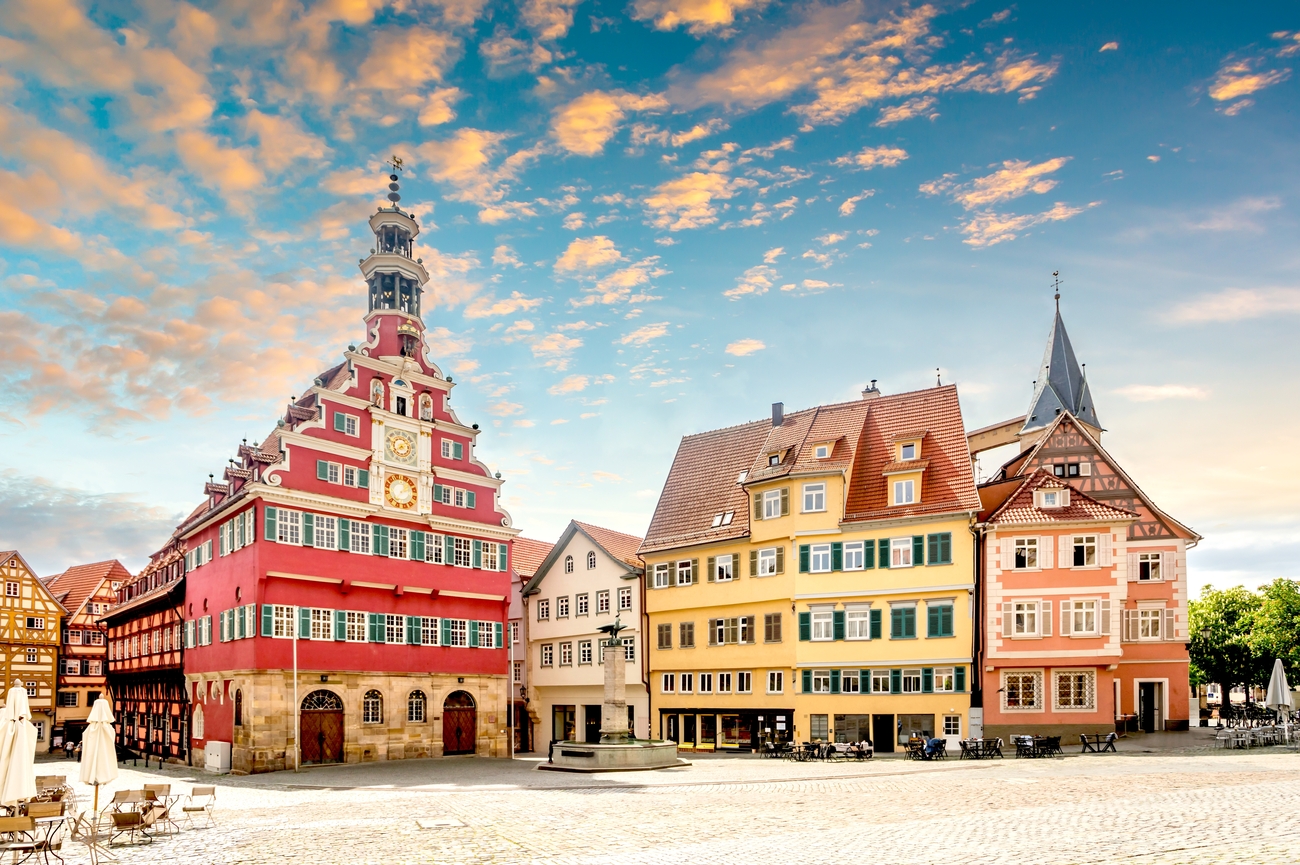
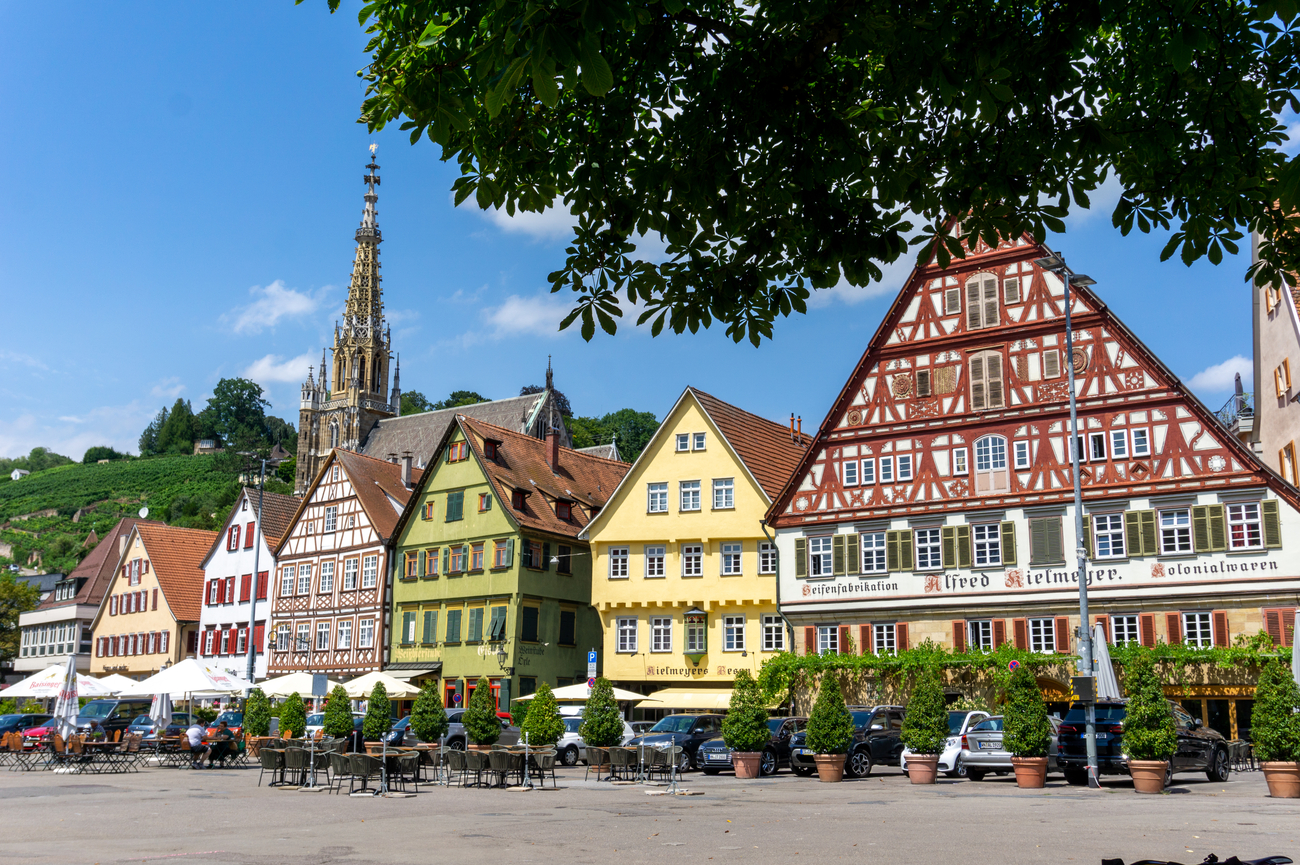
Esslingen brings a medieval atmosphere to the journey. Located near Stuttgart, the city is known for its preserved old town, half-timbered houses and historic streets. The contrast is noticeable after the larger cities along the Rhine. Esslingen feels more compact, with its medieval architecture and traditional streets offering a glimpse into southern Germany’s older urban landscape.
Ulm
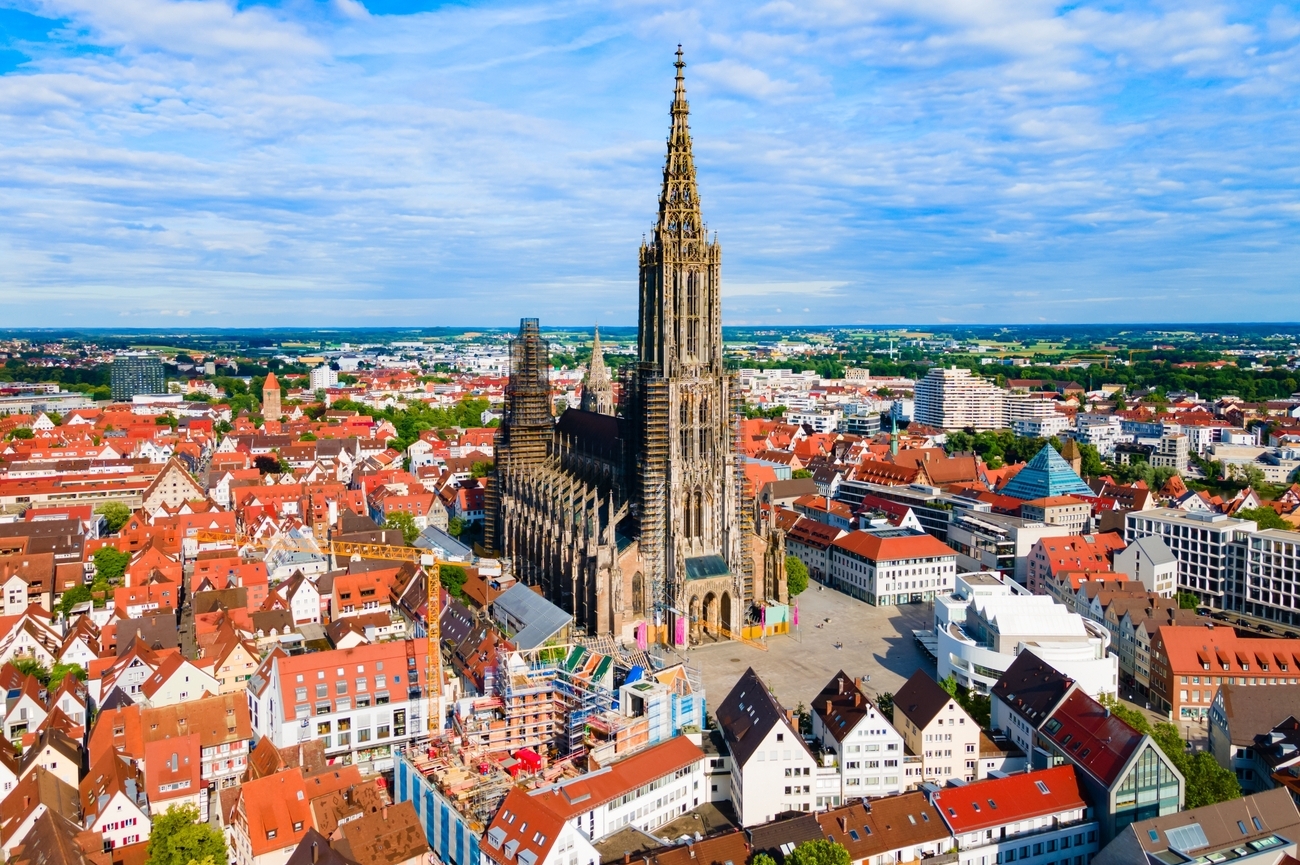
Ulm is one of the final major stops before the journey reaches Bavaria. The city lies on the Danube and is best known for Ulm Minster, whose 161.5-metre spire is the tallest church tower in Germany. The Gothic cathedral has shaped Ulm’s skyline for centuries and remains the city’s most recognizable landmark. You can explore the historic center around the minster, where traditional buildings, small squares and narrow streets reflect Ulm’s long history as an important trading city.
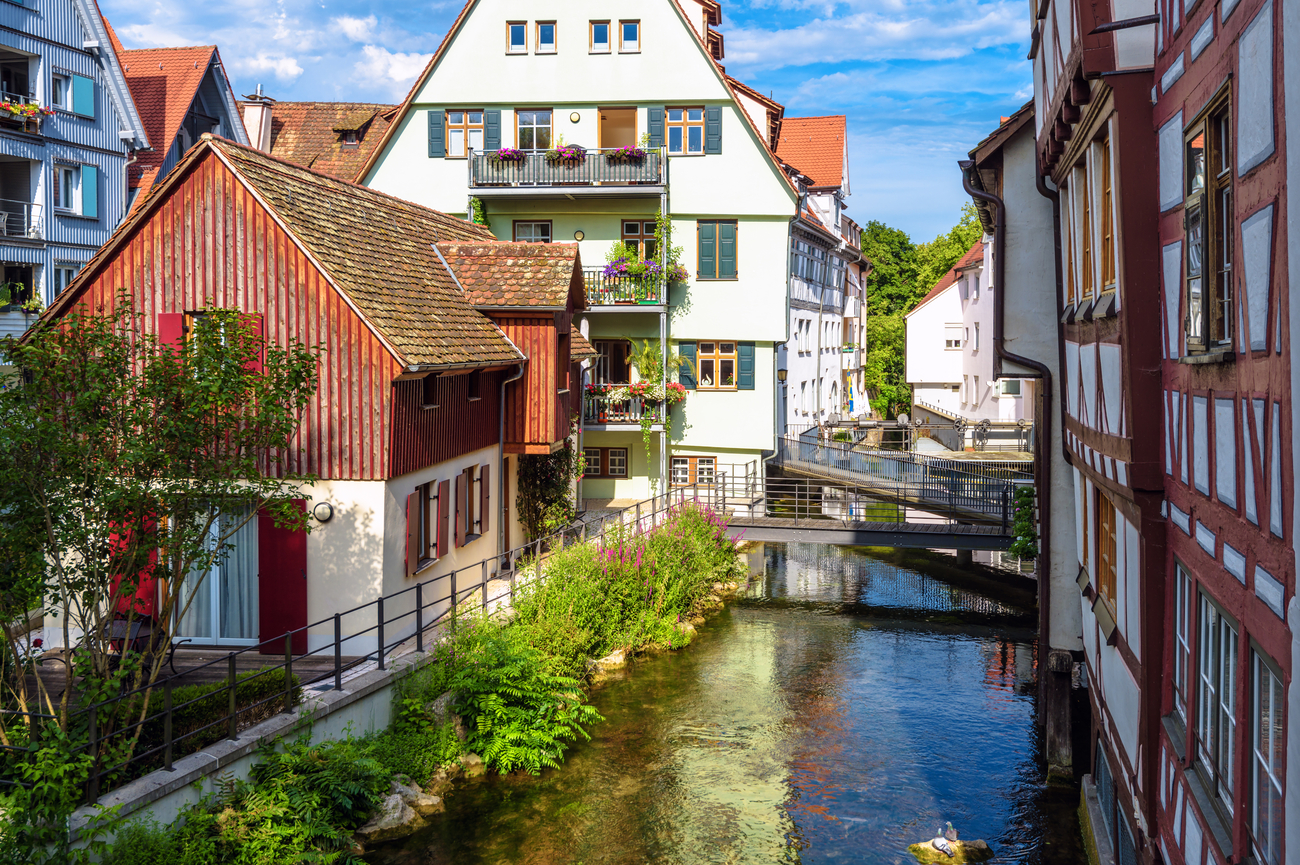
The old fishermen’s quarter, located along the Danube, adds another side to the city with narrow streets, historic buildings and riverside views. Many of the houses in this area have been carefully restored, including traditional half-timbered buildings that line the waterways.
Leaving Ulm, the scenery begins changing again. The flatter landscapes of southern Germany gradually give way to the foothills of the Alps, creating a noticeable transition before the train reaches München and continues toward Austria.
München
München marks the final major German stop on the route toward Wörthersee. The Bavarian capital combines historic architecture, museums and traditional culture with a modern city atmosphere. The surrounding region also provides a gateway toward the Alps, which become increasingly prominent as the journey continues south.

Wörthersee, Austria
After traveling through Germany’s industrial regions, river valleys and historic cities, the landscape changes completely to clear lakes, forests and Alpine surroundings. This is Wörthersee, Austria.
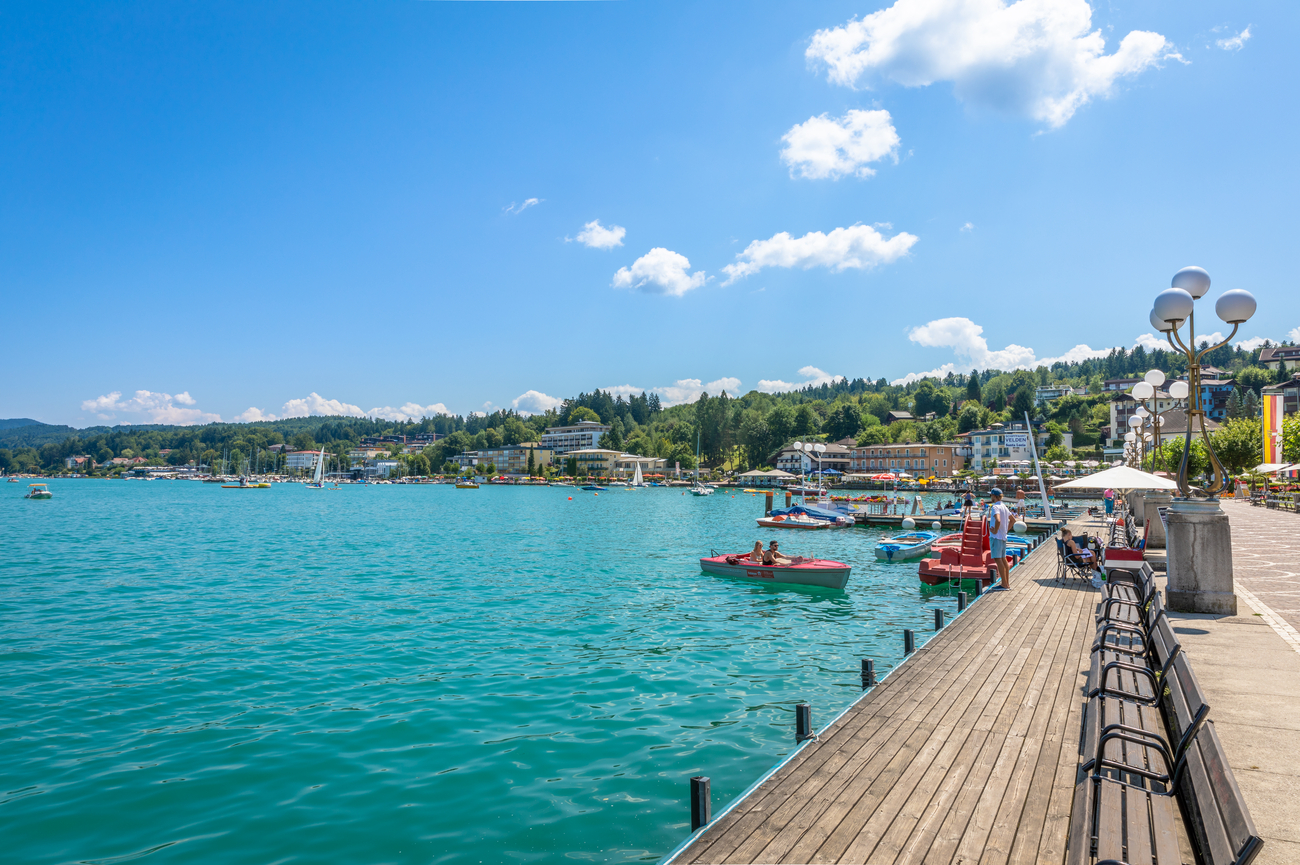
Wörthersee is known for its clear turquoise waters, wooded shorelines and mountain views, making it one of Austria’s most popular summer destinations. The lake is surrounded by elegant resort towns and villages, including Velden am Wörthersee, Pörtschach and Maria Wörth. During the summer, you can spend time swimming, boating, cycling or walking along the lakeside paths, while the surrounding hills provide viewpoints over the water and the wider Carinthian landscape.
The region combines relaxation with sightseeing and outdoor activities, offering a slower pace compared with the major cities that define the first part of the journey. After the long railway journey through Germany and southern Austria, Lake Wörthersee is your peaceful final setting.
Autumn Itineraries
The AKE-Rheingold autumn journeys take passengers beyond Germany’s borders into some of Europe’s most scenic lake and mountain regions. After the summer routes focus on destinations such as the Baltic coast, Austria and northern Italy, the autumn program shifts toward landscapes known for colorful forests, historic towns and quieter lakeside settings. The journeys include destinations around Lake Maggiore, Lake Garda and South Tyrol. Each route offers a different side of southern Europe.
What Is the AKE-Rheingold Route from Dortmund to
Lake Maggiore?
Dortmund
You can board the AKE-Rheingold in Dortmund, one of the main starting points for the journey south. The city sits at the eastern edge of the Ruhr region and has a history closely connected with coal mining, steel production and brewing. Dortmund combines its industrial background with a modern cultural identity. The Dortmund U-Tower, a former brewery building turned arts center, and the German Football Museum are among the city’s best-known landmarks.
As the train leaves Dortmund, the route enters the Ruhr region, where cities, railway lines and former industrial landscapes sit closely together. The journey begins among the dense urban areas that shaped western Germany’s industrial growth.
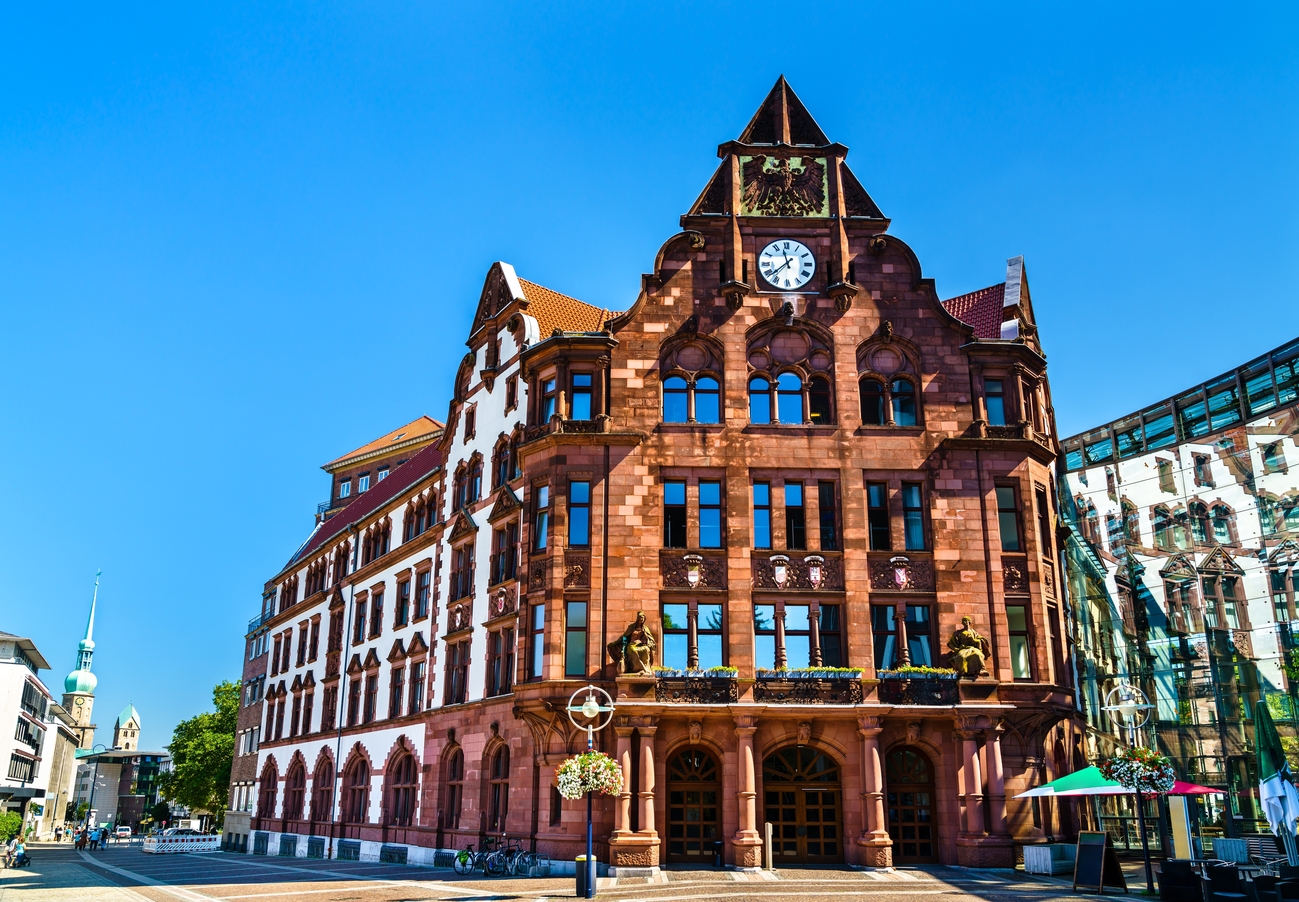
Essen
Essen is one of the most important stops for understanding the Ruhr region’s transformation. Once a major center of coal and steel production, the city is now known for preserving its industrial heritage while giving former industrial sites new purposes. The Zollverein Coal Mine Industrial Complex, a UNESCO World Heritage Site, remains Essen’s defining landmark. The former mine and coking plant now house museums, exhibitions and cultural spaces, while the original architecture reflects the scale of the industry that once shaped the region.
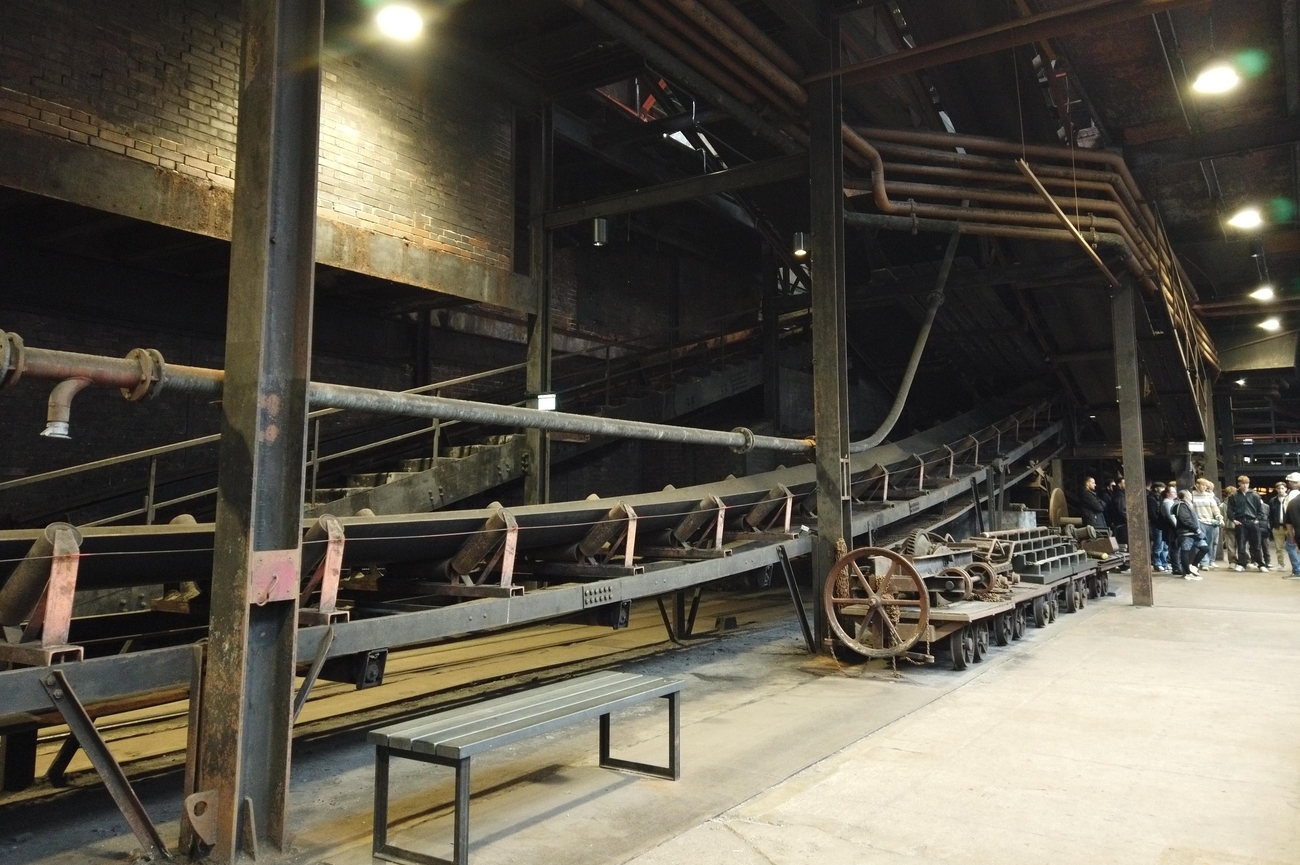
Düsseldorf
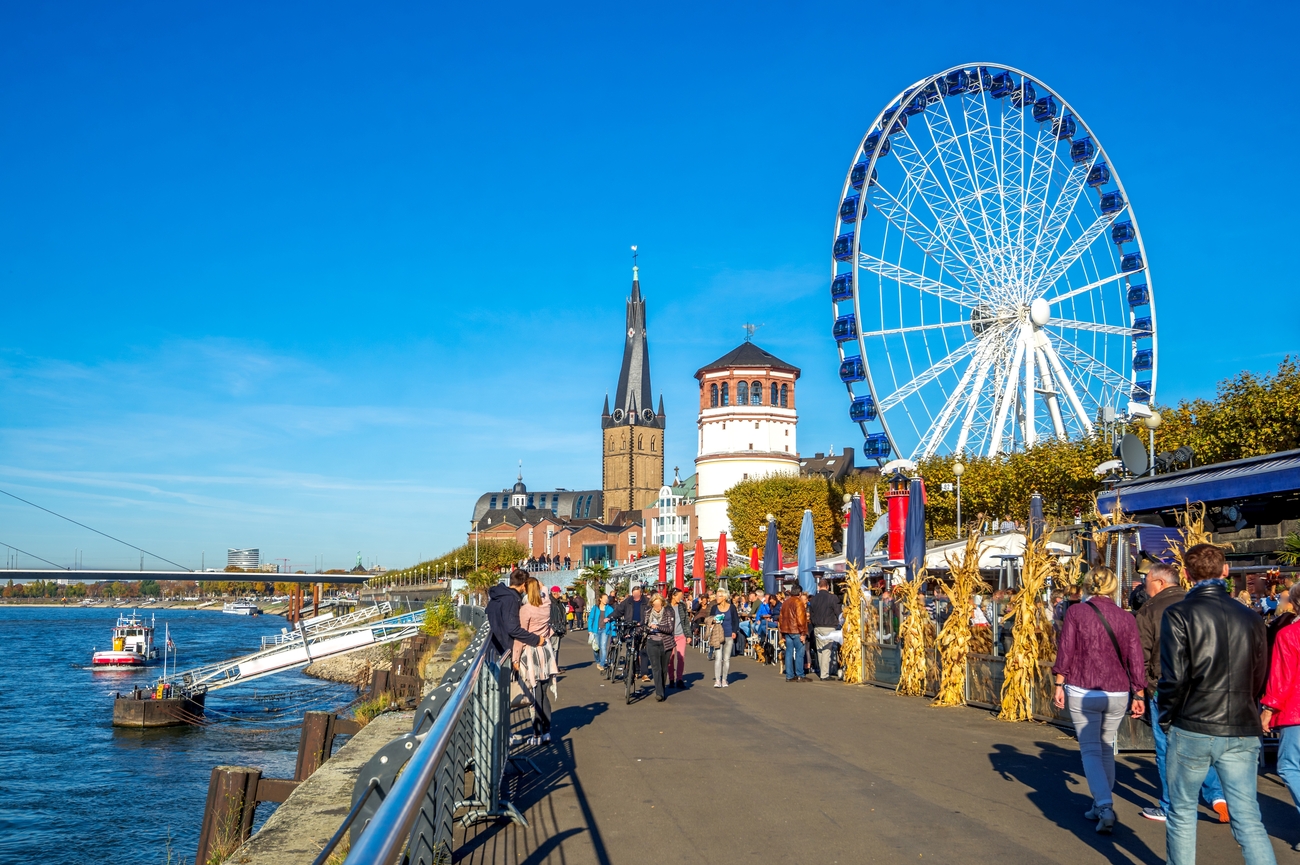
Düsseldorf brings a different atmosphere after the industrial landscapes of the Ruhr. The city is known for fashion, art, business and its location along the Rhine, creating a contrast with the heavy industry that defines much of the region to the north.
The Altstadt remains the historic heart of the city and is known for its dense collection of restaurants, cafes, galleries and bars, giving it a lively atmosphere throughout the day and evening. Along the river, the Rhine promenade provides views across the water and connects the old town with Düsseldorf’s modern waterfront districts. Once an industrial port, the area has been transformed into one of the city’s most recognizable business and cultural districts.
Cologne
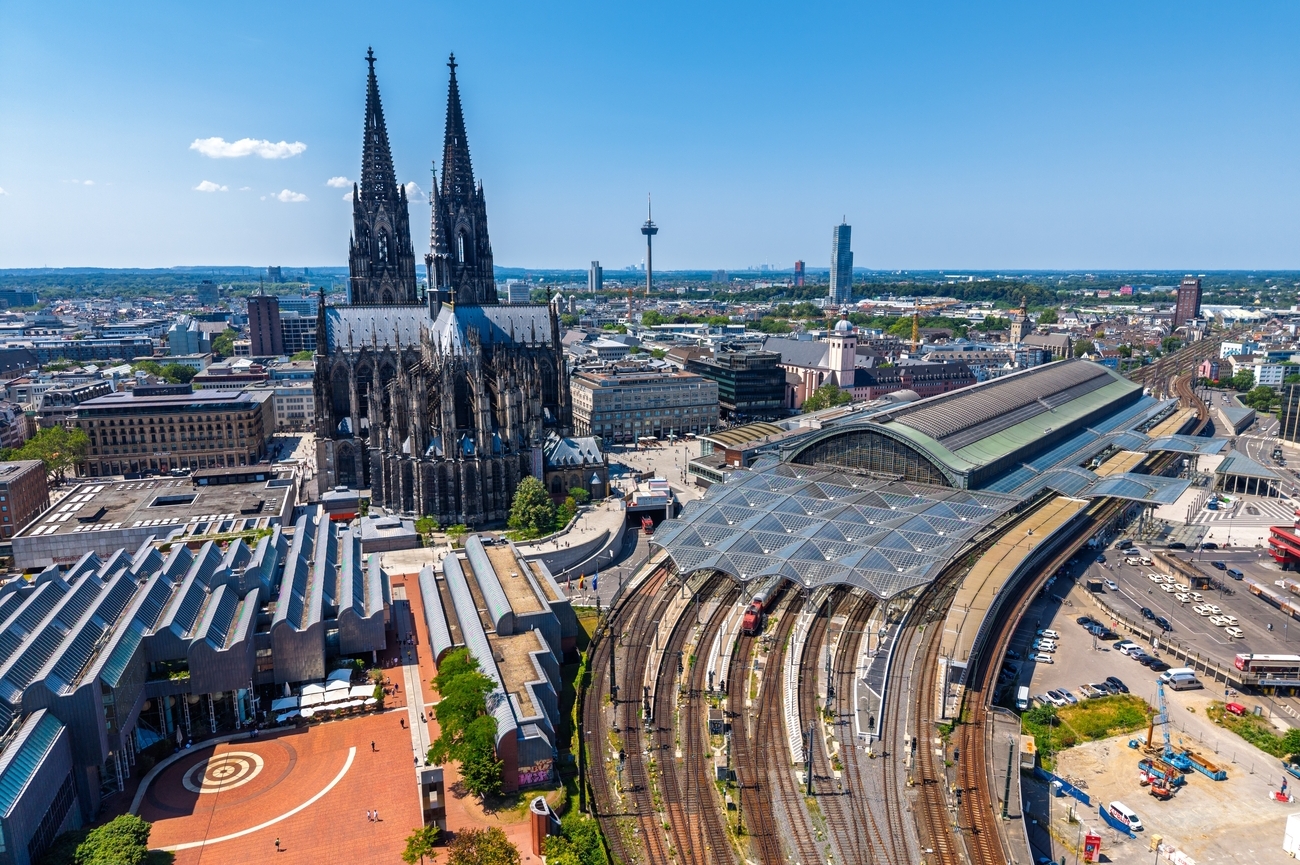
The AKE-Rheingold passes through Cologne, one of the most significant cultural cities along the Rhine. Although the stop is brief, the view of Cologne Cathedral rising beside the railway station creates one of the journey’s most recognizable moments. As the train continues south, the urban landscape gradually gives way to the historic Rhine Valley, where riverside towns, vineyards, and wooded hills begin to shape the scenery.
Bonn
Passing through Bonn introduces a more refined and historic side of the Rhine region. The former capital of West Germany and birthplace of Ludwig van Beethoven, the city blends cultural heritage with riverside scenery as the AKE-Rheingold leaves the urban landscape behind and continues south.
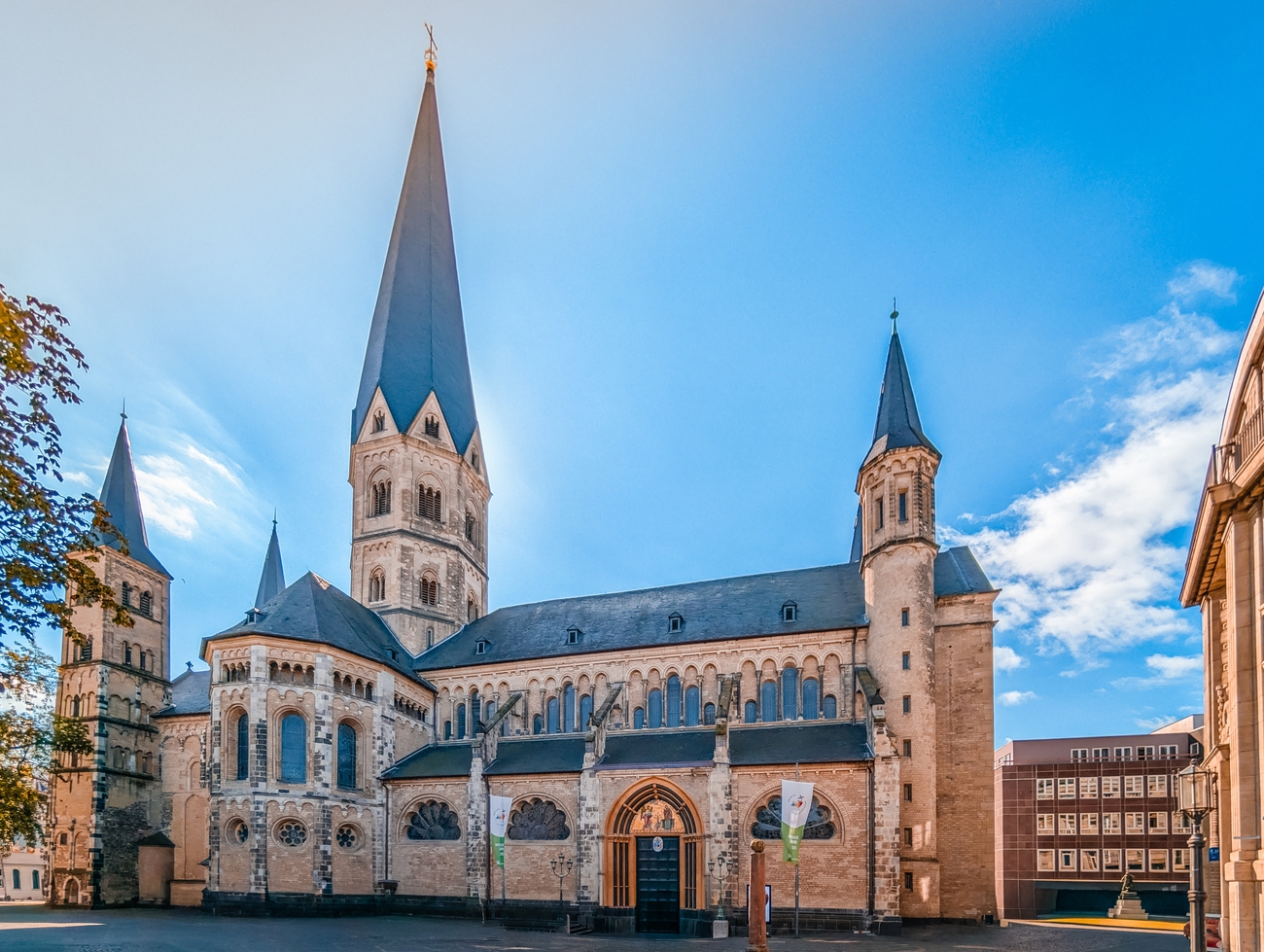
Mainz
Mainz continues the journey along the Rhine and introduces another historic river city. Known for its Roman heritage, wine culture and connection to Johannes Gutenberg, Mainz has played an important role in European history.
The city’s major landmarks include Mainz Cathedral, one of Germany’s finest Romanesque churches and the Gutenberg Museum, which explores the history of printing and the work of Johannes Gutenberg. The old town, with its historic squares, colorful buildings and narrow streets, adds to Mainz’s character, while the riverside offers views across the Rhine.
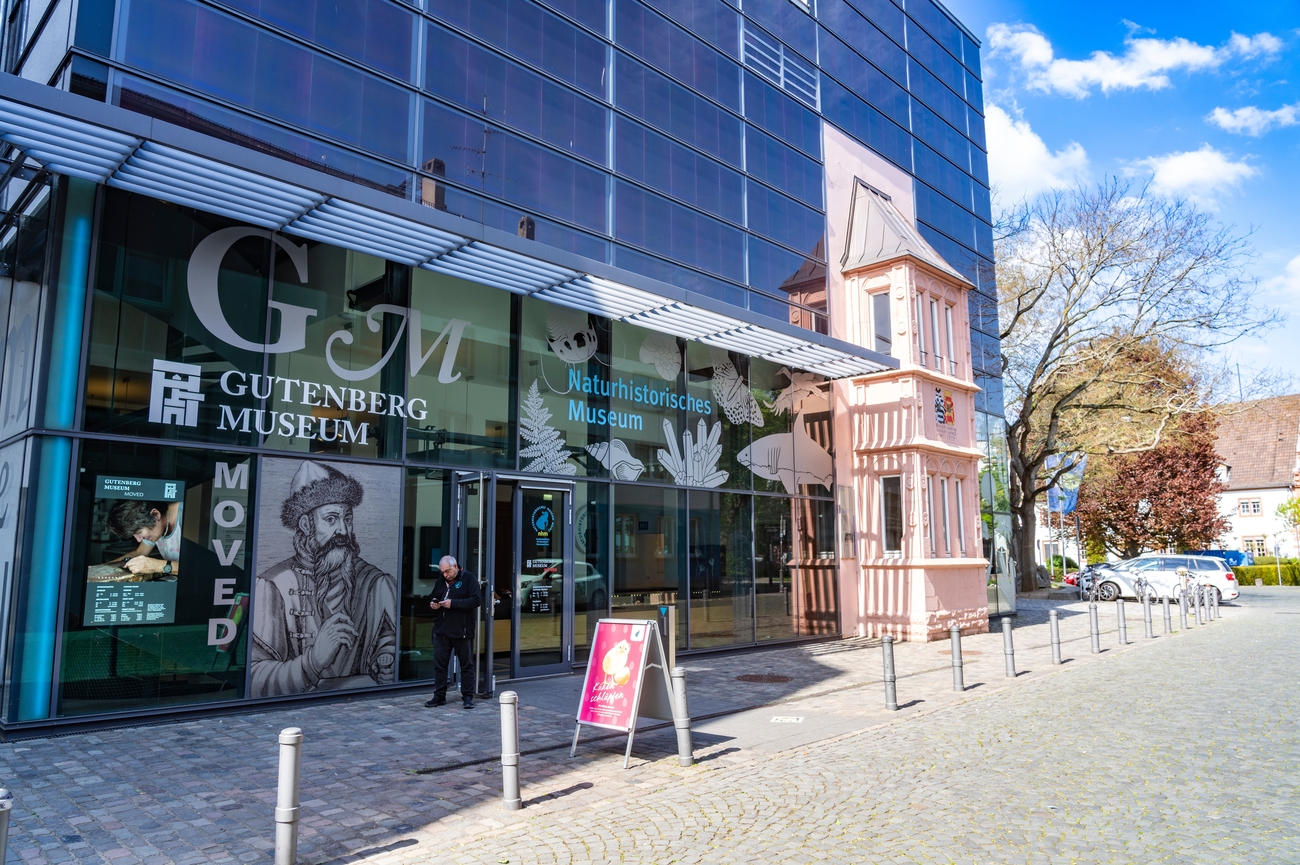
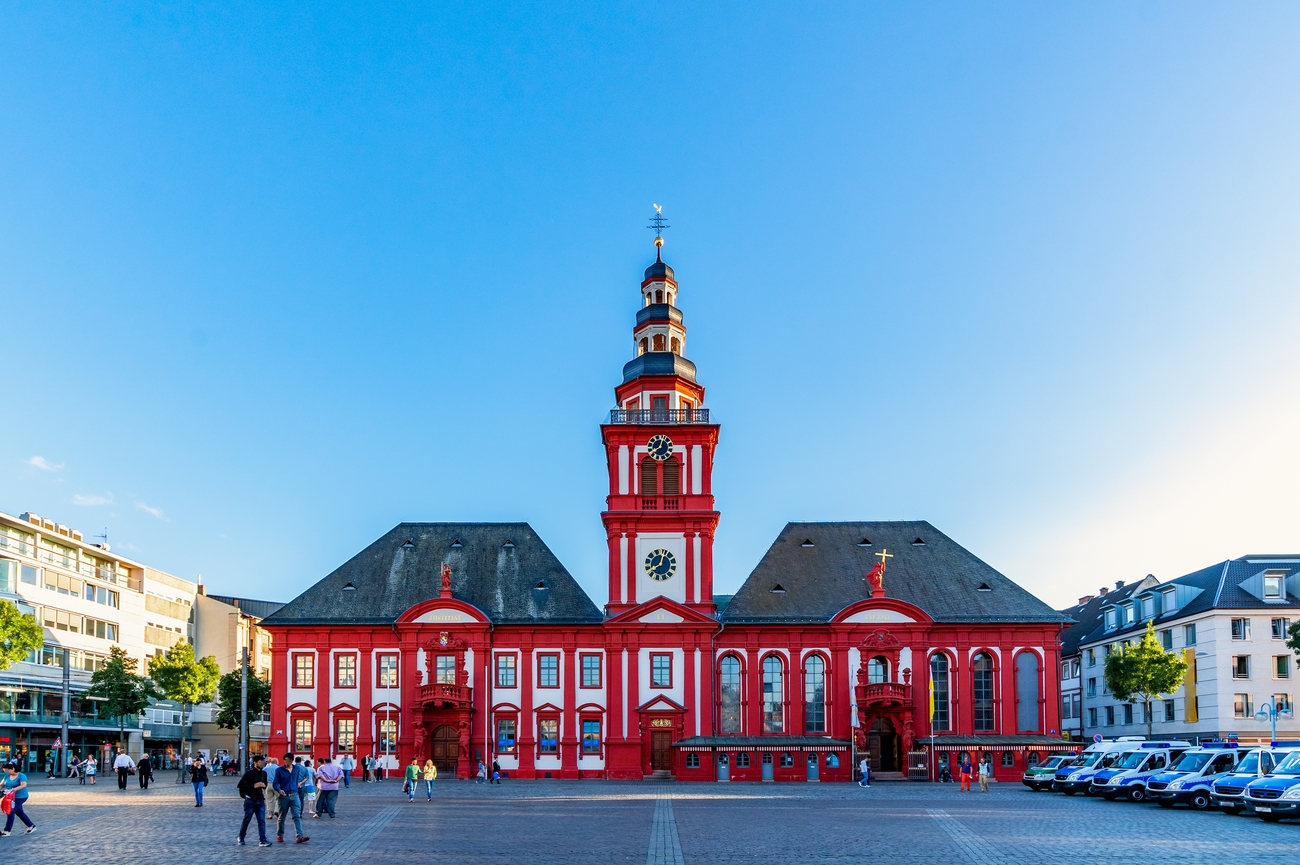
Mannheim
Mannheim marks the transition into southwestern Germany. Located where the Rhine and Neckar rivers meet, the city is known for its planned grid layout and baroque architecture, especially Mannheim Palace, one of Europe’s largest baroque residences. It is also connected with innovation and engineering, including Carl Benz’s development of the first practical automobile.
Leaving Mannheim, the landscape becomes quieter, with more open countryside appearing as the train continues toward the Swiss border.
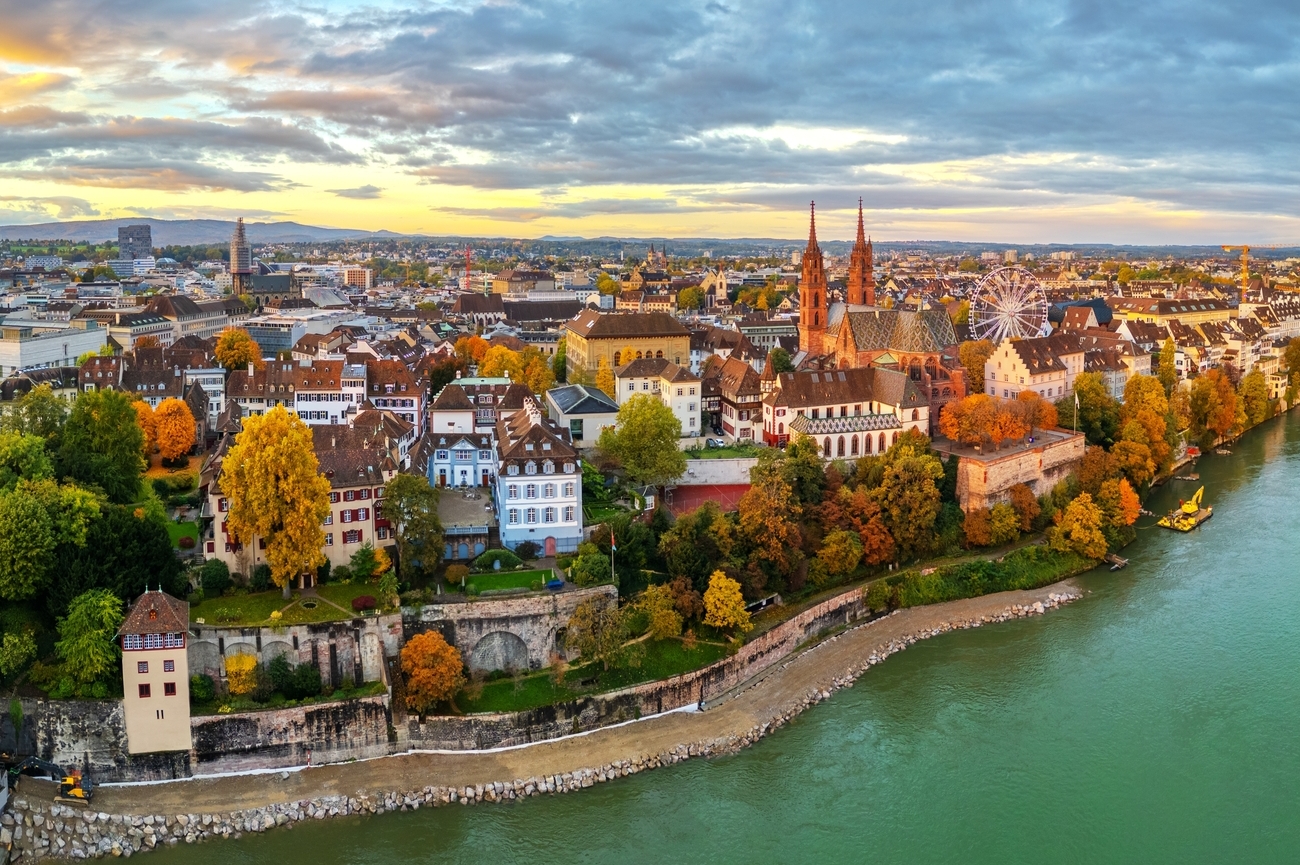
Basel
Basel marks the transition from Germany into Switzerland and sits where Switzerland, Germany and France meet. Located along the Rhine, the city has long been an important center for trade, culture and European connections. The historic old town, Basel Minster and riverside areas showcase the city’s long history, while its museums and arts scene give it a modern identity.
From Basel, the journey leaves the Rhine corridor and continues towards the Alps and Domodossola, where passengers transfer by bus for the final journey to Locarno on Lake Maggiore.
Lake Maggiore
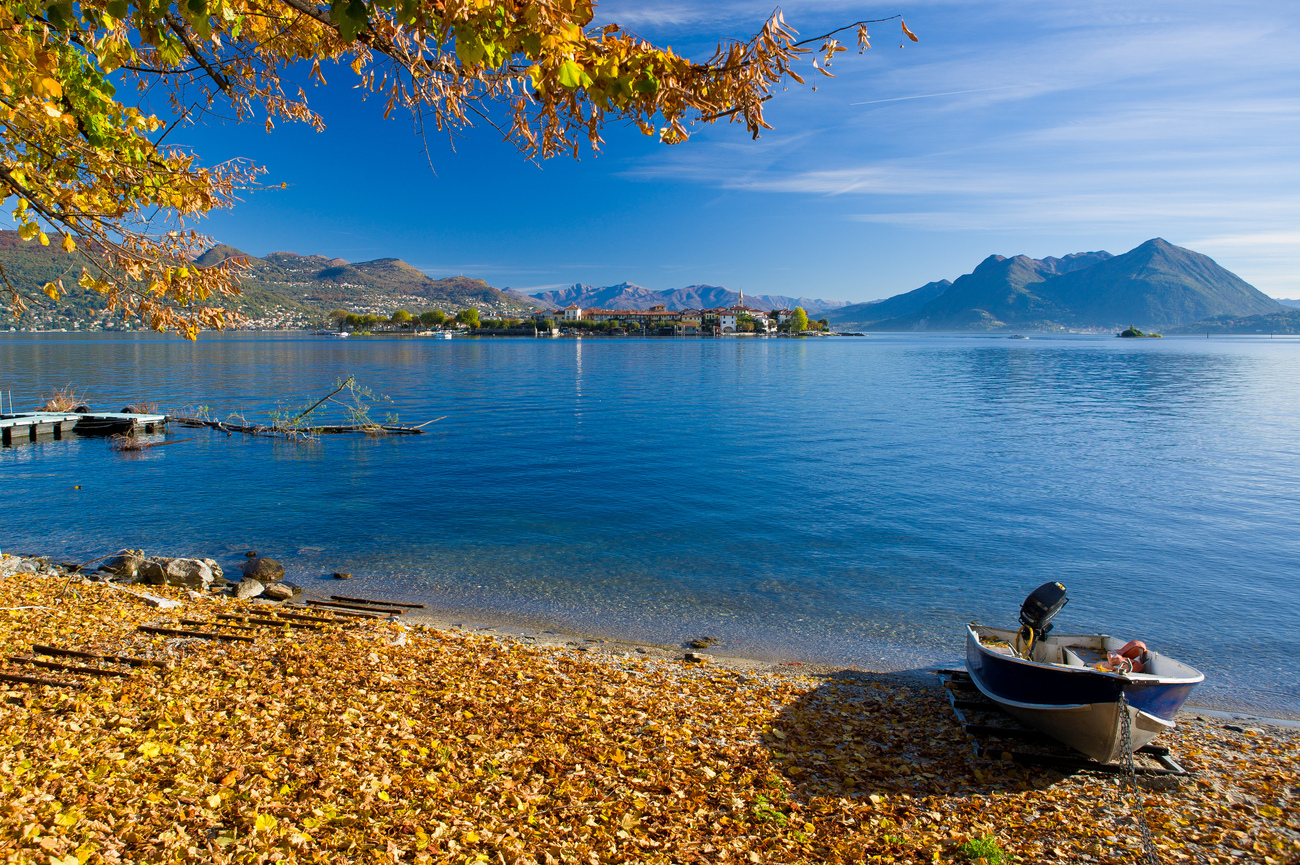
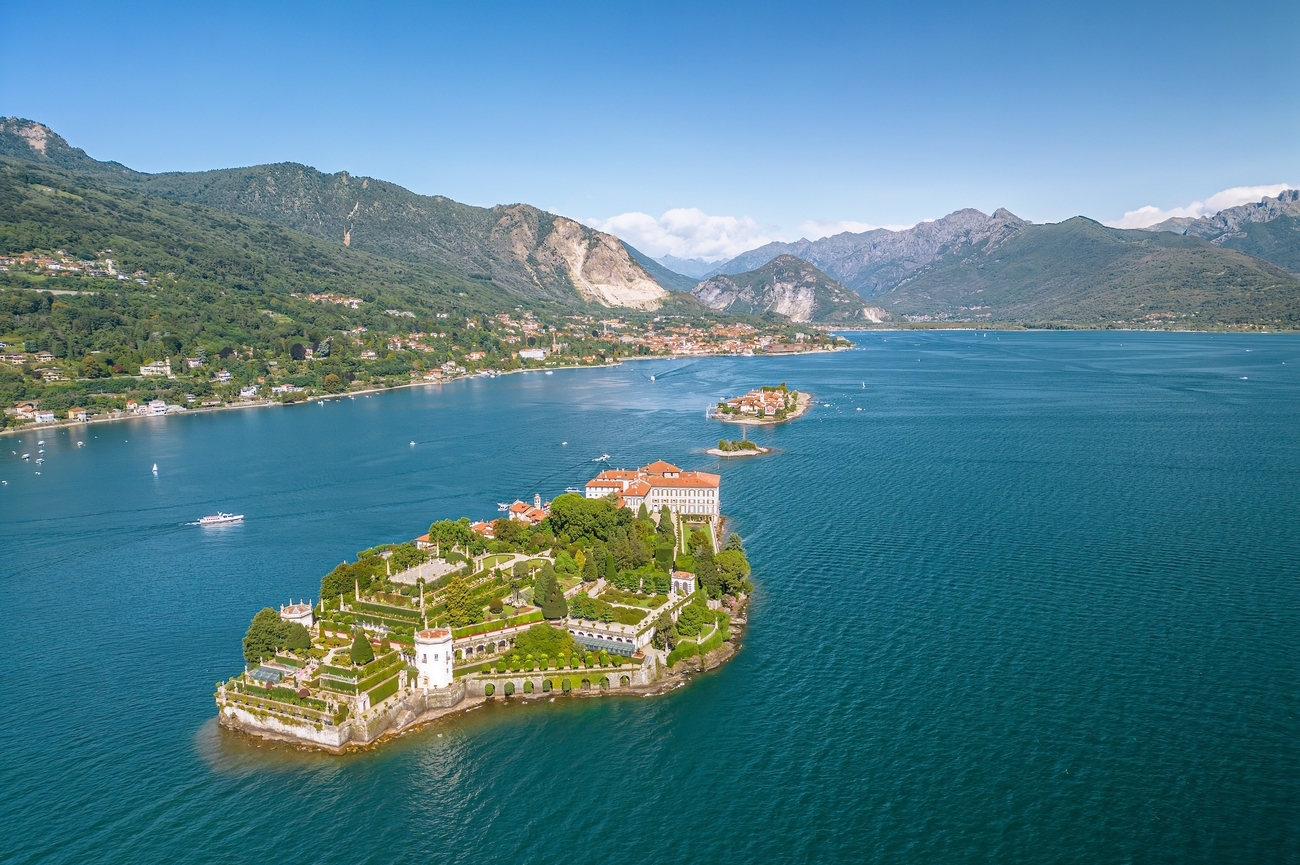
The journey reaches Lake Maggiore, one of Europe’s most scenic lake regions, shared between Switzerland and Italy. Surrounded by mountains, historic towns and elegant waterfronts, the destination feels completely different from the industrial and urban landscapes earlier in the journey. This region includes destinations such as Stresa, Locarno and Ascona. Stresa is known for its waterfront promenade and views toward the Borromean Islands, while Locarno and Ascona combine Swiss and Italian influences through historic streets, cafés and lakeside walks.
During autumn, Lake Maggiore takes on a quieter character. Forests surrounding the lake turn warmer in color, the mountains frame the water more dramatically and the region offers a slower pace after the long railway journey south.
What Is the AKE-Rheingold Route from Dortmund to
Lake Garda?
The AKE-Rheingold journey to Lake Garda follows a route that begins in western Germany before heading south through the Rhine region and into the Alpine landscapes of Bavaria and northern Italy. The first part of the journey shares the same route as the previous AKE-Rheingold itinerary, passing through major cities such as Dortmund, Düsseldorf, Cologne, Bonn, Koblenz, Mainz and Mannheim.
The following stops continue the journey from Mannheim toward southern Germany and the Alps. From Mannheim, the route takes a different direction, with the landscape gradually changing from the Rhine valley into the foothills of the Alps.
Mannheim
Mannheim marks the transition from the Rhine corridor toward southwestern Germany. Known for its baroque architecture, planned city layout, and connection to engineering history, it introduces a different atmosphere before the journey continues south. Leaving Mannheim, the AKE-Rheingold continues through a quieter landscape, with more open countryside replacing the larger urban areas of western Germany.
Esslingen
As the AKE-Rheingold travels toward Esslingen, the scenery begins to change from the broad Rhine corridor to the more varied landscapes of Baden-Württemberg. The train passes through open countryside, wooded hills and vineyard-covered slopes.
Esslingen introduces a more traditional side of southern Germany. Located near Stuttgart, the city is known for its well-preserved medieval old town, half-timbered houses and historic streets that have survived for centuries. This city offers a glimpse of the smaller towns that shaped the cultural landscape of Baden-Württemberg, with vineyards and wooded hills surrounding the city.
Ulm
Ulm sits along the Danube River and is one of the final major German stops before the route reaches Bavaria. The city’s most famous landmark is Ulm Minster, whose 161.5-metre spire is the tallest church tower in Germany. The historic fishermen’s quarter adds another side to Ulm, with narrow streets, restored buildings and riverside views.
As the AKE-Rheingold leaves the city, the scenery begins changing again, with the Alps becoming increasingly influential in the landscape.
München
München is the final major German stop before the journey continues toward Italy. The Bavarian capital combines historic architecture, museums, gardens and traditional culture with a modern city atmosphere.
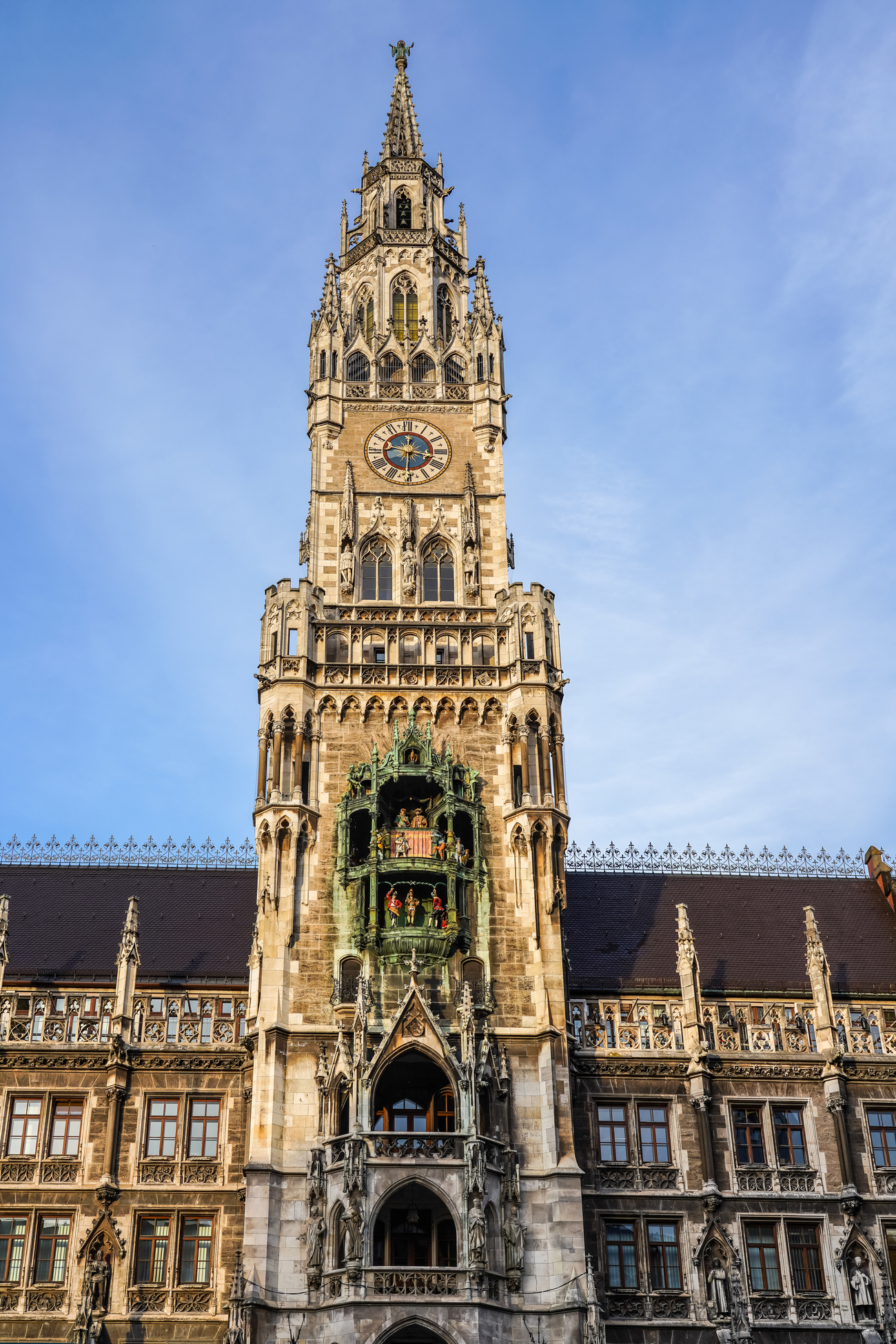
This city offers plenty to explore before the journey continues south. Marienplatz forms the center of the old town, dominated by the ornate New Town Hall and its famous Glockenspiel. Nearby, the Frauenkirche, with its distinctive twin towers, and the former royal Munich Residence provide further insight into the city’s history. The Residence contains grand state rooms, courtyards and collections connected with Bavaria’s former rulers. And beyond München, the surrounding region acts as a gateway to the Alps, making the city an important transition point between Germany and northern Italy.
Leaving München, the journey moves into increasingly dramatic Alpine scenery before reaching Steinach am Brenner in Austria. From there, a coach transfer takes passengers across the Alps to Limone on Lake Garda.

Lake Garda
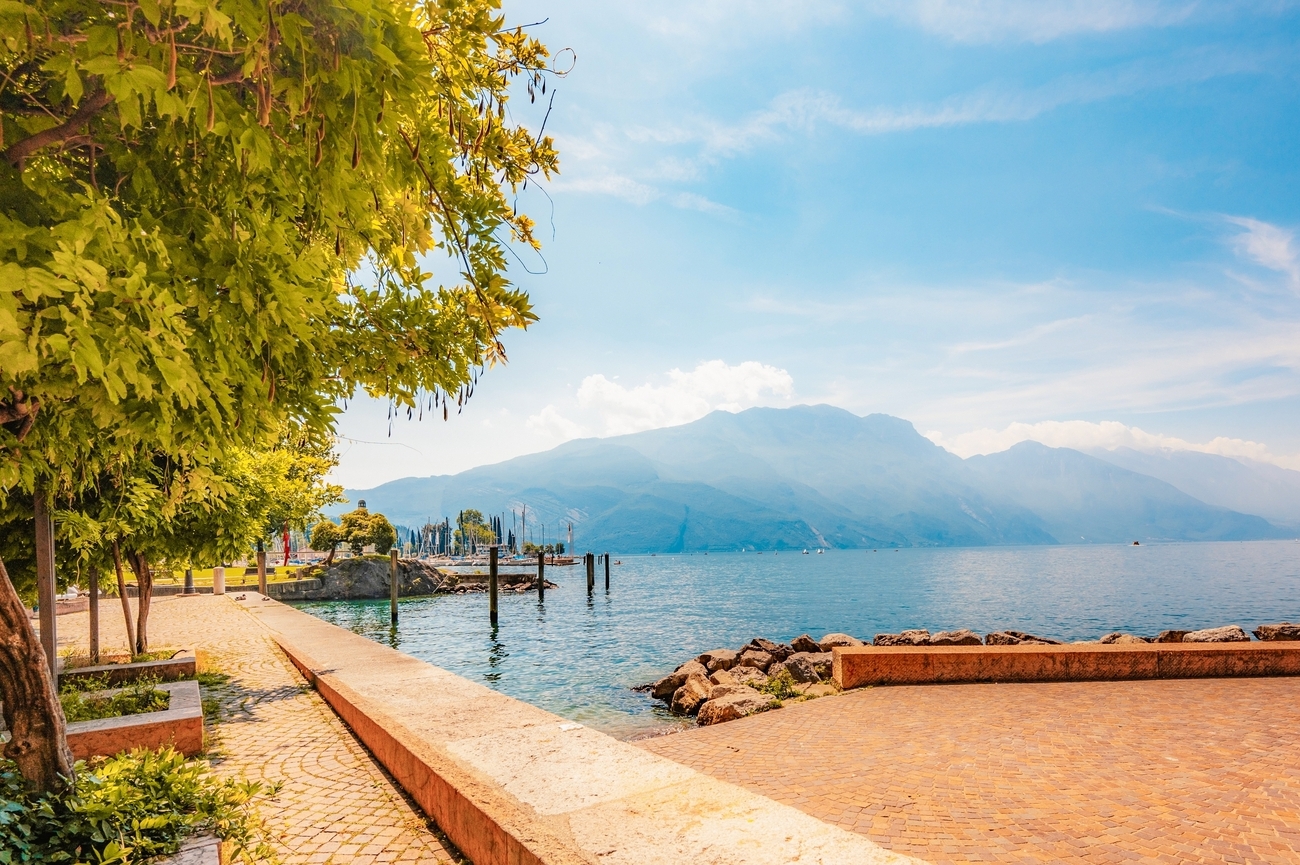
Now you’ve reached Lake Garda, Italy’s largest lake and one of its most popular destinations. Surrounded by mountains, historic towns and Mediterranean-style landscapes, the lake offers a completely different atmosphere from the German cities visited earlier in the route.
The northern part of Lake Garda is known for its dramatic scenery, where steep mountains meet the water. Towns such as Riva del Garda combine lakeside promenades, historic centers and outdoor activities, while places along the southern shore offer a more relaxed atmosphere with waterfront cafes, villas and gardens.
What Is the AKE-Rheingold Route to Merano in South
Tyrol?
The AKE-Rheingold journey to Merano follows the same route through Germany as the Lake Garda itinerary, beginning in the Ruhr region and continuing through the Rhine corridor before reaching southern Germany. After passing through Mannheim, Esslingen, Ulm and München, the journey takes a different direction toward South Tyrol and the Italian Alps. From München onward, the flatter regions of southern Germany give way to mountain scenery, with the route moving through the Alpine region before reaching Merano, a historic spa town surrounded by vineyards and peaks.
München
München marks the point where the journey leaves Germany and begins its Alpine transition toward Italy. The Bavarian capital combines historic architecture, museums, gardens and traditional culture with a modern city atmosphere.
Before continuing south, you can explore landmarks such as Marienplatz, the New Town Hall, Frauenkirche and the Munich Residence. Beyond the city, the surrounding region acts as a gateway to the Alps, making München a natural transition point between Germany and northern Italy.
Merano, South Tyrol
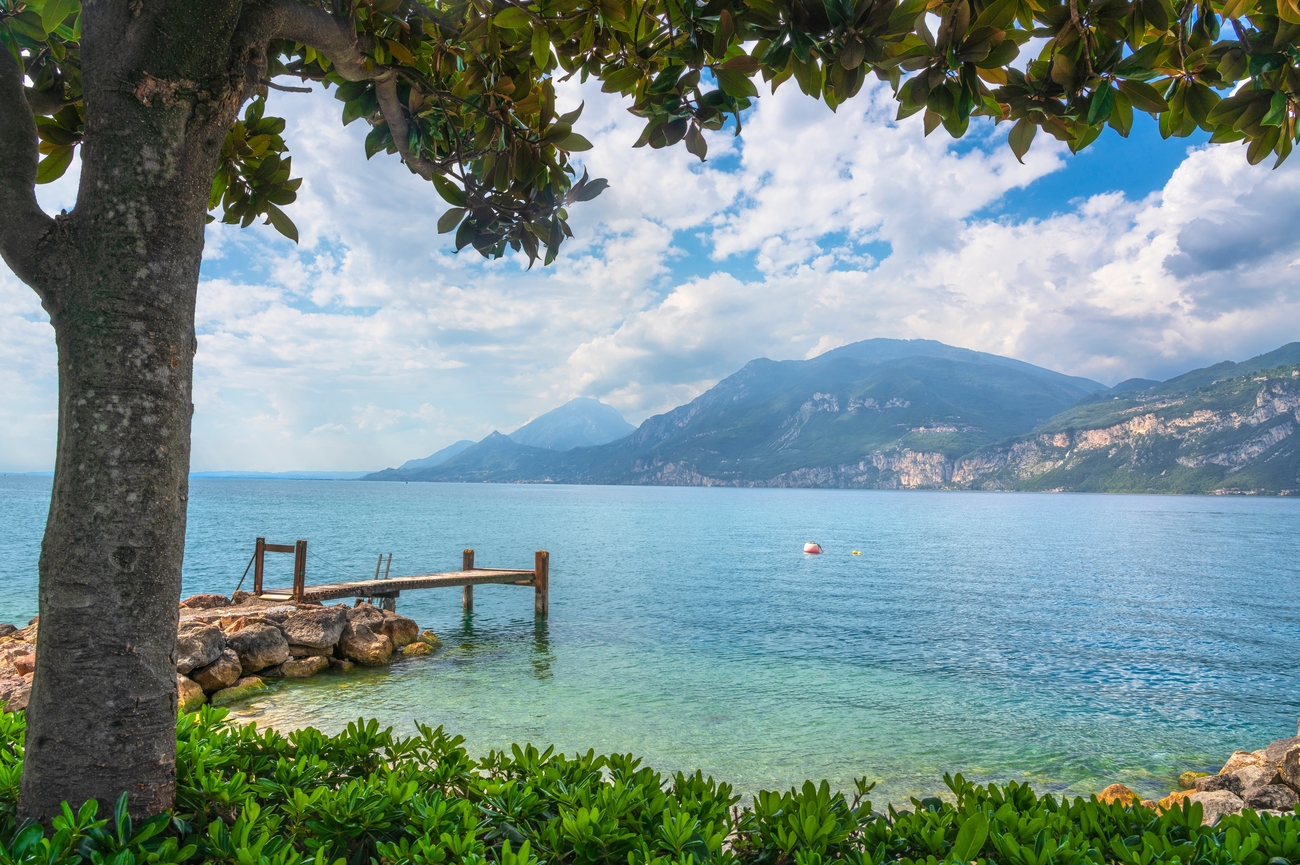
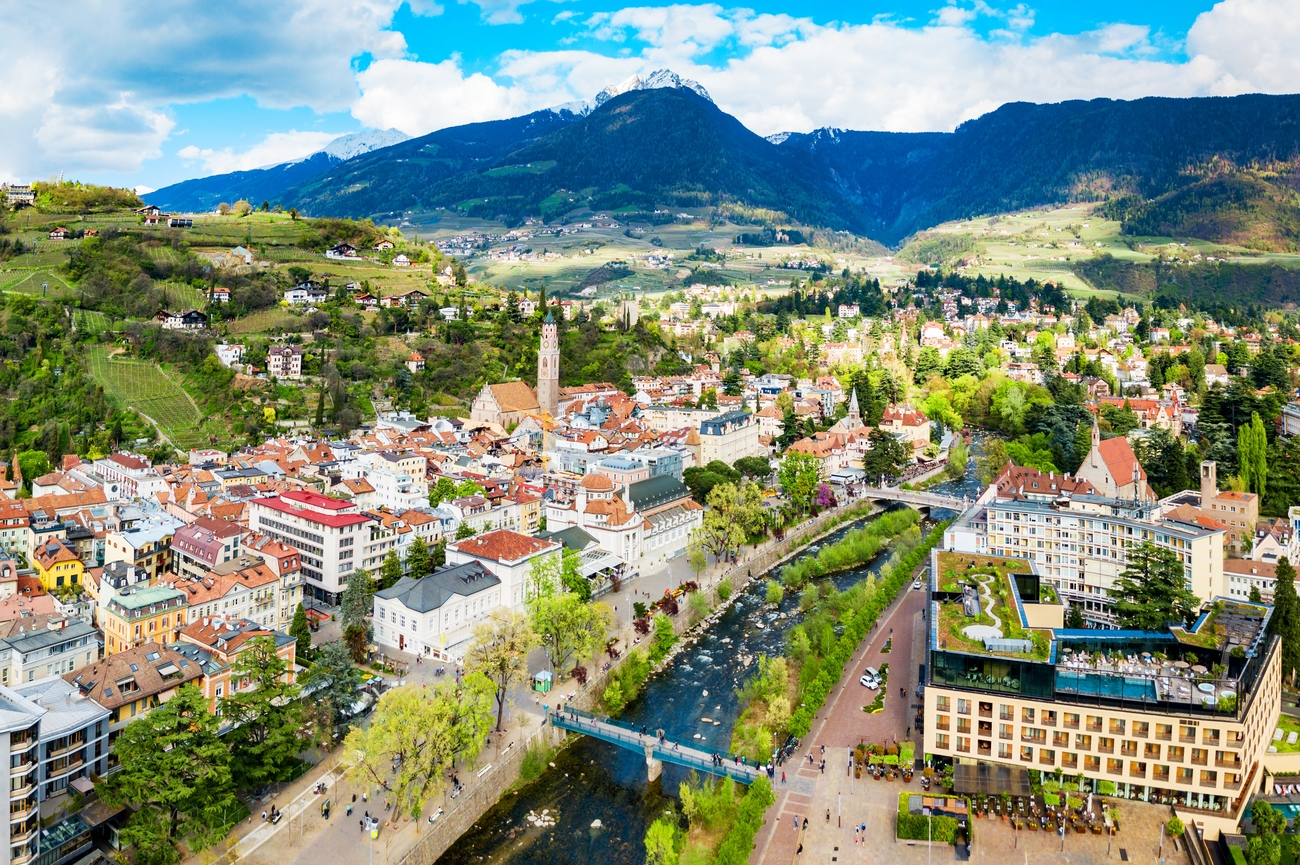
Merano lies in a sheltered valley in South Tyrol, where vineyards and orchards meet the surrounding Alpine peaks. The town’s architecture, cuisine and traditions reflect its distinctive blend of Italian and Austrian influences, creating a character that feels both Mediterranean and unmistakably Alpine. This city is known for its elegant promenades, thermal baths and relaxed atmosphere. Arcaded streets, landscaped gardens and historic buildings give the town a refined character, while the mountains rising around the valley provide a dramatic backdrop.
As the final destination on this AKE-Rheingold itinerary, Merano provides a fitting conclusion to the journey. The train travels as far as Steinach am Brenner in Austria, with passengers continuing by coach across the Alps to Merano. In autumn, the scenery around the town becomes particularly attractive, with vineyards and forests taking on warmer colors that contrast with the peaks beyond. Its Mediterranean atmosphere, Alpine setting and historic charm make it a memorable end to the trip.
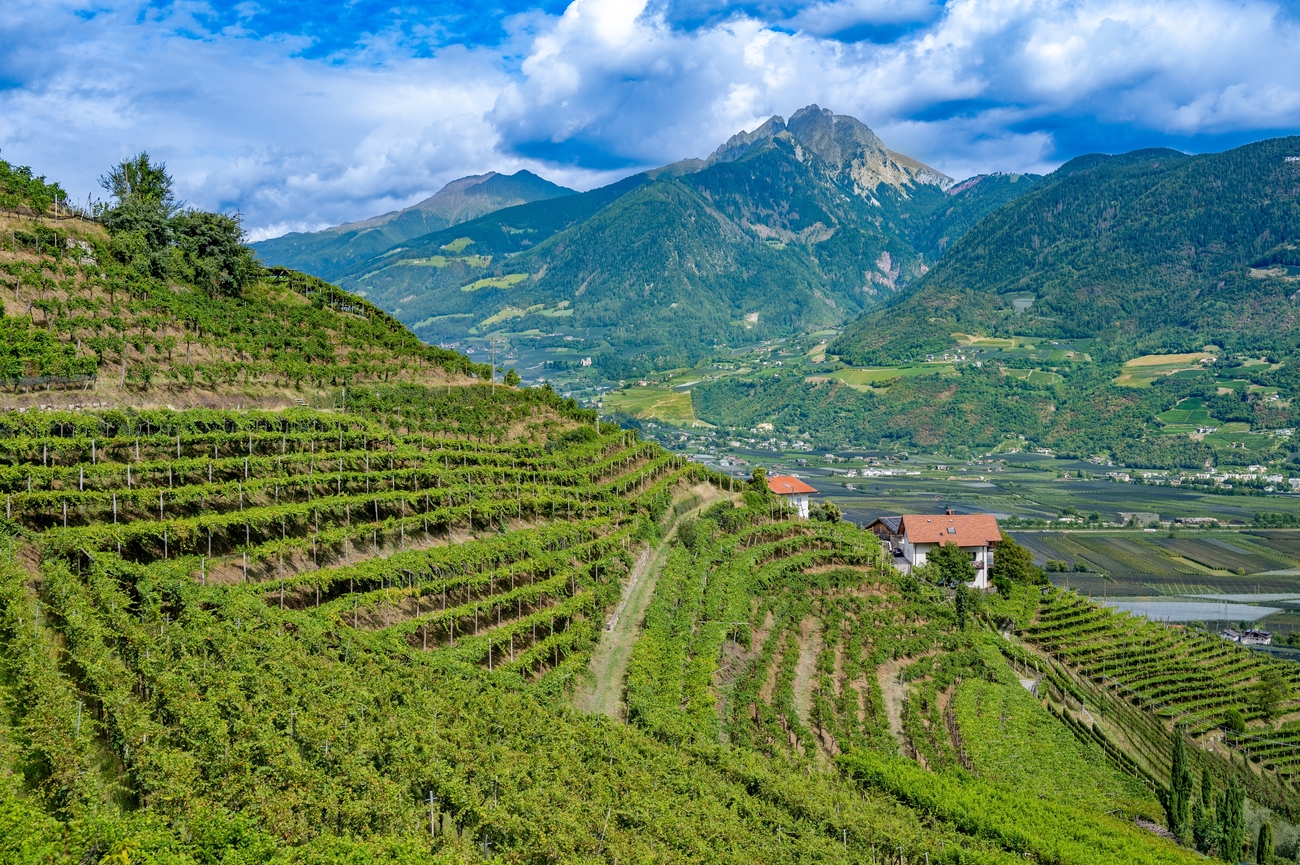
October Itineraries from Cottbus and Berlin
The October journeys explore Germany’s historic cities and changing landscapes, traveling from eastern Germany through central regions toward southern destinations. The routes pass through areas shaped by medieval towns, cultural landmarks and scenic countryside. After the shared section through Berlin and central Germany, the journeys continue in different directions, one toward München through Bavaria and another toward Freiburg through southwestern Germany.
What Is the AKE-Rheingold Route from Cottbus via
München?
The AKE-Rheingold October journeys begin in eastern Germany before crossing some of the country’s most historic regions. The route moves through Brandenburg, Berlin and central Germany. As the train travels south, the landscape gradually changes from the forests and waterways of Brandenburg to the historic towns and countryside of Thuringia and Hesse. After Fulda, the routes separate, with one continuing toward Bavaria and the other heading west toward southwestern Germany.
Cottbus
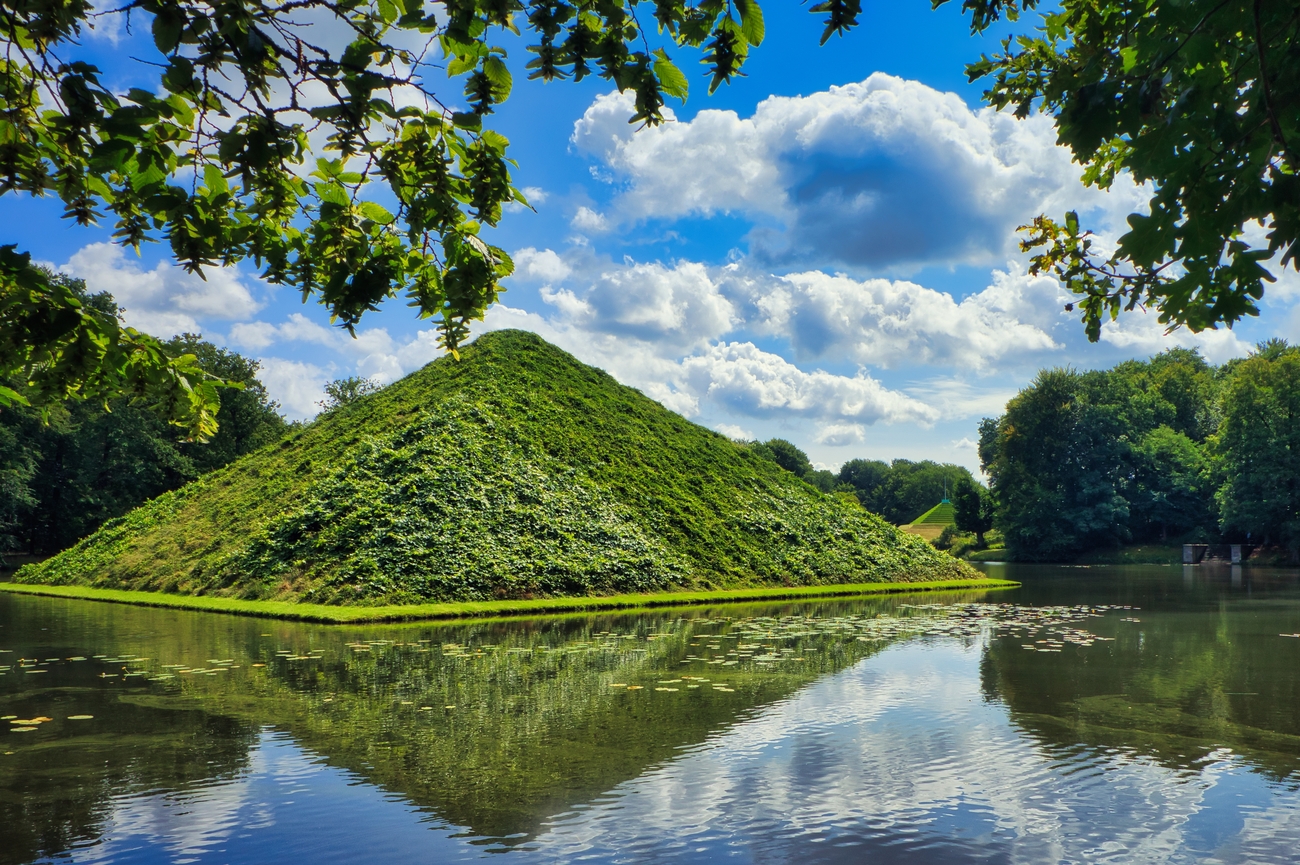
Cottbus is the eastern starting point of the AKE-Rheingold October journey. Located in Brandenburg near the Polish border, the city is surrounded by the forests, waterways and traditional villages of eastern Germany. Its position makes it an important gateway between the Lusatian region, Berlin and the historic landscapes further west. The city itself combines a historic center with a strong connection to the surrounding countryside. Cottbus is known for its parks, cultural institutions and nearby Branitz Park, whose landscaped grounds and distinctive earth pyramids were created by Prince Hermann von Pückler-Muskau.
Berlin
Berlin is the largest city on the route and one of Germany’s most historically significant stops. As the AKE-Rheingold arrives in the capital, the journey moves from the quieter landscapes of Brandenburg into a dense urban environment shaped by centuries of political, cultural and social change.
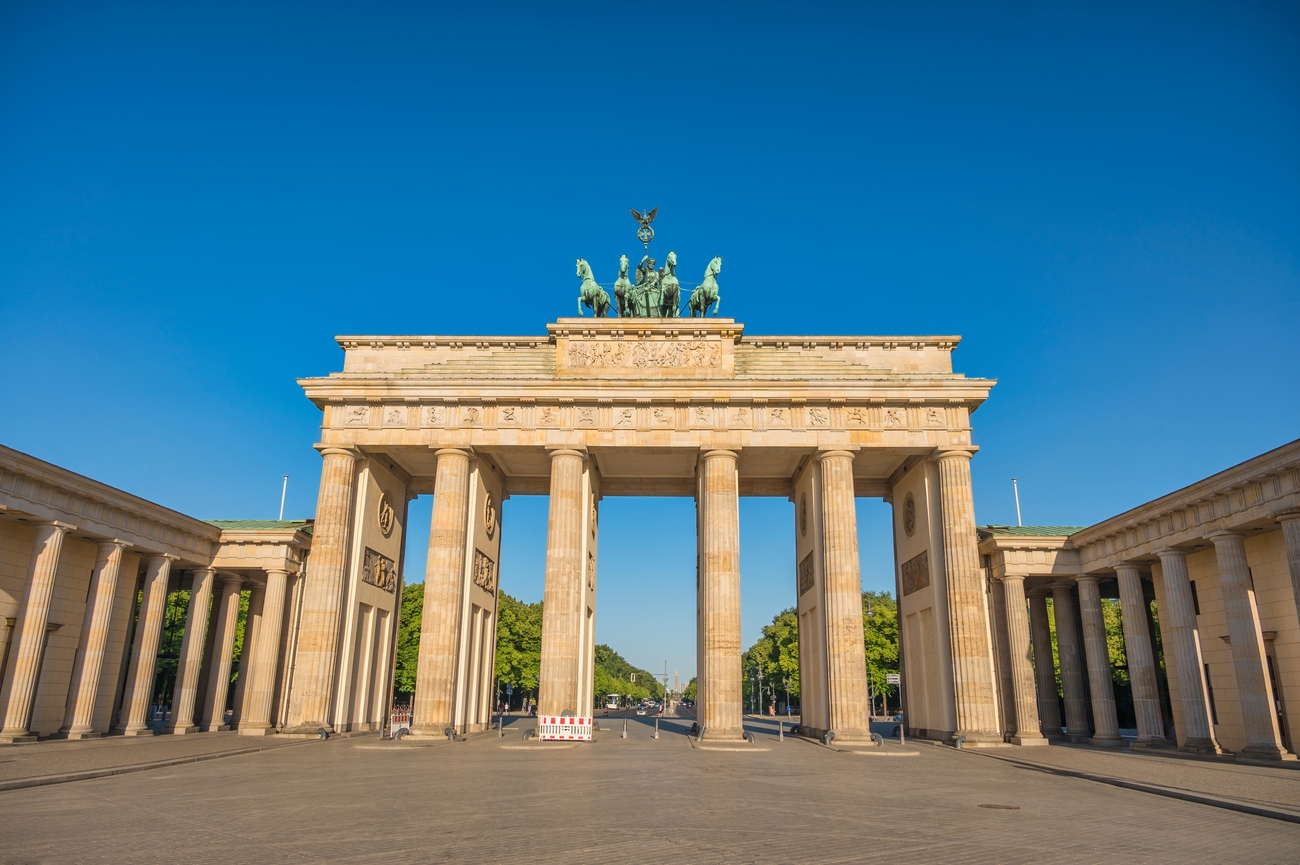
The city combines Prussian landmarks, 20th-century history and modern architecture. The Brandenburg Gate and Reichstag stand near the government district, while Museum Island brings together several of Berlin’s most important museums along the River Spree. Other notable areas include Unter den Linden, the historic boulevard leading toward the city center and the remains of the Berlin Wall, which recall the division of the city during the Cold War.
After leaving the capital, the train gradually moves away from the busy city districts, passing through suburban areas before the landscape opens into smaller towns, fields and countryside on the way toward Lutherstadt Wittenberg.
Lutherstadt Wittenberg
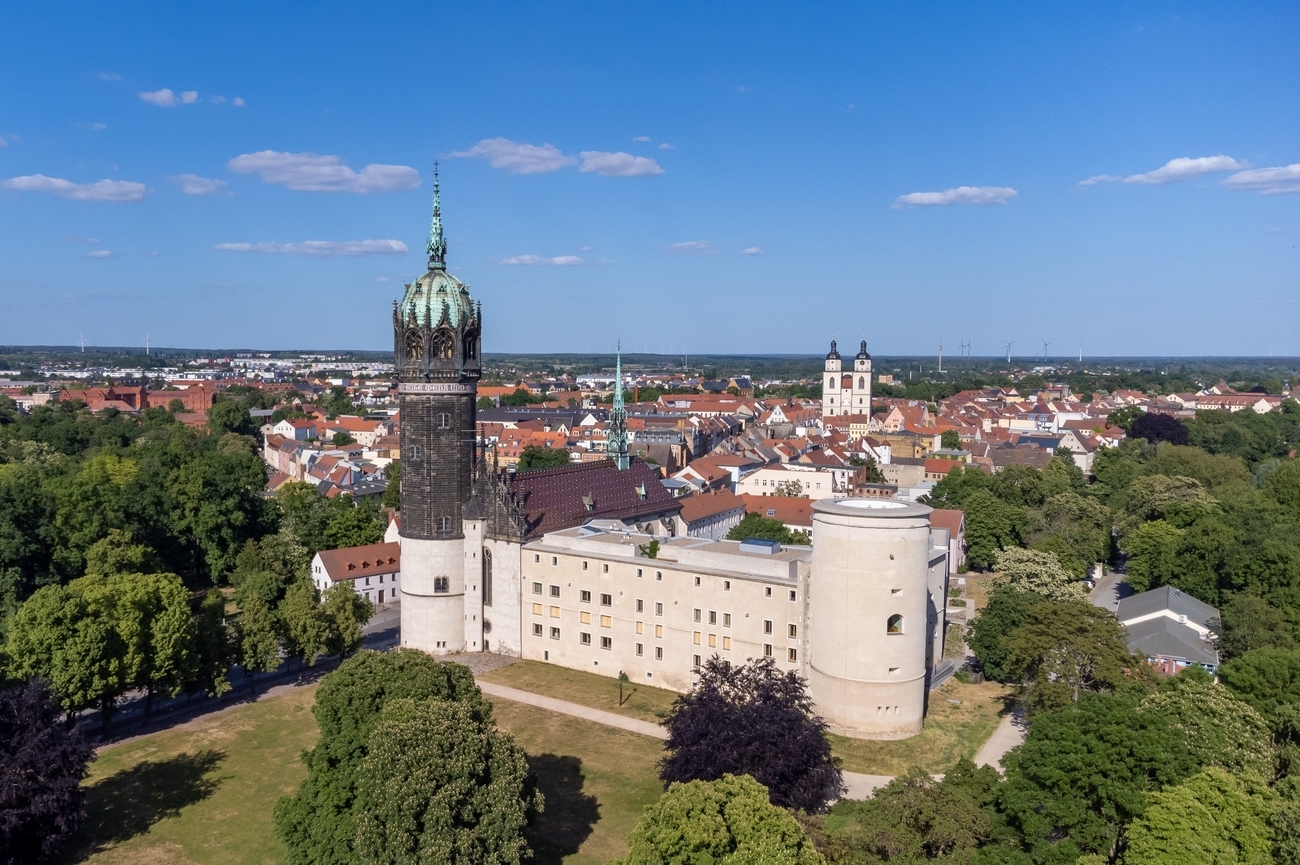
Lutherstadt Wittenberg is one of the most important historic towns along the route through eastern Germany. The city is closely associated with Martin Luther and the Protestant Reformation, which began here in the sixteenth century. Its center includes landmarks such as the Castle Church and Luther House, while the old town is filled with historic buildings and traditional squares.
As the AKE-Rheingold leaves Wittenberg, the route continues south through Saxony-Anhalt toward the historic cities of central Germany. The landscape changes from open plains to the river valleys and wooded hills of the region.
Halle
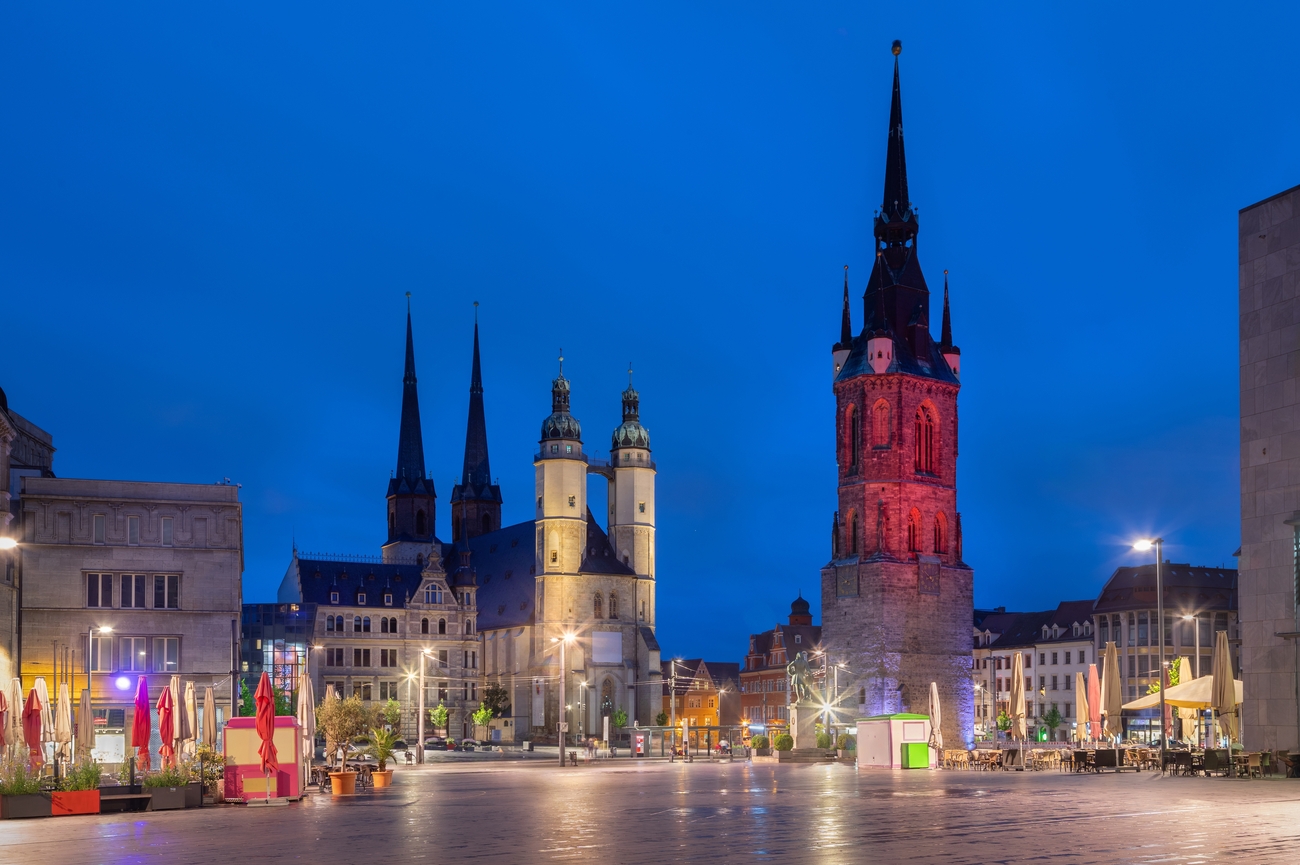
The train ride to Halle continues through the open landscapes of Saxony-Anhalt, passing rural fields and smaller settlements before arriving in one of the region's largest cities. From the carriage windows, the scenery gradually changes from the quieter countryside to Halle's more urban surroundings. This city is defined by the Marktkirche and Red Tower, while Halle Cathedral and the surrounding old town provide a glimpse into the city's medieval past.
Halle is also closely associated with composer George Frideric Handel, whose birthplace and other landmarks connected with his life can be found throughout the city. The annual Handel Festival celebrates his music and attracts visitors from around the world, further strengthening the city's connection with the famous composer.
Weimar
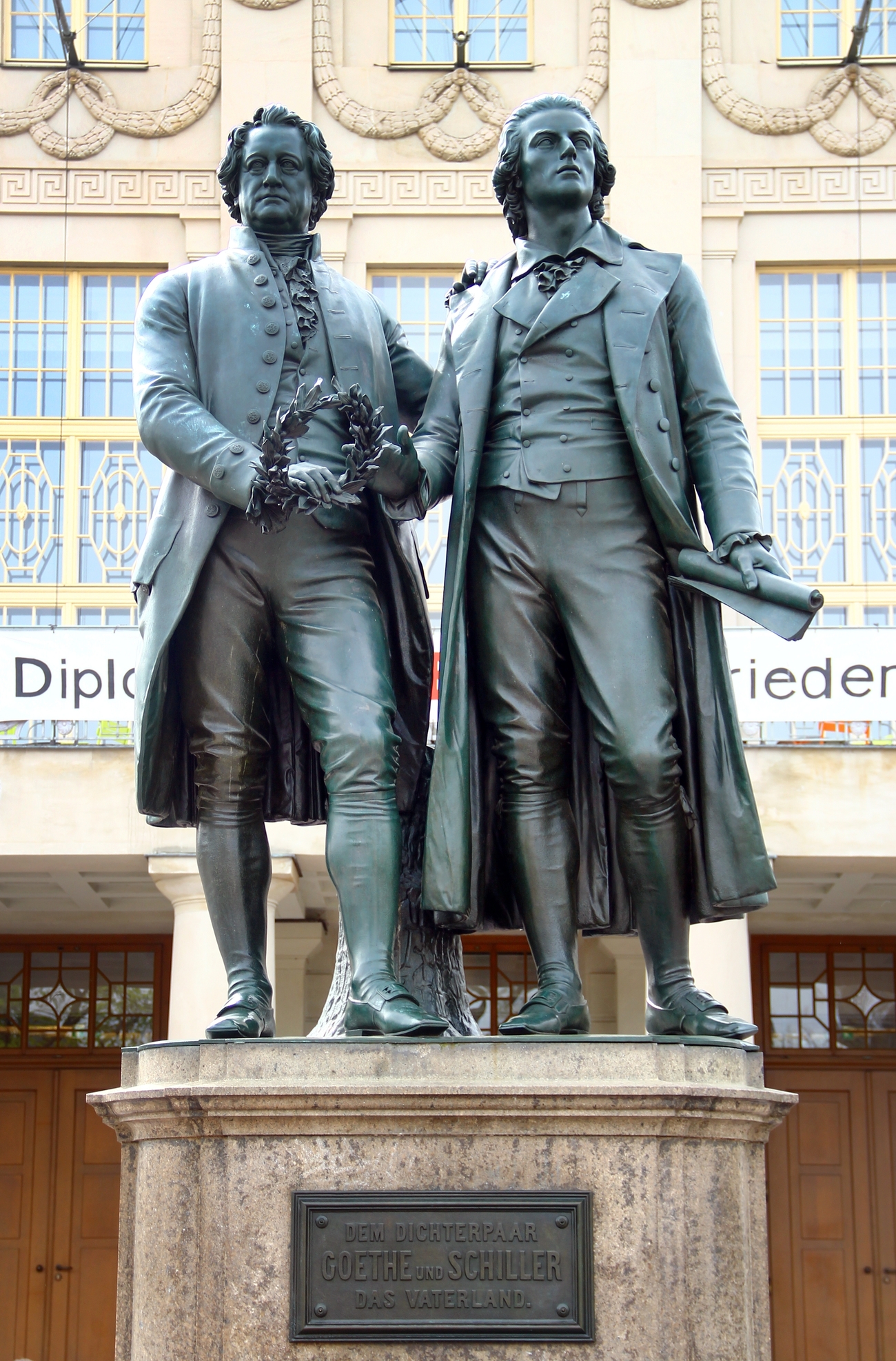
You will pass through the historic landscapes of central Germany, continuing south from Halle through the Saale valley and toward Thuringia. Along the way, the scenery changes from open countryside to wooded hills and smaller historic towns, creating a gradual transition into the cultural heart of the region. This is one of the cultural highlights of the journey. The city is closely associated with Johann Wolfgang von Goethe and Friedrich Schiller, whose homes and monuments remain among its most important attractions. It is also strongly associated with the Bauhaus movement, adding a modern artistic dimension to its long cultural history.
Erfurt
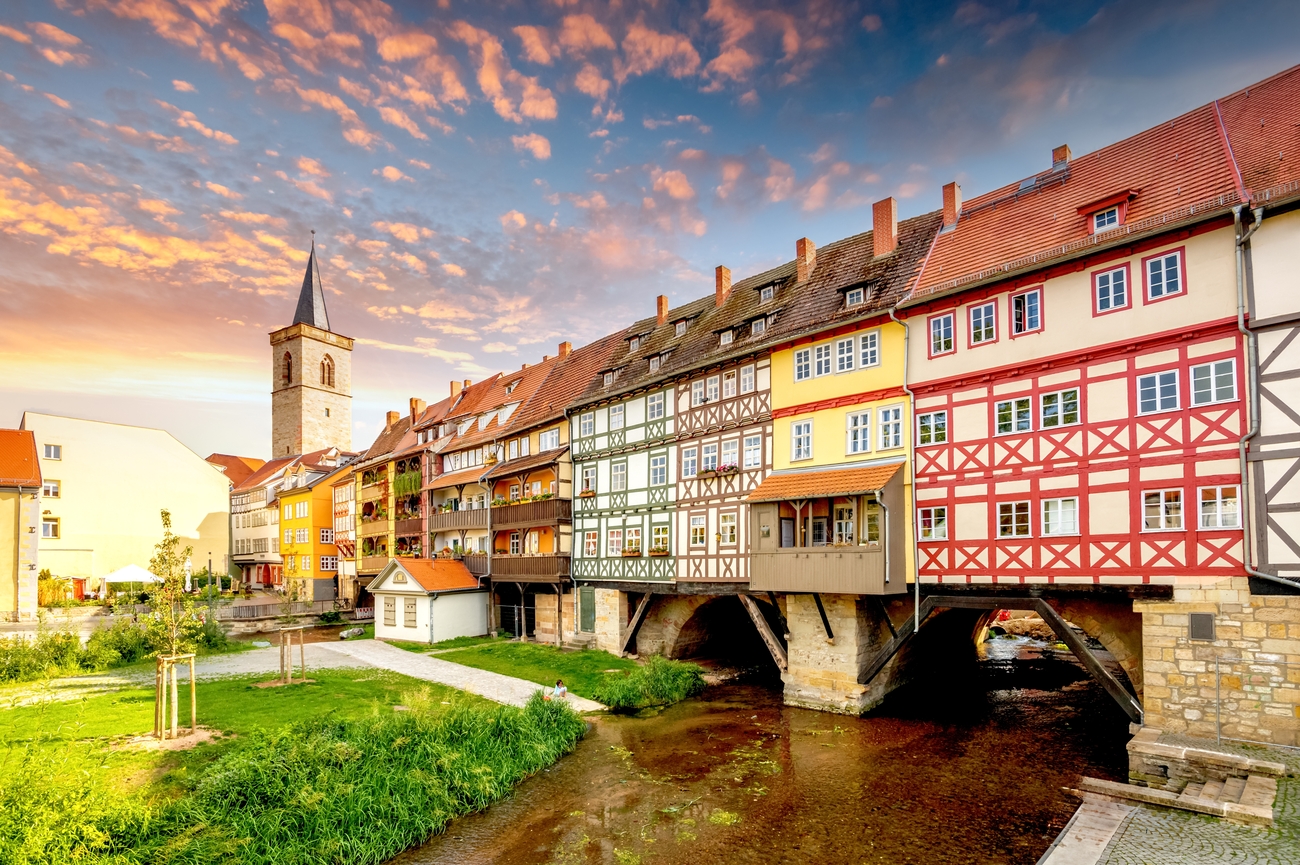
Erfurt's old town is known for medieval buildings, churches and narrow streets, with the famous Krämerbrücke forming one of its most recognizable landmarks. Originally built as a wooden bridge and later reconstructed in stone, the Krämerbrücke developed into a lively row of shops, workshops and homes. You can walk across the bridge while exploring its small stores, galleries and traditional buildings, which give the area a distinctive medieval character.
Oh, and this is another city connected with Martin Luther, who studied and lived here before becoming one of the central figures of the Reformation.
Eisenach
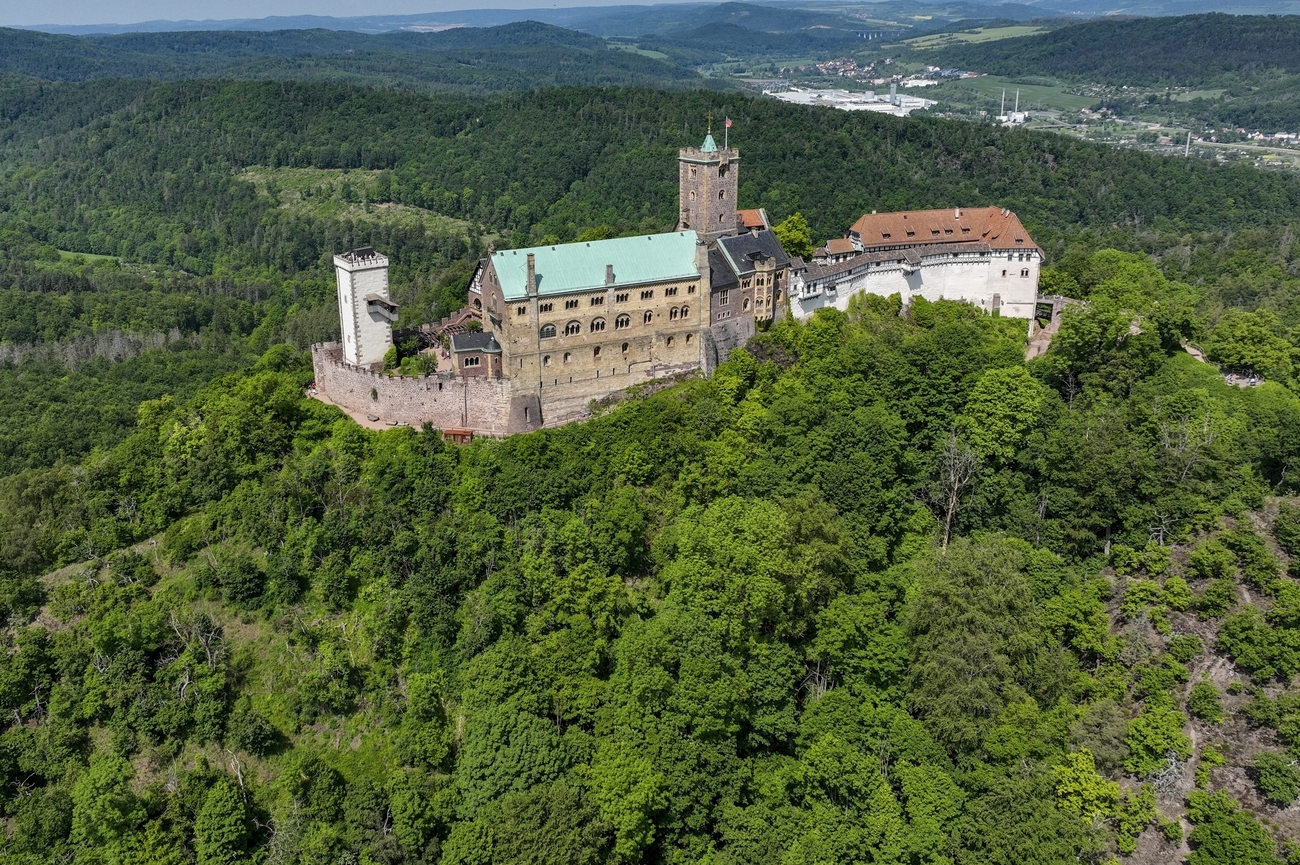
Eisenach is best known for Wartburg Castle, which stands above the city on a wooded hill. This is another Martin Luther city, as he stayed here and worked on his German translation of the New Testament. But history does not end there; the city is also the birthplace of Johann Sebastian Bach and has a strong musical heritage. Surrounded by the Thuringian Forest, Eisenach provides a more scenic setting as the journey moves farther south.
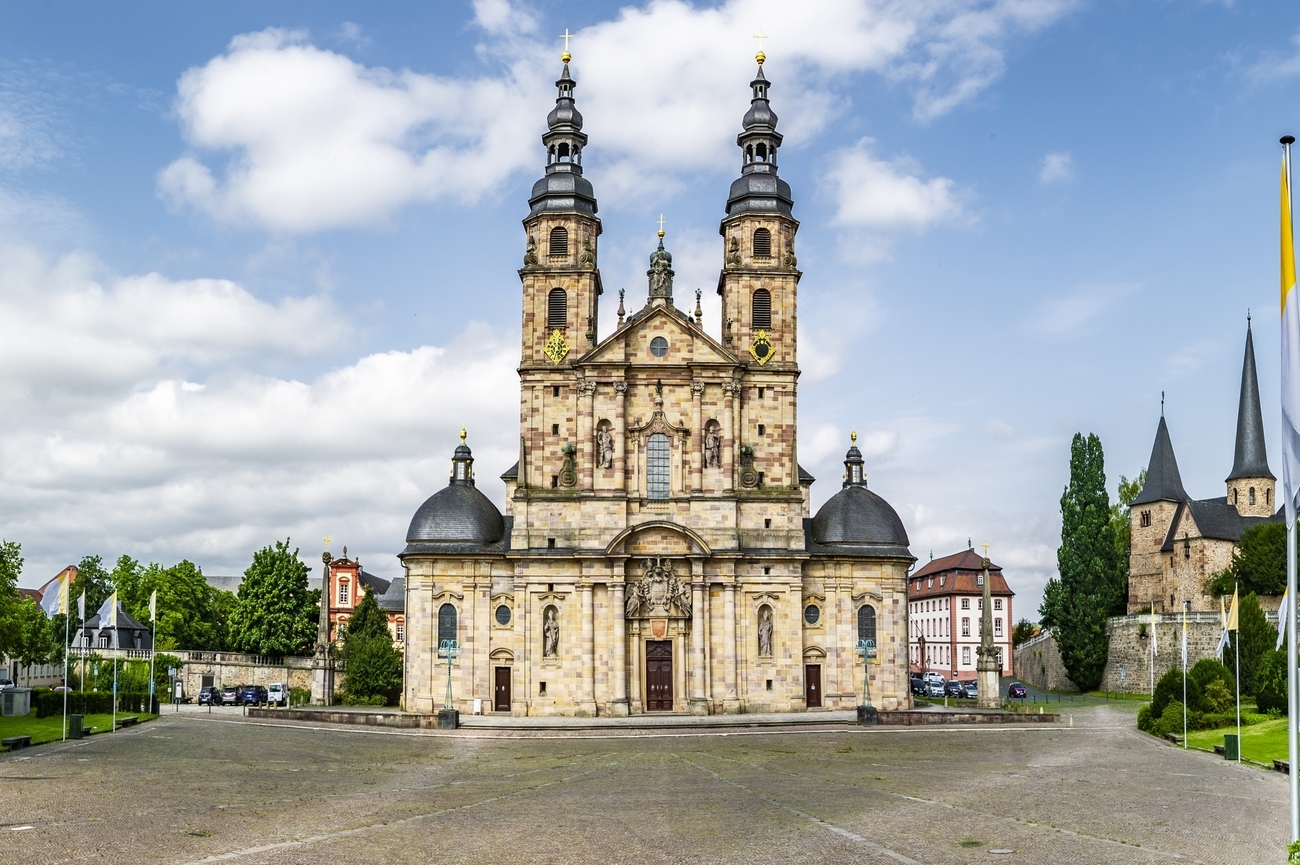
Fulda
Along the way, the scenery changes from the wooded hills of Thuringia to the open countryside surrounding Fulda. As the train continues south, the route begins to lead toward the vineyards and historic towns of Franconia. Fulda is an important historic city located between Thuringia and Bavaria. The city developed around a Benedictine monastery and became one of the most significant religious centers in central Germany.
Fulda Cathedral is the main attraction here, while the nearby palace and Baroque quarter reflect the influence of the prince-abbots who once ruled the city. As the train leaves Fulda, the landscape begins to shift toward the vineyards and historic towns of Franconia.
Würzburg
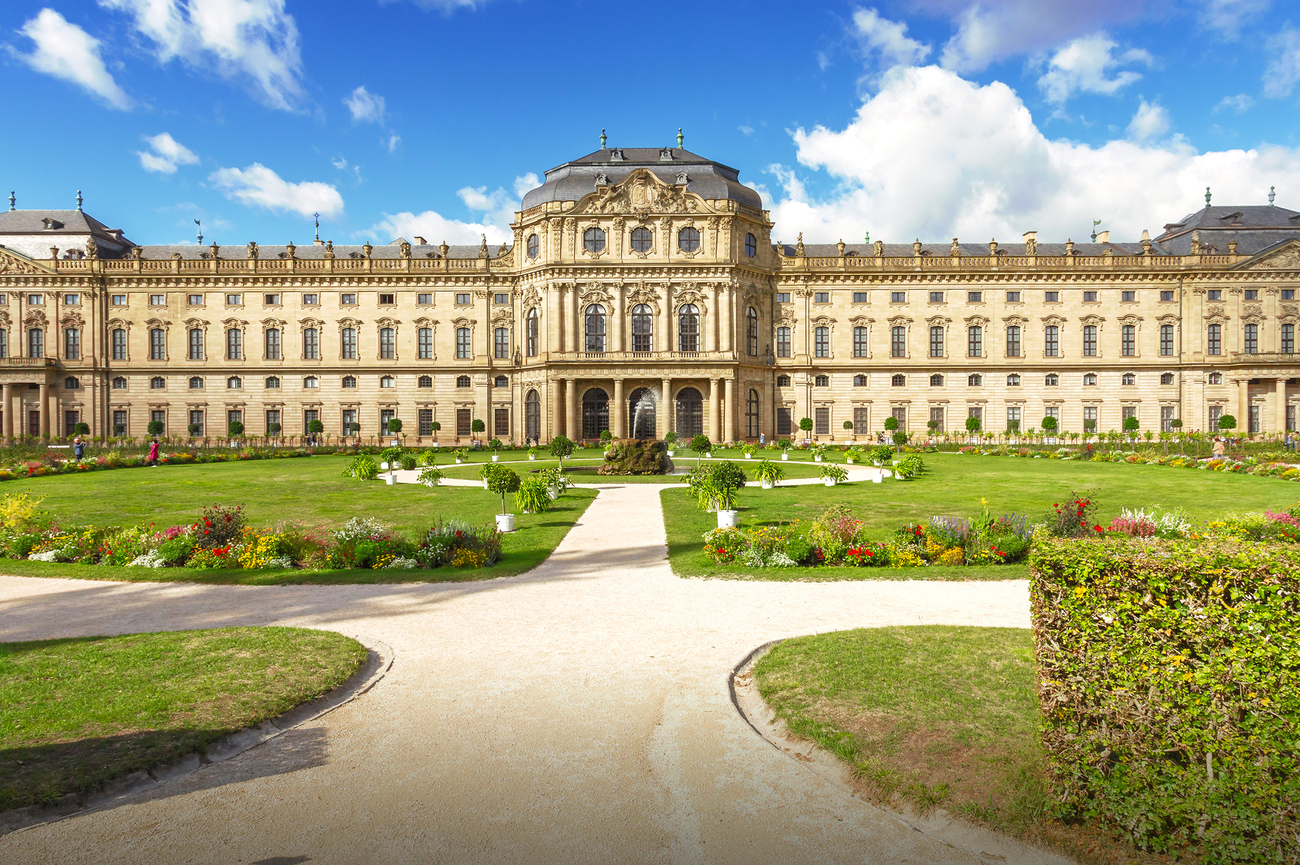
Würzburg marks the journey’s arrival in Franconia, where the landscape becomes increasingly shaped by the River Main and its surrounding vineyards. The city’s character is defined by its grand Baroque buildings, historic old town and long-standing wine tradition.
Among its most notable sights is the Würzburg Residence, an impressive Baroque palace built in the eighteenth century for the prince-bishops of Würzburg. The palace is known for its grand staircase, richly decorated rooms and magnificent ceiling frescoes by Giovanni Battista Tiepolo. The surrounding court gardens add to the elegance of the complex, while the Old Main Bridge provides views across the river toward Marienberg Fortress. With its combination of architecture, river scenery and vineyards, this city offers a distinct change of atmosphere before the route continues toward Nürnberg and München.
Nürnberg
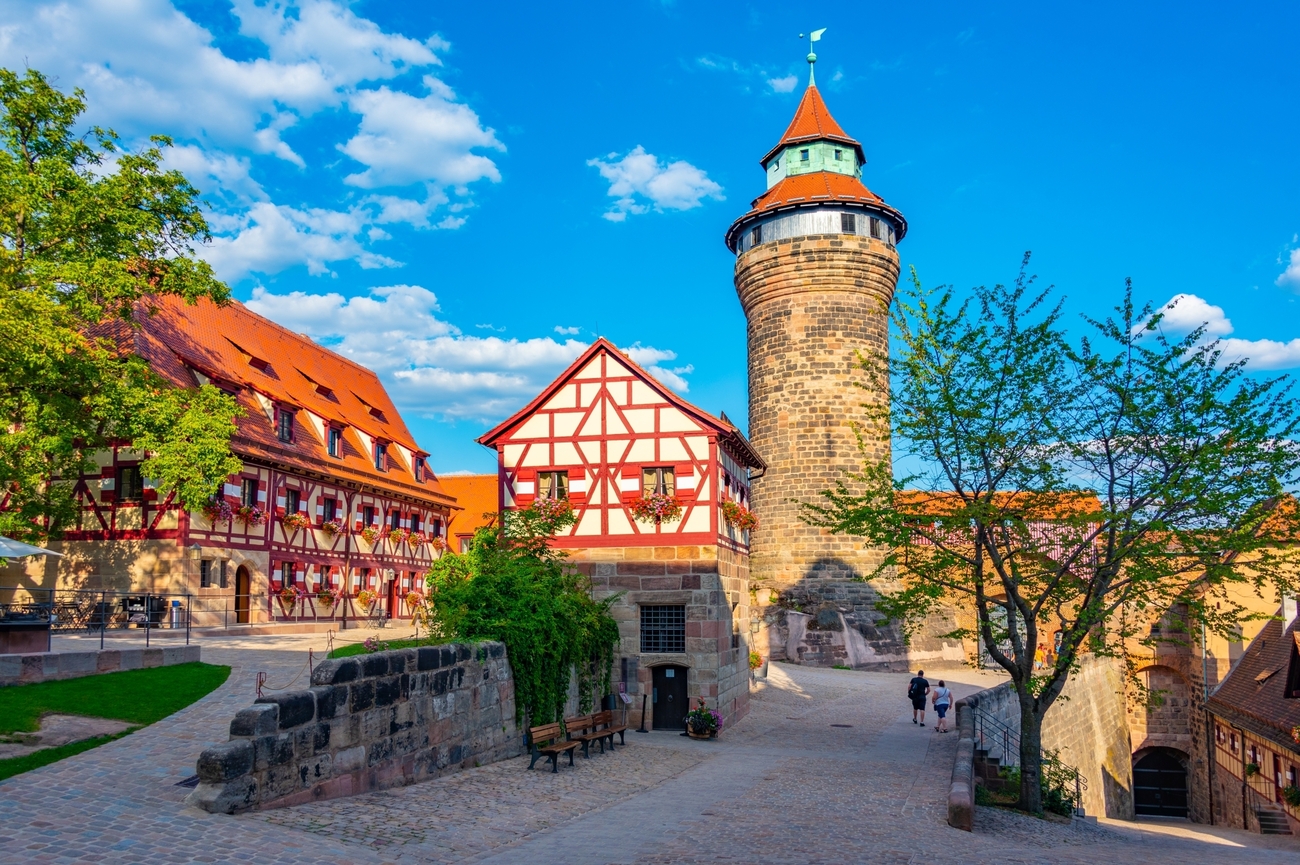
Nürnberg is the final major stop before München and one of Bavaria's most historically important cities. Its medieval old town is dominated by the Imperial Castle, a historic fortress complex that served as a residence for the Holy Roman Emperors during their visits to Nürnberg. The castle includes the Kaiserburg, the Sinwell Tower and the Deep Well, while its hilltop position offers views across the historic streets and the city. You can also visit the Hauptmarkt and Frauenkirche that add to the character of the old town.
Aside from that, this city also carries an important twentieth-century history through its connection with the Nuremberg Trials, which you can explore through the city's museums and historic sites.
München
München is the final major German stop on this route before the AKE-Rheingold continues into Austria. After travelling through eastern Germany, Thuringia and Franconia, the journey reaches the heart of southern Germany and the gateway to the Alps.
Arriving in München feels like a natural transition point. The landscape has gradually changed from the open plains of the north into the more distinctive Bavarian setting of the south, with the Alps lying beyond the city. Marienplatz is the historic heart of München, dominated by the Neues Rathaus and its famous Glockenspiel. Nearby, the Frauenkirche and Munich Residence provide further insight into the city's history.

What Is the AKE-Rheingold Route from Cottbus via
Freiburg?
The journey from Cottbus to Freiburg takes you across some of Germany’s most varied landscapes, linking the forests and waterways of the east with the historic cities of the center and the broad Rhine Valley. The route initially follows the same path as the journey to München, passing through Berlin, Lutherstadt Wittenberg, Halle, Weimar, Erfurt, Eisenach and Fulda. From there, the AKE-Rheingold heads southwest, moving through Hanau, Frankfurt, Mannheim and Karlsruhe before reaching Freiburg, where the Black Forest and the foothills of southwestern Germany create a fitting end to the journey.
Hanau
Hanau marks the beginning of the southwestern section of the journey after the route separates from the Munich-bound itinerary. Located near the confluence of the Kinzig and Main rivers, the city has a long history as an important trading and residential center in the region.
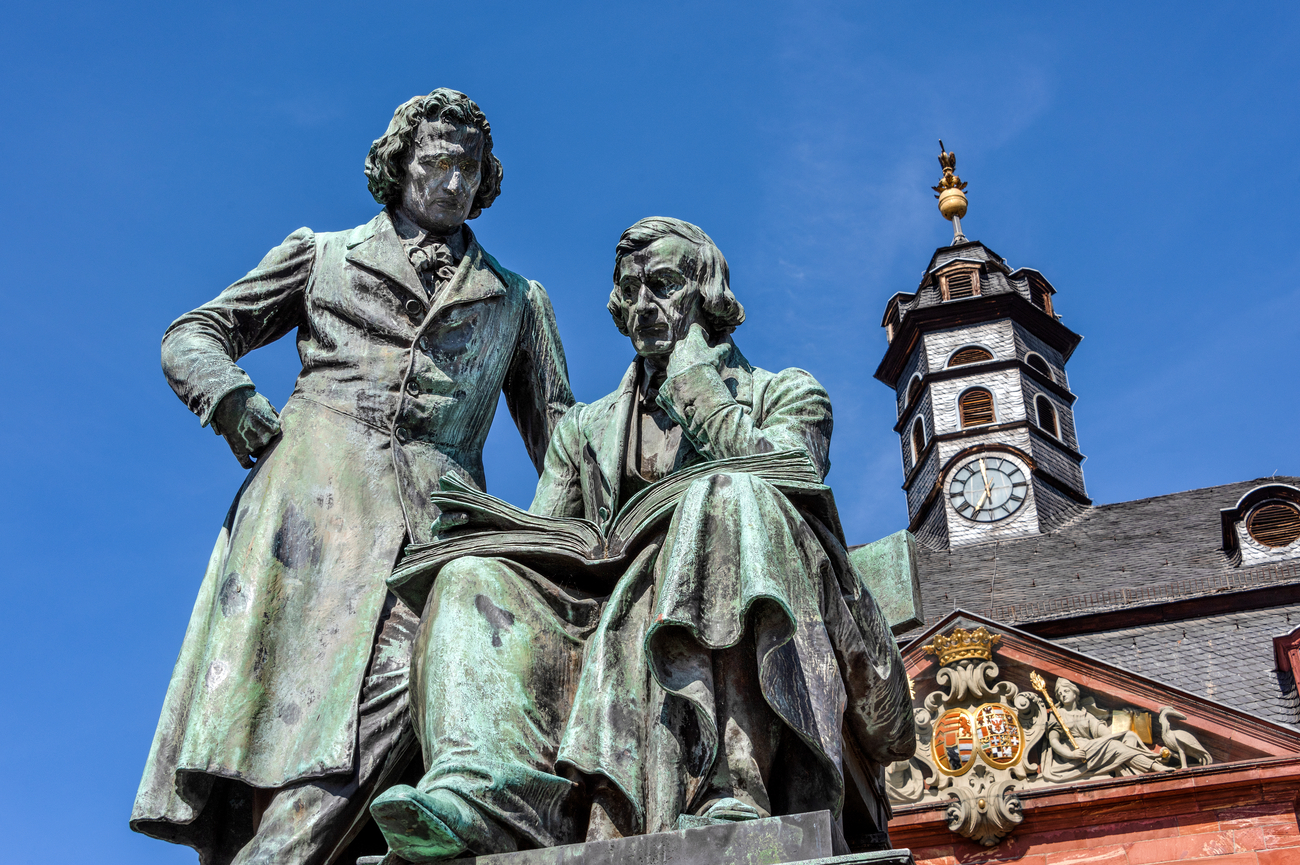
Hanau is best known as the birthplace of Jacob and Wilhelm Grimm, the brothers who collected and published many of Germany's best-known fairy tales. The city's connection with the Grimm brothers remains visible through monuments and cultural attractions dedicated to their lives and work. From Hanau, the train continues toward Frankfurt, with the landscape gradually becoming more urban.
Frankfurt
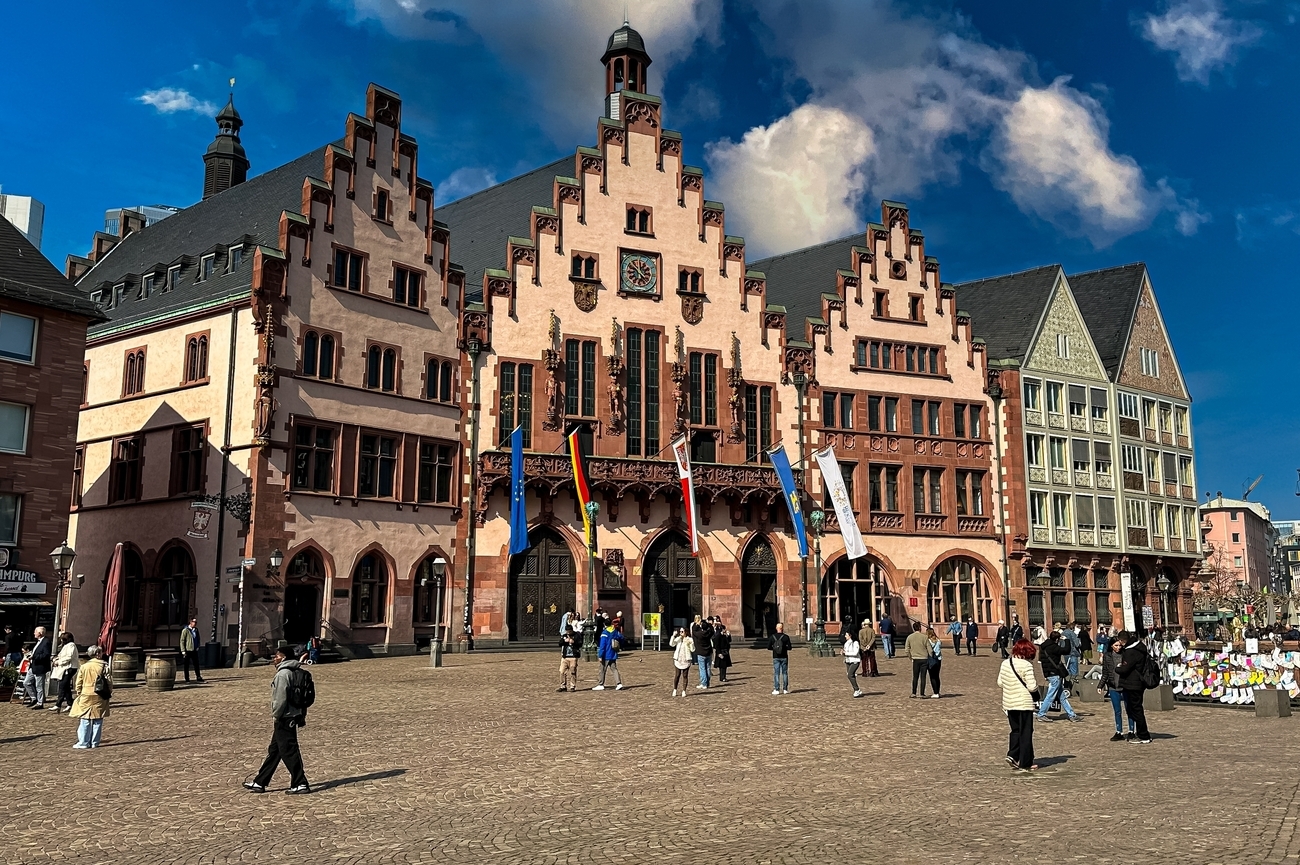
Frankfurt is one of the largest cities on the route and an important financial and transportation center in Germany. The city's skyline, shaped by modern skyscrapers, creates a sharp contrast with its historic center around the Römerberg. This is surrounded by reconstructed medieval and early modern buildings, including the Römer, the city's distinctive town hall. And just nearby, the Frankfurt Cathedral rises above the old town and recalls the city's former importance within the Holy Roman Empire.
Mannheim
As you continue southwest toward Mannheim, the trip leaves the historic towns of central Germany behind and enters the broad Rhine-Neckar region. Mannheim marks the route's transition deeper into southwestern Germany. Located where the Rhine and Neckar rivers meet, the city is known for its distinctive grid layout and Baroque architecture.
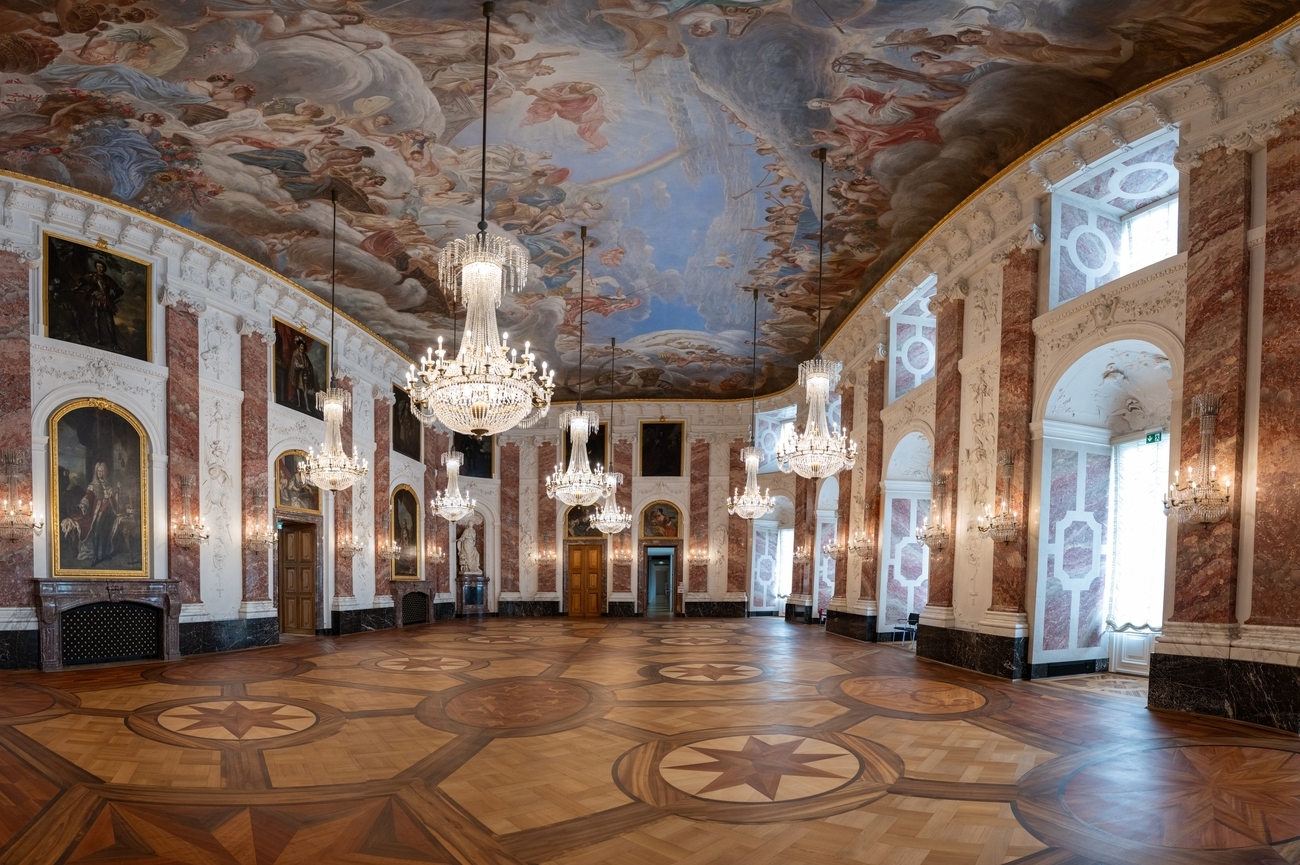
Mannheim Palace is the city's most famous landmark and one of Europe's largest Baroque residences. Built in the eighteenth century for the Electors Palatine, the palace stretches across much of the southern edge of the city center and reflects Mannheim's former importance as the capital of the Electoral Palatinate. Today, you can visit parts of the palace, including the ornate state rooms and the palace church.
Karlsruhe
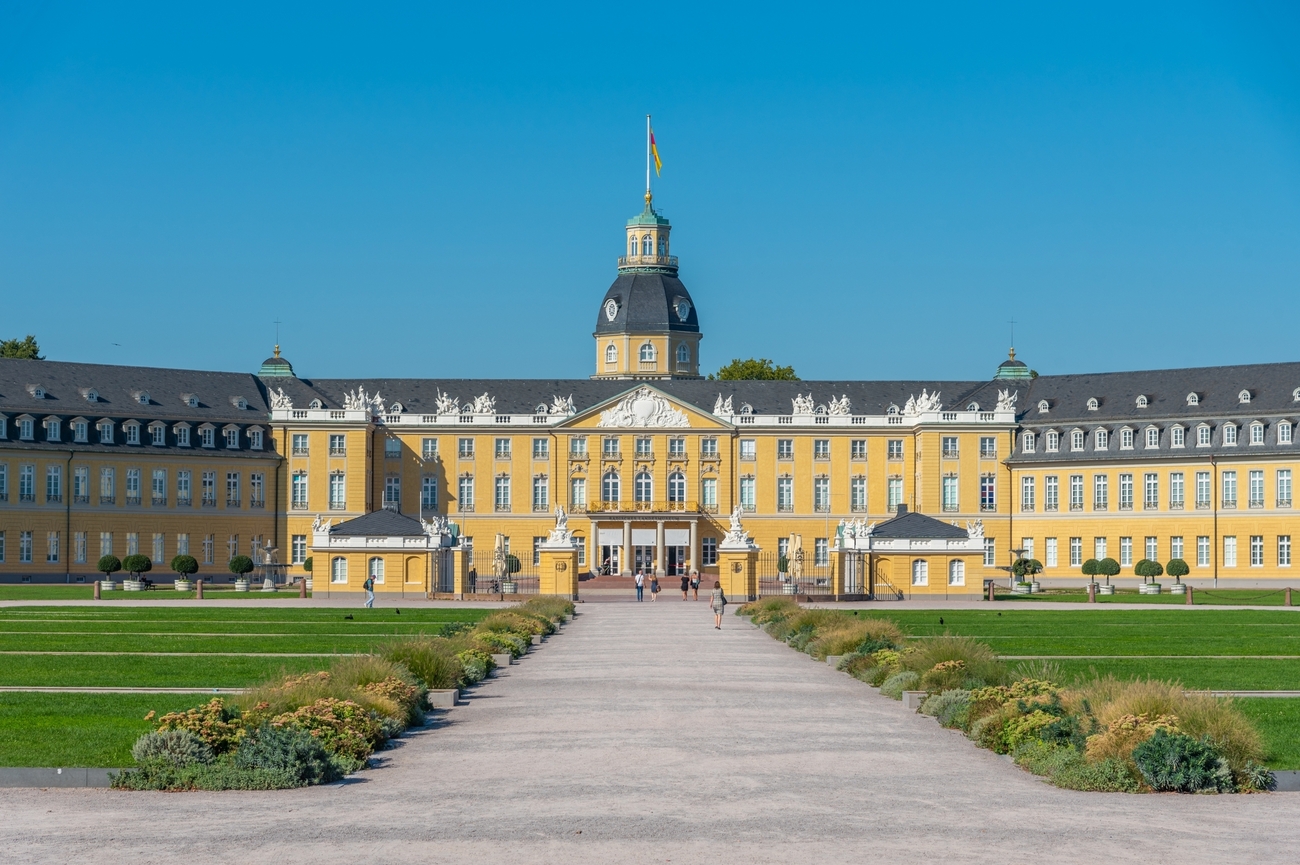
Karlsruhe has a distinctive shape that is easy to recognize on a map: its streets fan out from the former residence of the Margraves and Grand Dukes of Baden, Karlsruhe Palace. Built in the Baroque style, the palace remains the city’s defining landmark and the starting point for exploring its central avenues and gardens.
And as you travel south from Karlsruhe, you’ll see the urban surroundings gradually recede as the route leads toward Freiburg and the wooded landscapes of the Black Forest.
Freiburg
Set against the foothills of the Black Forest, Freiburg brings the journey to a close with a blend of medieval charm, lively city streets and easy access to the surrounding countryside. Vineyards and wooded hills frame the city, giving it a distinctly southwestern German character.
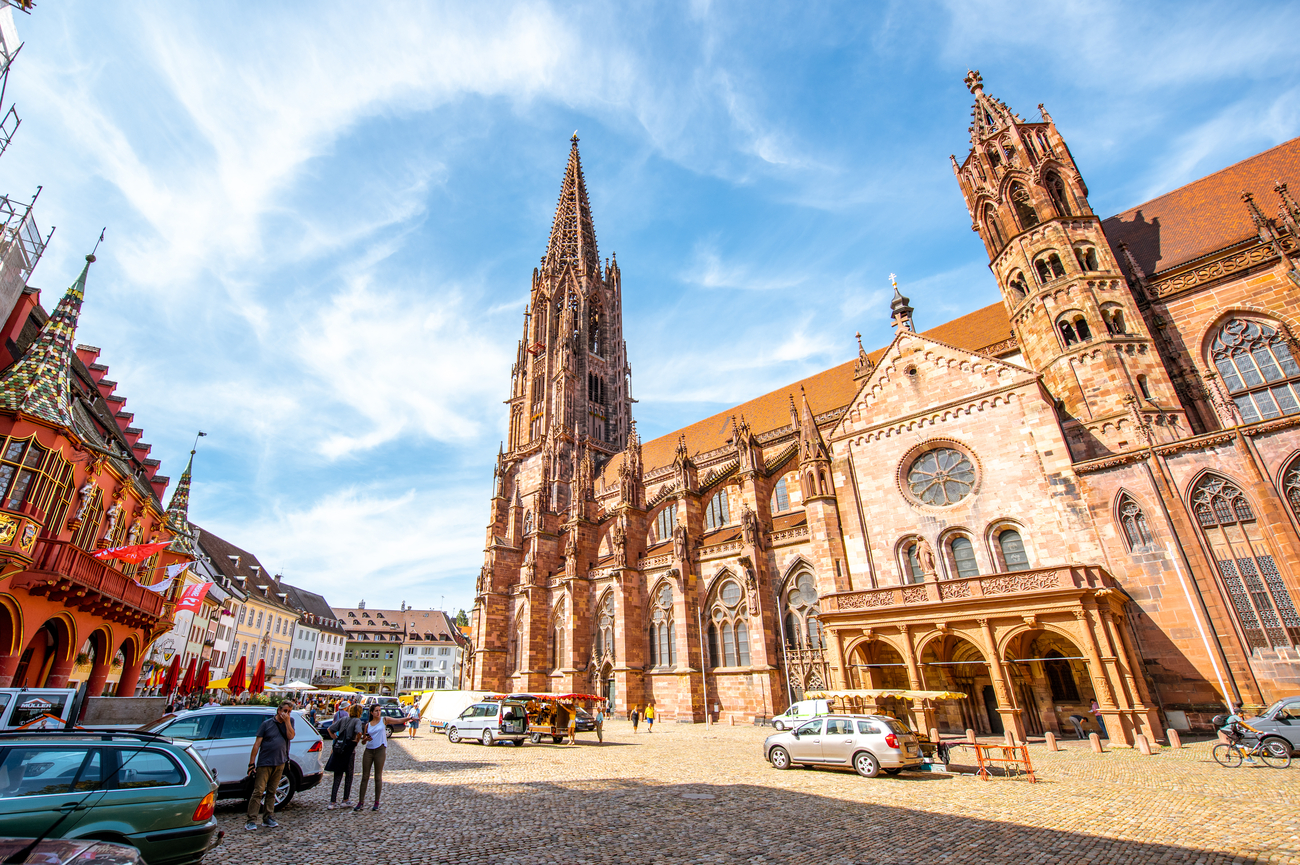
At the heart of Freiburg's old town, you can visit the Freiburg Minster, whose tower rises above the surrounding historic buildings. The nearby Rathausplatz and narrow lanes invite you to a slower exploration, while the Bächle, small open water channels running along many of the streets, add one of the city's most distinctive details.
After crossing eastern Germany, Thuringia, Hesse and the Rhine region, Freiburg is the final major German stop before the AKE-Rheingold continues across the border towards Basel and the destinations beyond. Its location between the Black Forest and the Upper Rhine Valley makes it one of the most scenic points on this section of the route.
How Long Does an AKE-Rheingold Journey Take?
The AKE-Rheingold journeys vary considerably in length, depending on the destination and starting point. Because these are private first-class special-train journeys, you remain onboard the AKE-Rheingold for the scheduled rail section, making the travel time part of the experience rather than simply a way of getting from one city to another.
The shorter journeys include Koblenz to Bremen, which takes around 4 hours and 45 minutes on the scheduled itinerary, while Dortmund to München takes just over 8 hours. The Dortmund to Basel journey for the Lake Maggiore itinerary takes approximately 7 hours and 40 minutes to reach Basel Bad Bahnhof. The October journey from Cottbus to Freiburg is one of the longest German sections, taking about 9 hours and 30 minutes.
Several of the longer itineraries also use München as a transition point. The South Tyrol journey, for example, reaches München after roughly eight hours from Dortmund before continuing by train to Steinach in Tirol, followed by a coach transfer to Merano. The exact total travel time beyond München can vary according to the destination and operating schedule.
Rather than treating these as conventional point-to-point train trips, it is better to allow most of a day for the longer routes. The frequent stops also mean the train moves at a more leisurely pace than a standard express service, giving you plenty of time to watch the landscapes change from one region of Germany to the next.
How Do AKE-Rheingold Schedules and Tickets Work?
The AKE-RHEINGOLD does not operate as a regular scheduled train. Instead, it runs on selected dates as a private special train for day trips and multi-day tours, with departure times and stops varying according to the itinerary.
Schedules are published by AKE-Eisenbahntouristik for each individual journey, and the operator notes that track assignments can change at short notice. You should therefore check the published timetable and station displays before departure. Tickets are issued specifically for AKE-Eisenbahntouristik special trains and are not valid on regular Deutsche Bahn services. Prices and inclusions vary by trip, with fares typically including travel on the private first-class special train and reserved seating, plus additional services depending on the excursion, such as tour guides, hotel stays, transfers or onboard catering.
Why Travel on the AKE-Rheingold?
The AKE-Rheingold is the kind of train journey where getting there is genuinely part of the holiday. Restored carriages, changing landscapes and routes that can take you from the Rhine to the Alps, the Italian lakes or the Baltic coast make every itinerary slightly different.
If you would like to build a European journey around the AKE-Rheingold, contact Revigorate. We can incorporate the train into a tailor-made itinerary, arranging the hotels, transfers and experiences around it so the journey works as one seamless trip.


Let us know what you love, where you want to go, and we’ll design a one-of-a-kind adventure you’ll never forget.
Get in touch
Miriam
Travel Specialist

Romina
Travel Specialist

Laura
Travel Specialist
Frequently Asked Questions
-
Are seats on the AKE-Rheingold assigned in advance?
Yes. Seats on the AKE-Rheingold are reserved in advance, with your carriage and seat numbers provided in your travel documents. You can request a particular type of seat when booking, although requests are subject to availability.
-
How much luggage can you take on the AKE-Rheingold?
AKE recommends keeping each suitcase to approximately 20 kg or less, with maximum dimensions of around 80 x 60 x 30 cm. Compartment coaches have overhead luggage racks, while the open-plan coaches have luggage storage areas at the ends of the carriage. A separate luggage transfer service is also available for selected journeys.
-
Is the AKE-Rheingold suitable for children?
Children can travel on the AKE-Rheingold. On day trips, children aged 5 to 14 travel for half the regular fare, while children aged 4 and under can travel free without their own seat. Prices for children on multi-day journeys are available on request.
-
Is the AKE-Rheingold accessible for passengers with reduced mobility?
The historic AKE-Rheingold is not fully accessible. Wheelchairs cannot be accommodated onboard, while walking aids and folding rollators can only be carried in limited numbers and must be declared when booking. Passengers with reduced mobility should discuss their individual requirements before reserving a journey.
-
Can the AKE-Rheingold accommodate dietary requirements?
Dietary requirements should be discussed in advance rather than assumed. AKE allows passengers to reserve restaurant meals before travelling, and some journeys offer vegetarian alternatives when ordered in advance. Availability for allergies, intolerances or other dietary requirements depends on the particular journey, so these should be confirmed before booking.
-
Are meals and drinks included in the ticket price?
Not necessarily. What is included varies according to the individual AKE-Rheingold journey. Restaurant meals can often be reserved before travel, while drinks and smaller refreshments are available onboard. Check the inclusions for your particular itinerary before departure.
-
Is there Wi-Fi on the AKE-Rheingold?
AKE does not currently list passenger Wi-Fi among the standard facilities provided on the AKE-Rheingold. As this is a historic train, you should not rely on having an onboard Wi-Fi connection during the journey.
-
Can passengers board the AKE-Rheingold at intermediate stations?
You can board at designated stations listed for your particular journey. AKE publishes the permitted boarding points for each itinerary, and not every station where the train stops necessarily allows passengers to board or leave the train.
-
Can Revigorate arrange an AKE-Rheingold journey as part of a tailor-made European vacation?
Yes. Revigorate can incorporate an AKE-Rheingold journey into a tailor-made European vacation, coordinating the train journey with hotels, private transfers and experiences before and after your time onboard.
Our offices:


Revigorate, Iberian Escapes and Algarve Lifestyle are the registered brand names of APCS Lda . We are a fully authorised travel agency licensed by Turismo de Portugal RNAVT/6867.
In the event of a dispute, the consumer may refer to: RAL - Centros de Arbitragem
Avª. 5 de Outubro, nº. 55, R/C Dtº. 8000-075 Faro, Portugal | Tel: +351 289 823 135 *
* national landline call
E-mail: info@consumoalgarve.pt| www.consumidoronline.pt | Mon to Fri: 9:00 - 13:00 / 14:00 - 17:00