The Complete Lantau Island Travel Guide: Beaches, Trails and Hidden Luxury
Lantau Island is Hong Kong’s quieter, more expansive side, a vast landscape of granite peaks, silver coastline and protected countryside where the city’s relentless pace finally gives way.
Any proper Lantau Island travel guide should begin with one simple truth: this island changes how people see Hong Kong. Lantau is larger than Hong Kong Island and Kowloon combined, yet much of it remains protected countryside. Mountain ridgelines cut through the interior, small fishing communities continue along the coast, and monastic plateaus overlook valleys where large-scale development never arrived.
Travellers who have already experienced Central’s skyline or the energy of Victoria Harbour will find that Lantau reveals an entirely different side of the region.
For travellers looking for a more considered stay, we also create tailor-made Lantau itineraries with sequencing, access and logistics handled seamlessly from arrival to departure.
View the 7-Day Luxury Lantau Itinerary

Why Staying on Lantau
Changes Everything
Some travellers treat Lantau as a day trip. They ride the cable car to the Big Buddha, stop briefly in Tai O, then return to Kowloon by evening. For them, the island remains a postcard, striking, but only partially understood.
Staying on Lantau changes the equation entirely. When you are based here, the island belongs to you at its quietest and most atmospheric. Cheung Sha Beach in the early morning, with the South China Sea catching the light at an angle no afternoon visitor ever sees. Tai O at dusk, after the last day-trippers have left. Ngong Ping when the plateau is calm and the only sounds are wind and the distant hum of a descending cable car.
Lantau is also the arrival point for most international visitors to Hong Kong, which makes staying here feel even more seamless. Hong Kong International Airport sits on adjacent Chek Lap Kok Island, directly connected to Lantau’s infrastructure. A private transfer from arrivals to your accommodation in Discovery Bay takes under twenty minutes. The transition, from international terminal to a car-free marina community facing the South China Sea, without the city in between, is one of the most elegant ways to begin a Hong Kong trip.
Where to Stay on Lantau Island: Stay in Discovery Bay
The accommodation question on Lantau becomes much easier once you understand Discovery Bay.
Discovery Bay
at Auberge
Discovery Bay, known locally as DB, sits on the northeastern shore of Lantau. There are no private cars, a promenade runs along the waterfront, and residences face the marina on one side and wooded hills on the other. It has the quality of somewhere designed for decompression rather than activity, which makes it the right base for this kind of trip.
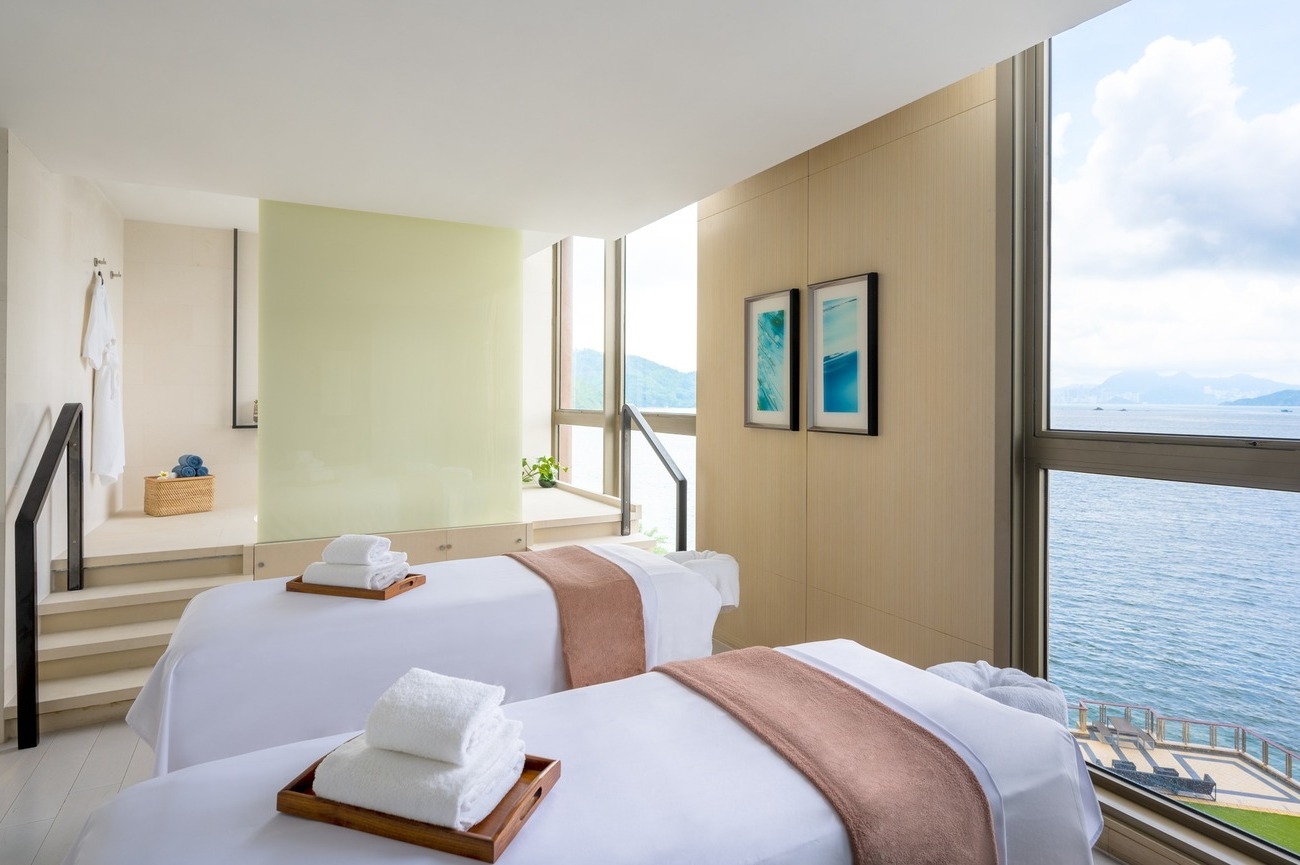
Auberge Discovery Bay Hong Kong is the resort hotel at its centre. The property faces the water, offers mountain or ocean views from every room, and has a 25-metre outdoor pool set so close to the sea that the distinction feels almost academic. Spa Botanica, the on-site spa, holds Condé Nast Traveller UK recognition as one of Asia’s top urban day spas. It features ten private treatment rooms, sea views, and a 180-minute Detox Retreat that combines a full-body massage with a purifying facial.
The hotel’s concierge team arranges day trips across the island, which matters more here than at most properties, because Lantau’s distances and road conditions make self-navigation significantly less pleasant than having someone else handle it.
The question of where to stay on Lantau, which properties suit different travel styles, and how to position your base relative to the island’s key destinations is covered in full detail in our dedicated guide to accommodation on Lantau Island.

The
South Lantau Coast: Three Beaches, Three Different Atmospheres
The south coast of Lantau is home to some of Hong Kong’s finest beaches, yet surprisingly few people from the city come here regularly. That combination is rarer than it sounds, and it is part of what makes this stretch of coastline feel so rewarding.
Cheung Sha
At three kilometres, Cheung Sha is the longest beach in Hong Kong. It is divided into Upper and Lower sections, each with a distinct character. Upper Cheung Sha feels quieter and more remote, with a broad sweep of sand and morning light that is worth waking up for. Lower Cheung Sha is more sociable, with beachfront restaurants and a livelier atmosphere. Gallery BBQ & Grill is located here, known for fresh seafood and grilled specialities served with a view that makes a long, unhurried lunch feel entirely appropriate.
At weekends, Cheung Sha does attract local day-trippers. That is exactly why a midweek visit, or an early morning arrival before the buses begin to appear, can make the difference between a typical public beach and something that feels far more private.
Tong Fuk
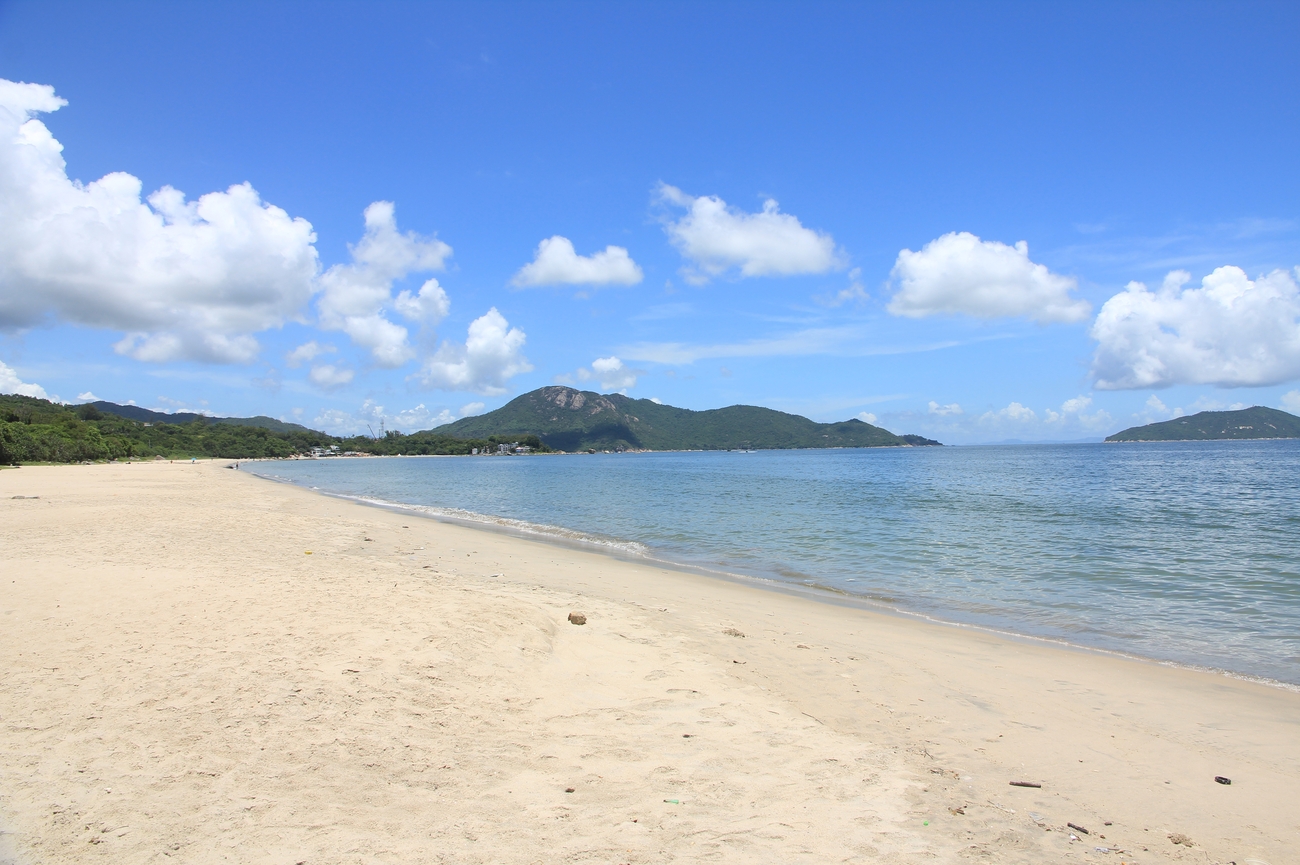
Tong Fuk sits between Cheung Sha and Pui O and is smaller and less visited than either. It is the right choice for travellers who want the beauty of the coastline without the footfall. With Lantau Peak rising behind it, the setting feels more dramatic than most photographs suggest.
Pui O
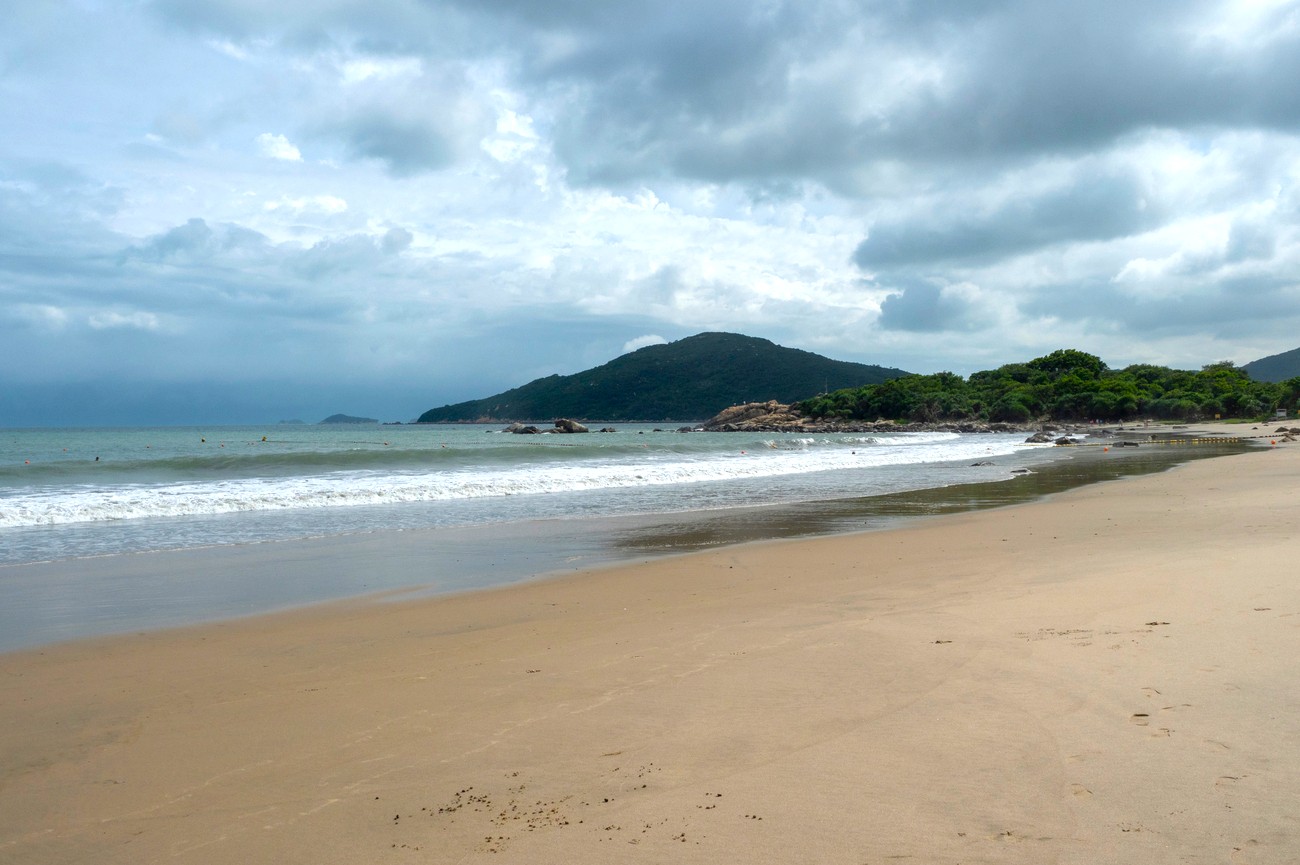
Pui O anchors the eastern end of the south coast beach corridor. It is the most approachable of the three, and a natural setting for a post-hike afternoon or a long lunch at Ooh La La! Café & Bar, which serves exactly the kind of relaxed meal that suits a place like this.
The individual character of each beach, including seasonal conditions, how the coastline changes through the year, and the scenic drive that connects them, is covered in our guide to Lantau Island beaches and coastline.
Ngong Ping: The Plateau, the Buddha, and What Most Visitors Miss
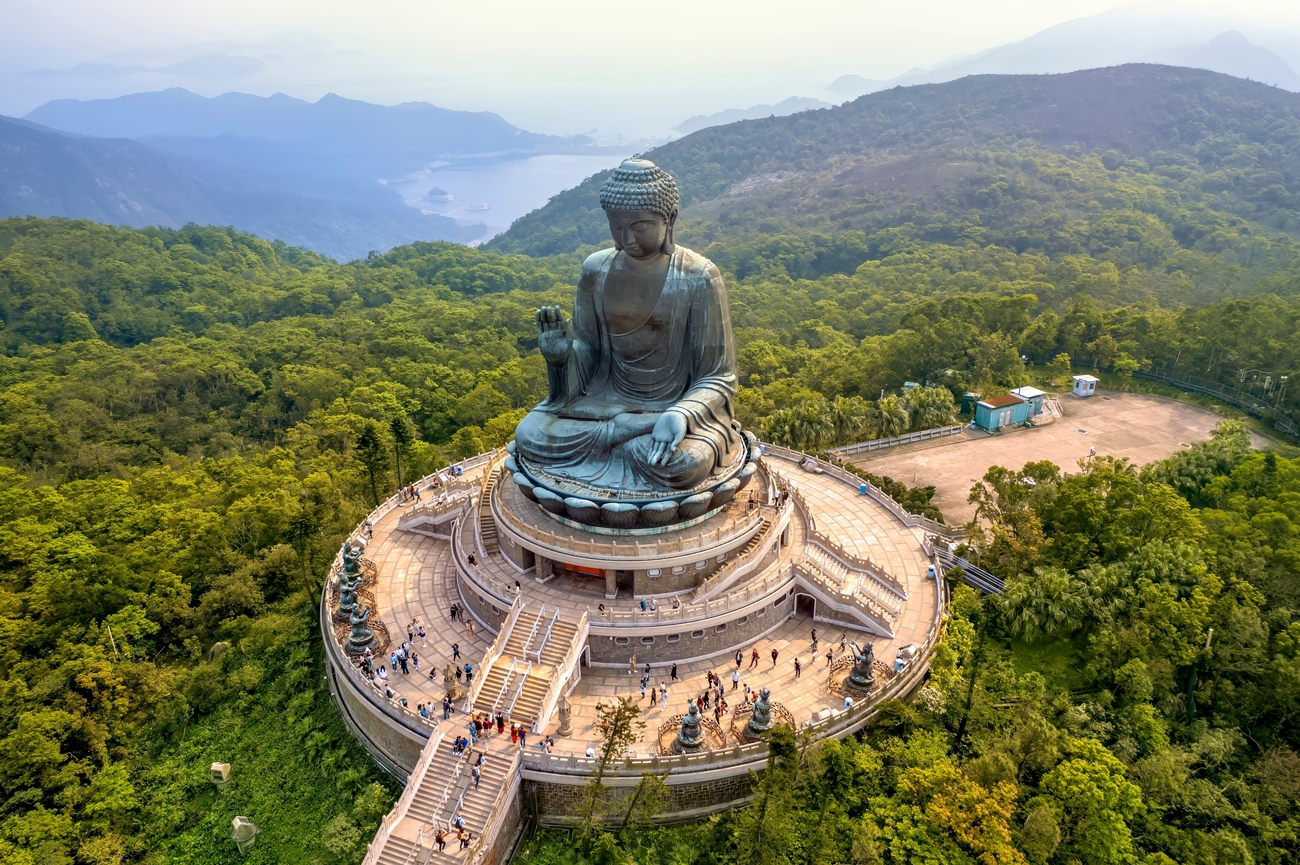
At 934 metres, Lantau Peak is the second-highest point in Hong Kong. At its foot lies the Ngong Ping plateau, home to the Tian Tan Buddha, Po Lin Monastery, and the Wisdom Path, one of the most culturally and spiritually significant sites in the region.
Tian Tan
Buddha
The Tian Tan Buddha is a 34-metre bronze statue seated high above the island, casting what monks describe as a benevolent gaze across Lantau and the South China Sea. Its scale only truly registers in person. A privately guided visit adds a dimension that a self-guided ascent rarely can, from the symbolism of the smaller surrounding statues to the orientation of the Buddha itself and the quality of morning light on the upper platform before the cable car crowds arrive.
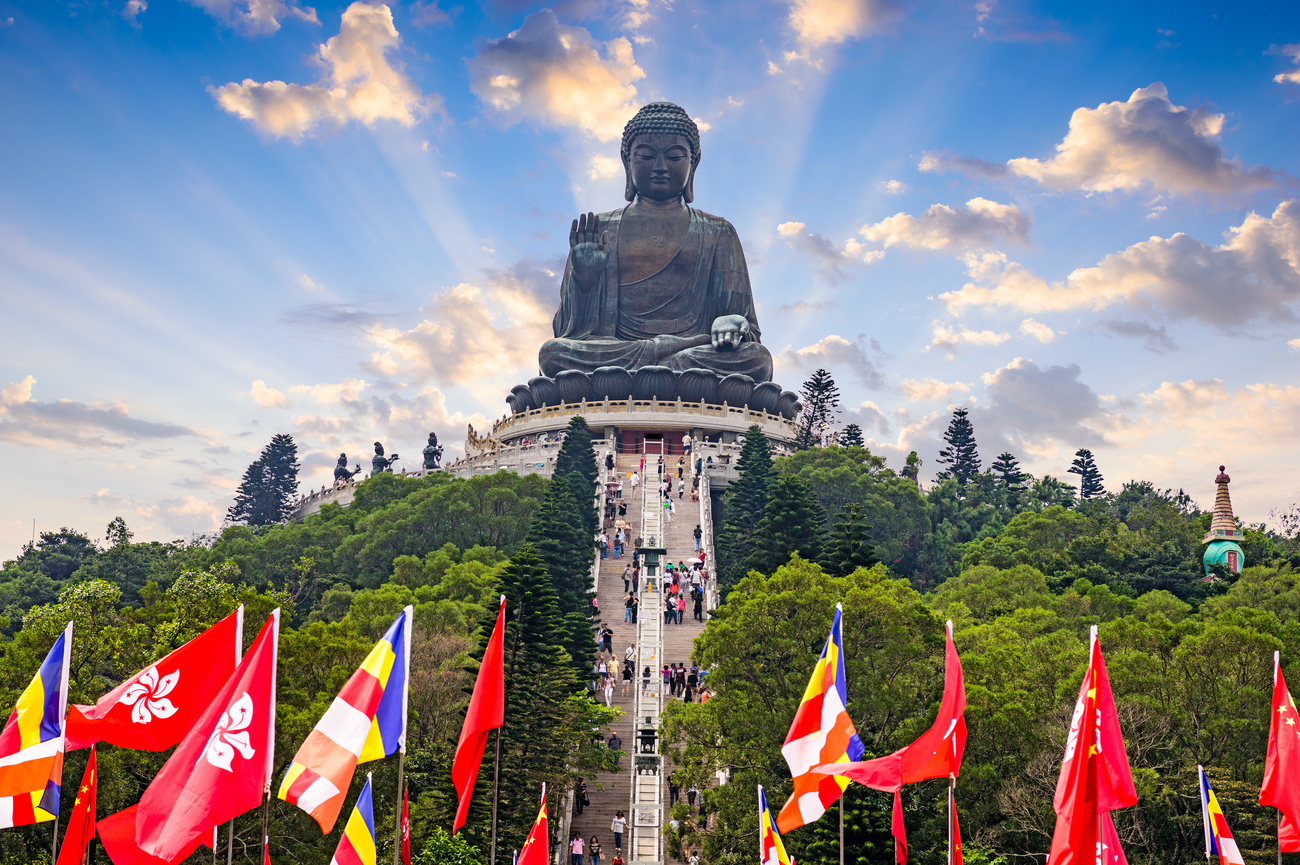
Po Lin
Monastery
Adjacent to the Buddha, Po Lin Monastery is a working Zen Buddhist complex that has stood on this plateau since 1906. The vegetarian lunch served in the monastery dining hall is far more than a simple courtesy to visitors. It is a genuinely refined set menu, prepared in the monastery kitchen and served in a setting that looks out across the high ground. It is one of the meals on Lantau worth planning your day around.
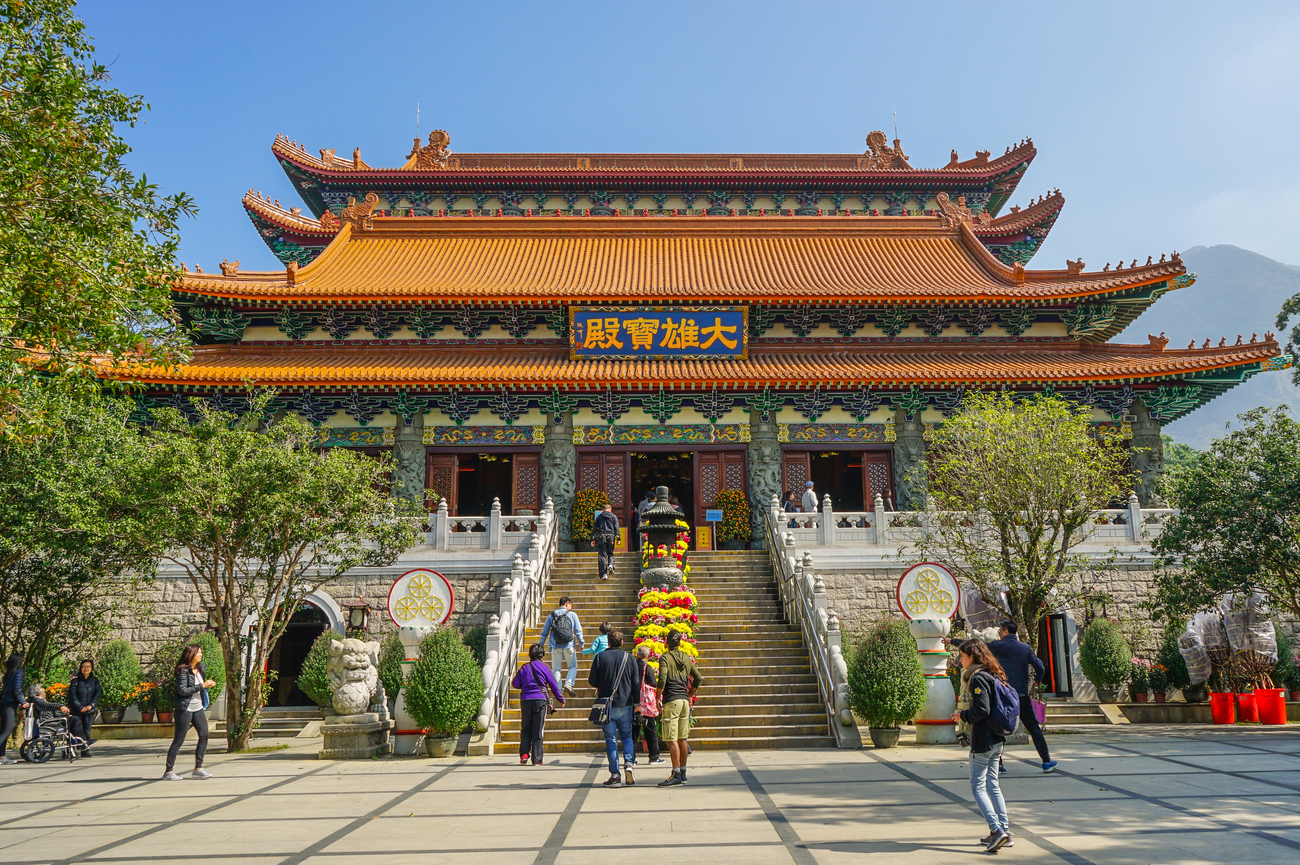
The Wisdom
Path
The Wisdom Path consists of thirty-eight carved wooden steles, each inscribed with verses from the Heart Sutra and arranged in an infinity pattern across the hillside. It remains surprisingly under-visited for what it offers, largely because reaching it means stepping away from the main Ngong Ping visitor flow. Those who do make the walk often stay longer than they expected.
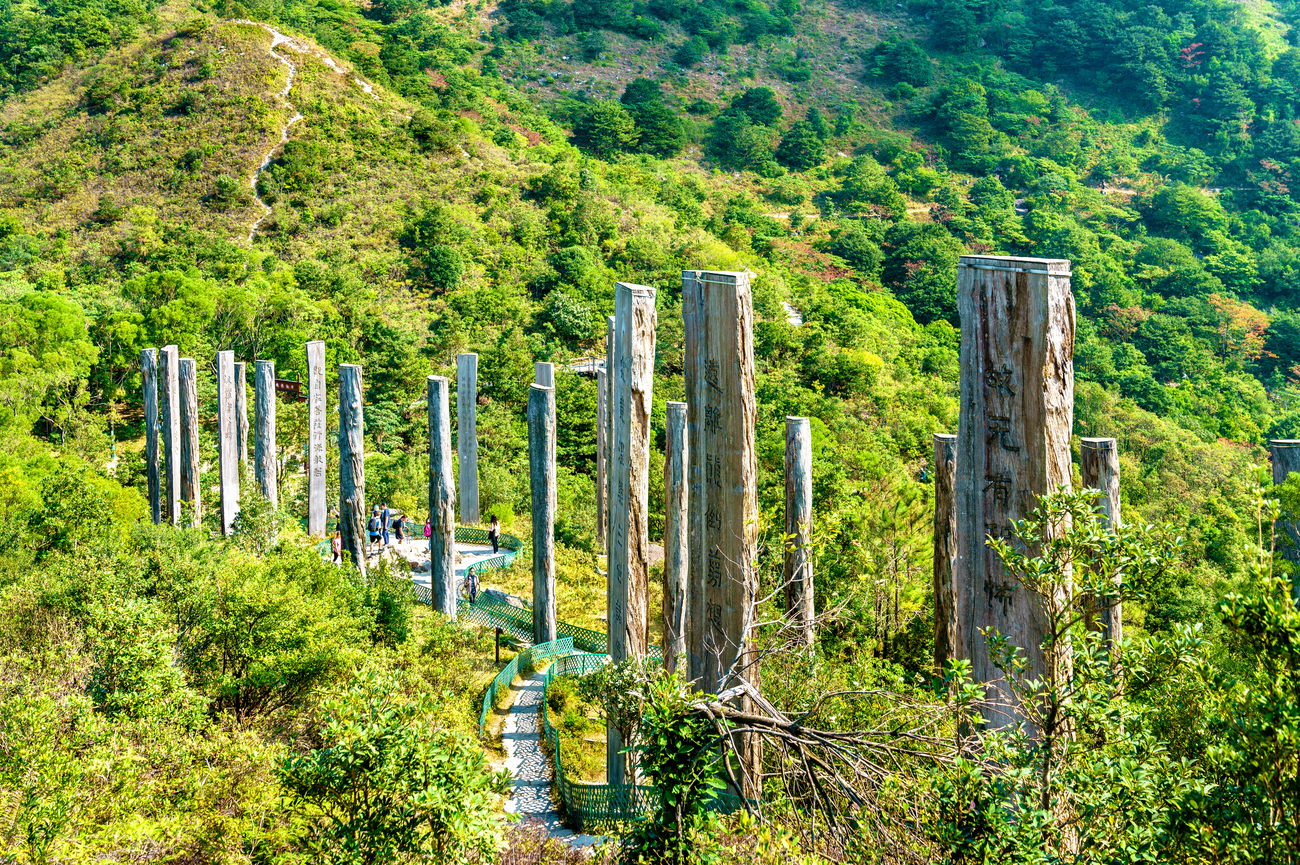
The Ngong Ping
360 Cable Car
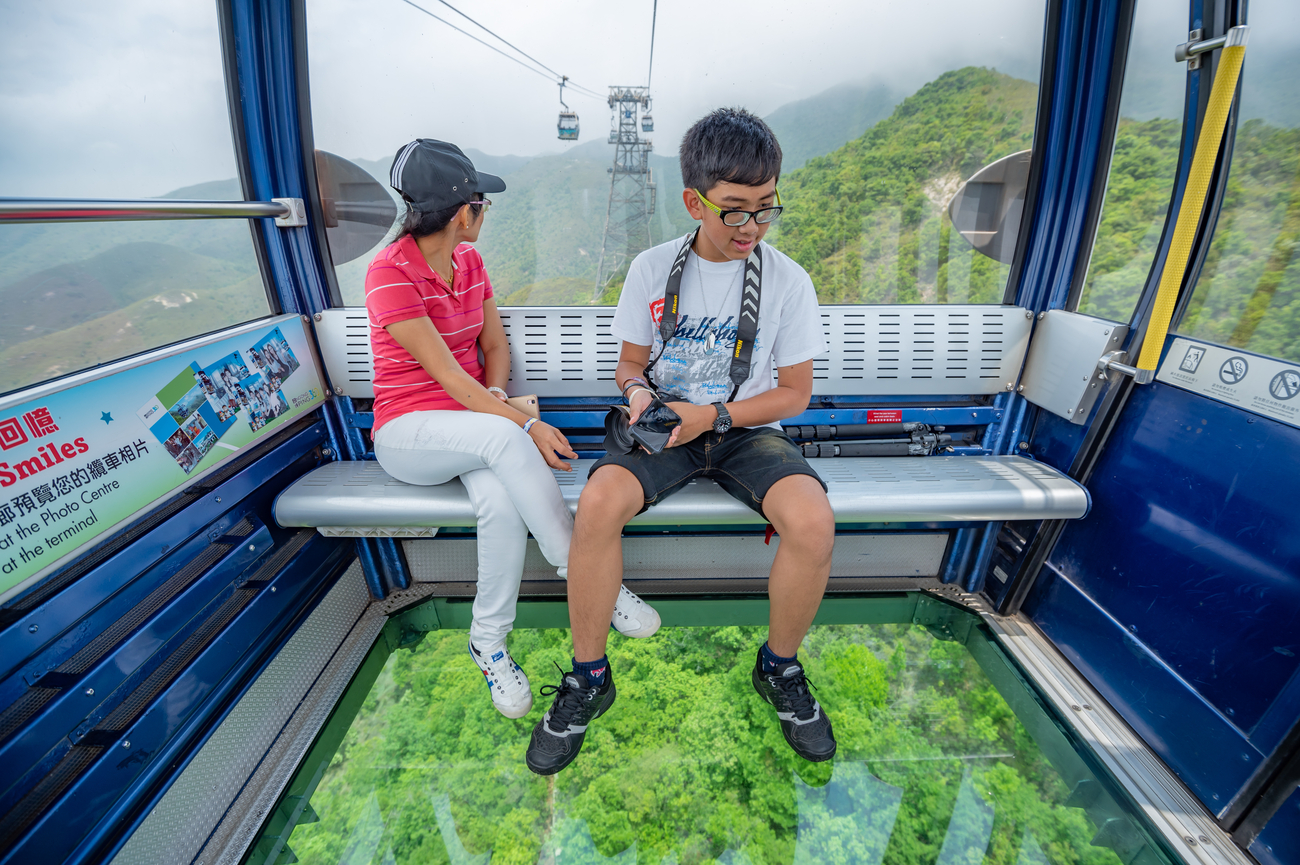
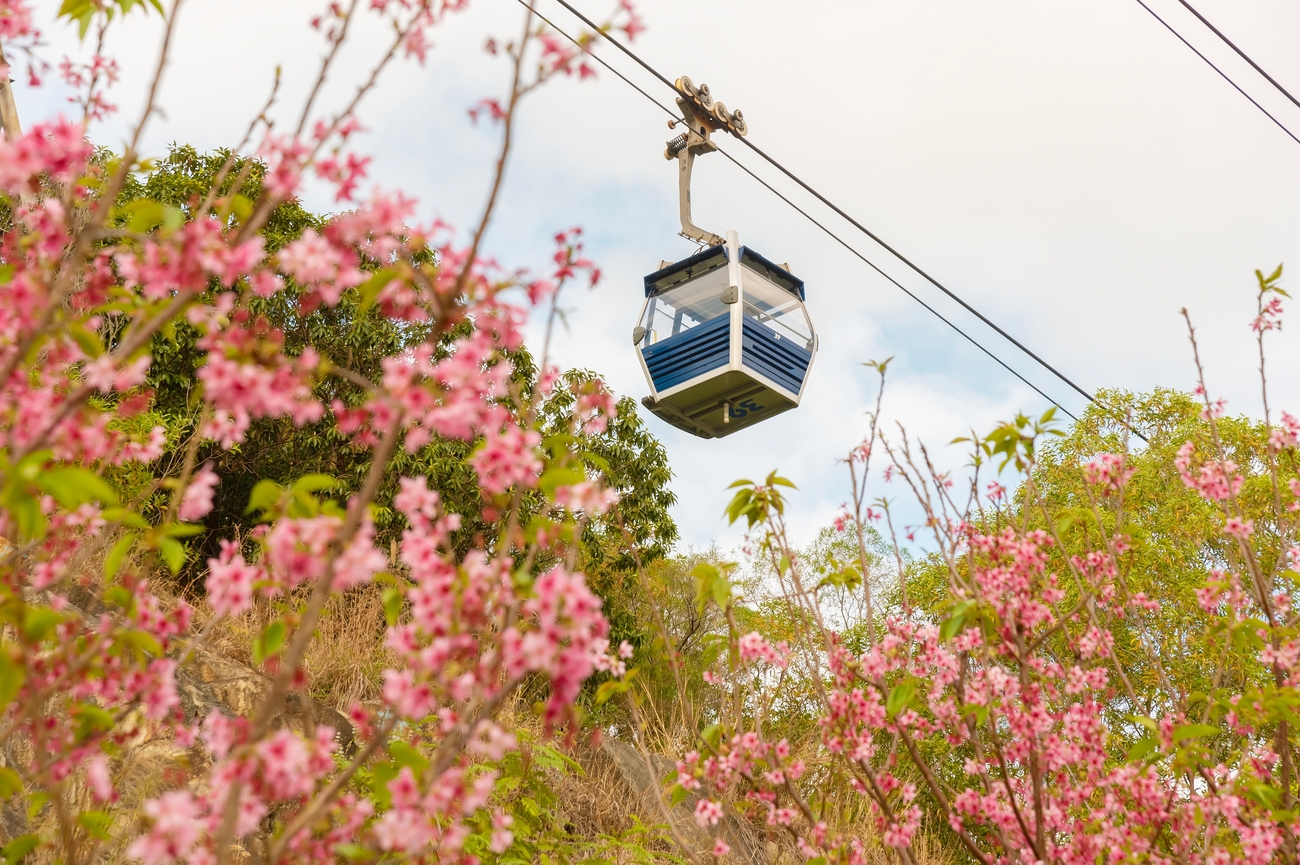
The 25-minute aerial journey from Tung Chung rises over forested ridgelines, opens across Lantau’s mountainous landscape, and reaches the plateau with sweeping views towards the South China Sea on clear days. The Crystal Cabin option adds a glass floor, but the real appeal lies in the approach itself as much as the destination.
The practical detail on visiting Ngong Ping, including timing, weekly crowd patterns, and the difference between a privately guided experience and an independent visit, is covered in our dedicated guide to Ngong Ping, the Big Buddha, and Po Lin Monastery.
Tai O: A Village Untouched by Time
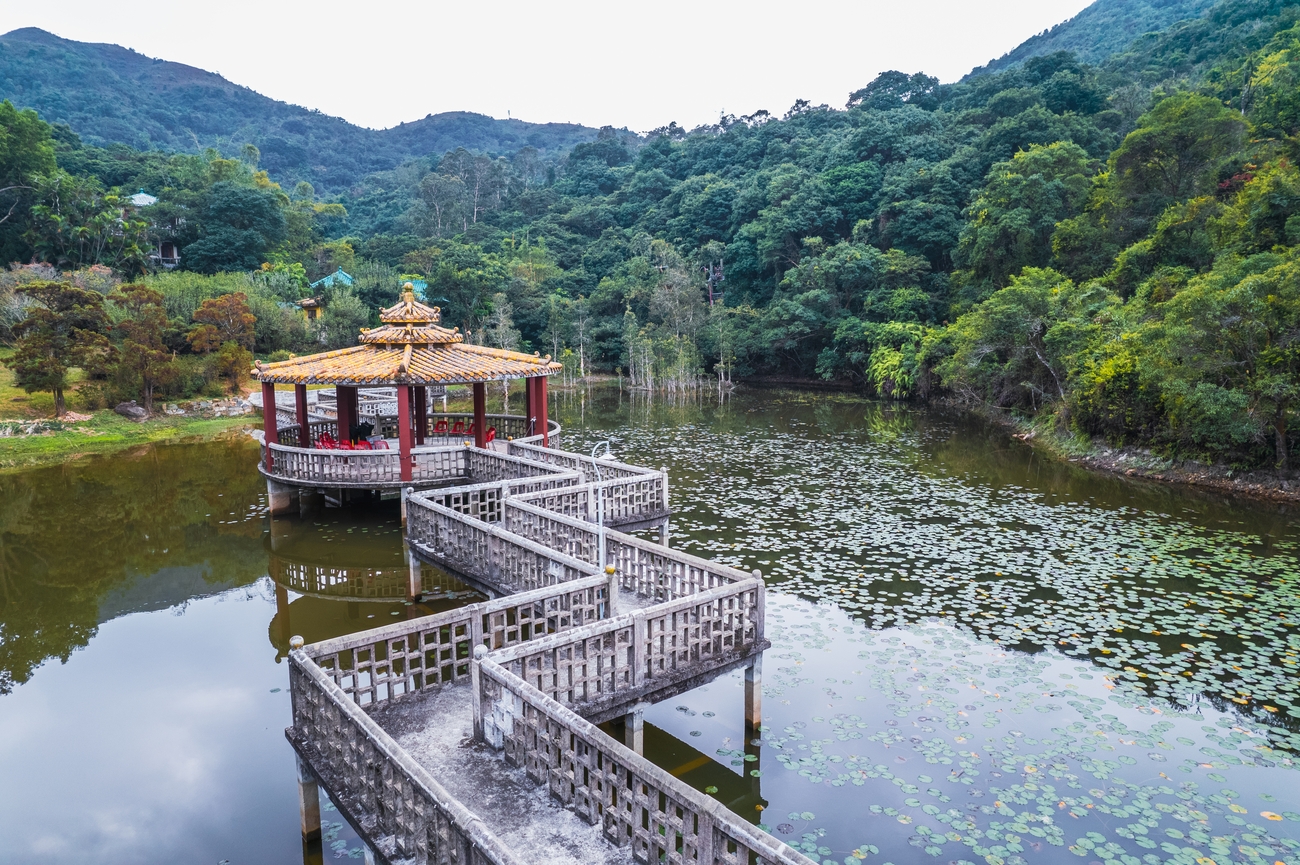
Tai O is a tidal fishing village on the western shore of Lantau, built by the Tanka people on a network of waterways and stilt houses dating back to the Ming dynasty. Around 2,000 permanent residents still live here. The canals remain navigable, the stilt houses still extend over the water, and the dried seafood markets along Kat Hing Street continue to operate much as they have for generations.
What has changed is the arrival of a more thoughtful kind of tourism. Tai O Heritage Hotel now occupies the former colonial police station on the hill above the village, a building that is both charming and striking in the way only well-restored colonial architecture can be. The hotel also offers guided heritage walks through the village for guests.
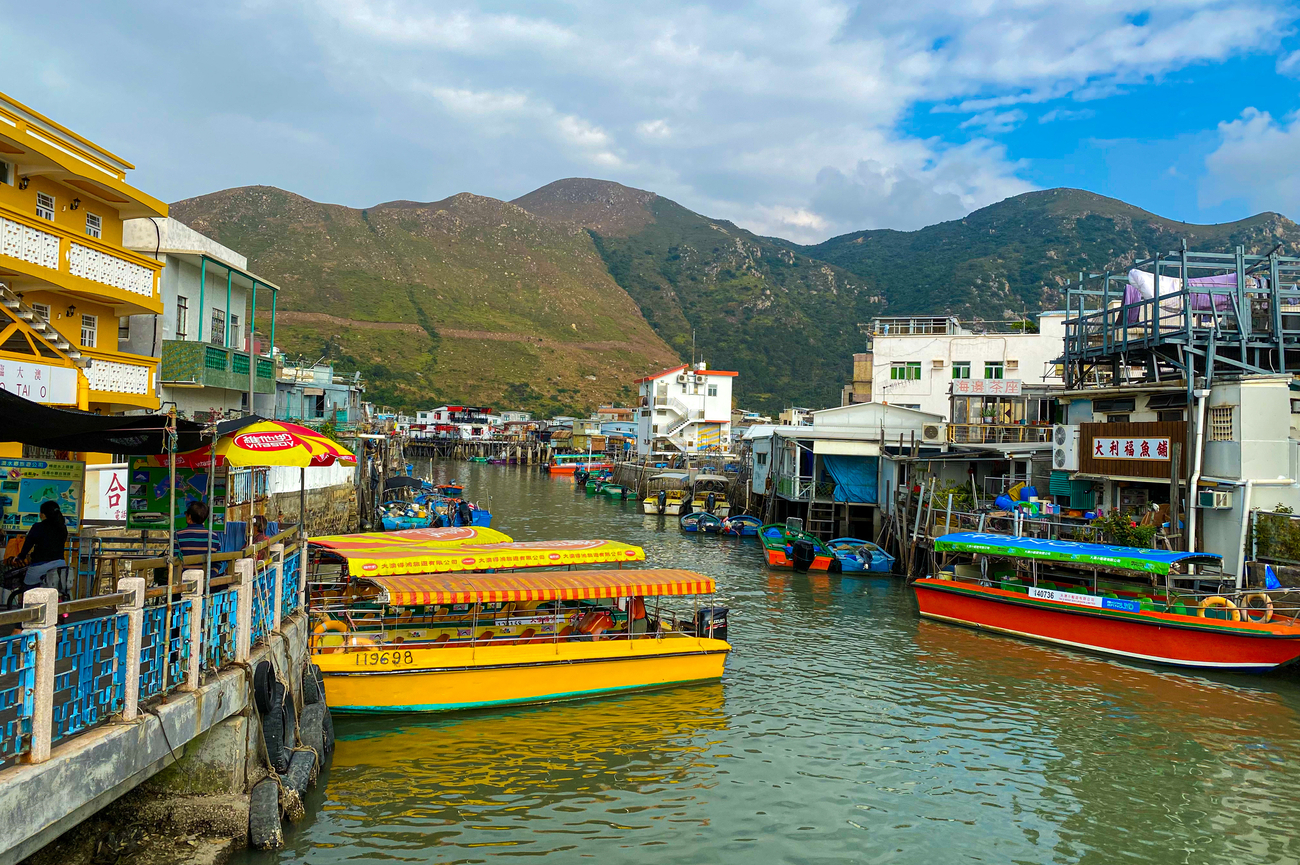
The Waterway
Experience
A boat excursion through Tai O’s waterways is one of the island’s more quietly extraordinary experiences. Seeing the stilt houses from canal level, and watching village life continue around and above you, gives an entirely different perspective from exploring on foot. Pink dolphins are sometimes spotted in the waters near Tai O, although sightings depend on weather and season.
A privately arranged boat excursion, with a local guide who knows which channels to follow and where to linger, offers a far more rewarding experience than boarding a shared tourist boat from the main pier. The difference is meaningful.
Day 5 of our Lantau itinerary is dedicated to Tai O, including a private boat excursion through the stilt-house waterways and a guided heritage walk through the village.
See the full Tai O day in context.
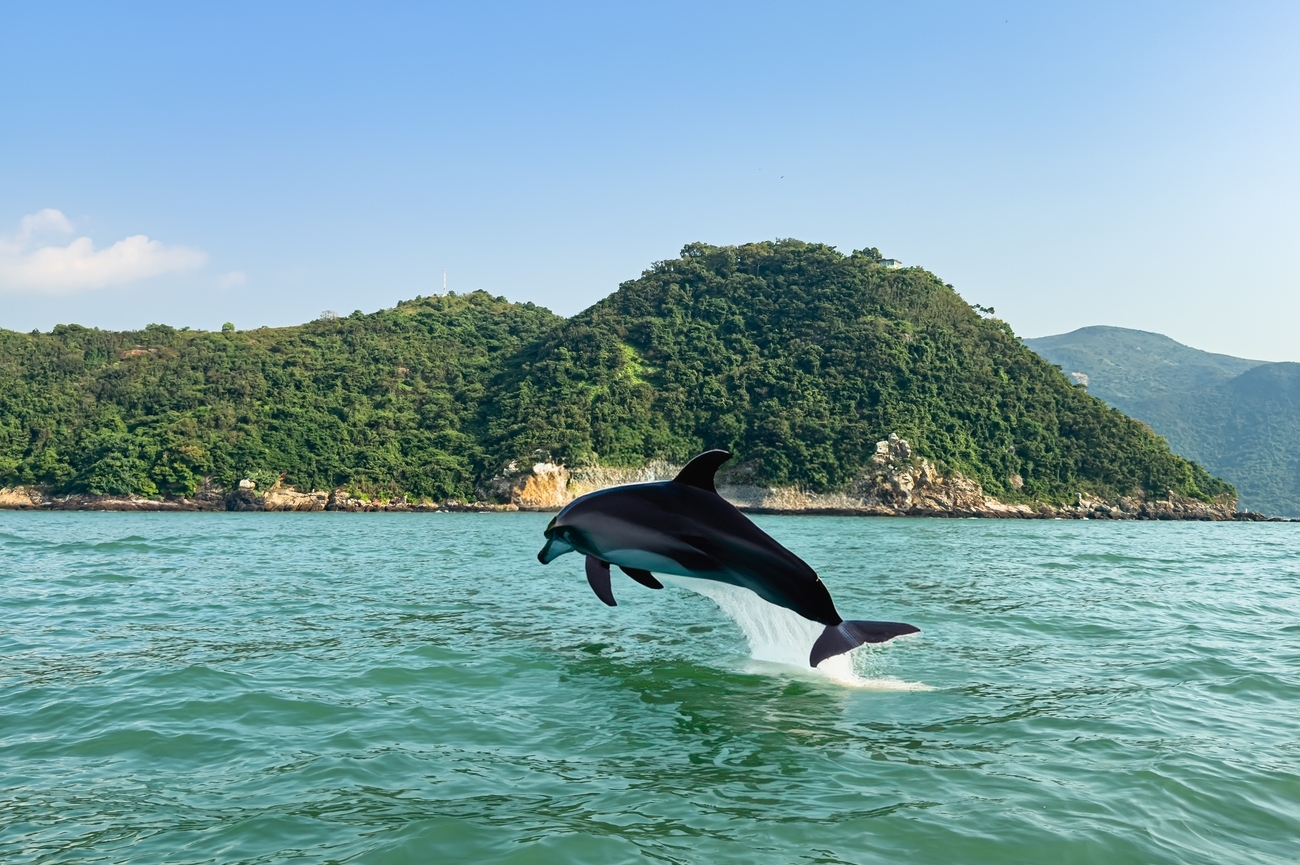
The Lantau Trail: Why the Island Looks Different from Above
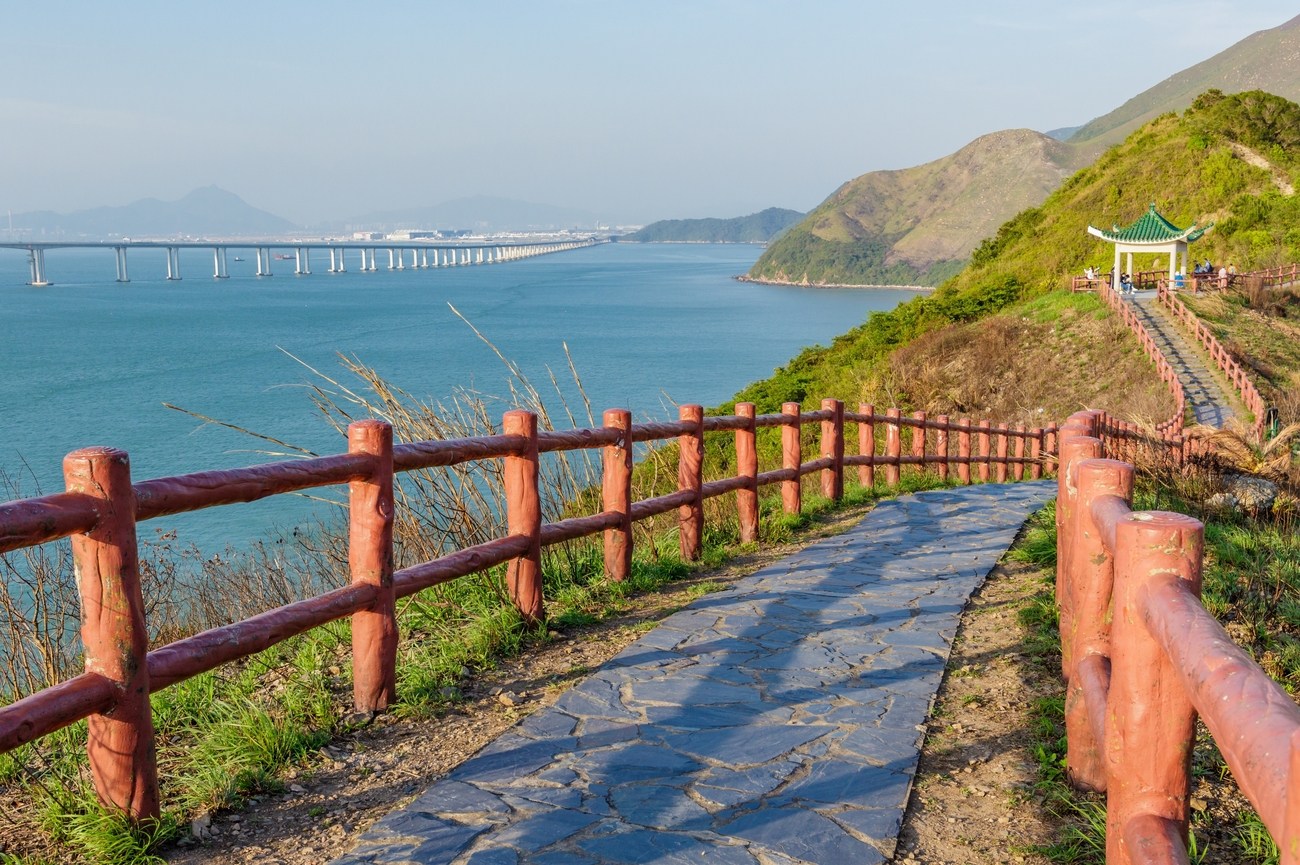
The Lantau Trail runs for 70 kilometres across the island and is divided into 12 sections of varying length and difficulty. It forms the backbone of Lantau’s landscape, crossing both major summits, descending towards the south coast, and looping through country park that covers much of the island’s interior.
Lantau Peak
and Sunset Peak
At 934 metres, Lantau Peak is the second-highest point in Hong Kong. Sunset Peak, at 869 metres, is the third. The views from both summits are among the finest in the territory, taking in coastline, open water, and, on clear days, the distant outline of the city. On exceptional mornings, a cloud inversion can leave you looking out from above the weather itself.
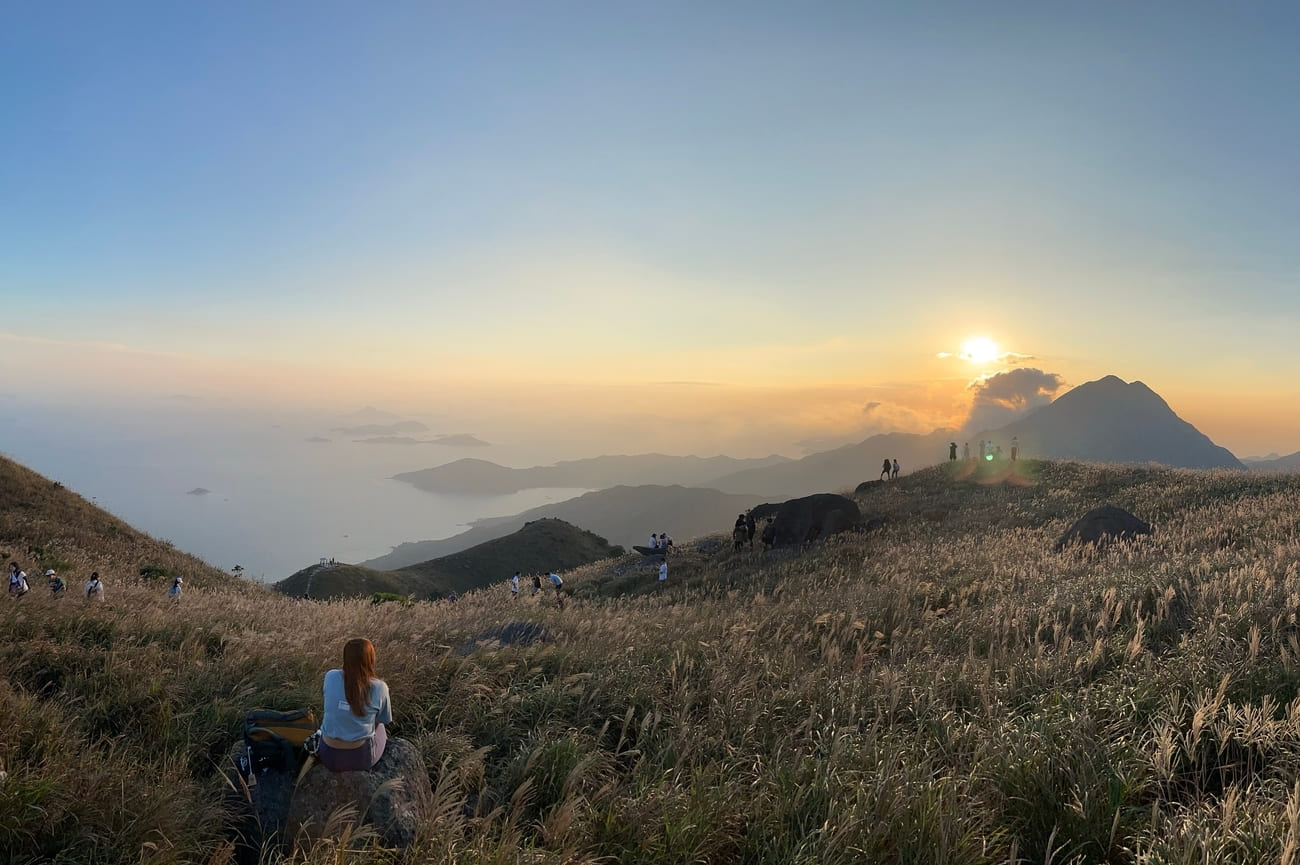
Sunset Peak, as its name suggests, is at its most striking in the late afternoon. In autumn and winter, the surrounding silvergrass catches the changing light in a way that transforms the entire mood of the mountain. It is one of the few places in Hong Kong where you can feel genuinely far removed from everything else.
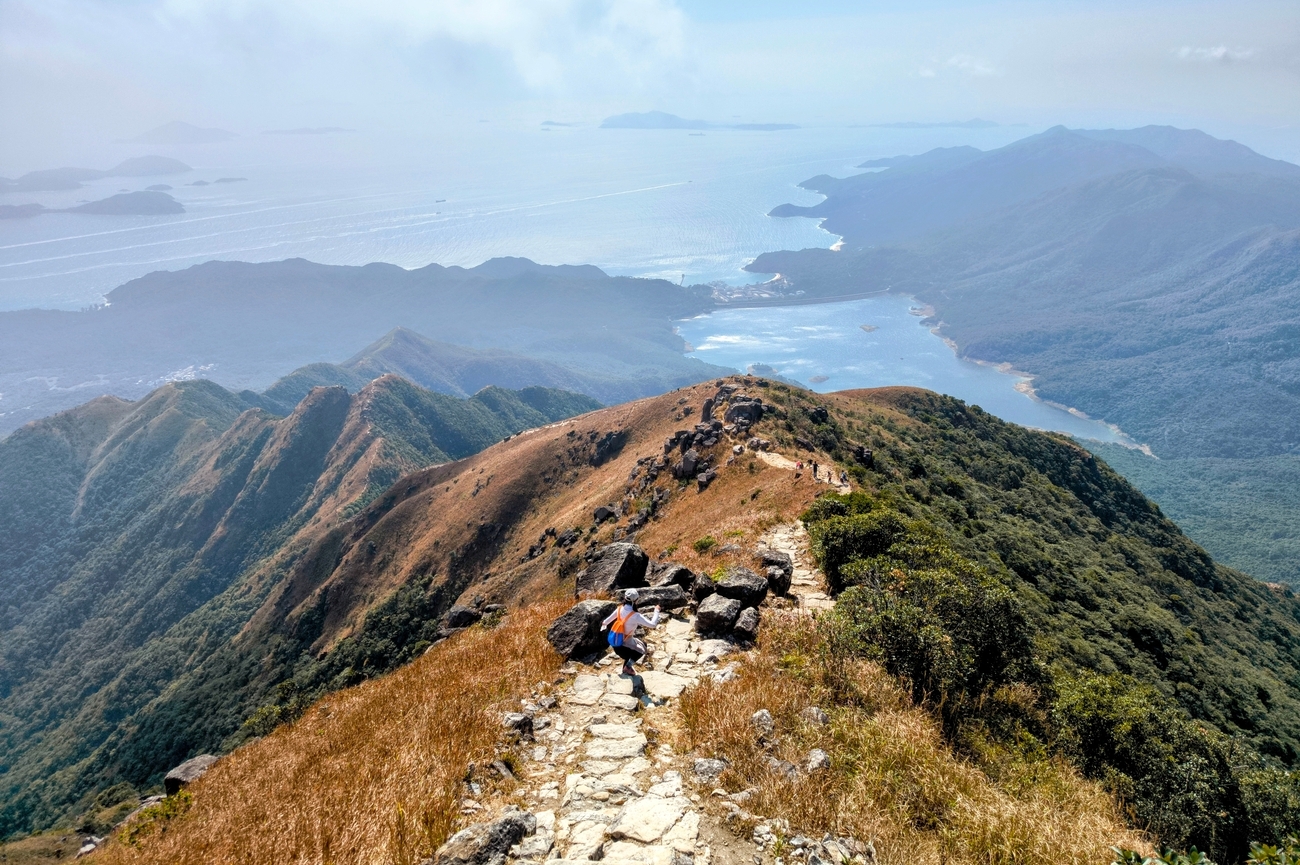
The Guided
Approach
The most rewarding sections of the Lantau Trail usually require fitness, local knowledge, or both. A certified local guide changes the experience considerably, not only by helping with navigation and safety on the more demanding routes, but also by allowing you to focus fully on the landscape rather than the path ahead. A trail morning followed by a spa afternoon at Spa Botanica is, quite simply, one of the most satisfying ways to spend a day in Hong Kong.
Wellness
on Lantau: The Spa as Part of the Itinerary
Spa Botanica at Auberge Discovery Bay Hong Kong is a Condé Nast Traveller-recognised spa with ten private treatment rooms, each with sea views. Its signature 180-minute Detox Retreat combines a detoxifying full-body massage with a purifying facial. Recognised with the Best Spa Experience award at the Singapore Tourism Awards, it has built a strong reputation as one of the region’s most accomplished spa facilities.
What makes it work so well within a Lantau itinerary is its place in the rhythm of the trip itself. The island’s slower pace naturally creates space for wellness, whether that means a trail morning followed by a spa afternoon on Day 4, or a restorative treatment before a flexible marina afternoon on Day 6. These are not extras added onto the programme. They are part of its structure.
For travellers seeking a stronger wellness focus, the hotel offers extended multi-day spa programmes. For those who want a single exceptional treatment to balance more active days, the individual sessions are just as thoughtfully designed.
Dining
Across Lantau Island
The dining scene on Lantau is more considered than its reputation in the city might suggest. The island’s relative isolation has allowed a collection of restaurants to develop around their own clientele rather than passing tourist trade, which often results in a more thoughtful and rewarding experience.
Key tables across the island:
- Gallery BBQ & Grill, Set on Lower Cheung Sha, this beachfront restaurant is known for fresh seafood and grilled dishes served with open views across the sand and out to the South China Sea. It is best enjoyed as a long, unhurried lunch.
- Zest by Konishi, Located at Auberge Discovery Bay, this Japanese-inspired fine dining restaurant offers a more polished evening experience, with a kitchen that treats its produce seriously in a setting that feels equally considered.
- Ooh La La! Café & Bar, Positioned near Pui O, this is the natural choice after time on the south coast. It suits a relaxed afternoon and tends to reward staying longer than originally planned.
- Bayside Grill, Overlooking Discovery Bay marina, Bayside Grill is well suited to a sunset dinner of seafood and well-chosen wines, in the kind of setting where the conversation often lasts longer than the meal itself.
- Po Lin Monastery Vegetarian Lunch, Served in the monastery dining hall at Ngong Ping, this refined set menu is worth planning your morning around, particularly if your day already includes the Buddha and the Wisdom Path.
A
Local's Honest Take on Lantau by Season
There is a version of Lantau that most travel articles describe, and then there is the version that reveals itself once you have spent real time on the island across different times of year. The two are not always the same.
Here is what the seasons actually deliver.
Autumn:
October to December
This is the season Lantau does best. Temperatures usually settle between 22°C and 28°C, the humidity becomes genuinely comfortable, and the quality of light changes everything. On the upper slopes of Sunset Peak, the silvergrass reaches its peak in November, turning the ridgelines a warm gold that no photograph quite captures. On clear days, which are especially common in October and November, the views from Lantau Peak stretch beyond the South China Sea towards the Pearl River Delta.
Cheung Sha Beach in October has the feeling of a place that has just exhaled. The water is still warm enough for swimming, the summer crowds have thinned, and the long, gentle afternoon light makes it the kind of beach you stay on for hours rather than minutes.
The practical note is that October is no longer much of a secret. It is widely understood to be one of the best months to visit Lantau, which means the island’s most popular sites can become noticeably busier. At Ngong Ping and the Big Buddha, the difference between a weekday morning and a weekend afternoon is significant. A well-planned itinerary takes that into account.
Winter:
December to February
Hong Kong winters are mild by almost any standard. From December through February, temperatures usually range between 15°C and 20°C, the air is drier, and the skies are often at their clearest. Hiking conditions on the Lantau Trail are excellent, visibility from the peaks is often at its best, and the trails themselves are quieter than during the autumn high season.
January and February also bring the atmosphere of Chinese New Year, which changes the energy of the territory as a whole. Po Lin Monastery draws larger numbers of worshippers during this period, and the approach to Ngong Ping takes on a more ceremonial quality than at other times of year. For travellers whose itinerary includes a day on the plateau, visiting around Lunar New Year can add a cultural depth that a standard visit does not offer.
The coast in winter is not a beach destination in the conventional sense, but it has a different appeal. Cheung Sha feels crisp, beautiful, and almost empty. A long walk along the shore followed by lunch at Gallery BBQ & Grill, with a cool wind coming off the water, has its own distinct pleasure.
Spring: March
to May
Spring on Lantau begins well, then becomes less predictable. March is arguably underrated, with temperatures between 18°C and 24°C, fewer visitors than in autumn, and the island at its greenest after winter. The trails are usually in good condition, and by April the beaches begin to warm towards genuinely swimmable temperatures.
The complication comes in April and May, when the weather pattern begins to shift. Humidity rises, and the island can disappear into a low grey mist for stretches at a time. Some days are beautiful. Others are overcast and damp. For any itinerary that includes Lantau Peak or the cable car crossing, flexibility matters more in spring than at any other time of year. On a clear spring morning, the summit views can be among the finest on the island. On a misty day, they can disappear entirely.
Summer: June
to September
Summer needs to be addressed directly.
From June through September, temperatures rise above 30°C, humidity often sits between 80 and 85 percent, and typhoon season becomes a real factor. The beaches can still be very appealing in summer, and Cheung Sha in July has a bright, sun-drenched energy that suits some travellers extremely well. Hiking, however, becomes genuinely demanding in the heat, and the possibility of typhoon warnings affects boat excursions, the cable car, and any itinerary that depends on stable weather.
For the kind of trip described in this guide, summer needs a different structure. More spa time, more indoor dining, outdoor activity weighted towards the morning, and genuine flexibility for days when a typhoon warning changes the plan completely. It is still possible to travel well at this time of year, and some travellers deliberately choose the island in its lush summer green. It simply needs to be planned for properly.
If you can choose your timing, the honest answer is this: book for October or November. If those months are not possible, late February to March is the next best window. Both deliver the version of Lantau that most fully earns its reputation.
How to Reach and Explore Lantau
Lantau’s proximity to the airport is an advantage that many itineraries fail to use well. A private transfer from Hong Kong International Airport to Discovery Bay takes under twenty minutes, while the high-speed ferry from Central Pier reaches Discovery Bay in around 25 minutes. For getting around the island itself, a private car is the most effective choice, as the south coast roads are scenic but narrow, and public bus schedules rarely suit the pace of a well-planned visit.
Getting the Most from Lantau
Planning a week on Lantau involves a series of decisions that can quickly become more complex than they first appear. Which trail sections are most suitable, when to schedule the cable car, how to arrange Po Lin Monastery lunch for a private group, or which Spa Botanica treatment best suits a guest after hiking, all of these details help distinguish a curated stay from an improvised one.
Our Lantau Island luxury itinerary is carefully designed by our team of travel experts, with private transfers, certified guides, pre-reserved spa sessions, restaurant bookings, and flexible contingency planning for weather-dependent experiences all handled on your behalf.
What a Week on Lantau
Actually Looks Like
Our Lantau Island travel guide is built around a seven-day structure that sequences the island’s key experiences into a programme that flows rather than rushes. The shape of it :
Day 1, VIP airport arrival, private transfer to Discovery Bay, welcome evening at Zest by Konishi
Day 2, South Lantau coast, Cheung Sha, Gallery BBQ & Grill lunch, coastal drive, Spa Botanica afternoon
Day 3, Ngong Ping 360, privately guided Tian Tan Buddha and Wisdom Path, Po Lin Monastery lunch
Day 4, certified local guide on the Lantau Trail, Pui O beach lunch at Ooh La La!
Day 5, Tai O, private boat excursion through the waterways, guided heritage walk, afternoon return
Day 6, flexible day, marina sailing, Spa Botanica morning, or a relaxed evening at Bayside Grill
Day 7, leisure morning, private transfer to the airport
Seven days gives the island enough time to feel genuinely known rather than efficiently processed. It is not a rushed highlight reel. It is the difference between simply visiting Lantau and experiencing a Lantau Island itinerary in a way that feels complete.
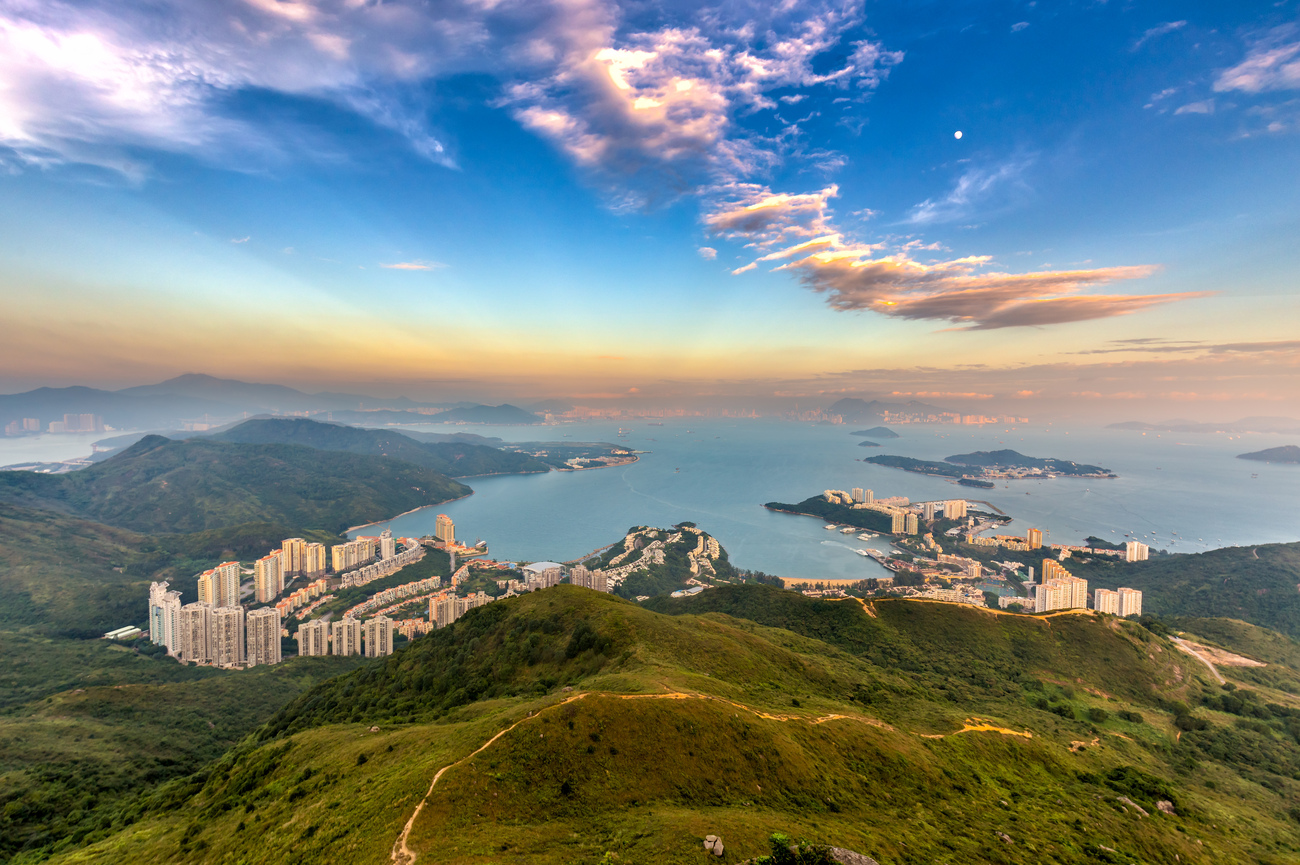
Lantau, Beyond the Stopover
Stop treating Lantau as a transit point, leaving with a single photograph of a monument and only the vague impression of a village. Stay longer, and the island reveals a very different side of Hong Kong, one where the noise of the city falls away and something far more atmospheric takes its place. It is a destination easily diminished by haste, yet deeply memorable when experienced at the right pace.
This Lantau Island travel guide is your introduction to a side of the region that many travellers never truly see. At Revigorate, we shape each journey around your preferred pace, handling the sequencing of trails, private boat experiences, wellness time, and island logistics with care and precision.
If you are still planning the wider city experience, explore our guide to the best things to do in Hong Kong, covering skyline views, cultural landmarks, temples, markets and traditional neighbourhoods.
Lantau provides the backdrop. We provide the expertise.
Let’s move beyond the postcard and start planning a stay that reflects the quality and attention your time deserves.
Consult with a Revigorate specialist to curate your Lantau escape.


Let us know what you love, where you want to go, and we’ll design a one-of-a-kind adventure you’ll never forget.
Get in touch
Miriam
Travel Specialist

Nina
Travel Specialist

Abigail
Travel Specialist
Frequently Asked Questions
-
Where is Lantau Island and why is it worth visiting?
Lantau Island is the largest island in Hong Kong, located west of Hong Kong Island. It is worth visiting for its beaches, mountain trails, Ngong Ping plateau, Tian Tan Buddha, and traditional fishing villages like Tai O, offering a completely different experience from the city.
-
What are the best things to do on Lantau Island?
Top experiences include visiting the Tian Tan Buddha, exploring Po Lin Monastery, riding the Ngong Ping 360 cable car, relaxing on Cheung Sha and Tong Fuk beaches, hiking the Lantau Trail, and taking a boat trip through Tai O fishing village.
-
How many days do you need on Lantau Island?
While Lantau can be visited as a day trip, a stay of 5 to 7 days allows you to experience the island fully, including beaches, hiking, Ngong Ping, Tai O, and time to relax without rushing between locations.
-
What is the best time to visit Lantau Island?
The best time to visit Lantau Island is from October to November, when temperatures are comfortable, humidity is lower, and visibility is at its clearest. Late February to March is also a good alternative with fewer crowds.
-
How do you get to Lantau Island from Hong Kong?
Lantau Island is easily accessible from Hong Kong. You can take the ferry from Central to Discovery Bay, use the MTR to Tung Chung, or arrange a private transfer from Hong Kong International Airport, which takes under 20 minutes.
-
Where is the best place to stay on Lantau Island?
Discovery Bay is the best base for most travellers, offering a peaceful waterfront setting, easy ferry access to Central, and proximity to key attractions. Auberge Discovery Bay Hong Kong is the island’s main full-service hotel.
-
Are Lantau Island beaches worth visiting?
Yes, Lantau’s south coast beaches such as Cheung Sha, Tong Fuk, and Pui O are among the best in Hong Kong. They offer clean water, open space, and a far quieter atmosphere than city beaches, especially on weekdays.
-
Is Ngong Ping and the Big Buddha worth visiting?
Ngong Ping and the Tian Tan Buddha are among Hong Kong’s most important cultural and spiritual landmarks. Visiting early in the day allows you to experience the monastery, Buddha, and Wisdom Path in a quieter and more meaningful way.
-
What makes Tai O different from the rest of Hong Kong?
Tai O is a traditional fishing village built on stilts, with a slower pace of life and a strong cultural identity. Boat trips through its waterways and views of the stilt houses offer a unique perspective rarely found elsewhere in Hong Kong.
-
How does Revigorate plan a Lantau Island trip, and what is included?
We design your Lantau journey around your pace and priorities, combining the right accommodation, private transfers, guided experiences, spa bookings, and dining reservations into a seamless itinerary. Every detail is arranged in advance so the island can be experienced without logistical friction, from arrival to departure.
Our offices:



Revigorate, Iberian Escapes and Algarve Lifestyle are the registered brand names of APCS Lda . We are a fully authorised travel agency licensed by Turismo de Portugal RNAVT/6867.
In the event of a dispute, the consumer may refer to: RAL - Centros de Arbitragem
Avª. 5 de Outubro, nº. 55, R/C Dtº. 8000-075 Faro, Portugal | Tel: +351 289 823 135 *
* national landline call
E-mail: info@consumoalgarve.pt| www.consumidoronline.pt | Mon to Fri: 9:00 - 13:00 / 14:00 - 17:00