Lantau Island Beaches: Cheung Sha, Tong Fuk and Pui O
The south coast of Lantau feels like a well-kept secret.
It is late morning on a weekday in October. The humidity has finally broken, and you are the only car on South Lantau Road. The mountains rise behind you. The South China Sea lies below. Cheung Sha appears first, three kilometres of sand with almost nobody on it. Then comes Tong Fuk, quieter still. Then Pui O, where the road levels out and the buffalo that have lived here since the 1970s are already moving towards the beach.
You had no idea Hong Kong could look like this. Most visitors never find out.
The beaches along Lantau’s south coast are not exactly hidden, but they are the kind of place that rewards knowing what you are doing. The right base, a private car, a weekday, and a clear morning. Those four things turn a good day into the kind that makes the rest of the trip feel as though it has been building towards something.
The south coast is only one part of the island. Our Lantau Island travel guide places it in the wider context of everything else Lantau can offer.
The South Coast: A Different World Entirely
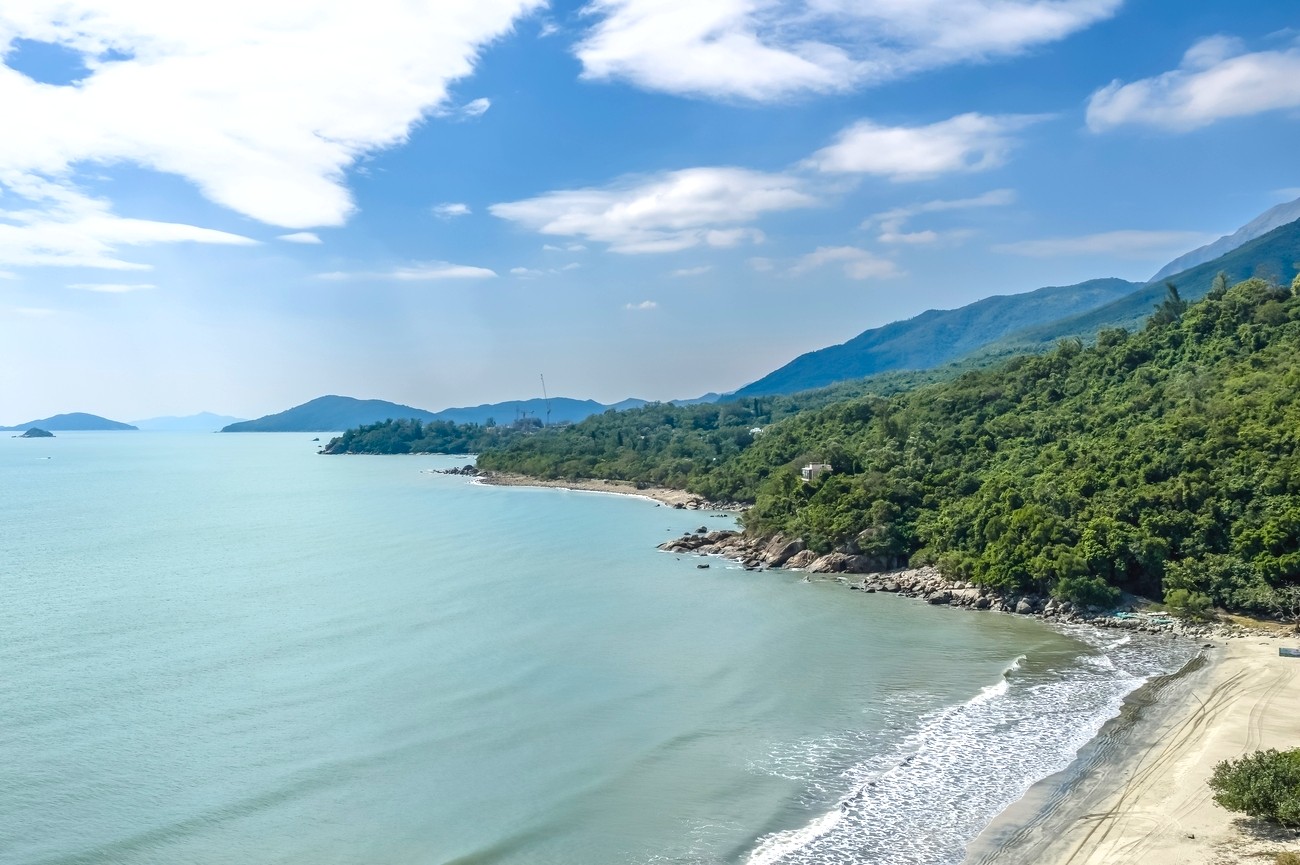
Stand on Upper Cheung Sha at seven in the morning and you are looking out across the South China Sea, with Lantau Peak and Sunset Peak, the second and third highest points in Hong Kong, rising directly behind you. There is no high-rise in sight. No city noise. Only the water and whatever wind is coming in from the south.
That is the quality the south Lantau coastline delivers so consistently, and that no amount of description fully prepares you for. It looks like the sort of place that should require a flight to reach. In reality, it is just 45 minutes by private car from Hong Kong International Airport.
The three principal beaches, Cheung Sha, Tong Fuk, and Pui O, all lie along a single road, South Lantau Road, linked by a coastal drive that deserves its own place in the day’s programme. The road rises above each beach before dropping down towards the next, opening up cliffside views across the water along the way.
On clear days in October and November, the light along this coastline feels specific to this place and this season.
Cheung Sha Beach
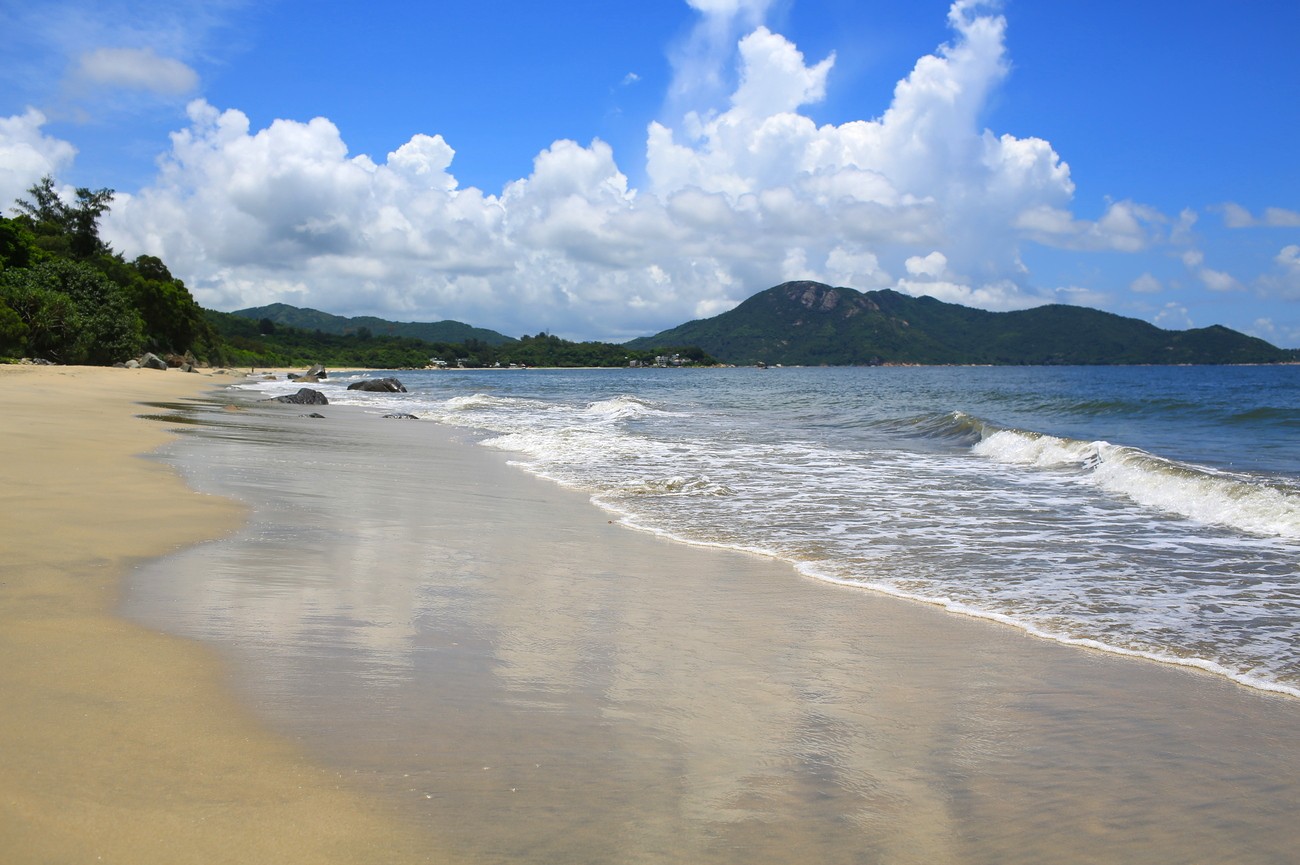
At three kilometres, Cheung Sha is the longest beach in Hong Kong, and that length is exactly what gives each end of it a distinct character.
Most references to Cheung Sha treat it as a single destination. In reality, it is two. Upper and Lower Cheung Sha are separated by a small headland and linked by a path that runs behind it at high tide and in front of it when the water recedes. The difference in atmosphere between the two is unmistakable.
Upper Cheung
Sha
This is the longer and quieter stretch. There are no beachfront establishments and no strip of restaurants. The sand is soft, the beach is broad, and the absence of commercial infrastructure is entirely the point. On a Tuesday in October, you can walk the full length of Upper Cheung Sha and pass no more than a handful of other people.
Behind the beach, Sunset Peak fills the skyline. The combination of open water in one direction and a mountain ridgeline in the other is specific to this stretch of coast. Upper Cheung Sha in the early morning, before the day has properly begun, is one of the best ways to start a south coast day.

Lower Cheung
Sha
Lower Cheung Sha is livelier and better equipped, making it the right choice for those who want a beach with a little more infrastructure around it. Restaurants line the village end, and changing rooms, showers, and lifeguard stations operate from April to October. On a clear weekday afternoon, the atmosphere is relaxed and genuinely appealing.
Bathers is the established name here, an al fresco restaurant at 32 Lower Cheung Sha Village with a terrace facing the sand and a menu that runs from oysters and seafood platters to steaks and wood-fired dishes. It is the sort of place that can carry an afternoon into evening without asking anything more of you.
One caveat applies specifically to Lower Cheung Sha. On Saturday afternoons, when the weather is good, the beachfront becomes noticeably busier. The experience remains enjoyable, but it is distinctly different from the midweek version. A well-structured itinerary accounts for this by placing the south coast excursion on a weekday, one of those small sequencing decisions that often separates a well-planned Lantau stay from an improvised one.
Tong
Fuk Beach: Lantau’s Quietest Shore
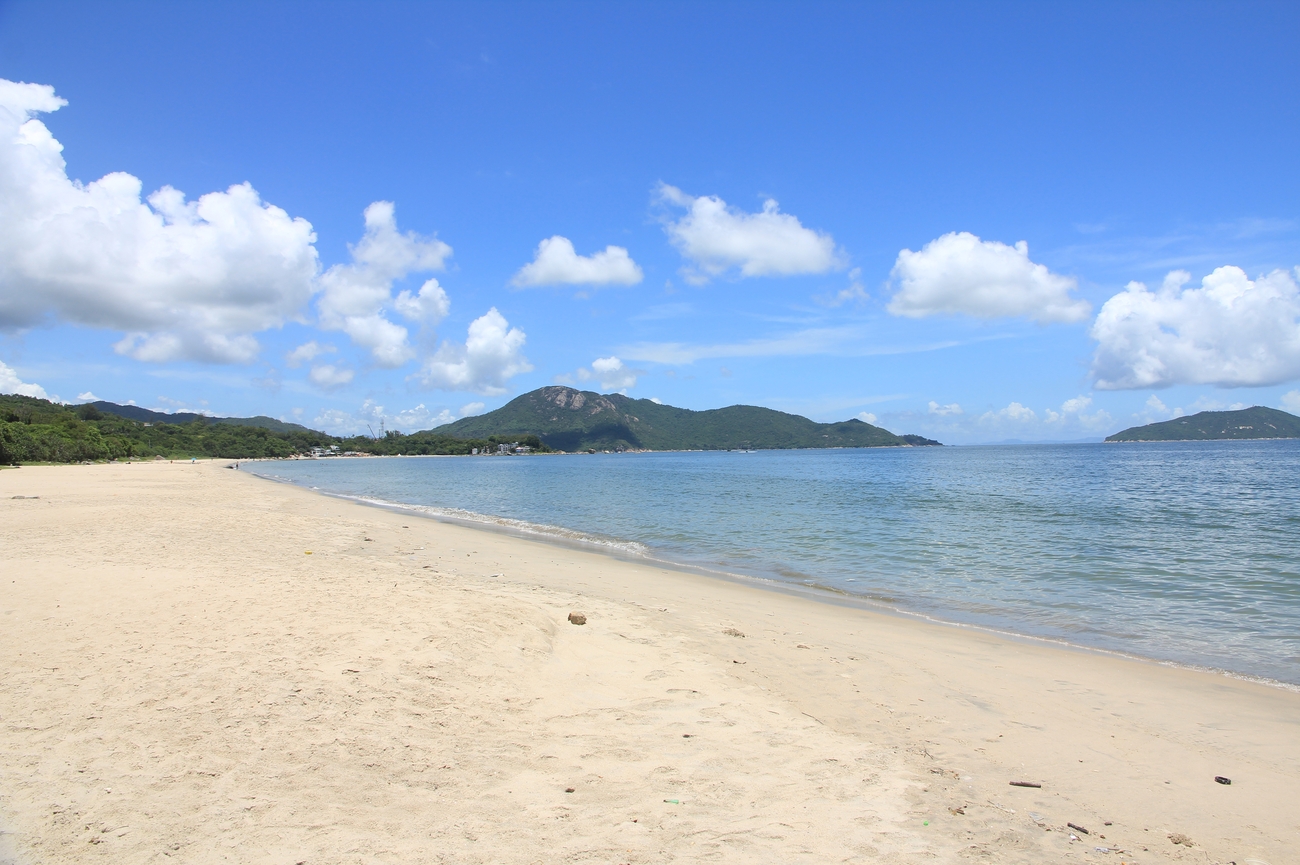
CNN included Tong Fuk on its list of hidden beaches in Hong Kong, and the description was accurate enough: firm grey sand, clean water, and striking sunsets. What it did not fully capture is how consistently quiet the beach remains compared with its neighbours.
Tong Fuk lies just west of Upper Cheung Sha, slightly further from the ferry links that bring weekend visitors out from the city, and without any beachfront commercial strip of its own to draw a crowd. The result is a 150-metre beach that receives only a fraction of the footfall seen at Cheung Sha, even on weekends and public holidays.
Water quality here has been rated Good by the Hong Kong Environmental Protection Department consistently since 1988, with more than 89 per cent of recent samples achieving Grade 1 status. The beach also has shark prevention nets, changing facilities, and lifeguard services from April to October.
The Gallery sits just above Tong Fuk on South Lantau Road, at 26 South Lantau Road in Tong Fuk Village. It is the restaurant most often mentioned when people talk about where to eat on the south coast. Dry-aged steaks cooked over an open grill, fresh seafood, a serious wine list, and a covered al fresco dining area looking towards the beach and the mountains beyond. Reservations are advisable on Friday and Saturday evenings. Wednesday and Thursday are quieter. The restaurant is closed on Mondays and Tuesdays.
Pui O Beach
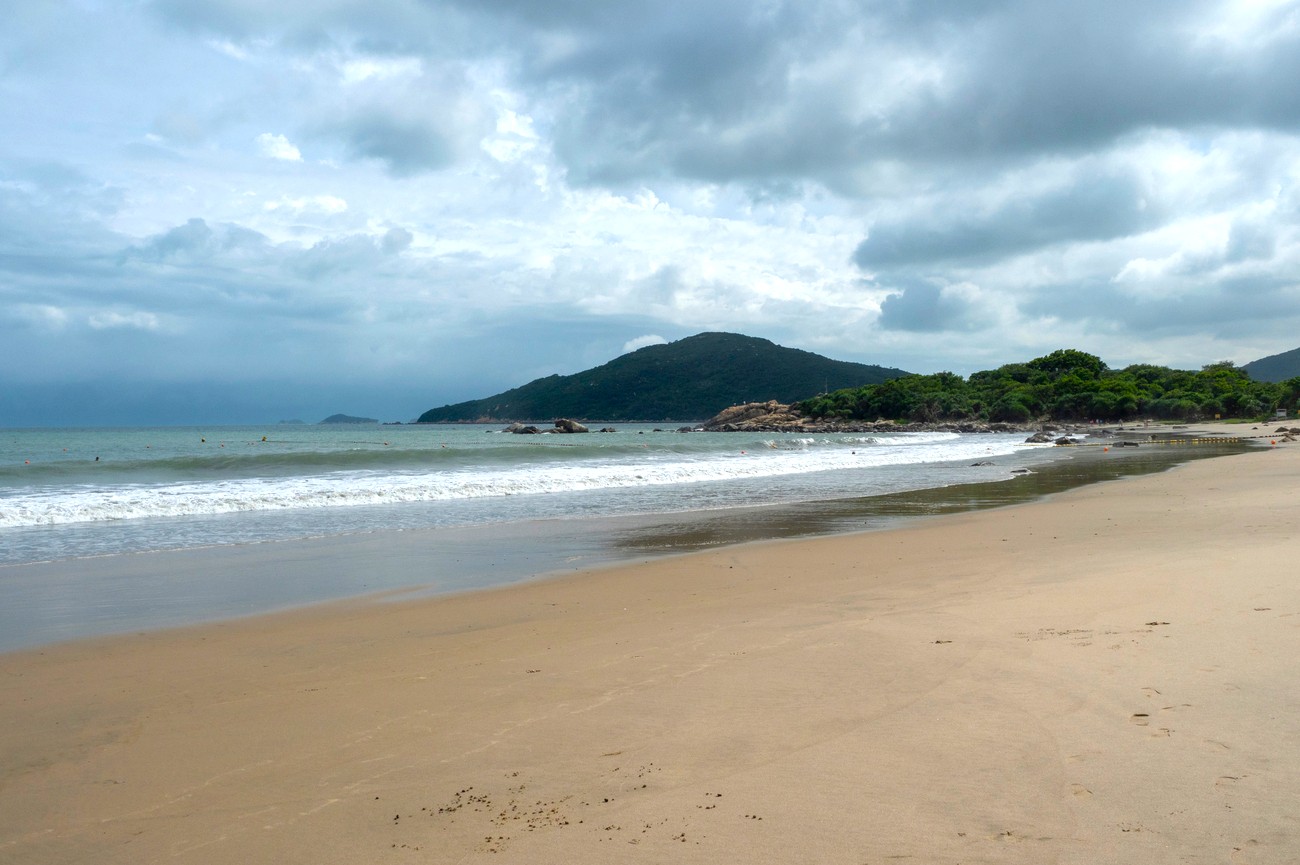
Pui O marks the eastern end of the south coast corridor. It is smaller than Cheung Sha and lacks the particular seclusion of Tong Fuk, yet it has a character entirely of its own. The sand is soft, the pace is unhurried, and the flat land behind the beach gives the setting a sense of openness that the other two beaches do not quite share.
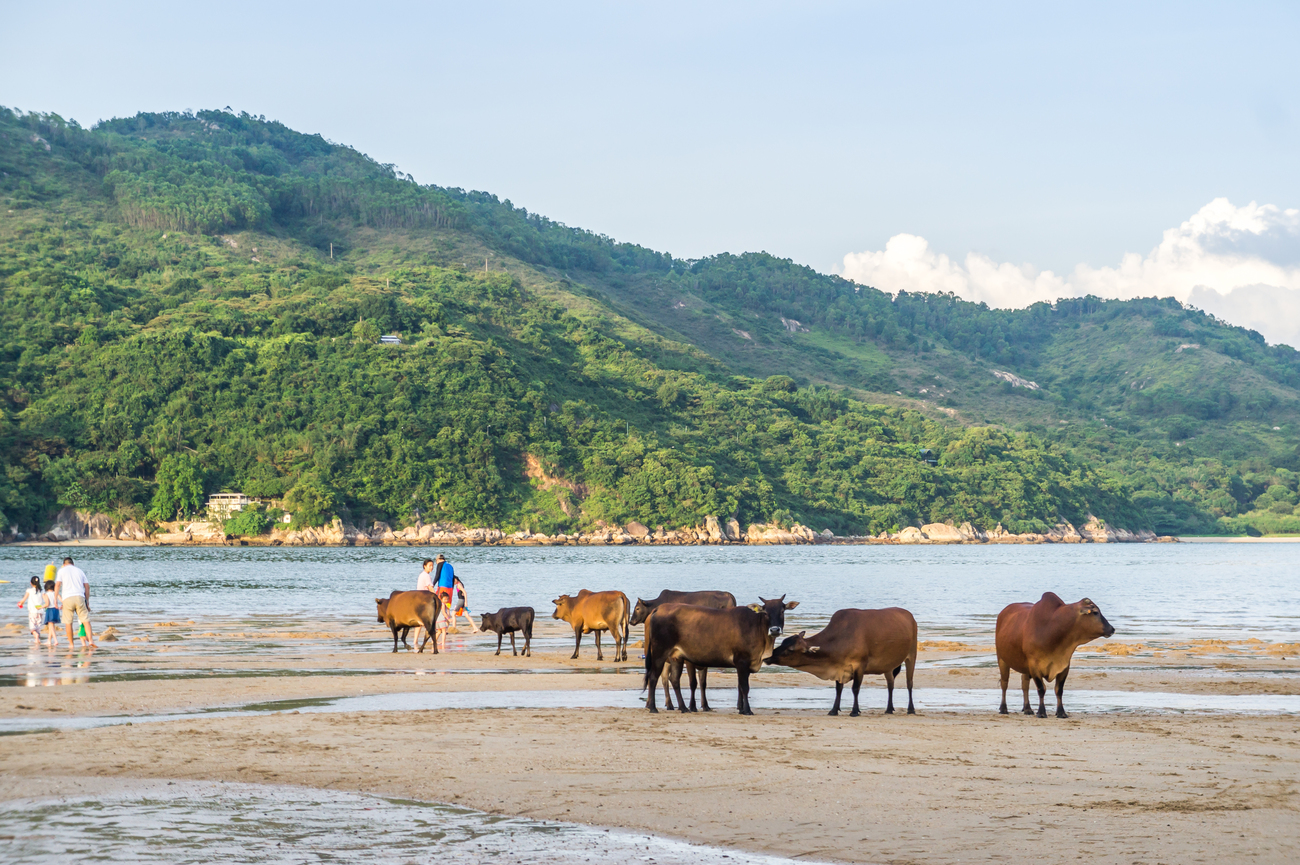
Pui O’s defining detail is its wild water buffalo. A herd of feral buffalo has lived on Lantau’s south coast since the 1970s, when they were no longer needed to plough the village fields. In the late afternoon they graze the wetland and open ground behind the beach, and sometimes wander onto the sand as the light begins to fade. They are not an attraction in the staged sense. They are simply part of the landscape, which makes seeing them feel more memorable than any curated wildlife encounter.
Pui O also marks the end of Lantau Trail Section 11, which follows the coast from Cheung Sha. A guided trail morning moving west to east along the south shore arrives here naturally, making the beach feel like the point the walk has been leading towards rather than an added stop.
Dining at Pui O
Treasure Island Beach Club at Pui O Beach opens on Friday evenings, weekends, and public holidays, serving classic comfort food in an open setting directly on the sand. For a more reliable daily option, the south coast is usually better planned around lunch at Cheung Sha or Tong Fuk, followed by a late-afternoon arrival at Pui O rather than expecting a full dining scene here.
Days 2 and 4 of the Revigorate Lantau itinerary are built around the south coast, the coastal drive, a private car from Discovery Bay, lunch at Cheung Sha, and the trail-to-beach sequence ending at Pui O. The sequencing is designed to avoid weekends at the beaches and to position the south coast excursion within the weather window that makes the most of the coastline from October to November.
View the Lantau Itinerary.
South
Lantau Road: The Scenic Drive Along the Coast
The road linking these beaches deserves more attention than most itineraries give it. South Lantau Road runs along the base of the mountain range, climbing above one beach before dropping down towards the next, and it is in these stretches between the sand that the coastline feels most dramatic.
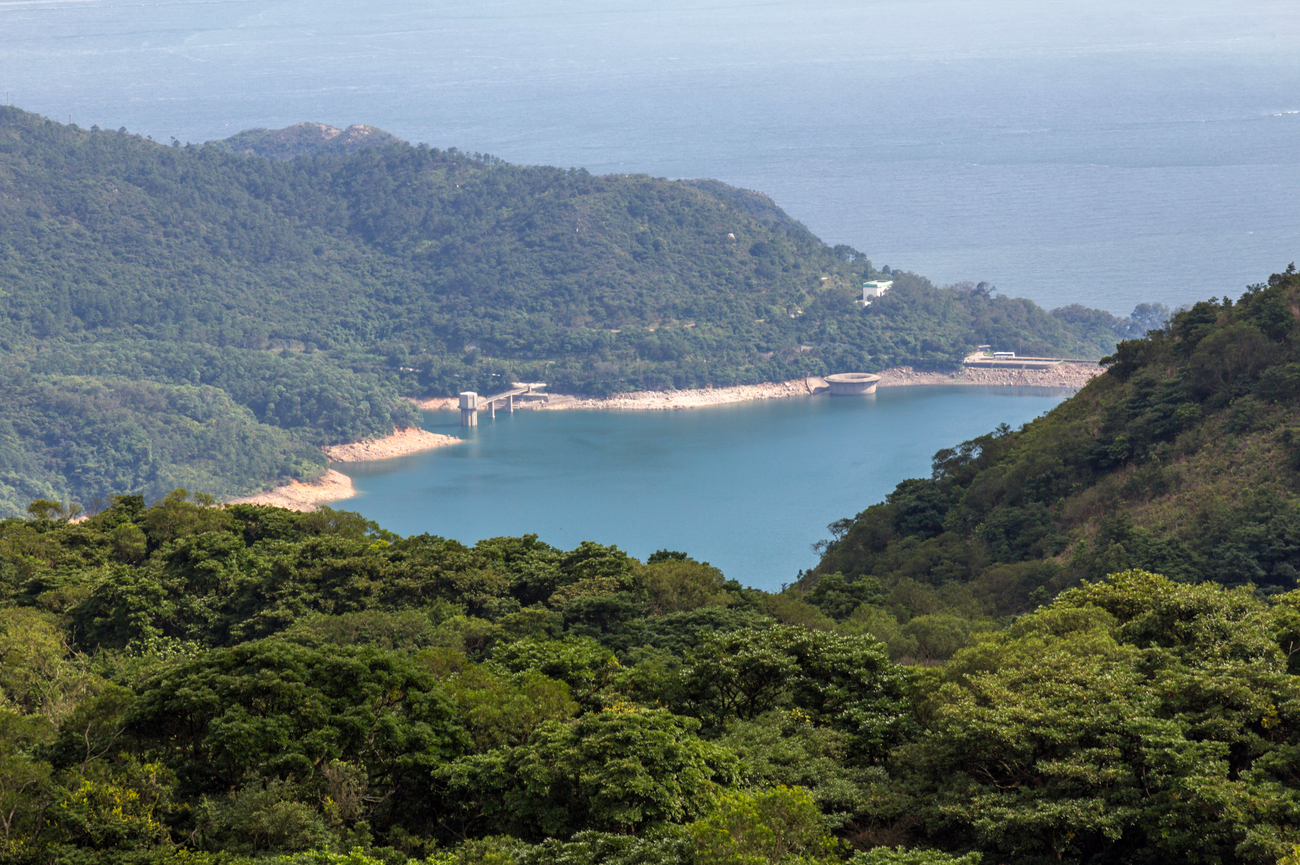
The elevated section between Lower Cheung Sha and Tong Fuk opens onto the South China Sea from an angle the beaches themselves do not offer. Further on, the cliffside approach to Shek Pik Reservoir, Hong Kong’s third-largest reservoir, reveals an inland view that changes your sense of the landscape’s scale. These are not incidental glimpses from a car window. On a clear afternoon in October, they are among the most visually striking moments of the day.
A private car, with time allowed for planned stops, is the best way to experience this route properly. The viewpoints on the headlands between beaches are too specific and too unhurried to fit comfortably into the timetable of a public bus.
When the South Coast Performs at Its Best
Timing changes the experience of Lantau’s beaches more than many visitors expect. The south coast has a clear seasonal rhythm, and arriving in the right window makes a meaningful difference.
October and
November
This is the peak season for the south coast. Temperatures usually sit between 22°C and 26°C, humidity is lower, and the light is at its clearest. The sea remains warm enough for swimming through October and into early November. On the ridgelines above Cheung Sha and Tong Fuk, the silvergrass reaches full colour in October, turning the mountain backdrop a warm amber-gold in the late afternoon. These are the months when beach and mountain scenery are at their best at the same time.
Late February
to April
This period is cooler, drier, and noticeably quieter than the autumn peak. Swimming is possible, though the water can feel cold. The beaches are in excellent condition. A coastal walk along Upper Cheung Sha in February, under clear skies and with almost empty sand, offers a different version of the south coast, but one that is equally worth experiencing. For itineraries focused more on hiking and Ngong Ping than extended beach time, this is an underrated season.
Summer
Summer brings temperatures above 30°C, humidity consistently above 80 per cent, and typhoon season from June to September. The sea is warm, and early visits to the beaches can still be genuinely enjoyable before the heat builds. Afternoons in full sun, however, require preparation rather than spontaneity. Typhoon warnings can also close gazetted beaches at short notice, which makes flexibility essential in any itinerary that includes a south coast day.
Dining on the South Coast
The south coast is not Lantau’s main dining destination in the way Discovery Bay is. The restaurants here are more specific, and at their best when treated as part of the day rather than as a full restaurant circuit in their own right.
- Bathers (32 Lower Cheung Sha Village): Al fresco beachfront dining throughout the day. Oysters, seafood platters, steaks, and wood-fired dishes. The terrace faces directly onto the sand. Best enjoyed as a long, unhurried lunch rather than a brief stop.
- The Gallery (26 South Lantau Road, Tong Fuk): The south coast’s most serious restaurant. Dry-aged steaks, grilled seafood, and a strong wine list, with al fresco tables looking towards Tong Fuk Beach. Best booked for Fridays and Saturdays. Closed on Mondays and Tuesdays.
- Ooh La La! Café & Bar (near Pui O): A good choice after a hike or a late afternoon on the beach. Casual, well placed, and better suited to an easy arrival later in the day than a planned lunch.
The most effective structure for a south coast dining day is lunch at Cheung Sha or Tong Fuk as the centrepiece, followed by a late afternoon at Pui O, then dinner back in Discovery Bay at Zest by Konishi or Bayside Grill. The south coast is not really an evening destination, and trying to stretch the day there after dark tends to add complexity without adding much else.
Where
to Stay for the South Coast
Access to Lantau’s south coast depends almost entirely on the road, and that shapes the accommodation decision more than most beach guides tend to acknowledge.
Using Auberge Discovery Bay Hong Kong as your base gives you straightforward access to the south coast by private car, usually around 35 to 45 minutes arranged through the hotel concierge. At the same time, it keeps the city ferry option open and positions you well for Ngong Ping, Tai O, and the island’s wider programme. In that structure, the south coast becomes one excellent day within a well-balanced week rather than the only part of Lantau your base can reach.
Smaller guesthouses in the Cheung Sha and Mui Wo area offer genuine proximity to the beaches. The trade-off is more limited access to the rest of the island, together with the absence of the resort infrastructure that helps shape the quality of everything else. For a trip built specifically around extended time on the south coast, with little interest in the rest of Lantau, that can make sense. For a full week on the island, it is usually a compromise.
Our dedicated guide to where to stay on Lantau Island covers the full accommodation picture, including Discovery Bay as a resort base and what the island’s different locations mean for the shape of the week.

You Came for the City, You'll Come Back for
This
A well-planned day on Lantau’s south coast is hard to improve on.
You arrive at Upper Cheung Sha before the road begins to fill. Lunch at The Gallery more than justifies its reputation. By late afternoon, Pui O is exactly what you hoped it would be. By evening, you are back in Discovery Bay, with a little of the coast’s warmth still in the light, and the day has the satisfying completeness of something that was planned properly from the start.
That sense of completeness is what a well-structured itinerary creates, and what a loosely planned one often misses by an hour, a wrong turn, or the wrong sequence. The south coast rewards the version of the trip where the small decisions have already been made, which day to go, in what order, and which car is waiting where.
That is the version we curate. Explore our Lantau itinerary.


Let us know what you love, where you want to go, and we’ll design a one-of-a-kind adventure you’ll never forget.
Get in touch
Miriam
Travel Specialist

Nina
Travel Specialist

Abigail
Travel Specialist
Frequently Asked Questions
-
Which are the best beaches on Lantau Island?
The best beaches on Lantau Island are Cheung Sha, Tong Fuk, and Pui O. Each offers a different experience, from long open stretches of sand to quieter, less-visited coastal spots.
-
What is the difference between Upper and Lower Cheung Sha Beach?
Upper Cheung Sha is quieter, more remote, and has no commercial facilities. Lower Cheung Sha is livelier, with restaurants, changing rooms, and a more social atmosphere.
-
Is Tong Fuk Beach worth visiting?
Yes, Tong Fuk Beach is one of the quietest beaches on Lantau, with clean water, fewer visitors, and a more secluded feel compared to Cheung Sha.
-
Can you see buffalo at Pui O Beach?
Yes, wild water buffalo are often seen around Pui O, especially in the late afternoon, grazing near the wetland and occasionally walking onto the beach.
-
When is the best time to visit Lantau Island beaches?
October and November are the best months, with lower humidity, clear skies, and warm sea temperatures. Late February to April is also a good alternative for quieter conditions.
-
Is it easy to reach the south coast beaches on Lantau?
The beaches are best reached by private car. Public transport is available but less flexible, and the coastal road is easier to enjoy with planned stops along the way.
-
Are there restaurants near Lantau’s south coast beaches?
Yes, Cheung Sha and Tong Fuk have good dining options, including beachfront restaurants and grills. Pui O has more limited choices and is better suited as a stop rather than a dining destination.
-
Can you combine hiking with visiting the beaches?
Yes, sections of the Lantau Trail connect to the south coast, particularly ending at Pui O, making it possible to combine a guided hike with time at the beach.
-
Where should you stay to visit Lantau’s south coast beaches?
Discovery Bay is the best base, offering easy access by private car while still connecting you to the rest of the island and Hong Kong. Staying directly on the south coast limits access to other areas.
-
How does Revigorate plan a Lantau south coast beach day, and what is included?
We plan the day around timing, transport, and sequencing, arranging a private car, selecting the right beaches in the right order, and booking lunch so the experience flows smoothly without logistical interruptions.
Our offices:



Revigorate, Iberian Escapes and Algarve Lifestyle are the registered brand names of APCS Lda . We are a fully authorised travel agency licensed by Turismo de Portugal RNAVT/6867.