Architecture, Print and Design: Singapore Art Week’s Expanded Ecosystem

Singapore Art Week rewards those who move beyond the main programme, revealing a deeper layer of design, printmaking and architectural experiences across the city.
Beyond the museum circuit and blue-chip galleries, Singapore Art Week design programming unfolds through quieter districts and creative spaces. At STPI Creative Workshop and Gallery along Robertson Quay, master printers open their studios to visitors, offering direct insight into contemporary printmaking and edition production.
Nearby, specialist publishers gather for The Print Show Singapore, where printmaking is presented at the scale and ambition of contemporary art rather than as a secondary medium. Across the city, architecture tours move through restored shophouse districts and heritage spaces that become part of the curatorial experience.
Singapore Art Week also extends into boutique hotels, temporary exhibition venues and immersive design events that many first-time visitors overlook. Those who return year after year recognise that this expanded ecosystem is where the week becomes more layered, rewarding and culturally significant.
For the full structure of the event, including gallery districts, museum programmes and VIP access, see our Singapore Art Week insider guide.

STPI: The Print Studio
Worth Giving a Full Morning
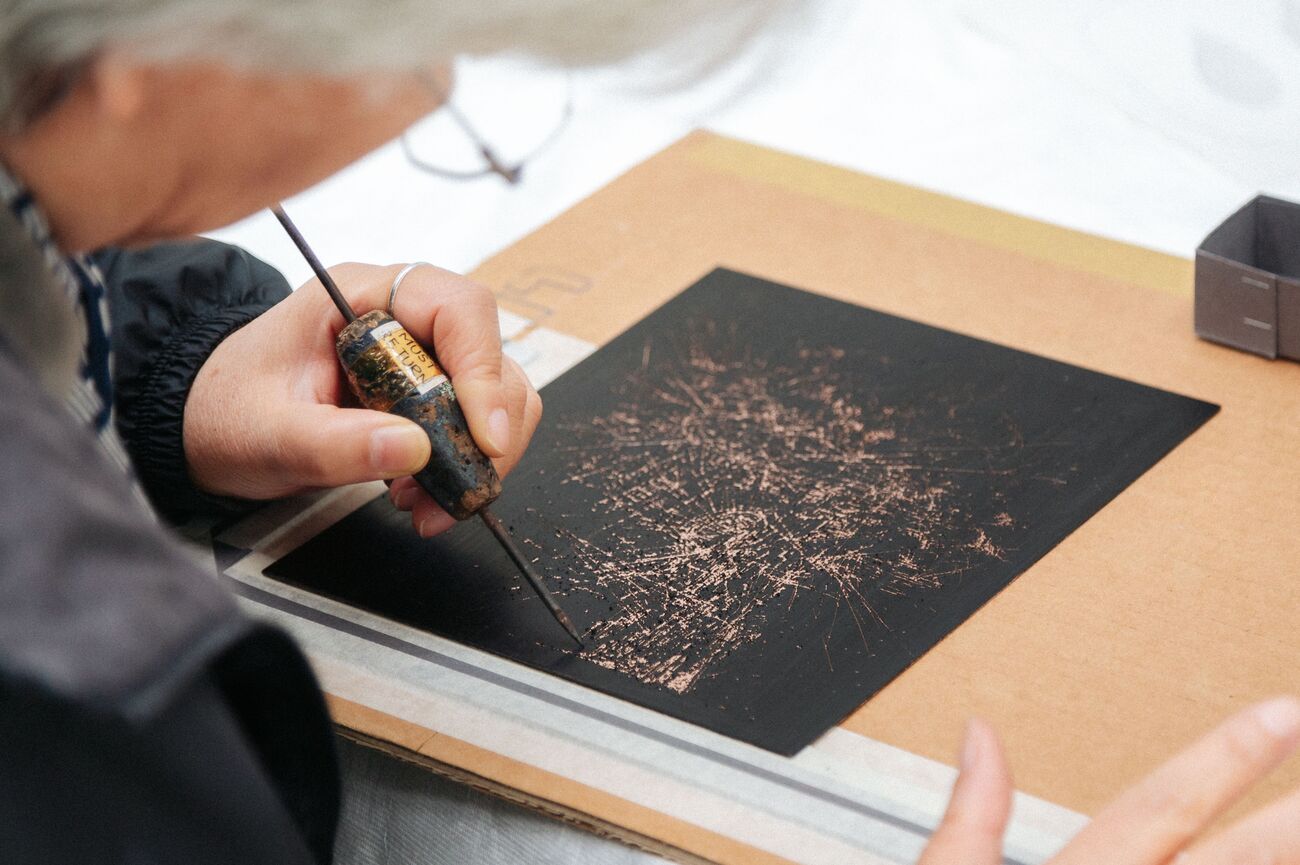
There is a particular pleasure in visiting a place that produces what it also exhibits. STPI Creative Workshop and Gallery at 41 Robertson Quay has done exactly that since 2000, creating artist editions on site through residencies and collaborative projects, then presenting the finished work in the gallery above the studio floor. The result is a space where the act of making remains present in the viewing, changing the way a print is understood.
The relationships STPI has built with artists over more than two decades place it in a category of its own in Southeast Asia. Do Ho Suh, Louise Bourgeois, Yayoi Kusama, Rirkrit Tiravanija, and William Kentridge have all worked in the Robertson Quay studio. The presses are large-format, the master printers are internationally trained, and the editions produced here are collected seriously across Asia and beyond. During Singapore Art Week, STPI also appears within ART SG’s main sector, maintaining a presence both on the fair floor at Marina Bay Sands and at its own Robertson Quay space, an unusual dual role that reflects the organisation’s hybrid identity.
Admission to the gallery is free. From the gallery level, the studio remains visible, and on any given visit it is possible to watch an edition being produced on the same floor where finished works are on display.
The Print Show Singapore 2026: A First Edition That Set the Tone
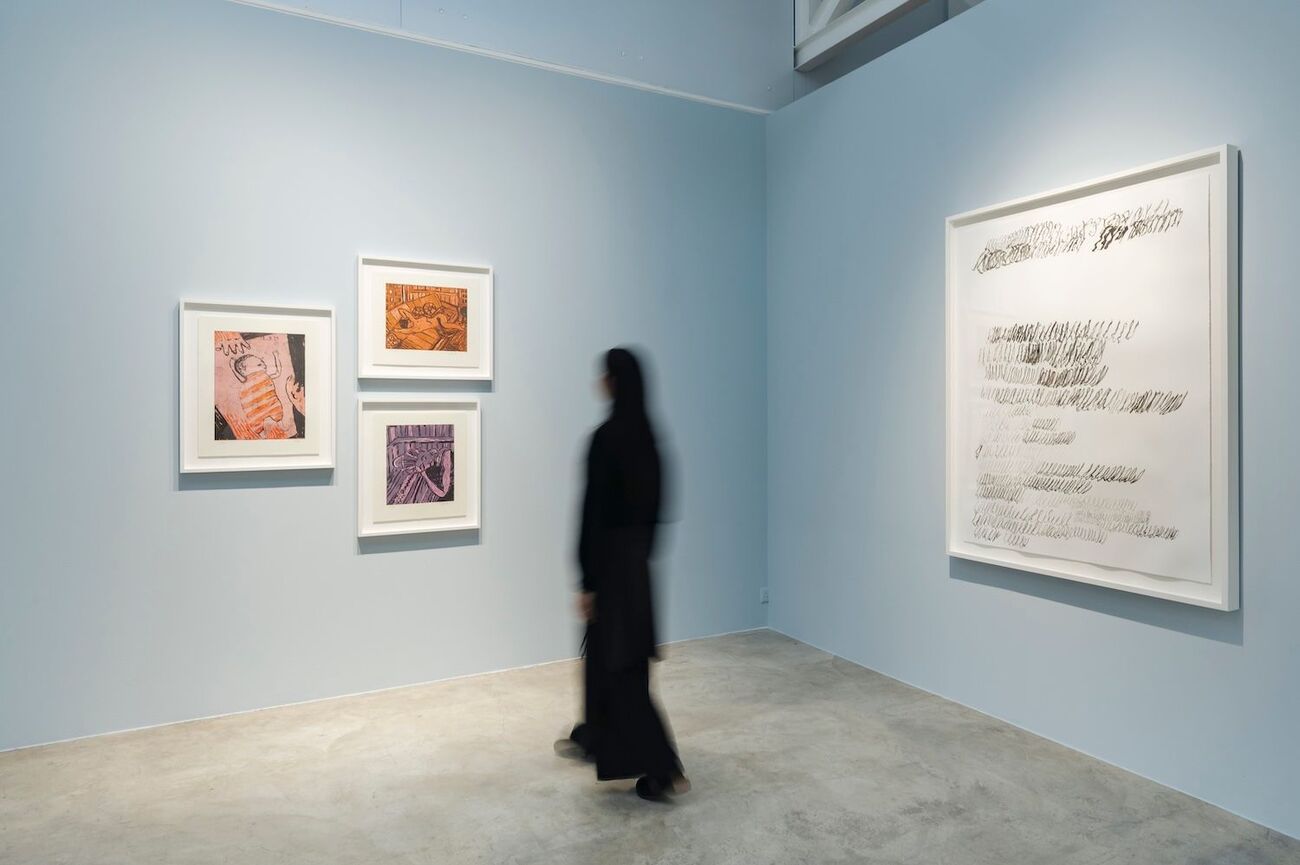
The inaugural Print Show Singapore ran from 22 January to 7 February 2026, extended from its original close of 31 January after demand remained strong into the second week. Organised by STPI under Executive Director Emi Eu, it was the first platform of its kind in Southeast Asia devoted entirely to printmaking as a living contemporary practice.
Twenty-seven internationally recognised artists were presented across the Robertson Quay gallery in a format Eu described as “exhibitions within exhibitions”, with works from leading publishers and editions houses placed in direct conversation according to formal and conceptual relationships rather than chronology or geography. The range was both international and regional, bringing together Jeff Koons’s Gazing Ball series, David Hockney, Takashi Murakami, Doris Salcedo, and Kara Walker alongside Dinh Q. Lê, Kim Lim, Natee Utarit, and Do Ho Suh. Contributing publishers and editions houses included Two Palms in New York, Crown Point Press in San Francisco, BORCH Editions in Berlin and Copenhagen, and Cristea Roberts Gallery in London.
Eu positioned the Print Show clearly around the collector entry point. Printmaking’s range, from emerging artist editions to works by globally established names, makes it one of the most accessible starting points for serious collecting. The inaugural edition was structured with that accessibility in mind, without giving up any of its critical ambition. The 2026 Print Show marked the beginning of what STPI intends to build as an annual programme.
The Politics of Print: A Symposium That Mattered
The companion symposium to The Print Show Singapore ran on 23 and 24 January 2026 at 72-13 Mohamed Sultan Road, curated by Stephanie Bailey, former curator of Conversations at Art Basel Hong Kong. Several panels sold out in advance, which mattered because it confirmed that this was not simply a satellite event attached to the fair, but a destination in its own right.
Across two days, the programme made a clear argument: print remains one of the most politically charged, intellectually flexible, and commercially relevant mediums in contemporary art.
The first day opened with The Politics of Print, a panel examining printmaking’s historical role in political resistance and cultural transmission. Wu Mo traced Zao Wou-Ki’s cross-cultural print practice in Paris, Özge Ersoy explored print as a form of feminist social organising through the work of Lala Rukh and Sheba Chhachhi, and Kathleen Ditzig examined the medium’s role in the cultural Cold War across Southeast Asia.
The afternoon shifted towards the market with New (Print) Markets, New (Print) Worlds. Mazdak Sanii of Avant Arte shared data showing that 70 to 80 per cent of buyers across their projects are first-time collectors, while Molly Steiger of Sotheby’s added the auction-house perspective. The day closed with a keynote conversation between Pinaree Sanpitak and Michael Craig-Martin.
The second day widened the discussion further. Crit Club, a structured debate project by Cem A., the artist behind @freeze_magazine, considered NFTs and memes as contemporary inheritors of print’s long-standing role in disseminating ideas at scale. The afternoon keynote, titled “The worse things are, the better the art becomes”, returned to print’s history as a medium that often flourishes under conditions of pressure and constraint. During the symposium, STPI also launched print_screen, a new editorial platform intended to continue these conversations beyond Art Week through text-based commissions and critical writing.
It was one of the most intellectually substantive events of Singapore Art Week 2026. Its arguments, about print’s politics, its market, and its relationship to digital reproduction, felt genuinely current rather than retrospective. That distinguished it from many satellite events, which spend more time explaining a medium than testing its relevance.
When the Hotel Becomes
the Gallery
Singapore Art Week has a feature that distinguishes it from comparable art weeks in the region: the hotels participate. In 2026, two notable activations used hospitality spaces as exhibition environments, and in both cases the architecture of the building did more than provide a backdrop.
Wan Hai Hotel:
Singapore Strait at The Warehouse Hotel
The Warehouse Hotel at 320 Havelock Road is a 37-room boutique property housed within a restored 1895 godown on the Robertson Quay waterfront, a building with enough history to sustain a serious curatorial project. Between 1895 and the 1980s, the warehouse stored rice, pepper, and rubber arriving on trading vessels moving through what was once one of Asia’s busiest commercial waterways. Its 2018 URA Architectural Heritage Award recognised the restoration by W Architects.
Curated by X Zhu-Nowell, Executive Director and Chief Curator of Shanghai’s Rockbund Art Museum, Wan Hai Hotel: Singapore Strait ran from 20 to 31 January 2026 and brought twenty artists into the hotel’s reception, lounge, bar, study, restaurant, and architectural margins. Co-presented by ART SG and Rockbund Art Museum with support from the National Arts Council and Singapore Tourism Board, the project reshapes itself around the maritime conditions of each host site. The Singapore edition was not a restaging of the Shanghai original, but a newly configured exhibition developed specifically around the Robertson Quay strait and its colonial trading histories.
The participating artists spanned Southeast Asia and beyond, including Ho Tzu Nyen, Martha Atienza, Stephanie Comilang, Dawn Ng, John Clang, Bhenji Ra, Ming Wong, Robert Zhao Renhui, Joshua Serafin, Taloi Havini, Arka Kinari, Irwan Ahmett and Tita Salina, and Cai Kunyu.
The works ranged across film, video, sound, installation, performance, and object-based practice, unfolding through the hotel’s sequence of spaces so that the exhibition was encountered while moving through a building that people were also actively inhabiting.
John Clang’s Reading by an Artist ran on selected days by reservation, offering a 30-minute one-to-one performative exchange between artist and viewer. It is the kind of format that only works in a hospitality setting, where the architecture and the social contract of a hotel create an intimacy that a conventional gallery rarely can. Booking it required knowing it existed before arrival.
The exhibition itself was free and open to the public. The performance layer required advance reservation. That distinction matters. It reflects how some of the most interesting Singapore Art Week programming operates, with a public surface and a more considered interior for those who have planned ahead.
Mondrian
Singapore Duxton: Art Collection and Creator Residency
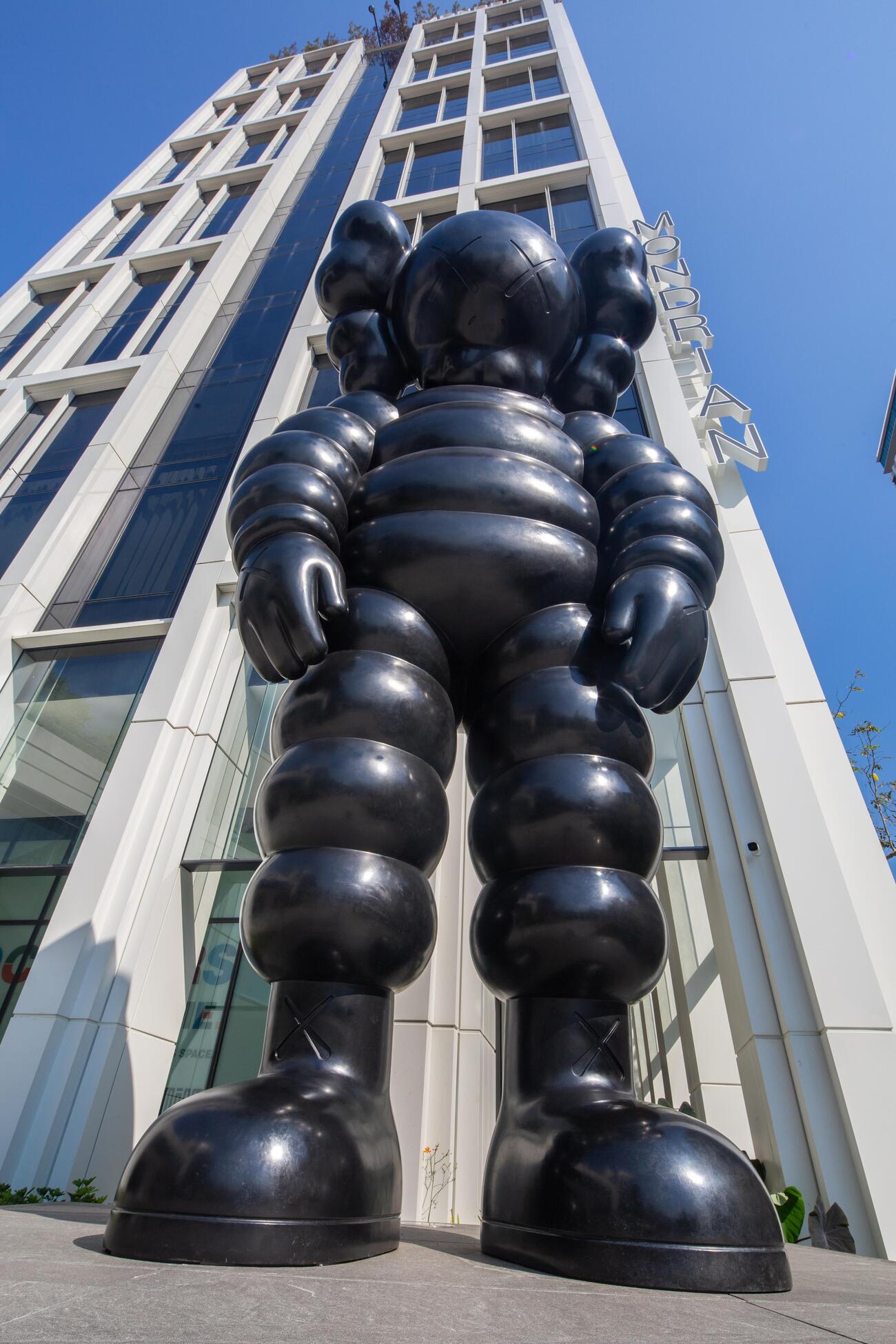
The Mondrian at 28 Duxton Road holds a permanent contemporary art collection strong enough to merit attention beyond any temporary Art Week activation. KAWS’s six-metre bronze WHAT PARTY stands at the entrance. Inside are works including Tracey Emin’s I Longed For You, Ian Davenport’s Deep Magenta Mirrored, and Dawn Ng’s Waterfall Series, installed throughout the hotel’s public spaces.
During Art Week 2026, the Singapore Tourism Board and the hotel launched the pilot STB Creator Residency Programme, commissioning Singaporean artist tobyato and Filipino artist Jappy Agoncillo to create a site-specific mural titled Leon at Lion on the hotel’s Duxton Road steps. The work responded to the neighbourhood’s layered identity as a heritage conservation area, nightlife district, and design corridor within the same small stretch of the city.
Alongside this, the hotel launched free bi-weekly public art tours of its collection, running on the first and third Friday of each month at 4 pm. The initiative reflects a broader STB strategy of positioning hotel properties as cultural destinations during Art Week, something that has been building across successive editions. The Mondrian tour is one of the more substantial examples, given the quality of the permanent collection it brings into view.
The Robertson Quay and Duxton precincts, where both hotel activations are concentrated, connect directly to one of Singapore Art Week’s most rewarding gallery corridors. For a fuller look at that district, see our guide to Singapore’s gallery districts during Art Week.
The Public Art Dimension: Seven Districts, One City
Singapore Art Week 2026 extended across seven defined districts: Bras Basah.Bugis, Civic District, Gillman Barracks, Kampong Glam and Little India, Marina Bay, River Valley, and Tanjong Pagar, with additional programming appearing across the island, including Pasir Ris Park, Geylang Serai, Jurong Lake Gardens, and the NTU campus. The public art layer connecting these districts is where Singapore Art Week begins to resemble urban planning as much as cultural programming.

Art in the
City and the Trail Programme
For the 2026 edition, the Singapore Tourism Board introduced Art in the City in partnership with Gardens by the Bay and Marina Bay Sands, launching self-guided trails through the Civic District and Marina Bay. These routes repositioned Singapore’s public art collection as a reason to move through the city, rather than as a backdrop.
The Public Art Trust expanded this further, refreshing its routes across six districts: Civic District, Bras Basah.Bugis, Marina Bay, Chinatown, Kampong Glam, and Katong–Joo Chiat. Taken together, the system created a network of connected paths that allowed visitors to experience Art Week as a continuous, city-scale programme.
Singapore Art Museum extended this approach with Momentary Pulses, introducing outdoor installations into the Central Business District, a deliberate expansion into an area not typically associated with cultural programming. Works appeared within the financial district’s public spaces, creating unplanned encounters for commuters and visitors moving between Marina Bay and the Civic District.
Bring Your Own Racket by Yeo Shze Yiing and Tan Shu Ning was one of these interventions. An elongated orange sculpture derived from the visual language of a badminton net, it was placed within an intersection defined by efficiency and movement. Its proposition was simple but precise: that public space can accommodate something other than circulation. It required no ticket and no prior knowledge of Art Week to engage with it.

Open House
Singapore: The Architecture Walk
Open House Singapore’s annual Art Week programme, now in its twelfth edition, staged its 2026 walk through a decommissioned factory at Moonstone Lane Estate. Titled OH! Moonstone: Everything Changes, Everything Stays the Same, the programme brought together four site-specific works responding directly to the building’s industrial history.
Open House operates year-round as an architecture and urban planning advocacy organisation, and that perspective shapes its Art Week programme. The Moonstone walk treated architecture as evidence of how a city evolves. The factory’s age, its decommissioning, and its temporary occupation by artists were read as part of the same narrative, rather than separate moments.
The Arts and Design
Corridor: Reading the City Through Architecture
The Arts and Design Corridor is not a formal institution or a mapped trail. It is a way of understanding the programming that unfolds across Singapore’s historic shophouse districts during Art Week, most notably around Robertson Quay and River Valley, Chinatown and Duxton Hill, and the Bras Basah.Bugis precinct further north. What connects these areas is not a single organiser, but the architecture itself.
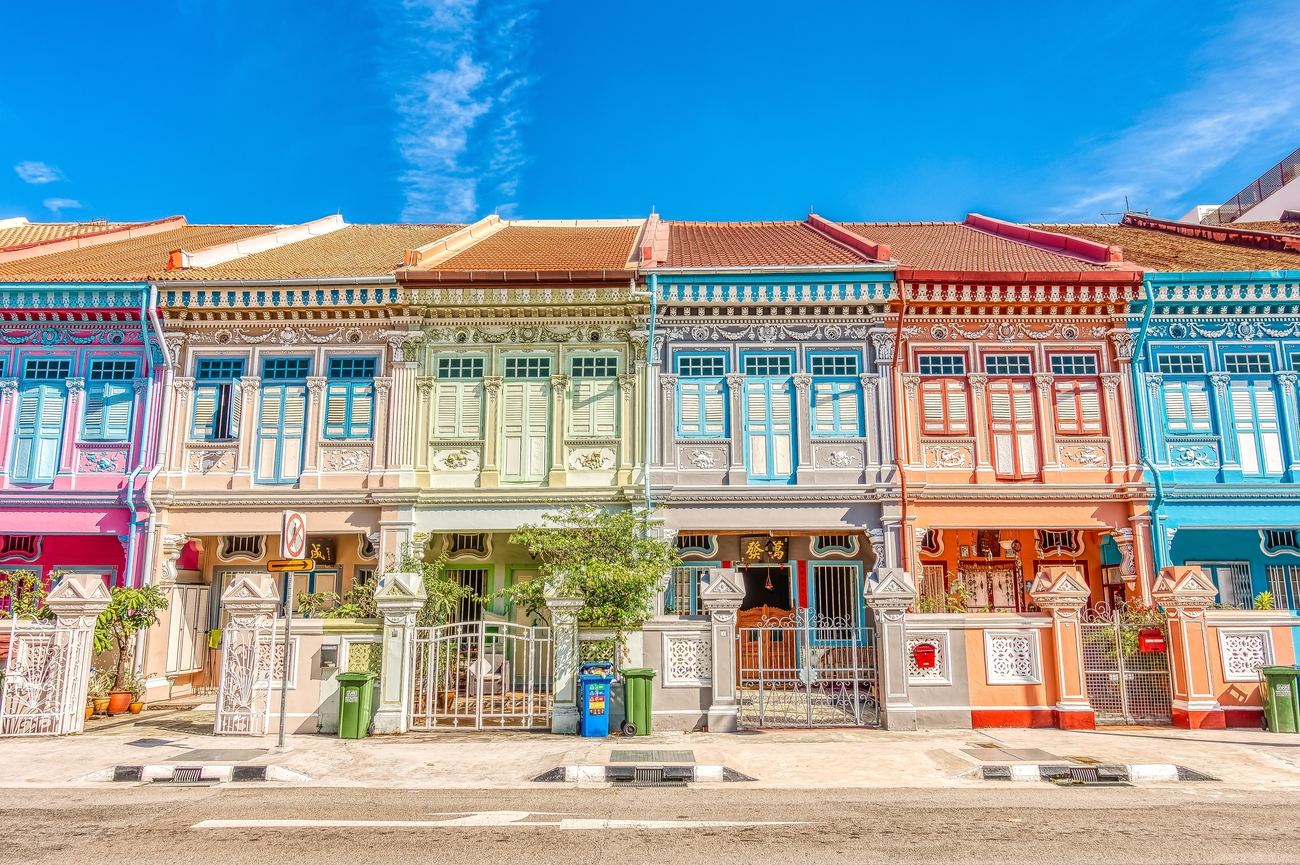
Singapore’s shophouse districts hold one of the largest concentrations of conserved 19th and early 20th-century street architecture in Southeast Asia. These two- and three-storey Peranakan and Chinese-Baroque buildings, with their five-foot covered walkways, ceramic tile façades, and internal courtyard light wells, were originally designed to combine commerce and living. Over the past three decades, they have been adapted into galleries, design studios, restaurants, and boutique hotels, with varying degrees of sensitivity.
Moving through these streets with attention, not only to what is inside the buildings but to how the buildings themselves are ageing and evolving, becomes a form of architectural reading that no museum can replicate.
During Singapore Art Week, this is where design and print culture are most visibly embedded in the city itself. STPI at Robertson Quay operates within a conserved shophouse block. The Warehouse Hotel is a restored godown. The Mondrian Duxton sits within the Duxton Hill conservation area. Galleries along the corridor occupy spaces where the building’s history remains legible in its materials, from terracotta floor tiles and timber shutters to ventilation slits in party walls.
Day 4 of the Singapore Art Week Insider Access, Art and Design Itinerary moves through this corridor with that level of attention, linking the print programme at Robertson Quay, the hotel activations, the Duxton Hill district, and the Central Business District public art installations, before the Light to Night programme brings the evening back to the Civic District.
The sequencing is deliberate. So are the restaurant reservations across River Valley and Robertson Quay, which are typically secured well before Art Week begins.
The Part of Art Week
That Rewards the Most Prepared Visitor
The STPI symposium’s most in-demand sessions were fully booked before the public programme was completely announced. John Clang’s one-to-one performance at The Warehouse Hotel required a reservation that many visitors simply did not know to make. The Mondrian Duxton’s collection tours run on a fixed bi-weekly schedule that does not align neatly with Art Week itself. The architecture walks through the shophouse precincts are best experienced in the morning, before the heat rises and before the institutional programme takes over the afternoon.
None of this is obscure. All of it depends on knowing what exists before you arrive.
Revigorate treats the design and print layer of Singapore Art Week with the same seriousness as the fair and museum circuit, because for the right traveller, this is where some of the week’s most considered and least crowded experiences are found. The STPI visit, the Wan Hai Hotel walkthrough, and the architectural rhythm of the Robertson Quay corridor are often the parts of the week that remain most vividly remembered long after it ends.
Singapore Art Week 2026 has concluded. The 2027 edition will be confirmed by the National Arts Council, and dates will be updated here as soon as the official schedule is announced.
Where Singapore Art Week
Becomes More Interesting
By the time many visitors begin to understand how Singapore Art Week really works, their return flight is already booked.
The fair, the museums, and the headline exhibitions provide the visible structure of the week. Yet the part that regular attendees tend to remember most often comes from somewhere else entirely.
Our Singapore Art Week Insider Access itinerary builds that layer directly into the experience, from studio visits and architecture-led routes to hotel exhibitions and the reservations that tend to disappear first.
The 2027 edition will be confirmed by Singapore’s cultural authorities in the coming months. Until then, the full Singapore Art Week insider access itinerary offers a first view of how the next Art Week experience is already beginning to take shape.


Let us know what you love, where you want to go, and we’ll design a one-of-a-kind adventure you’ll never forget.
Get in touch
Miriam
Travel Specialist

Nina
Travel Specialist
Abigail
Travel Specialist
Frequently Asked Questions
- What is STPI Creative Workshop and Gallery?
STPI Creative Workshop and Gallery is a leading print and papermaking studio in Singapore where international artists collaborate with master printers to produce contemporary editions, which are then exhibited in the gallery.
- What is The Print Show Singapore?
The Print Show Singapore is a dedicated platform for contemporary printmaking, bringing together international artists, publishers, and editions to present print as a primary artistic medium rather than a supporting format.
- Is STPI free to visit during Singapore Art Week?
Yes, admission to STPI Creative Workshop and Gallery is free, and visitors can often observe the printmaking process from the gallery level.
- What makes Singapore Art Week different from other art events?
Singapore Art Week extends beyond galleries and museums into architecture, hotels, public spaces, and design districts, creating a city-wide programme that blends art, urban planning, and cultural experiences.
- Can you visit hotel exhibitions during Singapore Art Week?
Yes, several hotels participate in Singapore Art Week by hosting exhibitions, installations, and performances, many of which are open to the public, though some require advance booking.
- Are architecture walks part of Singapore Art Week?
Yes, architecture walks are an important part of the programme, offering access to historic buildings, industrial sites, and conserved districts where architecture becomes part of the artistic experience.
- Do you need to book events in advance during Singapore Art Week?
Many of the most in-demand events, including talks, performances, and guided tours, require advance booking and often sell out before the week begins.
- How does Revigorate enhance the Singapore Art Week experience?
Revigorate curates structured itineraries that combine exhibitions, studio visits, architecture routes, and reservations, ensuring access to key events and a seamless experience throughout Singapore Art Week.
Our offices:



Revigorate, Iberian Escapes and Algarve Lifestyle are the registered brand names of APCS Lda . We are a fully authorised travel agency licensed by Turismo de Portugal RNAVT/6867.
In the event of a dispute, the consumer may refer to: RAL - Centros de Arbitragem
Avª. 5 de Outubro, nº. 55, R/C Dtº. 8000-075 Faro, Portugal | Tel: +351 289 823 135 *
* national landline call
E-mail: info@consumoalgarve.pt| www.consumidoronline.pt | Mon to Fri: 9:00 - 13:00 / 14:00 - 17:00