Surfing in Siargao: Best Spots, Seasons & Private Surf Trips

There is a moment every surfer remembers, the first time they see Cloud 9 working properly. Clean lines stack on the reef, the water glows in impossible shades of blue, and you understand why Siargao has become synonymous with serious surf.
Siargao has firmly established itself as the surfing capital of the Philippines. With consistent reef breaks, a variety of wave types and year-round potential, the island now sits comfortably alongside other recognised surf destinations in Asia and beyond. Yet it still retains a raw, uncrowded feel in many areas that more developed surf hubs have long since lost.
Whether you are a complete beginner looking to stand up for the first time, an intermediate surfer refining technique, or an experienced rider chasing powerful barrels, Siargao offers waves suited to every level.
This guide covers the best surf spots in Siargao, when to visit for the best conditions and how to structure your trip around the swell. For the full island overview, see our complete Siargao travel guide, or explore our 4-day Siargao private island-hopping and surf escape if you prefer a curated experience that blends surf, comfort and seamless logistics.
Why Siargao is a
World-Class Surf Destination
Cloud 9 put Siargao on the international surf map in the late twentieth century, when travelling surfers began talking about a near-perfect right-hand reef break peeling over shallow coral. Word spread gradually, and today Siargao draws surfers from across the world who come for the waves, the atmosphere and the feeling that the island still has something raw and real.
Much of Siargao’s swell energy is generated in the Pacific, with stronger and more consistent swells commonly arriving during the second half of the year, particularly from around August through November. The advantage is range, even when one spot is too small, too big or too wind-affected, there is often another break that is working, which makes the island surprisingly reliable across the year.
What makes Siargao genuinely special is variety. You have powerful reef breaks, friendlier waves for progression, lefts and rights, and different options depending on tide and wind. You can surf Cloud 9 one session, then move to a softer, more forgiving wave the next, without needing to leave the island.
The water stays warm year-round, so you can travel light and surf in boardshorts, with a rash guard for sun and reef protection. Crowds exist, especially at peak times around Cloud 9, but the island still feels less congested than many of the world’s most famous surf hubs, particularly if you are willing to explore beyond the main boardwalk zone.
Surfing here is woven into daily life. It is not a resort add-on. Local surfers, travelling surfers and long-stay expats share the line-up, and the island’s surf economy supports everything from lessons and board rentals to repairs and surf-focused accommodation. That infrastructure has grown rapidly, making Siargao accessible for beginners while still delivering serious waves for advanced surfers.
Siargao also hosts a long-running international surf competition, typically held around September or October, which adds extra energy to the island during the season. If you are timing your trip around events, check the official competition calendar closer to your dates.
One of the best parts is how naturally surfing fits with everything else Siargao offers. You can surf early while conditions are clean, spend the afternoon island hopping, then finish the day at the Cloud 9 boardwalk as the sun drops. To make the most of your time between swells, see our Siargao Island Hopping Guide.
Understanding Siargao's
Surf Seasons
Peak Surf Season (August–November)
This is when Siargao’s most powerful season arrives. Swells generated in the Pacific build momentum and the island’s main reef breaks start firing consistently. When Cloud 9 is working, it is easy to understand why Siargao has become a true surf pilgrimage.
Wave size during this period can be substantial and conditions regularly push into overhead territory on stronger swells. Mornings often deliver the cleanest surf, as lighter winds and tidier lines make dawn sessions the most rewarding. This is the season best suited to intermediate and advanced surfers who are comfortable with power, reef and heavier take-offs. Beginners can still surf during this time, but should focus on more forgiving breaks and choose smaller days carefully.
It is also the busiest part of the year. Cloud 9 in particular can feel competitive, so etiquette, patience and line-up awareness matter. Expect wet-season weather patterns too, with rain showers that tend to pass quickly and rarely ruin an entire day.
The island’s major surf competition is typically held around September or October, bringing extra energy and a festival atmosphere to the area.
Shoulder Surf
Season (March–May, December–February)
This is the most balanced window for many travellers. Swells are generally smaller and less consistent than peak season, but still offer plenty of surfable days with manageable, fun conditions.
For beginners and progressing intermediates, this is often the best time to build confidence. Line-ups are usually less intense, the waves are more forgiving, and you can focus on technique rather than simply surviving larger sets. March to May also overlaps with drier weather, which makes the overall experience more predictable and comfortable, especially if you want sunshine alongside surf.
Low Surf
Season (June–July)
June and July are typically the quietest months for swell. Some days can be small and certain reef breaks may struggle to produce rideable waves, particularly for shortboarders.
That said, this period can be excellent for absolute beginners and longboarders. Smaller surf can make learning far less intimidating and allow for more relaxed progression. It is also a great time to build a trip around island hopping, lagoons, rock pools and exploring Siargao beyond surfing.
If waves are your main reason for travelling, checking a forecast close to your dates is sensible, as conditions can vary year to year.
When to Visit
Based on Skill Level
If you are a beginner, March through July is generally the easiest window, with smaller, more forgiving surf that supports learning and confidence-building. Intermediate surfers often find the best balance in December to February and March to May, when waves have enough energy to progress but are typically less heavy than peak season. Experienced surfers chasing powerful, hollow surf should aim for August through November, when the Pacific delivers the size and intensity Siargao is known for.
Siargao rewards local knowledge. The difference is rarely luxury versus budget, it is timing, choosing the right break for the day, avoiding unnecessary crowds, and having the flexibility to adjust plans when weather shifts or when a different part of the island is working better than Cloud 9.
Cloud 9: Siargao's Most
Famous Wave
What Makes
Cloud 9 Siargao Surf Special
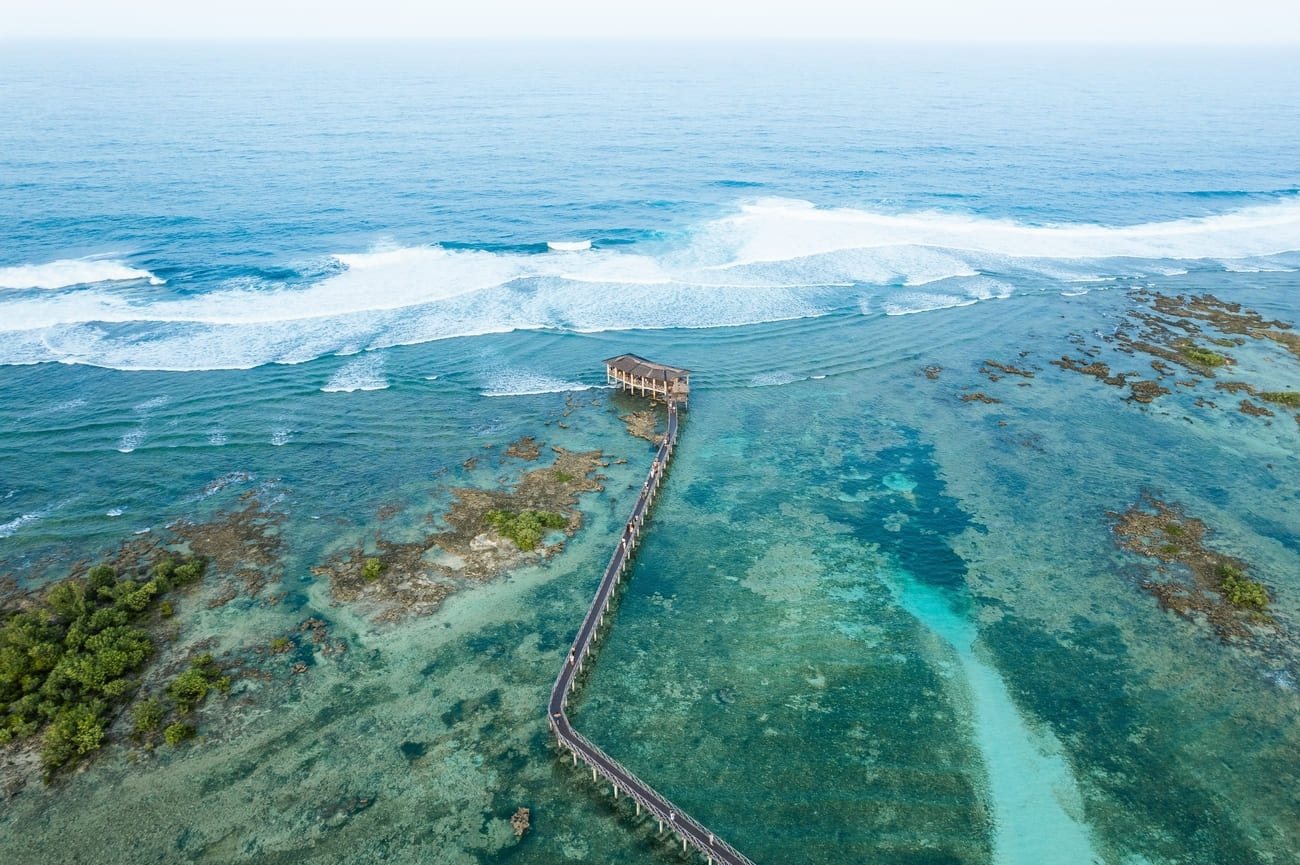
Cloud 9 is the wave that put Siargao on the global surf map. It is a powerful right-hand reef break that can produce clean, hollow barrels when swell, wind and tide align. The wave breaks over shallow coral, which is exactly why it can be so perfect and why it demands respect.
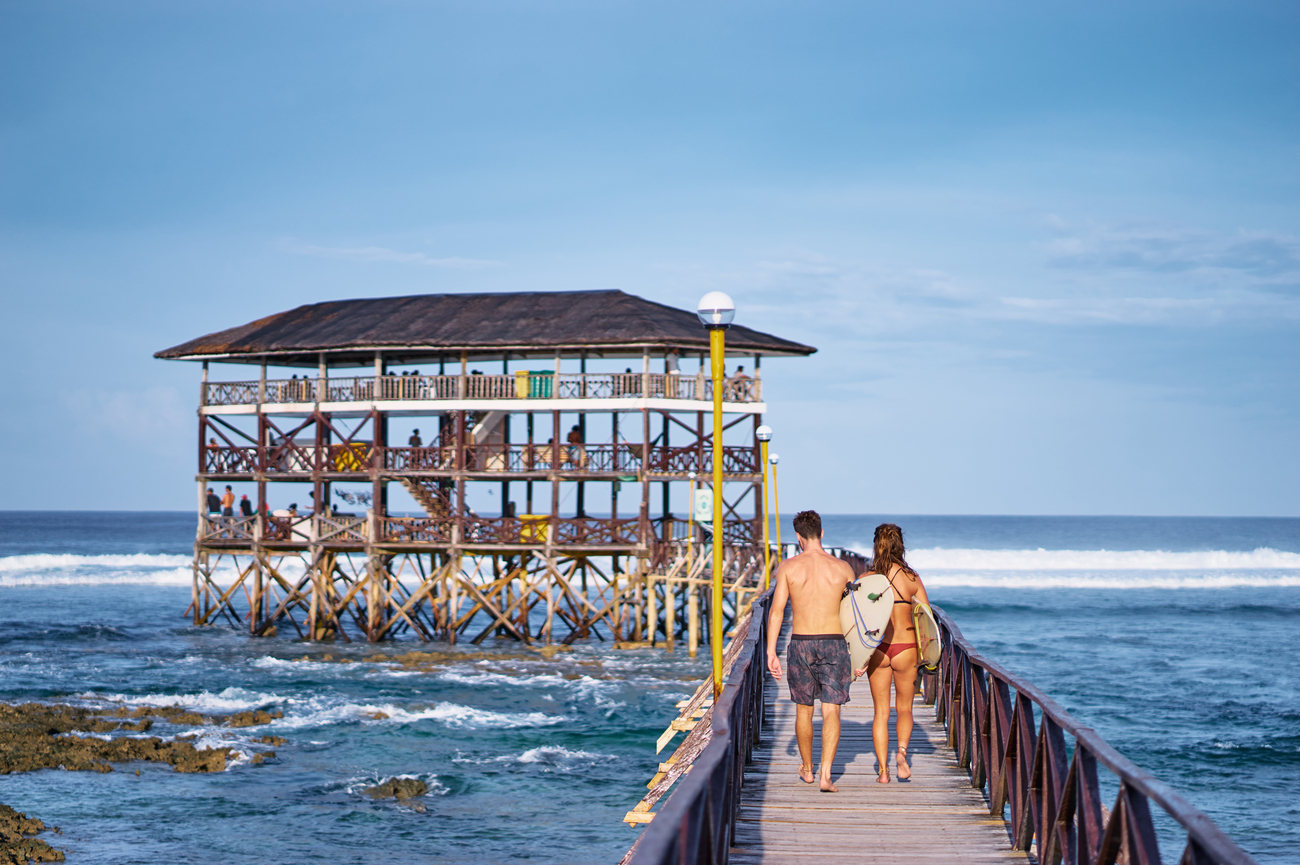
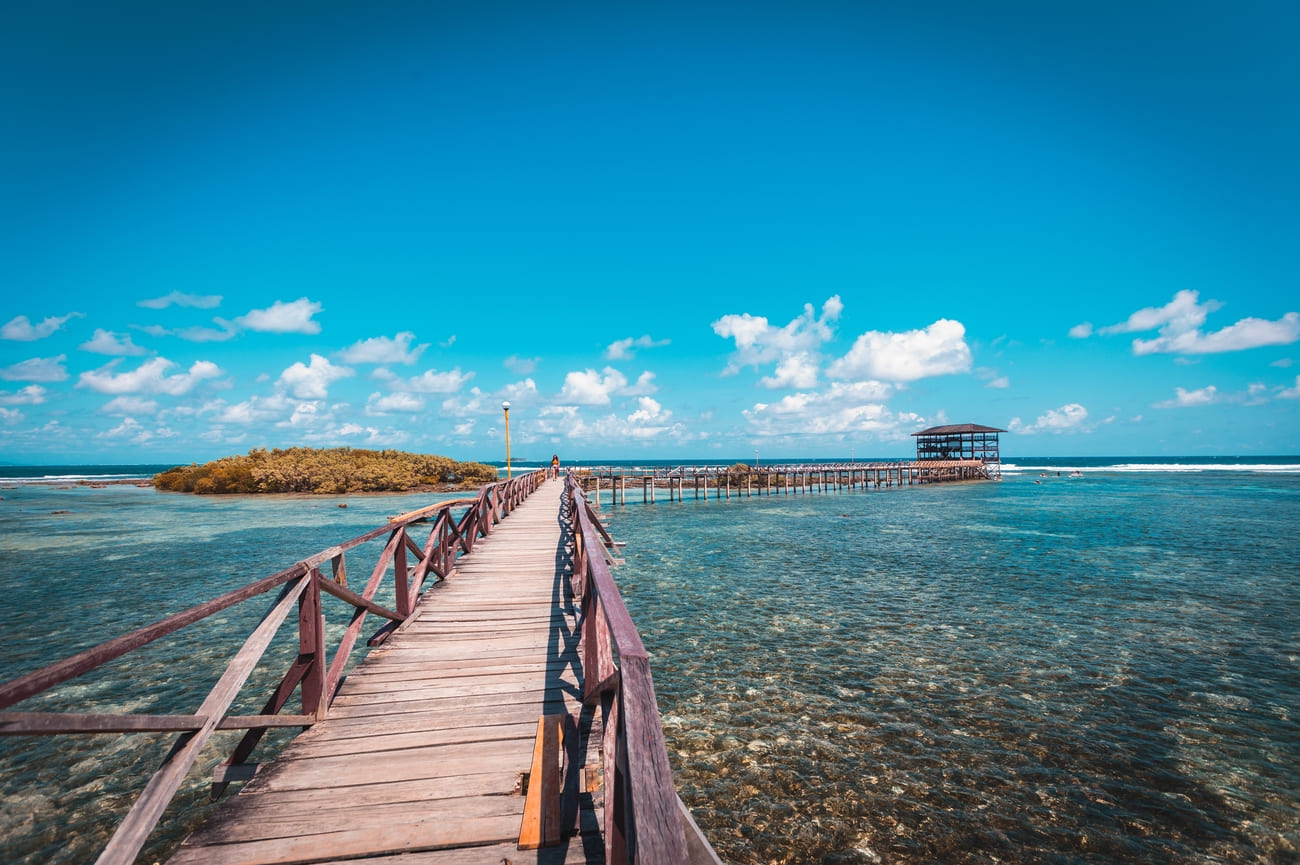
The boardwalk is part of the legend. It gives spectators and photographers a front-row view of the line-up, and on a good day you will see barrel after barrel with cameras trained on every set. If you get a memorable wave, there is a good chance someone captured it.
During peak season, Cloud 9 is also relatively consistent by reef-break standards. When the Pacific is sending energy through, the wave is on often enough that surfers build trips around it with confidence.
Wave
Characteristics
Cloud 9 is primarily a right-hand reef break, with occasional left sections when conditions allow, but the right is the main event. The cleanest swells usually arrive from the east to north-east, and the best surf tends to happen early in the morning when winds are light and the face stays groomed.
Tide is critical. Mid to high tide is generally the safer window, because low tide exposes the reef and increases the risk of impact. Wave size varies widely depending on swell strength, and bigger days here are not casual. This is an advanced wave, with shallow reef, strong currents, speed and crowds combining to raise the stakes. When it is firing, the barrel potential is exceptional and that is exactly why experienced surfers chase it.
Cloud 9 Surf
Etiquette & Safety
Cloud 9 requires strong etiquette. Locals surf this break daily and know it intimately, and respect matters. If someone is deeper and has priority, it is their wave, and trying to force your way into the line-up is the fastest way to create tension.
This is not the place to test your limits. If conditions look beyond your ability, the smarter move is to watch from the boardwalk or choose a more forgiving break elsewhere. Reef awareness is essential, particularly around low tide, and injuries do happen when surfers underestimate how shallow it gets.
Reef booties can help protect your feet on entry and exit, but they do not remove the risk. The most important protection is choosing the right tide window and only paddling out when you are genuinely ready for the wave.
Crowds also change the experience. Peak season can mean long waits for the right set and plenty of competition. Staying patient, following standard etiquette and keeping your positioning under control makes the session safer and far more enjoyable.
Rip currents can run strongly in the area. If you are caught, the key is not to panic. Stay calm, conserve energy and move out of the current before working your way back in.
Best Time to
Surf Cloud 9
Daily timing matters. Early morning sessions tend to deliver the cleanest surf and lighter crowds, with calmer wind and smoother water. Seasonally, September through November is often the most consistent stretch for size and quality, and this is when Cloud 9 most often shows its full potential.
From a safety perspective, surfing around higher tide is generally the better option. Low tide increases risk significantly, particularly for anyone unfamiliar with the reef.
Cloud 9 for
Spectators
Cloud 9 is also one of Siargao’s best experiences for non-surfers. The boardwalk offers a clear view straight over the line-up, making it an easy place to watch high-level surfing up close. It is also excellent for photography if you have the right lens, as many surf photographers shoot from this exact vantage point.
Sunset at the boardwalk is a daily ritual. Even if you never paddle out, it is worth visiting for the atmosphere and the view as the sky changes colour over the ocean. The surrounding area also has cafés and bars where you can settle in and watch the show.
If you want to check conditions before you go, look for a live cam or recent updates locally, as conditions can change quickly throughout the day.
Best Surf Spots in
Siargao Beyond Cloud 9
Stimpy's (Tuason Point)
Stimpy’s is a favourite for surfers who love left-handers. It is reached by a short boat ride from the Catangnan area near the Cloud 9 boardwalk, and it is often checked alongside nearby Rock Island so you can choose whichever wave is working best. Stimpy’s can be fast and powerful, and on a solid swell it is known for producing hollow sections, particularly when the tide is lower. When the surf is smaller, it becomes far more approachable and can feel like an excellent progression wave for confident intermediates.
The most enjoyable sessions tend to come with an east swell and mid to high tide, when the wave lines up into workable walls. Crowds are usually lighter than Cloud 9, though it is rarely empty. The main trade-off is access, you will need a boat, and it is best arranged through local operators in General Luna.
Why surf here: a quality left-hander that can feel more manageable than Cloud 9 while still delivering serious surf.
Jacking Horse
Jacking Horse sits close to the main surf zone and offers a fast, hollow wave that suits intermediate to advanced surfers. It can provide a quality left when conditions align, but it tends to be shorter and more intense than the longer, more forgiving waves on the island. It is a good option for surfers who want something punchier without committing to the heavier consequences of the most shallow reefs.
Conditions are specific, and when it is not working, it is not worth forcing. Whene good, it draws attention because quality lefts are relatively limited in the area, so crowds can build quickly on the right day.
Why surf here: a strong left option for surfers who want speed and intensity close to General Luna.
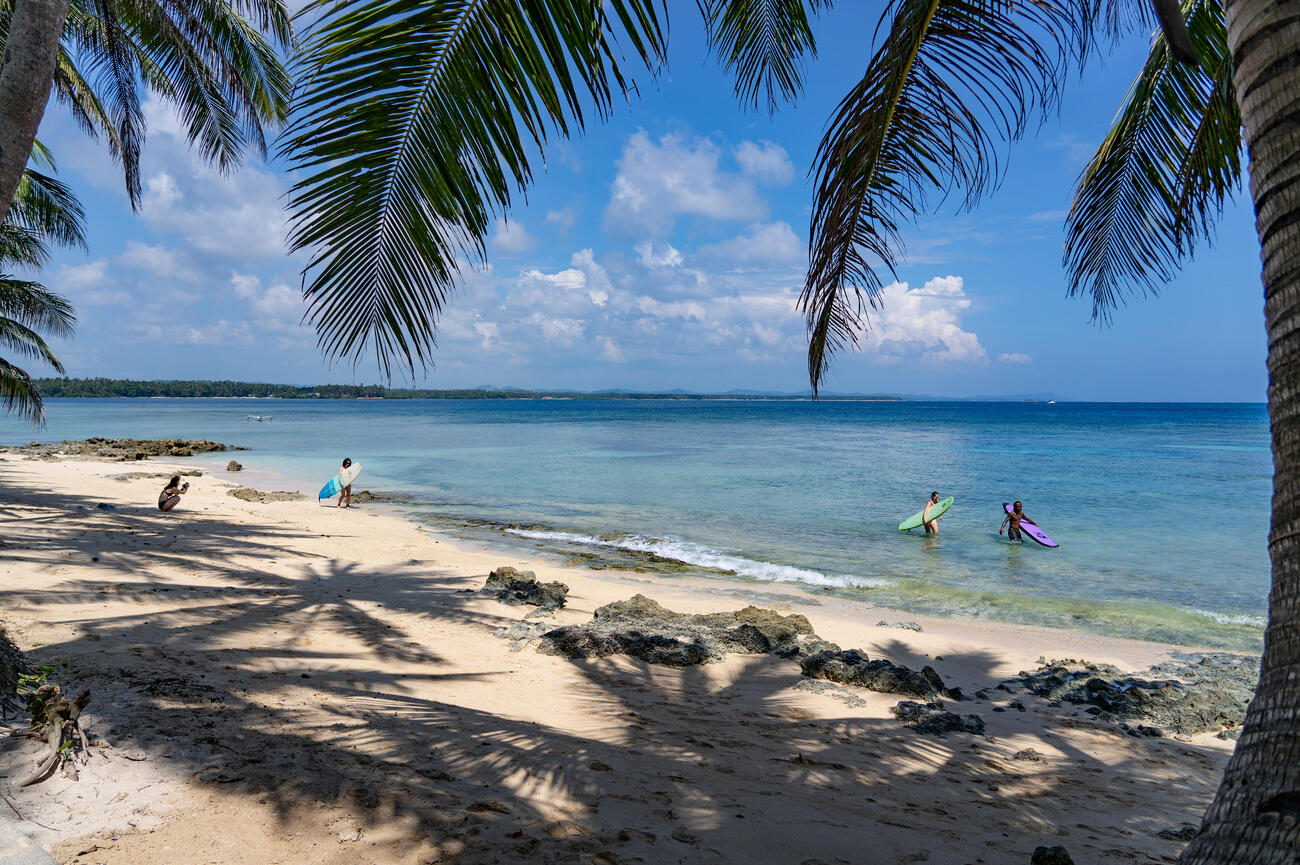
Pacifico
Pacifico sits away from the main General Luna surf scene, and the drive alone filters out casual surfers. When the swell is significant, Pacifico can deliver long, peeling right-hand rides with a point-break feel that is very different from the faster reef peaks further south. It suits intermediate to advanced surfers who understand positioning and wave selection, and it rewards those willing to plan around conditions rather than simply showing up.
Crowds tend to stay lower because it requires time and commitment to reach. If Pacifico is a key part of your surf plan, staying nearby can make the experience far easier than commuting from General Luna each day. For accommodation options, see our Where to Stay in Siargao guide.
Why surf here: longer rides, dramatic scenery and a more open line-up when the swell is right.
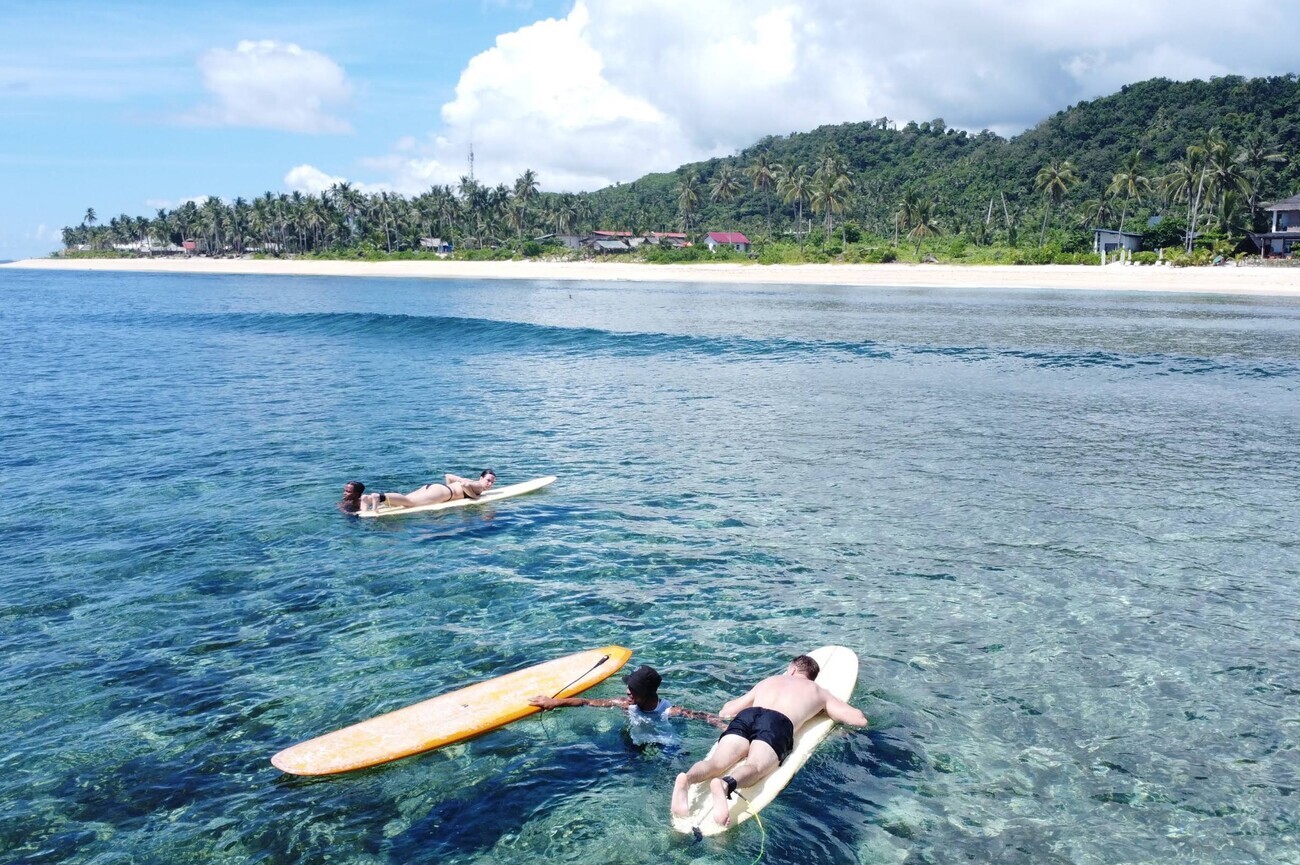
Rock Island
(Pansukian)
Rock Island is accessed by boat from the General Luna area and offers an A-frame style peak that can break both left and right. Compared to heavier reef breaks, it can feel more playful and less intimidating, making it a good option for surfers building confidence on reef waves. Mid tide often provides a cleaner, more workable set-up, though it can handle a range of conditions.
Crowds are typically low to moderate, largely because it requires a boat and it does not carry the same name recognition as Cloud 9.
Why surf here: fun, workable waves on a reef that can feel more forgiving than the main heavy hitters.
Cement
(Cemetery)
Cement is a serious left-hand reef wave near the Cloud 9 zone and is best viewed as advanced-only. It is fast, shallow and punishing, with the kind of barrel sections that appeal to experienced surfers who are fully comfortable in consequence-heavy conditions. It is also inconsistent, requiring very specific swell and tide alignment, so even skilled surfers can miss it.
Crowds tend to be low because it is not a casual wave. The risk is real, and anyone considering it should be confident in both skill level and reef awareness.
Why surf here: a challenging left for experienced surfers when conditions align.
Quicksilver
(Secret Spot)
Quicksilver is one of Siargao’s more discreet breaks, and it is often approached through local knowledge rather than public directions. It is a right-hand reef wave that can offer consistent, quality surf, with difficulty varying depending on size. The low crowd factor is part of what makes it special, and it is worth respecting the local approach by not turning it into a social media pin drop.
If you want to surf this type of spot responsibly, working with a local guide is the right approach.
Why surf here: quality waves with fewer people, accessed through local knowledge.
Beginner-Friendly
Spots
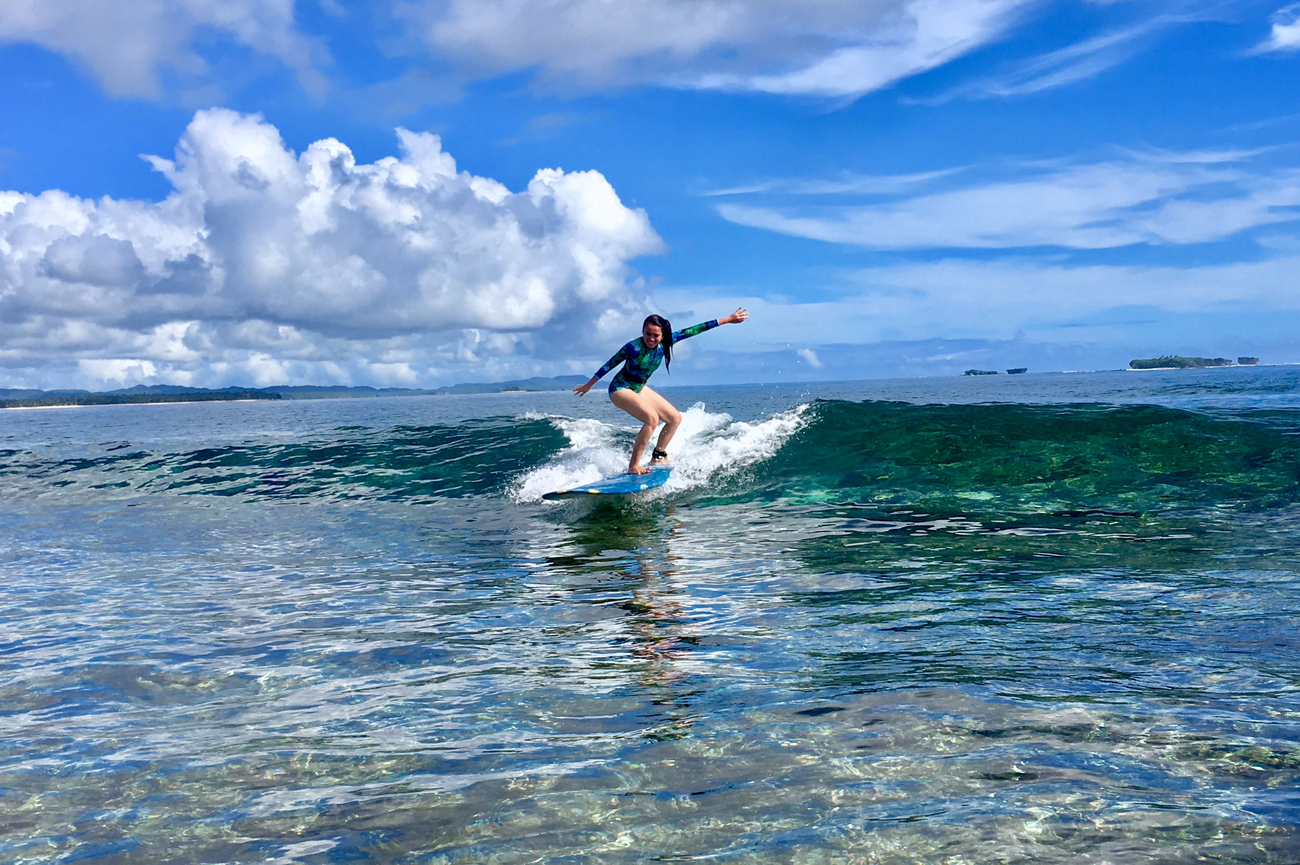
For beginners, Malinao Beach in General Luna is one of the easiest places to start. It is a beach break with a sandy bottom and smaller, softer waves on the right day, which makes wipeouts far less intimidating. Many surf schools run lessons here, and it is well suited to first-timers focusing on pop-ups and basic board control.
On calmer days, Daku Island can occasionally offer very mellow small surf near the shore, though conditions are variable. If you are already heading there as part of island hopping, it can be a fun bonus rather than something to plan a surf day around. For the island details, see our Siargao Island Hopping Guide.
If you want to visualise where each spot sits relative to your accommodation, online surf maps can help you plan travel time and pick the most practical base.
Surf
Lessons Siargao & Surf Schools
Learning the correct technique from the beginning makes a significant difference. Proper instruction helps prevent bad habits that can take months to unlearn, and it accelerates confidence in the water. In a reef environment like Siargao, safety knowledge is just as important as technique. Understanding rip currents, reef positioning and how to fall safely reduces the risk of unnecessary injuries.
Professional surf schools also provide structured progression. Instead of simply trying to stand up for a photo, you build real skills that allow you to read waves, paddle efficiently and position yourself correctly in the line-up.
Reputable Surf
Schools in Siargao
Kermit Surf Resort and School is one of the island’s longest-running and most established options. It has built a strong reputation for safety and consistency, offering lessons for beginners through to more advanced surfers. Equipment rental is available if you only need boards.
Island Surf School Siargao is well regarded for smaller group sizes and ISA-certified instructors. It suits surfers who want focused attention and clear progression rather than a crowded beginner session.
Harana Surf Resort operates close to the Cloud 9 boardwalk and offers coaching for all levels, as well as surf guiding to different breaks depending on conditions. Its location makes it convenient for those staying near the main surf zone.
What is
Usually Included
Most lessons include a soft-top foam board for safety, a rash guard or top for sun protection, and a leash. Some schools also provide reef booties depending on the break and conditions.
You should bring your own swimwear, reef-safe sunscreen, a towel and a water bottle. A willingness to listen and stay patient with yourself matters more than anything else.
Private Surf Experiences
Private sessions or small-group coaching allow the lesson to be built around your ability and goals. Instead of following a fixed plan, your instructor adapts to your level, whether that means focusing on pop-ups, improving turns or learning how to read reef breaks properly.
Surf guiding is another key advantage. Rather than guessing which break might suit you that day, an experienced guide selects the most appropriate wave based on tide, swell direction and your confidence level. Video analysis, where available, can significantly speed up improvement by showing you exactly what needs adjusting.
Flexible scheduling also makes a difference. Surfing at the right tide and wind window is far more productive than heading out simply because that is when a group lesson is scheduled.
If you want structured progression combined with comfort and seamless logistics, our 4-Day Siargao Private Island-Hopping and Surf Escape includes tailored surf sessions aligned with the best conditions for your level.
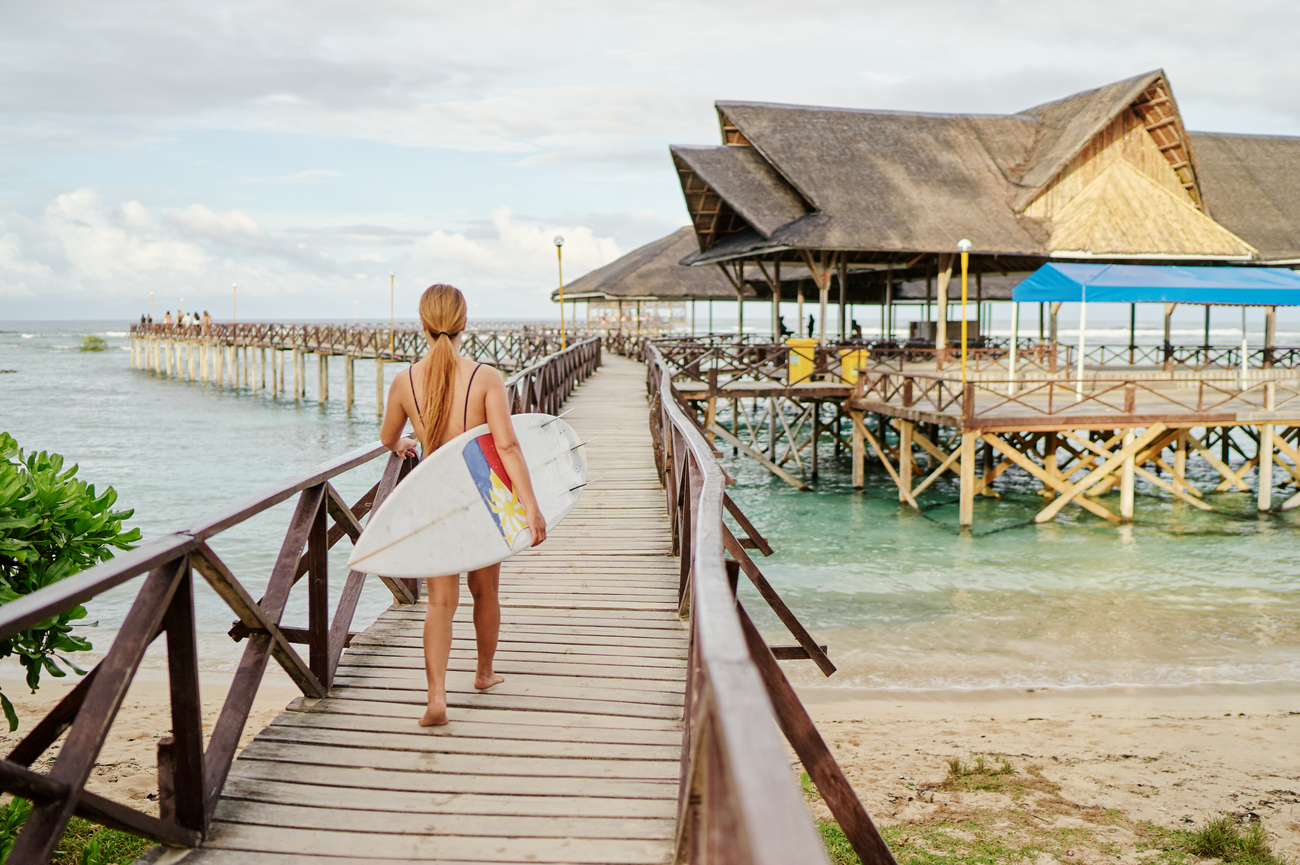
Surfboard Rentals &
Gear in Siargao
If you are travelling for a longer stay and plan to surf most days, bringing your own board can be worth it. A proper board bag is essential for flights, and many surfers also pack the small items they are already used to, such as a reliable leash, preferred wax and reef booties that fit well. A quality rash guard is also a smart choice for sun protection and to reduce irritation from paddling.
If you are only visiting for a short trip, it is usually easier to rent locally and travel light. Siargao has plenty of surf shops in General Luna, with a good range of boards and accessories available. Tropical wax is easy to find, as are replacement leashes and basic essentials if something breaks mid-trip.
When renting, inspect the board properly before you take it out. Look closely for cracks, soft spots, delamination, loose fins and previous repairs that may not hold. It is better to spend two minutes checking than to lose a session to an avoidable problem.
Board repairs are widely available in General Luna. Simple dings are often turned around quickly, while larger repairs can take longer depending on workload and damage. If you are surfing daily, it is worth asking about repair timing as soon as an issue appears, rather than waiting until the board becomes unusable.
If you are flying with boards, using proven travel protection methods can reduce airline damage risk, particularly around nose and rail impact points.
Surf
Safety & Ocean Awareness
Understanding Siargao's Surf Hazards
Siargao’s beauty comes with real ocean energy and reef environments that demand awareness. Most of the island’s key breaks sit over sharp coral reefs. At lower tide, the reef can be dangerously shallow, increasing the risk of cuts, impact injuries and board damage. Choosing the right tide window and honestly assessing your ability level are critical decisions before paddling out.
Rip currents are another factor to understand. They can pull you away from your take-off zone or further out to sea more quickly than expected. If caught in one, staying calm is essential. Move parallel to shore to exit the current rather than fighting directly against it. Experienced surfers often use channels and currents strategically to paddle out more efficiently, but this requires observation and confidence in the water.
Sea urchins are present around shallow reef areas. Stepping on one can be extremely painful, and spines can embed in the skin. Reef booties reduce risk, particularly when entering or exiting over exposed reef. Marine life in general is rarely aggressive, but awareness matters. Jellyfish occasionally appear, sea snakes are uncommon but should never be disturbed, and stingrays may rest in sandy areas, so a gentle shuffle when wading helps avoid accidental contact.
Strong lateral currents between sections of reef or near island channels can also create challenges, particularly for less confident swimmers. Surfing with a partner and letting someone know your plans is always wise.
Surf Safety
Best Practices
Before paddling out, spend time observing the break. Watch where other surfers enter and exit, identify the channel, note set intervals and check the tide level. Mid to high tide is generally safer on most reef breaks. If the waves look beyond your current ability, it is better to wait for a smaller window or choose a more forgiving spot.
In the line-up, follow established surf etiquette. Do not drop in, respect priority and communicate clearly. Staying hydrated and reapplying reef-safe sunscreen regularly are simple but important habits, as tropical sun exposure is more intense than many visitors expect.
After your session, check for cuts or abrasions immediately. Even small reef scrapes can become infected in tropical conditions if left untreated. Clean wounds thoroughly with fresh water and soap, apply antiseptic and monitor healing over the next few days. If a cut worsens, becomes increasingly painful or shows signs of infection, seek medical advice promptly.
Basic medical facilities are available on the island, and during busier periods lifeguards are present in the Cloud 9 area. It is sensible to save local emergency numbers in your phone and confirm that your accommodation can assist if needed.
Surfing in Siargao is deeply rewarding, but the ocean should always be approached with respect. Knowledge, patience and honest self-assessment are the foundations of a safe and memorable session.
Surf
Culture & Community in Siargao
Siargao’s surf identity long predates social media. The island has been part of the regional surf conversation since the 1970s, and many of the local surfers at breaks like Cloud 9 grew up on these reefs. For them, surfing is not a trend or a travel experience, it is part of everyday life and family history. That heritage shapes the atmosphere in the water and on land.
Respect is central to the culture. Visiting surfers are guests in a community where people surf the same breaks daily. A simple nod in the line-up, patience when waiting for waves and an awareness of local hierarchy go a long way toward building goodwill.
Over the years, an international surf community has also taken root. Long-term residents from around the world now call Siargao home, creating a blend of Filipino and global surf perspectives. The result is a scene that feels both local and international, but still grounded in island rhythm.
Surf competitions take place throughout the year, with the Siargao International Surfing Cup remaining the most recognised event. During competition periods, the island energy shifts, with more spectators, visiting surfers and a stronger festival atmosphere.
Environmental awareness is part of the surf culture as well. Beach clean-ups are regularly organised by local groups and surf communities, and many businesses promote reef-safe products and reduced plastic use. Visitors who participate in clean-ups or support responsible operators contribute directly to preserving the breaks they enjoy.
Respecting
Local Surf Culture
Understanding and respecting local priority is fundamental. At home breaks, experienced local surfers often command deeper positioning and set waves. Observing before paddling out helps you understand the dynamic of the line-up.
Sharing waves fairly and avoiding aggressive behaviour keeps the atmosphere positive. Surfing here works best when the line-up functions cooperatively rather than competitively.
Supporting local surf schools, guides and independent shops also strengthens the community. Choosing locally run businesses ensures that tourism income remains within the island economy.
Community events, from small competitions to environmental initiatives, are often open to visitors. Participating respectfully allows you to engage with the island beyond the wave itself.
Surf Social
Scene
The Cloud 9 boardwalk is more than just a surf vantage point, it is a daily meeting place. After sessions, surfers gather to talk through waves, watch the sunset and wind down.
General Luna hosts many of the island’s cafés, bars and restaurants where the surf crowd naturally gravitates. Evenings often blend travellers, locals and long-term residents in a relaxed, open atmosphere shaped by the day’s conditions.
Occasional surf film screenings, local events and informal gatherings add to the social layer of the island. Surfing in Siargao is not only about the water, it is about the rhythm of life built around it.
To understand how surfing fits into the wider island experience, see our Complete Siargao Travel Guide for what to explore beyond the breaks.
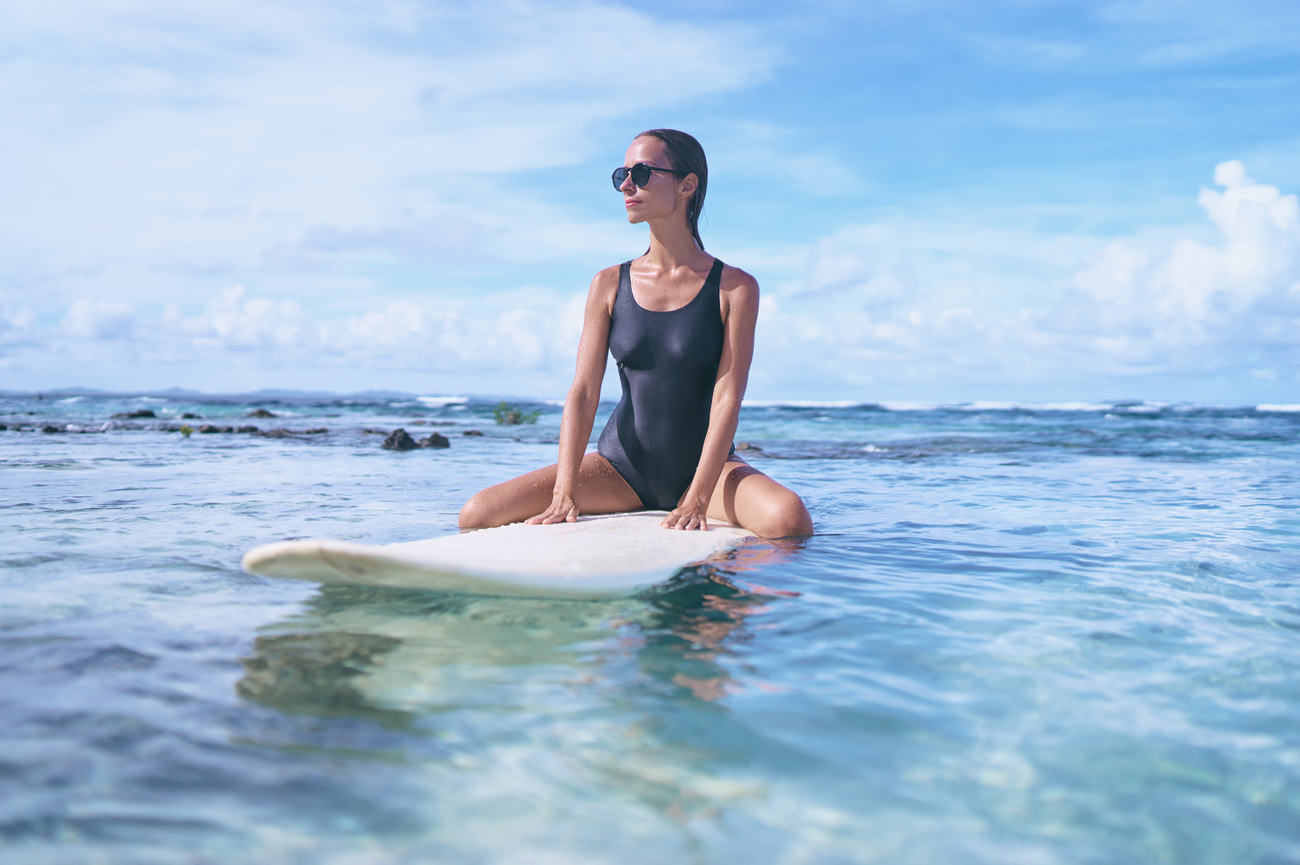
Combining Surf with
Other Siargao Activities
Surfing may be the headline act in Siargao, but the island is far more than a surf destination. The best trips here blend early sessions with island exploration, excellent food and enough downtime to actually feel refreshed. You do not need to surf from dawn to dusk every day to have an outstanding surf holiday.
A simple rhythm works well. Surf in the morning when conditions are typically cleaner and your energy is highest, then use the afternoon for experiences that suit warmer temperatures and windier conditions. Evenings are ideal for slower moments, sunset views, good meals and recovery for the next day.
Perfect Surf
& Island-Hopping Balance
Most surfers aim for early sessions, often between around 5:30 and late morning, when winds are calmer and the sea surface is smoother. Afternoon is a natural window for island hopping, when surf can soften and the day is better suited to boat trips. That makes it easy to combine surfing with a three-island tour to Guyam, Naked and Daku without feeling like you are choosing one experience over the other.
If you want to plan your boat days efficiently, our Siargao Island Hopping Guide helps you understand what each island offers and how to structure the day around your surf schedule.
What to Do
When You Are Not Surfing
Island hopping is one of Siargao’s signature experiences and fits naturally around surf days. Calm-water activities such as paddleboarding or kayaking at places like Sugba Lagoon are ideal when the ocean is less cooperative or when your body needs a lighter day. Snorkelling and diving add another layer, with coral, reef fish and occasional turtle sightings depending on conditions.
Sohoton Cove delivers a different kind of adventure, with caves, lagoons and the rare experience of swimming near stingless jellyfish when conditions allow. On the main island, Magpupungko Rock Pools are worth timing carefully around low tide, offering a dramatic natural swimming spot carved into rock.
Siargao’s food scene is also a real part of the experience. Many travellers build evenings around trying different restaurants, then finish with sunset at the Cloud 9 boardwalk or a quieter beach stretch. Yoga and wellness sessions are popular too, especially for surfers looking to recover and stay loose between sessions.
If you want the balance handled for you, our 4-Day Siargao Private Island-Hopping and Surf Escape is designed to combine surf sessions with private island adventures and seamless logistics, so your trip flows naturally around the best conditions.
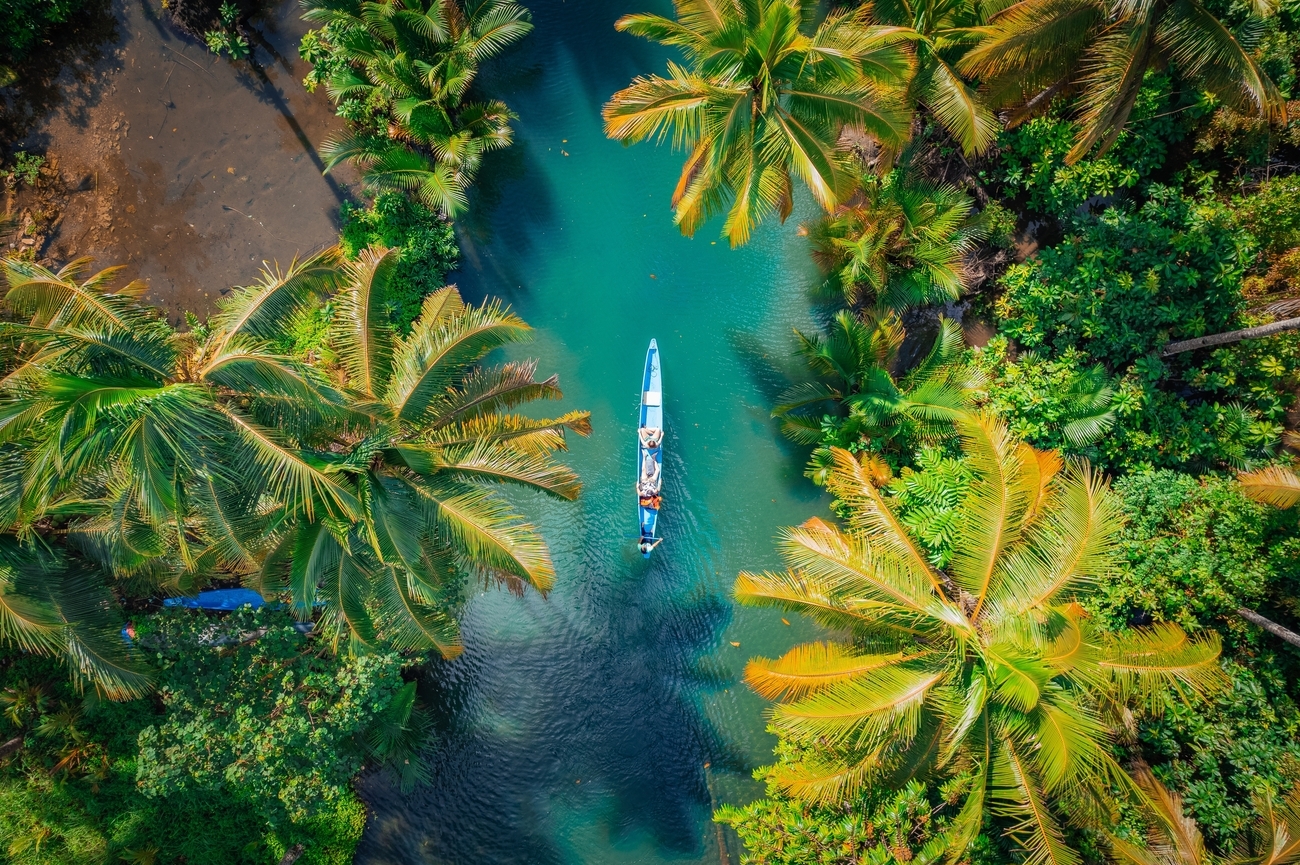
Ride the Wave to Your
Best Siargao Adventure
Siargao delivers genuinely world-class surfing across every skill level. Beginners can learn on gentle beach breaks with space to build confidence. Intermediate surfers can progress on faster, more playful reefs and points. Advanced surfers can chase the kind of hollow, consequence-heavy barrels that made Cloud 9 legendary. Whatever your level, there is a wave here that fits.
Cloud 9 may be the crown jewel, but the real advantage of Siargao is range. Exploring beyond the main boardwalk opens up quieter sessions, better pacing and waves that suit the day’s conditions, your ability and the tide, rather than forcing you into the most crowded line-up.
Experience Siargao's Legendary Waves with Revigorate
We designed our Siargao experience to remove the friction that ruins otherwise great surf trips. Instead of spending your week piecing together boats, timing tides and hoping you chose the right coach, we handle the logistics end-to-end. Accommodation is carefully selected, surf sessions are matched to your level and conditions, and transport is arranged so you move smoothly between breaks, islands and downtime without wasted hours.
Explore our 4-Day Siargao Private Island-Hopping and Surf Escape and let us take care of the details while you focus on the waves.
The water is warm, the Pacific keeps delivering, and Siargao is ready when you are.
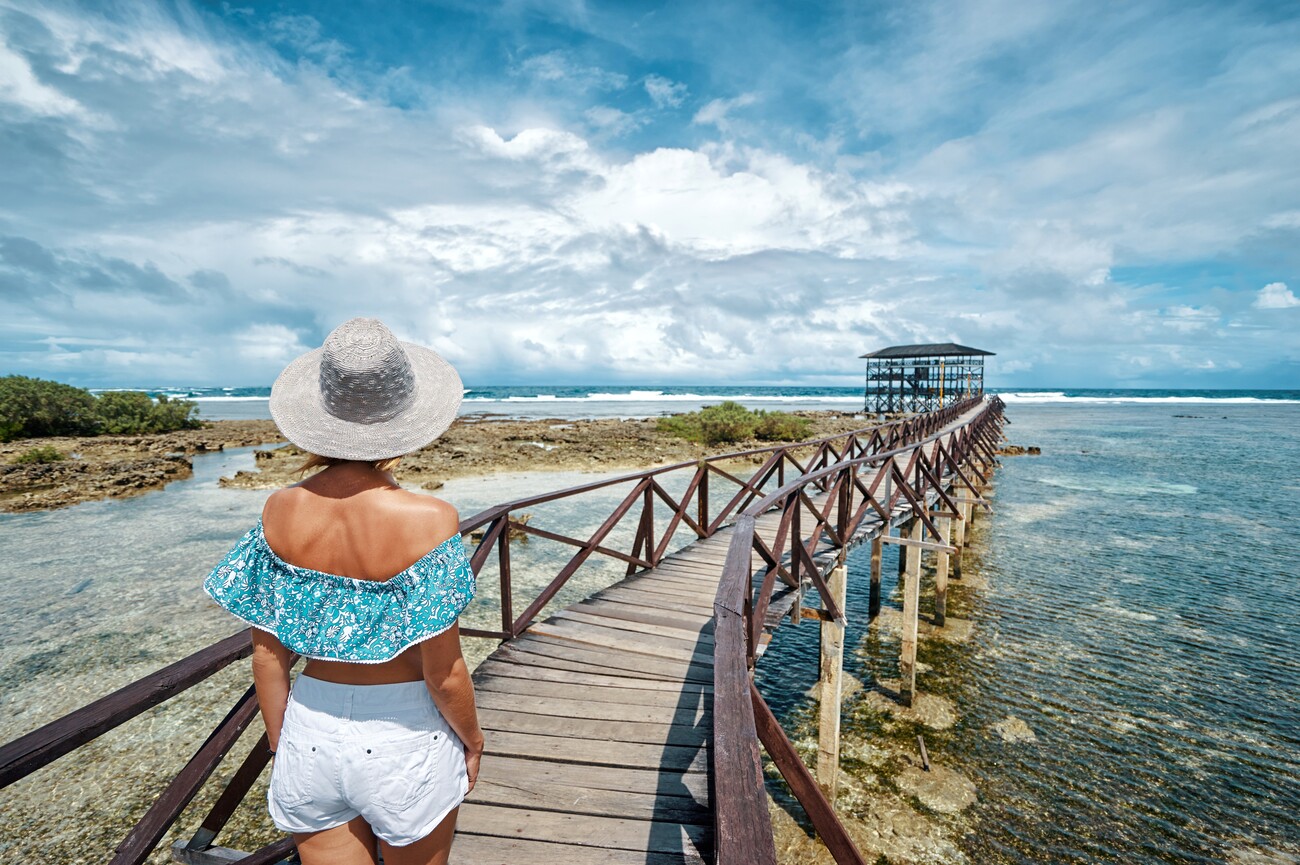


Let us know what you love, where you want to go, and we’ll design a one-of-a-kind adventure you’ll never forget.
Get in touch
Miriam
Travel Specialist

Romina
Travel Specialist

Laura
Travel Specialist
Frequently Asked Questions
-
What is the best time of year to surf in Siargao?
The best time to surf in Siargao depends on your level. August to November is the main surf season, with stronger and more consistent swells that suit intermediate and advanced surfers. March to May and December to February are often better for beginners and progressing surfers, thanks to smaller, more manageable waves.
-
Is Siargao good for beginner surfers?
Yes, Siargao is a great destination for beginners as well as experienced surfers. While Cloud 9 is an advanced reef break, the island also has gentler spots and surf schools that are well suited to first-time surfers learning the basics in safer, more forgiving conditions.
-
What is Cloud 9 in Siargao?
Cloud 9 is Siargao’s most famous surf break and the wave that made the island internationally known. It is a powerful right-hand reef break that can produce fast, hollow waves when conditions align, making it one of the most sought-after surf spots in the Philippines.
-
Are there good surf spots in Siargao besides Cloud 9?
Yes, Siargao has several excellent surf spots beyond Cloud 9. Depending on the conditions and your ability, surfers also explore places such as Stimpy’s, Jacking Horse, Pacifico, Rock Island and other lesser-known breaks across the island.
-
Do I need surf lessons in Siargao?
If you are new to surfing or want to improve your technique, lessons are highly recommended. Learning with a qualified instructor helps you build confidence, understand ocean safety and choose the right break for your level, which is especially important on an island known for reef waves.
-
Can you combine surfing with other activities in Siargao?
Yes, surfing combines very naturally with other experiences in Siargao. Many travellers surf early in the day, then spend the afternoon island hopping, visiting lagoons, relaxing on the beach, or enjoying the island’s cafés, restaurants and sunset spots.
-
Is Siargao suitable for a private surf holiday?
Yes, Siargao works very well for a private surf holiday. A tailored trip gives you more flexibility around tides, swell, coaching and transport, allowing you to surf the right spots at the right time while also enjoying a more relaxed and comfortable overall experience.
-
Why book a Siargao surf trip with Revigorate?
Revigorate creates personalised Siargao surf journeys designed around your level, travel style and the day’s conditions. We take care of the planning, accommodation, transport and overall flow of the trip, so you can focus on the surfing while enjoying a smoother and more exclusive island experience.
Our offices:



Revigorate, Iberian Escapes and Algarve Lifestyle are the registered brand names of APCS Lda . We are a fully authorised travel agency licensed by Turismo de Portugal RNAVT/6867.
In the event of a dispute, the consumer may refer to: RAL - Centros de Arbitragem
Avª. 5 de Outubro, nº. 55, R/C Dtº. 8000-075 Faro, Portugal | Tel: +351 289 823 135 *
* national landline call
E-mail: info@consumoalgarve.pt| www.consumidoronline.pt | Mon to Fri: 9:00 - 13:00 / 14:00 - 17:00