Hong Kong Harbour with Kids: Ferries, Space and Skyline Views
The harbour day is the simplest day of the week.
That is exactly why it works.
After the structure of Hong Kong Disneyland and the scale of Ocean Park, this is the point where the city takes over. The pace drops. The movement feels natural. Nothing needs to be managed too closely.
It starts with the Star Ferry.
A ten-minute crossing that has been running since 1888, moving between Central and Tsim Sha Tsui with the skyline building in front of you as you leave the pier. No queues to manage beyond boarding. No complexity once you are on it.
From there, everything connects without effort.
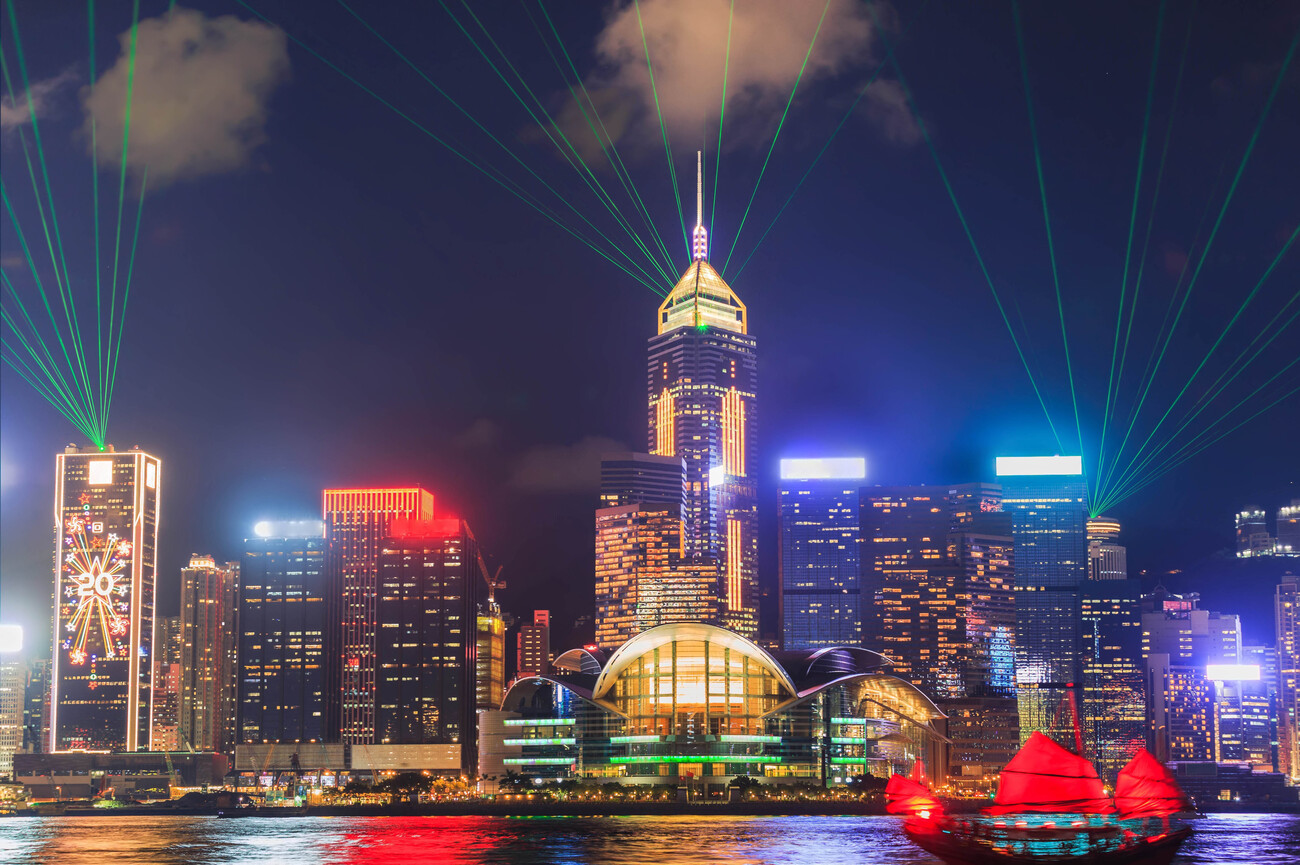
The Space Museum sits a short walk from the waterfront. The Avenue of Stars runs along the harbour with figures like Bruce Lee marking the route. The Symphony of Lights begins each evening whether you planned for it or not.
Above it all, Victoria Peak gives the full perspective.
Reached by the Peak Tram, the city unfolds in a single view. The harbour, the skyline, the route you have just taken, all visible at once.
This is what makes the harbour day different.
It does not need structure in the same way as the rest of the week. The city provides it.
For the full Hong Kong family itinerary that this day fits into, including the hotel, Disneyland, and Ocean Park, see our Hong Kong family travel guide.

Why This Day Works Best from Kowloon
Central is where many families stay. Tsim Sha Tsui is where this day really happens.
One Star Ferry crossing separates the two, and once you arrive on the Kowloon side, the rest of the day begins to connect naturally on foot.
That is the real advantage.
The Space Museum, the Avenue of Stars, the Clock Tower, and the promenade used for the Symphony of Lights all sit within a short walk of the ferry pier. There is no need for extra transfers. No need to organise taxis between stops. The family steps off the ferry and the day is already in motion.
The shape of it is simple.
It starts with the Star Ferry crossing from Central to Tsim Sha Tsui. From there, the Space Museum sits just a few minutes away along the waterfront. The Avenue of Stars carries the day forward between lunch and evening. Aqua provides the midday pause above the harbour. The return crossing to Central leads naturally into the Peak Tram, which closes the day from high above the city.
That progression is what makes the day work so well.
Water level to skyline in a single sequence. The harbour first, then the promenade, then the full view from above.
For the broader case for why Hong Kong works so naturally for families, including its compactness, language accessibility, and range of experiences, see 10 reasons why Hong Kong works for families when it’s done right.
The Star Ferry: Why It Is Worth Doing
Properly
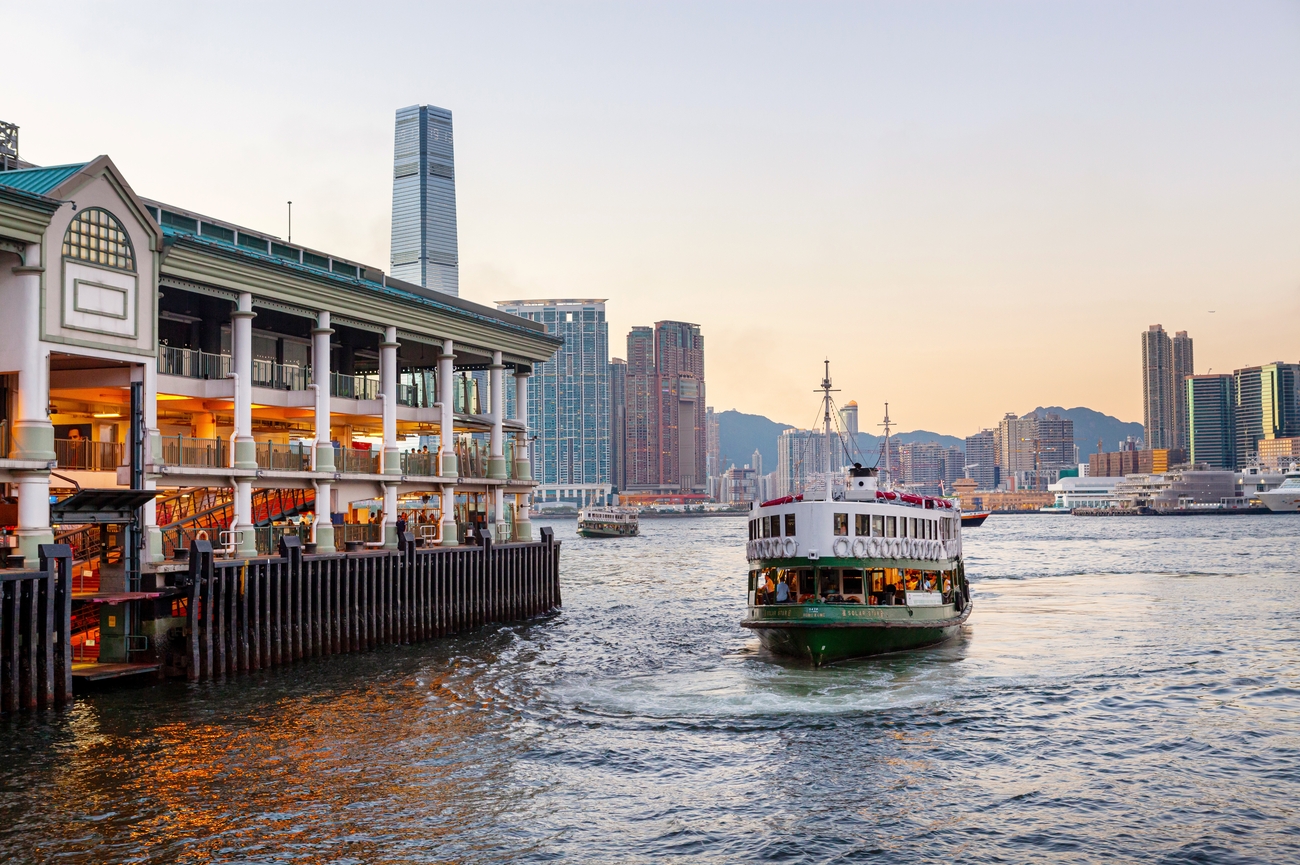
The Star Ferry has been crossing Victoria Harbour since 1888, and it remains one of the simplest and best experiences in Hong Kong.
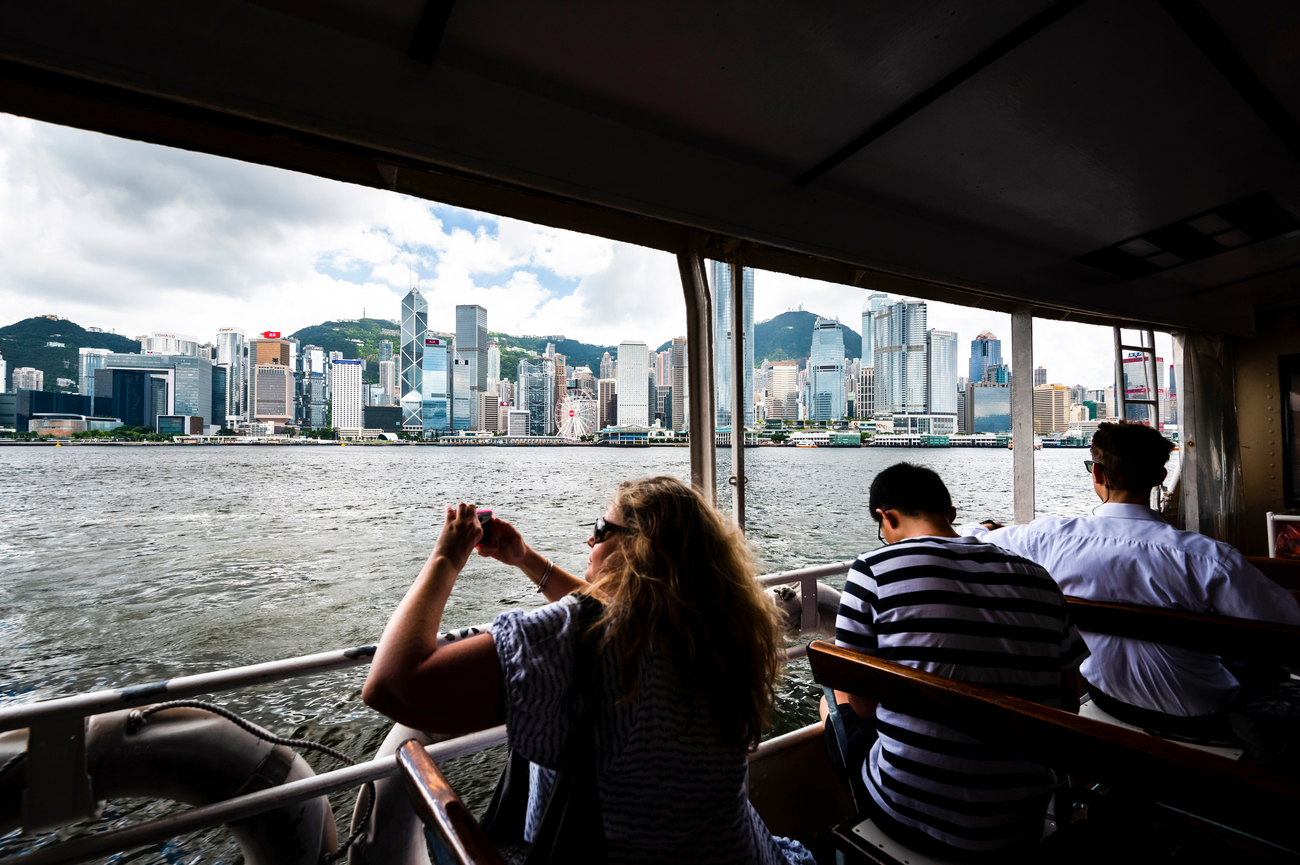
The crossing from Central to Tsim Sha Tsui takes around ten minutes. In that short time, the full skyline builds in front of you. IFC, the Bank of China, HSBC, and Victoria Peak rising behind them. It is the same view that appears in almost every image of Hong Kong, but from the ferry you are not looking at it from afar. You are moving through it.
That is the difference.
Upper Deck or
Lower Deck
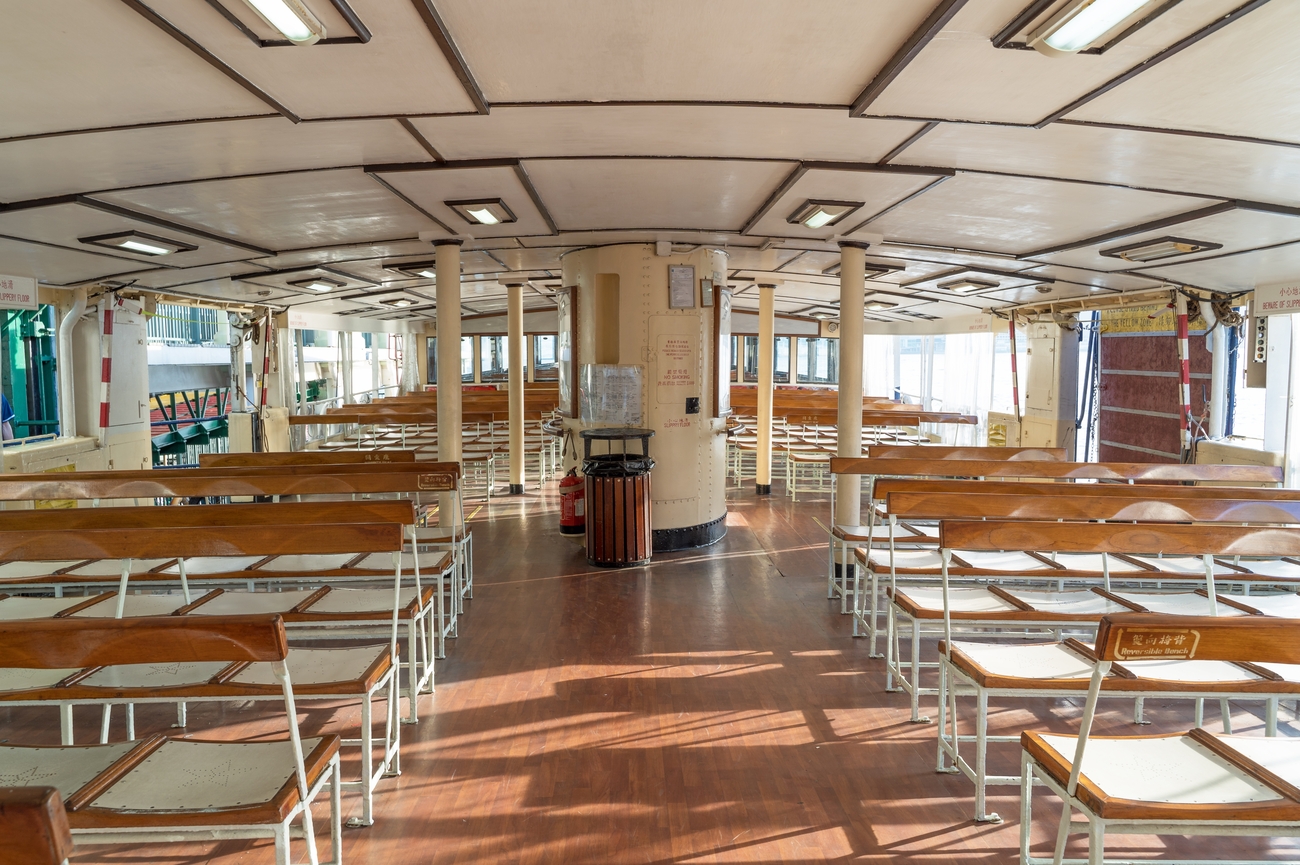
The ferry has two decks, with separate boarding gates and slightly different fares.
The upper deck is the better choice for a first crossing. It gives a clearer view, more open air, and more space at the railing. For children, it is usually the most exciting option.
The lower deck feels closer to the water and more traditional in atmosphere. It is worth trying on a second crossing, but the view is more restricted.
When to Take it
The timing changes the experience.
A mid-morning crossing works well for orientation. The skyline is clear, the light is clean, and the city is easy to read.
At dusk, the same crossing feels completely different. As the ferry moves away from the pier, the light drops behind Hong Kong Island and the buildings begin to illuminate one by one. Children who have been seeing the skyline all week suddenly understand it in a more immediate way. Adults usually do too.
If there is only time for one crossing, choose dusk.
If the day allows for both, take one in the morning on the way to Kowloon and one in the evening before returning to Central for the Peak Tram.
A Detail
Children Often Notice
One detail is especially good with children.
The Star Ferry does not need to turn around. It arrives, unloads, reloads, and departs again without reversing in the way most people expect.
That is because it is double-ended, with controls and propulsion at both ends.
It is a small engineering detail, but children often notice it immediately, and it adds a small extra layer of interest to the crossing.
The Hong Kong Space Museum: The Stop That Surprises Everyone
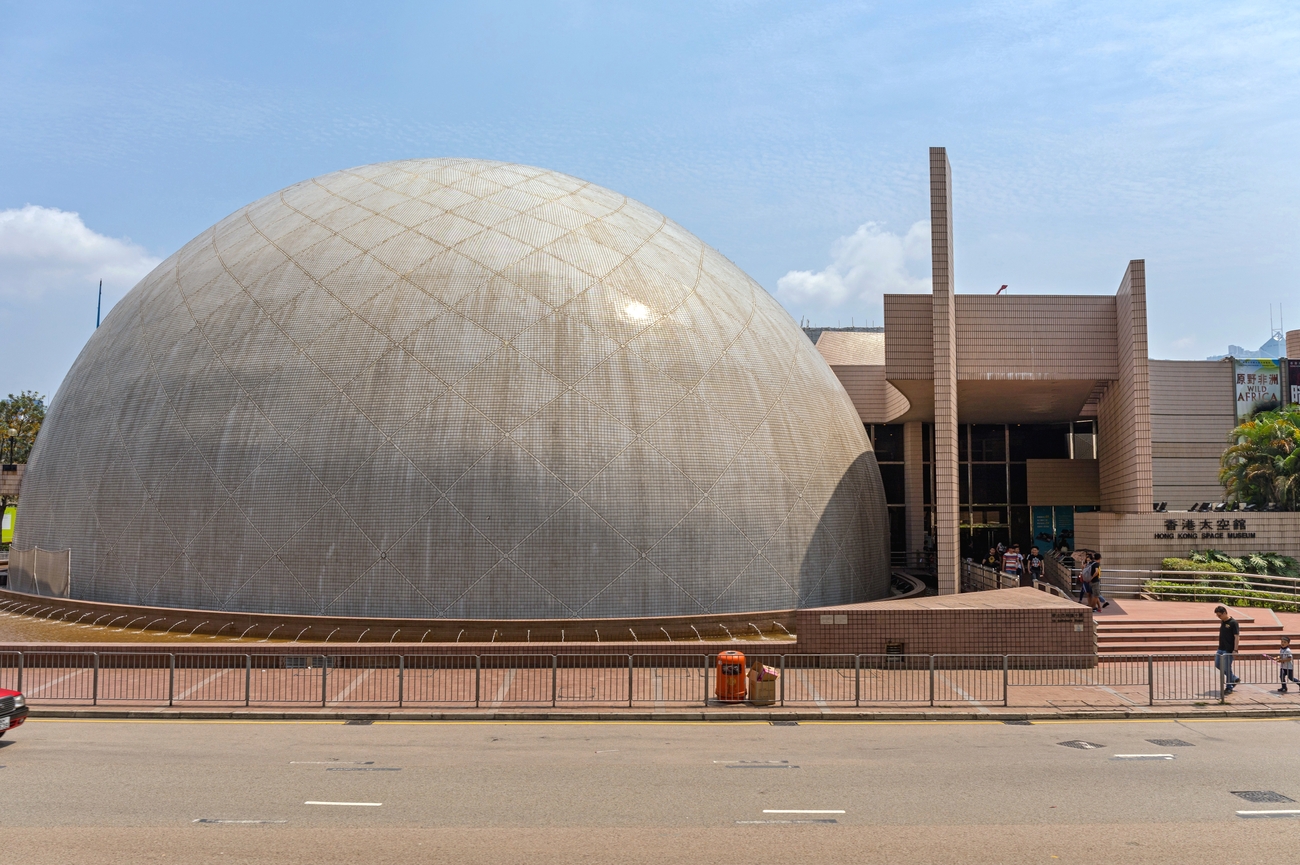
The Hong Kong Space Museum stands out immediately on the Tsim Sha Tsui waterfront. Its white dome looks nothing like the towers around it, and children often notice it before they know what is inside.
That is part of its appeal.
This is not a children’s museum dressed up in the language of science. It is a serious space and astronomy museum that happens to work exceptionally well for families. Across its permanent exhibition halls, more than 100 exhibits explore the universe from different angles, and more than half are interactive.
Hall of the
Cosmos
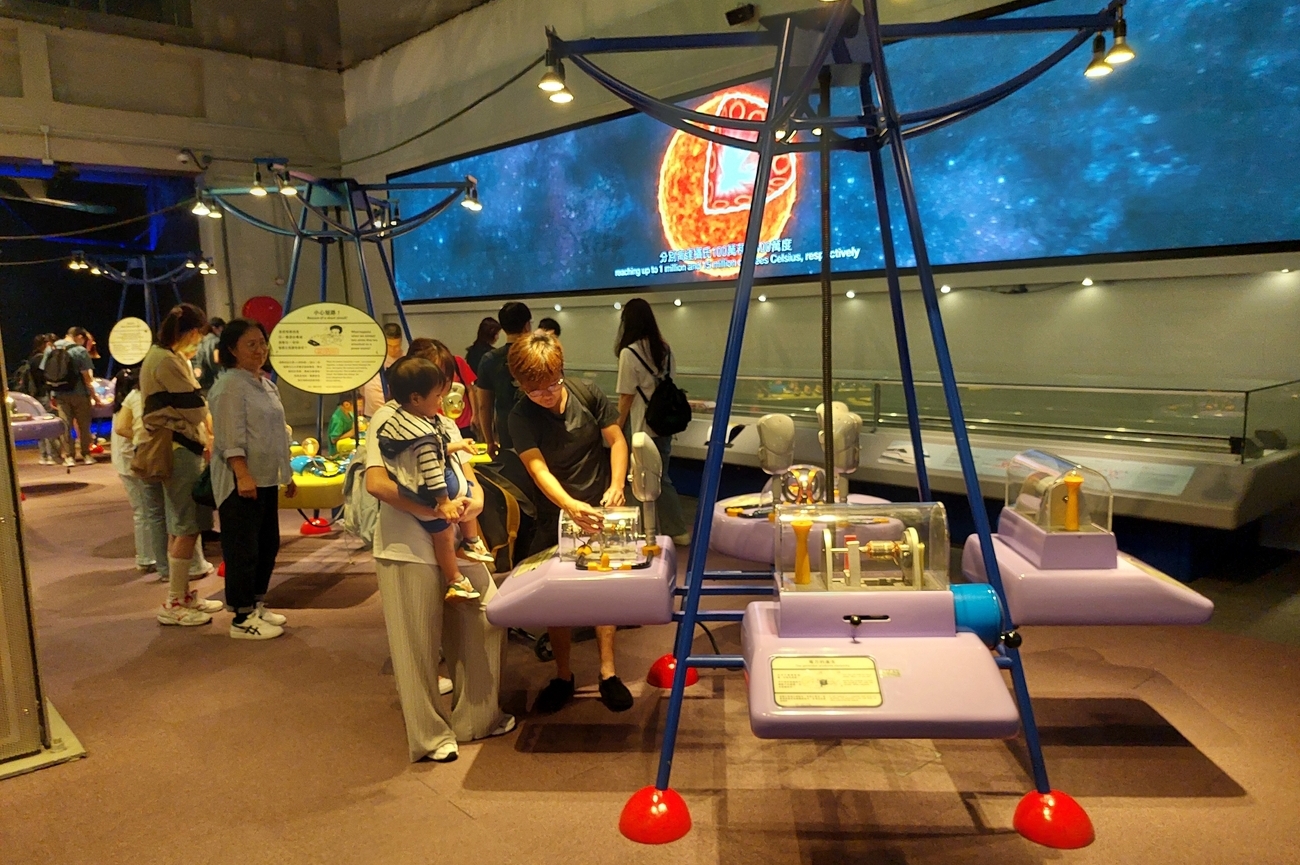
The ground floor begins with the wider universe. Stars, galaxies, black holes, the Big Bang, and dark matter are all presented through exhibits designed to be touched, operated, and experienced rather than simply read.
The aurora exhibit is especially good with children. Visitors adjust solar wind strength inside a vacuum tube to create an aurora over an Earth model. The result is immediate and highly visual.
The Big Bang Theatre offers a short, immersive film experience tracing the universe from its beginnings to the present. It is dark, dense, and usually leaves children briefly quieter than expected.
The Relativity Bicycle is another standout. By riding it, visitors experience visual distortions linked to travel near the speed of light. It is one of the better examples of how the museum makes difficult scientific ideas feel understandable.
Hall of Space
Exploration
Upstairs, the museum shifts from theory to exploration.
This section focuses on how humans have travelled into space, what they have built there, and what may come next. Life-sized replicas of the Apollo 11 command module and China’s Shenzhou spacecraft make an immediate impression.
Interactive exhibits allow visitors to simulate docking a space station, experience reduced gravity, and try on replica astronaut gear. There is also a Mars section with rover models and current mission material.
For older children and teenagers, the Moon and Mars VR experience is especially strong. It uses real scientific data from Chinese lunar and Mars missions and allows visitors to move through actual landing zones. This attraction is intended for ages 13 and above.
The Space
Theatre
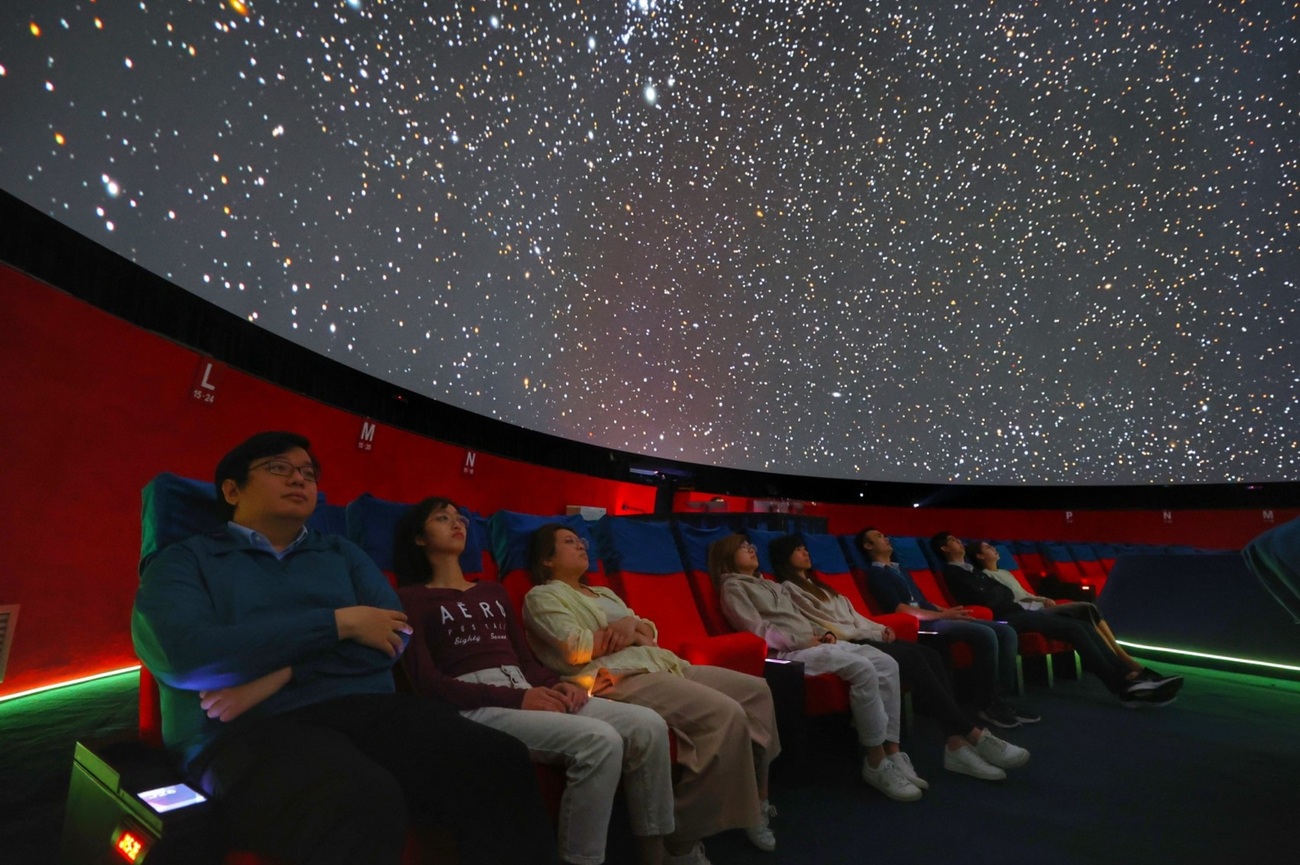
Inside the dome itself is the Stanley Ho Space Theatre.
This is one of the most distinctive parts of the museum. Omnimax and 3D fulldome screenings run through the day, using a seamless dome screen that fills the visitor’s field of vision far more completely than an ordinary cinema can.
For many families, this becomes one of the most memorable parts of the visit.
Show tickets are priced separately, with children’s tickets lower than adult ones. Weekend screenings can sell out, so advance booking is worth considering. Show schedules also run independently from the exhibition halls, so timing needs to be checked separately.

Practical
Notes
The museum sits around seven minutes on foot from the Star Ferry pier, which is what makes it fit so naturally into the harbour day.
Opening hours vary by day, with earlier opening at weekends and on public holidays. It is usually closed on Tuesdays except public holidays, and also closes for the first two days of Chinese New Year.
Exhibition admission is inexpensive, children under four enter free, and Wednesdays are free for all visitors.
What matters most, though, is how consistently this stop surprises people.
It is one of the most overlooked attractions on the harbour route, and one of the most frequently mentioned afterwards. Younger children respond immediately to the interactive exhibits. Older children and teenagers tend to remember the theatre and VR most strongly. On hot days, it also offers something very practical, a fully air-conditioned stop in the middle of a waterfront day.
Aqua: The Right Lunch for This
Particular Day
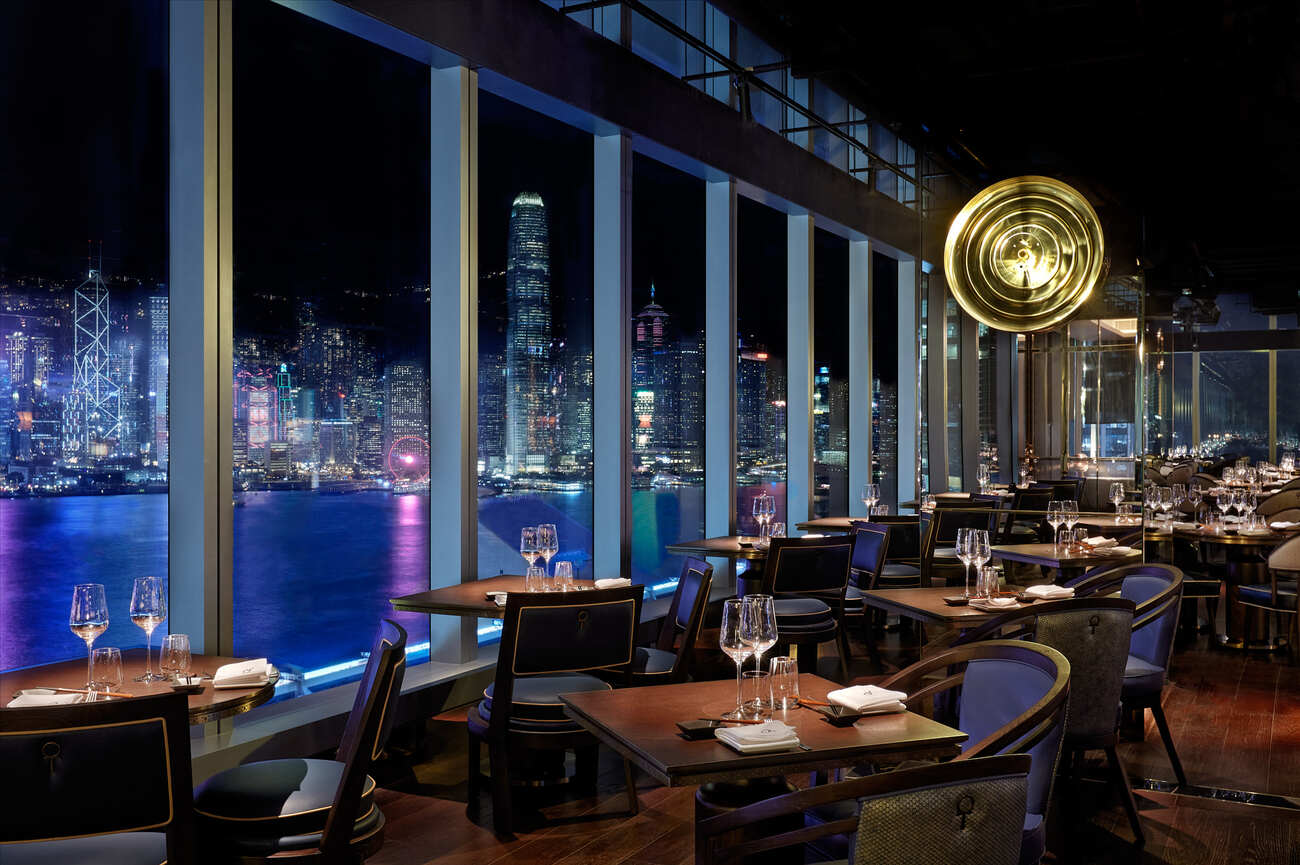
Aqua sits on the 29th and 30th floors of One Peking Road in Tsim Sha Tsui, with Victoria Harbour directly outside the windows and the Central skyline set across the water at eye level.
That view is one of the main reasons it belongs in this itinerary.
At lunchtime, it offers one of the best harbour perspectives on the Kowloon side. More elevated than the promenade, but still closely connected to the water. The family has already crossed the harbour by ferry, and from here they see the same skyline again from a different angle.
The second reason is practical.
The Japanese-Italian menu works well across different ages. Adults feel they are having a proper lunch. Children are able to eat comfortably without the meal becoming a negotiation.
That balance matters.
The timing also fits naturally into the day. Aqua comes after the Space Museum and before the promenade walk along the Avenue of Stars, giving the harbour route a clear pause in the middle.
The walk from the museum to One Peking Road takes around ten minutes along the waterfront.
Reservations are worth making in advance, especially for window tables. Weekday lunch is usually easier to secure than weekends.
If booking, request a window table.
This is the view to ask for.
The Avenue of Stars, and What the
Symphony of Lights Delivers
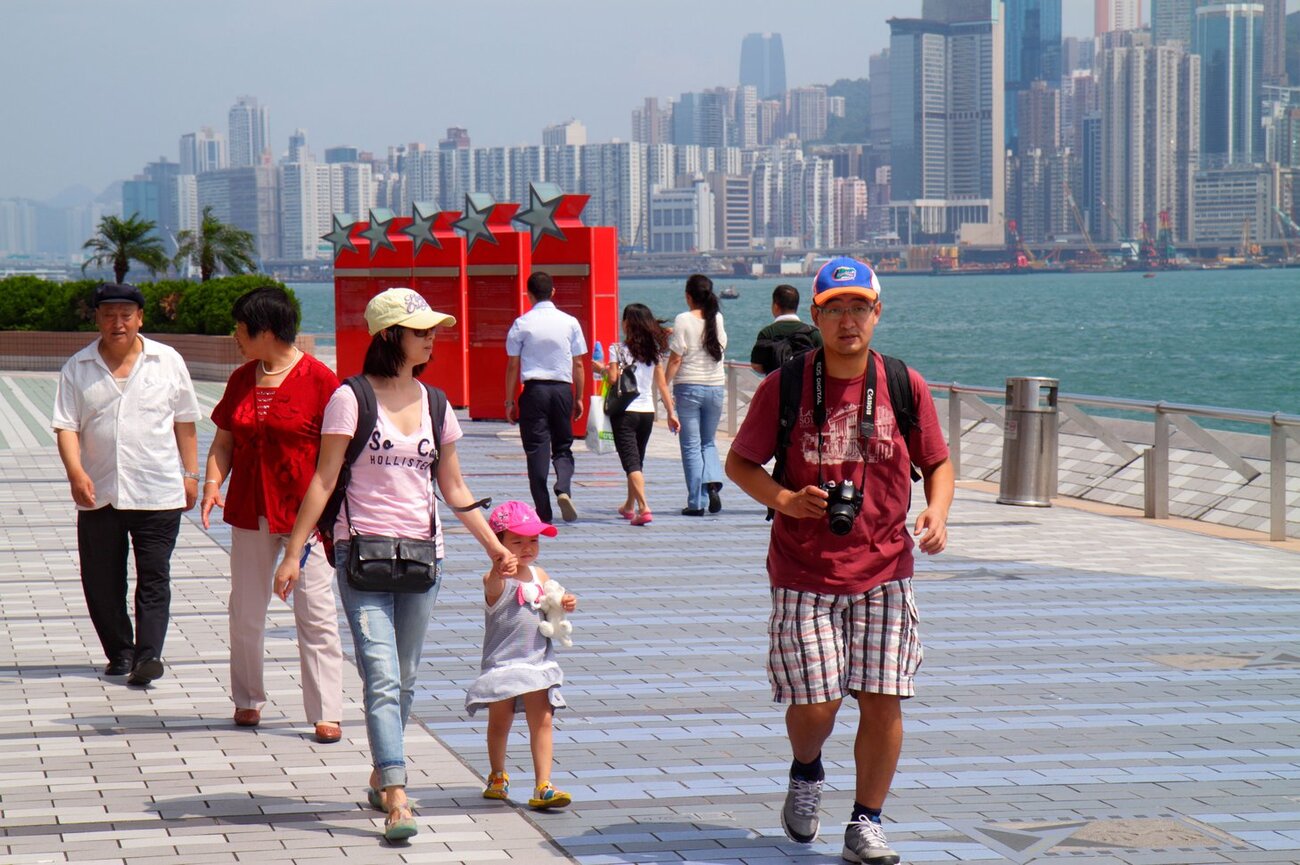
The Avenue of Stars runs for 440 metres along the Tsim Sha Tsui waterfront and works best when it is treated as part of the harbour experience rather than a destination on its own.
That is what makes it good with children.
The promenade is open, easy to walk, and built around the skyline rather than against it. Along the way, more than 100 figures from Hong Kong cinema are marked through handprints and plaques, with names such as Bruce Lee, Jackie Chan, Michelle Yeoh, Tony Leung, and Wong Kar-wai represented along the route.
Bruce Lee’s bronze statue is the point most children respond to first. The Hong Kong Film Awards statue near the entrance also works well as a photo stop, especially because of its scale.
What matters most, though, is the setting.
After lunch at Aqua, this section of the day needs no forcing. Children can move along the promenade at their own pace while adults take in the harbour view. The avenue works because it allows the city to keep doing the work.
That same logic applies to the Symphony of Lights.
The show runs nightly at 8pm, weather permitting, across both sides of Victoria Harbour. Buildings light in sequence, with lasers and music layered across the skyline for just over ten minutes.
The honest version is this.
The Symphony of Lights is worth seeing not because it is the most technically extraordinary show in the world, but because it gives the harbour evening a natural close. The atmosphere, the waterfront at night, and the shared sense of anticipation matter as much as the show itself.
For families, that is usually enough.
The best approach is simple. Arrive near the Cultural Centre, watch with the harbour in full view, and treat it as the final note of a day that has already done most of the work.
In our Hong Kong family itineraries, this sequence is arranged properly in advance, from the Star Ferry crossing and Aqua reservation through to the evening timing on the promenade. For the full week around it, see the ultimate luxury family travel guide to Hong Kong.
Victoria Peak: The Right Way to End
the Harbour Day
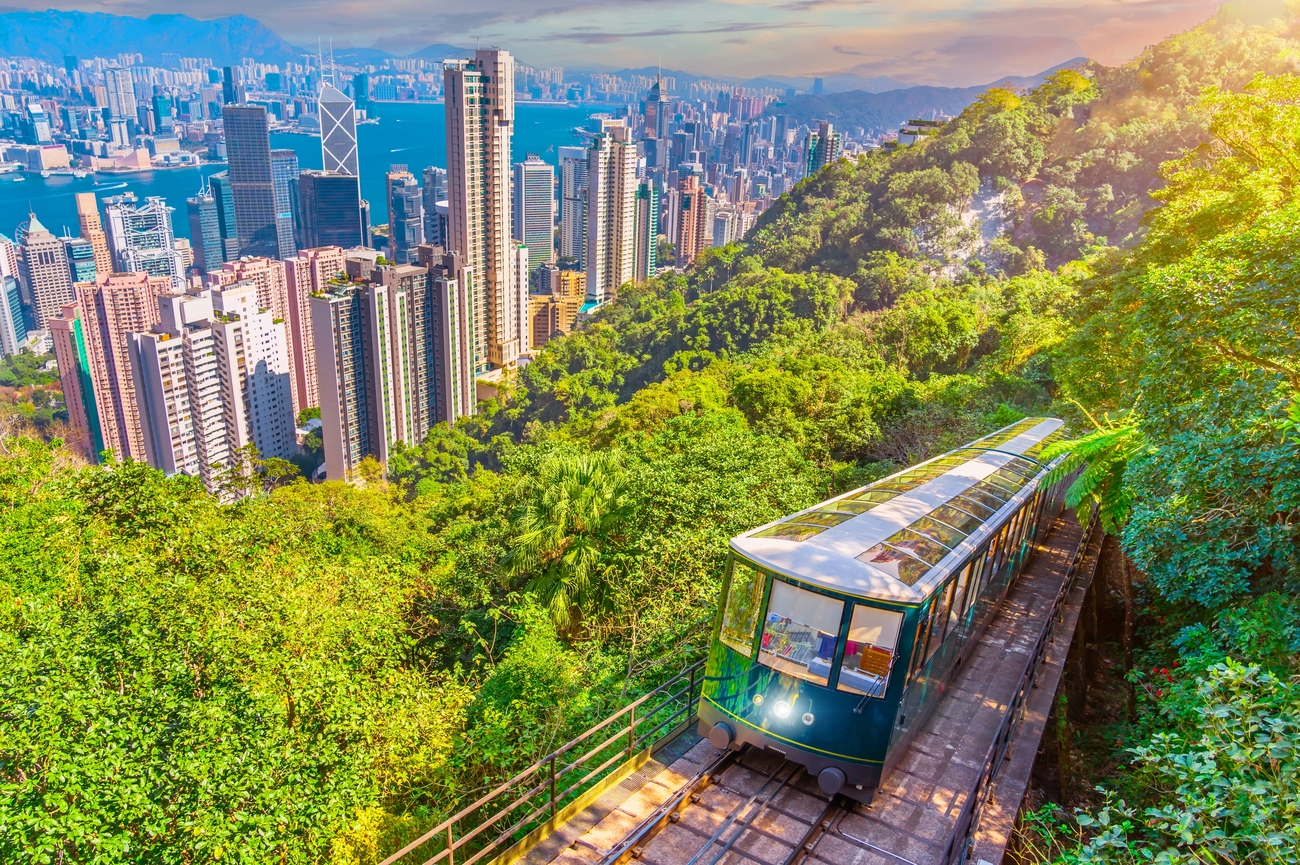
The Peak Tram has been climbing to Victoria Peak since 1888, the same year the Star Ferry began crossing the harbour.
That detail is worth mentioning, especially with children.
It links two of Hong Kong’s most iconic experiences in a way that gives the day a satisfying sense of continuity.
The tram itself is part of the attraction. Since its refurbishment, the cabins feel more open, with larger windows and a clearer sense of the climb. As the tram rises, the city appears to tilt. Buildings seem to lean at impossible angles, and children often react to it as though it were a ride rather than a piece of transport.
The journey takes around seven minutes.
That is enough.
By the time you arrive at the top, the whole city feels as though it has shifted beneath you.
At the Top
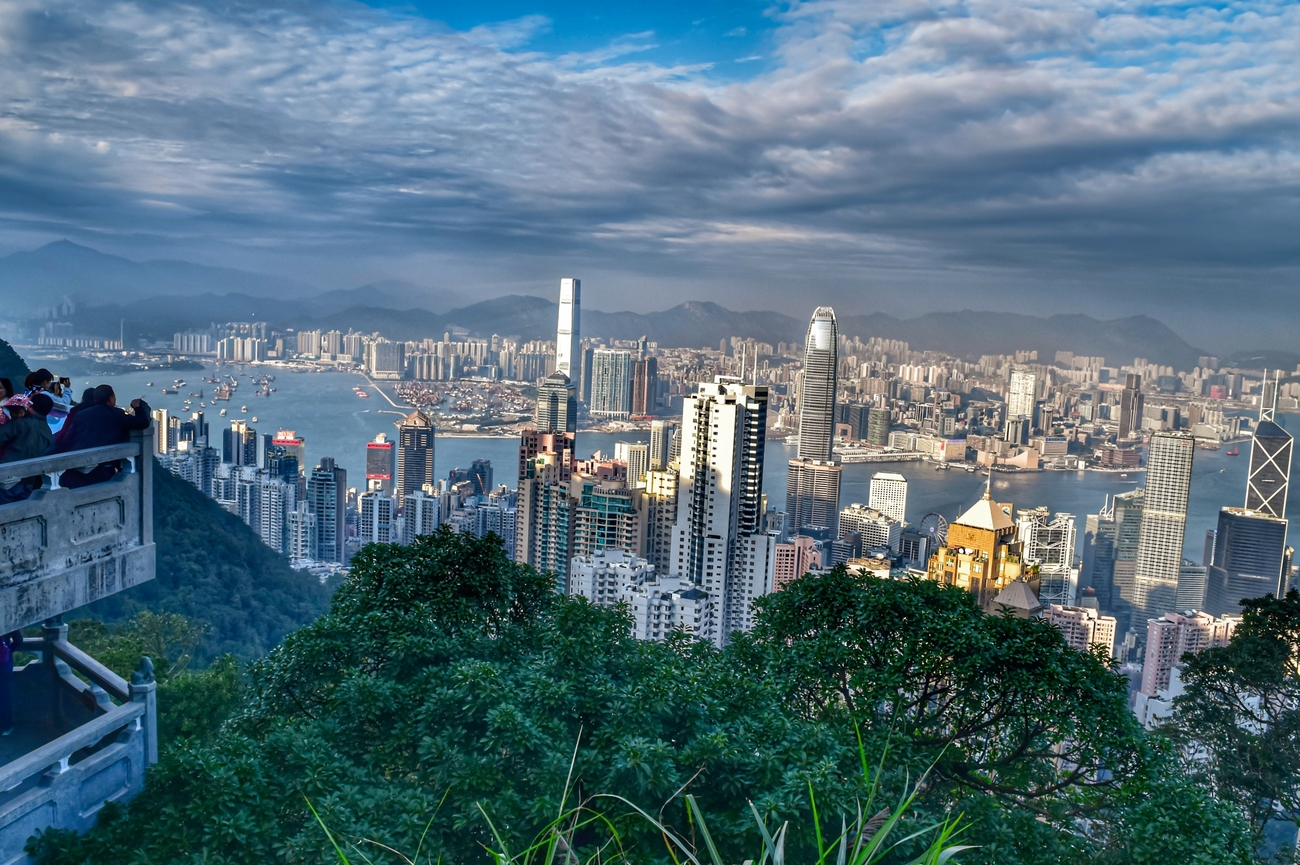
Peak Tower brings together several elements in one place, but the most important is Sky Terrace 428.
At 428 metres above sea level, it gives the clearest public view over Hong Kong. To one side, the full harbour, Central, and Kowloon. To the other, the greener southern side of the island and the South China Sea. After a day spent moving through the city at water level, this is the moment when everything becomes easy to understand.
Madame Tussauds Hong Kong also works well here, especially for families.
Children who have passed Bruce Lee and Jackie Chan earlier on the Avenue of Stars often recognise them again at the top, which gives the day an unexpected sense of connection.
For most families, the Sky Pass is the right ticket. It combines the tram and Sky Terrace 428, and is better value than buying them separately.
Pre-booking is worth doing, especially at weekends and during peak periods, when queues at the lower terminus can become significant.
If possible, sit on the right-hand side on the way up.
That side usually gives the strongest harbour views during the climb.
The Best Time
to go
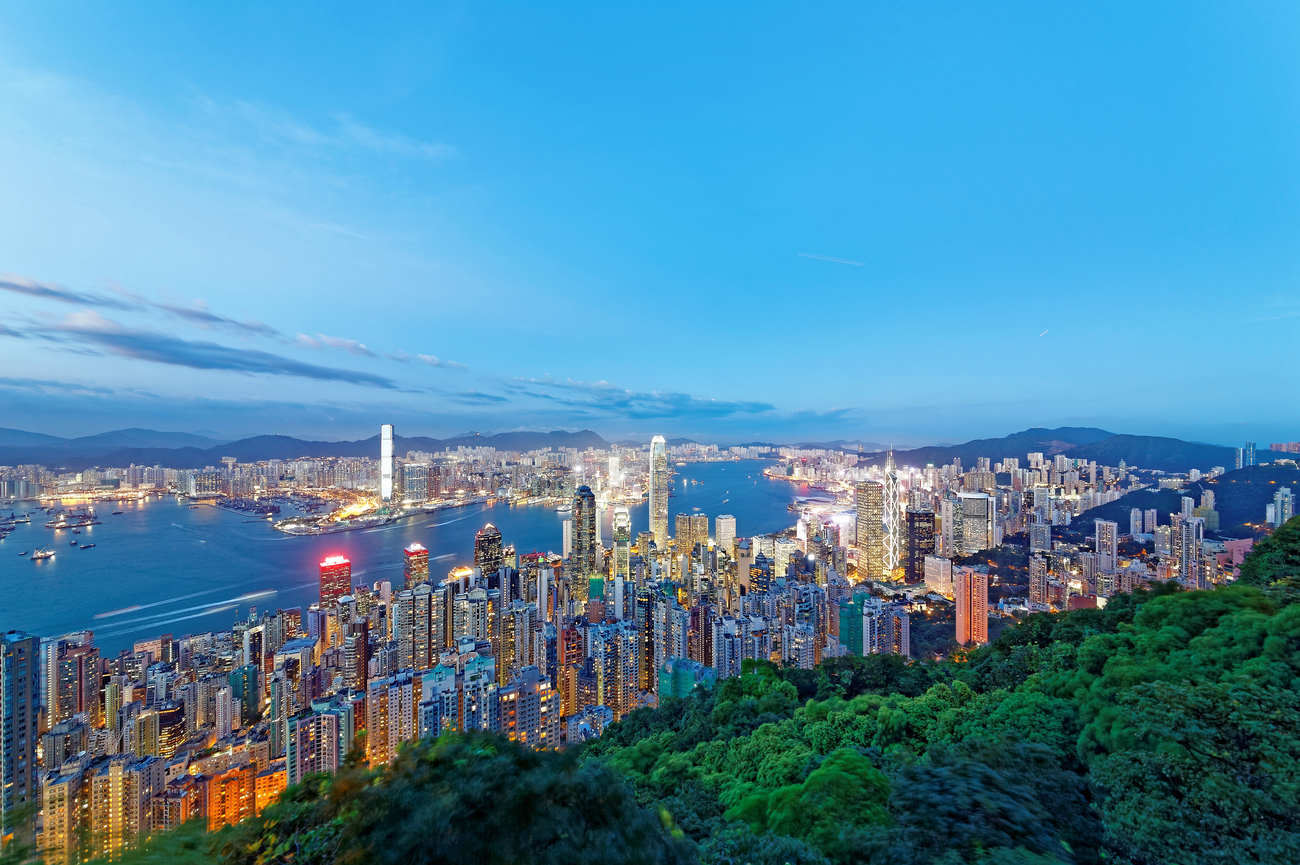
The Peak is best timed for dusk.
This is when the city begins to light up, the harbour changes colour, and everything the family has been moving through across the day suddenly appears in full below them.
It is the right ending.
One practical point is worth keeping in mind. The summit is often noticeably cooler than sea level, especially in the cooler months, so a light layer is useful later in the day.
Hong Kong Gives. The Week Gives More.
Hong Kong does not pause for anyone. The harbour is already lit. The ferry is already crossing. The city is already in motion.
The families who get the most from it are the ones who arrive with everything already in place. The key decisions made. The timing understood. The week shaped properly before they land.
That is what our luxe family harbour retreat is designed to do.
If you want Hong Kong with children done properly, start with Revigorate.


Let us know what you love, where you want to go, and we’ll design a one-of-a-kind adventure you’ll never forget.
Get in touch
Miriam
Travel Specialist

Nina
Travel Specialist

Abigail
Travel Specialist
Frequently Asked Questions
-
How long should you plan for a Hong Kong harbour day with kids?
A full day works best, allowing time for the Star Ferry, Space Museum, lunch, a waterfront walk, and finishing at Victoria Peak without rushing.
-
Which side of Hong Kong is better for a harbour day, Central or Tsim Sha Tsui?
Tsim Sha Tsui is better for the main harbour experience, as key attractions like the Space Museum and Avenue of Stars are within walking distance of the ferry terminal.
-
When is the best time to visit Victoria Peak with children?
Dusk is the best time, as families can see the city in daylight, sunset, and illuminated at night in a single visit.
-
Do you need to book the Peak Tram in advance?
Yes, advance booking is recommended, especially on weekends and peak travel periods, to avoid long queues at the lower terminus.
-
Can Revigorate organise a seamless harbour day in Hong Kong?
Yes, Revigorate plans fully tailored harbour days with pre-arranged ferry timing, restaurant reservations, Peak Tram access, and a structured flow that removes all on-the-day logistics.
Our offices:



Revigorate, Iberian Escapes and Algarve Lifestyle are the registered brand names of APCS Lda . We are a fully authorised travel agency licensed by Turismo de Portugal RNAVT/6867.
In the event of a dispute, the consumer may refer to: RAL - Centros de Arbitragem
Avª. 5 de Outubro, nº. 55, R/C Dtº. 8000-075 Faro, Portugal | Tel: +351 289 823 135 *
* national landline call
E-mail: info@consumoalgarve.pt| www.consumidoronline.pt | Mon to Fri: 9:00 - 13:00 / 14:00 - 17:00