Imperial China in Hong Kong: Palace Museum, Qing Symbolism & Chinese Aesthetics
The Hong Kong Palace Museum invites a closer reading of imperial China in Hong Kong.
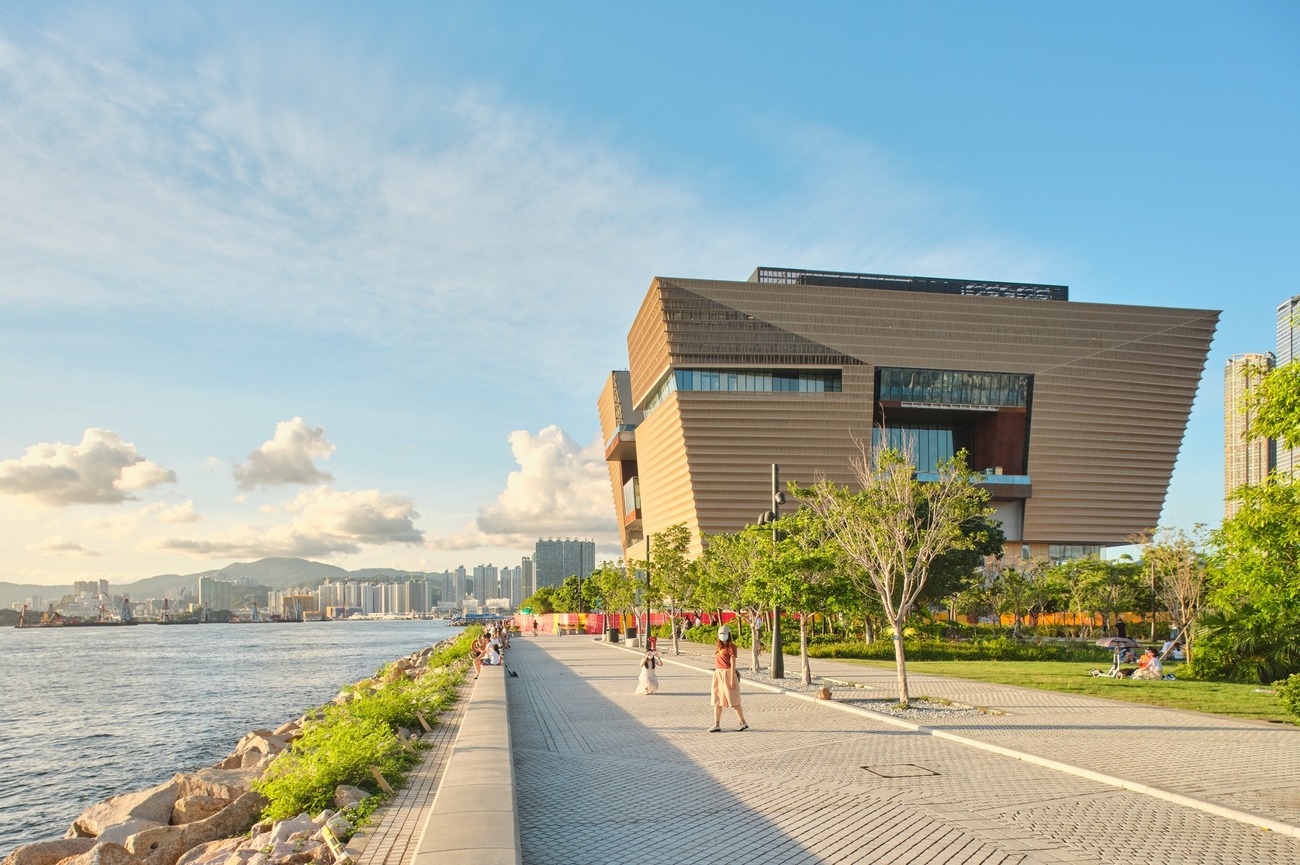
Standing on the West Kowloon waterfront, the building resembles a bronze vessel reimagined for the present, while its curatorial ambition reflects Qing aesthetics and imperial power in a modern city.
Visitors encounter more than ceramics, robes, and treasures—they see a visual language where colour, form, and ornament once conveyed rank and authority. These aesthetic codes continue to echo across Hong Kong today, in temple smoke over Kowloon, the timber architecture of Diamond Hill, and the symbolic details shaping the city’s cultural landscape.
To explore further, read Imperial Hong Kong: a deep guide to the city’s culture, art & living history, which connects the palace galleries to the living streets beyond.
The Hong Kong Palace Museum’s Cultural Role
The relationship between the Hong Kong Palace Museum and the Palace Museum in Beijing is often misunderstood. HKPM is not simply a satellite institution displaying the Beijing collection in a more convenient location. It is a collaborative project between the West Kowloon Cultural District Authority and the Palace Museum, funded in part by a HK$3.5 billion donation from the Hong Kong Jockey Club Charities Trust, and shaped by its own curatorial mandate. That mandate is clear: to present Chinese imperial culture in dialogue with world civilisation, rather than as the peak of a closed and self-contained tradition.
Director Louis Ng has described the museum’s role in similar terms. HKPM uses Hong Kong’s position as an East-meets-West cultural hub to create a kind of conversation that the Beijing institution, by its nature, is not designed to stage. That approach affects which objects are loaned, how they are framed, how galleries are structured, and what kinds of questions visitors are encouraged to leave with. The Qing court here is presented comparatively rather than reverentially. That difference matters.
Since opening, the museum has received more than 1,500 loan objects from the Palace Museum in Beijing, including 223 grade-one national treasures as of January 2026, the highest category of protected cultural heritage in China. Many of these works have never previously been shown outside the Forbidden City. The building itself, designed by Rocco Design Architects, also reflects this balancing act. Its inverted trapezoidal profile recalls the form of a traditional Chinese ding vessel, while its golden exterior panels echo imperial palace aesthetics within the language of contemporary museum architecture. The two visual registers sit together without cancelling one another out.
The Permanent Galleries: How to Use Them
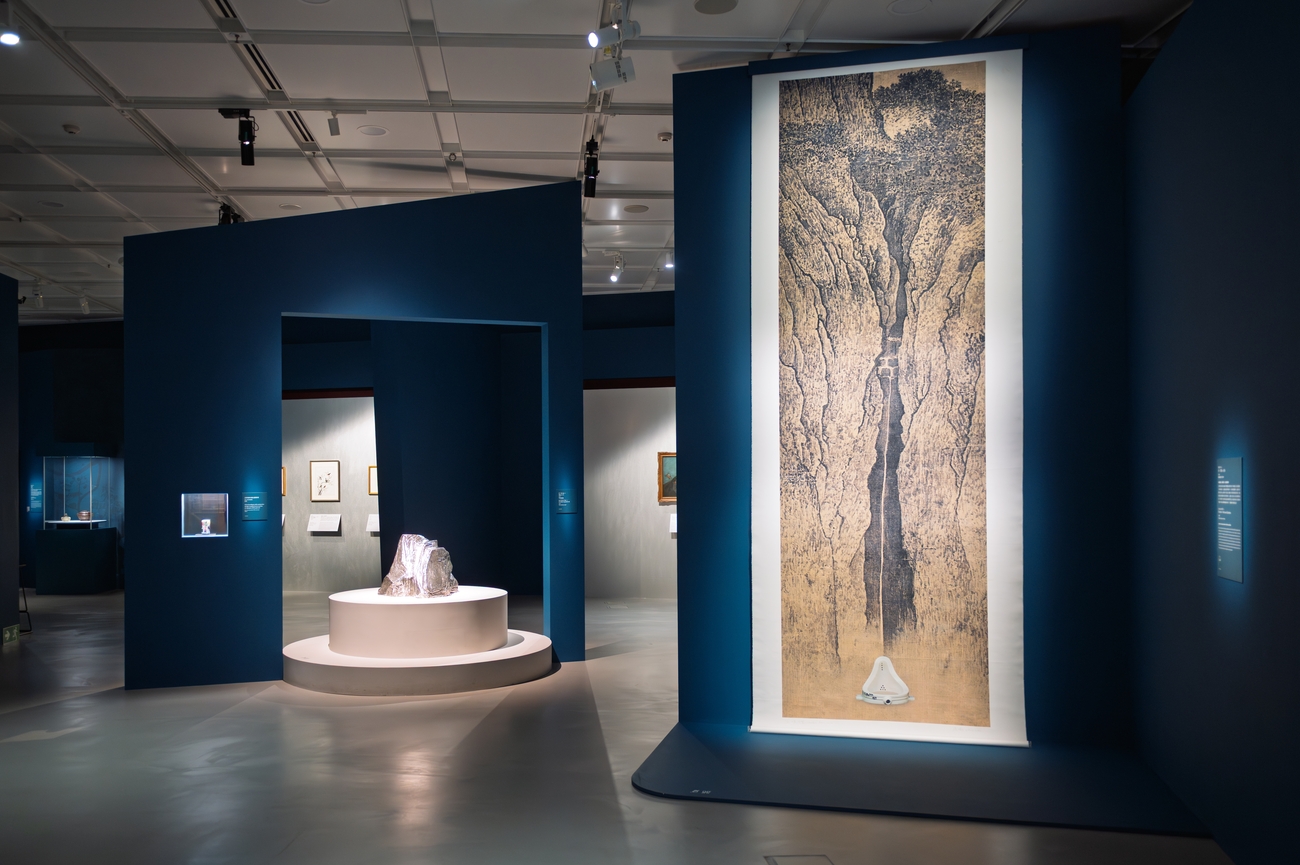
The Hong Kong Palace Museum has nine galleries spread across several floors, combining permanent thematic displays with rotating special exhibitions. The permanent galleries provide the foundation. The changing exhibitions are what make a return visit worthwhile.
Gallery 1:
Entering the Forbidden City
The first gallery establishes the spatial and political logic of the Forbidden City itself, its architecture, layout, the symbolic importance of the central axis, and the relationship between built form and imperial authority. More than 100 objects from the Palace Museum help frame what follows in the rest of the museum. It is the right place to begin, whatever else you plan to see, because the other galleries become far easier to read once the structure and symbolism of the Forbidden City are clear.
Gallery 2:
From Dawn to Dusk
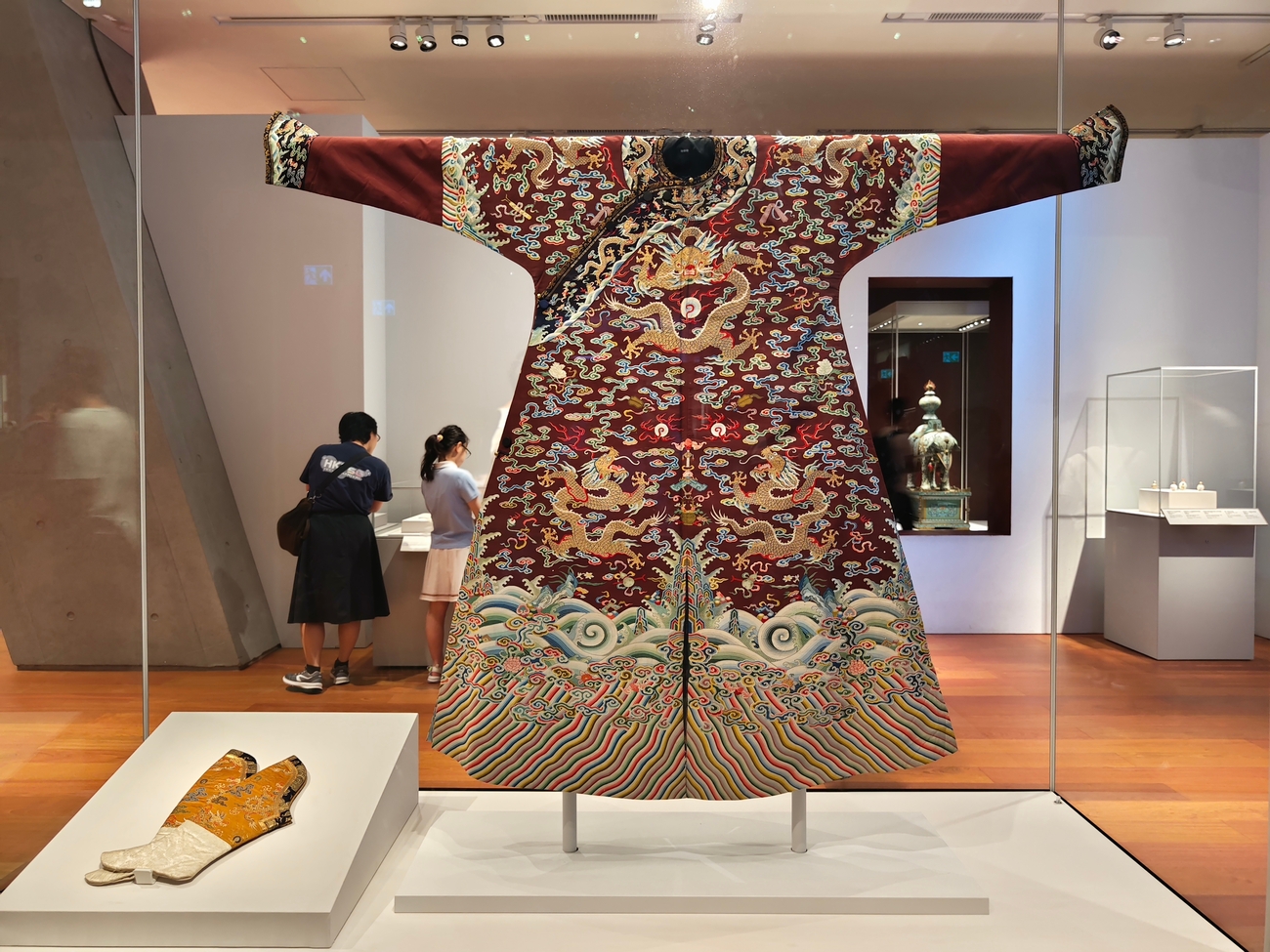
For many visitors, this is the most absorbing gallery in the museum. From Dawn to Dusk: Life and Art in the Forbidden City compresses a full day of 18th-century Qing imperial life into a single sequence, using more than 300 objects to trace the emperor’s morning rituals, working hours, ceremonial obligations, and evening routine.
What emerges is not just imperial splendour, but the material texture of court life. The ceramics used for specific meals, the robes assigned to particular rituals, and the clocks, including several made in Europe, all show how tightly ordered the court was in both symbolism and daily practice.
This is what the gallery does so well. It reveals the Qing court not as an abstraction, but as a lived system. The emperor was not simply a figure inside symbolic spaces. He ate from specific vessels, wore colours that communicated authority, and slept beneath objects shaped by cosmological meaning. Gallery 2 makes that world feel tangible.
Gallery 5: The
Quest for Originality
This is the museum’s most deliberately provocative gallery. Nearly 100 Palace Museum objects are placed in direct conversation with contemporary Hong Kong design, setting the work of imperial workshops beside the output of the city’s current creative scene.
The juxtaposition is not there for decoration. It asks what happens when an inherited aesthetic tradition is reinterpreted, challenged, or quietly refused by contemporary practice. Some of the pairings are illuminating. Some are deliberately uneasy. That tension is part of what makes the gallery worth your time.
The 2026 Exhibition Programme
The Hong Kong Palace Museum’s 2026 programme is one of its strongest yet, with nine new exhibitions announced across the year. The most important thing to understand before visiting is that the museum is using its temporary programme not just to add variety, but to reinforce its core idea of Chinese imperial culture in dialogue with the wider world.
- Heavenly Horses: Masterpieces from the Palace Museum, Gallery 4, from 20 March 2026. This exhibition brings together nearly 100 horse-themed paintings by more than 60 artists from the Yuan dynasty to the 20th century, exploring courtly and literati traditions, as well as the relationship between Chinese and Western painting styles.
- The Forbidden City and the World: Cultural Encounters, Gallery 1, from 3 June 2026. With more than 150 objects from China, Asia, and Europe, it places the Forbidden City within wider networks of diplomacy, trade, and cultural exchange across the Yuan, Ming, and Qing dynasties. This is one of the clearest expressions of the museum’s broader curatorial purpose.
- Contemporary Design in Dialogue with Palace Display, Gallery 5, from 30 September 2026. This exhibition is set to bring together around 200 treasures from the Qing imperial workshops, looking closely at how court art was designed, produced, and displayed, with Hong Kong designers and artists involved in shaping the conversation.
- Qing Court in Four Seasons: Life and Culture of the Imperial Household, Gallery 2, from 4 November 2026. With nearly 200 objects, it explores how Qing emperors aligned ritual, governance, religion, hunting, and seasonal life with the rhythms of nature.
- Ancient Egypt Unveiled: Treasures from Egyptian Museums, Gallery 9, through 31 August 2026. Featuring 250 objects from seven Egyptian museums, including finds from Saqqara, it remains one of the museum’s clearest examples of its cross-civilisational approach.
Admission to the permanent galleries is HK$120, while a full-access ticket covering special exhibitions is HK$190. The museum is generally open from 10:00 to 20:00 and is closed on Tuesdays, except public holidays. Booking online in advance is recommended, especially for special exhibitions.
The material culture of the Qing court, the ceramics, lacquerware, silk, and decorative objects you see inside the Palace Museum, also reappears in very different form along Hollywood Road’s antique corridor. That connection continues in Sheung Wan & Tai Ping Shan: medicine streets, temples & the origins of Hong Kong society.
What these galleries ultimately reveal is that the Qing emperor was not just a symbolic figure inside symbolic spaces. Court life was expressed through objects, colours, materials, and rituals used every day. That is what makes the museum so rewarding when read carefully.
Reading
the Qing Aesthetic: What the Objects Are Saying
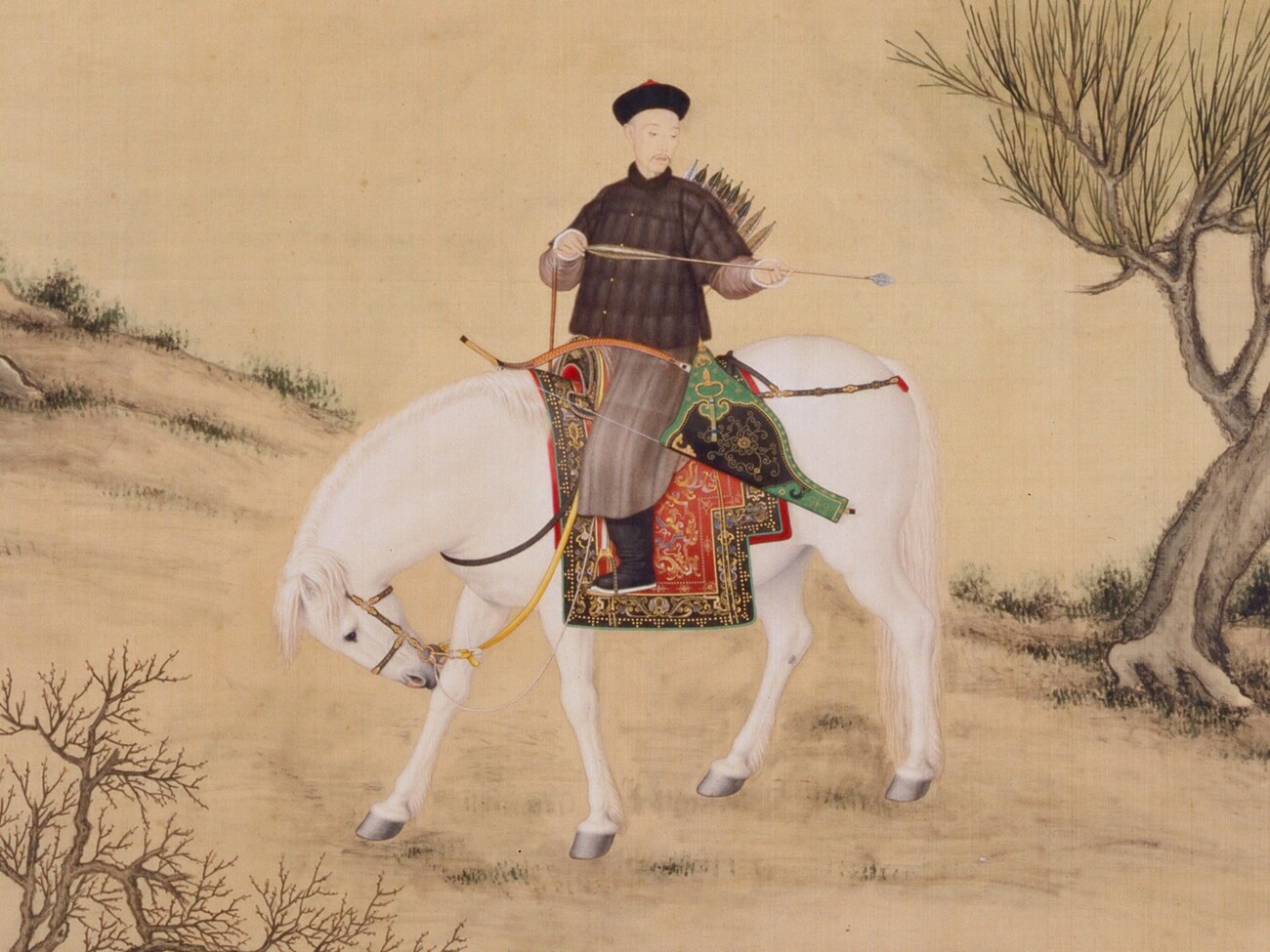
The objects in the Hong Kong Palace Museum do more than display imperial taste. They communicate power, hierarchy, and belief through a visual language that was meant to be understood. Chinese imperial aesthetics worked as a system, and each colour, motif, and material carried meaning for the court audience for whom these objects were made.
Colour as dynastic language
Colour was never decorative alone. It signalled status, ritual function, and cosmological order.
Yellow was the emperor’s exclusive colour from the Ming dynasty onwards, used for imperial robes, roof tiles, and ceramics reserved for the sovereign’s personal use. The specific golden yellow associated with the imperial court communicated authority even beyond the palace walls. White carried associations with mourning and purity. Red signified celebration, joy, and auspiciousness, which is why it still dominates Lunar New Year and wedding imagery today. Blue-green, or qing, was associated with the east, spring, and renewal.
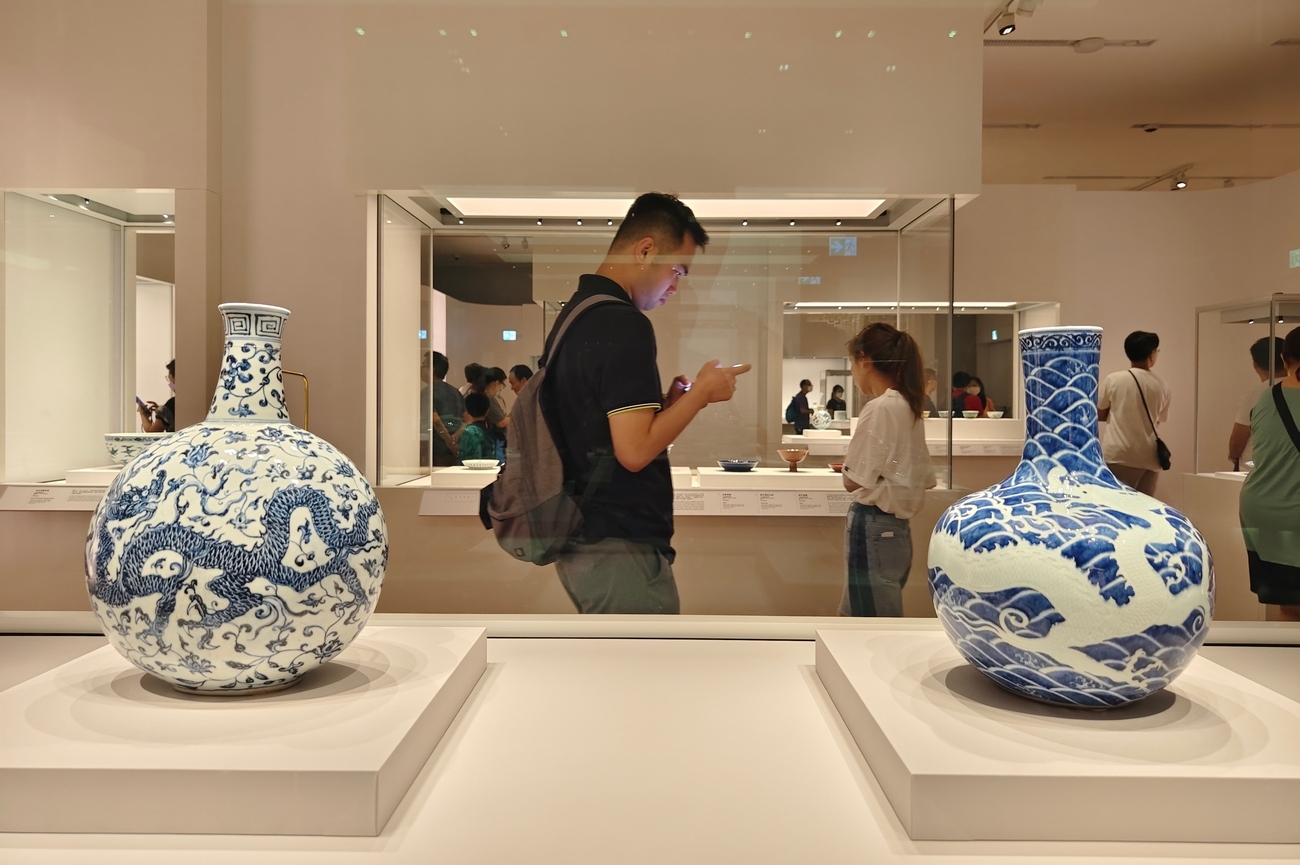
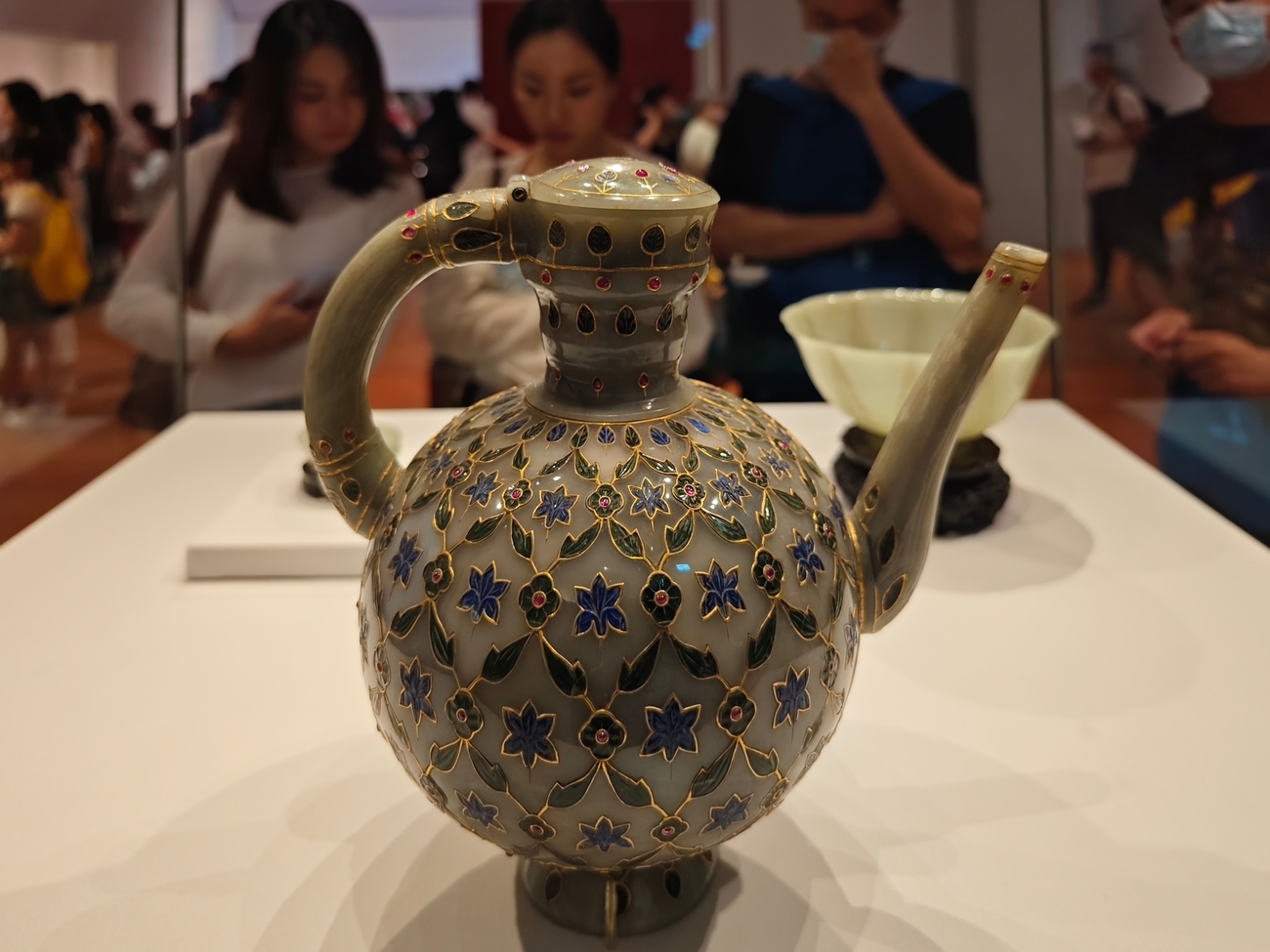
During the Qing period, the ceramic palette expanded significantly through contact with European enamel technology introduced by Jesuit missionaries at the Kangxi court. Before that, porcelain decoration relied heavily on the traditional wucai five-colour system of blue, green, red, black, and yellow, with limited mixing between tones. With new enamel techniques, the palette widened dramatically, helping to produce styles such as famille rose and famille verte. When you stand in front of a Qianlong-period famille rose vase in Gallery 2, you are looking not only at imperial refinement, but also at the result of cross-cultural exchange absorbed into the Qing court’s own visual system.
Motif as Imperial Language
Motifs also carried strict and recognisable meanings.
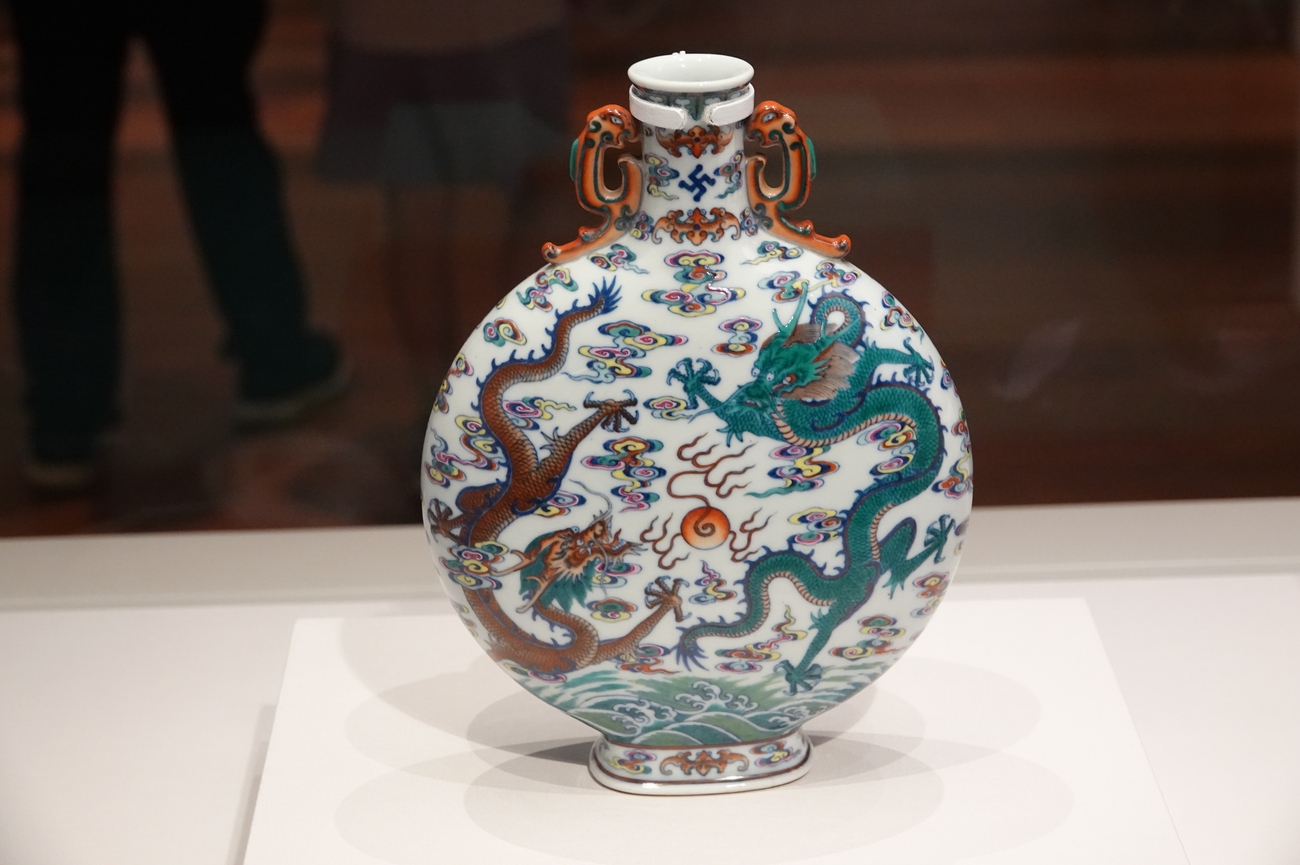
The five-clawed dragon on robes, vessels, and architectural details was reserved for the emperor. Four-clawed dragons could appear on objects associated with princes. This was not a decorative variation, but a formal distinction tied to rank and authority. The phoenix, often paired with the dragon, represented the empress. Together, the two expressed the union of yang and yin at the centre of the imperial order.
Other motifs carried their own symbolic force. Bats signified good fortune through wordplay. Deer represented longevity and official success. The lotus, rising clean from muddy water, expressed a Buddhist ideal of purity. Peaches suggested immortality. Pomegranates, with their many seeds, symbolised fertility and abundance. In this world, surfaces were meant to be read. A robe, a vase, or a lacquer box was never only an object. It was also a statement.
What makes the Hong Kong Palace Museum so rewarding is that it gives you enough repetition and context to begin recognising that language for yourself. The labels are clear, the sequencing is thoughtful, and the scale of the loans allows patterns to emerge across galleries. By the end of a visit, you are no longer just looking at beautiful things. You are starting to read them.
Chi Lin Nunnery: The
Architecture Still Being Lived In
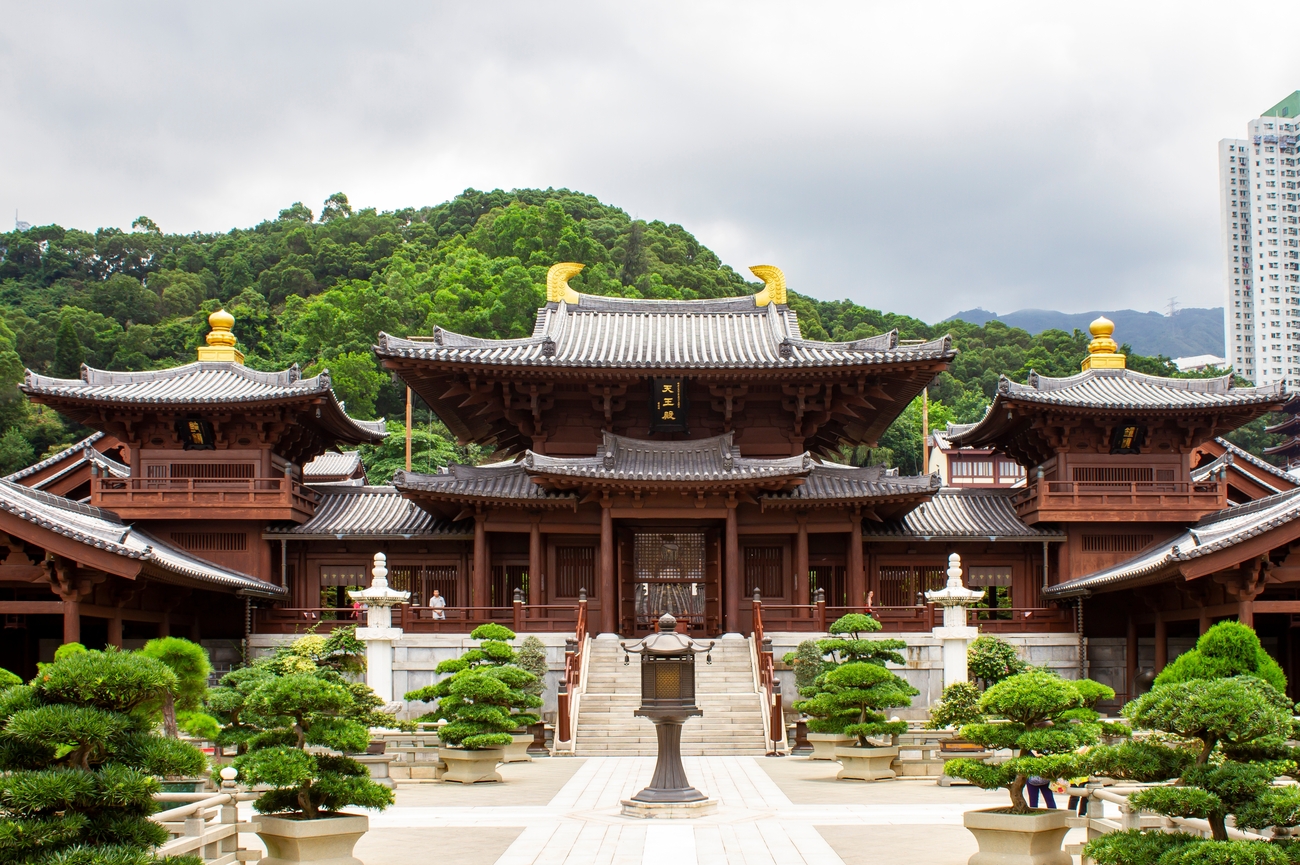
The Hong Kong Palace Museum offers an intellectual encounter with Chinese imperial aesthetics. Chi Lin Nunnery in Diamond Hill offers the spatial one. Here, the same principles of proportion, material, and layout appear not in display cases, but in a functioning religious complex.
Completed in 1998, the nunnery was built using Tang dynasty architectural principles drawn from the Yingzao Fashi, the 11th-century treatise that codified the proportional systems, structural logic, and material requirements of traditional Chinese architecture. No metal nails were used in its construction. Instead, the entire complex relies on traditional timber joinery, the same kind of structural method seen in surviving Tang and Song architecture in China and Japan. The result is not a reconstruction, but a contemporary building made according to an older architectural language, and made with real technical discipline rather than visual imitation.
What Chi Lin gives you is something photographs cannot. The relationship between covered walkways and open courtyards, the controlled proportions of the main hall, and the placement of the lotus pond in relation to the rest of the complex all follow the same geomantic and architectural principles that the Palace Museum explains through objects. Visiting Chi Lin after the museum turns ideas into lived space. One helps you understand the other.
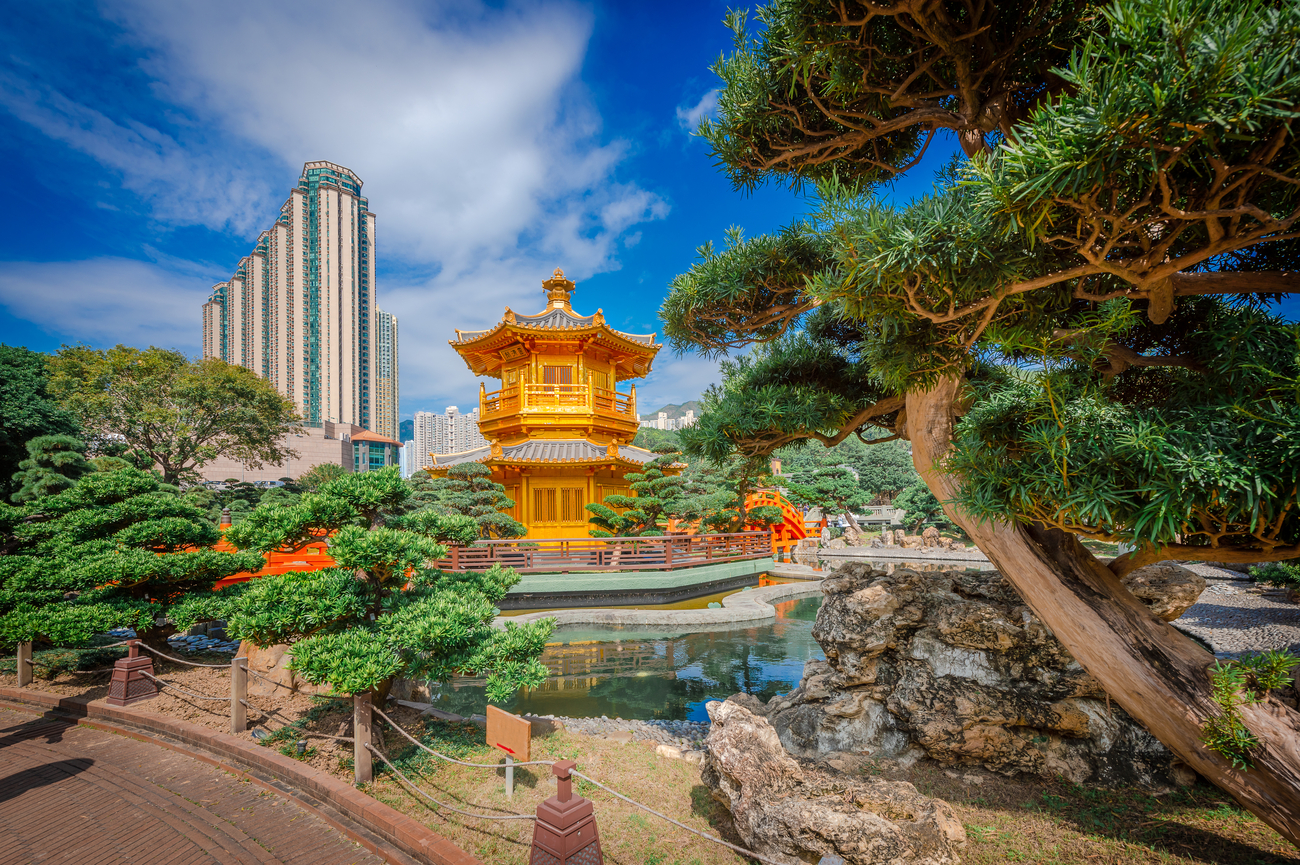
Nan Lian Garden, directly beside the nunnery and free to enter, applies the same classical principles to garden design, with rock formations, water, pavilions, and carefully framed views. The vegetarian restaurant within the garden serves a fixed menu that suits the setting. The contrast between Nan Lian’s stillness and the surrounding Diamond Hill residential towers only sharpens the effect. In its own way, it says as much about Hong Kong’s relationship with continuity as the museum does.
Wong Tai Sin: The
Syncretic Temple
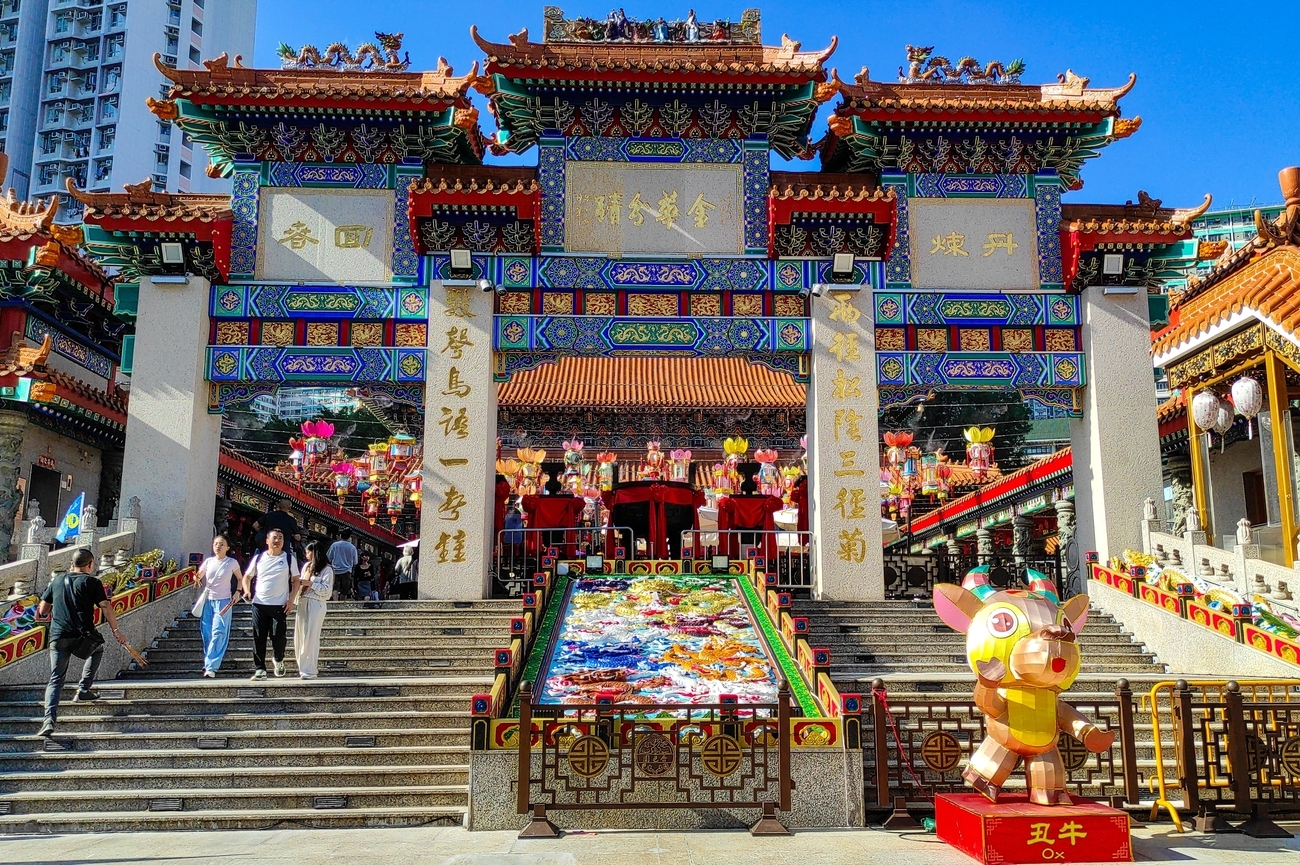
Established in 1921 in north Kowloon, Sik Sik Yuen Wong Tai Sin Temple reflects Hong Kong’s syncretic religious tradition, bringing Taoist, Buddhist, and Confucian beliefs together within a single active place of worship.
The 18,000 square metre compound is dedicated to Wong Tai Sin himself, a fourth-century shepherd from Zhejiang said to have attained immortality through forty years of Taoist practice. The temple’s motto, “What you request is what you get” (有求必應), has drawn devotees here for generations. The kau cim fortune-telling ritual, in which worshippers shake bamboo sticks until one falls and then seek an interpretation, remains an active devotional practice rather than a performance for visitors. People come here with real questions about health, marriage, work, and family, and treat the temple accordingly.
Its Three Saints Hall makes that syncretic character especially clear, bringing together Patriarch Lü Dongbin for Taoism, Bodhisattva Guanyin for Buddhism, and Lord Guan for Confucianism under the principle of San Jiao, three teachings, one respect.
The architecture of the compound follows the logic of the five geomantic elements. The Bronze Pavilion represents Metal, the Scripture Hall represents Wood, the Yuk Yik Fountain represents Water, the Yue Heung Pavilion represents Fire, and the Earth Wall represents Earth. The same cosmological system that appears in Palace Museum objects through colour and motif appears here through spatial design. That continuity is part of what makes the temple so revealing.
Behind the main complex, the Good Wish Garden includes a Nine-Dragon Wall modelled on the one in Beijing’s Forbidden City. Set against an everyday Kowloon neighbourhood, with residential blocks rising beyond the temple walls, it becomes a striking example of how Chinese imperial culture survives in Hong Kong not only as museum heritage, but as living community practice.
The colonial institutions that projected a different kind of authority across the same city, including Tai Kwun and the former LegCo, are explored in Central & Tai Kwun: understanding colonial power in the heart of Hong Kong.
Lunch: Spring Moon at The Peninsula
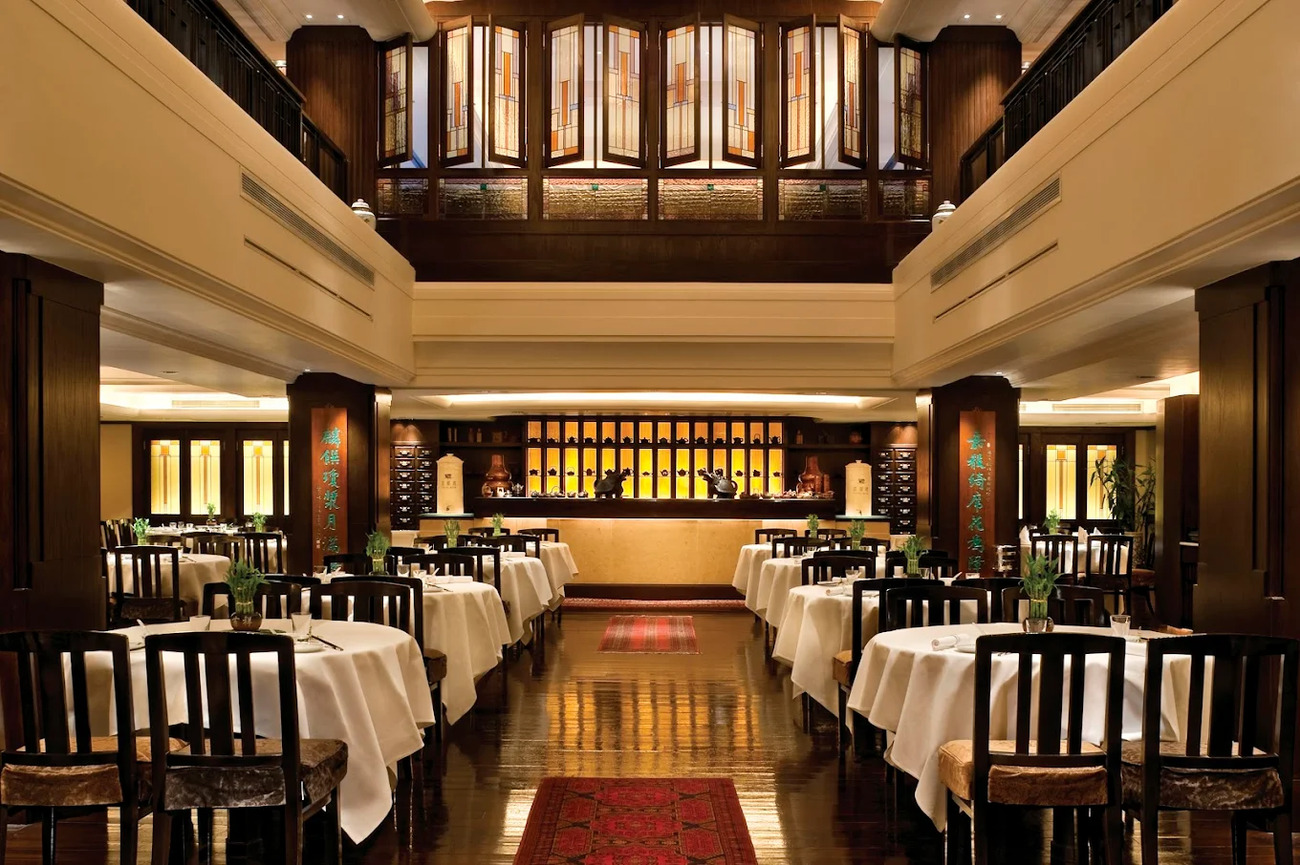
Spring Moon has occupied the same dining room at The Peninsula Hong Kong on Salisbury Road in Tsim Sha Tsui since 1986. It has held one Michelin star continuously since 2017. With its Art Deco stained-glass windows, intimate scale, and the polished service for which The Peninsula is known, it is the kind of dining room that has built its reputation through consistency rather than reinvention.
The menu is classically Cantonese, which means traditional technique paired with exceptional ingredients. Chef Lam Yuk Ming’s kitchen is especially known for its Braised Bird’s Nest in Superior Broth, a dish that depends as much on sourcing and preparation as it does on execution. The Roasted Peking Duck is another signature, with properly lacquered skin, pancakes, scallions, and the XO chilli sauce that Spring Moon is often credited with having created.
At lunch, the dim sum is equally worth your attention:
- Baked Barbecued Pork Puffs
- Shrimp Dumplings with Bamboo Shoots
- Pan-Fried Turnip Cake
This is the kind of Cantonese cooking a restaurant like Spring Moon has been refining for decades. The tea service, guided by Spring Moon’s Tea Masters from a selection of more than 25 varieties, is an especially fitting match after a morning spent in the Palace Museum galleries. What you have been encountering intellectually through objects and symbolism begins, over lunch, to register through taste, texture, and ritual.
A privately guided day through the Hong Kong Palace Museum, Chi Lin Nunnery, Nan Lian Garden, and Wong Tai Sin Temple, with a pre-reserved table at Spring Moon, forms part of the Revigorate 4-day Hong Kong imperial heritage itinerary.
Living the
Imperial Legacy
The shift from the quiet, climate-controlled galleries of West Kowloon to the cedar-scented halls of Chi Lin Nunnery reveals something essential about Hong Kong. Imperial aesthetics are not preserved here as a static memory. They remain part of a living cultural language, expressed through architecture, ritual, craftsmanship, and hospitality. You see it again at Spring Moon, where the treatment of ingredients and the discipline of service reflect the same respect for refinement and continuity that shaped Qing court culture.
Taken together, these different corners of the city, the Palace Museum’s treasures, the geometry of the temples, and the elegance of Hong Kong’s great dining rooms, create a portrait of a place that has not entirely let go of its dynastic inheritance. For visitors willing to look closely, Hong Kong becomes a richly layered city of symbols, materials, and traditions still in active use.
Our travel experts have brought these experiences together into one carefully considered journey. If you want to explore this lineage through private guiding, cultural context, and refined hospitality, our 4-day Hong Kong imperial heritage itinerary brings the city’s most storied locations into a single seamless experience.
Ready to experience Hong Kong’s imperial legacy in depth?

Let us know what you love, where you want to go, and we’ll design a one-of-a-kind adventure you’ll never forget.
Get in touch
Miriam
Travel Specialist

Nina
Travel Specialist
Abigail
Travel Specialist
Our offices:


Revigorate, Iberian Escapes and Algarve Lifestyle are the registered brand names of APCS Lda . We are a fully authorised travel agency licensed by Turismo de Portugal RNAVT/6867.
In the event of a dispute, the consumer may refer to: RAL - Centros de Arbitragem
Avª. 5 de Outubro, nº. 55, R/C Dtº. 8000-075 Faro, Portugal | Tel: +351 289 823 135 *
* national landline call
E-mail: info@consumoalgarve.pt| www.consumidoronline.pt | Mon to Fri: 9:00 - 13:00 / 14:00 - 17:00