Central & Tai Kwun: Understanding Colonial Power in the Heart of Hong Kong
The British were never subtle about what they wanted Central to represent.
Every major colonial building placed on this hillside, the courthouse, the cathedral, the prison, and the police station, stood above the waterfront and above the Chinese residential quarters below. That positioning was deliberate. In the colony’s early decades, the geography of authority was carefully managed and clearly expressed through elevation, architecture, and proximity.
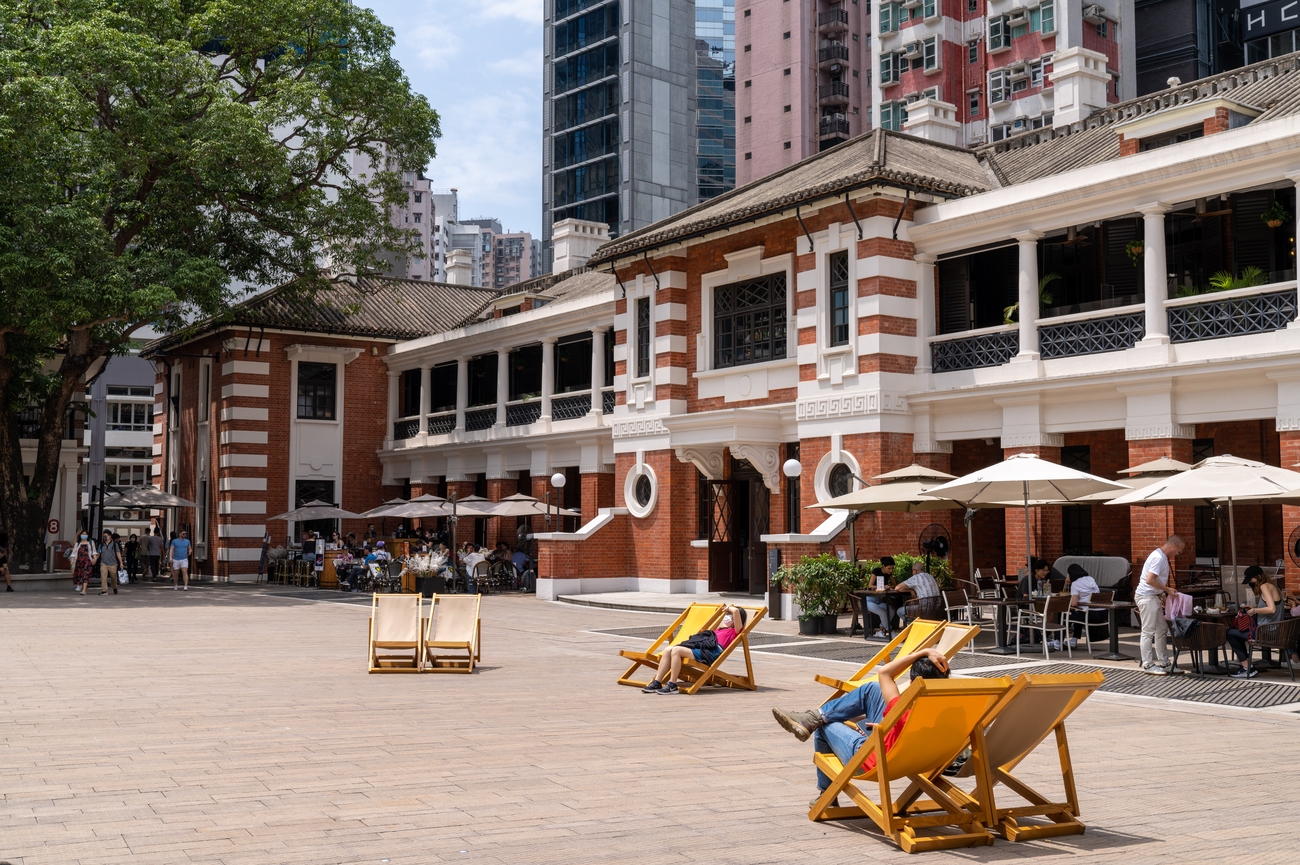
What makes this part of Hong Kong worth exploring slowly, rather than passing through quickly, is that these buildings still stand. Not as ruins, and not as museums in the usual sense, but as active spaces that still carry the full weight of their original purpose. The Tai Kwun heritage compound on Hollywood Road is the clearest example. Once a prison, magistracy, and police headquarters, it has drawn more than 20 million cumulative visits since reopening in 2018, while never pretending to be anything other than what it was.
This article forms part of a wider guide to Hong Kong’s imperial and colonial heritage. The broader picture, including Kowloon, Sheung Wan, Yau Ma Tei, and the links between them, is explored in Imperial Hong Kong: a deep guide to the city’s culture, art & living history.
The
Architecture of Colonial Authority
Hong Kong Island was ceded to Britain in 1842. Within a decade, the colonial administration had claimed the hillside above Queen’s Road Central as the seat of governance, justice, and security. Not because the land was cheap or convenient, it was neither, but because elevation communicated something very clearly about who held authority, and over whom.
The Former
Legislative Council Building
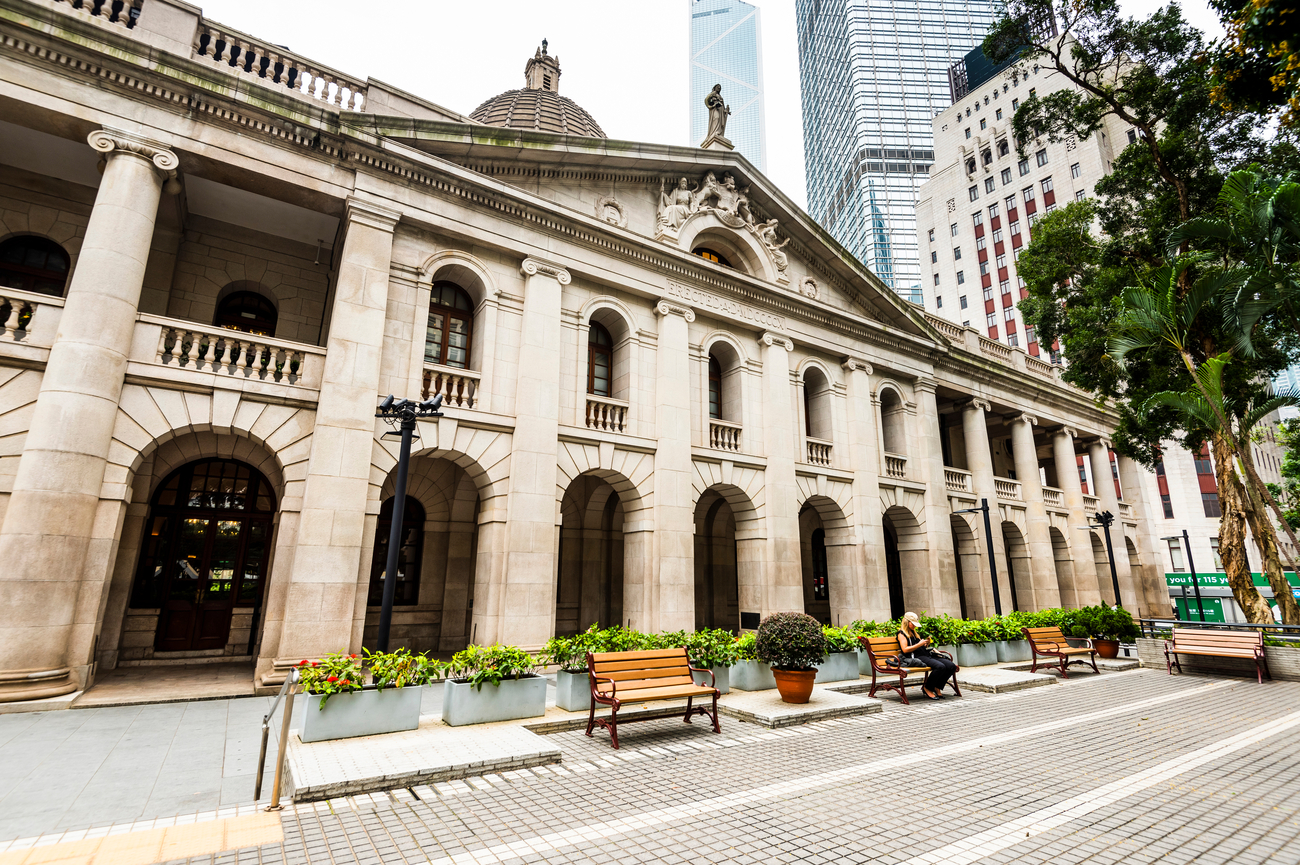
The building at 8 Jackson Road, with the statue of Themis on its roof and the Ionic colonnade facing the harbour, was completed in 1912. Its architects were Sir Aston Webb and Ingress Bell, the same pair responsible for the eastern façade of Buckingham Palace in London. Their appointment for a colonial courthouse in Hong Kong was no coincidence. The building was intended to project gravitas, permanence, and the visual language of British legal authority in a city that had been under British rule for less than seventy years.
It housed the Legislative Council until 2011. Today, it serves a very different legal system, but the building still projects the authority and permanence it was originally designed to convey under British rule. Walking around the colonnade and reading the inscription above the entrance is one of the more revealing experiences in Central.
St. John's
Cathedral
Two minutes uphill from the former LegCo stands St John’s Cathedral, consecrated in 1847 and still the oldest Western ecclesiastical building in continuous use in Hong Kong. Built in the Gothic Revival style, it was chosen for its associations with permanence and Protestant authority, rather than for any practical relationship with Hong Kong’s subtropical climate. It also holds a Crown lease in perpetuity, a legal curiosity that remains technically valid today.
Inside, the cathedral carries more history than its modest exterior first suggests. During the Japanese occupation of Hong Kong from 1941 to 1945, it was requisitioned and used as a social club by the Japanese military. The war memorial plaques inside record the names of men who died defending a colonial order that would itself be fundamentally altered within decades. These details are not incidental. They are the substance of the place.

Tai
Kwun: What the Compound Was, and What It Became
The site at 10 Hollywood Road has operated under some form of official authority since 1841. Victoria Prison was the first permanent Western building constructed in Hong Kong, completed on 4 August 1842, before there was even a formal police force. It predates the police station that would later stand beside it, and it predates the magistracy that would adjudicate the cases that filled it.
The compound expanded organically as the colony grew, with the Barrack Block following in 1864 and the Central Magistracy reaching its current form in 1914.
By the time it was decommissioned in stages between 1979 and 2006, the compound had been in continuous institutional use for 165 years. Ho Chi Minh was detained in Victoria Prison in the early 1930s. Riot police were coordinated from the Central Police Station during the 1967 disturbances. Well over one million people, overwhelmingly Chinese, were sentenced through the Central Magistracy between 1841 and 1941. These are not footnotes. They are part of what the buildings still hold.
The reason Tai Kwun works so well today is that it does not attempt to soften or erase this history. It allows the buildings to carry it.
The
Restoration And What Was Preserved
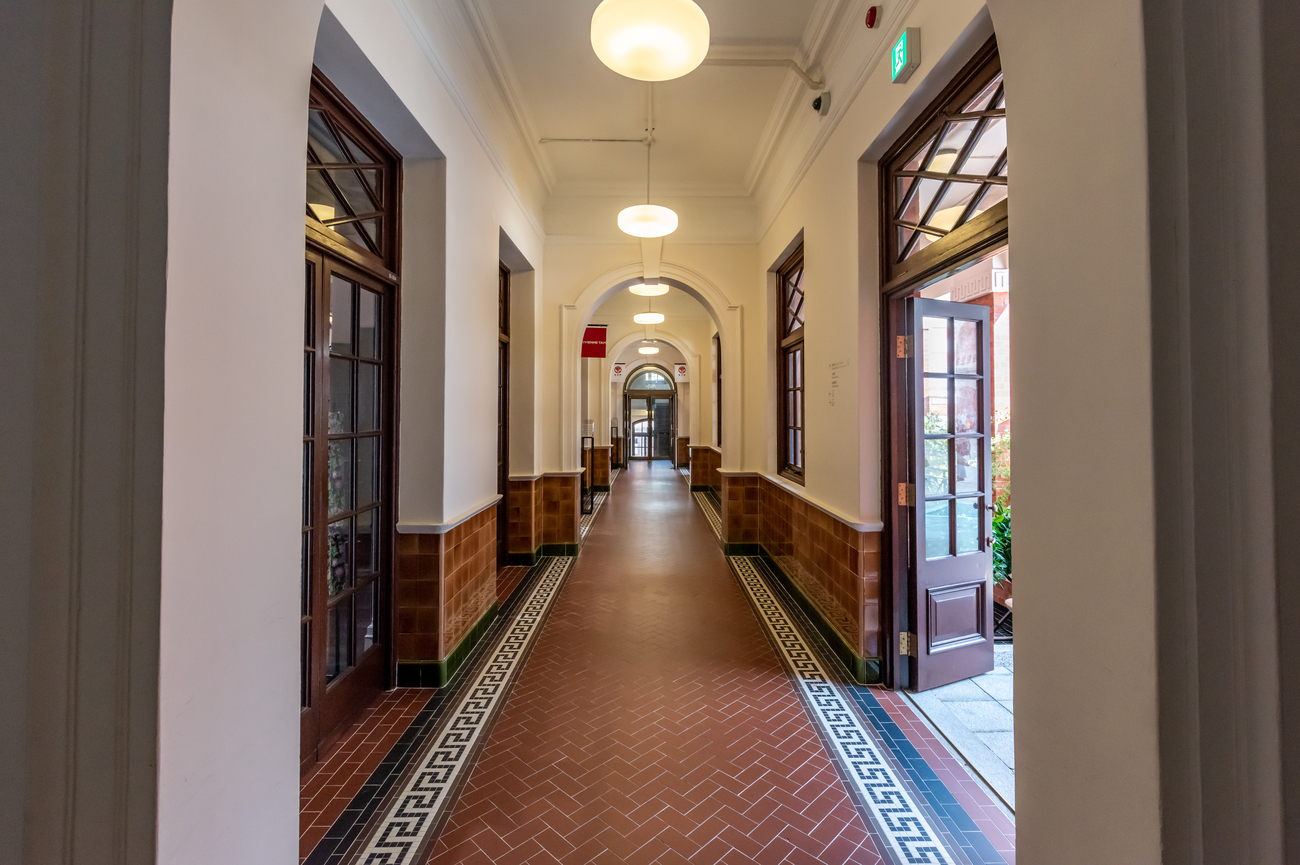
The Hong Kong Jockey Club led the conservation and revitalisation project, which reopened to the public in May 2018. In 2019, the compound received the UNESCO Asia-Pacific Award of Excellence for Cultural Heritage Conservation. Both facts matter, but neither fully explains what makes the result so effective.
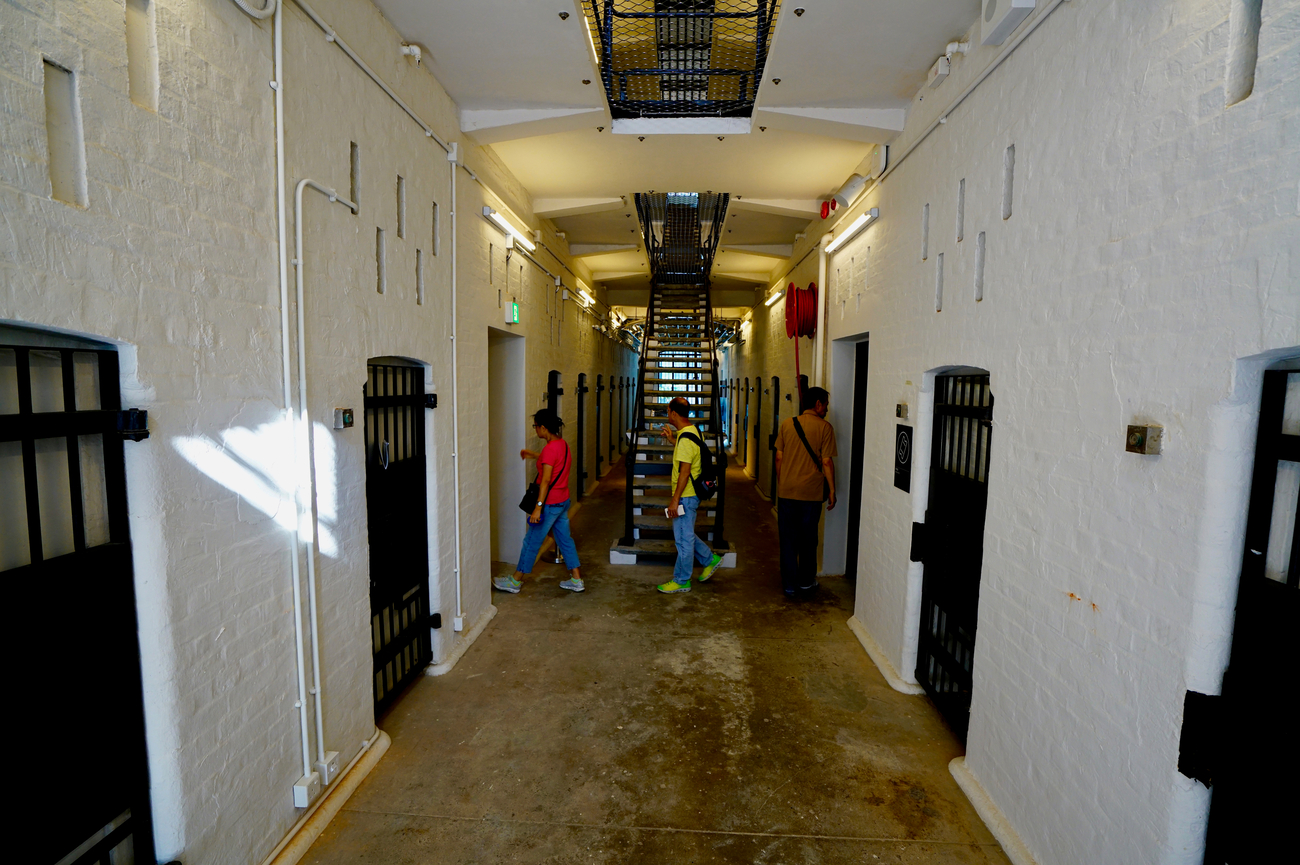
The restoration succeeded because it never tried to sanitise what the buildings originally were. The cell dimensions in the Victoria Prison blocks remain exactly as they were, narrow enough to be physically felt. The Parade Ground is still unmistakably a parade ground. The institutional character of each structure has been preserved so clearly that the architecture becomes its own interpretation.
The Three Main
Structures
The compound comprises three declared monuments, each with a distinct institutional role that shaped its form and atmosphere:
- Central Police Station, with the Barrack Block completed in 1864 and the Headquarters Block in 1919: the administrative and operational centre of colonial law enforcement in Hong Kong. The Headquarters Block faces Hollywood Road and was built after the Parade Ground had already been established, its street-facing orientation reflecting a changed relationship between the police and the public they governed.
- Central Magistracy, in its current 1914 Greek Revival form: designed explicitly to communicate the authority and stability of the colonial legal system. Its façade is a visual statement of colonial jurisprudence. In its first century of operation, the magistracy sentenced more than a million people, the vast majority of them Chinese.
- Prison, dating from 1841: the longest continuously operating prison in colonial Asia, built on the Victorian radial plan that placed surveillance at its geometric centre. B, D, and E Halls survive. F Hall, used first as a prison workshop and later as a printing workshop for inmates, was rebuilt in 1948 after severe bomb damage during the Japanese occupation.
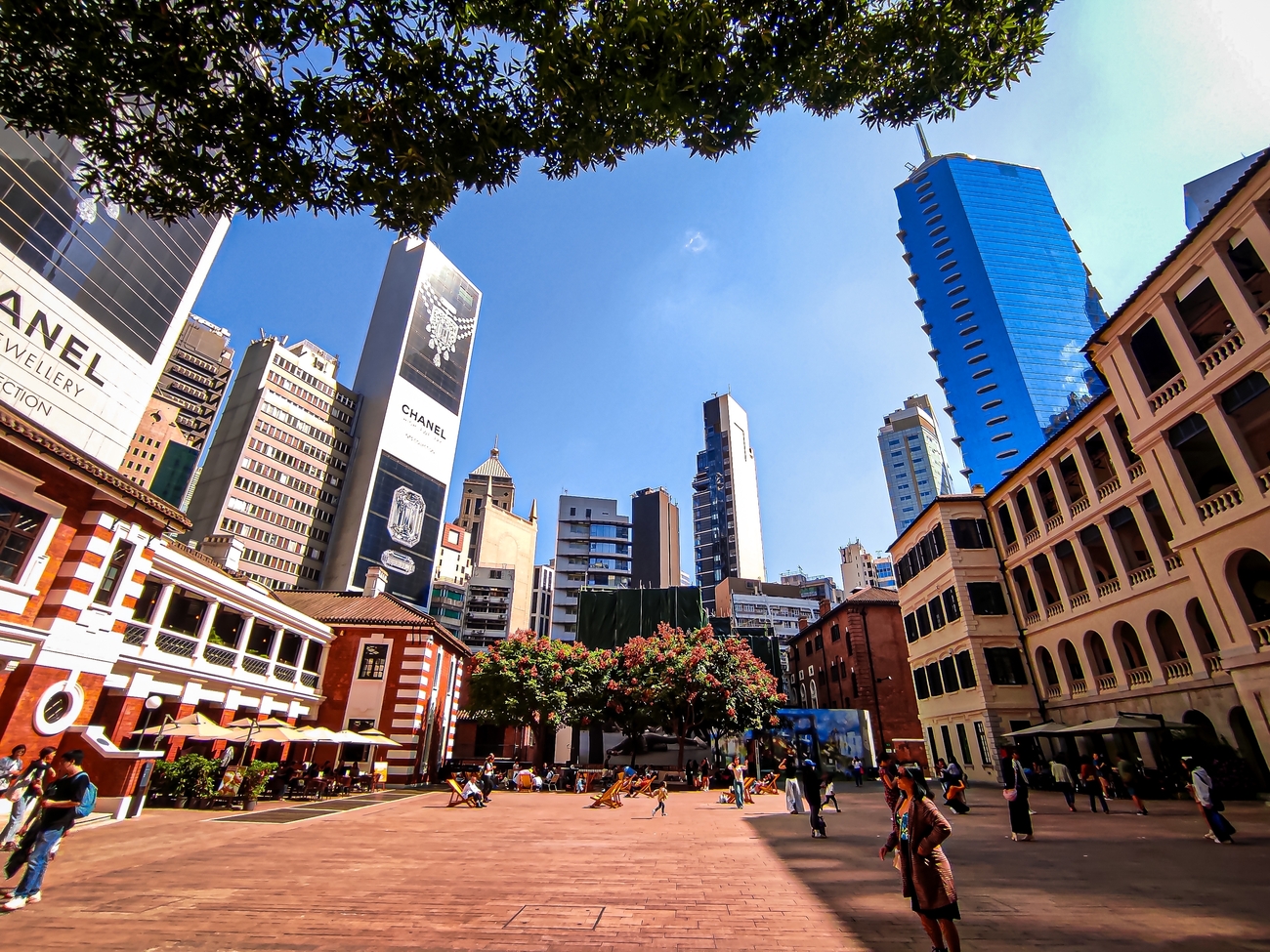
Contemporary
Art Within a Colonial Compound
Tai Kwun Contemporary operates year-round across JC Contemporary and F Hall, offering more than 1,500 square metres of museum-standard gallery space within the 19th-century compound. The programme is research-led, with a strong focus on Hong Kong and Asian perspectives placed in dialogue with wider global debates. It is not simply an arts venue beside a heritage site. It is a serious contemporary art institution located within one of Hong Kong’s most historically significant compounds, and the relationship between the two is deliberate rather than accidental.
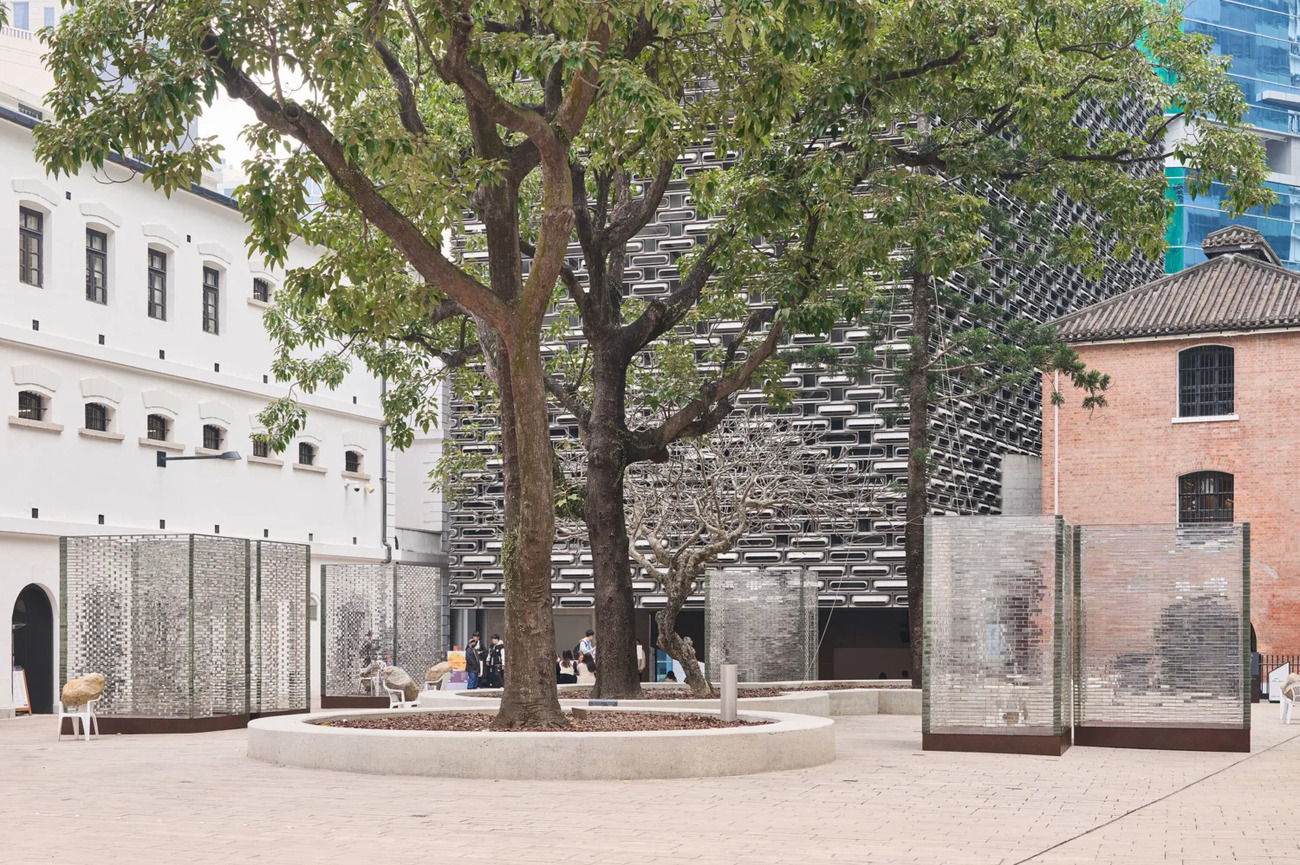
Between five and eight exhibitions are staged across the gallery spaces each year. Alicja Kwade’s site-specific installation Waiting Pavilions occupies the Prison Yard and is confirmed on view until late 2026. The work consists of three structures commissioned for this specific location and engages directly with the compound’s carceral history. It connects the architecture of the former women’s prison in F Hall with the open yard, and it is exactly the kind of commission that only fully works in a place like this.
The heritage exhibitions remain permanently installed across the Barrack Block and the Victoria Prison halls. The Main Heritage Gallery provides a historical overview of the site, as well as of policing and justice in colonial Hong Kong. The Victoria Prison heritage displays, relaunched in a new permanent form in September 2025, offer the clearest encounter with what daily institutional life inside the compound actually looked like.
What To Know
Before You Visit
- General admission: free. Some exhibitions and programmes have separate charges.
- Heritage exhibitions are usually open daily from 11am. Gallery hours vary, while bars and restaurants open later and close later.
- Guided heritage tours are available; and advance booking is strongly recommended for ticketed exhibitions.
- The compound is pedestrian-only. Entry is via the Hollywood Road gate, the Old Bailey Street gate, or the footbridge from the Central-Mid-Levels Escalator system.
- Bar 001 operates within the former prison cells, and is one of the most atmospheric bars in Hong Kong. It is also deliberately hard to find.
The Qing court aesthetics, imperial Chinese art institutions, and the Palace Museum that help contextualise what colonial Hong Kong was positioned against culturally are explored in Imperial China in Hong Kong: palace museum, Qing court symbolism & Chinese aesthetics.
Dining
Within the Compound: Madame Fu
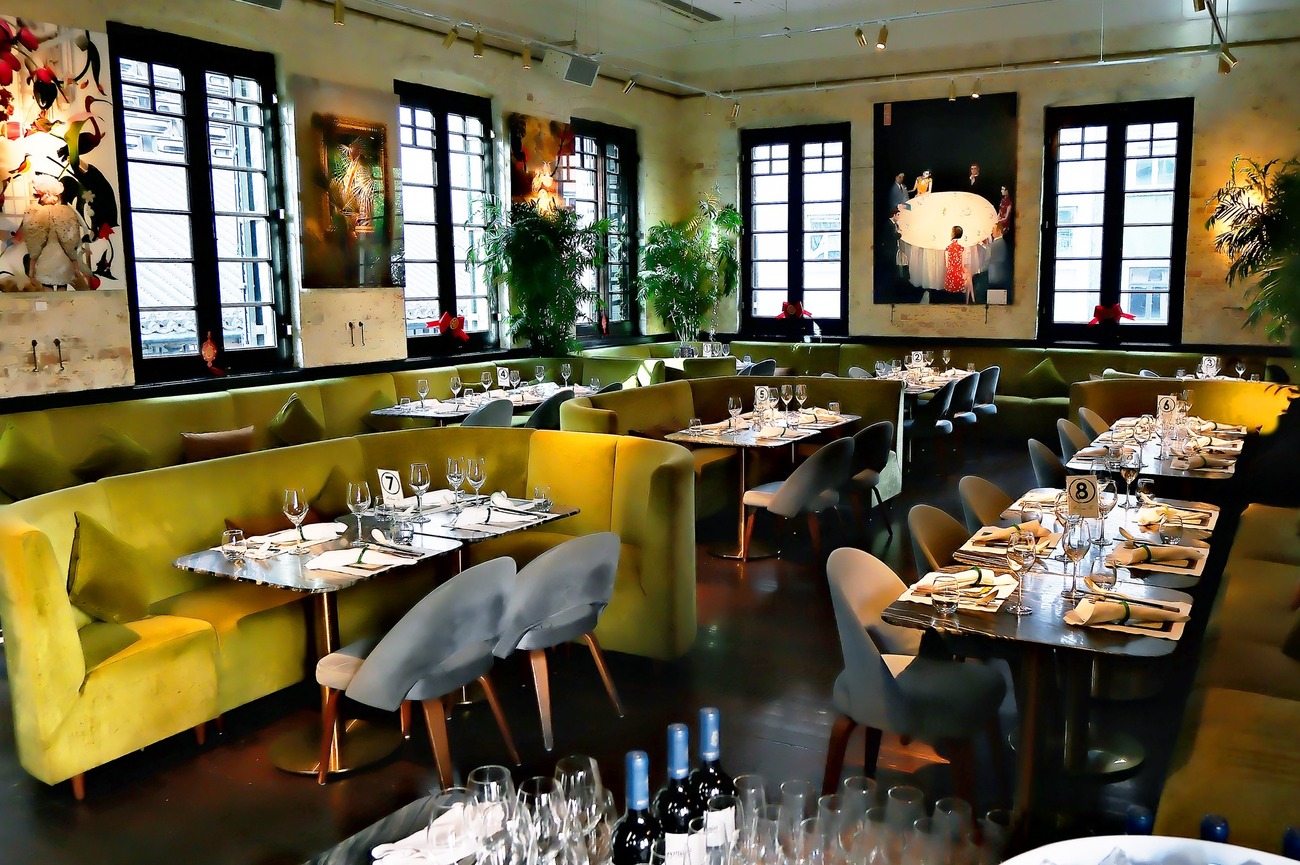
Madame Fu occupies the entire third floor of the Barrack Block, 8,000 square feet across seven rooms, including a wraparound verandah that looks directly over the Parade Ground. The menu is contemporary Cantonese, with signature dishes that draw on both Cantonese and Northern Chinese traditions.
The dishes worth ordering are specific:
- Signature Crispy Chicken with Black Truffle and Chives Sauce, the dish many regulars begin with. On paper, the combination sounds unlikely. On the plate, it works exactly as intended.
- Peking Duck, the brunch standout and the dish that keeps people coming back. Lacquered skin, finely sliced meat, and wrappers that are rolled and blistered rather than batter-heavy. Familiar, but handled with precision.
- Crystal Vegetable Dumpling with truffle, with a delicate wrapper and just enough black truffle to add depth without overwhelming the filling.
- Scallop and Seafood Dumplings, generously filled, clean in flavour, and consistently one of the first dim sum dishes to disappear from the table.
- Char Siu Bao, the kind of bun that earns loyalty through years of steady, unshowy consistency.
- Black Truffle, Egg White and Pine Nut Fried Rice, a dish that could easily feel ornamental but is instead balanced, fragrant, and fully convincing.
What makes a meal here worth the climb from Hollywood Road, beyond the fact that the food is genuinely good, is the setting. Eating in rooms originally designed for colonial police officers, while looking out over the parade ground where they once drilled, adds a layer of context that few Hong Kong dining rooms can match. Contemporary Cantonese cuisine in this setting feels less like a contrast and more like a reclaiming of space. Lunch or afternoon tea here fits naturally into a day spent exploring the heritage blocks below.
Madame Fu is included in the Revigorate 4-day Hong Kong imperial heritage itinerary for reasons that go beyond the food alone. Lunch here, after a morning in the compound, places the meal in a context most visitors never quite manage to arrange for themselves. The reservation is made. The table on the verandah is held. All that remains is to order.
The
Hong Kong Museum of Medical Sciences
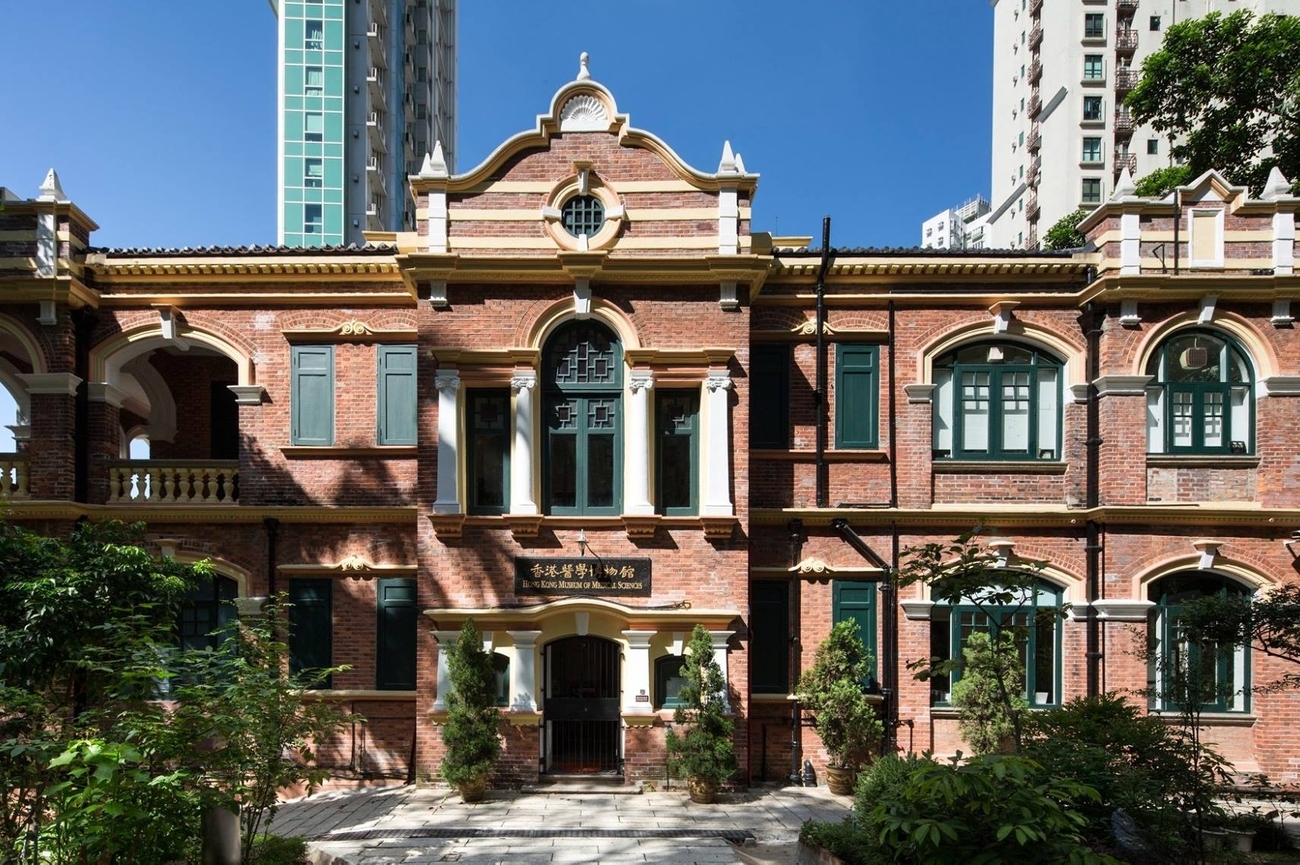
The building at 2 Caine Lane does not immediately announce itself from the street. Tucked at the end of a short lane off Caine Road in the Mid-Levels, it is a handsome Edwardian red-brick structure with arched windows, Ionic columns, and a bauhinia tree at the entrance. It opened in 1906 as the Government Bacteriological Institute, Hong Kong’s first purpose-built medical laboratory, and it was built here for a very specific reason.
The 1894 bubonic plague began in Tai Ping Shan, the Chinese residential quarter immediately to the west. By the time the outbreak was brought under control, more than 3,500 people had died in the first year alone, with the total death toll eventually exceeding 20,000 across the epidemic’s recurring waves through 1929.
The bacteriologist Alexandre Yersin arrived in Hong Kong in June 1894 and identified the bacillus responsible for the disease, laying the groundwork for future methods of prevention and treatment. The pathogen was later named in his honour, Yersinia pestis. The Bacteriological Institute was established to continue that work, and the building still contains its original autopsy rooms, laboratory spaces, and mortuary, all of which can be seen as part of the museum today.
The epidemic reshaped colonial Hong Kong more profoundly than almost any other event before the Second World War. The colonial government’s response, including the clearance of 384 houses in Tai Ping Shan by the end of 1894, the burning of furniture in the streets, and the imposition of quarantine measures fiercely resisted by the Chinese community, forced a fundamental renegotiation of relations between the colonial administration and the people it governed. Tung Wah Hospital, which provided Chinese medical care to the local community, came close to being shut down under pressure from the Colonial Office in London. It survived, and went on to become the charitable institution that still manages Man Mo Temple today.
The Museum of Medical Sciences tells this story in full. Its permanent displays cover the 1894 plague, the development of public health policy in colonial Hong Kong, the 2003 SARS outbreak, the coexistence of Western and traditional Chinese medicine, and the original laboratory equipment still housed in the very rooms for which it was made. It is one of the few places in Hong Kong where the physical evidence of such a consequential historical moment remains directly in view.
- Address: 2 Caine Lane, Mid-Levels, Hong Kong Island
- Opening hours: Tuesday to Saturday 10:00-17:00, Sunday 13:00-17:00. Closed Mondays.
- Admission: HK$20 adults, concessions available
- Getting there: alight at the Ladder Street bus stop on Caine Road, walk down Ladder Street and left into Caine Lane
The Tai Ping Shan quarter where the plague began, along with the medicine streets, Man Mo Temple, and the community institutions that predated and outlasted colonial public health intervention, is explored in Sheung Wan & Tai Ping Shan: medicine streets, temples & the origins of Hong Kong society.
The
Tram and What It Reveals
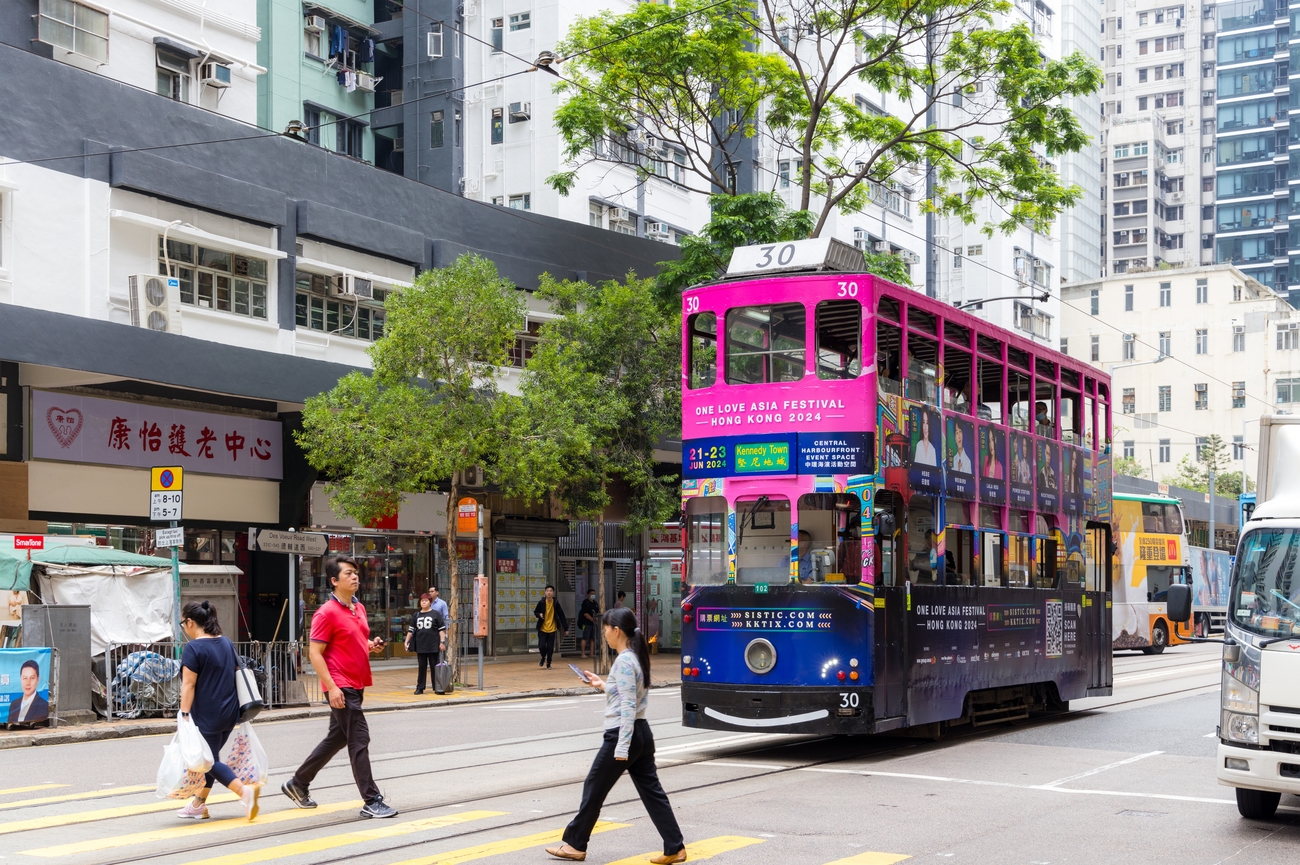
Hong Kong Tramways has been running along Des Voeux Road and Hennessy Road since 1904. From the upper deck of a westbound tram travelling from Central toward Sheung Wan, the city becomes easier to read. At around 15 kilometres per hour, the pace creates a very different relationship with the streetscape from that of a taxi or the MTR.
Colonial-era buildings appear at eye level instead of slipping past in seconds. Above the ground-floor shops, layers of signage build upwards into a distinctly Hong Kong streetscape, English street names set into colonial stone at ground level, Cantonese shop signs rising through the middle floors, and glass towers lifting above them.
The tram is not a visitor experience designed for show. It remains part of daily life on Hong Kong Island. Riding it from Central toward Sheung Wan in the late afternoon, and watching the street unfold at a human pace, offers one of the clearest transitions between the colonial institutional core of Central and the Chinese commercial quarter of Sheung Wan. No private car gives you the city in quite the same way.
A guided day through Central and Tai Kwun, with historical context, pre-reserved dining at Madame Fu, and private transfers, forms part of our 4-day Hong Kong imperial heritage itinerary.
Power, Preserved in Plain Sight
Some cities place their past behind glass. Hong Kong leaves it in circulation.
At Tai Kwun, nothing has been softened for comfort. The scale of the cells, the severity of the Magistracy, and the geometry of the Parade Ground all remain intact, not as relics, but as direct evidence of how authority was once exercised. You move through the compound much as the city once did, through systems designed to regulate, control, and endure.
Seen on its own, the compound is impressive. Seen within Central’s wider colonial layout, and read in relation to the Chinese institutions just beyond it, the experience becomes sharper and more revealing.
That kind of understanding is rarely accidental. It depends on timing, access, and context, the things most visitors only begin to piece together after they have left. When approached properly, the city becomes coherent while you are still standing in it.
Our 4-day Hong Kong imperial heritage itinerary: culture, art and history is built around exactly that. Every element is arranged. Every transition is considered.
Ready to explore Hong Kong’s history in depth?


Let us know what you love, where you want to go, and we’ll design a one-of-a-kind adventure you’ll never forget.
Get in touch
Miriam
Travel Specialist

Nina
Travel Specialist

Abigail
Travel Specialist
Our offices:



Revigorate, Iberian Escapes and Algarve Lifestyle are the registered brand names of APCS Lda . We are a fully authorised travel agency licensed by Turismo de Portugal RNAVT/6867.
In the event of a dispute, the consumer may refer to: RAL - Centros de Arbitragem
Avª. 5 de Outubro, nº. 55, R/C Dtº. 8000-075 Faro, Portugal | Tel: +351 289 823 135 *
* national landline call
E-mail: info@consumoalgarve.pt| www.consumidoronline.pt | Mon to Fri: 9:00 - 13:00 / 14:00 - 17:00