Marina Bay Street Circuit Explained: Why Singapore Is Formula 1's Toughest Night Race

Some circuits reward raw speed. Others demand technical precision. Marina Bay Street Circuit demands both, along with a level of physical endurance that quickly separates contenders from pretenders.
This is 4.94 kilometres of unforgiving tarmac threading through downtown Singapore. Nineteen corners under 1,600 custom-built floodlights. Humidity hovering around 88%. Track surface temperatures reaching 45°C. Even world champions have described it as the hardest physical test on the calendar.
Under the lights of Singapore’s skyline, Formula 1 becomes something more intimate and more punishing, a test of control, endurance and resolve. To win here is not simply to be fast, but to master one of the most relentless circuits the sport has ever built. This is your guide to why the Singapore Grand Prix remains Formula 1’s most demanding night race.

The Origin of Formula 1’s Most Iconic Urban Circuit
Singapore's street racing history runs deeper than most realize.
The Thomson Road circuit hosted races from 1961 through 1973. Those events drew crowds, but the combination of fatal accidents, increasing traffic concerns, and infrastructure limitations eventually ended that era.
Singapore’s modern Formula 1 era began in 2008, when the city re-entered the global motorsport stage with a first of its kind: a Grand Prix run entirely under floodlights. The original layout, developed by Hermann Tilke and later refined with support from KBR, was built to weave past Marina Bay’s most recognizable landmarks while meeting FIA Grade 1 requirements.
That first race is often remembered for the later fallout of “Crashgate,” tied to Renault and Nelson Piquet Jr. Yet the bigger takeaway was simpler. Singapore proved that night racing could succeed at the sport’s highest level, both technically and theatrically, setting a new benchmark for modern Formula 1 night race track events.
The circuit has evolved strategically since then. The Singapore Sling chicane at Turn 10 was simplified in 2013, increasing corner entry speeds by roughly 40 km/h. Turn 13 received minor adjustments in 2015. The biggest shift arrived in 2023, when the section from Turns 16 to 19 was redesigned into a 397-meter straight. The update reduced the circuit from 23 corners to 19 and immediately made the lap faster, cutting roughly twenty seconds from the overall time.
The change was deliberate. Singapore has always been demanding, but this adjustment opened up more room for overtaking, improved visibility for spectators, and created a safer, more fluid sequence through that part of the track. The circuit kept its intensity, while the racing gained a little more breathing space.
The Technical Reality: Sector by Sector
Sector 1: Opening Intensity
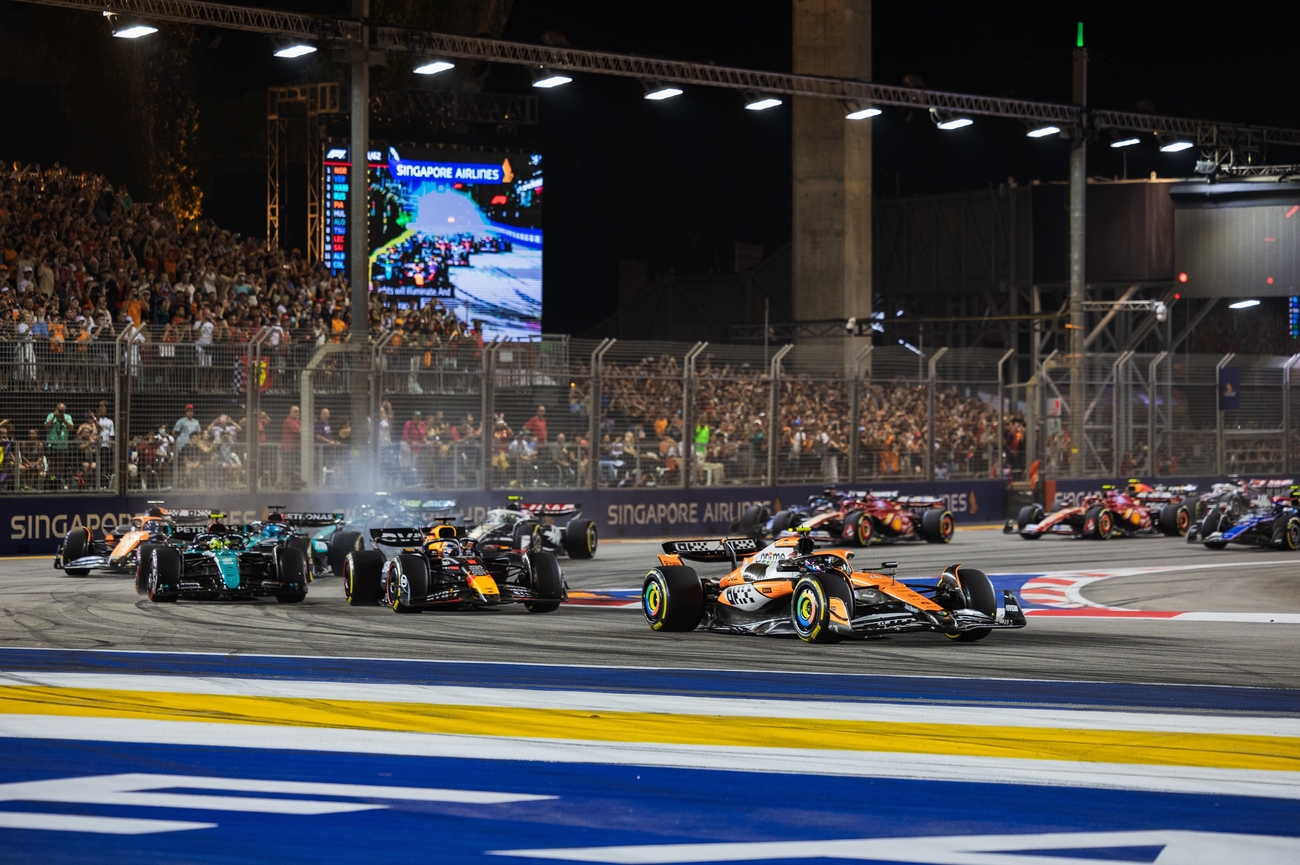
The pit straight allows cars to reach 308 km/h before Turn 1, where heavy braking drops speeds to approximately 146 km/h. This right-hander is where first-lap chaos typically unfolds. Throughout the race, it remains the primary overtaking zone.
Turns 2 and 3 flow together in an S-curve configuration. Turn 2 swings right, Turn 3 cuts left at just 90 km/h. Precision here matters because errors compound through the following sequence.
Turn 4 along Republic Boulevard lets drivers accelerate toward 260 km/h before braking for Turn 5's right-hander at 145 km/h. The Raffles Boulevard section through Turn 6 represents the fastest part of the circuit, with speeds reaching 320 km/h in optimal conditions.
Turn 7 demands everything. Cars brake from 320 km/h down to 127 km/h for this hairpin. It's second gear, maximum steering lock, and critical exit acceleration for the technical middle section ahead.
Sector 2: The Grinding Test
The sequence from Turn 8 onward requires constant concentration. These corners lack the drama of high-speed sections but accumulate mental and physical fatigue lap after lap.
Turn 8 on Nicoll Highway drops speeds to 81 km/h for a tight right-hander. The track narrows here, and the camber changes test mechanical grip.
The former Singapore Sling chicane at Turn 10, removed in 2013, previously interrupted flow through this section. The revised left-hander keeps the lap moving, but precision hasn’t gone anywhere.
Over the Esplanade Bridge at Turns 11–12, the circuit feels different. There’s a small rise, a brief lightness in the car, and then the glare of artificial lighting. At night, drivers rely on references that simply don’t exist on most tracks, adjusting by feel as much as sight.
Turn 13's long, sweeping left generates sustained lateral G-forces. Front tires work hard through this corner, and the exit determines speed onto the back straight.
Sector 3: Speed and Risk
The 2023 layout changes made the greatest impact here. What was once a series of tight corners is now an extended straight approaching 800 meters. Cars accelerate hard, reaching approximately 290 km/h before the Bayfront chicane.
Multiple DRS zones activate along this stretch. Slipstream effects become pronounced. Overtaking attempts happen regularly into Turn 16's heavy braking zone.
The Bayfront chicane (Turns 16-17) requires immediate deceleration from maximum speed. Late-braking moves work here, but lock-ups send cars wide onto the exit, compromising the approach to Turn 18.
Turn 18 is architecturally unique: cars pass directly underneath a grandstand. The lighting transition from exterior to tunnel to exterior affects visibility momentarily. Photographers favor this section for obvious reasons.
Turn 19 completes the lap with a left-hander that sets up the drag race back to Turn 1. Exit speed here determines whether you're defending or attacking on the pit straight.
For a fuller perspective on what defines this weekend beyond the lap itself, explore our Insider Guide to the Formula 1 Singapore Grand Prix.
Formula 1’s Ultimate Test of Endurance
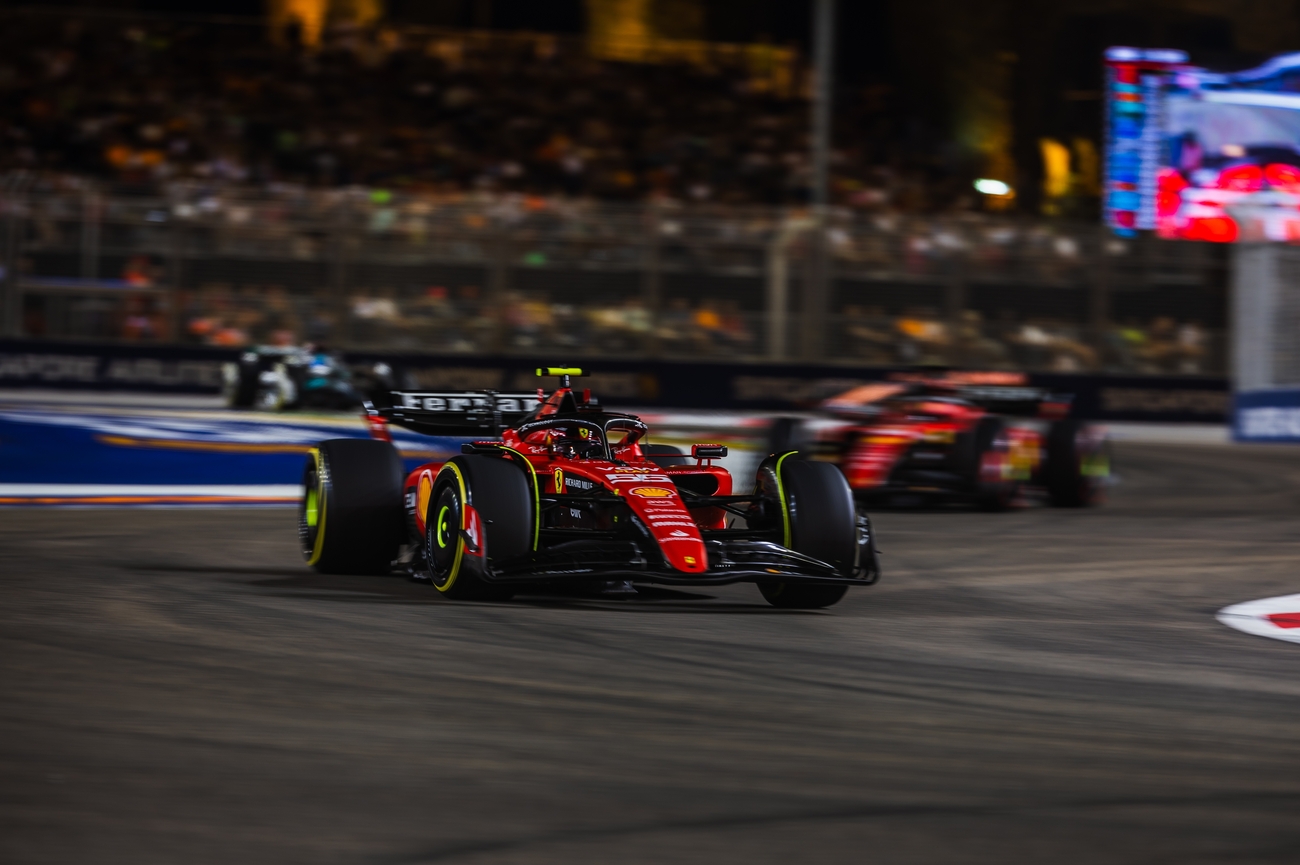
Marina Bay is as much an endurance event as it is a race. Ask drivers which weekend drains them the most, and Singapore comes up again and again.
Even at night, the air barely cools. Trackside temperatures sit around 28–32°C, and inside the cockpit it can climb well past 50°C. Humidity stays heavy, so the heat doesn’t lift. Sweat doesn’t evaporate the way it would elsewhere, and the body struggles to reset lap after lap.
Core body temperature rises to levels that would concern medical professionals in any other context. Drivers lose 3-4 kilograms through the race.
Race duration compounds everything. Singapore typically runs the full two-hour time limit. That's 120 minutes of sustained high-intensity physical output in extreme conditions. There's no respite. The lap is long enough that recovery between sections is minimal.
Constant directional changes tax neck and core muscles. Nineteen corners mean the body never rests. G-forces through corners require continuous muscle engagement to maintain head position and body control. The counter-clockwise direction particularly stresses muscles differently than clockwise circuits.
Singapore punishes concentration. There’s no space to drift, no margin to reset. You’re either precise or you’re in the wall.
The build-up reflects that. Drivers spend weeks preparing for the heat, doing more cardio than they would for most races, and putting serious work into neck strength. Hydration and recovery become part of the strategy before the weekend even starts.
Several drivers have cramped during the race. Some have required post-race medical attention. Younger drivers, despite superior fitness, sometimes struggle more than veterans who know how to manage energy across the full race distance.
The Engineering of Formula 1 After Dark
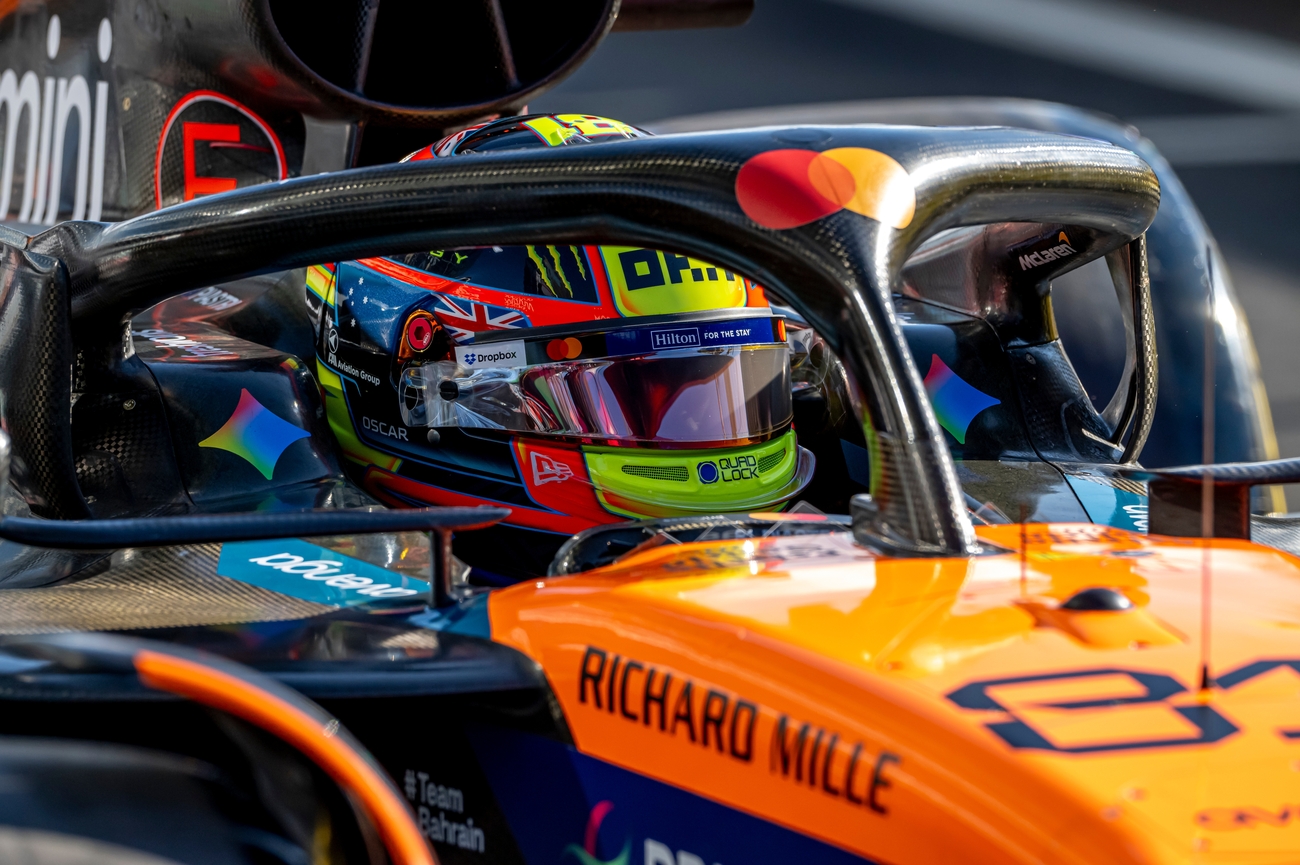
The infrastructure supporting Singapore's night race represents significant engineering. 1,600 custom-made floodlights position around the circuit. These aren't standard stadium lights; they're designed specifically for motorsport broadcast requirements.
The floodlighting in Singapore is intense, far brighter than a typical stadium setup, designed to keep the circuit evenly lit for both drivers and broadcast cameras.
Even so, racing under artificial light changes what you see. Shadows sit in unfamiliar places, glare catches you at odd angles, and depth perception never feels quite as clean as it does in daylight. Certain corners look different lap to lap depending on where the light falls.
The surface becomes harder to judge as well. Small bumps and imperfections don’t announce themselves the same way they would during the day, and drivers end up relying on slightly different reference points for turn-in and apexes.
Spray during wet conditions amplifies visibility problems exponentially. The combination of artificial lighting and water creates conditions where following another car closely becomes genuinely hazardous.
Strategic implications shift under lights. Tire temperature management differs at night because track surface temperatures cool below ambient air temperature. Brake cooling requirements follow different patterns. Track evolution is less pronounced without the progressive heating that occurs during daylight races.
Safety Car periods happen more frequently here. The circuit held a remarkable record: at least one Safety Car deployment in every race from 2008 through 2023. That streak finally ended in 2024.
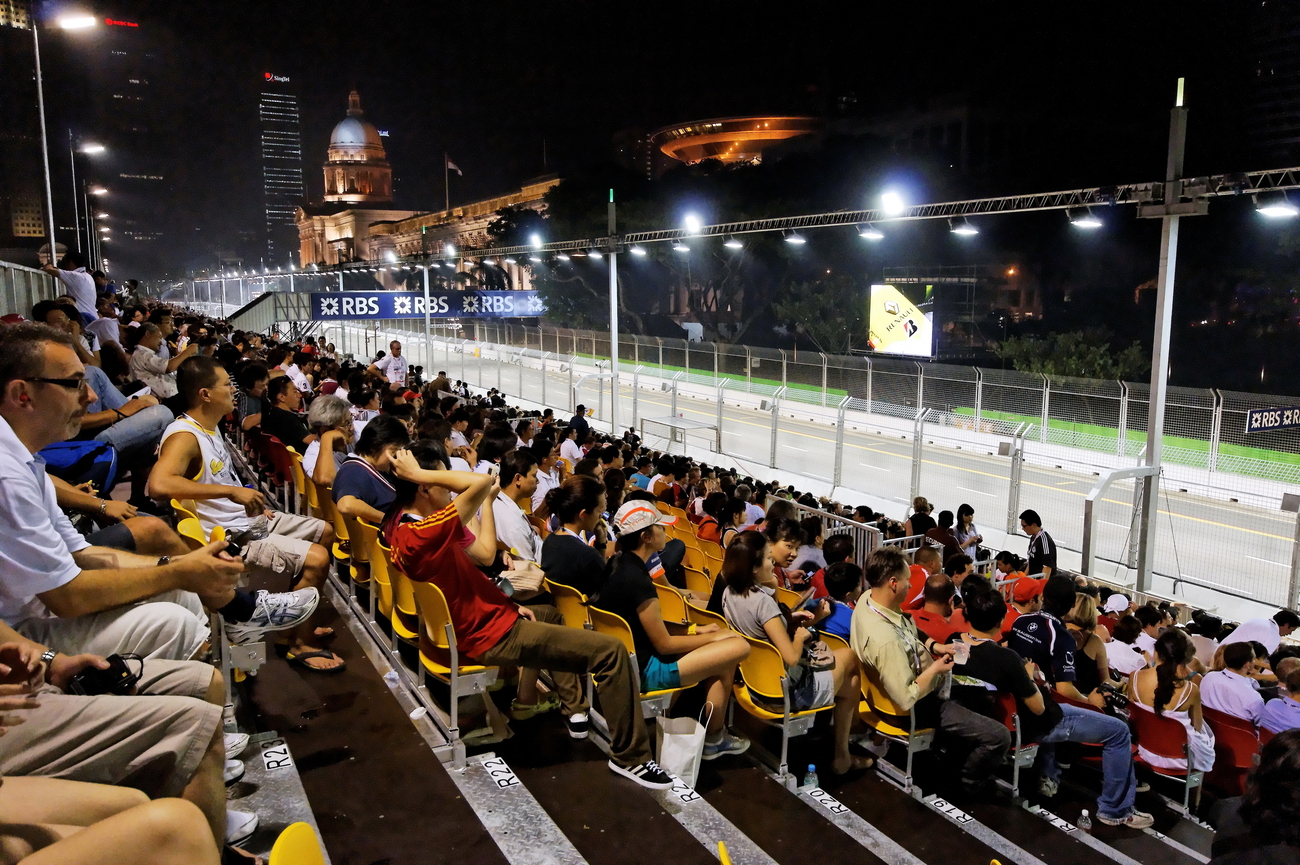
From the grandstands, the night race is the point. The temperature drops just enough to make the evening comfortable, and the whole circuit glows against the city. It’s hard to imagine the same atmosphere in daylight. Post-race fireworks visible across the city mark the conclusion.
European television audiences watch at reasonable hours. The timing works for Asia-Pacific viewers. North American broadcasts happen during morning hours. This scheduling consideration influenced the original decision to race at night.
For many guests, Singapore is the rare Grand Prix where the setting matters as much as the racing itself. The night transforms the city into part of the circuit, and access becomes the difference between simply attending and truly experiencing it. Our Formula 1 Singapore Grand Prix: VIP Night Race Experience is designed around that reality, with curated viewing, seamless hospitality, and a level of comfort that matches the occasion.
The Metrics That Distinguish Marina Bay Circuit
Specifications:
Circuit Length
Total Laps
Race Distance
Direction
Corners
DRS Zones
Gear Changes per Lap
Average Speed
Details:
4.940 km (3.070 miles)
62
306.28 km (190.35 miles)
Counter-clockwise
19
2 (pit straight, back straight)
Approximately 60
~172 km/h (slowest on calendar)
Current Lap Records (post-2023 layout):
- Fastest qualifying lap: 1:29.158 (George Russell, 2025)
- Fastest race lap: 1:33.808 (Lewis Hamilton, 2025)
These times represent significant improvements over the previous Marina Bay circuit turns. The old circuit, with 23 corners and a shorter back straight, produced lap records around 1:41-1:42 for race pace.
Most successful drivers at Marina Bay:
Marina Bay has produced a fairly clear shortlist of repeat winners.
- Sebastian Vettel remains the standout with five victories across Red Bull and Ferrari
- Lewis Hamilton follows with four.
- Fernando Alonso has taken two as well, including Singapore’s very first race in 2008.
At team level, it’s unusually balanced. Ferrari, Mercedes, and Red Bull are level on four wins apiece, which says a lot about the nature of this circuit. Singapore tends to flatten the usual hierarchy. Pure engine advantage matters less than it does elsewhere, and the weekend often comes down to mechanical grip, physical endurance, and getting the strategy exactly right.
The tight distribution among top teams reflects how this circuit neutralizes certain performance advantages. Mechanical grip, driver stamina, and strategic execution matter more here than at power-sensitive circuits.
Safety Car statistics tell their own story. Until 2024, every Singapore Grand Prix featured at least one Safety Car period. Twenty-four deployments across the first 16 races created strategic opportunities that didn't exist at other venues. Teams factor probable Safety Car periods into race strategy from the start.
The Circuit’s Limited Passing Windows
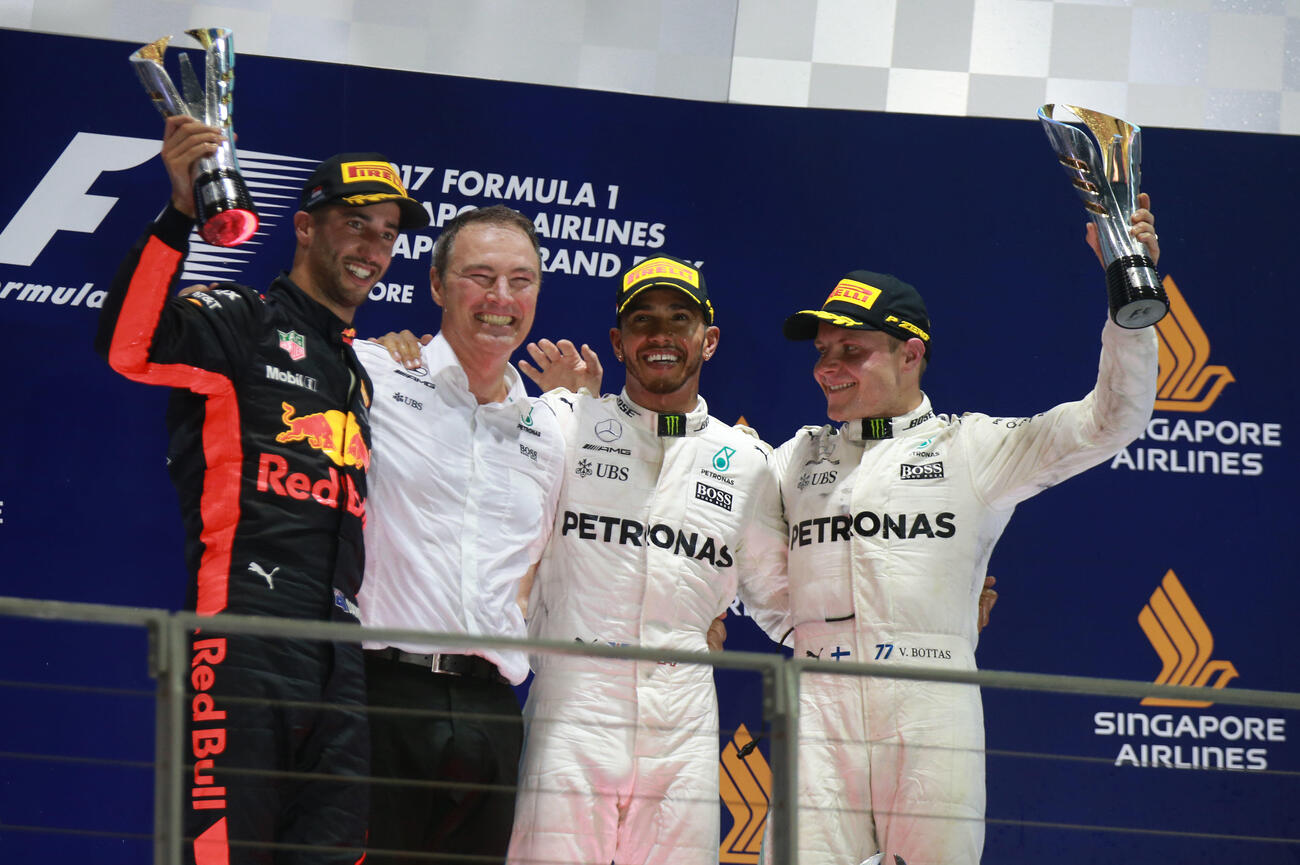
Overtaking in Singapore has always been selective. It’s more open than Monaco, but it’s still a street circuit, and the walls shape everything.
- Most moves happen into Turn 1. The approach is fast, the braking zone is long, and drivers know it’s the best place to arrive alongside someone with a real chance of making it stick. The inside line matters, and the opening lap here often sets the tone for the first stint.
- The other opportunity comes later in the lap, down the straight into Turn 16. Since the 2023 changes, that section has become more useful, especially with DRS in play. The closing speed builds quickly, and late braking into the chicane can invite a move, though defenders usually have just enough room to make life difficult.
- Turn 7 is more situational. It tends to appear when there’s a tyre offset or someone has a clear pace advantage, because the margin for error is thin. In Singapore, a small mistake rarely ends with a harmless run wide.
What makes passing so difficult is simple: the circuit doesn’t give drivers many options. The track stays narrow, the barriers are immediate, and following closely through the slower corners overheats the front tyres. There isn’t much space to improvise, and compromised lines carry a real cost.
DRS helps, but it doesn’t transform the race. Teams often lean toward straight-line efficiency in the hope that the few passing zones are enough to matter, even if it means giving up some comfort through the technical middle sector.
Singapore usually lands in the middle ground for street-circuit racing. There are chances, especially at the right corners, but it rarely turns into the kind of free-flowing overtaking you see at purpose-built tracks.
Singapore Among F1's Street Circuits
Marina Bay exists in context with other street venues. Comparisons reveal what makes Singapore F1 circuit layout distinctive.
Monaco (3.337 km, 19 corners) remains slower and more technical. Overtaking at Monaco is nearly impossible. Singapore allows more racing. Monaco runs during the day in Mediterranean spring weather. Singapore's night race in tropical humidity creates entirely different physical demands.
Baku (6.003 km, 20 corners) mixes a tight castle section with an exceptionally long straight where cars exceed 340 km/h. Baku produces more dramatic overtaking. Singapore maintains consistent technical challenge throughout the lap rather than contrasting slow and fast sections.
Jeddah (6.174 km, 27 corners) is technically a street circuit but runs at much higher average speeds. The Saudi Arabian track is faster than some purpose-built venues. Singapore's average speed of 172 km/h makes it the slowest circuit on the current calendar.
Las Vegas (6.201 km, 17 corners) also races at night through an iconic city. The Nevada circuit prioritizes high-speed racing over technical complexity. Temperatures in Las Vegas (typically October/November) are significantly cooler than Singapore's tropical climate. The physical challenge differs entirely.
What distinguishes Marina Bay:
- Perfect balance between speed sections and technical corners
- Physical demands that remain unmatched
- Atmosphere created by location integration
- Consistent quality and organization since 2008
- Status as night racing's pioneer and ongoing standard-bearer
The circuit rewards complete drivers who combine technical skill, physical conditioning, strategic awareness, and mental resilience. Pure qualifying pace matters less here than at circuits where grid position guarantees race result.
Singapore also rewards preparation off-track as much as on it, especially when it comes to where you stay during race week.
Circuit Access and Viewing Positions
The Marina Bay Street Circuit divides into four distinct zones. General admission tickets limit access to one zone. Premier tickets grant movement across all four, allowing you to experience different perspectives throughout the weekend.
- Zone 1 encompasses the pit and start-finish area. This is where podium celebrations happen, where pit stops unfold under pressure, where races conclude. Pit Grandstand provides the most comprehensive single-location viewing on the circuit.
- Zone 2 covers Turns 1-7. Turn 1 Grandstand captures first-corner drama and is positioned for optimal overtaking views. This area includes the fastest section along Raffles Boulevard.
- Zone 3 includes Turns 11-16. Bayfront Grandstand at Turns 16-17 positions spectators for late-braking overtaking attempts off the long straight. Views here combine action with Marina Bay's skyline backdrop.
- Zone 4 covers the Esplanade and waterfront area. This zone provides atmosphere and entertainment access but trades some circuit visibility for event experience.
Multiple MRT stations serve the circuit: Promenade, Esplanade, City Hall, Bayfront. Each station positions you near different gates. Walking times from stations to gates range from 5-15 minutes depending on your destination.
Security procedures and entry times matter. Practice sessions allow arrival 30 minutes before track activity begins. Qualifying sessions warrant 45-60 minute advance arrival. Race day requires 90+ minute early arrival to clear security and reach your viewing position before pre-race activities begin.
What This Circuit Reveals About Formula 1
Marina Bay Street Circuit challenges assumptions about what Formula 1 racing should be. It's deliberately difficult, uncompromisingly demanding, and completely unforgiving of mistakes.
The circuit rewards drivers who prepare comprehensively, who understand that Singapore requires different skills than Monza or Spa or Silverstone. The fastest car doesn't always win here. The best-prepared driver often does.
Physical conditioning separates strong performances from struggling ones. Strategy execution under pressure determines results when cars are closely matched. Mental resilience through two hours of intense focus becomes as important as technical skill.
For 62 laps every October, downtown Singapore transforms into a proving ground where the world's best drivers test their absolute limits. The circuit is demanding by design. That's precisely the point.
The Circuit Is Only the Beginning
Marina Bay remains Formula 1’s most exacting street circuit for a reason.
The margins are narrow, the conditions relentless, and the setting unlike anywhere else on the calendar. Once you understand what this track demands, the Singapore Grand Prix becomes something you watch with sharper attention and deeper appreciation.
Our Formula 1 Singapore Grand Prix: VIP Night Race Experience offers a way to be part of that atmosphere with exceptional access, refined hospitality, and a perspective worthy of the sport’s defining night race.
Experience the Singapore Grand Prix exclusively.
Frequently Asked Questions
-
Why is the Marina Bay Street Circuit considered the most demanding race in Formula 1?
Marina Bay combines extreme heat, high humidity, and a physically demanding layout with 19 corners. Drivers spend nearly two hours navigating a tight street circuit where mistakes mean contact with the barriers, making it one of the toughest races on the Formula 1 calendar.
-
How long is the Marina Bay Street Circuit and how many laps does the Singapore Grand Prix have?
The circuit measures 4.94 kilometres (3.07 miles). The Singapore Grand Prix runs for 62 laps, covering a total race distance of 306.28 kilometres.
-
Why is the Singapore Grand Prix held at night?
The race is held under floodlights to accommodate global television audiences while avoiding the extreme daytime heat of Singapore. The night setting also creates the distinctive skyline atmosphere that has become one of Formula 1’s most iconic visuals.
-
How many corners are on the Marina Bay Street Circuit?
After the 2023 layout update, the circuit now features 19 corners. Earlier versions of the track had 23 corners before the redesign replaced part of the final sector with a longer straight.
-
Why is the Singapore Grand Prix so physically demanding for drivers?
Cockpit temperatures can exceed 50°C while humidity remains extremely high. Drivers often lose 3 to 4 kilograms of body weight during the race, while the constant sequence of corners requires sustained concentration and physical effort for almost two hours.
-
Where are the main overtaking opportunities at the Singapore Grand Prix?
Most overtaking happens into Turn 1 after the pit straight and into Turn 16 at the end of the long back straight. These sections provide the strongest braking zones where drivers can attempt late passes.
-
What changes were made to the Marina Bay circuit in 2023?
The section between Turns 16 and 19 was redesigned into a longer straight. This reduced the number of corners from 23 to 19 and improved overtaking opportunities while making the lap noticeably faster.
-
Which Formula 1 drivers have been most successful in Singapore?
Sebastian Vettel holds the record with five victories. Lewis Hamilton has four wins, while Fernando Alonso has won twice, including the first Singapore Grand Prix in 2008.
-
Why are Safety Cars common at the Singapore Grand Prix?
The narrow street circuit and close barriers mean even small mistakes often result in incidents. From 2008 to 2023 every race featured at least one Safety Car deployment.
-
What makes the Marina Bay Street Circuit unique among Formula 1 street circuits?
Unlike many street tracks, Marina Bay combines technical corners, high humidity, night racing, and an urban skyline setting. The circuit demands both precision and endurance, making it one of the most distinctive races on the Formula 1 calendar.
-
How does Revigorate design a Singapore Grand Prix travel experience?
Revigorate creates tailor-made Singapore Grand Prix trips built around the race weekend. We combine premium race viewing, luxury accommodation, private transfers, and curated local experiences so guests can enjoy the event comfortably while experiencing the best of Singapore during the Grand Prix.


Let us know what you love, where you want to go, and we’ll design a one-of-a-kind adventure you’ll never forget.
Get in touch
Miriam
Travel Specialist

Romina
Travel Specialist

Laura
Travel Specialist
Our offices:



Revigorate, Iberian Escapes and Algarve Lifestyle are the registered brand names of APCS Lda . We are a fully authorised travel agency licensed by Turismo de Portugal RNAVT/6867.
In the event of a dispute, the consumer may refer to: RAL - Centros de Arbitragem
Avª. 5 de Outubro, nº. 55, R/C Dtº. 8000-075 Faro, Portugal | Tel: +351 289 823 135 *
* national landline call
E-mail: info@consumoalgarve.pt| www.consumidoronline.pt | Mon to Fri: 9:00 - 13:00 / 14:00 - 17:00