Victoria Harbour Hong Kong Guide: The City’s Most Privileged Perspective
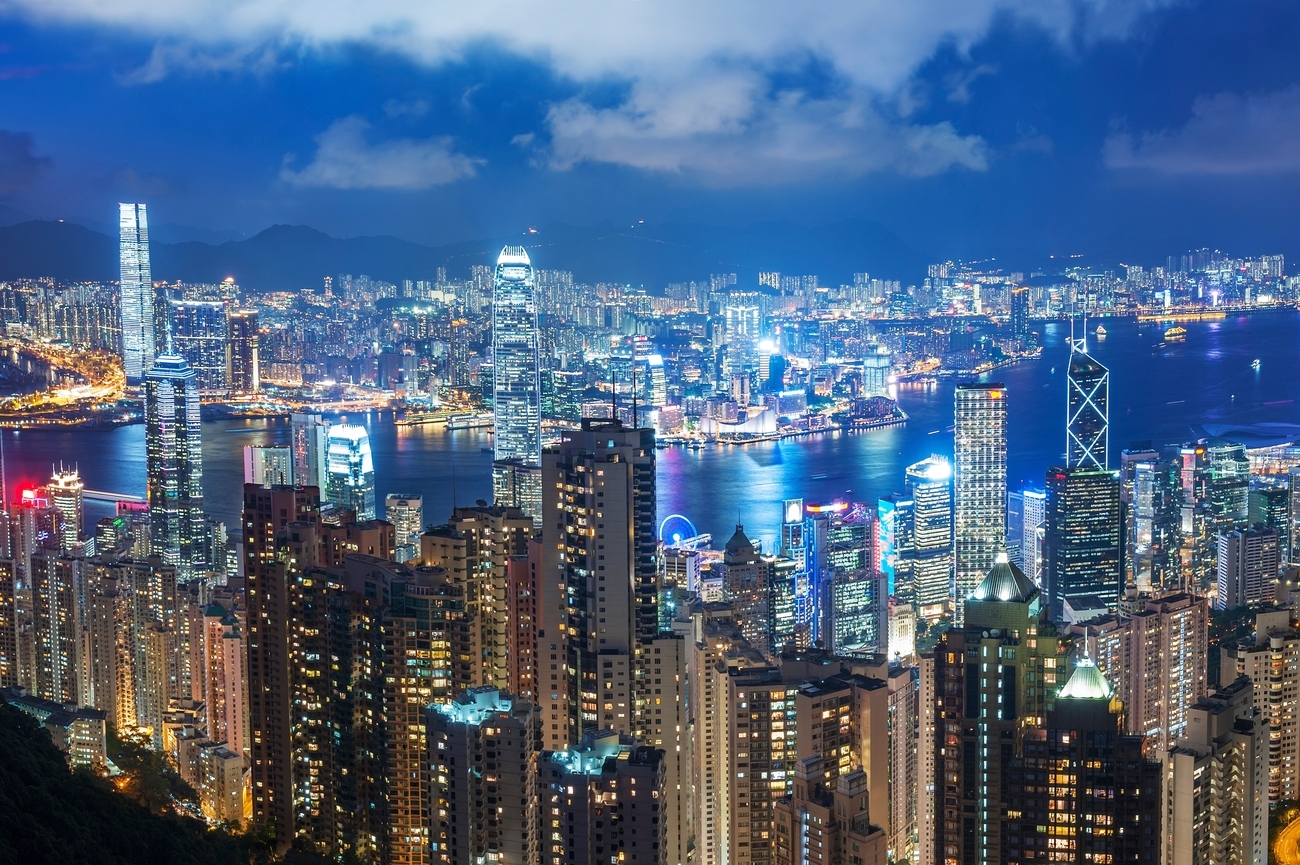
The harbour is 1.6 kilometres wide at its narrowest point, and that width is the whole argument.
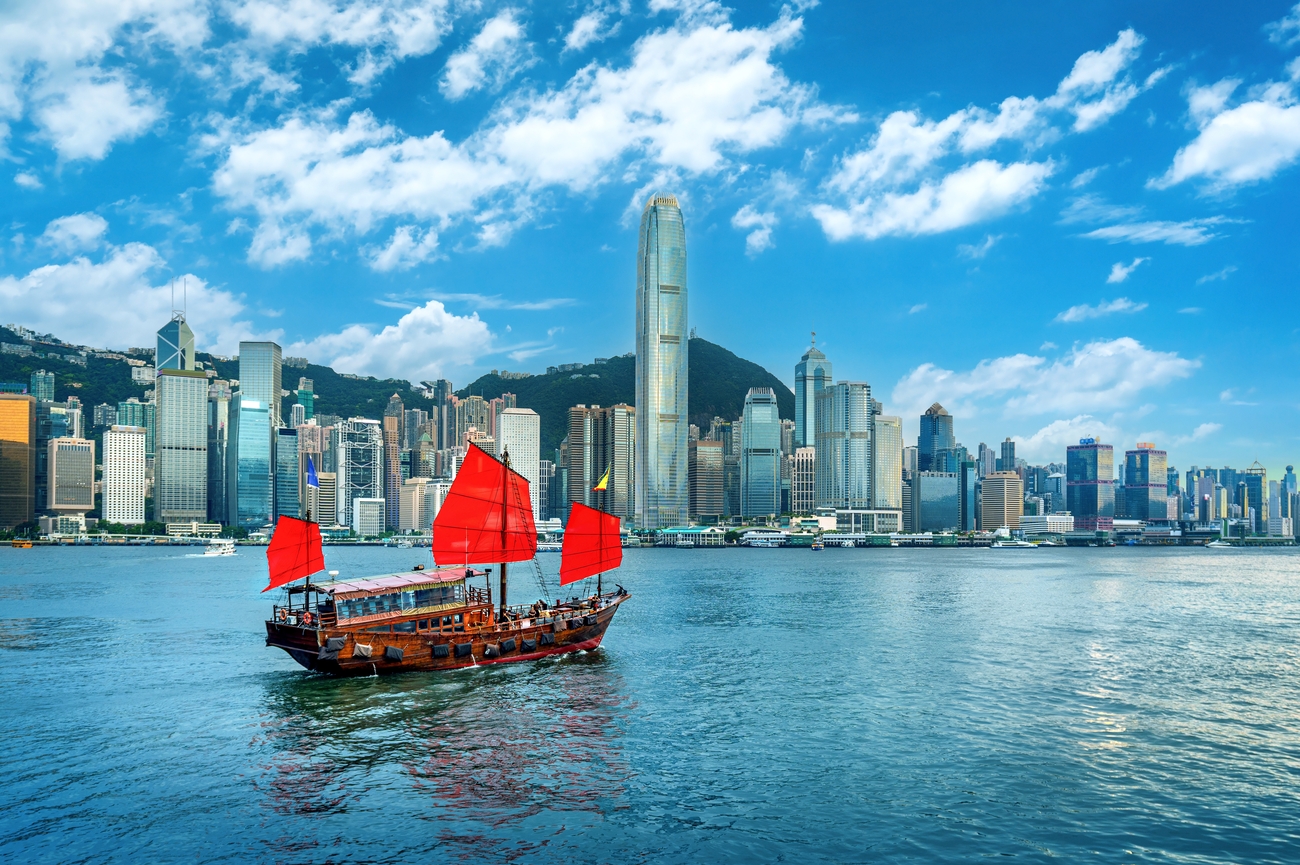
Close enough to read the individual towers on the Hong Kong Island skyline from the Kowloon promenade. Far enough that the city holds its shape as a complete picture rather than collapsing into detail.
Named after Queen Victoria in 1861 by people who had never met her, framed by a skyline she could not have imagined, it remains one of the most composed views on earth.
Set between two of the densest urban shorelines in the world, it still manages to feel like open water.
Our six-day Victoria Harbour itinerary brings the harbour, the skyline, and the city’s best experiences into one perfectly sequenced stay.
Why
Victoria Harbour Is the City’s Defining Perspective
Victoria Harbour has been many things: a colonial port, a commercial artery, a contested piece of geography named after a British queen who never once saw it. Today, it is the axis around which Hong Kong’s finest experiences are arranged.
What makes the harbour so compelling is not only its history or even its beauty, but its proportion. The channel is narrow enough for the skyline to remain legible from either shore, yet wide enough for the city to hold its full shape. From Tsim Sha Tsui, Central appears composed and theatrical. From Hong Kong Island, Kowloon feels denser, broader, and more immediate. The harbour does not simply divide the city. It explains it.
A Skyline Best Understood from More Than One Angle
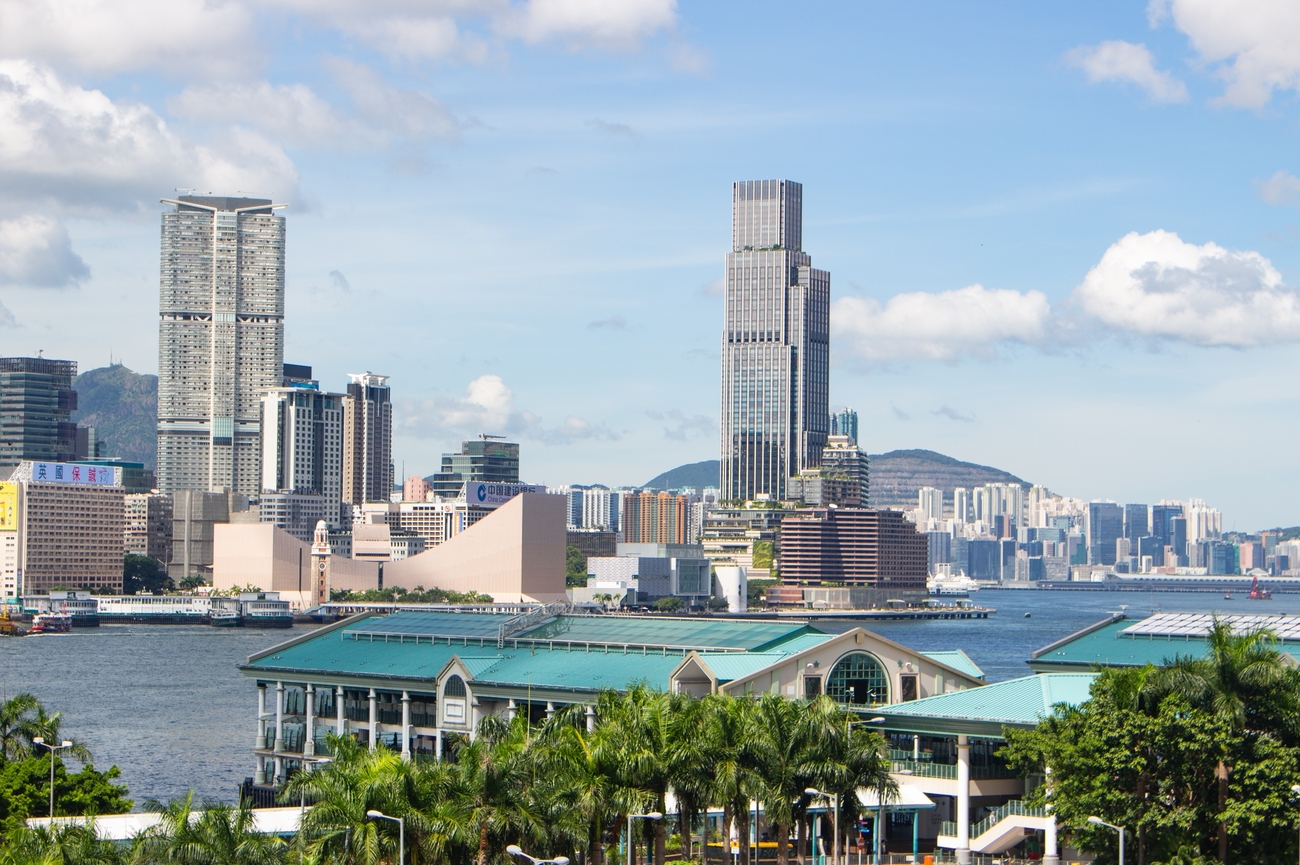
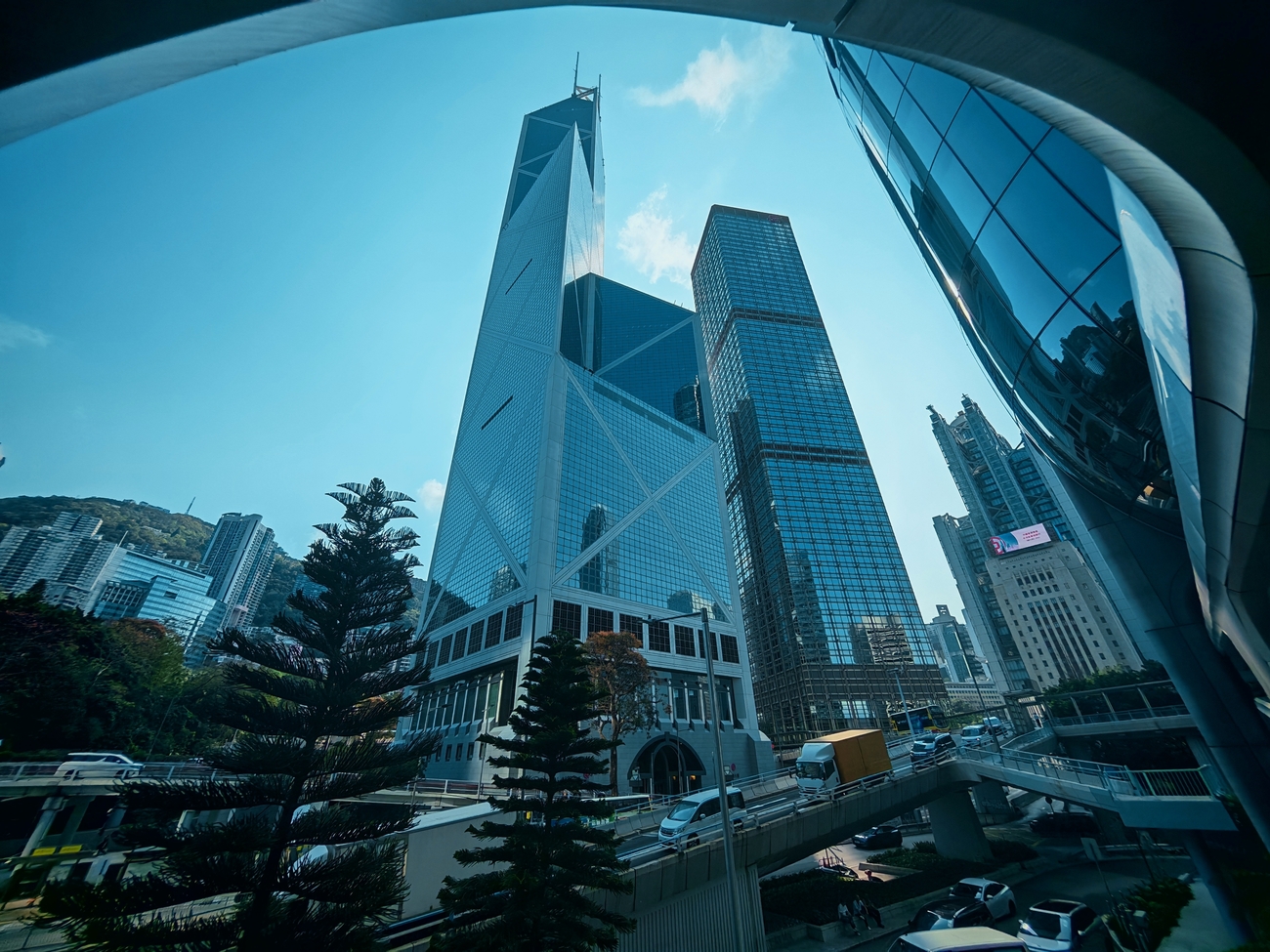
The skyline earns its reputation because it is never static. Two IFC rises with absolute clarity above Central. The Bank of China Tower catches and fractures the light. Victoria Peak stands behind the island like a reminder that the city’s vertical drama begins with the landscape itself.At 8 PM each night, 47 buildings on both sides of the harbour synchronise for the Symphony of Lights. The Hong Kong Tourism Board calls it the world’s largest permanent light and sound show, but the more important detail is where you watch it from. On the promenade, you face one shore. On the water, you sit between both. From a high table or a harbour-facing suite, the city becomes something else again. In Hong Kong, perspective changes the experience as much as the experience itself.
Why the Kowloon Side Matters
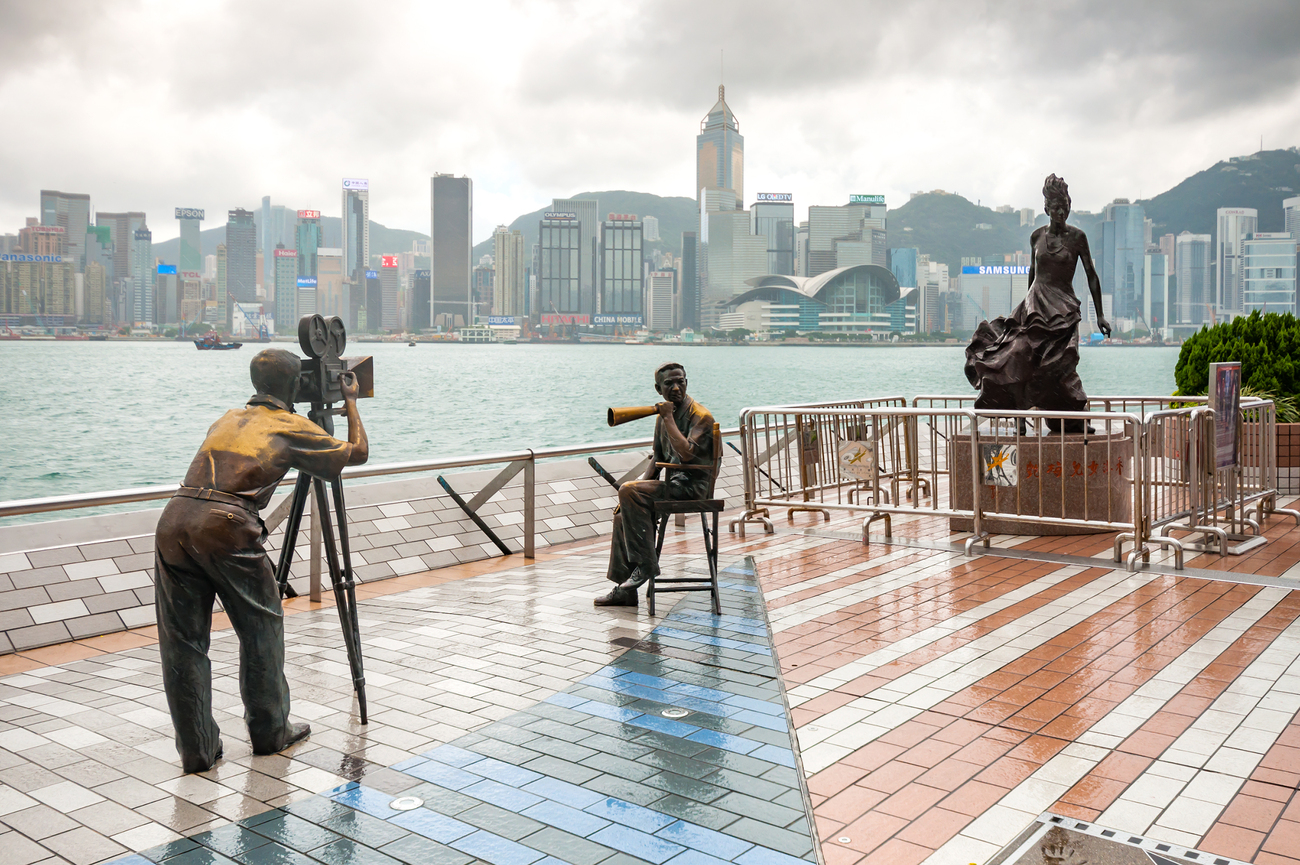
The Kowloon side gives the harbour its most iconic foreground. The Peninsula, the Avenue of Stars, and the waterfront promenade all frame Hong Kong Island in a way that feels immediately recognisable, even on a first visit. Further west, the harbour opens out toward M+, the West Kowloon Cultural District, and the ICC, where the city begins to feel less historic and more contemporary.
This is why six days works so well here. It gives you time to move between both shores, to see the harbour at ground level, from the water, and from above, and to understand that each vantage point reveals a different version of Hong Kong.
The Peninsula Hong Kong: Where the
Stay Becomes Part of the Experience
Opened in 1928, The Peninsula Hong Kong sits on Salisbury Road in Tsim Sha Tsui, facing the harbour directly. That orientation defines the hotel. Not the fleet of Rolls-Royce house cars. Not the HK$450 million refurbishment. Not the roster of heads of state who have occupied the Peninsula Suite with its double-height living room and private terrace. All of that is context. The view is the reason.
A harbour-facing room in the early morning is the city at its most unguarded. Freighters move through the channel. The first ferries cross. Victoria Peak lifts itself out of cloud above the Central skyline. By evening, the same window becomes something else entirely.

Inside the
Peninsula
- Gaddi's on the ground floor. One Michelin star. French haute cuisine. Open since 1953, making it Hong Kong’s first fine-dining restaurant. Crystal chandeliers, a 1670 coromandel screen, pressed duck, and a wine cellar that has been accumulating serious bottles for longer than most restaurants have existed.
- Felix on the 28th floor. Philippe Starck interiors. Modern European cuisine. Floor-to-ceiling harbour panoramas that make the nightly Symphony of Lights feel like a private performance.
- The Lobby for afternoon tea, served beneath colonnaded double-height ceilings in a room that has been doing this long enough to have stopped trying to impress anyone. It impresses anyway.
- Peninsula Afternoon Tea Voyages on Saturdays, aboard a dedicated Star Ferry vessel. 105 minutes on the harbour with Peninsula service, live music, and tiered stands. HK$820 per person, tables of two to four, booked in advance.
Arriving by private transfer, checking into a harbour-view suite, and spending the first evening at Felix with the skyline filling the glass from the 28th floor sets the tone for everything that follows. The rest of the trip begins to organise itself around that first view.

The
Harbour from Ground Level and Above
The harbour changes depending on where you stand. At ground level, it is immediate and close. From the Peak, it becomes something broader and more composed. Both perspectives matter.
Tsim Sha Tsui Waterfront
and the Avenue of Stars
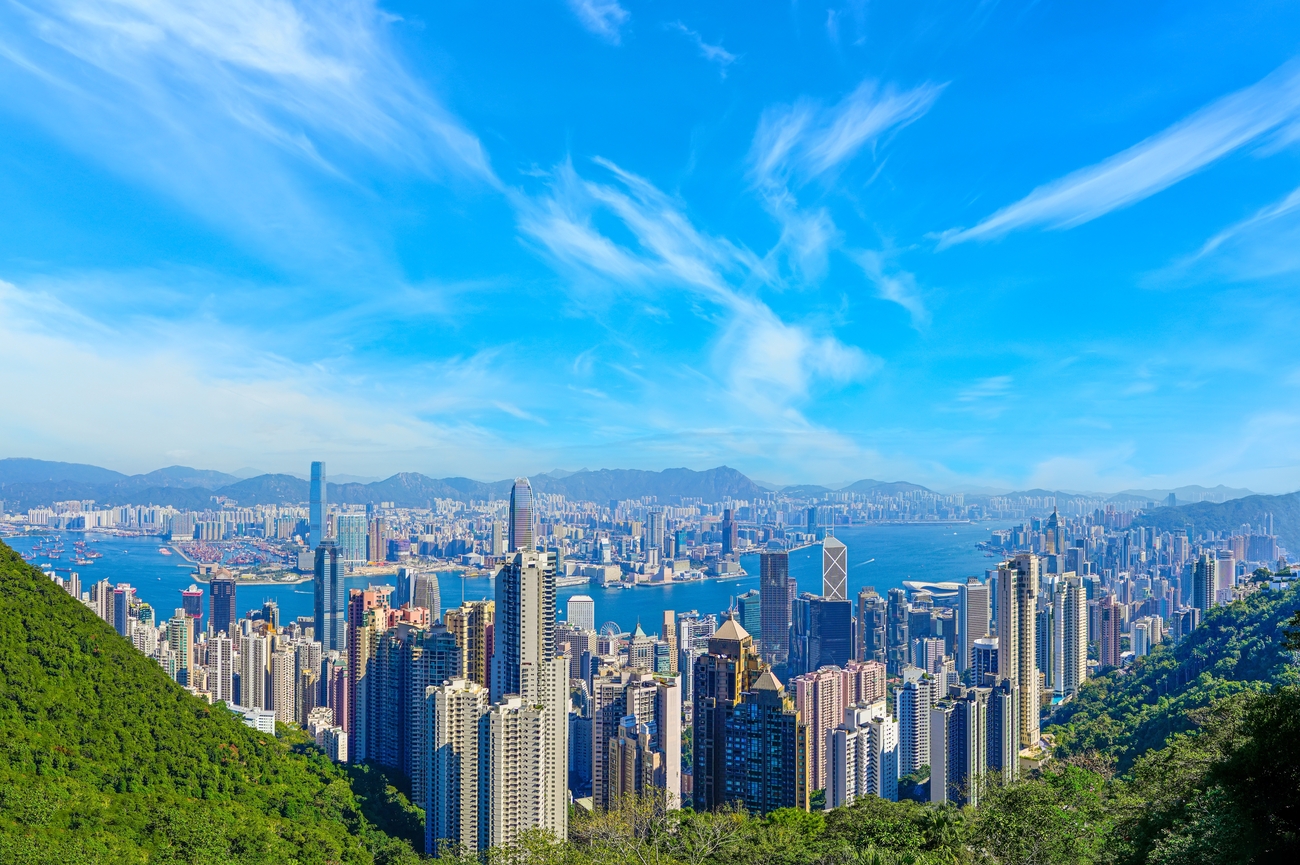
The Tsim Sha Tsui Promenade runs along the Kowloon harbourfront facing the Hong Kong Island skyline. It is the definitive ground-level vantage point and works best in two distinct windows: early morning, when the promenade belongs mostly to locals moving slowly through Tai Chi with the city as a backdrop, and the hour before 8 PM, when the light softens and the skyline begins to gather itself for the evening.
The Avenue of Stars runs alongside it, paying tribute to Hong Kong’s film industry. The bronze handprints. The Bruce Lee statue. The Cultural Centre clock tower at the western end.
All of it is familiar, but it works best as a transition rather than a destination, a walk that moves you from the hotel toward the water and quietly introduces the city’s layout before anything more deliberate begins.
Victoria Peak and Lugard
Road
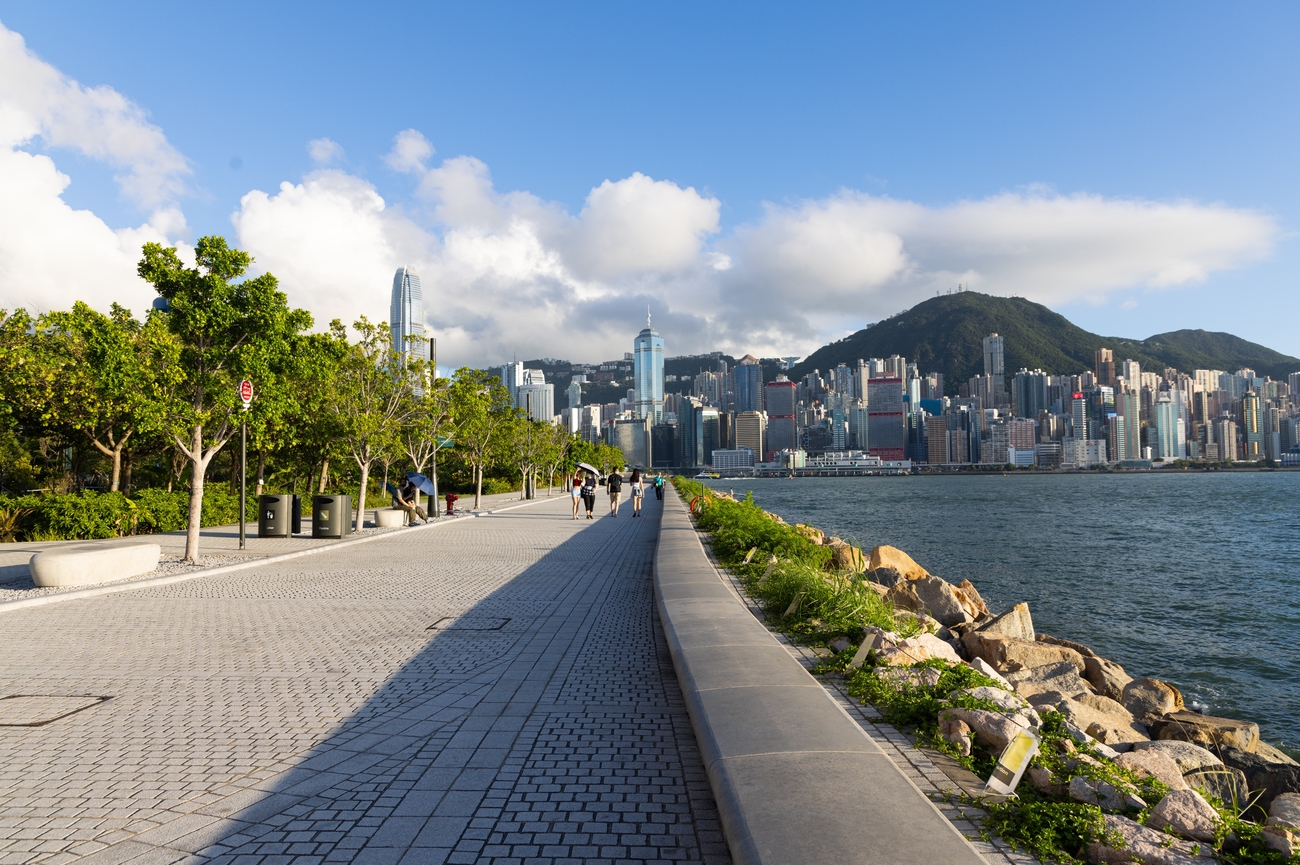
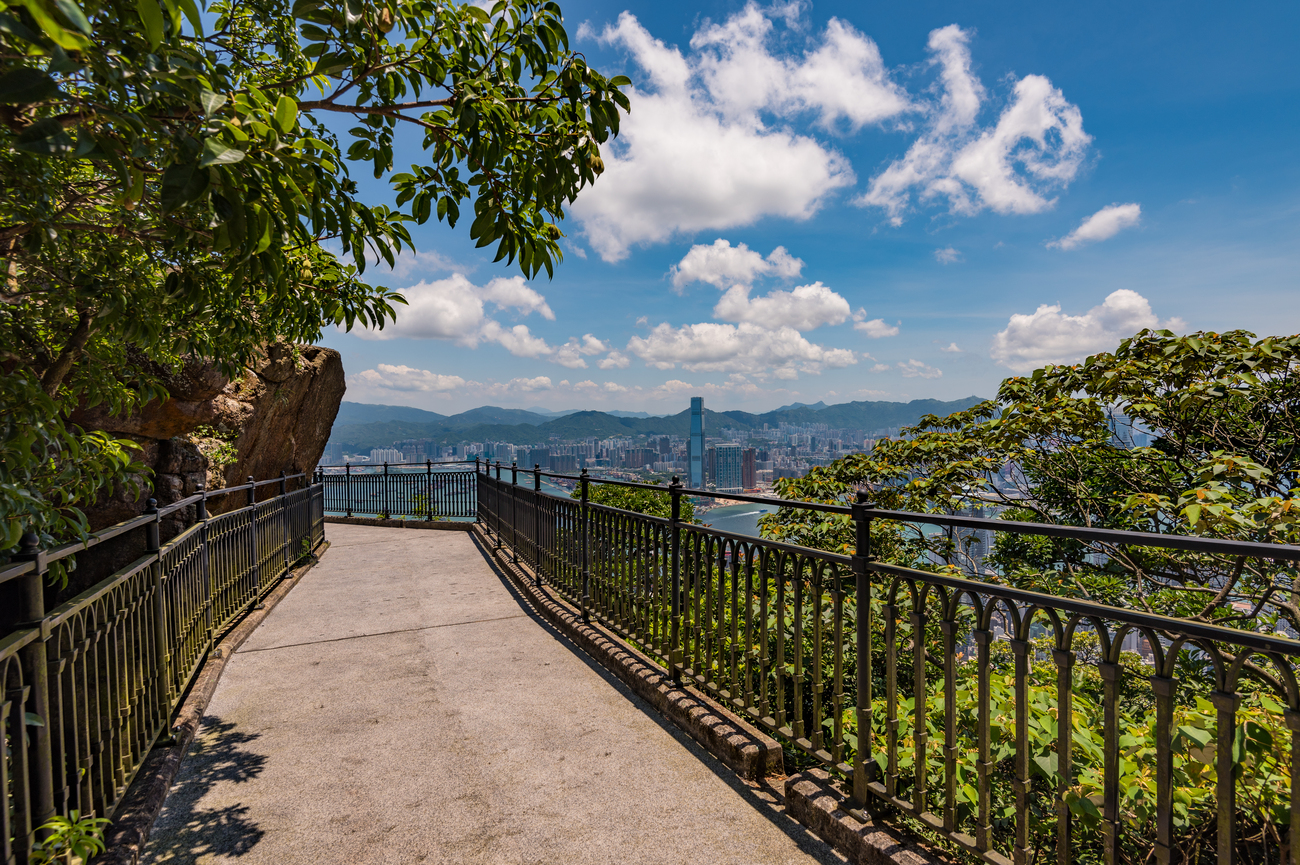
The ascent to Victoria Peak delivers a completely different reading of the harbour. At 552 metres, the city resolves into something structured rather than overwhelming. Lugard Road, a 3.5-kilometre circular path around the Peak, offers continuously shifting views across both shorelines, Lamma Island to the south-west, and the South China Sea beyond. On clear mornings in November or December, visibility can extend to the horizon with nothing between you and the water but air.
The Peak Lookout, a 1901 colonial building now operating as a restaurant, is well positioned for a long, unhurried lunch after the walk.
The Peak Tram remains the most cinematic route up, tilting sharply as the city recedes beneath you, though confirming its operational status before visiting is sensible. For a six-day itinerary of this calibre, a private chauffeured ascent is the more seamless approach.
The Harbour from the Water
The promenade is a preview. The water is the experience itself.
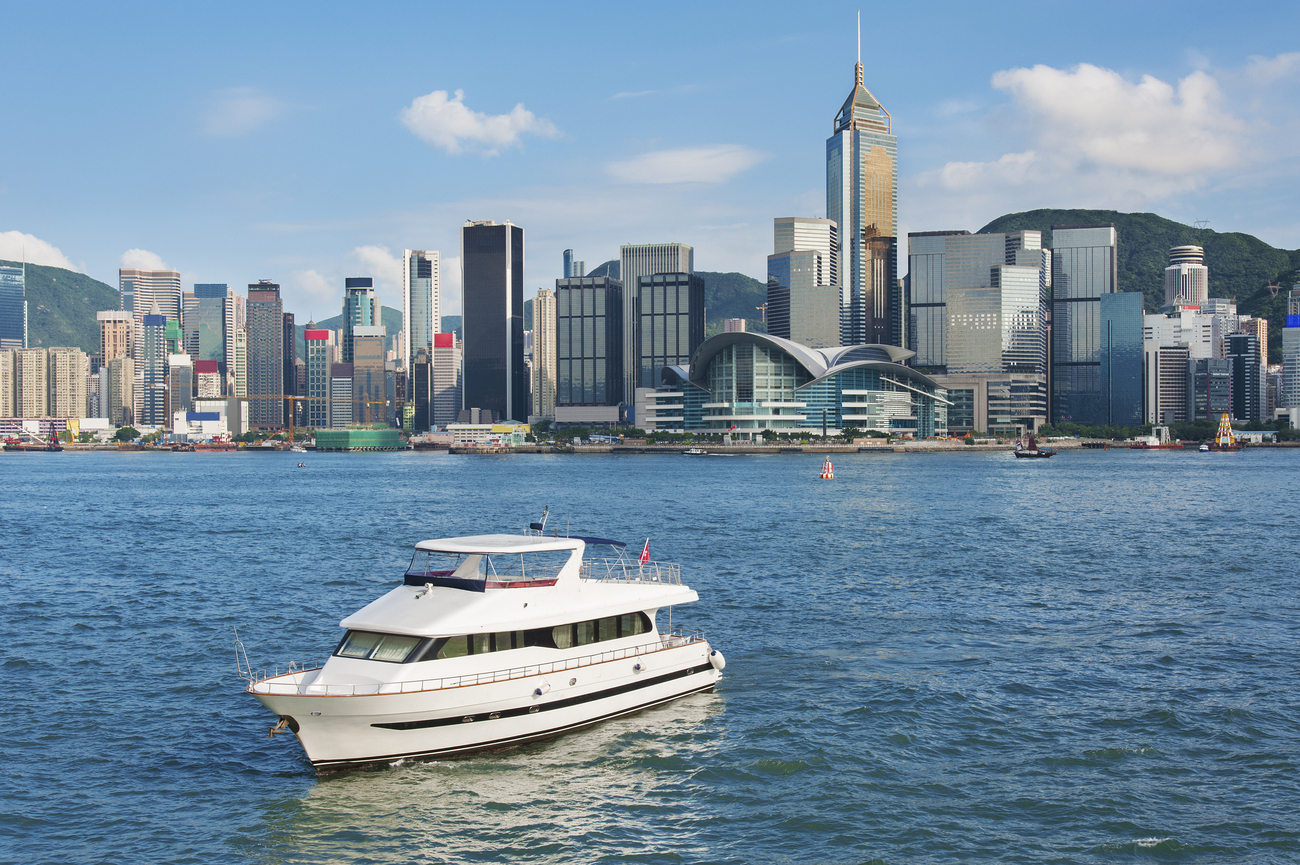
A Private Yacht on Victoria Harbour
Move from The Peninsula lobby to the open deck of a private yacht. The harbour opens fully around you, Kowloon behind, Hong Kong Island ahead, the ICC tower to the west catching the last of the afternoon light. Champagne. The city held at just enough distance to become clear rather than overwhelming.
The Symphony of Lights, from the Centre
At 8 PM, 47 buildings on both shores synchronise. From the Tsim Sha Tsui Promenade, the show asks you to choose a side. From mid-harbour, both skylines perform at once. Lasers cross overhead. The scale only fully registers from the centre, which is exactly where the yacht sits.
This is the moment most people remember. Weeks later, when asked about Hong Kong, this is the evening they describe first.

What Makes the Difference
The private harbour cruise market is well established. The distinction is not the size of the vessel, but how the evening is arranged. Timing relative to the show. Provisioning that reflects the occasion. A crew who know exactly where to position the yacht before 8 PM. And the complete absence of logistics on an evening that should feel effortless.
That is what separates a curated experience from one assembled piece by piece.
The full detail on private charters, vessel types, and harbour routes is covered in our guide to Victoria Harbour by water.
West Kowloon: Hong Kong’s Most Contemporary
Chapter
Most first-time visitors stay between Tsim Sha Tsui and Central. The West Kowloon Cultural District, set across 40 hectares of reclaimed harbourfront to the north-west, is where the city is still evolving, and where its most contemporary expression is taking shape.
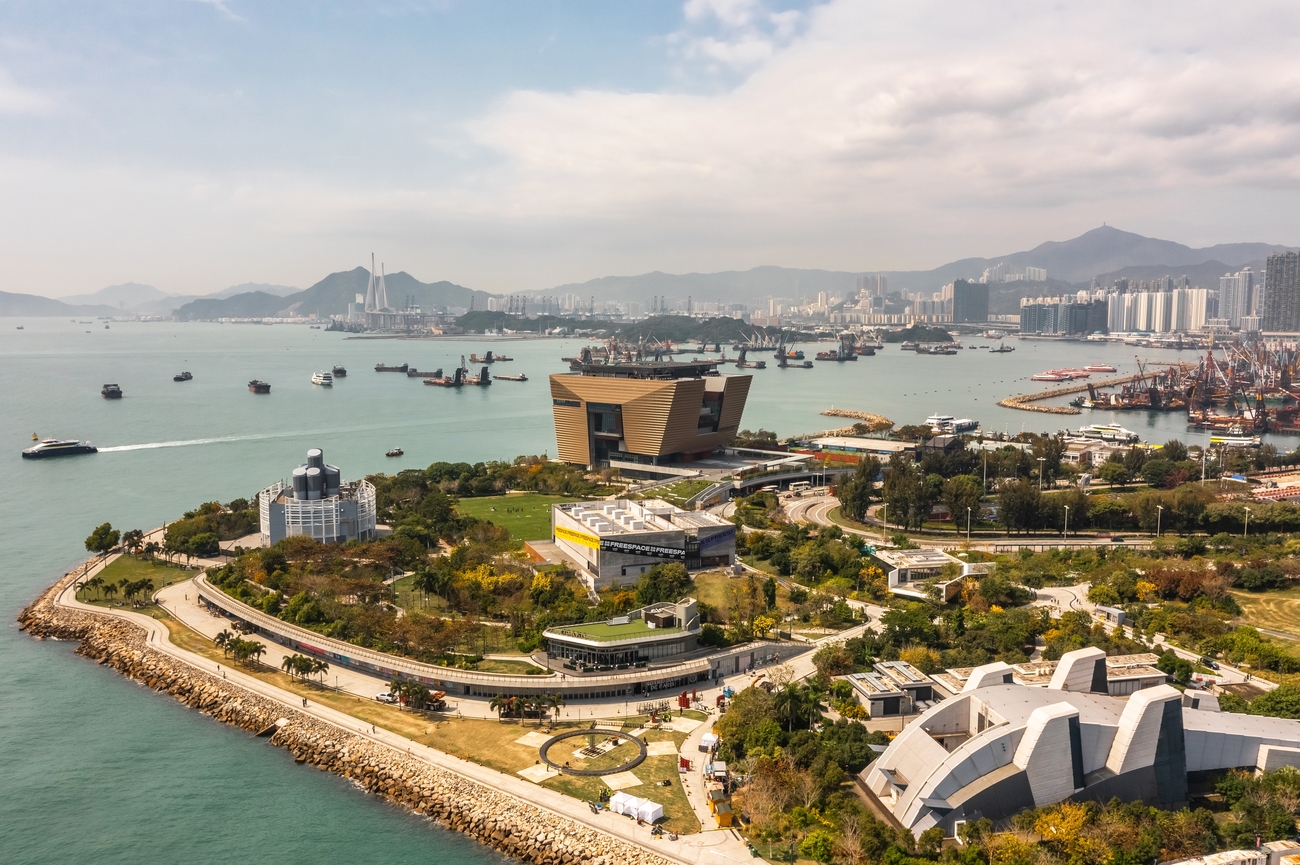
M+ Museum
M+ opened in November 2021 as Asia’s first global museum of contemporary visual culture. Designed by Herzog & de Meuron in partnership with TFP Farrells and Arup, the 65,000-square-metre building houses 33 galleries, a Moving Image Centre, a Learning Hub, and a roof garden overlooking the harbour.
The facade facing the water is one of the world’s largest LED media surfaces. At night, it becomes part of the skyline itself, transmitting moving image works visible from both Kowloon and Hong Kong Island.
The current long-running display, M+ Sigg Collection: Inner Worlds, runs until June 2027, alongside rotating exhibitions including Robert Rauschenberg and Asia through April 2026. Programming evolves regularly, and checking current listings before visiting is essential.
What elevates the experience is not only the collection, but how you move through it. A private guide shifts the visit from observation to understanding, identifying which works reward time, how the galleries connect, and how the collection reflects Hong Kong’s position between the global and the local. The Sigg Collection alone remains one of the most significant holdings of Chinese contemporary art anywhere in the world.
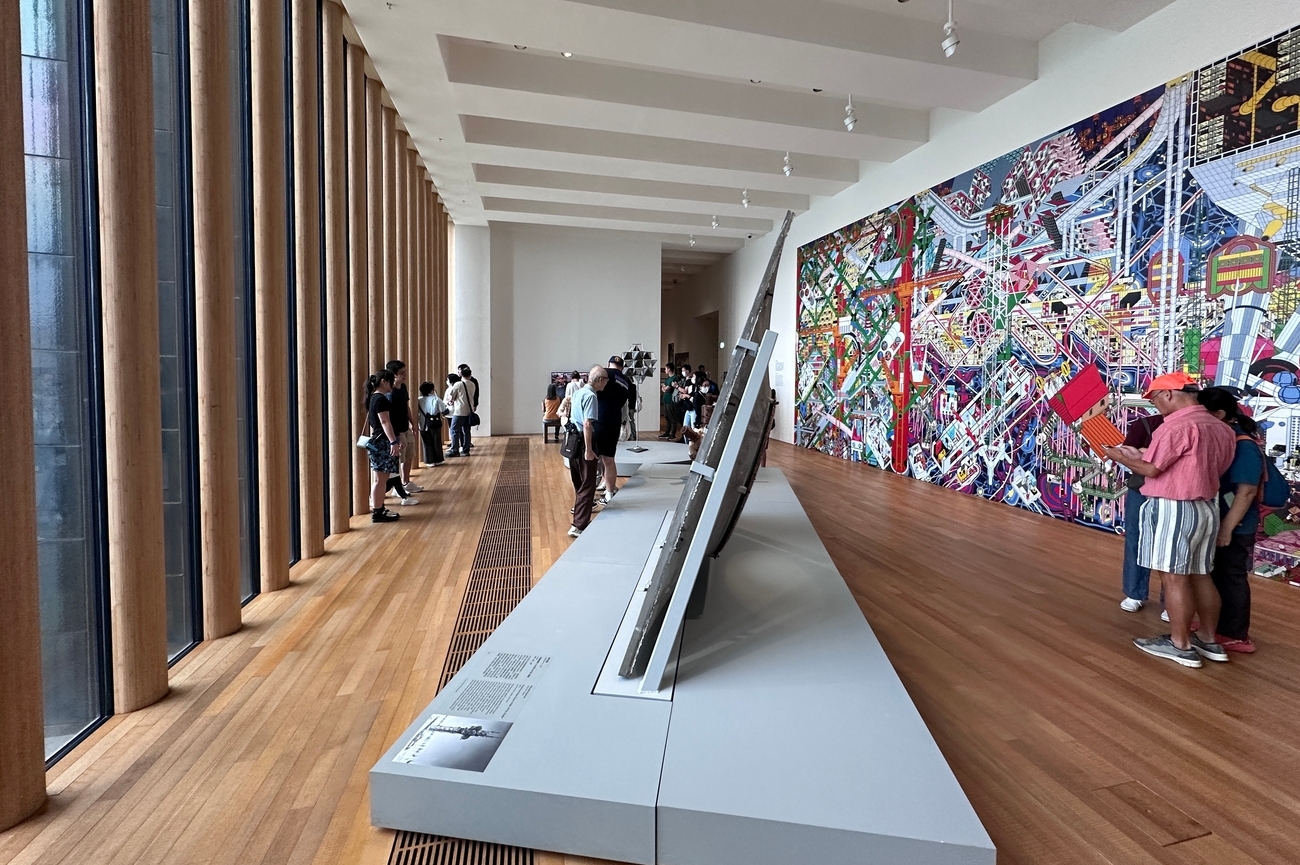
The Art Park and Harbourfront
Adjacent to M+, the West Kowloon Art Park opens into 23 hectares of public space, with a two-kilometre waterfront promenade running along the harbour. This is where the city slows. The ICC tower rises overhead, the water remains visible in both directions, and the density of Hong Kong recedes just enough to make space for it.
The Hong Kong Palace Museum and the Xiqu Centre sit within the same district. Neither requires a full day, but both reward time. The Palace Museum brings rotating loans from Beijing, while the Xiqu Centre offers a contemporary setting for Cantonese opera.
This part of Hong Kong works best as a single, well-paced afternoon that moves from M+ through the promenade and into the surrounding institutions without rush.
The full scope of the district, including how to sequence it properly, is covered in our guide to the West Kowloon Cultural District.

Michelin Dining with a Harbour View
Hong Kong holds more Michelin stars per square kilometre than almost any city on earth. The 2025 Michelin Guide Hong Kong & Macau lists eleven two-star restaurants and three three-star establishments. A select group of these tables sit with direct sightlines across Victoria Harbour, where the view becomes part of the experience rather than a backdrop.
Felix at The Peninsula
The 28th floor. Philippe Starck interiors. Modern European cuisine under Chef de Cuisine Henry Wong. Since opening in 1994, Felix has remained one of the city’s defining dining rooms. The harbour fills the floor-to-ceiling windows, and on the right evening, the Symphony of Lights feels less like a public event and more like something arranged for your table.
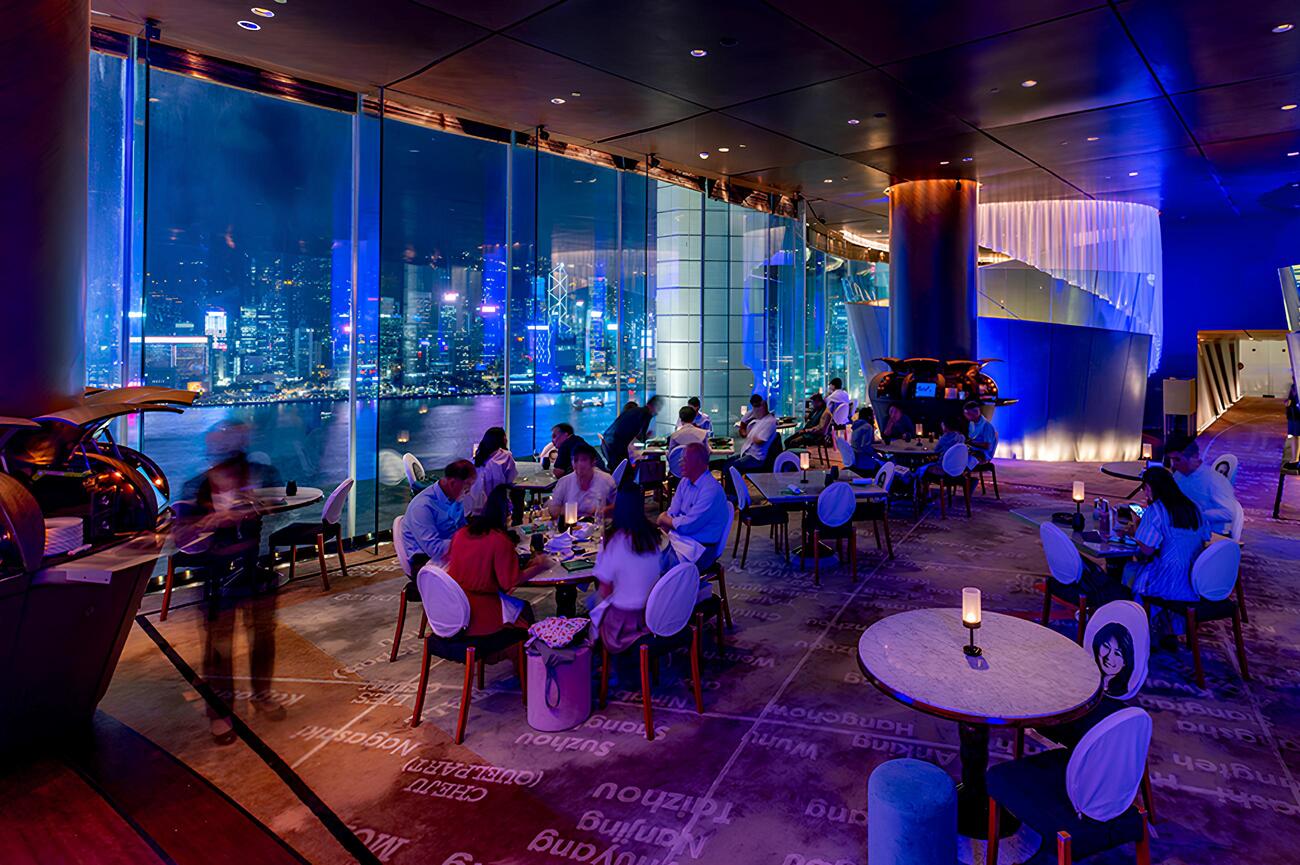
Lung King Heen at the Four Seasons
Two Michelin stars in the 2025 Guide. The first Chinese restaurant in history to earn three Michelin stars, a distinction it held for 14 consecutive years. Chef Chan Yan Tak remains at the kitchen. From its position within the IFC complex, the restaurant looks directly across the harbour. The dim sum, the whole abalone puff with diced chicken, the barbecued suckling pig, continues to define the upper limit of Cantonese cooking in the city.
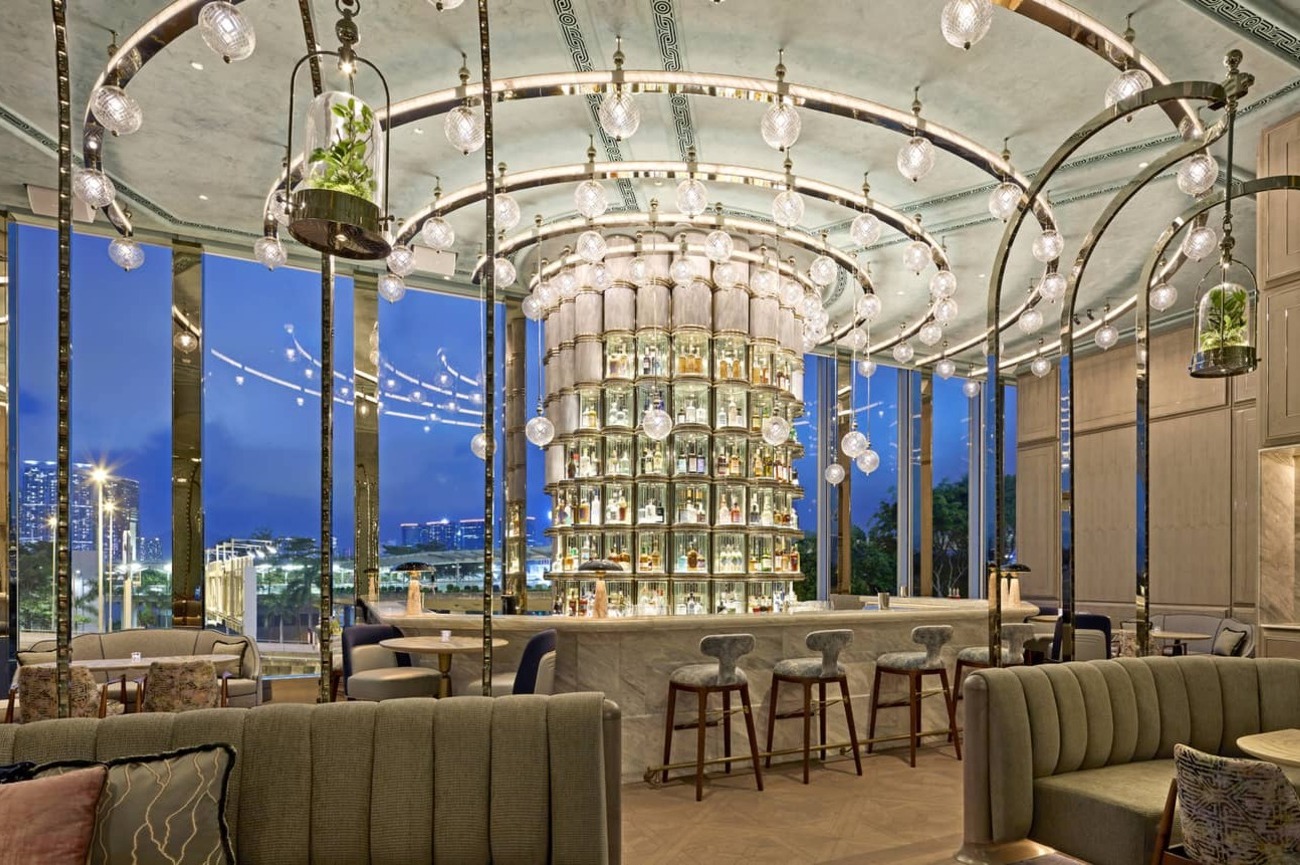
Gaddi’s at The Peninsula
One Michelin star. Open since 1953. Hong Kong’s first fine-dining restaurant. The room remains unchanged in all the ways that matter: Paris crystal chandeliers, a 1670 coromandel screen, white tablecloths pressed to a standard that predates most of the competition. Chef Anne-Sophie Nicolas leads the kitchen. The pressed duck and the soufflé remain central to the experience.
Tin Lung Heen at The Ritz-Carlton
Two Michelin stars. Level 102 of the International Commerce Centre. The harbour from this height becomes something abstract, ordered, almost architectural. Refined Cantonese cuisine, precise dim sum, and a dining room that places the entire city beneath you. The Iberico char siu is the dish most often associated with the kitchen.
Caprice at the Four Seasons
Three Michelin stars for the sixth consecutive year as of the 2025 Guide. Chef Guillaume Galliot. Ranked No. 18 on Asia’s 50 Best Restaurants 2025. Classical French technique, globally inflected, delivered from a dining room that faces the harbour with complete confidence. The view extends the experience without ever competing with the food.
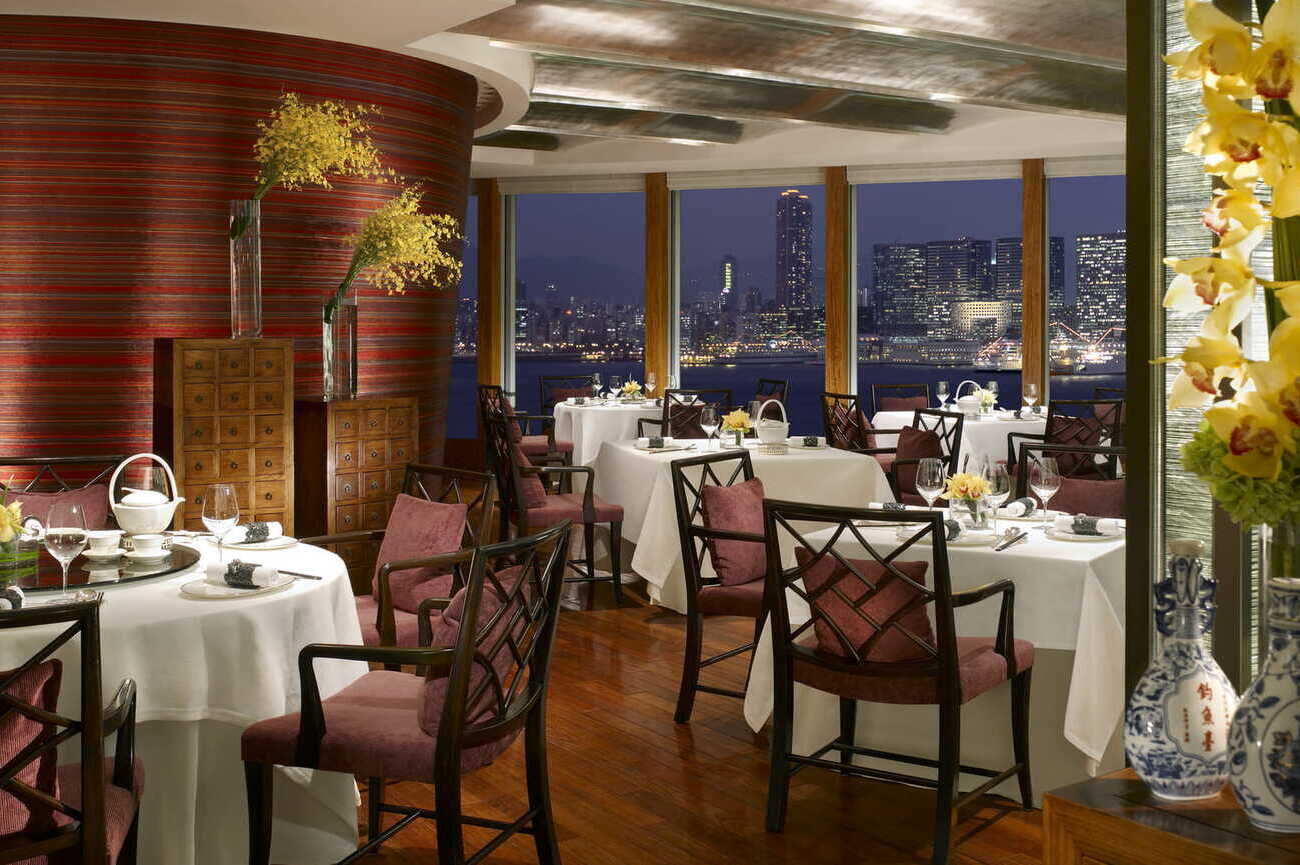
Hutong
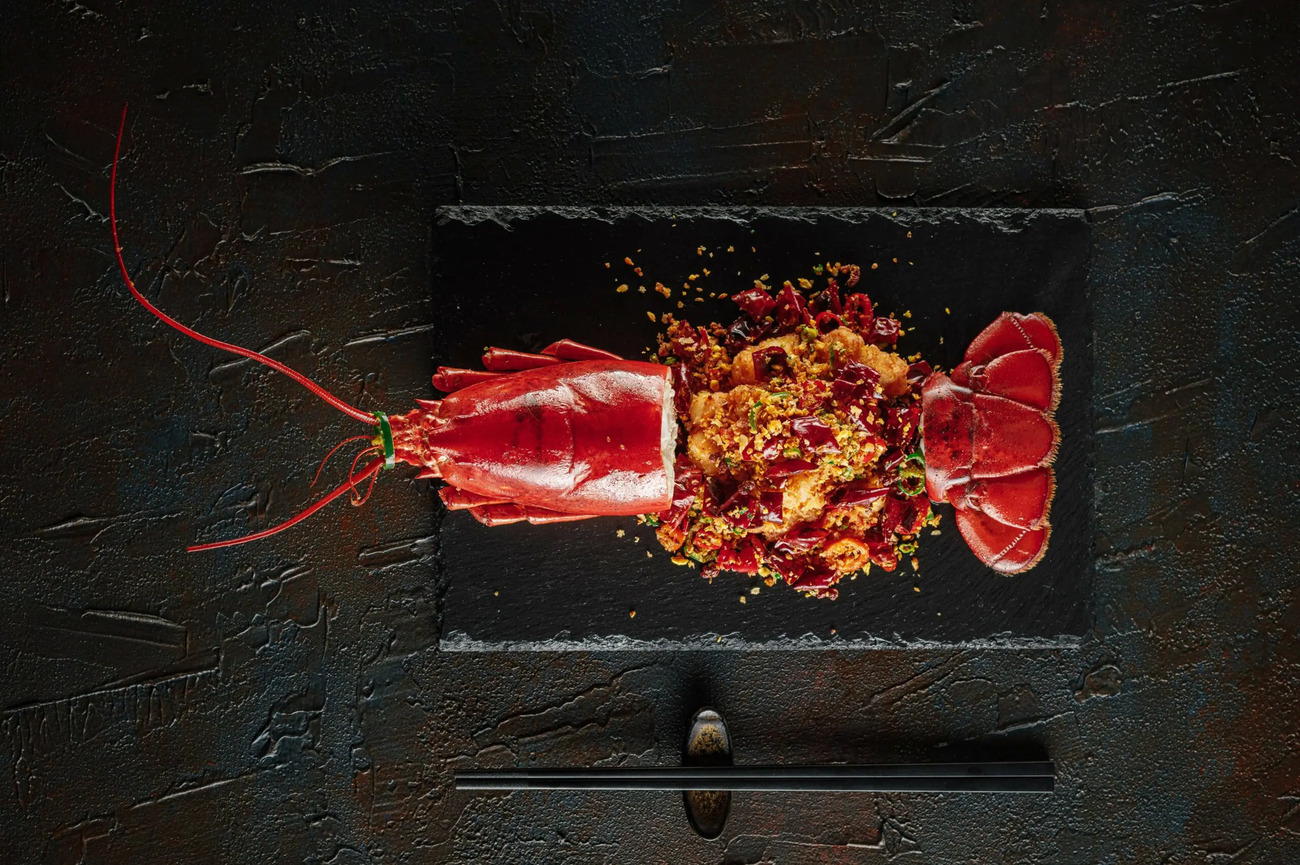
Northern Chinese cuisine in Tsim Sha Tsui with panoramic views across the illuminated Hong Kong Island skyline. Hutong has earned its place through consistency rather than accolades. The crispy deboned lamb rib, the soft-shell crab, and the atmosphere of the room itself make it a natural closing dinner for a stay built around the harbour.
A full breakdown of each restaurant, including reservation strategy, dress codes, and what to order, is covered in our detailed guide to Hong Kong fine dining with a harbour view.
Central and the Harbourfront
Central is where Hong Kong’s commercial gravity concentrates. The streets tighten, the buildings rise, and the retail becomes more considered. After the Peak, it is a natural descent, back into the city, but now with the harbour understood rather than simply observed.
IFC Mall and the Harbourfront
The IFC Mall connects directly to the Four Seasons and Hong Kong Station, placing the Airport Express, Michelin-starred dining, and a harbour-facing promenade within minutes of each other. International luxury brands define the retail, but the view remains constant. The harbour stays present through the glass as you move through the building, less a design feature than an acknowledgment of what matters most.
Outside, the Central Harbourfront Promenade runs toward the Star Ferry terminal. In the cooler months, October through April, the afternoon light sits low across the water. The Kowloon skyline fills the opposite shore. Freighters move through the channel without urgency. It is a walk that requires no structure, and benefits from not having one.

Landmark and the Jewellery District
A short walk inland, Landmark carries a different tone. The retail here is quieter, more deliberate, anchored by Louis Vuitton, Chanel, Dior, and a concentration of fine jewellery and watch specialists that reflects Hong Kong’s position as one of the world’s most important markets for both.
The density of certified gem dealers and independent watchmakers in this part of Central is not incidental. It is one of the reasons collectors build Hong Kong into their travel plans.

Three Ways to Spend a Morning
Not every morning in Hong Kong needs structure. These three are worth making time for.
A Helicopter Flight Over the Harbour
A private helicopter flight delivers what no ground-level vantage can. Both shorelines at once, the ICC and IFC towers at eye level, the container terminals stretching north-west, and the South China Sea opening to the south. In a single pass, the city resolves into something coherent. The scale becomes clear. The geography finally makes sense.

The Peninsula Spa
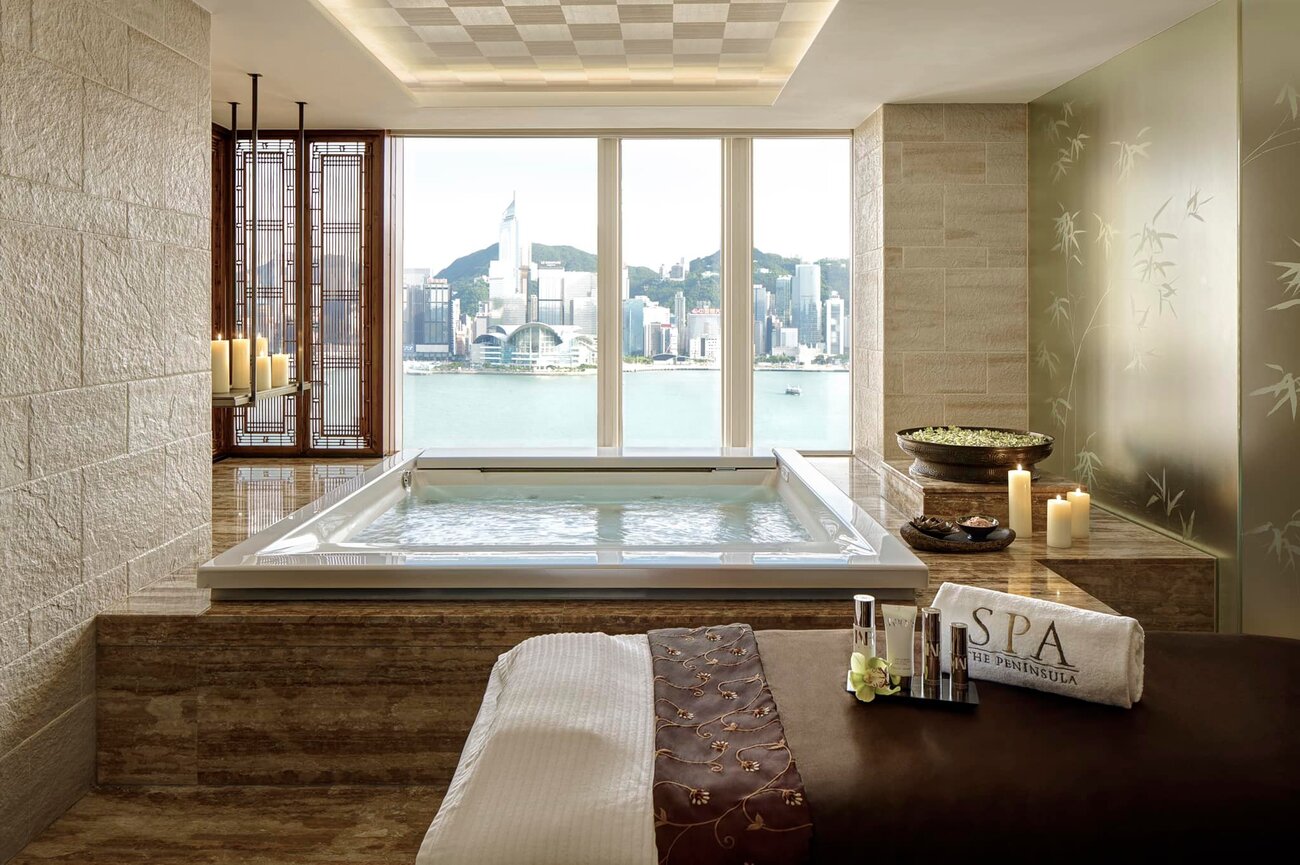
Set high above the heritage building, The Peninsula Spa offers a different kind of perspective. A Roman-style pool, private treatment rooms, and a level of stillness that the city rarely allows. Hong Kong rewards attention. This is where you step away from it for a few hours.
Fine Jewellery, by Appointment
Hong Kong remains one of the world’s most concentrated markets for certified fine jewellery and watchmaking. The right way to experience it is not by browsing, but by appointment. Private showrooms, access arranged in advance, and a level of discretion that matches the quality of what is being shown.
What Stays With You After Hong Kong
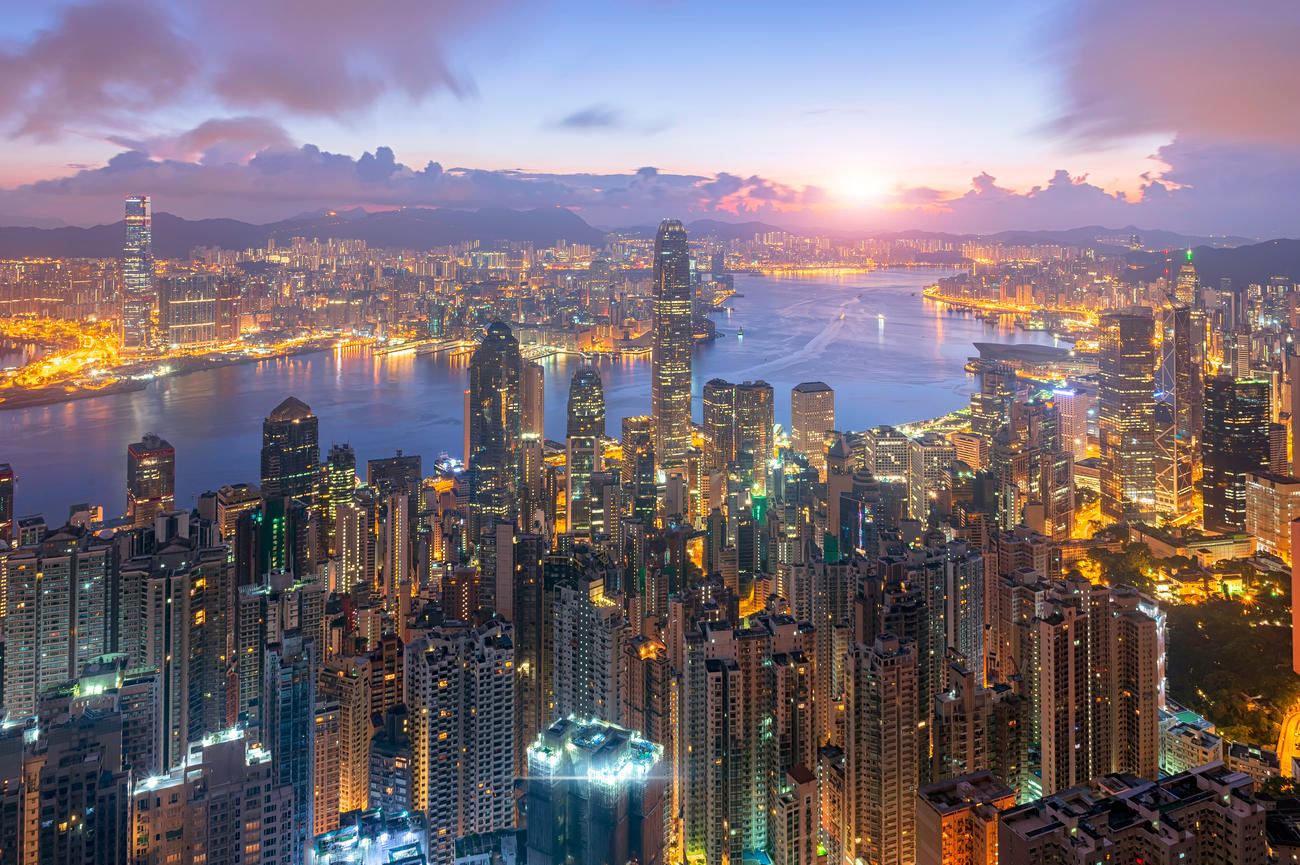
The city feels larger in memory than it did in person. Not because it overwhelms, but because the density of what it contains only becomes fully legible with distance. A two-Michelin-star lunch at 400 metres. The harbour at 8 PM from a private deck. A museum holding one of the most significant collections of Asian contemporary art anywhere in the world. The same afternoon tea served in the same lobby since 1928. None of it announces itself as significant in the moment. It accumulates quietly and lands later.
That is what separates Victoria Harbour from cities that impress on arrival and fade by Thursday. It improves the longer you stay. It improves again once you have left.
Practical
Details that Matter
When to Go
October through April is the ideal window. The weather is cooler, humidity is lower, and visibility from the Peak and across the harbour is at its clearest. The Symphony of Lights runs nightly at 8 PM throughout the year, but is cancelled when Typhoon Signal No. 3 or a Red Rainstorm Warning is in effect. Summer remains entirely viable, though the heat and humidity are significant considerations for an itinerary built around moving comfortably between outdoor and indoor engagements.
Dress Codes Across the Itinerary
The restaurants in this itinerary maintain clear dress standards. Felix is smart casual, with no sports attire. Gaddi’s requires elegant dress, including closed-toe shoes, long trousers, and long-sleeved collared shirts for gentlemen, with no jeans or sandals. Caprice follows a similarly formal standard. Tin Lung Heen and Lung King Heen are smart casual, with no sandals, open-toed shoes, or shorts for men. Build time into each day for changing between daytime and evening wear, it makes the itinerary feel considerably more seamless.
Arrivals and Getting Around
Hong Kong International Airport connects to the city via the Airport Express in 24 minutes, with direct service to Hong Kong Station in Central and Kowloon Station. For a stay of this calibre, private luxury transfer is the right arrival mode, arranged from the moment of landing.
Within the city, private chauffeured car is the most seamless way to move between the harbour’s two shorelines, especially on days with multiple timed engagements. The MTR is excellent and deservedly trusted by local residents. It is simply not the right setting for an afternoon that moves from M+ to Tin Lung Heen to a helicopter terminal.
Where a Great Hong Kong Stay Begins
Hong Kong is one of those cities people spend years meaning to do properly. The right trip. The right length of stay. The right table confirmed before departure. It rarely happens by accident. The travellers who leave with the version of the harbour they actually wanted are, almost without exception, the ones who decided in advance that this time it would be arranged correctly.
Our six-day Victoria Harbour journey exists for exactly that decision. The Peninsula for accommodation. A private yacht positioned mid-harbour at 8 PM. Michelin-starred tables on both sides of the channel, confirmed. M+ with a guide who knows what you are looking at. The helicopter flight, the spa, the jewellery appointment, and every transfer between them, all of it handled before you land.
The harbour will look exactly like the photographs. What you do with the six days around it is the part worth getting right.


Let us know what you love, where you want to go, and we’ll design a one-of-a-kind adventure you’ll never forget.
Get in touch
Miriam
Travel Specialist

Nina
Travel Specialist
Abigail
Travel Specialist
Frequently Asked Questions
-
Why is Victoria Harbour Hong Kong’s most iconic viewpoint?
Victoria Harbour is Hong Kong’s most iconic viewpoint because it reveals the city in full scale. From either shore, travellers can see the skyline, the harbour traffic, and the dramatic backdrop of Victoria Peak. Its width creates a rare balance, close enough to appreciate the detail, yet broad enough to understand the city as a complete composition.
-
What are the best ways to experience Victoria Harbour in Hong Kong?
The best ways to experience Victoria Harbour include walking the Tsim Sha Tsui Promenade, viewing the skyline from Victoria Peak, taking a private yacht cruise on the water, dining at a harbour-view restaurant, and staying in a luxury hotel such as The Peninsula Hong Kong. Seeing the harbour from ground level, from above, and from the water gives the fullest perspective.
-
How many days do you need for a luxury Victoria Harbour Hong Kong itinerary?
A six-day stay is ideal for a luxury Victoria Harbour Hong Kong itinerary. This allows enough time to divide your stay between both sides of the harbour, enjoy Michelin-starred dining, visit the Peak, explore the West Kowloon Cultural District, take a private harbour cruise, and include more exclusive experiences such as a helicopter flight, spa visit, or jewellery appointment.
-
Why stay at The Peninsula Hong Kong for a Victoria Harbour trip?
The Peninsula Hong Kong is one of the best places to stay for a Victoria Harbour trip because of its direct harbour-facing position in Tsim Sha Tsui. It combines heritage, service, and immediate access to the waterfront, while many of its rooms and dining venues offer exceptional skyline views. Staying here makes the harbour part of the experience from the moment you arrive.
-
Where is the best place to watch the Symphony of Lights in Hong Kong?
The best place to watch the Symphony of Lights depends on the type of experience you want. The Tsim Sha Tsui Promenade offers one of the most popular public viewpoints, while a private yacht positioned mid-harbour provides the most immersive perspective, with both skylines visible at once. Harbour-view restaurants and hotel suites can also offer a more private and refined setting.
-
Which Michelin-starred restaurants have the best Victoria Harbour views?
Several Michelin-starred restaurants combine outstanding cuisine with Victoria Harbour views. These include Lung King Heen at the Four Seasons, Caprice at the Four Seasons, Gaddi’s at The Peninsula, and Tin Lung Heen at The Ritz-Carlton. Felix at The Peninsula is also one of the city’s most famous harbour-view dining rooms, particularly for dinner and evening drinks.
-
When is the best time to visit Victoria Harbour Hong Kong?
The best time to visit Victoria Harbour Hong Kong is from October to April, when temperatures are cooler, humidity is lower, and visibility is usually clearer. These months are especially good for enjoying the Peak, waterfront walks, yacht cruises, and skyline views. Summer can still work well, but the heat and humidity are noticeably higher.
-
Why book a luxury Hong Kong itinerary with Revigorate?
Booking a luxury Hong Kong itinerary with Revigorate means the trip is arranged with the right sequence, access, and detail already in place. From harbour-view accommodation and private yacht charters to Michelin dining reservations, private guiding, chauffeured transfers, and curated experiences across Hong Kong, Revigorate ensures the stay feels seamless from arrival to departure.
Our offices:



Revigorate, Iberian Escapes and Algarve Lifestyle are the registered brand names of APCS Lda . We are a fully authorised travel agency licensed by Turismo de Portugal RNAVT/6867.
In the event of a dispute, the consumer may refer to: RAL - Centros de Arbitragem
Avª. 5 de Outubro, nº. 55, R/C Dtº. 8000-075 Faro, Portugal | Tel: +351 289 823 135 *
* national landline call
E-mail: info@consumoalgarve.pt| www.consumidoronline.pt | Mon to Fri: 9:00 - 13:00 / 14:00 - 17:00